Browsed by
Category: Articles

Gardening articles that may not include tips

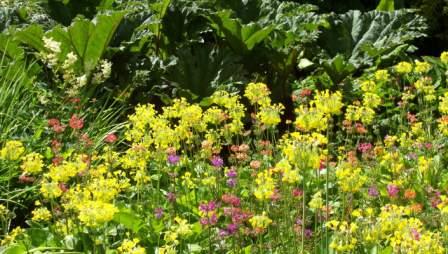
Ideas for a Shady Border

Ideas for a Shady Border

Cotinus

Plant selection

  • Plant tall flowering shrubs to bring a splash of colour to a dull corner or to make a shady border come to life. Hydrangea macrophylla or Rosa Rugosa will suit. More shrub ideas
  • Taller perennials and other to consider include Astible, Lilies, Ligularia or Foxglove.
  • Hostas and Hebes both do well in shade and if it is dry Eupohorbia polychroma and Iris foetidissima would work.
  • Try something a bit architectural such as Bears Breeches Acanthus mollis with tall flower spikes in summer and famous shaped leaves. Echinops globe thistles would be an alternative and Crocosmia has sword shaped leaves.
  • A smoke bush tree Cotinus coggyria is a good purple leaved shrub with airy pink/white

Planting Tips

  • Avoid planting too close to large trees as the roots take all the water. Anemone hybrids survive the dry but may not reach their full 3′ height.
  • Remove weeds and incorporate compost or manure to retain what moisture it can.
  • Plant shrubs in Autumn to give the roots chance to become established.

    Read More Read More

Crocodile Garden Design

Crocodile Garden Design

London basement garden

Any space bigger than a bottle can be used to create a garden. This London tennament had a basement flat twelve feet below the pavement and about 5 feet wide. Despite those limitations there was an exotic rock pool, obligatory ferns and phormiums and the London Lizard, the Camden Croc, or the Admiralty Arch Alligator.

Designing with Humour

  • Are the bars on these windows to keep the residents in or the London wild life out
  • A light touch when adding whimsy to a garden can add many a smile to the passer by
  • New materials can be introduced like this fibre glass sculpture
  • Painted pottery Gnomes are not to everyones taste but Gnomes need homes
  • Bruce Lawton’s Zen garden design tool is a bit of a spoof
Ideas Growing Hostas

Ideas Growing Hostas

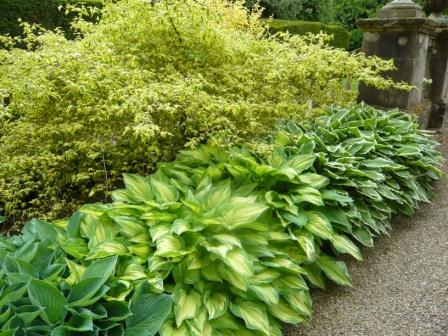
hosta

Facts about Hostas

  • Hostas are attractive foliage plants that prosper in the shade from spring to the first frost.
  • Hosta varieties vary in height from the Blue Angel at 4 feet to  Thumb Nail at 4 inches.
  • Blue green and yellow leaved hosts all like water and the yellow & gold leaved varieties will stand more sunshine like Sun Power .
  • Varied textures are available from smooth, crinkled, puckered and leathery all  to tempt you.
  • Hostas do not seem to die of old age and require minimum maintenance.
  • Read More Read More

Pond Water Features

Pond Water Features

If you want a cheap and easy water feature bury half a plastic dustbin in your garden. Fill it with rain water from your butt. If you use tap water it will have to stand for a week or more before introducing wild life and will probably go green with algae.

There is still plenty of frog spawn about in local ponds. You can make an escape bridge for the frogs by laying an old log over a corner of the pond. Natural rainfall will replace most of the evaporation except in summer when I let it reduce in depth but you can top it up from the hosepipe. The depth of the old bin makes a safe environment for aquatics but be careful with babies and young children.

We have used our pond as a home for goldfish that the children no longer want. They  lasted several years until they reached a size that the Heron liked. Similarly with golden Orfe they lasted many years and enjoyed basking in the sun on late summer evenings. The pond was mainly sheltered from the direct sun and is a feature in a wooded are of the garden.

Tips for Ponds

  • I find most of the recommended tips are of marginal benefit
  • A floating ball has never prevented a freeze up – but I was lucky not too loose any fish due to ice
  • Netting to stop leaves was also more trouble that it was worth – every couple of years I fish out the ‘sludge’ from the bottom and leave it very close by for creatures to return to the pond.
  • Marginal plants and moisture lovers need more water than the overflow from this type of pond provides.
  • Oxygenating plants work best if they grow below the surface. One of the most vigorous and recommended is Elodea crispa (Lagarosiphon major)

Charlie Dimmock may not approve but as a pond starter kit this is a cheap and quick option. I see you can now buy a Charlie Dimmock Gnome but I think that would end up in my pond

Tommy, Alan and Charlie

In a well known water feature a Gnome was placed on a rock in the center of a pond – The feature was called ‘Gnomeman is an Island’

Two Garden Gnomes walk into a bar. The third one ducks.

Gnomes grow a vegetable that helps brush your teeth – ‘Bristle Sprouts’

1000 Gardens to Visit and other 1000’s

1000 Gardens to Visit and other 1000’s

www.gardenerstips.co.uk/blog has now reached over 1000 tips on this blog. To celebrate this milestone I have looked for other notable 1000’s and have come up with the RHS Garden Finder last published in 2007 – 2008. This publication advertises ‘More than 1,000 gardens to visit and enjoy‘ and is a weighty 500 page reference book edited by Charles Quest-Ritson. Available from Amazon at a remaindered price from 1p plus postage.


Listing gardens to visit by country and county within the United Kingdom it also lists all the NCCPG National Collections. I guess the Philadelphus collections at Pershore College and The Hollies Park Leeds will smell just wonderful on the first of July.

Not to be out done on the tips front Readers Digest publish ‘1001 Hints and Tips for the Garden‘ with more contributors than you can shake a pea stick at.

Amazon also sell a couple of books celebrating one thousand including ‘1000 Fuchsias’ by Meip Nijhuis and ‘Emeralds 1000 Green Flowers and 500 Choice Green Foliage Plants’ by Karen Platt

Gaultheria Berries in Winter

Gaultheria Berries in Winter

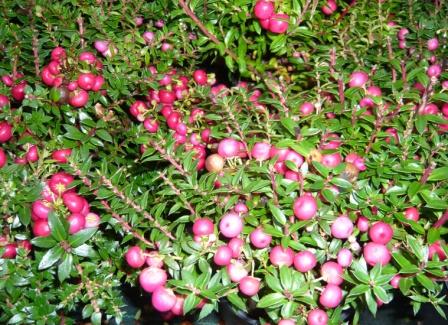
Purple and White Berried Gaultheria

  • Gaultheria are a range of shrubs often with aromatic evergreen leaves.
  • Grow for the fleshy coloured berries or calyx and look for Gaultheria mucronata
  • Some species are unisex and one male to six female shrubs will increase berrying
  • Grow in acid soil conditions with heathers and conifers or in a pot with ericaceous compost.
  • Flowers and leaves are small in comparison to the berries
  • The plants do not want any extra fertiliser
  • Also named Pernettya or Prickly Heath
Conservatory Plants

Conservatory Plants

November is a great time to plan next years plants for your conservatory. I would go for ‘shock and awe’ with some bold colours.

Lantana camara is worth the space in your cool conservatory where it will bloom from spring to late summer. It is evergreen and flowers best with good light. You will often see it in  Mediterranean gardens. There are numerous colour forms for this plant but my favourite is an orange flower changing to red.

Jasminum polyanthum is a favourite evergreen, twining climber. It has big clusters of white flowers tinged pink throughout summer. The heady scent permiates the conservatory especially in the evenings.

For winter interest Correa harrisii is a small evergreen shrub with an abundance of scarlet flowers during late winter. The leaves are narrow ovals with hairy undersides. Fragrant pink flowers are grown on Luculia gratissima.

Good partners for next summer are Cassia obtusa with deep yellow flowers contrasting with the purple-blue flowered evergreen Brunfelsia pauciflora.

Silver Birch – 8 Species Review

Silver Birch – 8 Species Review

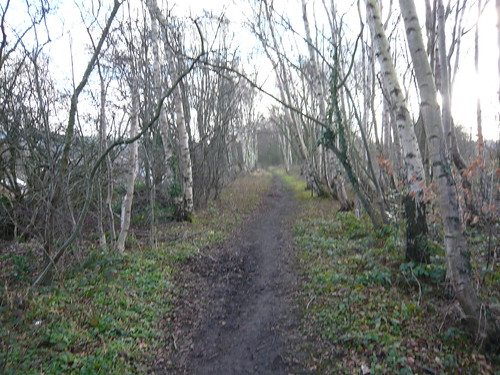
Silver Birch look the part on a cold and frosty morning. The white or silvery trunk looks good singly or when grouped together.
boxing morning 102

Key Features of the Silver Birch

  • Latin name Betula pendula other common names Curly birch, Paper Birch, Weeping Birch or Ribbon Tree
  • Height up to 100 feet 30m narrow spread.
  • Type of tree – Deciduous broad leaf
  • Leaves – Green and triangular shaped with toothed edges.
  • Flowers Male and female catkins borne on the same tree.
    Male are yellow and drooping female green and upright, later pendulous when fertilised.
  • Fruit Winged seeds borne in catkins
  • Bark Silver white with black fissures.
  • Family Betulacea

Origins and Distribution of the Silver Birch

  • European origin found throughout Europe, western and northern Asia.
  • Seeds prolifically and is found in Canada, Scandinavia, Turkey and widely spread as a specimen ornamental.

Uses and Commercial Attributes of the Silver Birch

  • Used for making barrels and furniture. The wood is too soft for use in construction
  • The fine twiggy branches are used for brooms and besoms as well as racecourse jumps.
  • Used as an ornamental tree in parks and gardens.
  • Silver birch is popular in Finland where it is the national tree used in forestry and as branches to beat yourself in the sauna.
  •   Historically the paper like bark was used in ancient times for writing Sanskrit texts and it is still used today for sacred mantras.

Gardeners Tips for the Silver Birch

  • Silver Birch grow in a cool climate and enjoy an occasional winter snowfall.
  • They are fast growing, shallow rooted that may require water during dry periods.
  • They grow best and show most colour in full sun planted in deep, well-drained soil..
  • Trees are short lived and rot from damage so dislike pruning.
  • They are often planted amongst leafy rhododendrons and conifers where the white bark is particularly striking.
  • The deciduous foliage turns yellow in autumn.

Read More Read More

Poplar Roundabout Felled in Sep-timber

Poplar Roundabout Felled in Sep-timber

In an oval roundabout in Menston a dozen Poplar trees were planted in the 1970s. As you can see only about half survive and these have been mistreated by polling them to restrict height.

What you may want to know about Poplars

  • Poplars (Populus)  are rapidly growing trees with shallow, spreading roots. Do not plant them near buildings.
  • The Black Poplar (nigra) has a shortish life of around 30 years so I shouldn’t be surprised by the state of these trees.
  • White Poplars (alba) are suckering trees with white woolly undersides to the leaf.
  • Balsam poplars can grow 6 feet per year and have a balsamic scent.
  • Female trees have long catkins but they are too high up these trees to see.

Poplar trees are usually felled in Sep-timber!

Greenhouse Tools and Equipment

Greenhouse Tools and Equipment

Good Ventilation

You need at least one roof ventilator and one side ventilator to get good air changes. The roof ventilator is the most important for allowing hot air to escape. Windows at both sides of the greenhouse can be beneficial. Louvered windows are very useful as they are easy to operate and I find hinged windows less stable in wind. Automatic ventilators are available that open the window using a plunger system. Obviously the door is a great ventilator and should be left open when temperatures reach 80 degrees or humidity is 100%. I have never needed an extractor fan but for a large greenhouse a slow moving fan can help some crops.

Temperature Control

A max/min thermometer should be suspended near to greenhouse plants at eye level on the northside of the greenhouse. Digital or traditional versions are available.

Insulation by plastic double glazing on a simple frame will help heating costs but cut down on the suns rays. Bubble wrap is another product to consider and if that cuts down on too much light it can be restricted to the north wall.

A warm greenhouse needs minimum temperatures of 55° F, a cool greenhouse may only need heating in winter to retain 45° F. Electric fan heaters are the popular choice as they also help move air around and you don’t need to move fuel around. Paraffin heaters are cheaper to buy and run but they produce water vapour that can encourage grey mould. Similar issues arise with bottled gas heaters. Piped hot water is a luxury but apart from the cost of installation there are few draw backs.

I also have an under soil electric heating cable for starting seeds and cuttings. They put heat exactly where you want it and are economic to run.

Staging and Shelving

Benches or stages are needed to be able to work at a comfortable height and increase the working area as you can use underneath. Wooden slats, mesh or solid benches are available. I use slats on a bench down the north edge of the greenhouse. A collapsible shelve allows you to grow more tomatoes when spring plants are finished.

I have an alluminium frame greenhouse and there is a neat plastic device that fits anywhere there is a bar. It allows you to string or suspend from. This cedar greenhouse from Alton looks good and shows ventilation and staging