Browsed by
Category: Articles

Gardening articles that may not include tips

Transpiration for Gardeners

Transpiration for Gardeners

Transpiration is a basic and crucial function that moves water around plants to cool and keep them healthy. Leaves have pores or stomata that open to allow moisture to transpire or evaporate. Large trees can transpire up to 500 gallons per day, our garden plants transpire far less but enough to cause wilting if there is insufficient moisture for the plant. Stems and flowers can also transpire and loose water.

Transpiration Strategies

  • Many trees have wide spreading and deep roots to provide the moisture they need.
  • Tomato plants have a deep main root to gather water and surface roots for feeding. Leaves can also wither or be defoliated to reduce water loss.
  • Succulents save water by opening the stomata pores at night to reduce transpiration and often have  waxy leaves. Cacti don’t have leaves and few stomata elsewhere so transpire very little.
  • Many plants loose there turgidity when short of water and thus transpiration is reduced.
  • Other  plants have small leaves or hairy leaves
  • Mediterranean natives may have silvery reflective leaves, or produce volatile  oils to reduce transpiration by reduced evaporation.


Plants & Gardeners Water Strategies

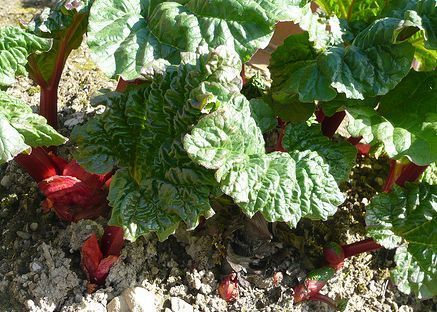
  • Many plant leaves are designed by nature to funnel water to suit the plants needs. Check how Rhubarb leaves collect water over a large surface but it is channeled to the ridges that take it to the roots. You may have heard the saying ‘ water rhubarb even when it is raining’.
  • Soft leaves seem to loose more moisture and the more leaves then the more they transpire. Hence gardeners need to mulch and water plants during dry spells to sustain transpiration.
  • Plants in pots still transpire and water hungry plants may not be suitable for containers for that reason. Remember the bigger the pot the more soil and thus moisture it could contain.
  • Shade and wind breaks can reduce water loss by cutting down on transpiration. You can have too much of a good thing and wind and sun are an enemy to successful transpiration.
  • Evergreens transpire even in winter but our climate is generally able to provide the water needed but be wary of long hard frosts particularly for young plants.

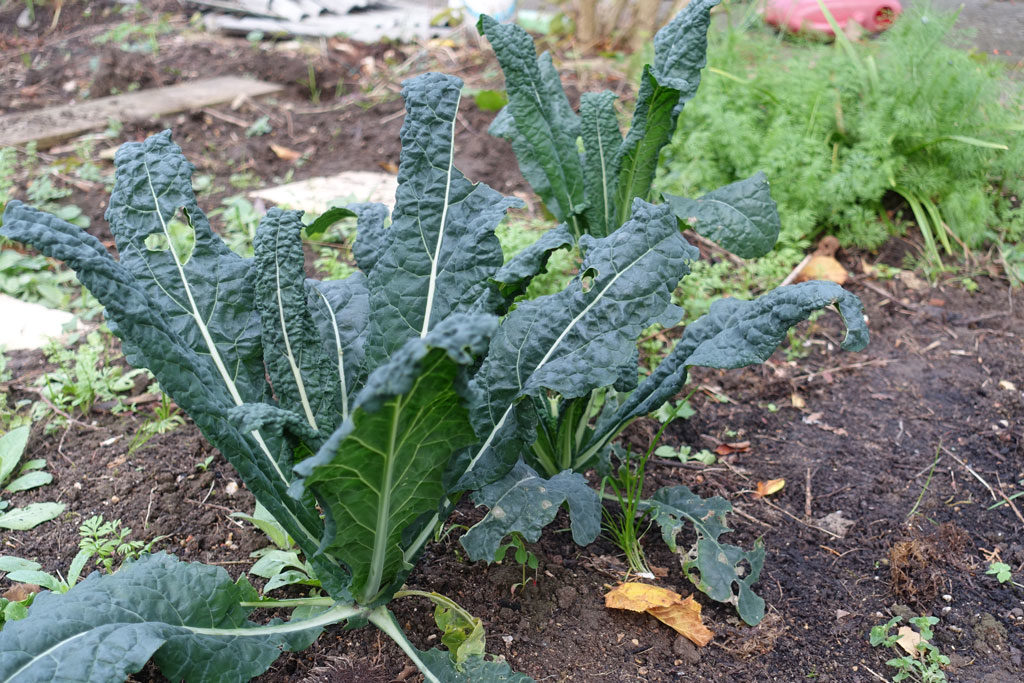
kale
Kale leaves are shaped to harvest rain.

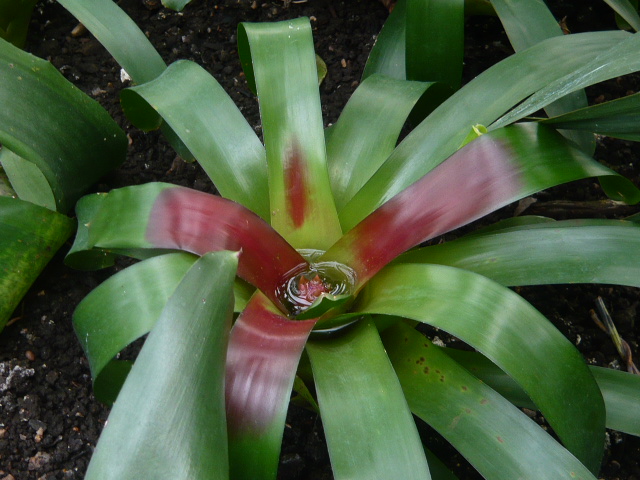
Brugsmania build in a water trap

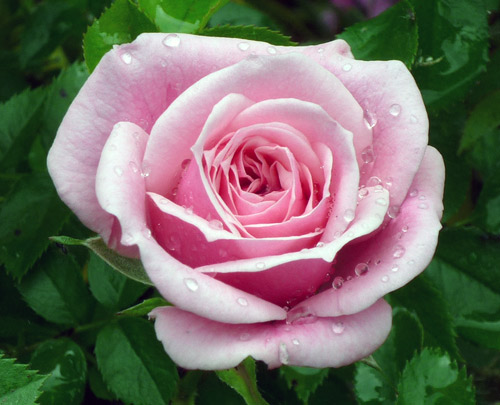
Pink Rose Dew by name and nature


Gardening Robots

Gardening Robots

Where would we be if there weren’t already numerous robots used in the gardening industry. Do you imagine there are thousands of Dutch gardeners pricking out the seedlings of the soon to be gaudy annuals on supermarket displays or thousands of Chinese coolies picking individual seeds for our packeted seed industry (well may be in this case).

Glasshouses have many automated facilities from sowing, watering and potting and these are becoming economic for some gardeners. Soon we will be able to do all our gardening from this position.

What of other robots to help individual gardeners in their own gardens perhaps for weeding? Early gardeners would be fascinated with the electronic tools now available not least the automatic programmed lawn mowers.

Robot Gardeners Questions

  • I wonder how robots will be propagated
  • What task would your first robot be programmed to do?
  • Farmers are gaining a new range of precision implements for spraying and crop management. Will the cost saving be passed on to consumers.
  • Will garden centers become full of robots instead of gifts and bric-a-brac

Fruit picked by human robot!

I will not be allowing robots to take on my favorite task of drinking a gin and tonic at he end of a session in the garden.

Tree Peonies from the Far East

Tree Peonies from the Far East

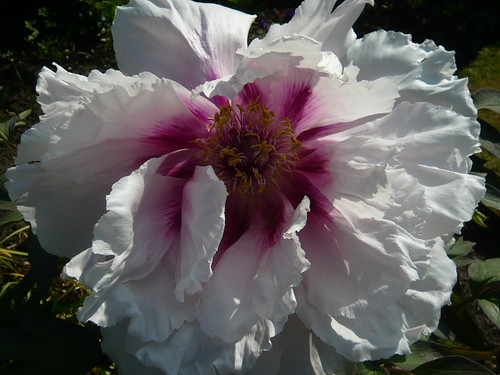
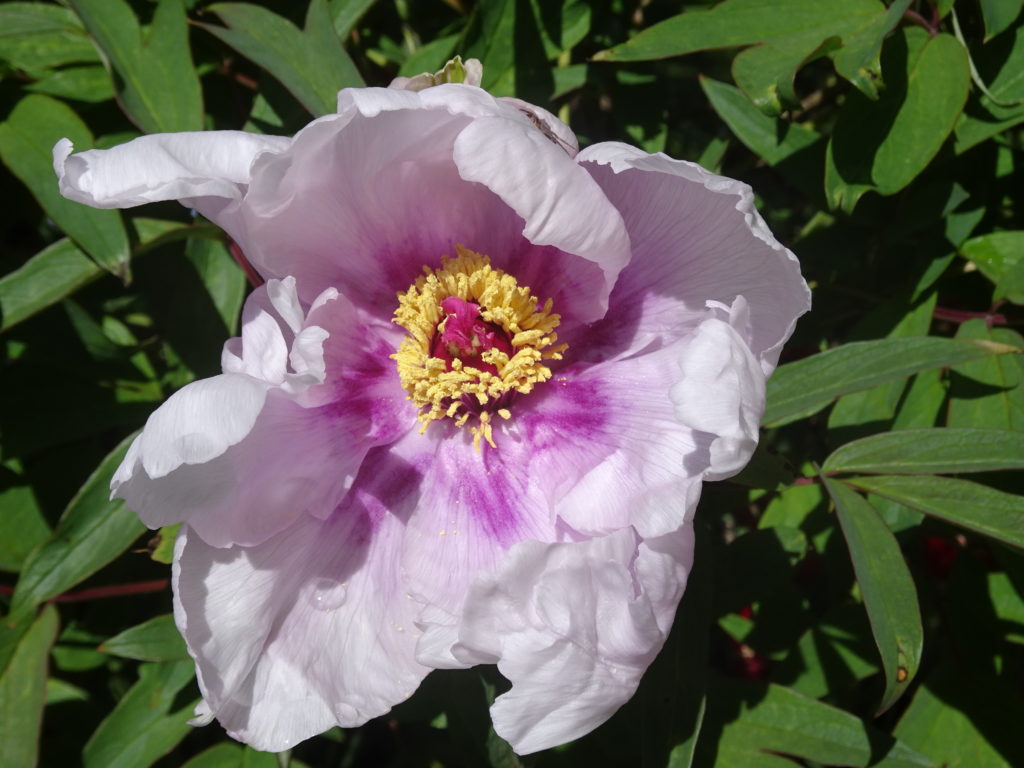
tree peony

History of Tree Peonies

The ancient Chinese have cultivated Tree Peonies for over 1500 years. Prized specimens are and were grown for medicinal purposes as they contain glucocides and alkolides. The  imperial palace gardens had many specimens that became quite valuable.

The tree peony was, for a time, the national flower of China and it is thought Chairman Mao sought to ban their growth as a decadent pastime. The root of P suffruicosa has been used in medicine for centuries.

Plants were transported to Japan in the 14th century. The Japanese  bred tree peonies creating over 1200 hybrids some of which are still grown today.

The cult status of Japanese Tree peonies encouraged 18th century plant hunters to import tree peonies in to Europe, particularly France and England. These plant hunters like Veitch, Joseph Rock and Kelway started their own breeding programmes from some of the five wild species and other hybrids.


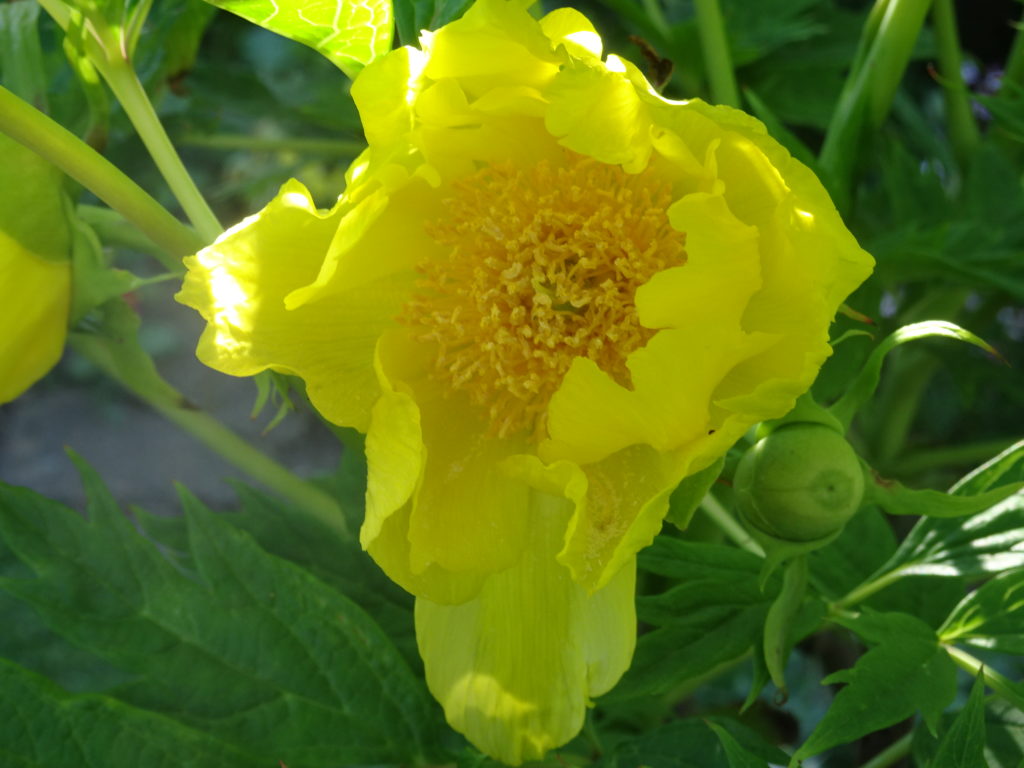
The Americans crossed P.lutea (above) and P. delavayi with Japanese hybrids to produce some of the vibrant colours now available. The flowers have a short but colourful life! The shrubs are far more long lived.

Tree peonies have long featured in oriental watercolour paintings. by Zou Yigui (1686–1772). Some of the varieties, like ‘Yao’s Yellow’ and ‘Wei’s Purple’ are  depicted in a series of paintings  mentioned in the Record of the Tree Peonies of Luoyang  Ouyang xiu (1007-1072 CE).


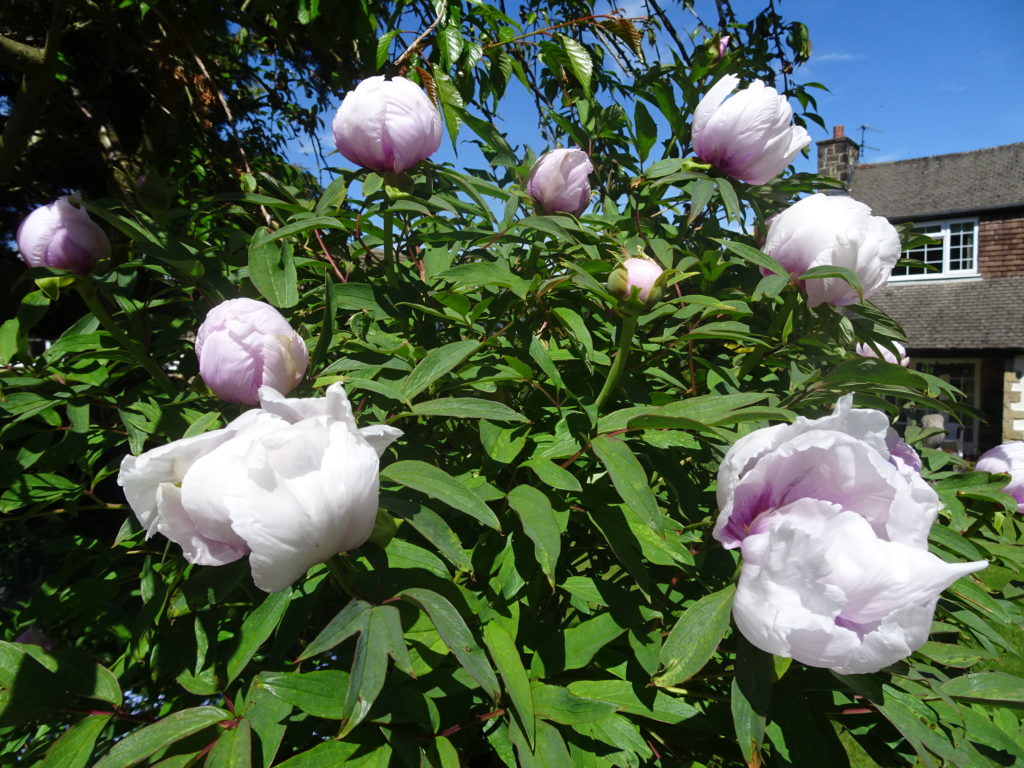
Imagine the splendid sight when all the buds open.


A Garden by any Other Name

A Garden by any Other Name

Naming of Garden Areas

Previously I have stuck to traditional names for bits of my garden. Veg plot, rockery, orchard (when I feel posh), rose bed, border, hedge and similar names have delineate what and where I was trying to grow.

Then I  launched some new names including the Den Den for a mixture of lolly pop like Primula denticulata .  This naming obsession started some years ago with the ‘Stumpery’ when I couldn’t dig out and dispose of the whole of a conifer root.

‘Alpine Land’ speaks for itself and reflects the time I was a keen member of the AGS. I collected lots of rocks and build slopes and appropriate habitats. Perhaps it deserves a better name.

The Pinkery has many dianthus and Japan Land has more statues and hard landscape and deserves more space.

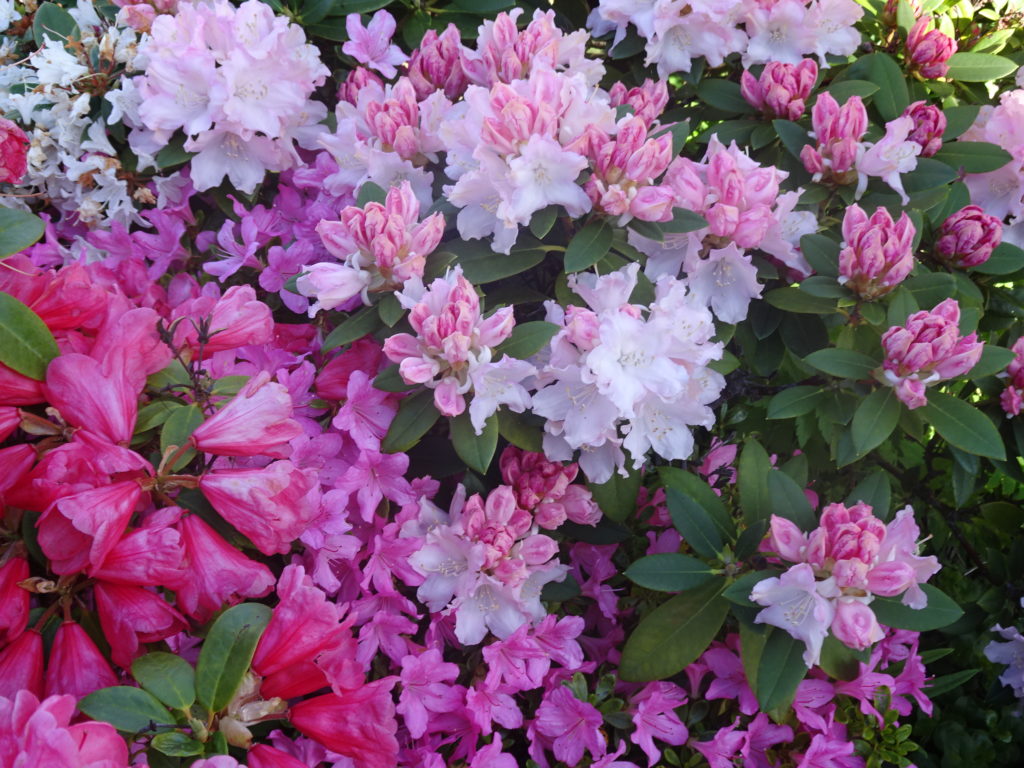
My favourite bed is Rhodo Road which will come into its own as spring develops. There are currently 3 early white bloomers that have eluded the frost.

Mole Mound contains some plastic moles or heads thereof, a big pile of dumped top soil which turned out to be subsoil and some shrubs.

The whole plot is named Fairfaxery Gardens after the street where it edges the roadside. I do not grow any more successfully but ……..they say give a dog a bad name but the garden may not be perfect but it isn’t a dog.

Best Tips for Outdoor Containers

Best Tips for Outdoor Containers

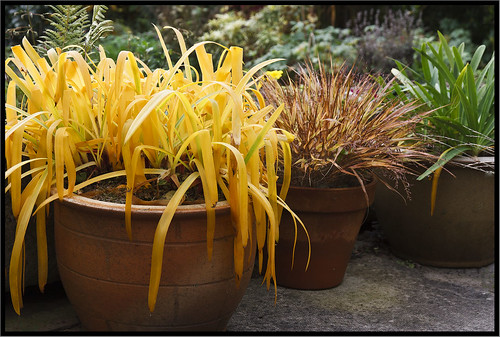
A mantra from my gardening experience is that ‘A good big one will beat a good small one’ and this applies to containers growing plants outdoors. Big containers offer more control over watering and feeding, they bring plants closer to your senses and can be architectural in their own right. In a plant poll they also opted for a big one over a small one!

Instant Tips

  • Think about the plant roots. Roses grow long deep roots needing deep pots, other plants take moisture and food from surface or shallow roots.
  • Think about the plant leaves. Fleshy leafy growth will need more water as they transpire.
  • Globular pots are popular but very hard to empty when repotting as the neck is narrower than the circumference.
  • Use matching saucers so you can also water from underneath. It can be hard to get enough water in from the top.

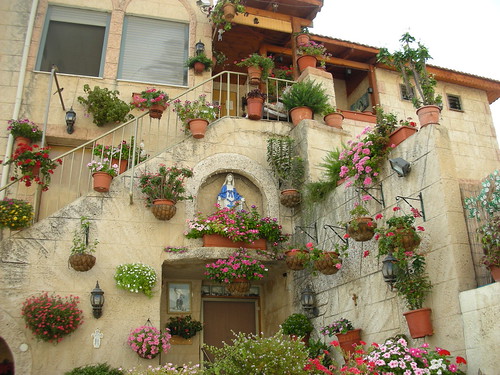
3 PLANT POTS

Use Heavy Containers

  • ‘A good big one will beat a good small one’ and this applies to most containers. When full of loam based compost a big container will be heavy.
  • You do not want containers to fall over, plants get damaged and grow at funny angles striving for light.
  • Do not let containers become top heavy or too light through lack of watering.
  • Thin walled containers gain and loose heat rapidly. Thicker containers keep roots at a more even temperature.
  • Choose heavy terracotta or reconstituted stone over plastic. If you must use a light container put rocks in the bottom.
  • You can get special casters to wheel your container around the garden. This can be useful to seek out the sun.

Planting Outdoor Containers

  • Decide which is your star plant and put it in place first, slightly off centre. Infill planting densely for a quick result, containers should be about show.
  • Aim for plants that add about 50% in height. Tall thin plants will dwarf the container and may make it unsteady.
  • Think of using a ‘shock and awe’ plant to grab attention.
  • Bury some plants in smaller pots that you can replace with fresher plants.
  • Use some trailing plants to break the edge of the container and make a link with the ground.
  • Plan a colour scheme green and gold foliage looks warm, silver foliage is cold. Spot plants with pink or purple flowers can add sparkle to a white combination.

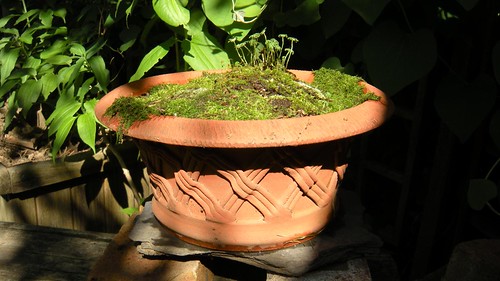
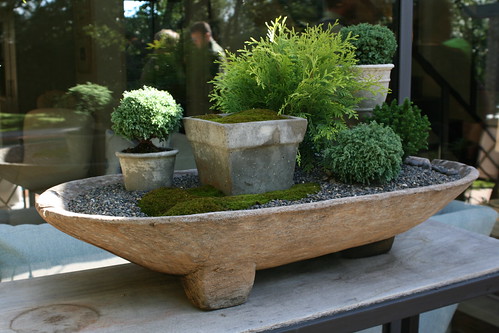
Moss Garden

Quick Tips for Containers

  • Use slow release fertiliser mixed with loam based compost if you are using longer term plants as opposed to annuals.
  • Provide good drainage and stand containers on pot feet so water can drain away.
  • Terracotta containers were used by ancient Greeks 2500 years ago so they are a well proven method of gardening.
  • Experiment with shapes and sizes of container. Make container gardening fun.
  • Get further inspiration for a book on Container Gardening from amazon.

Book Cover

Outdoor Containers for Special Purposes

  • You can grow ‘Crops in Pots: 50 Great Container Projects Using Vegetables, Fruit and Herbs.’ by Bob Purnell
  • Old sinks are often used for alpine and small plants.
  • Bonsai need to grow outdoors in natural conditions. Some beautiful containers are available
  • Quick growing salad crops can be grown in containers to avoid slugs.

Unique container at Bolen residence

Photo Credits
3 PLANT POTS by KTDEE….popping in and out CC BY-NC-ND 2.0
Moss Garden by Flatbush Gardener CC BY-NC-ND 2.0
Unique container at Bolen residence by Gardening in a Minute CC BY-NC 2.0
Potted Plants by Yoav Lerman CC BY-NC-SA 2.0

Potted PlantsSlightly Potty? Needs some potty training?

Bamboo Care and Maintenance

Bamboo Care and Maintenance

Lawns are cut regularly to encourage side shoots, prevent flowers and to keep the grass tidy. Some attention should also be given to other grasses and bamboos to encourage production of fresher growth at the beginning of the growing season.

bamboo ice

Pruning Bamboo

  • All bamboos look better when scruffy, broken or damaged shoots are removed.
  • Thin out dense thickets to create space for the flexing stems of new shoots.
  • Cut out old canes with sharp loppers or a pruning saw flush to the ground.
  • Thin out other shoots to create a balanced, airy clump.
  • Prune above a node to prevent die back.
  • Weak side shoots and branches often look unattractive and a judicious pruning improves appearance.

Bamboo Care

  • The best time to thin and prune is late spring just before new culms emerge.
  • Don’t be afraid to remove 30% of the culms leaving the freshest one-two year olds.
  • For more growth from dwarf bamboos cut down to soil level in early spring and treat like a hardy perennial to get fresh clean foliage.
  • Instead of under planting you can decorate with stones or round pebbles.
  • Some bamboos are invasive and the tough, springy roots need to be removed or root pruned annually. Plant a barrier at least 18 inches deep around invasive types.
  • Bamboo can be turned into Topiary as the leaves grow more abundantly after pruning and the culm won’t grow
  • Bamboos need to be replaced every 10-15 years
  • Water plants in late spring during a dry spell to help new shoots to develop.

Bamboo

Bamboo in Pots

  • Potted bamboos should never be allowed to dry out even in winter.
  • Because bamboo is tall, it may be susceptible to being blown over so weight the pot accordingly.
  • Bamboos make good subjects for growing in pots. I use terracotta pots as the colour seems to go well with the green leaves.
  • Pots restrict the root run of the plants and they should be trimmed every year.
  • Arundinaria viridistriata ‘Pleioblastus’ or Phyllostachys nigra ‘Black Bambo’o are decorative dwarf bamboos suitable for pot culture.
  • Feed with a high nitrogen feed as bamboos are hungry plants and you are their only source of nourishment.

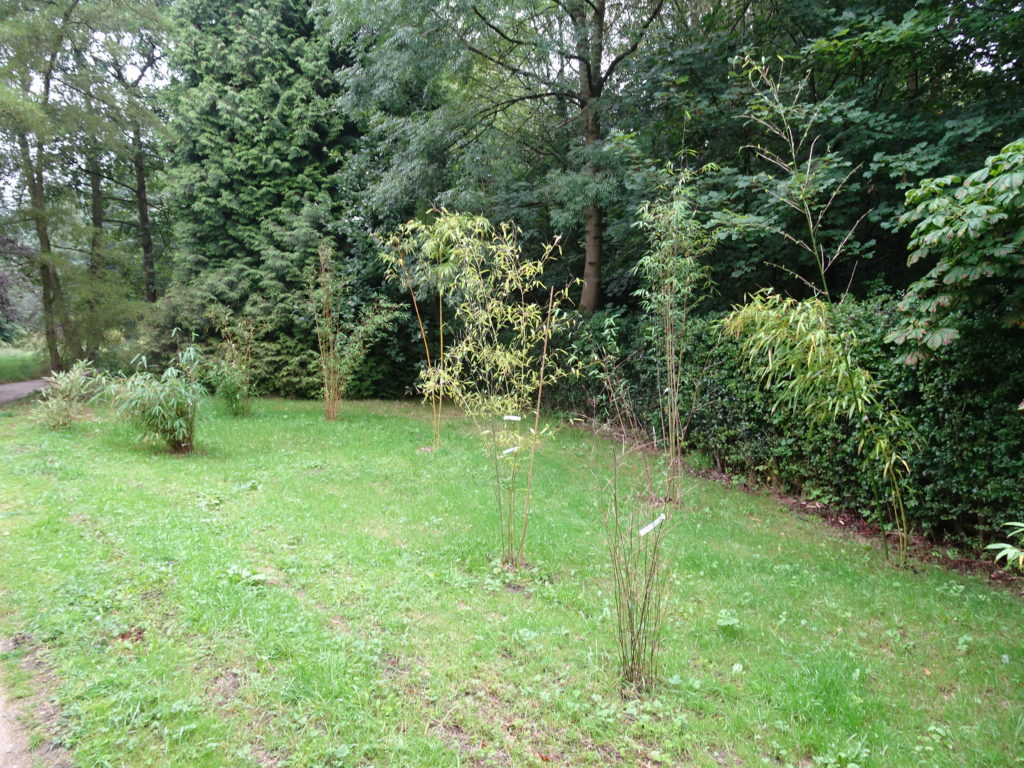
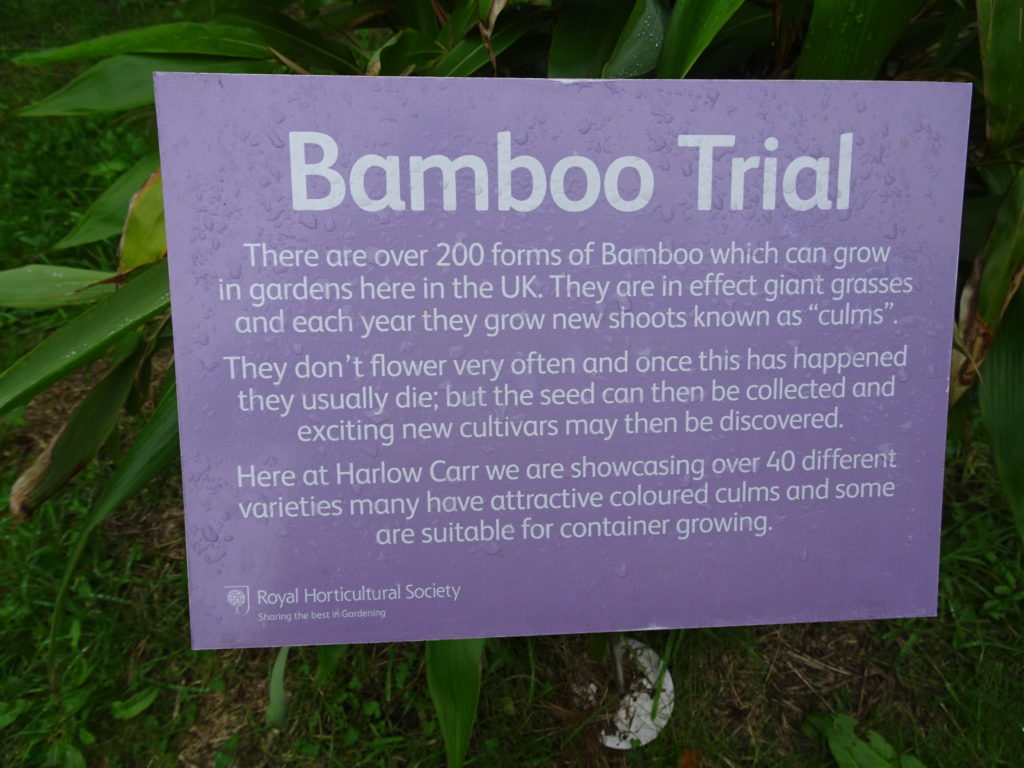
New Bamboo Boulevard at RHS Harlow Carr
New and Urban Hedge Rows

New and Urban Hedge Rows

Hedge your bets and start a hedge fund and do not hedge around!

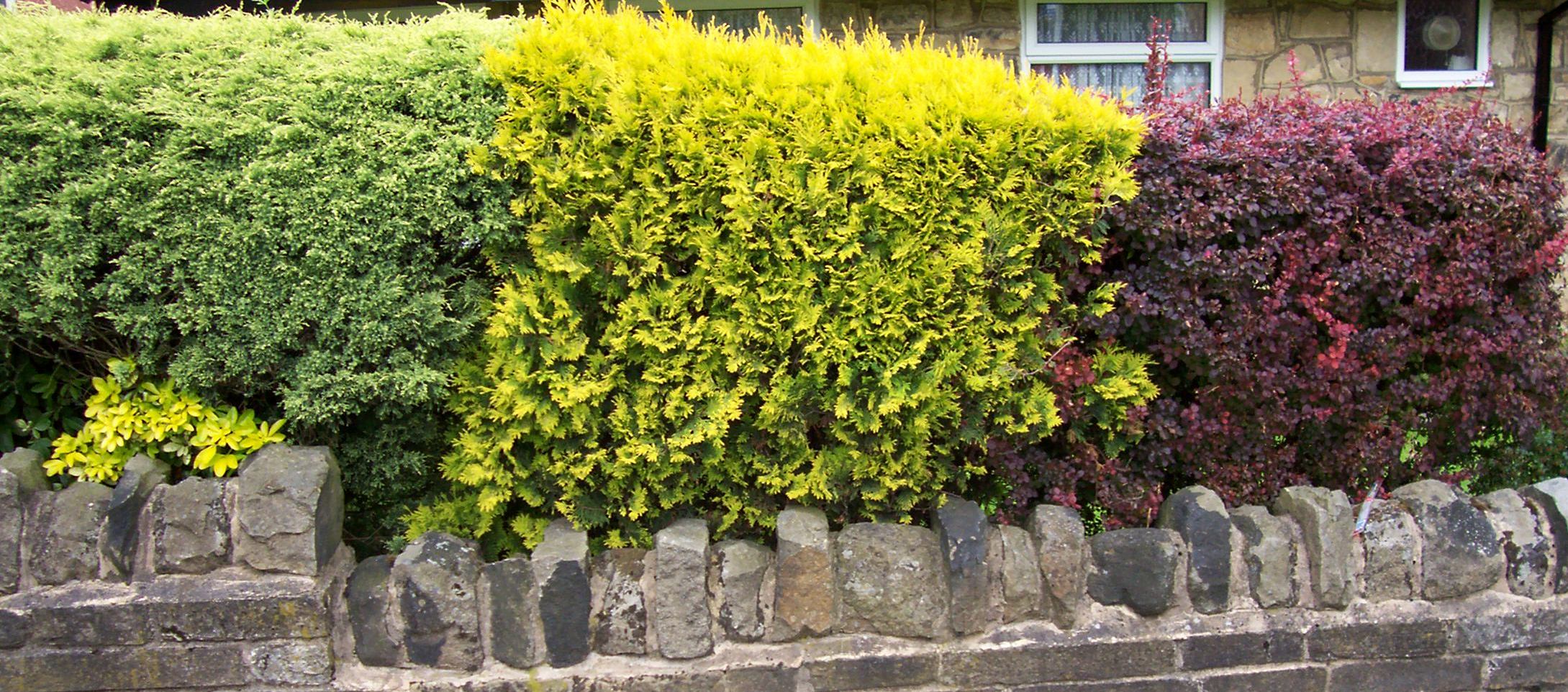
This isn’t my favourite hedge spotted on a walk to Menston railway station but it hints at what can be achieved. I would now opt for a fruitful hedge to feed me and the birds.

  • The blending of green, grey and red foliage has produced a singular hedge.
  • Mixed colours work best if kept formal, neat and tidy
  • Do not allow one type of plant dominate another, these all seem to be in proportion but vigorous growers will need more trimming
  • Different shaped foliage could also be blended in a mixed hedge
  • The stone wall provides some relief from the base of the hedge
  • Train lower branches into gaps. remove extraneous plants like the Choysia on the left

How to Plant A Hedge

  • Plant a bare root hedge in winter between November and March.
  • Buy 2 0r 3 year old plants in bundles. If you can’t plant them at once heel them into a trench.
  • Protect plants with a plastic bag whilst they are out of the ground.
  • Clear the ground of perennial weeds and keep it clear by hoeing.
  • Dig a trench 18″ wide for a single row of plants. Loosen the soil at the bottom of the trench and add slow release fertiliser like bone meal.
  • It isn’t necessary to add organic matter except perhaps as a mulch after planting.
  • Sprinkle any fungi treatment directly onto the bare roots before planting.
  • Water the hedge for the first year but then leave it to it’s own devices.
Old Adverts How Are You Doing My Old Fruit?

Old Adverts How Are You Doing My Old Fruit?

It is interesting to see how gardening adverts have changed with the horticultural industry and modern developments. Yet a top fruit business has in some ways stayed the same.

We are all pleased to see Ken Muir’s specialist fruit business is still on the go although Ken himself died in 2011 at the age of 85. This advert in The Garden October 1976 was placed when his mail order business was 10 years old. Ken Muir was famous for starting the Pick Your Own trend and supplying strawberries to Marks And Spencer. Unfortunately I can find no trace of Oldfield Nurseries – they claim an admiral slogan that we can take to heart  ‘We are NOT a garden Center -  We grow what we sell.’ Is it another case of use it or loose it?

Are weather vanes as popular now as they were? We get modern weather forecasts via all sorts of media but gardeners need to understand local conditions and what impacts on their own micro climates so there is a place for wind vanes.

Landsman bookshops suffered the fate of other specialist bookshops when information became a cheap commodity on the internet. This coincided with a drop in the number of students studying horticulture and farming. They lasted another 32 years after this advert  running a mobile bookshop which visited major agricultural and horticultural shows but then liquidation followed.

Andrews Lawn Edgers LTD  are not ‘ALE and hearty’ either! The Vintage Horticultural and Garden  Machinery Club reports ALE ‘sold many items including the Spintrim lawn edger, Billy Goat vacuum, Bluebird scarifier and the Cyclone spreader’ they have the adverts to proove it. I like the thought of Jenny the generator for the garden.