Browsed by
Author: hortoris

Cultivating Japanese Maples -Acer

Cultivating Japanese Maples -Acer

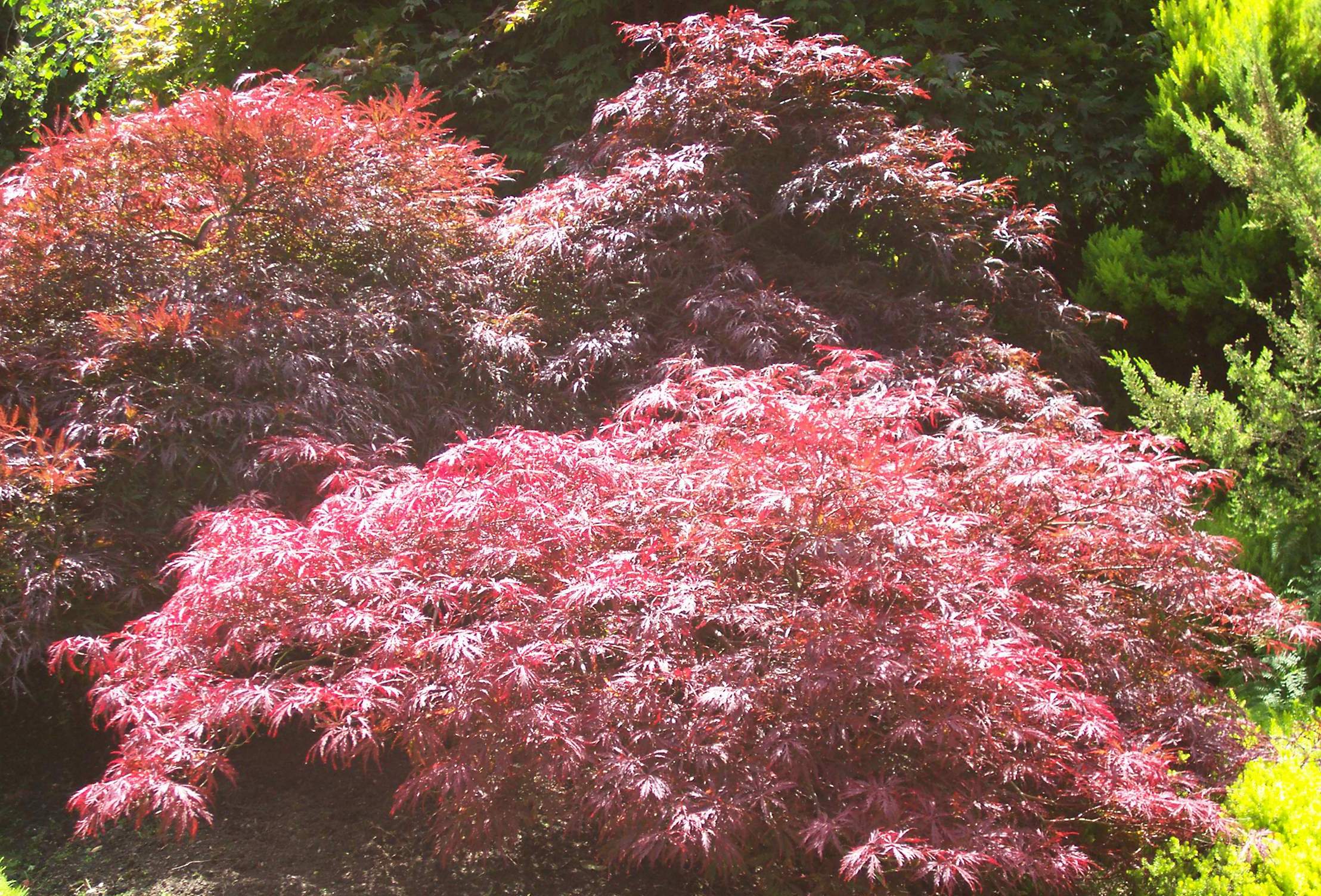
Acer palmatum dissectum atropurpureum

  • Acer is the genus for a range of trees that includes the Sycamore and some of the loveliest foliage trees for your garden.
  • palmatum the species name refers to the hand shaped leaves
  • dissectum or variety name reflects how the feathery leaves are finely separated and deeply cut or fringed
  • atropurpureum is the colour of deep purple leaves that turn bright red in autumn
  • Japanese Maple is a generic name for a range of Acers which have this semblance of age and dignity even when the trees are small and relatively young.

Hints on Cultivation

Read More Read More

Cedar of Lebanon – Root and Branch Review

Cedar of Lebanon – Root and Branch Review

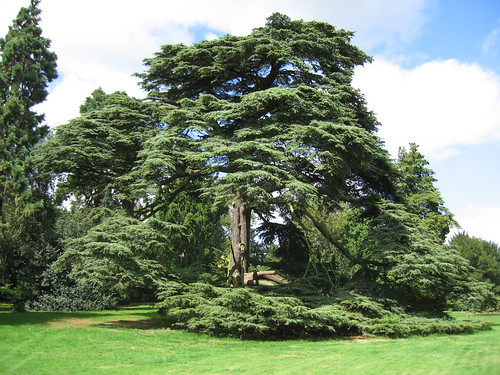
Cedar of Lebanon, wilton House
Cedar of Lebanon

In the eighteenth century Cedar of Lebanon became the fashionable tree to plant in gardens and estates of stately homes.

Key Features of the Cedar of Lebanon

  • Latin name – Cedrus libani
  • Height – up to 130 feet wide spreading – slow growing & long lived
  • Type of tree – evergreen conifer
  • Leaves – Grey-blue to dark green needles growing in whorls on side shoots and singly on main shoots.
  • Flowers – Male yellow-brown, female larger, (6″) bright green with purple tinge
  • Fruit – Erect barrel shaped cones of grey-green turning to purpleish brown
  • Bark – Red-browns with shallow fissures
  • Family – Pinacea

Origins and Distribution of the Cedar of Lebanon

  • Natural habitat Syria, Tarsus mountains and Mount Lebanon.
  • Examples of the tree are mentioned in several books of the bible.

Uses and Attributes of the Cedar of Lebanon

  • Used by the Egyptians and Phonecians for building ships.
  • The tree is the national symbol of Lebanon and features on the national flag.
  • Cedar wood is a beautiful color and is used in cladding due to it’s hardness, exquisite fragrance and resistance to insects

Gardeners Tips for the Cedar of Lebanon

  • During the first 30-50 years of it’s life the Cedar of Lebanon grows in a conical shape. It then starts to develop the magestic and distinctive levels like plates of foliage.
  • One theory is that the branch shape is determined by heavy mountain snow that weighs the branches down.
  • Cedrus libani Sargentii has a short trunk weeping branches and is ideal for the rock garden.

Cedar of Lebanon, Warwick Castle Grounds

Other types of Cedar of Lebanon

  • Cedrus libani subsp. libani – grows in Lebanon, Palestine, Israel, northwest Jordan, western Syria, and south central Turkey.
  • Turkish cedar or Taurus cedar Cedrus libani subsp. stenocoma is from Turkey.
  • Look out for the slow growing Golden Dwarf Cedrus libani Aurea Prostrata

Cedar of Lebanon comments from elsewhere

  • ‘The Forest of the Cedars of God’ is a World Heritage Site of old Cedrus libani.
  • Throughout history, cedar wood, and such byproducts as cedar oil, have proven to be worth far more money than living trees, however beautiful they were. At the time of Gilgamesh, Egypt has already cut (without replanting) large amounts of cedar for ship construction and for export. They continued the same tradition. Cedar cutting prevailed under various administrations, up through the time of the Ottomans. They finished off most of the remaining forests by using cedar wood as fuel for railway engines. They generally bypassed more easily obtainable oak wood, since cedar (because of its oil content) burned much better. The presently remaining cedar groves were spared mainly because their regions were relatively difficult to reach. Cedrus Libani has been famous in Lebanon since early written history. read more on Cedar of Lebanon info site

Credits
Cedar of Lebanon, wilton House by 1967geezer CC BY-NC-SA 2.0
Cedar of Lebanon, Warwick Castle Grounds by MichelleWalz CC BY 2.0

Trees Our Root and Branch Review

Trees Our Root and Branch Review

The British have a fascination with trees be they humble or ‘Remarkable’,’Ancient’ or saplings, ‘Great’ or just plain good.

Book Cover
I have collected facts on a dozen tree species to discuss over the next couple of days. I have tried to stick to a set format and apologise if I have missed your own personal favourite.

Book Cover
The book covers are just a small selection of books on the topic of Trees. As always you can buy them from Amazon by clicking on the cover.

Read More Read More

Snapdragons aka Antirrhinum majus

Snapdragons aka Antirrhinum majus

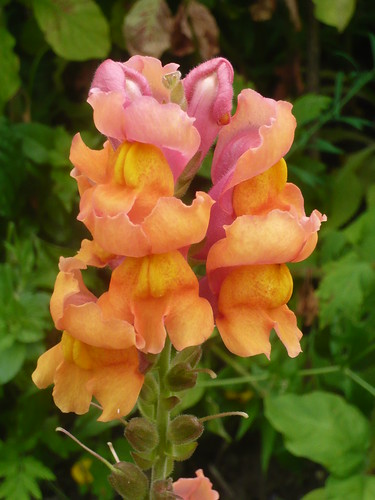
Antirrhinum

Snapdragons or better known as Antirrhinum are an easy flower to grow and they provide lots of colour with a distinctive scent. Good F1 plants can grow more than 2′ tall and if pinched out they bush out quite well.
Available in a wide range of colours I try and grow the same colours together to enhance the effect.

Where to Grow Snapdragons

These plants are good border flowers and can be planted in blocks, lines or singly.
Snapdragons do not need special soil conditions but flower best in sunshine.
Smaller varieties can be grown in containers.

How to Grow Snapdragons

I plant plug plants from the end of April to get quick flowers.
For raising Antirrhinums from seed read these tips
Pinch out the tallest growing shoot when it is about 3″ tall to encourage branching and thus more flowers.
Feed with a tomato fertilizer if you want extra blooms.
Water early in the day, plants should not be left wet overnight – distorted growth can result.

Snapdragons as Cut Flowers

Read More Read More

Spring Cleaning Your Garden

Spring Cleaning Your Garden

It may be boring but what better way to set off your garden than by getting everything neat, tidy, sorted,  spick and span. A tidy area will draw attention to the garden and plants not the bits that are out of place, dirty or untidy.  Here are my top ten tips.

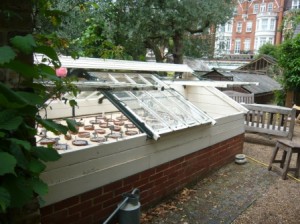
London 7.10 057

Top Ten Tips to Spruce up Your Garden

  1. Clean your paths, pavings and slabs. Make them look bright and new with a pressure washer or scrub them with Swarfega Path and Patio cleaner or equivalent. If stepping stones have sunk below soil height raise them so soil isn’t easily washed on to them. Clean glass in cold frames and greenhouses.
  2. Remove any weeds growing in cracks and give all hard surfaces a good brush.
  3. Trim the edges of Lawns, it is one of the most effective face lifts for the green parts of your garden.
  4. Stain or repaint any wood decking, furniture of visible structures. You can go as far as spray painting support canes for your runner beans though hopefully they will grow and cover them very quickly.
  5. Keep empty or non-flowering pots and containers away from important areas until they are at there best. Then move them into position for the duration. Pots need to be clean to look good.

    Read More Read More

Carnations Explanation of Types

Carnations Explanation of Types

Carnation

When is a pink Carnation not a Carnation? When it is a Pink. Confused, well so was I and I am not sure this will clear it up.

All Pinks and Carnations are members of the Dianthus genus that encompasses 400 + species and cultivars ( including Sweet Williams).

Types of Carnation

  • Border Carnations have one central shoot with a number of side shoots. Side shoots can be pinched out but the plant should never be stopped or the seasons flower will be lost.
  • Dis-budding will encourage longer stems on the main shoot for exhibitions.
  • These Carnations need a winter rest and a little late frost to check growth.Border Carnations are also know as Florist Carnations and are use in buttonholes.

Perpetual flowering carnation

Annual Carnations

  • Also called marguerite or Chabaud carnations are half-hardy perennials but treated as annuals.
  • Blooming the same year as the seed is sown, the flowers are thought by many to be inferior to other Carnations.
  • Exhibition classifications are based on markings, Selfs, (one colour) Fancies (with a coloured ground)and Picotees (white ground with a colour band around the petal.
  • Many are grown in a cool greenhouse to control watering.
Dianthus

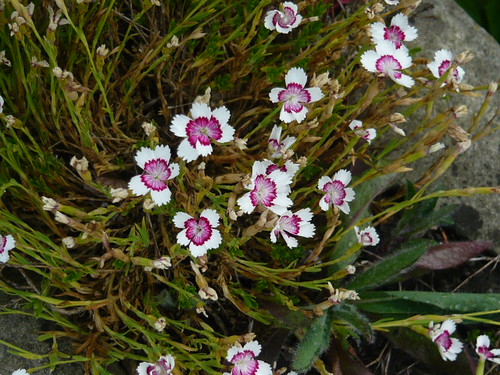
Types of Pinks

  • It is possible that Pinks, which have been so called for centuries, gave there name to the colour and not vice versus.
  • Older types, like border carnations, throw up a central stem which flowers. Side shoots will flower in following years
  • Modern Pinks derive from Dianthus plumarius and are scented.
  • Dianthus allwoodii will flower several times per season but not as well as a perpetual Carnation.
  • Single and double pinks are grown.
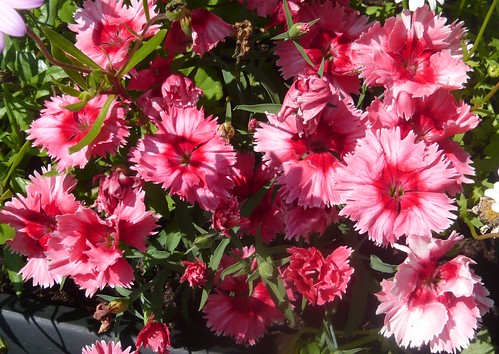
  • Indian Pinks are hardy hybrids flowering on 8″ high plants
Indian Pink

For more information on:

Growing Pinks with links to the National Society read.

Perpetual Carnations from Cuttings read

Close relatives – Sweet Williams read

Pinks for Cottage Gardens read

Seeds and plants are available from Thompson Morgan

Pinks as perfect perennials on Gardeners tips
Grow Early New Potatoes

Grow Early New Potatoes

potato

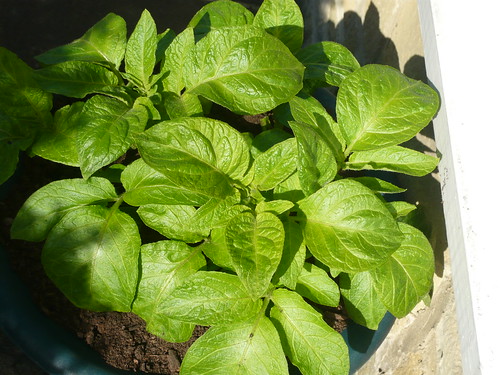
Quick Tips on Growing Early Potatoes

  • Aim for crops of new potatoes to lift  in May-July from ‘first early’ varieties Rocket, Arran Pilot, Duke of York, Pentland Javelin, Rocket, Winston and/or Lady Christl. they will be ready in 10-12 weeks.
  • Buy small tubers (size isn’t so important) of seed potato from your garden centre or mail order
  • Encourage sprouting,  ‘chitting’, by placing the potatoes in a cool light place with the bud eyes facing upwards. For a small number you can stand them in old egg boxes. You are aiming to get short, strong shoots at the rose end. If there are too many shoots I rub off some of the surplus to channel energy.
  • A bit of warmth or at least a sheltered spot will bring them on. Avoid frost and cold as they grow.

Read More Read More

Flowering Quince Japonica – Cydonia – Chaenomeles

Flowering Quince Japonica – Cydonia – Chaenomeles

quince flower

Compact, early flowering shrubs with jam making potential from fruit in autumn make these plants well worth cultivating.
As I think you can now imagine Chaenomeles make good and often under utilised shrubs and small trees in the garden  landscape. Varieties vary from 3 feet to 12 feet in height. I grew my plants from seed supplied by the Royal Horticultural Society in the annual seed distribution.

Growing Tips for Quince

Ornamental Quince also known as Cydonia are shade tolerant. For hedging the thorns make for a good security feature.
Shrubs may look a bit scruffy but are great when trained on a wall.
Against walls they should be spur-pruned like apple varieties to produce a heavier crop of flowers and fruit. In other formal situations, it should be treated as any other early-flowering shrub and pruned directly after flowering to encourage new growth on which to flower the following year. They only need light pruning.
The fruit of the common quince, Cydonia oblonga Vranja, has the best flavour for cooking.

Read More Read More

Sensory and Senses Gardens

Sensory and Senses Gardens

All gardens pamper to our senses to a greater or lesser extent. Add features and plants to stimulate sepecific senses   and you will create a sensory and potentially therapeutic garden.

Book CoverMovement and Sound

  • The sound of wind or even a slight breeze can stimulate our aural senses.
  • Grasses are very useful in this situation as the leaves, stems or flowers can rustle together and also make shapes and movement.
  • On a hot summer day pollinating insects may buzz around your flowers.
  • Running water is ever popular in most sensory gardens but take care on behalf of young children.
  • Hard landscaping and path materials should be chosen with sound in mind. Gravel can be nice and crunchy whilst cobbled paths may echo from shoes and boots.


Book CoverScent and Smell

Read More Read More