Browsed by
Author: hortoris

Plant Labels, Minefield or Mine of Information

Plant Labels, Minefield or Mine of Information

This garden centre label is colourful and was surprisingly close in colour to the plant it was selling.

Beware of faded and cracked labels as this is a sign of UV deterioration and the plant will have been with the label for far too long.

Labels should be Informative

  • Labels should show the name of the plant in botanic terms (in this case Rhododendron)  and the variety in this case ‘Golden Eagle’. It often has the common name crucially missing in this case as it is a Knapp Hill Azalea.
  • Planting Instructions are usually fairly generic, in this case it mentions acid or ericaceous soil.
  • Cultural instructions include positioning, watering, feeding and where necessary pruning guidelines should be helpful.
  • A plant description giving height and spread in inches or cm, time of flowering, habit etc. Missing in this case as unlike most rhododendrons this is deciduous not evergreen.
  • It is a growing trend to include the growers details particularly where they want to impose some rights like Plant Beeders Rights

Keeping Labels

  • As far as I know there is no hobby of collecting plant labels like match boxes.
  • I keep my labels to remind me what I planted but do not put labels in the garden. May be I should reconsider as I forget more than I remember except where the Rosemary is planted!
  • Labels sometimes include the price and that amazes me years later when I think what I spent. The pre printed white tags are good for this.
  • Cut off the white tyvek tags and any bits of elastic without damaging the plant.

See more pictures of Golden Eagle

Read more about Labels Markers and Tags

Growing Carnivorous and Insectivorous Plants

Growing Carnivorous and Insectivorous Plants

Carnivorous plants are not as hard to grow as you might imagine. There are several ways you can grow interesting displays of these consuming plants. If you want to grow Pitcher plants similar to those above read Easy Carnivorous Pitcher Plants.

Tips for Growing and Displaying

  • The top Gardeners tip for these plants is to supply plenty of rainwater. Tap water contains too many chemicals.
  • The cold greenhouse display below incorporates a stream supplied by a small garden pump and recycling filter.
  • The water helps the insects, that the plant will consume, to breed.
  • You can grow your plants in a half barrel, large terracotta pot or an old rubber trug.
  • Buy hardy varieties from a specialist nursery. Badly treated plants seldom recover.
  • Discourage flowering for a couple of season to build up the plants strength.

Read More Read More

Fantastic Fruiting Fungus

Fantastic Fruiting Fungus

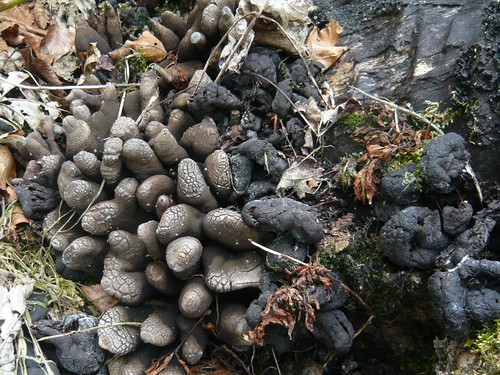
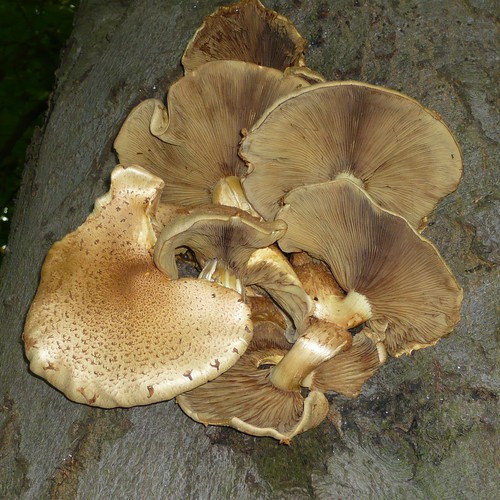
The mushroom we see is the fruiting part of a fungus that distributes the spores of the fungus for its own reproduction.

Fungus Facts

  • Most fungi are small microorganisms that live in soil, on dead matter, or as a symbiont of plants or animals.
  • Fungi perform an essential role in the decomposition of organic matter and have fundamental roles in recycling nutrients.
  • The study of fungi is known as mycology, which is often regarded as a branch of botany
  • Yeasts and moulds are forms of fungi but slimes are not.
  • The Kingdom Fungi has been estimated to include approximately 1.5 million species, most of which have not been classified.

Read More Read More

Actaea simplex autopurpurea

Actaea simplex autopurpurea

Bug bane of a gardeners life? No Bugbane is just another name for Actaea. Part of the Atropurpurea Group this variety was on show at Harlow Carr and is probably ‘Hillside Black Beauty’. The White Allium flowers set off the dark foliage.

Growing Actaea Simplex

  • Plants are accommodating but do not like thin alkaline soil.
  • Support using stakes before the flowers appear as they can reach 6 feet tall.
  • Cut spent flowers down to the ground in spring.
  • Lift and divide congested colonies in late autumn or early spring.
  • The fruit are noxious to creatures large and small.
  • Part of the Buttercup family they are generally tall, with great spikes of white flowers in autumn.


Actaea Varieties

  • Other varieties include Actaea matsumurae ‘White Pearl’ and Actaea simplex ‘Black Negligee’ both also called bugbane.
  • Actaea simplex ‘Brunette’ AGM with fabulous dark brown leaves.
  • Actaea Pink Spike is a clump-forming perennial with purple-brown foliage and arching stems of fragrant, pink, flowers.
  • Actaea simplex Pritchard’s Giant has large spikes of tiny white flowers and yellow seedheads
Green Vista From Combining Plants

Green Vista From Combining Plants

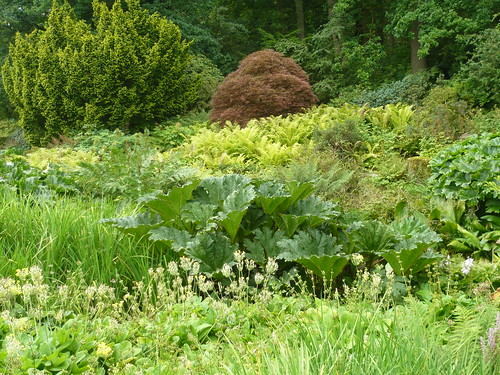
Your garden will have viewing points from which you can see a vista. This green vista has scale and impact but you can create your own combination with just a few well chosen plants.

Plants in this Display

  • The woods form a back drop to this view and include some old Rhododendrons and various deciduous trees.
  • Drawing the eye to the centre is an Acer palmatum with purple-green leaves and a strong geometric shape.
  • To the left is a lime green conifer that could be Taxus baccata an upright Yew.
  • Immediately in front of the Acer are a collection of acid loving acid yellow Ferns.
  • The strong leaf shape of the Rheums are in the fore ground.
  • At the front are flowered Primulas of the Candelabra variety and a collection of grass like Iris.
  • Other plants fill up the space so that in the middle of August there is no bare soil showing.

Selecting Your Vista

  • For your backdrop use trees or shrubs to screen out ugly areas.
  • Vary the shapes of trees, shrubs and plants.
  • Green has more shades than any other colour from bottle green to lime, blue-green and purple-green to yellow-green and so on. This provides opportunity to select contrasting or complementary shades.
  • Shape and texture can play an important part in providing the eye with something to consider after the initial view has been taken into account.
  • Construct your layout like an artwork. Split the view into thirds vertically and horizontally and aim for interest at the intersections.
  • Circular and triangular impressions work well be keeping the eye moving but holding it on the main view.


Rheums are not just Rhubarb
link

Overwintering Fuchsias

Overwintering Fuchsias

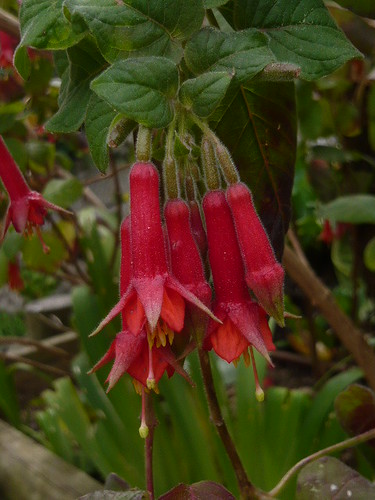
Fuchsia splendens

Overwintering as the name suggests is the treatment of a fuchsia to protect it during winter so that it will survive to perform again next year. All Fuchsias can be overwintered as cuttings and I recommend that as a belt and braces approach.

Overwintering Hardy Fuchias.

  • Hardy cultivars are bred and grown to survive British winters and do well particularly in the south. Fuchsia magellanica ‘Gracilis’, Happy, Lady Thumb, C J Howlett, Graf Witte, Lena, Margaret and Thompsonii are hardy varieties with an AGM.
  • The micro climate for a Fuchsia can help it survive. If grown in full sun the wood will ripen to a firm brown twig that resists freezing. Well drained soil prevents water logging.
  • Plant deeply, at least 4″, so that buds below the soil are protected.
  • I cut back the soft growth in October and cover the root and shoot area with bracken or peat substitute.
  • In spring I prune down to just one or two buds at the base to encourage new growth.

Overwintering Decorative Fuchsias

  • Unless your fuchsia is known to be hardy it is safer to assume it is not and treat it accordingly.
  • Take semi-ripe hardwood cuttings before frost in October and keep in a frost free room to root over winter.
  • The whole plant can be overwintered for several years by making it dormant from October. Stop watering, harden the wood outdoors in the sunshine where possible.
  • Put the plant in a cool, dry frost free place. If it starts shooting it is too warm.
  • Water thoroughly with tepid water only when the root ball becomes totally dry.

Restarting Overwintered Fuchsias

  • Hardy Outdoor varieties will start themselves. Pull off the bracken leaves after the danger of frost has passed.
  • In spring bring out the pot plants and prune back to one or two buds per shoot. Cut out crossing branches and make the plant open.
  • Repot in fresh compost.
  • Place in the light and warmth and syringe the branches. Do not over-water, wait until shoots are growing strongly before any feeding.
  • Stop the plants to get bigger flower heads. Beware overwintered plants can start to loose the size of flower after several seasons.

See also Fuchsia Pink Fantasia on Gardeners tips

Runner Bean Organic Feast

Runner Bean Organic Feast

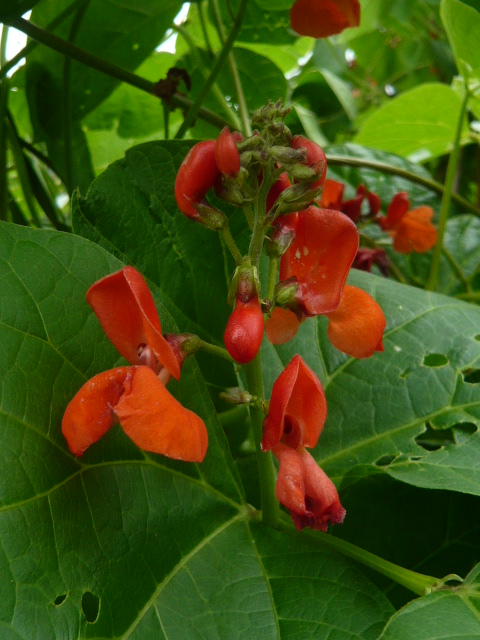
The early insect damage on my runner bean leaves (above) has not damaged the crop of beans. Cool evenings and warm sunny days with adequate rain, has helped produce a bumper crop of tender beans.

Tips For Runner Bean Next Year

  • Add plenty of rotted compost this winter to increase the moisture holding ability of your soil.
  • Grow in a sunny spot sheltered from strong winds.
  • Stake to at least 6′ high in a wigwam or A frame shape. I used old canes and they snapped in the wind so beware false economy.
  • Plant more than one variety (I also planted heritage Painted Lady for the bi-coloured flowers).
  • Runners need pollination by insects and this is helped when the air is a bit damp. If the weather is very dry, spray your plants with plain water.
  • For organic veg I put up with some leaf damage rather than use chemicals

For more tips on Growing Scarlet Emperor

Saving Bean Seeds

  • When the beans start to fill out the pod and go starchy the seed is ready for saving for next years crop.
  • Let the pod dry out then keep the seed cool and dry for next year.
  • Save enough to give some seed to neighbors.
  • A good big one will beat a good small one so select prime seeds to save.
  • Even runts will probably grow OK but damage seed should not be kept.
Autumn Insect Feed

Autumn Insect Feed

Sedum

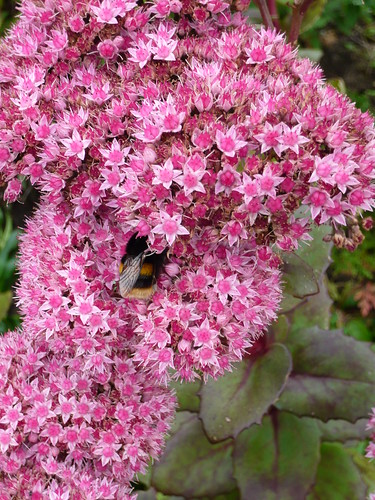
The Sedum or Ice Plants are providing a treat for the bees and insects in the garden this September. Many other plants have ‘gone over’ quite early this year so these Sedum blossoms will be quite welcome as a pre-winter energy booster.

Autumn Insect Food

  • Late Rose flowers seem especially well scented at the moment and this will also be attracting nectar feeding insects.
  • I have left a couple of rotting apples on the ground and of course the slugs are now getting free reign on the Hostas.
  • This morning I spread an old compost heap on a plot that I am renovating. The bio-activity and insects have done a great job breaking down the garden waste but there are still bits for the insects to keep feeding on as they work their way back into the garden soil. If you think about the waste products produced by insects no wonder the compost is rich in food – they provide the P in NPK!
  • My sprouts have been decimated by butterfly caterpillars
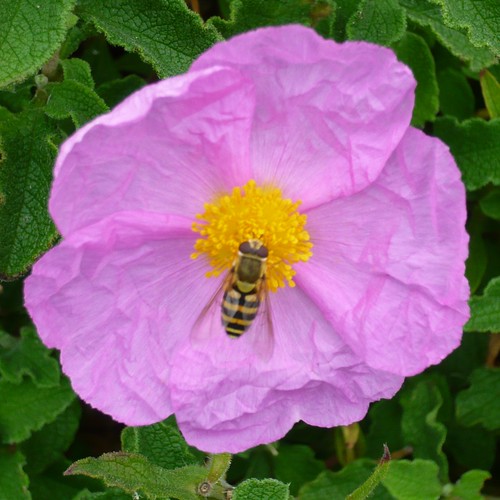
  • Some plants are having a final burst of individual flowers like the Cistus below.

Wentworth Castle 069

Winterproofing your Garden

Winterproofing your Garden

Summer is over and we had the first Autumn frost last night 26th September. It was only a light frost and we have some cloud cover for the next few nights so it won’t be as cold tonight. Still I set-too to protect some plants.

Winter Plant Protection

  • Tender plants can be protected in a frost free environment. Conservatory plants left out for some summer sunshine should be brought back inside. This is true of Citrus fruit trees and Pelagoniums.
  • Insulate your greenhouse with bubblewrap and install a heater for really cold nights. Aim for a minimum temperature of 37°
  • Lift tender rhizomes of Cannas and Gladioli corms.
  • Prepare hessian or sacking to wrap the centre of tender plants like Tree Ferns and Palms.
  • Reduce watering and keep pot plants a bit on the dryer side.
  • Mulch or cover the growing crowns of perennials with bracken, dry leaves or compost.

Winter Maintenance Tips

  • Put terracotta pots on feet or raise onto bricks so they do not freeze to the earth or paths. Bring in none frost proof pots.
  • Clean up paths, greenhouse glass, garden furniture, bird feeders etc.
  • Retie or stake trees that may suffer from wind rock.

Causes of Winter Damage

  • Prolonged excess damp can be fatal to pot plants. In winter there is little or no drying effect.
  • Snow can break the branches of trees and the weight can damage conifers and evergreens.
  • Frost will damage soft fleshy growth easier than it will kill ripe twiggy growth. Camillia growers will know what frost can do to blossom.
  • Climate changes, prolonged cold snaps, unseasonal spring or summer weather and other changes can create ‘plant stress’ that shortens the plants life.

Other tips – Leave on holiday for hotter climates and return in spring.

Single and Collerette Dahlias Tips

Single and Collerette Dahlias Tips

The hot subject for discussion this Autumn seems to be the renaissance of Dahlias. For me they have never been far from my garden but I understand how fashions come and go then return.

Quick Dahlia Cultivation Tips

  • Disbudding two out of three buds per stem with produce longer, stronger and more weather resistant stems.
  • Support all but the very low growing Dahlias with a stake or triangle of canes.
  • Keep feeding with high potash feeder until September.
  • Remove dead and dying flowers regularly.
  • Earwigs may be a problem for flowers destined for the house but otherwise they are good predators and should be tolerated.
  • Buy new tubers from a Dahlia nursery. A plastic bagged retail plant often disappoints and I have never known one flower better than the picture on the packaging.

Single and Collerette Dahlia Varieties

  • Single Dahlias bred from the dark leaved varieties like Bishop of series are popular this year.
  • The garden writer Rachel de Thame has had a pink variety name after her.
  • After Eight is the name of an AGM winner with  white flowers on very dark leaves.
  • Collerettes are flowers of two petal layers rather than one single – see pictures
  • One collerette that caught my eye was ‘Twyning’s Revel’ a 4-5′ high plant with salmon flowers, orange centre and dark fern foliage

Note
Dark leaved Bishop’s children Dahlias are looking very good as Autumn comes to an end. Children will be surprised the leaves are not green and the flowers remain so colourful read more
See a mosaic of Pink Dahlias with top ten pointers