Browsed by
Author: hortoris

Cottage Garden and Annuals Triptych

Cottage Garden and Annuals Triptych

This is a series of 3 photographs of my favourite cottage garden on Main Street Menston. Late summer each year will see me leaning over the Yorkshire stone wall to admire the ‘gaudy’ collection of flowers that create one enormous display.

Design Features

  • The hard landscape is suitably constrained and smacks of belonging to a true plantsman or plantswoman. The red brick from the family home and a small section of slatted paneling limits the borders of this front garden.
  • The garden barely needs to borrow from the surrounding landscape but the old grey Yorkshire stone walls add a timelessness to a short lived period of glory from the plants.
  • Like my garden this garden suffers from a drain cover in an inconvenient spot but it is as disguised as practical with the wooden hooped barrel used as a plant pot. (How else can they get more flowers on show?)
  • The central bed is designed as a lozenge rather than a more normal oval or circle. It works well and allows the gardener access from all 4 sides.

Flowers on Display

  • The main feature is not of structural plants or herbaceous perennials but the selection of  bright cheerful annuals.
  • Wispy Cosmos and Nicotiana edge over the roadside wall on which I lean to take these three photographs.
  • Good strong yellow flowers predominate and link the whole composition together. I particularly like the Tagetes, Marigolds and Rudbeckia .
  • It would be churlish to mention the grass which is in fair condition towards the end of summer.
Chelsea Blue

Chelsea Blue

I like a good strong blue in the garden and not because Chelsea FC play in a blue soccer strip. With the 2018 Chelsea flower show on the RHS calendar I have selected a few photographs to highlight my favourite colour.

Hydrangea Macrophylla

The faceless pansy can be a substitute for a viola it plays well as a center forward or in midfield.

In goal we must have the African with the furry edged petals in Violet

The B team Allium is just getting back into form after a long layoff. A mid season injury saw a 4 week metatarsal break disrupt his training.
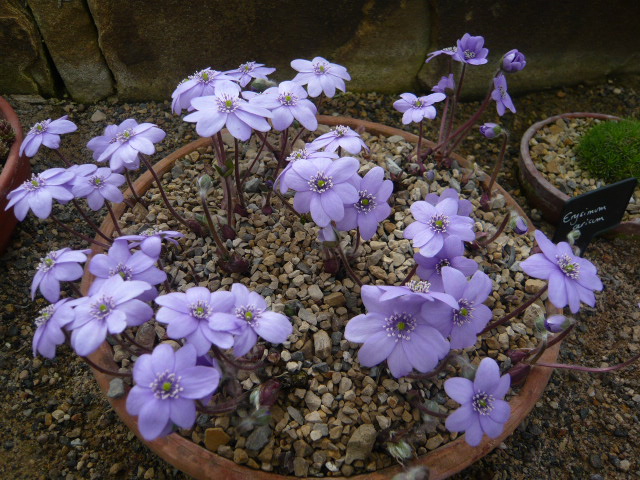
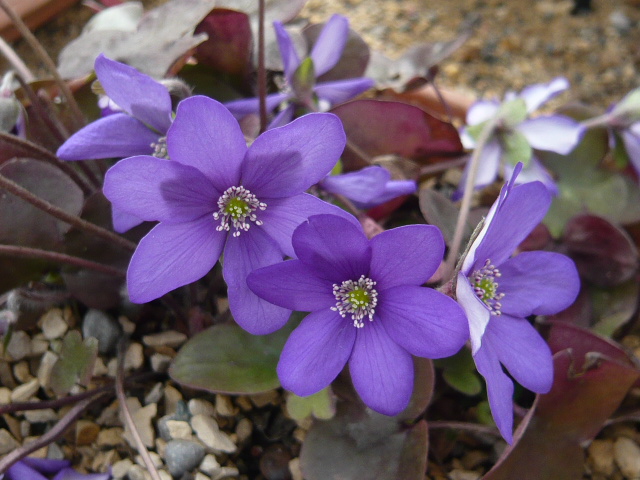

Anemone and Ranunculus in defense occasionally charging down the wings

Large Scale Water Features

Large Scale Water Features

Moon pond water feature with pheasant – early spring at Studley Royal Ripon

Probably a bridge over a thousand years old at Fountains Abbey Nr Ripon. The Snowdrops set off another far older water feature with a bridge that was destroyed in the reformation in the 16th century. The snowdrops are probably related to the first known cultivation in 1597.

Posidon or ‘Neptune’ by Oliver Andrews standing in the middle of the Moon Pond after the restoration of the 18th century pond that had fallen into disrepair.

Pentas – Urge to Grow Five Annuals

Pentas – Urge to Grow Five Annuals

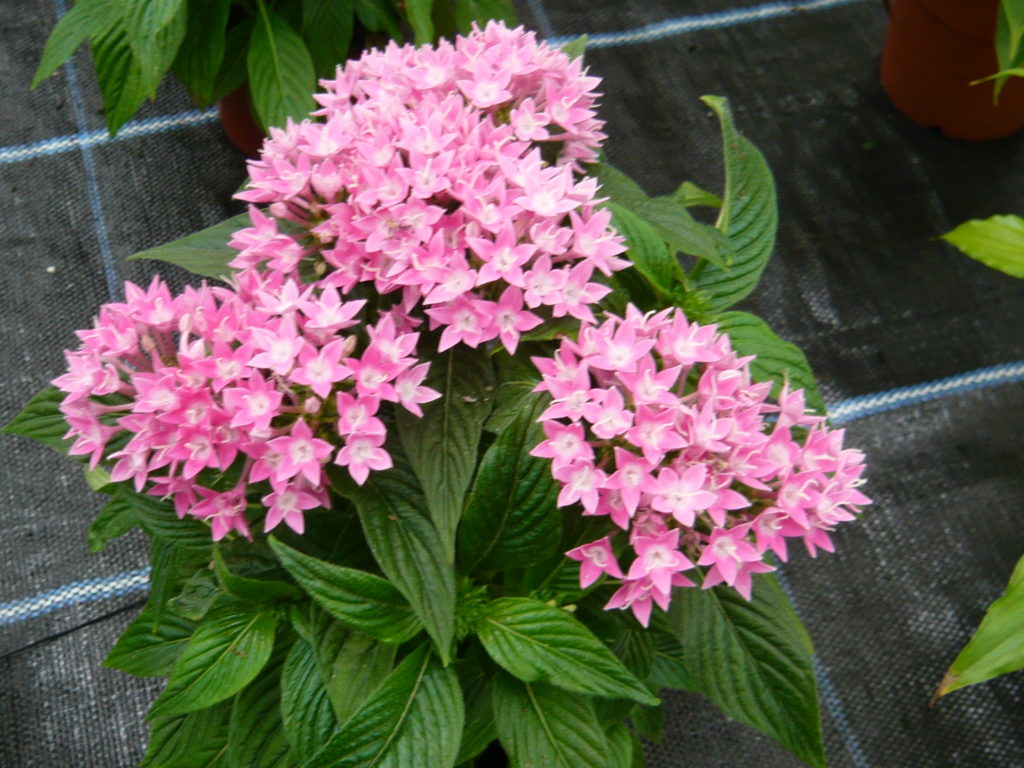
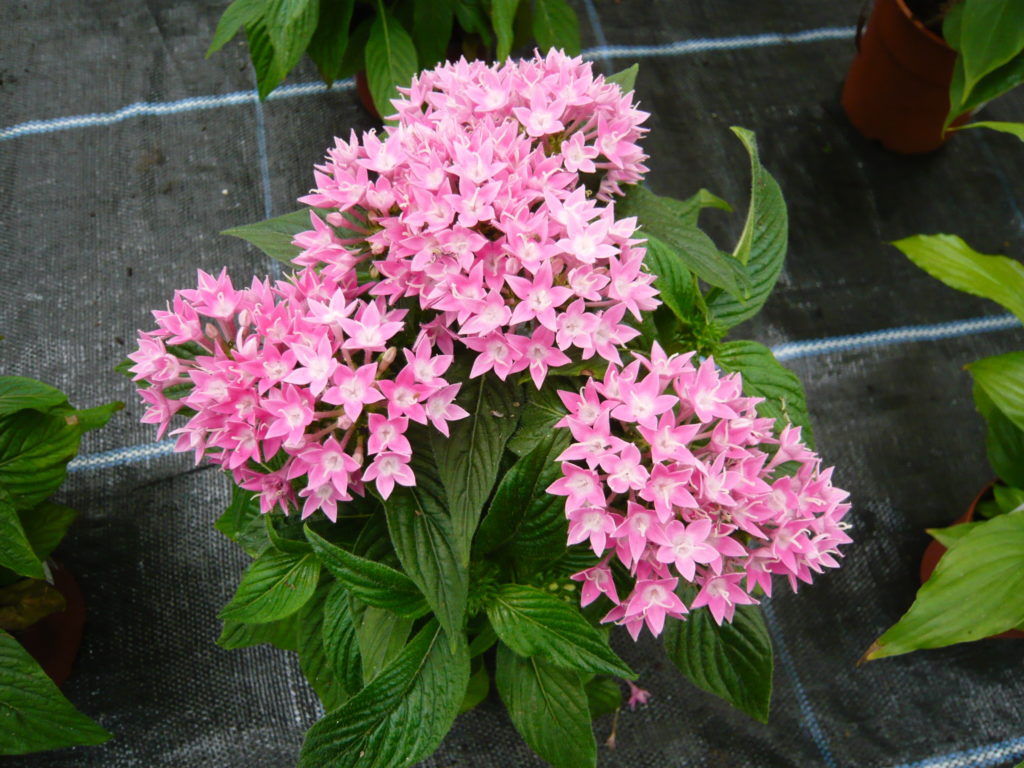
Pentas are semi-tropical shrubs grown as annuals that will be ideal if we have a long warm summer. (What is one of those I hear you ask?) They may last through a mild winter and gradually become a woody a 3 foot high shrub .

How to Grow Pentas

  • The nectar-rich blossoms grow in 3” clusters over a long blooming season in vibrant red, white, pink, and purple shades.
  • Bees and butterflies are attracted to them due to the open flowers and high insect food content.
  • Pentas will tolerate some shade but perform best in full sun that is also attractive to the butterflies.
  • Pentas appreciate a mildly acidic soil above pH 5.5
  • Grow from fresh saved or purchased seed providing light for germination. Don’t cover them with soil when sowing.
  • Soft wood cuttings may be grown in a greenhouse.
  • To avoid leggy growth keep in the sun and provide moisture rich soil.

Pentas Varieties to Try

  • Penta lanceolata belongs to the Rubiaceae family are often called “Egyptian Star Flower” due to the flower’s shape.They are very popular in the USA where the following varieties may be acquired.
  • ‘Butterfly’ series: Easy to grow from seed
  • ‘Graffiti’ series: Compact mounding plants
  • ‘Kaleidoscope Appleblossom’: Pale pink and rose on the same flower; an early bloomer
  • ‘New Look’ series: Upright plants that don’t flop
  • ‘Northern Lights’: Continues to produce pale lavender flowers in cool temperatures
  • Other common names for Pentas include star flower  or star cluster.

Another view of the same plant

RHS Garden Book Resources

RHS Garden Book Resources

Harlow Carr Library

RHS and Books

This week I revisited RHS Harlow Carr library for the first time in several years. I previously volunteered in the ‘old potting shed’  library before the new building was completed. Then I was part of the team that moved and reshelved all the books from one part of the garden to the ecofriendly new premises.

At the time of our relocation there had been a spate of thefts from the Lindley Library and some very valuable tomes had been taken. Good old artistic books with frameable prints were also susceptible to loosing pages to the ner-do-wells. So the powers that be decided to install anti theft devices in the spine of all the books at Harlow Carr. After much painstaking work we volunteers were told the exit was not compatible with the spine tags and another exit system had been purchased. As a consequence new RFID tags a couple of centimeters square had to be fixed inside all the books that already had a metal spine. Several good looking end papers were damaged or covered in this process. Imagine my ‘surprise’ (not) when the 3 books I borrowed this week were passed to my by the librarian in a way that circumvented the exit alarm because it wasn’t working properly.

The harlow-carr-library-learning-centre-is-eco-friendly as reported here eight years ago see’ library’


Garden Library

Orville Lyttle    A Tree of Knowledge?


RHS Lindley Library Disaster Prone

  • Named after botanist and artist John Lindley the library is a multisite operation with books, paintings, photographs and old documents at Wisley, London HQ and other RHS gardens.  In addition to old and modern books  the RHS has an extensive collection of paintings and photographs plus horticultural paraphernalia.
  • When I tried to visit the library last January it was closed for stock taking!  Now I bother to check the website and warn you it is again ‘Closed: First fortnight in August’.
  • The library in Vincent Square London was saved from a proposed closure in 1995 by refurbishment of the downstairs area. Then in 2011 it was damaged by fire but reopened in 2012.
  • Bigger disaster occurred when a notable book thief stole 13 volumes published between 1848 and 1860 of  ‘Une Nouvelle Iconographie des Camellias’ by nineteenth-century Belgian horticulturist Ambroise Verschaffelt.
  • William Jacques, also known as the ‘tome raider’ stole antique books worth £50,000 from the world-famous Lindley  library and was jailed for three-and-a-half years after skipping bail and evading recapture for several years.
  • Jacques used a false name to sign in to the Library before stuffing valuable books under his tweed jacket and fleeing, Southwark Crown Court. I was shown how easy it was to circumvent the security gates by balancing items on your head (but keep that under your hats).


RHS as Hard Copy Publishers

  • The most popular RHS publication is probably ‘The Garden’  a members monthly magazine that often ends up in charity shops or NHS waiting rooms.
  • Also very popular are the annual Members’ Handbook, The Plantsman and the RHS Plant Finder
  • Coffee table books are produced regularly often in a joint venture with other publishers like Dorling Kindersly. This supplements the technical treatise on specific subjects under the RHS own imprint including Botany, Genealogy, Latin for Gardeners and encyclopedias.
  • I have cheekily chosen the following title to highlight because I am not sure ‘How Do RHS managers Work?’

Book Cover

What Others Say about RHS

  • RHS is a charity generating over £82m last year 2016/17. The accounts are silent on how much of this relates to publications, RHS enterprises ltd operates some commercial activities with profits gifted back to the charity.
  • The Lindley Library contains works dating back as far as 1514. It is widely regarded as one of the world’s most extensive horticultural collections, including books, journals, pictures and art concerned with botany, garden design and history, as well as practical gardening.
  • The Heritage Lottery Fund has awarded £4.8 million in a first stage grant towards an overall project of £160 million  10 year development project.   HLF said  “Wisley is such an important site in the history of plants and gardens – a superb setting for some rare and fascinating plant specimens along with thousands of books, artifacts and photographs…….
My Books on How to Garden

My Books on How to Garden

My Garden Books

My Gardening Books 

I am almost as keen on books as I am on gardening so it is natural that I should combine the two by collecting books related to gardens and gardening. The attached pdf is a cold list of my current collection by title, authors, publisher and date of publication. The extra columns were for my amusement showing the number of pages ( over 100,000) and a score that I attributed when I first browsed the book. The collection is a bit eclectic as a result of acquiring what was available and affordable at the time augmented by family gifts.

Why Collect Garden Related Books

  • A good book with knowledgeable content is priceless as long as I apply the ideas in my own husbandry.
  • A good picture is worth a thousand words. Where would we be if we were not seduced by a good picture on a seed packet, plant label, magazine or more importantly inside a book.
  • A bit of history goes a long way and all plants and species have their own tale to tell. Keeping old seed catalogues and public garden brochures will remind us how things were. Books about plant hunters and patrons can highlight our social fabric.
  • Before the internet and google, knowledge was power and attracted a price for those who shared their know how via books, magazines and radio shows. Much of my collection was produced during of just after WWII when growing larger crops was vital.
  • If I was more industrious I would have recorded my books using the Dewy decimal system where  all books have a classification number and reference. 580 is generally reserved for Plants with the following subsections

    • 575 Science of parts of plants
    • 580 Plants
    • 581 Specific topics in natural history of plants
    • 582 Plants noted for specific vegetative characteristics and flowers
    • 583 Magnoliopsida – Dicotyledones
    • 584 Liliopsida – Monocotyledones
    • 585 Pinophyta – Gymnosperms
    • 586 Cryptogamia – Seedless plants
    • 587 Pteridophyta  -Ferns
  • Some 20th century books will become more valuable as evocations of a bygone era. Good writing and art work, first editions and special books by key designers may lead the way.
  • One challenge for me has been to find a niche within the published gardening books where I do not currently have any coverage. There are some monographs and old classics where I would like to invest but for the time being I will content my self with a look at planting in accordance to the phases of the moon. This area, also called Biodynamic gardening, is often popular in the press and media at the turn of the year or following blue moons (both of which we have just experienced.)

New Books on Biodynamic Gardening

Book CoverAnecdotally biodynamic gardening increases yields with quality,  edible crops with a good depth of flavour. Science has not yet proved how this can be measured

Book Cover

These guides have been published annually for over 50 years to help gardeners choose the optimum days for sowing, pruning and harvesting various plants and crops.

Book Cover
Get help from nature – my garden needs all the help it can get and maybe just the sun is not quite enough so I’ll give the moon a go as well.
Book Cover
The moon garden is planted and tended in harmony with phases of the moon to take advantage of gravitational pull on the earth’s water table. Sow when the moon is waxing never plant anything when the moon is waning.

Book CoverExpanding into growing beyond the garden is a book that includes tips and ideas on large-scale farming,  livestock market gardening. cereal cultivation and commercial vegetable growing.


Secateurs and Why I Choose Them

Secateurs and Why I Choose Them

Secateurs are an indispensable tool for the the tidy minded gardener and even me.

 Ergonomic  Features to Look For on Secateurs

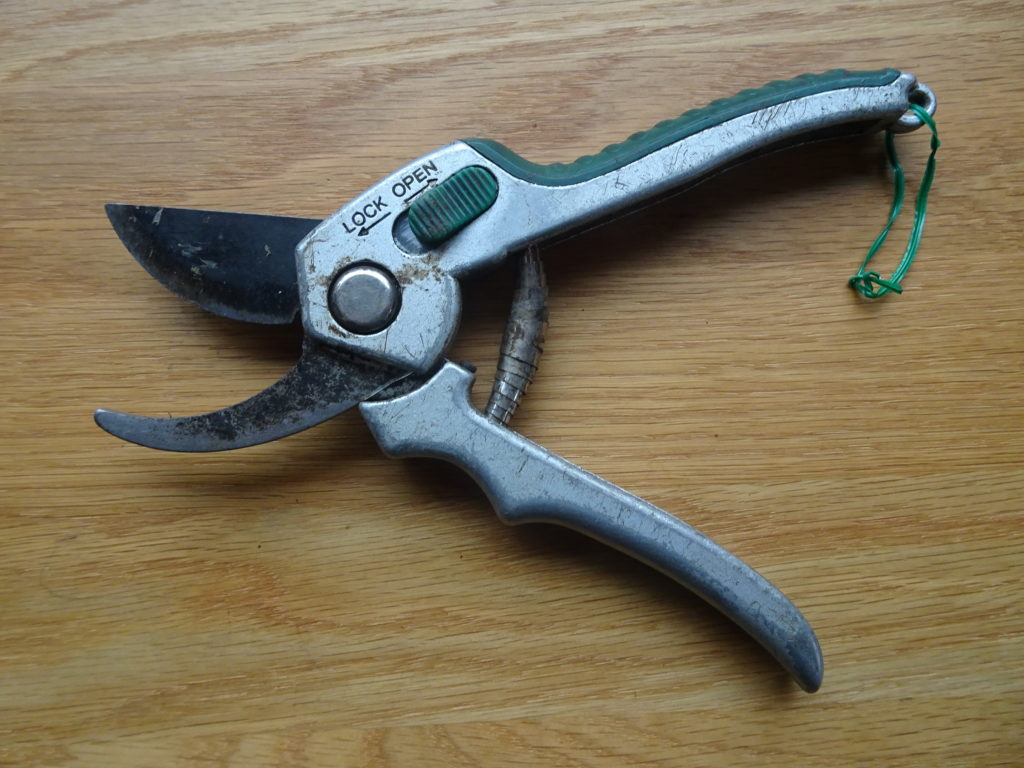
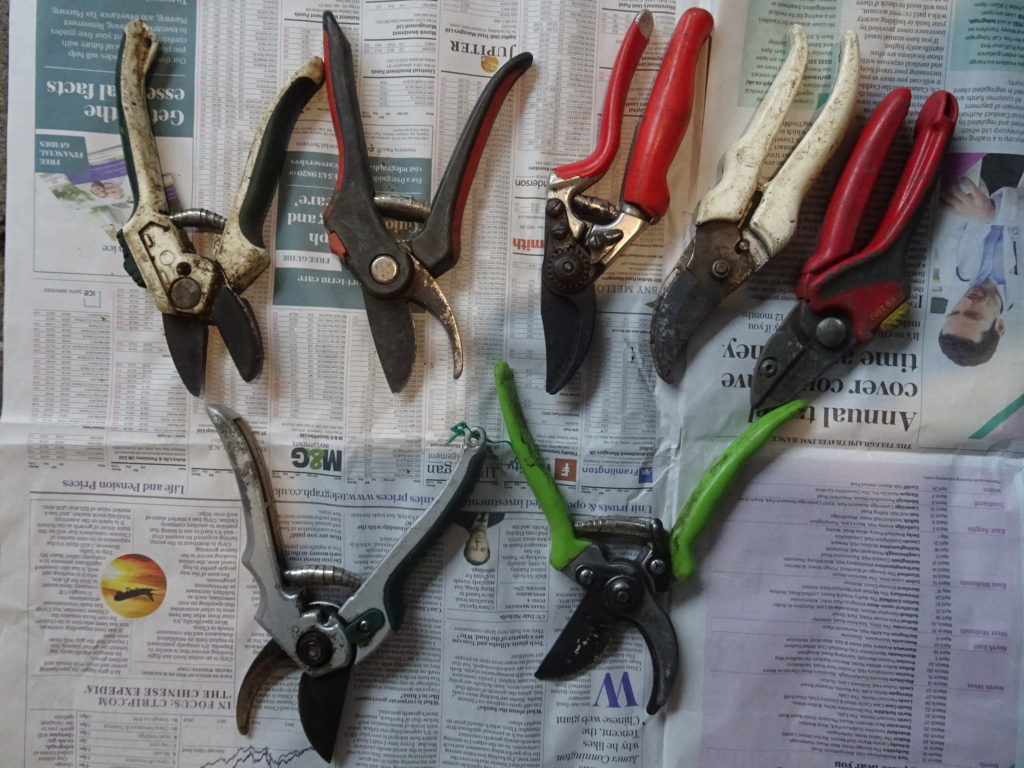
  • I like to be able to find the secateurs when I inevitably put them down despite the intentions of keeping them about my person. I good bright colour for the handles helps. I have lime green and red on my two favourite pairs and surprisingly the lime green stands out even amongst leaves and foliage.
  • On a similar ‘ability to find theme’ I like the pair with a small loop at the end of one handle with a hole drilled in. This allows a string or wire to be fed through to facilitate hanging them in a suitable location.
  • The grips should be moulded for fingers so a good purchase and transfer of power can be distributed. On my right handed secateurs the blade section has 4 finger grooves and the other handle is curved for the thumb and palm without a groove.
  • The grips are often some form of rubberised or hard plastic which I find preferable to bare metal that strikes cold.
  • Most secateurs have a thumb operated locking facility to keep them closed and safe when not in use. The idea is sound but you need to be able to operate this with the thumb of the same hand. A fiddly or unsafe device can be very frustrating.

Selected Secateurs

 Functional Features to Look For on Secateurs

  • There are two basic options for the blades to bypass one another in a scissor type motion or for the blade to cut then hit an anvil like a chopping board. I like the bypass or parrot nosed version for the majority of soft wood and stem cutting. I find that leaves the plant wound less prone to damage. The anvil approach is good for twigs and dryer material.
  • The blade and access to keep it sharp are key features. When buying new secateurs look for the best you can afford but focus on the blade.
  • At the base of the blade at the junction of the other arm there is normally a notch that can be used to cut tough items like wire.
  • The return (compression) spring to open the secateurs after every cut is generally held in place by two holes or protuberances near the top of each handle. They are key to the functionality and fun of using your secateurs  and if they spring loose you can spend ages looking for them. Keep them oiled and clean and if necessary stretch them to make a tighter fit.
  • Blade replacements are faffy and I find it hard to locate supplies. Why don’t manufacturers supply spares with new secateurs.
  • A Falco branded pair have a finger side handle that twists a quarter turn as you operate. I like this but am not sure it stops repetitive strain injury as I assume was the intention. I wont know unless I buy a new pair as this feature disabled itself and no longer works.
  • I have not used ratchet or geared secateurs that cut in a number of stages but find that useful on my loppers.


Well used anvil secateurs

My Experience Using Secateurs

  • There is a tendency to want to twist when cutting tough stems. This sprains the scissor action out of alignment and can cause irreparable damage. I have done this with many cheap pairs before I knew better.
  • As you can see I have numerous pairs that are not all that clean. I do oil them and try to remember to wipe excess sap off the blades.
  • I have a sharpening stone that I use frequently. I once sharpened the inner bit of the blade and then you could see light through where  gap should be. Sharpen the external edge.
  • For  cutting thicker stems use a lopper or more robust shears.
  • I have a good pair that occasionally nip the skin as I close them. As well as painful and frustrating I am also put out by having forgotten the makers name!

Gardeners secateurs tips


Why Choose Cyclamen

Why Choose Cyclamen

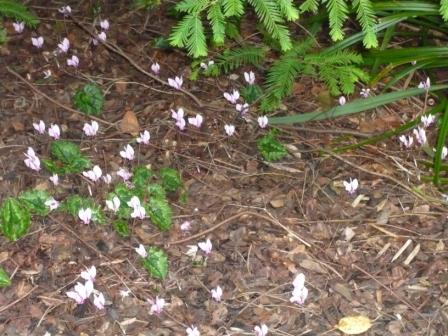
I coum early to Cyclamen (in the same way I came late to Chrysanthemums). Sorry, good gardening is no laughing matter but I like to plant a pun or two to see how they grow!

Eight Uses of Cyclamen

  • As a houseplant to brighten up your room
  • As a gift for someone else to brighten their room or day.
  • As a thank you, birthday gift, or as a token when visiting.
  • Historically they were give for people in hospital but the infection control police put paid to such plant based gifts.
  • As a garden stalwart in shade or partial shade under trees.
  • Persian cyclamen send a colourful  personal message or signifier in pink or brilliant white, cyclamen can convey  sympathy and love. Stronger feelings of pleasure, passion, friendship and fun are more appropriate in bright pink, dashing red or violet.
  • Cyclamen plants decorate a patio, conservatory, windowsill or any cool room inside the house.
  • Try cyclamen as cut flowers flowers!

Cyclamen

Florists Frilled to Meet you Cyclamen

Cyclamen As a Garden Stalwart

  • The corms will grow in size to saucer or even larger producing the proverbial profusion of purple people I mean flowers. They are also good self sowers with sticky seeds moved away from the parent plant to germinate. The flower stem twists and spirals as it dries then the seed is expelled
  • Single  flowers sit on top of slim stalks and contrast with heart-shaped dark green foliage. Generally flowering in autumn , winter and late spring depending on variety
  • Woodland gardens and shady areas with deciduous trees are good locations of cyclamen.
  • Flowers often arrive prior to leaves which can look very distinctive and interesting during winter.

Read More Read More

Foliar Feeding Hints & Tips Frenzy

Foliar Feeding Hints & Tips Frenzy

Foliar feeding does at least some good. First and foremost it makes me, the putative garden expert, think I am doing some good for the plants in my care. If the fertilised plants pick up any extra nutrients so much the better. If they also repay me with a better crop or display then wow!

What is Foliar Feeding

Foliar feeding is the method of supplying nutrients to plants through their foliage. It involves spraying water-dissolved fertilizers directly on the leaves. Many believe that foliar feeding is preferable to soil application and that it is associated with higher yields and better quality. However I am firmly of the belief that both forms of fertiliser application is best.

Foliar feed can involve the drenching of leaves and stems with suitably diluted liquid fertilizers. This allows nutrients and trace elements to pass into the plants system through direct leaf and stem absorption.

Greenhouse spraying helps humidity and the removal of dust from leaves so why not add some weak feed to the spray and add  nutrients to plants through their foliage.

I personally believe this method is a supplement to normal root based feeding  which is naturally derived from water uptake.

How to Foliar Feed

Mix up your chosen feed by diluting concentrated liquid feed or dissolving  fertiliser salts in warm water. Using  a very fine spray apply the solution on top and under all the leaves.

Evening is the  best time for plants to be treated with a foliar spray without jeopardizing the plants other root based feeding schedule and risking burn from strong sun.

Small amounts of nutrients should be applied little and often. I find foliar feeding useful for specific situations such as ailing plants in need of a ‘pick them up’. I spray the leaves of tomato plants all over.

To increases the retention of the spray solution, by reducing the surface tension of the droplets, add a surfactant like a couple of drops of vegetable oil in the spray. This will contribute to a more uniform coverage of the foliage.

Benefits of Foliar Feeding

Read More Read More

A Garden Jim but not as we know it

A Garden Jim but not as we know it

Attribution-NonCommercial-NoDerivs 2.0 Generic (CC BY-NC-ND 2.0)

Fiona Weir, has been supported by the Freedom board and was invited to take the creation – a traditional black cab festooned with hundreds of colourful bee-friendly plants to the fringe festival at the Horniman Museum in Forest Hill.

I regularly fill the boot of my car with large bulky garden waste that would take more than 2 years to rot down. I have never tried using under the bonnet for extra space but console myself with rear seats that lay flat hatchback style. If I still had my chipper it may be a different story. I would still have my chipper it it didn’t clog or rust! Perhaps Santa can beam me up to an intergalactic compost heap that will do away with roots, weed seeds and compost undesirables.

Hull had a bee in it’s bonnet for the City of Culture 2017

The photo of the Black Cab garden by Adele an artist and designer who was helped by Fiona Weir. Fiona is a  landscape architect and bee specialist from the Yorkshire Wildlife Trust work together ‘to plant temporary beelines and insect friendly gardens in the most unexpected scenarios’.

Other Garden Sculptures

 Memorial Garden Bradford City Fire Disaster 1985

Klingons on the starboard bow, starboard bow, starboard bow there’s Klingons on the starboard bow, starboard bow, starboard bow – not quite Klingon language.

Roylan