Browsed by
Author: hortoris

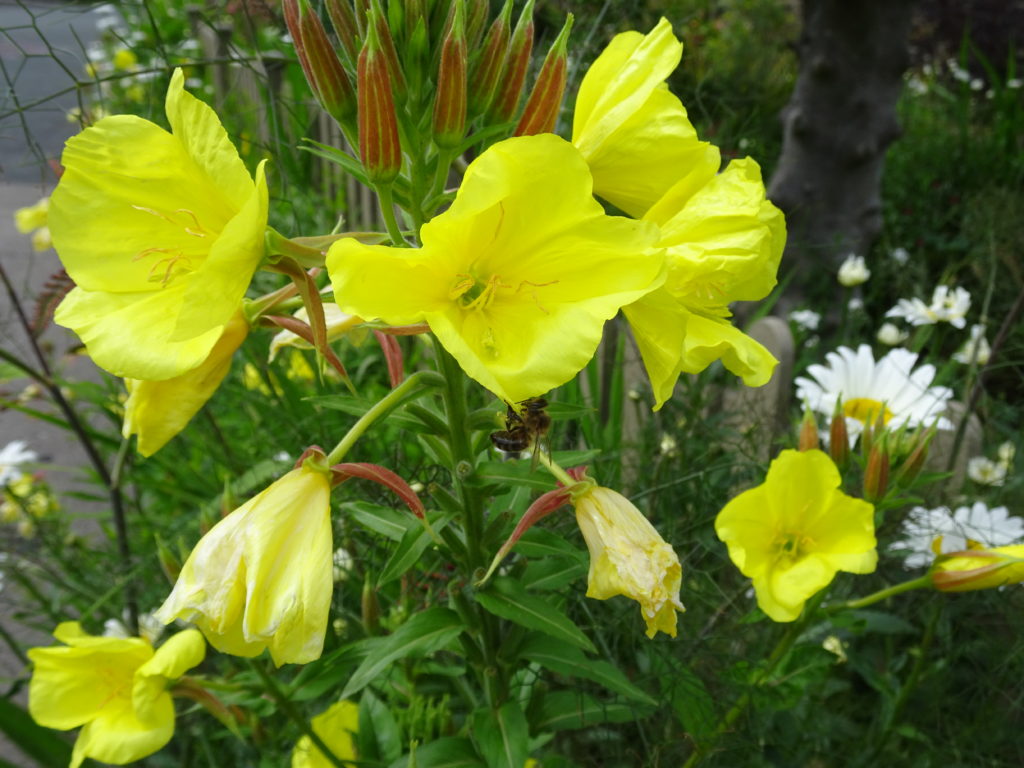
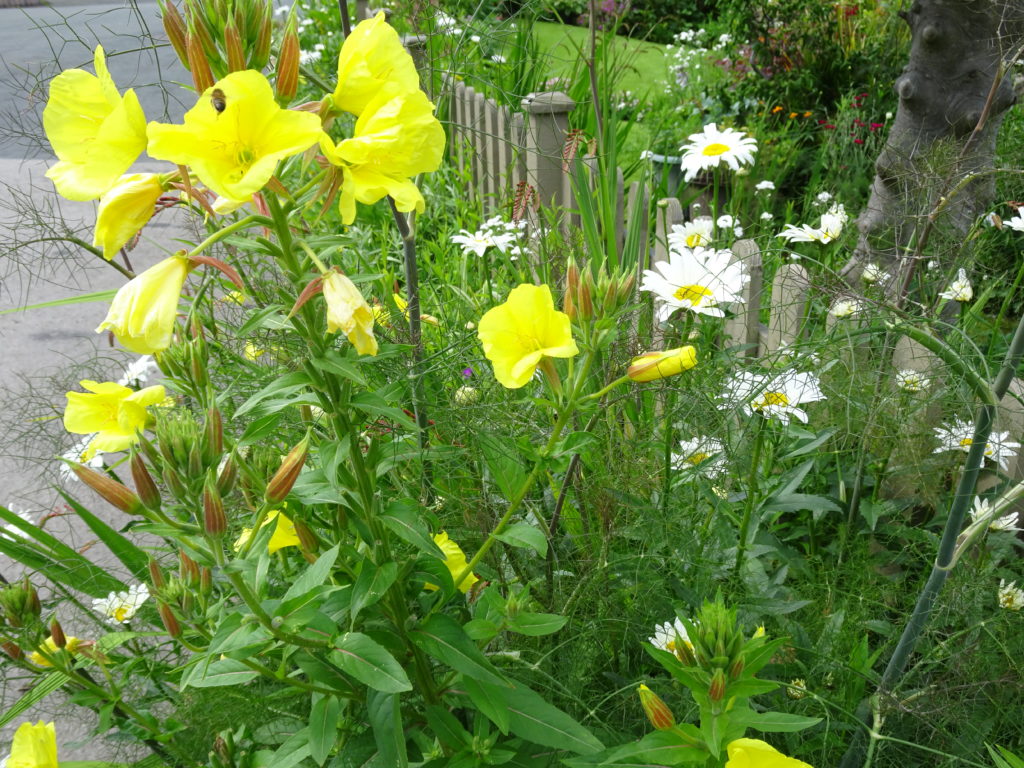
Oenothera biennis Our Evening Primrose

Oenothera biennis Our Evening Primrose

The Evening Primrose is one of my favourite, limeish yellow, summer, biennial flowers. 2024 is becoming a spectacular year for my plants growing in a wall.

Evening Primrose Oenothera glazioviana

Evening Primrose Growing

  • These plants are capable of seeding profusely
  • The large-flowered evening-primrose Oenothera glazioviana is one of 4 common UK species
  • There are another dozen species and many hybrids and crosses.
  • Evening primrose  flower from June to September. and seeds are produced in mid-August
  • There is a fragrant evening-primrose Oenothera stricta.

Evening Primrose Medical Benefits

The plant is common and popular in the USA and its roots are eaten and used for various purposes. Gardeners Path say it can ‘help a number of conditions including eczema, rheumatoid arthritis, premenstrual syndrome, and osteoporosis  and oil of Evening primrose can be used  to regulate blood pressure and to keep the immune system functioning’.

Gardening with Hellebores

Gardening with Hellebores

Pink & White Hellebore

Hellebores are generally very accommodating plants flowering early in spring and living happily in shade. Avoid Helleborus foetidus the stinking hellebore or setterwort.  If you want coloured rose like flowers with shapely green leaves try  growing them in a dedicated green bed.

As this graphic shows there are a growing number of hybrids offering a range of colours.
See our tips on Growing Helebores

Read More Read More

Late Flowering Oriental Lilies

Late Flowering Oriental Lilies

Blazing saddles had nothing on this years blazing Lilies in pots and beds. My current go- too is the oriental ‘Black Beauty’
Lily

Oriental Lilies are native to China and Japan and are a later flowering variety of Lily. Oriental Lilies tend to produce large, showy and fragrant flowers. They vary in size from 1 foot dwarves to 7 feet giants. The smaller varieties make good pot plants.

Oriental Lily Facts

  • With a spicy and sweet fragrance, oriental lilies are late bloomers  in August / September.
  • They bear 6+ open faced flowers with spotted, brushed or dark shaded petals.
  • Varieties of oriental Lilies include crimson Black Beauty, pure white Casa Blanca, dark pink Journeys End, pink Le Reve,  rose red Stargazer whilst Acapulco produces dark pink flowers.
  • Lily flowers can be stored by florists for 4 to 6 weeks after harvesting. They have a vase life of 7 to 14 days if harvested at the right stage and given the proper treatment. This makes them an excellent choice for fresh flower arrangements and popular wedding bouquet flowers.
  • These Lilies prefer slightly acidic soil and dislike alkaline soil. New lime tolerant hybrids now include Orienpets like Black Beauty.

Lily

Read More Read More

Cistus maculatus with spots on

Cistus maculatus with spots on

‘Twin flowers’

Cistus produce abundant flowers when grown in a hot dry garden but are more at home growing wild in Crete or Cyprus

Cistus maculata

The Latin part of a plant name often gives a hint about the attributes of a plant or flower.

Maculatus or maculata means spotted in leaf, bark or this case flower. It also means spotted in the insect world.

Look out for other obvious hints like odorata and fragrans which will be scented . Alba means white whilst nigrescens will be black. The spellings may differ and it isn’t a fool proof method of plant selection but it may help.

Cistus are known to cross pollinate with Halimum with are smaller similar plants that grown in the same conditions

A national collection and authority on the species is Bob Page.   see Cistaceae family. http://www.cistuspage.org.uk/

Read More Read More

A Trio of Purple Leaves

A Trio of Purple Leaves

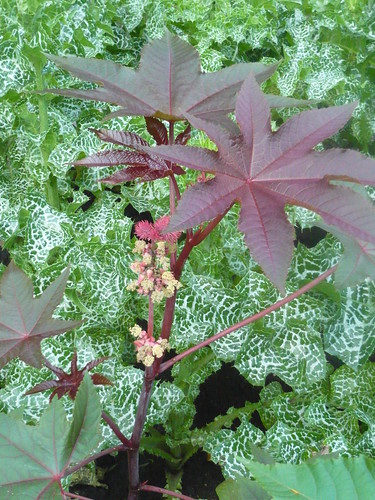
It is hard to ignore plants with leaves as stunning as these in a Parks garden. The purple is from one of the Sumachs or Rhus family. Selecting plants that contrast in colour shape or form is part of the skill of gardening but starting with plants like these is a good beginning.

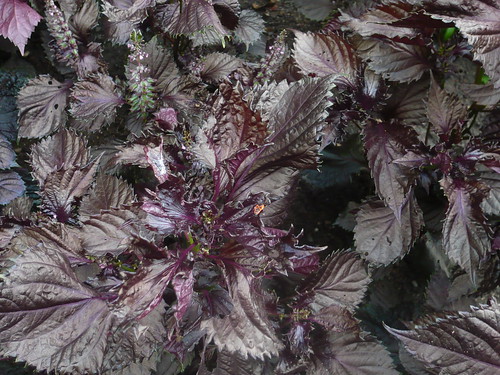
Purple is one of my favourite leaf colours of the moment and the Lamium below is called Perilla fructenscens. I am putting several plants in one area of my garden and will see how well they get on with one another.

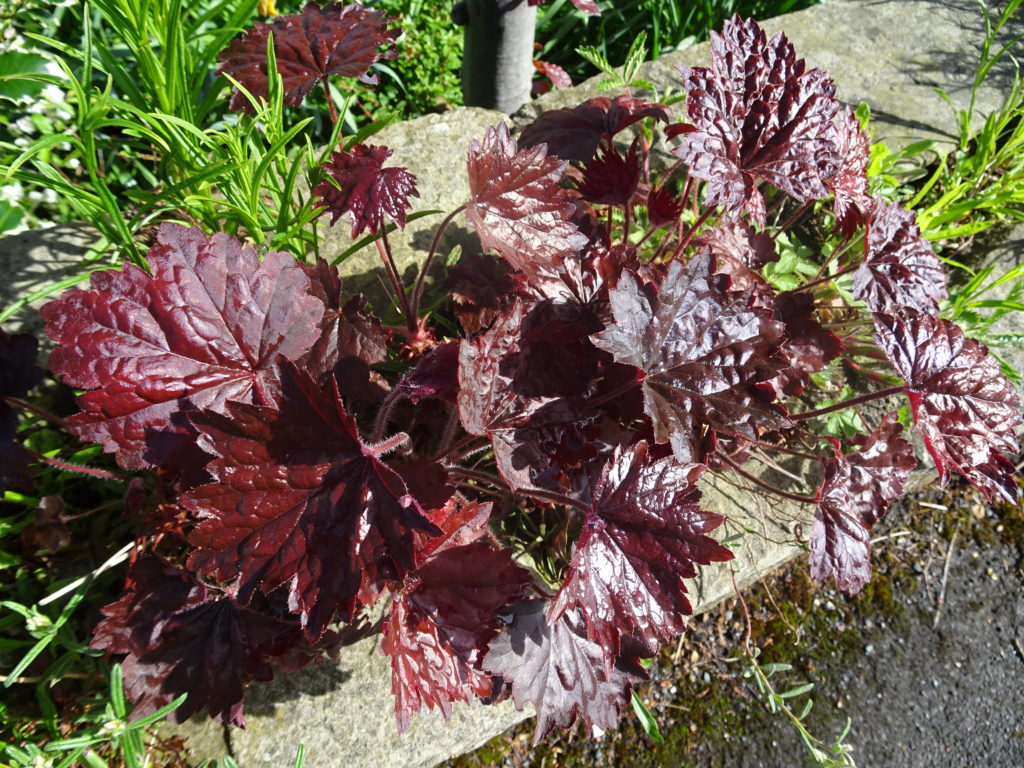
This Heuchera below surprised me growing in a wall cleft with thin soil. I do not remember planting it in what I thought would be a hostile location. It must have been self sown but I have not got any other plants except the parent.

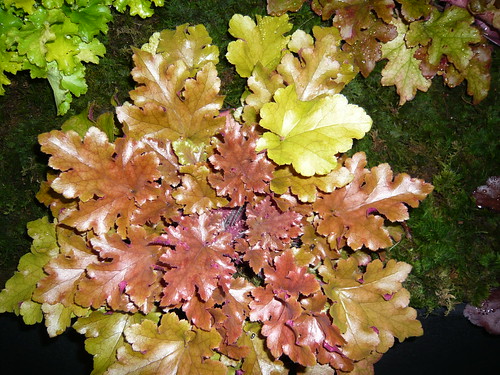
Heuchera Facts and Varieties

Heuchera Facts and Varieties

I am hoping for some coloured Heucheras for Fathers day later this year – well hope is free!

Uses of Heuchera

  • Heuchera are commonly used as specimen plants or in small groups of the same variety.
  • They are at home in woodland gardens, rock gardens or as groundcover.
  • Heuchera are useful in patio pots or as components in mixed containers. They are often used at this time of year for winter containers
  • Flower panicles make fine additions to cut flower arrangements.
  • Heuchera attracts butterflies.
  • Heuchera consists of over 50 species and there are many new varieties so you could make a study and collection of these interesting plants.

Read More Read More

Kew a Year of Visits

Kew a Year of Visits

Book Cover

Six DVD’s in a boxed set ‘A Year at Kew – The Collection’ (Series 1-3) with Alan Titchmarsh is available from Amazon  in time for a Christmas gift. Over 1000 minutes of gardening in a month-by-month journey via the BBC through the world’s greatest botanical garden.

I enjoyed a winter perusal of the BBC Book that accompanied the series. With monthly highlights and in sights into the inner workings of various specialist department there is enough to encourage return visits.

Kew 066

Rather than punt the book for the negligible commission we get if you buy after clicking the cover or link above I will just post some seasonally coloured photos of plants taken at Kew.

Kew 200

Read More Read More

Roses with Single Petals

Roses with Single Petals

dog-2

My book de Jour is ‘Fifty Favourite Roses’ Michael Gibson. A second reading has given me some new insights and some varieties to look out for: 5 petalled Tea Roses Dainty Bess,  Mrs Oakley Fisher (golden) and Ellen Willmott (white) rugarosa Robusta and colour changing Mutabilis

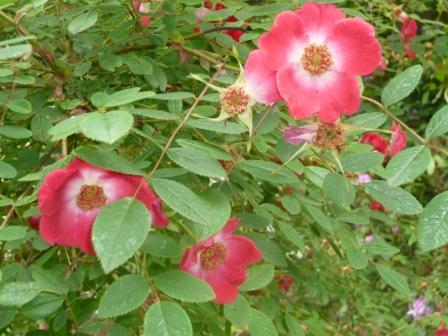
Above is a true red rose that also flowers very early on a robust plant 5 feet tall.

canary-bird

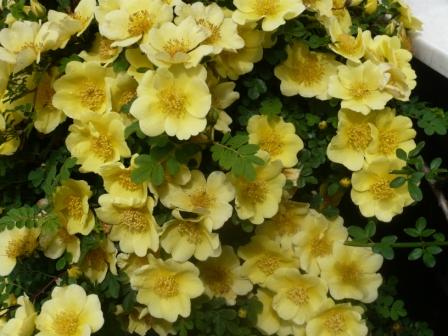
Now a more commonly available single rose this Rosa ‘Canary Bird’  is a tall growing very floriferous lemon- yellow rose with good foliage.

Read More Read More

Top Ten Old Roses

Top Ten Old Roses

Repeat flowering old Rose varieties do what it says in their name however the first 5 in my Top Ten only flower once per year but still inspire.

Old Rose Top Ten

  1. Celsiaha  this Damask rose is strong and vigourous with good clusters of large, lasting, pale pink flowers.
  2. Enfant de France is a compact gallica rose with sweet scented, double flowers in a silvery pink with quilled petals.
  3. Rosa gallica Versicolour or Rosa mundi is a 16th Century semi double variety with candy striped red and white flowers.
  4. Mme Hardy is a pure white rose opening from a slightly pink bud on a shrub up to 6 feet tall. It is disease resistant and good in an organic garden.
  5. Mme Sancy de Parabere is a thornless climber. Early flowering yet hardy plant with double, saucer-shaped flowers and ragged petals of deep lavender pink.
  6. John Hooper is a strong scented pink hybrid with perpetual flowering.
  7. Gloire Lyonnaise Semi-double creamy white blooms on a very erect shrub. Virtually thornless shrub that withstands wet weather better than most.
  8. Captain Hayward has light crimson, shapely, double flowers with excellent orange hips.
  9. Paul Neyron has large 6″ flowers in a deep shade of pink.
  10. Souvenier du Doctor Jamain has medium-sized flowers of the richest maroon colouring, opening flat. Grows 6ft. tall x 3ft. wide.

Classes of Old Roses

The Gallicas are probably the oldest of all garden roses forming short bushy shrubs, many of which are quite suitable for small gardens. They were grown by the Greeks and Romans then bred in 17th century by the Dutch and French.
Among them are some very fine roses with magnificent mixtures of colour particularly among the crimson, purple and mauve shades. They have beautiful flower formation with open upright blossom which shows the yellow stamens
All of the Gallicas are once blooming and most have very good fragrances. Tuscany variety is an almost black purple may be the oldest surviving Gallica from pre 1596.

Damask roses are another very old group, said to have originally been brought from the Middle East by the Crusaders.

Read More Read More

Boost Your Patio Roses Now

Boost Your Patio Roses Now

Spring Booster For Pot Roses

  • My patio roses have been given some TLC (TenderLovingCare) to set them up for flowering this summer.
  • TLC has involved checking over the pots and how they and the roses over wintered. Luckily there were no disaster or significant problems.
  • Pots were on the dry side, no bad thing through winter but now I will up the watering with dilute fertiliser.
  • The high growth had been trimmed in late autumn but now I undertook some careful pruning. Old and dead wood was cut out and the center of the rose was opened up to allow in air as they develop.
  • I took off the top 3 inches of soil and replaced it with a top dressing of John Innes and compost. I added a few slow release granules to each pot first.
  • Last year I covered the top of each pot with an inch of Strulch to suppress weeds and help watering. That worked so well I am repeating this mulch for this year. The old Strulch and top compost has gone on the heap.
  • I checked the pots for winter damage, fortunately they survived intact

Future Care and Boosting Plans

  • Black spot can be a problem on susceptible varieties so I will spray with a fungicide. Infected leaves will be taken off and dustbinned.
  • I will feed with a rose feed in may and a tomato feed after the first flush of flowers.
  • I am potentially over feeding as I hope to get some more cut flowers this year.
  • I also plan to buy another plant, or several, they are great value for money.

Pot Observations

  • My pots are a mishmash but I prefer those that are uniform terracotta pots.
  • Even in my glazed pots and two twelve inch square plastic efforts the patio roses produce masses of flowers annually.
  • Most pots contain roses over 5 years old and I do not re-pot them.
  • My favourite pots are 16 inch high ‘Long Toms’ that make a group of three. This grouping helps a micro-climate and a blowsy display.
  • The shortest pot in 9 inches high and I should have selected a miniature rose rather than a fully fledged patio variety. Several miniature roses are in my shallow soiled rockery.