Browsed by
Author: hortoris

Good Value Alpine Garden Society

Good Value Alpine Garden Society

Euphorbia milii

Regular visitors will remember that I recently received a gift of membership too the AGS.

I continue to get good value for money via the magazines, free seeds and the local West Yorkshire Group meetings. A recent talk by Tony Gartwaite with photographs by Mike Ireland was called ‘show stoppers.’

This is an excuse to show some more of my pictures. Hover over pictures for info

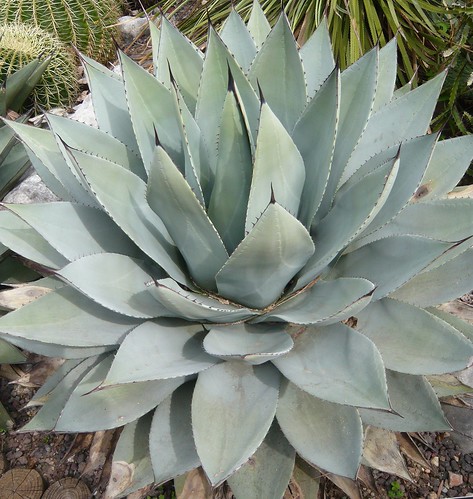
Agave paryi

From the alpine house at Kew.

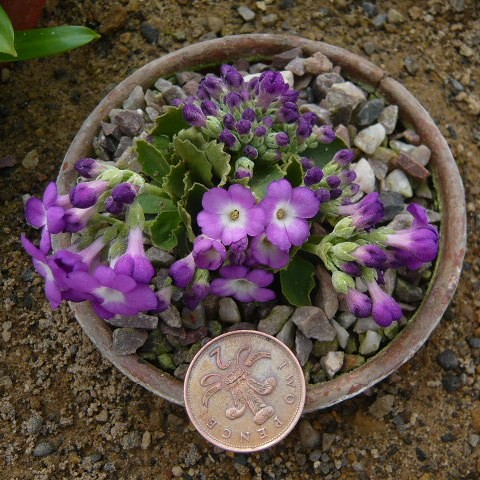
Primula allianii Joan Hughes

I have started a collection of various primulas after spotting this alpine variety Primula allianii Joan Hughes

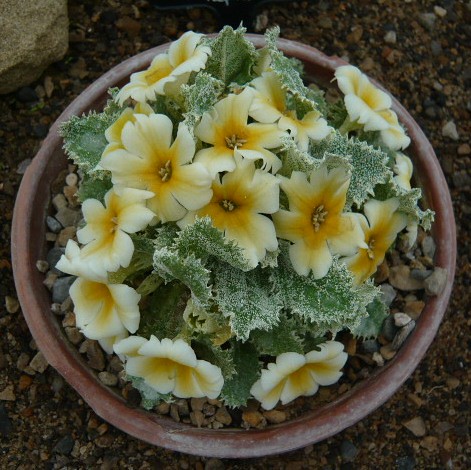
Primula aureata nepal

Primula aureata nepal is a bit harder to grow in my greenhouse.

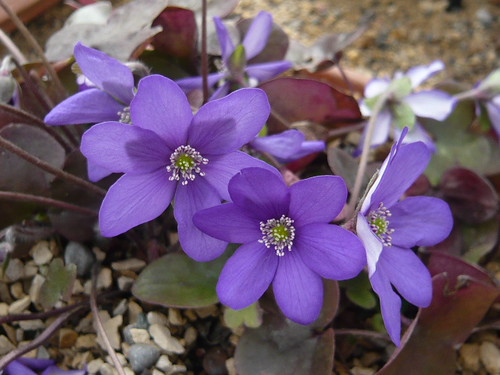
Hepatica nobilis Cobalt
See more about Hepaticas and how the Japanese grow these fascinating plants

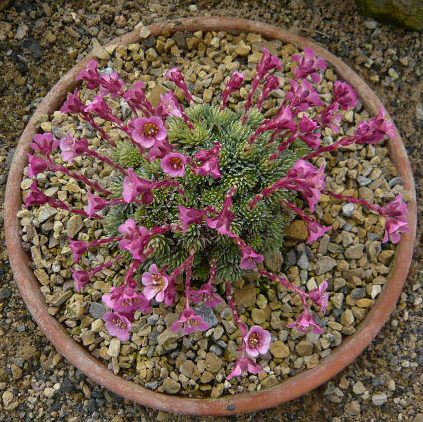
Saxifraga kellever suendermannii

Regular local alpine shows are a good way to pick up tips.
The national shows move around the country so keep your eyes open or check with the AGS
Specialist nurseries also turn out at these shows and it is a chance to get some new stock.

Getting Grapesvines to Grow Fruit in the UK

Getting Grapesvines to Grow Fruit in the UK

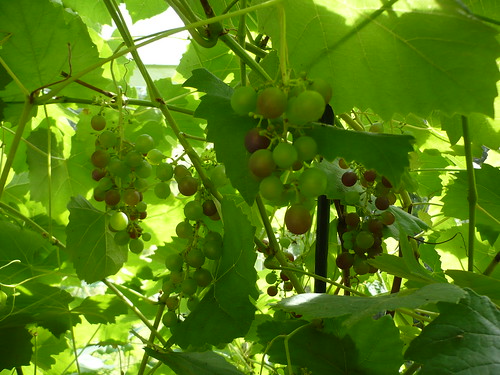
Grapes

Tips to Grow More Grapes

  • Grape vines produce fruit on “this year’s growth” coming from “last year’s side branches” (canes). Grapes produce the most fruit on shoots growing off of one-year-old canes. New growth coming from older branches does not produce fruit.
  • If you prune back your vines completely each year, then you get lots of new growth but few grapes
  • New grape vines can take 2 to 5 years to produce fruit
  • Insufficient drainage and too much water will cause very few grapes or no grapes at all
  • Stop watering grape vines in Autumn so that the vine will harden itself up for winter
  • Trim shoots to encourage energy to be channeled into fruit production.
  • Grapes like dry poor soil so if you over feed you will get tons of leaves and no grapes.
  • For older vines with thick stems apply Epsom Salts every other autumn but feed them March, May and July with balanced fertiliser. This provides them with food at bud-break, fruit set and mid-way of the fruit development.

Pruning to Get Grapes to Fruit

  • Prune the laterals to 2 or 3 buds, but do not remove the laterals that will shape your plant.
  • Prune the side branches, leaving two or three buds each.
  • Prune out any dead or unwanted growth and vines will produce fruit on one year old growth.
  • Pruning grapes in late November -January. Later pruning will encourage excessive bleeding from the cuts as the sap rises.
  • Prune all the way back to the main stems will cause new growth and many more flowers.
  • Training and pinching out of new shoots and thinning of fruits is carried out in spring and summer.

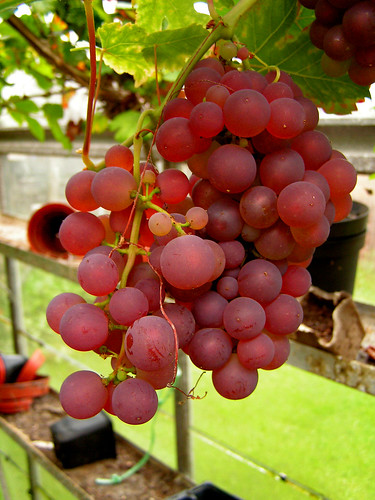
 Black Hamburg

Advice from RHS

‘The cordon or ‘rod and spur’ pruning system is usually used for indoor grapes in greenhouses or conservatories,

Young Vines
Let two of the side branches produce a bunch of grapes, then pinch back their tips to two leaves beyond the bunch of grapes
Pinch back side branches not bearing fruit to five leaves.
In December reduce the main stem by half, cutting to a bud on mature brown wood. Cut back side shoots to 2.5cm (1in) or to two strong buds.

Year three onwards

In January untie the main stem to one third of its length above ground.
Allow the top two thirds to bend down and almost touch the ground. This encourages side branches to break along the full length of the stem
In the growing season as soon as the buds on the spurs (knobbly bits where the main side branches were cut back to a single bud) begin to grow, tie the main stem back into position against its supports.
Pinch out the growing tips of flowering side branches two leaves beyond the flower cluster, allowing only one flower cluster to develop per side branch for dessert grapes. More clusters can be allowed for wine grapes
Tie in each flowering side branch to a wire
Pinch out non-flowering side branches to five leaves
Pinch out any side shoots growing from the side branches to one leaf
For wine grapes, allow all bunches of grapes to develop. For dessert grapes, allow only one bunch per side branch
Cut back the side branches to one or two plump buds from the main stem.’

More UK based grape growing advice from the RHS.

Quaffable Quotes

The wrath of grapes comes from a lack of fruit.
Have you heard any more on the grape vine?
Did the green grape tell the purple grape to Breathe!
Did the grape that got stepped on let out a little wine?
Vini Vidi Vino


Photo Credits
Grapes by dichohecho CC BY 2.0
Black Hamburg by keaw_yead_3 CC BY-NC 2.0
Grapes by freefotouk CC BY-NC 2.0

Grapes

Spring Onion Gardeners Tips

Spring Onion Gardeners Tips

Tips from Gardeners on Spring Onions  (Allium Cepa)

Do you like a crisp spring onion. White Lisbon is a variety grown from seed that will grow quickly and produce some nice strongly flavoured salad onions.
If you can find a variety White Spanish try that for a milder flavour.

  • Sow seed from early March if you can give them some protection.  ( Thompson & Morgan sell various varities of Spring Onion and other vegetable seeds)
  • Alternatively over winter an October sowing for onions from April.
  • Try sowing direct into a grow bag. Warm the bag in the house for a couple of days or in a heated greenhouse.
  • Pull young onions alternately to leave space for others to grow
  • All early onions pulled this way can be used as salad onions
  • Fertilise with a light sprinkling of sodium nitrate in wet weather to help them bulk up
  • Spring onions grown from seed are possible throughout the year  by sowing every 4 weeks from early spring to autumn.
  • Keep the ground free from weeds. All onions dislike the competition from weeds and other plants.

Know your onions

Bunching Onions are a trendy name for Spring onions. Varieties include Ciboule, Performer and Ishikura.

Spring onions (Allium Cepa) are part of the Allium family that includes:

Garlic

Chives

LeeksPot Leeks & Blanching Leeks

Shallots and Pickling Onions

Welsh onions and Japanese Onions

Ornamental Alliums

Special and Extraordinary Leaves

Special and Extraordinary Leaves

Some plants are worth growing just for their special and extraordinary leaves. This is particularly true of houseplants and tropical species which we are less accustomed to seeing in our gardens.
Leaves can create a shock and awe feature in the garden or contribute to the overall peace and tranquility in a lush setting.

Book Cover
‘Leaves are everywhere, appearing in an astonishing variety of shapes, colors and textures. They are the unappreciated gifts of nature, worthy of far more extensive study by all’ according to Dennis Sharader author of Extraordinary Leaves.

Leaf radials

Special and Extraordinary Edible Leaves

  • Aromatic herbs and salad leaves vary from the small Thyme & Rosemary to the giant Banana leaves used to wrap food
  • Salad crops provide essential vitamins and tasty leaves.
  • Vine leaves are used in some Mediterranean cooking to wrap food and the Chinese send their leaves off to the wok

Leaves Autumn 065

Special and Extraordinary Seasonal Leaves

  • Some leaves can tell the time. Calathea open in the morning and close as it gets dark
  • Most leaves can tell the season and the colour produced in autumn by the Maple family can bring out the crowds in arboretum around the globe.
  • The first leaves of spring are often lime green and fresh but you also get the Pieris with red leaves that gradually turn green

Leaves

Special and Extraordinary Shaped Leaves

  • Spiked and spiny leaves even bamboo leaves can deter invaders in your garden
  • Dissected and crinkle cut leaves can provide architectural features in your garden
  • Tree Leaf Design, Shape and Function is discussed in more detail here

Lost Gardens of Heligan leaves

Special and Extraordinary Coloured Leaves

  • We have mentioned autumn colour but grey leaves combined with purple leaved plants can look spectacular.
  • Colueus and Begonia can produce Fancy Leaves for Colour, Shape and Texture in one plant. See pictures
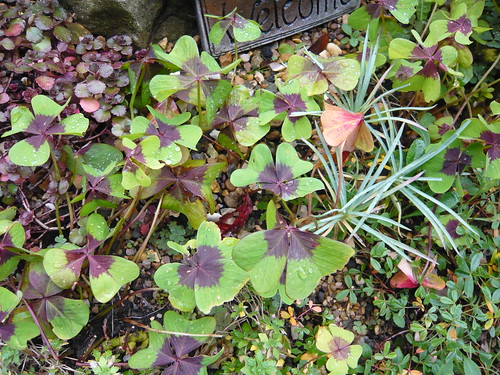
  • Four leaved clover is said to be lucky but do not rely on the two tone Oxalis leaves below

Oxalis

Alan J. Coombes is a Coordinator of Scientific Collections at the Herbarium and Botanic Garden of the University of Puebla, Mexico, and the author of many books about plants and trees. Zsolt Debreczy is Research Director of the International Dendrological Research Institute in Boston. They have combined to produce The Book of Leaves available now from Amazon. It is very strong on tree leaves.
Book Cover

Growing Calathea ‘Wavestar’

Growing Calathea ‘Wavestar’

Calatheas are a group of plants native to the tropical Americas. They are popular as pot plants for the house or conservatory due to their decorative leaves that often react to touch or light.

Calathea 'Wavestar'

Calathea Wavestar

  • Calatheas are now being cross bred amongst their 50 or so species and Wavestar is one of the results.
  • The leaves are soft,ridged, purple underneath and green when open in full light. The leaves close up in the evening.
  • I was surprised to see the yellow flowers at the soil level last time I watered this plant see above.
  • This variety is said to originate from Bahia in Brazil but if so why has it been granted PBR status?
  • The plant breeders rights are owned by Decorum a Dutch company

Korbmaranthe, Calathea bachemiana

Decorum Plants Calathea Wavestar

  • ‘Decorum Plants’ are a brand name that claims to be a leading specialist in the trade sector for more than 10 years.
  • Decorum Plants represents a selection of 1200 decorative and flowering potted plants under the well-known (to some)‘Decorum flag’.
  • Supplies to the trade via a web link may provide more information

Calathea majestica 'Albolineata'

Growing Calathea

  • Calathea need good light but avoid direct sun as it will scorch or fade the leaf
  • Keep soil moist and humid throughout spring and summer with less watering in winter.
  • Keep your Calathea warm preferably 15-23ºC.
  • Feed with a dilute fertiliser weekly during summer.
  • Soil should be light and free draining.
  • Repot annually and propagate at that time by division. Repoting tips

Calathea makoyana

Calathea varieties for Growing Indoors

  • Calathea makoyana the Peacock plant, features purplish coloring on the undersides of leaves, with white and green on top. Known as the peacock plant.
  • Calathea zebrina the zebra plant, has green markings on the leaf top and purple leaf undersides.
  • Calathea insignis also called Rattlesnake plant, is a bushy species with narrow, tapering erect foliage.
  • Calathea crocata has plain leaves but displays of upright orange-red flowers.
  • Calathea ornata. Reddish marking on leaf tops with purple undersides.
  • Calathea louisae has leaves broadly ovate, dark green with light green splotches along the midrib.

Other Facts about Calathea

  • Calatheas are closely related to Maranta, and often confused with their species Ctenanthe and Stromanthe.
  • Calathea can thrive in bottle gardens and terrariums due to their liking of high humidity.
  • Calatheas are propagated by divisions or tip cuttings, with nodes to form the roots.
  • Mist and reduced light are important during the early stages of propagation.

Calathea zebrina (Sims) Lindl

Calathea Photo Credits
Korbmaranthe, Calathea bachemiana by Dandelion And Burdock, CC BY-NC-SA 2.0
Calathea majestica ‘Albolineata’ by tuis CC BY-NC-ND 2.0
Calathea makoyana by Bárbol,CC BY-NC-SA 2.0
Calathea zebrina (Sims) Lindl by adaduitokla CC BY-NC-SA 2.0 ‘Calathea zebrina (Sims) Lindl. Marantaceae. CN: Zebraplant. Native of southeastern Brazil. Ornamental. Low rosette herb with striped pattern on leaves; leaf texture velvety. Growth habit clumping up to 90 cm tall.’

Vegetable Families their Importance and Types

Vegetable Families their Importance and Types

The importance of rotating vegetable crops to keep soil in good heart and avoids disease build up has been know for millennia. Gardeners should rotate families of similar vegetable using the lists below, not just switching for cabbages to cauliflowers.
Vegetables from the same family often need similar culture or treatment and suffer from similar pests. Fresh soil helps.

Families of like vegetables need similar nutrient levels and attach importance to different fertilizers.

Aubegine

Cucurbitacea – the marrow family

Leguminosae – Fabacea

Compositae – Daisy Family

  • Chicory – Endive
  • Jerusalem Artichoke
  • Lettuce
  • Salsify and scorzonera

…

Read More Read More

Parrot Flower or Bird of Paradise Flower Photos

Parrot Flower or Bird of Paradise Flower Photos

I was convinced my latest photos were of Strelitzia or Bird of Paradise flowers – that was until the horticulturalists at Kew Gardens made me rethink.
I had never come across the Parrot flower until I saw the Kew photo below and now I realise how ornithologically challenged I am.

Parrot’s flower in the Palm House
I love going to the Palm house at Kew where this photo was taken by their staff.
The variety of plant life hints at what you could discover in better weather conditions than we experience in the UK.

Eden Project Strelitzia

These Cornish flowers were also under glass in the tropical dome at the Eden project.

Eden Project Strelitzia

Strelitzia – Bird of Paradise Species

Strelitzia alba White bird of paradise
Strelitzia caudata Mountain Strelitzia
Strelitzia nicolai White or Giant bird of paradise;
Wild banana or Blue and white Strelitzia
Strelitzia reginae Bird of paradise, or Crane lily
Strelitzia juncea African desert banana
S. × kewensis hybrid between S. reginae and S. augusta (alba)

Strelitzia
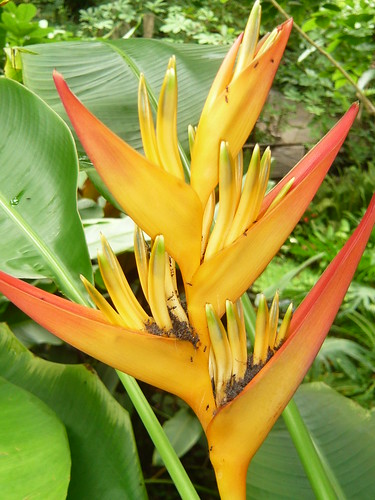
Checking my old holiday photos I found this Strelitzia which threw my identification skills into question.

Eden Project Strelitzia
These leaves look like banana leaves but the flowers fall short of Paradise.

Eden Project Strelitzia
Insects are having a good lunch on this flower photo.

Photo Credits.
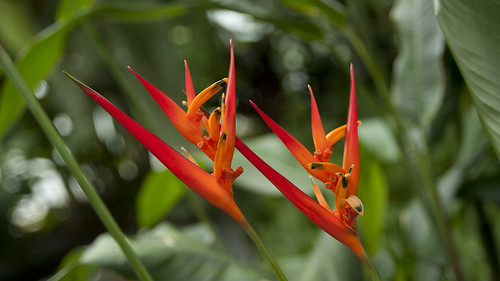
Parrot’s flower in the Palm House by Kew on Flickr CC BY-NC-SA 2.0 ‘This parrot’s flower, Heliconia psittacorum, was collected in Brazil in 1974. Find its striking orange flowers in the Palm House.’
Heliconia platystachys (multiple flowers) CC BY-NC-SA 2.0
Our photos from the Eden Project Cornwall

Heliconia platystachys (multiple flowers)
When you start looking there are Parrots everywhere!
There are over 100 species of Heliconia found in rainforests or tropical wet forests where they are sometimes referred too as False Bird of Paradise flowers.

Bare Rooted Raspberry Canes or Plants

Bare Rooted Raspberry Canes or Plants

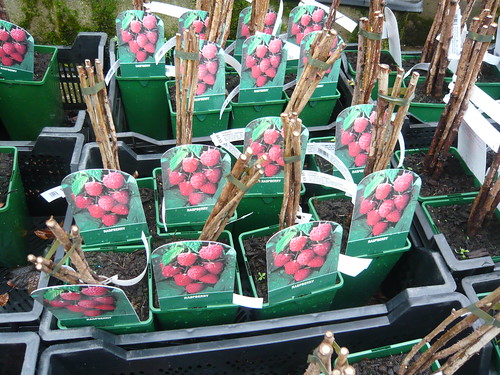
Spring raspberry canes

These raspberry canes were available from my local garden centre March 20th. They look container grown but are bare rooted canes plonked into pots. Container grown plants look like a bunch of healthy canes growing from the same root stock.
If you can’t get to Swincar Nursery in Guiseley and who can, then you can buy the following varieties mail order from Thompson & Morgan

Raspberry ‘Glen Moy’ (Early season summer fruiting) – produces an abundance of firm, medium sized fruits from June to July on virtually spine-free canes, which make harvesting a pleasure.

Raspberry ‘Glen Ample’ (Mid season summer fruiting) – Exceptional high-yielding mid season variety, producing a heavy crop of large, deep red, succulent berries, with superb flavour.

Raspberry ‘Polka’ (Late season autumn fruiting) – This superb Polish bred primocane variety produces up to double the yield of its parent, Raspberry ‘Autumn Bliss’, and crops at least 2 weeks earlier.

Raspberry ‘Autumn Bliss’ ‘is one of the best and most reliable autumn fruiting varieties, producing a heavy crop of large, attractive red berries from late August until mid October. The delicious fruits have an excellent flavour and firm texture making them ideal for eating fresh from the plant or freezing for another day. The short, sturdy canes of Raspberry ‘Autumn Bliss’ makes them perfect for growing in smaller gardens and containers as they don’t require supports for their stems. An excellent British bred variety, with good resistance to raspberry root rot disease. Height: 59”. Spread:20”.’

See also
Coloured and species Raspberries
Growing and maintaining raspberries
Raspberries Spring Summer and Autumn

Bare-root or Pot-Grown Plants

Bare-root plants are only delivered in the winter season for planting from November to March when the ground is not frosty.
Pot grown plants can be delivered all year round but take care as this photo shows barerooted plants have been stuck in a pot for retail purposes!
Bare-root plants cost less for the same size plants and you can carry and plant them easily.

Pot Grown plants can be delivered & planted all year round.
Plants in pots can be kept for months if there is a delay in planting.
If you can’t wait to get planting then buy pot grown plants, otherwise order bare roots.

First Cuckoo or Bulb Catalogue of Spring

First Cuckoo or Bulb Catalogue of Spring

It is only 28th June but I have just received my first catalogue for Spring bulbs, is that cuckoo or what?
Still 164 pages of glossy photos in J Parker’s Wholesale catalogue is always welcome and a useful reference up to and past spring.
Daffodils

Why Order Bulbs Early

  • The early bird gets the fat worm or the best of breed and that can be true of bulbs.
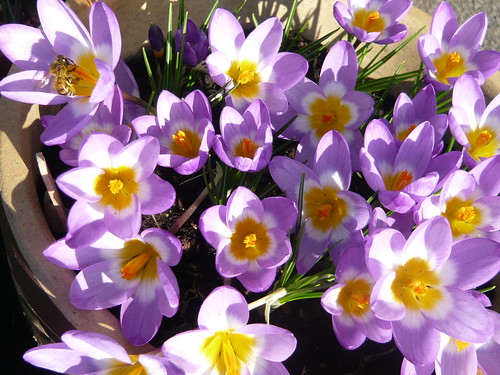
  • Choice bulbs sell first.
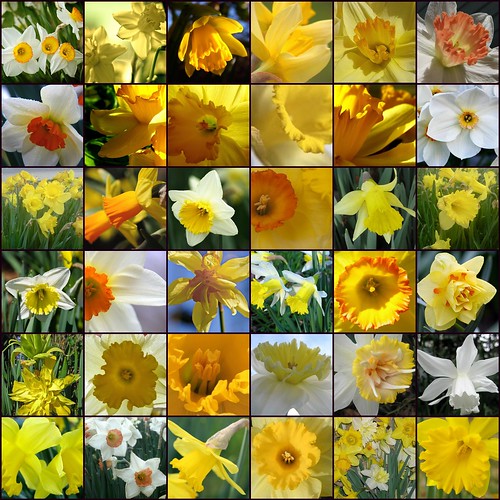
  • You will not be tempted to buy bargain basement bulbs that will probably be unsuitable.
  • Some bulbs like Narcissus appreciate a long period in the ground to develop good roots

Tulip

Why Order Bulbs Later

  • If you can’t store spring flowering bulbs correctly they will deteriorate.
  • You need to plant them to suit your garden conditions and when you have the space prepared.
  • Vendors are after your money – if you order now you will get more catalogues and offers – just watch this space.
  • You should be in the garden not reading glossy spring bulb catalogues.

Crocus 2012

Why Wholesale Bulbs

  • J Parker’s Wholesale catalogue is not only for retailers and professional gardeners.
  • Bulbs are sold in quantity generally of 100, and 1,000 but you can buy 25 of one variety at the rate for a 100 or 250 at the 1,000 price.
  • This volume buying works out good value and encourages you to select your varieties with care and get a good showing or massed grouping (I find buying in 10’s get a dot effect.)
  • Beware the Parker’s prices are quoted before VAT and there is a £4 small order surcharge.
  • More info and catalogue request at www.Dutchbulbs.co.uk

Gardeners Tips
J Parker also produce an Autumn wholesale catalogue and a variety of other vat inclusive catalogues during the year.
The paper is too glossy to go on my compost heap so I recycle old catalogues with our paper collection

Daffodils
Daffodils by robynejay CC BY-SA 2.0

New Mini Dahlia

New Mini Dahlia

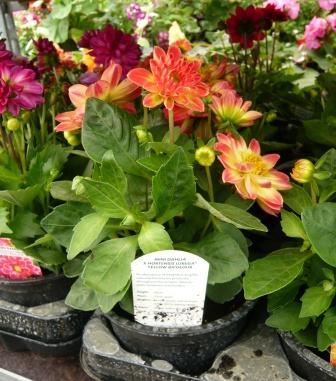
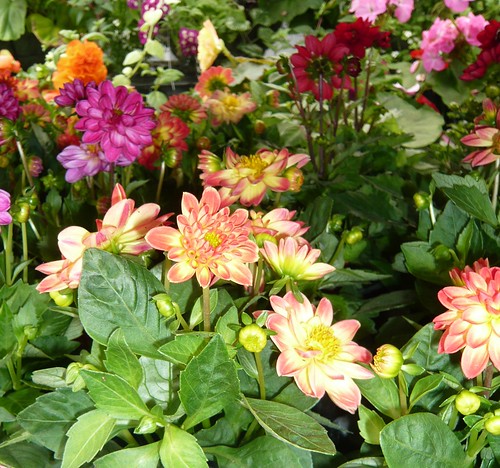
Mini Dahlia X Hortensis Lubega® is the latest addition to my plants acquired due to aggressive marketing. As readers will know I like to test new plants but do not what too much marketing.
In the garden centre it was on a tray marked £1.50 but was really £2.99 when I got to check out. This is another serious whinge of mine, duff pricing and or naff quality at garden centres.

Dahlia X Hortensis Lubega

Small Plan for Mini Dahlia

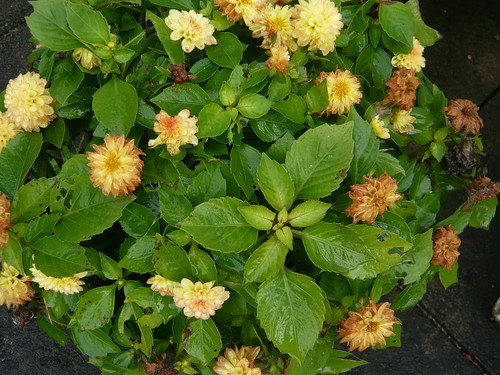
Despite my reservations I couldn’t resist this ‘mini dahlia’ in yellow and orange. It had over a dozen visible buds of which 5 showed the beginnings of colour. (One other similar plant had fully open flowers that showed a semi double effect).
My plan is to see how many flowers one plant will produce in one summer (assuming we get a summer).
It was in a 4″ pot and I have repotted into a 7″ pot. The recommended distance apart is 10″ which small for a dahlia that generally like their own space.
Current height is 6″ that suits me and the mini stature but I am worried as the label says in will grow to 16″ which is more than mini in my book. I must wait and see and will report back.
Report back after 10 weeks – bitter disappointment at poor volume of flowers. Plant leaved up but remained 12″ high but negligible new buds. Will September redeem the plant? I have my doubts!

Mini Dahlia Growing Instructions

  • Mini Dahlias are a half hardy perennial that is grown as a half hardy annual.
  • Garden centres are told ‘High light intensity and day lengths from 13 to 15 hours will promote an advanced florescence and a good plant structure’.
  • The label tells gardeners position in fertile, moist, well drained soil in sun or partial shade. (Oh that is so unusual).
  • Water well in dry weather and feed weekly when in flower.
  • Mini Dahlia Yellow Bicolour should ‘produce an abundance of delightful, brightly coloured blooms throughout summer.’
    Ideal for patio containers and borders.

Definition of Mini Dahlia

  • A Mini dahlia is a low growing dahlia normally between 10 and 18 inches tall.
  • Flowers dictate the definition ‘mini’ ranging from 1.5 to 3 inches in diameter.
  • Dahlias with flowers larger than 4 inches are no longer considered minis.

November mini dahlia
5 months Later

What about the Growers of Mini Dahlias

This is a German product by trade supplier Volmary GmbH Munster
Mini Dahlia X Hortensis Lubega® is one of a series or range of varieties that includes:
Dahliettaâ„¢
Dahliettaâ„¢ Surprise
Figaro Mix
Gallery®
Happy Day
Lubega®
Lubega® Mini with a Compact and well-branched habit of the mulitflora type
Lubega® Power
Melody
Mr Fothergill sells seeds of Dahlia Dwarf Double Mixed (Dahlia x hortensis)

Some Other Dahlia Species

Dahlia coccinea, Dahlia variabilis
Dahlia imperialis, Dahlia laciniata
Dahlia rosea’ Dahlia x hortensis