Browsed by
Author: hortoris

Evergreen Climbers

Evergreen Climbers

Not to everyone’s taste but Ivy or Hedera species are the most frequently grown, year round, climbing plants. Try these alternatives.
Kew 056e

5 Top Evergreen Climbers

Solanum crispum ‘ Glasnevin’ is a shrubby climber that needs to be tied in to wire supports. It will repay with prolific blue blossom with yellow stamen during summer and autumn.
Lonicera henryi has purple flowers followed by small black fruit. It is a good twining and climbing plants to grow up vertical supports.
Lonicera japonica variety Halliana is another honeysuckle this time with scented yellow flowers. It will only loose the leaves if the winter is exceptionally harsh and cold.
Trachelospermum Jasminoides is heavily scented when in flower. It grows aerial roots and like most scented climbers prefers a warm south facing wall.
Clematis armandii flowers in late winter and covers a large area such as a wall or fence clinging with twisting leaf stalks.
Ivy

Evergreen Ivy Tips

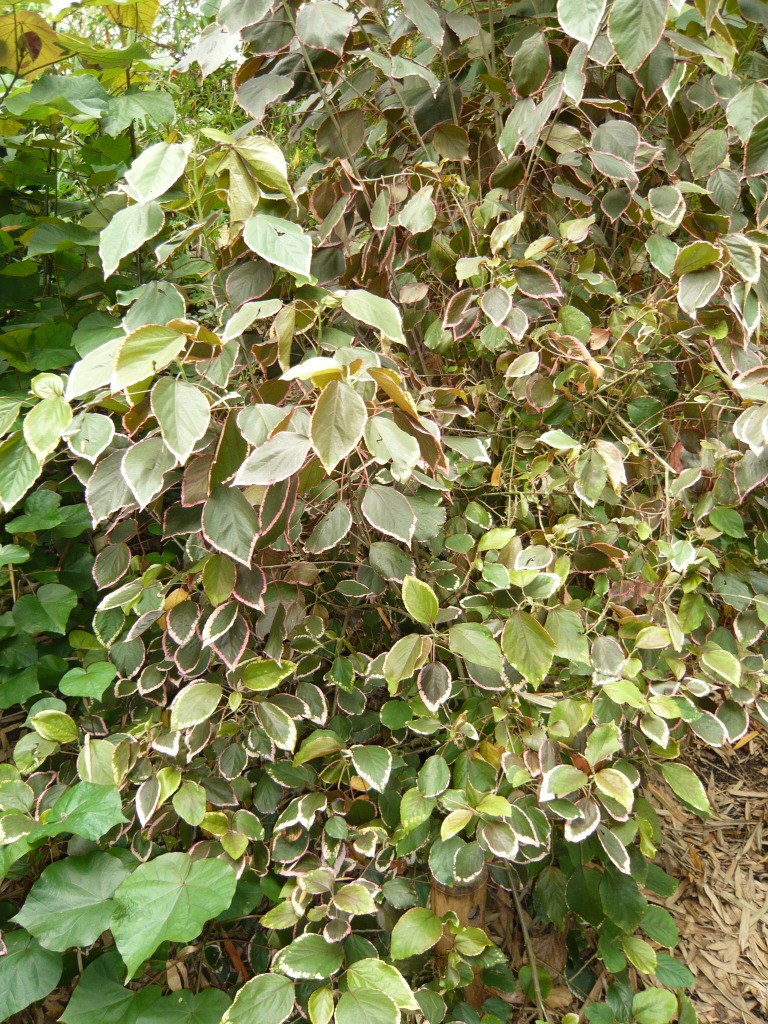
Try a variety other than common Ivy such as Hedera colchica ‘penata variegata’. You get better colour or leaf form but retain all the benefits.
Ivy provides food and shelter for wildlife and a year round backdrop for your garden.
The aerial roots should not damage a sound wall but the young rootlets may loosen bad mortar.
The leaves can be plaited to create wreaths or used as a filler in decorations.
Ivy can be grown on steep sloped as ground cover that protects soil from erosion.

Ivy

Photo credit
Kew 056e by Michelle Bartsch CC BY-NC-ND 2.0
Ivy by R~P~M ‘Ivy leaves at sunset, Lower Salden Farm, Mursley’ CC BY-NC-ND 2.0

All a Gardener Wants for Christmas

All a Gardener Wants for Christmas

What should you give your gardening relatives for Christmas?
Not an out of season plant that will doubtless die after a short indoor performance.
Nor in my mind a Poinsettia that will shed its leaves no matter how good a gardener they are (because it has already stood in a draught.)

Poinsettia

As a keen gardener I would be happy to receive vouchers at anytime and at Christmas it beats a shirt, tie or socks into a cocked hat. No I do not need a cocked hat either unless it keeps the rain off.

Vouchers for Gardeners

Amazon vouchers. The range of garden and outdoor products is now quite large and I love gardening books into the bargain.
National Garden tokens are accepted by lots of garden centers and some nurseries.
Seed and supplies are available on tokens from Thompson & Morgan They also accept Tesco Clubcard voucher, Copella voucher, Woodland Trust voucher or Garden News Society vouchers.That is just as well as their vouchers are hard to order on line!
Local nurseries and garden centers often sell vouchers which are bespoke to one nursery (I can always use them for dry goods if there are no plants I want)
Larger multiples – B&Q Gift Cards can be spent on anything at all UK B&Q stores, including the massive range of gardening goods. From sheds to shears, they make a great garden gift. Argos Gift Cards can be spent on the catalogue store’s complete garden range including barbecues, garden decoration, garden power tools and lawnmowers
RHS gift vouchers make great presents and are accepted in any RHS shop, along with HTA vouchers.


Alternative Garden Gifts

If it is a close family member we often make our own homemade gift vouchers. The gift may be cash, time or a service and is often well received as it is very personal.
You can make your own voucher from garden material or the back of a flower photograph. It is the thought that counts.
If you promise some labour don’t forget to deliver on your promise.
Small gifts can be found in cheap ‘pound’ shops – garden twine always comes in and a favourite Aunt may be amused by a plastic snail or garden ornament.

Book Cover
36 Great Christmas Presents for Green Thumbed Friends and Relatives [Kindle Edition] by R.J. Ruppenthal

Top Ten Styles of Garden

Top Ten Styles of Garden

Garden design and style is influenced by Gardeners, Location, Objectives and Resources. No two people would design the same garden for the same space nor would that garden grow and develop in the same manner.
Style is a personal choice made by the gardener but influenced by nature.

Top Ten Garden Styles

  1. Alpine or Rock garden
  2. Cottage garden
  3. Wild or Environmentally friendly garden
  4. Walled or Victorian garden
  5. Family and traditional garden
  6. Fruit and Vegetable plot
  7. National garden, Italian, Japanese, English, Swiss, Spanish, New Zealand or Mediterranean
  8. Sculpture garden
  9. The Peace garden
  10. Water garden

There are so many gardens that could be designed that a top 10 list is subjective in the extreme. The content of the garden then goes to the heart of the gardens style.
A woodland garden came very close to inclusion in out top ten and is a natural feature that many want to cultivate.
We could have selected a ‘garden of rooms’ but that is often a ‘technique’ used in many of the above types of garden.
Specialist plantings like Rose gardens or Herbaceous gardens could have had there own spot but I had to finish somewhere.
Top of the shop should have been my garden (or my wife’s and our garden).

Strawberries Growing on Trees

Strawberries Growing on Trees

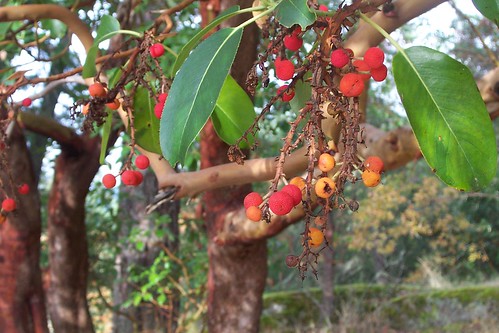
With knobbly fruit that are all dimpled and uneven Arbutus unedo is a group of trees and shrubs that fruit with strawberry like red berries.

Variegated Arbutus unedo
Variegated shrubs such as ‘Ukigumo’ are successful grown in shade.
Fruiting is less dominant on variegated forms. The round knobby fruits gradually ripen to strawberry red.
The evergreen glossy foliage can be quite beautiful. The cinnamon-colored bark is also attractive.

Arbutus berries

Arbutus unedo ‘Compacta’, Killarney Strawberry Tree from Thompson Morgan
‘This striking shrub makes a superb focal point for year-round interest. Its leathery, evergreen foliage and peeling, cinnamon brown bark form a superb backdrop for the clusters of small, white, urn-shaped flowers in autumn. The dainty blooms give way to scarlet red fruits that only fully ripen in the following year, as a new set of flowers emerge. The edible fruits of Arbutus unedo ‘Compacta’ have a sharp aftertaste when eaten raw, but can be made into jams and preserves for a sweeter, guava-like flavour. This neat, compact variety is an ideal specimen shrub for a sheltered position. Although perfectly hardy once mature, Arbutus will appreciate a layer of fleece for winter protection when young. ‘

Arbutus andrachneor the Greek Strawberry Tree is less hardy in the UK as it is native to the Mediterranean.

Arbutus unedo

Photo credit
Arbutus berries by GerryT CC BY 2.0
Arbutus unedo by Xevi V CC BY-NC-SA 2.0

Black Grass Ophiopogon planiscapus Nigresens

Black Grass Ophiopogon planiscapus Nigresens

Grass is designed to be green but gardeners being what they are they often want to get Black Grass.

Ophiopogon planiscapus Nigresens is often called Black Mondo. It is a rhizomus grass with delicate flowers.

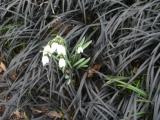
The snowdrop sets off the grass which is easy to grow but occasionally slow to spread.
It makes a gothic garden feature or fits in well with a ‘black foliage and flower garden’.
The straplike, shiny black foliage grows in little tufts and combines well with many other plants.
Ophiopogon planiscapus Nigresens is not to be confused with Black-grass Alopecurus myosuroides or Black twitch. This is an annual weed native throughout the UK.

Plants and framed photographs are available from Amazon.

Acer Season 2012

Acer Season 2012

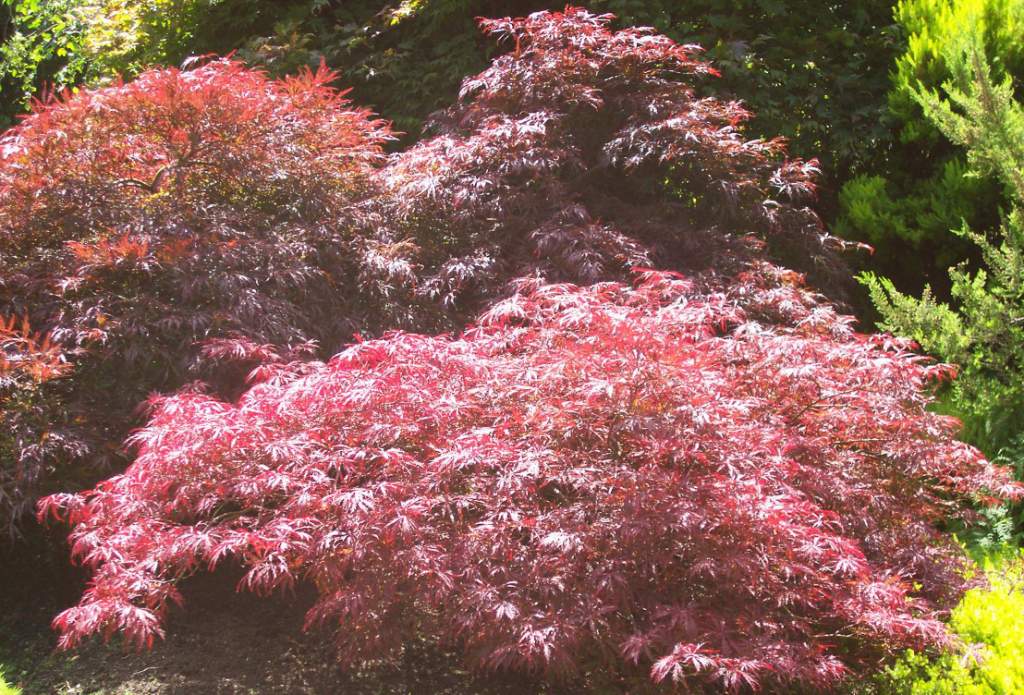
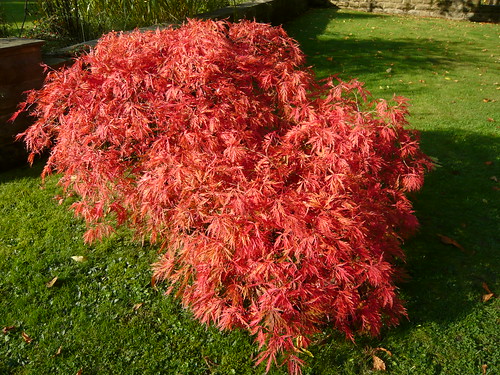
Maple trees or Acers have exceptional colour in autumn which is why tourists flock to New England and the eastern seaboard to see the flaming colours. Cold nights and warm days are the conditions that help turn green leaves to vibrant colours.

With the falling temperatures, the lush green colours of summer have been replaced with vivid reds, golden yellows and browns.

Leaves Autumn Amber

Why do Some Leaves Turn Red
Leaves naturally turn yellow as the chlorophyll breaks down and the green disappears but yellow can attracts sap-sucking aphids.
Some species of tree produce a bright red pigment into the leaves to confuse these insects.
Some trees are naturally red pigmented from the outset.

Gardeners Tips Favourite Links

Leaves Autumn 065

Gardeners Top Tip
Plant Acer palmatum ‘Matsukaze’, which opens bright bronze-red turns olive green, flushed with purple but then scarlet in autumn colour, where sun can shine through the coloured leaves to enhance the autumn effect.

Osmanthus Shrubs and Uses

Osmanthus Shrubs and Uses

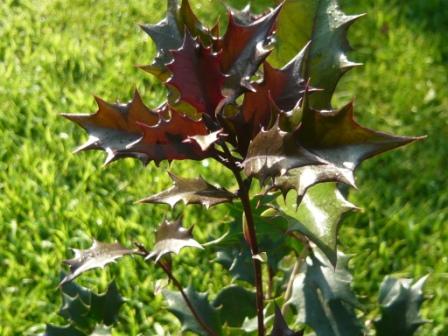
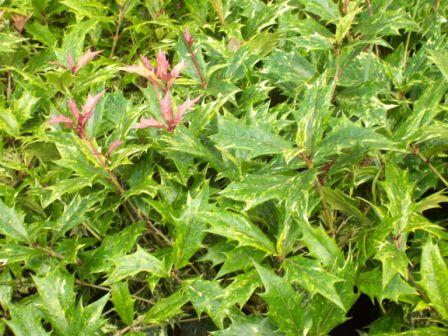
Osmanthus is an attractive genus of evergreen shrubs. The leaves are holly like with a leathery texture and spikes. The young leaves are green, red, cream or purple and below is a variegated example.
This variety O. hetrophylus is slow growing but can make a dense hedge or small tree. The flowers are sweetly scented in autumn.

Other Osmanthus and Uses

  • Osmanthus delavayi grows upto 6 foot tall and wide with fragrant white april flowers. It can be grown as a small tree.
  • Osmanthus yunnanensis ‘New Zealand Holly’ a fast growing large shrub with olive green leaves with flowers that can be a bit of a let down.
  • Osmanthus americanus ‘Devil Wood’ is a bit tender in the UK.
  • Osmanthus x burkwoodii which has small leathery leaves and fragrant white flowers in late spring. It can make a good hedge.
  • Osmanthus heterophyllus ‘Variegatus’ can be used as ground cover.
  • Osmanthus heterophyllus ‘Goshiki’ is an evergreen compact, fairly slow-growing shrub with dark-green, holly-like leaves.

Gardeners Top Tip
Osmanthus are cheap to buy when small, easy to grow and care for and are strongly recommended for a mixed border or ornamental woodland.

Gardeners Tips Favourite Links

Choice of White Daffodils

Choice of White Daffodils

I have just bought and planted some white Daffodils for cutting next spring. I buy them from a nursery that allows you to pick your own bulbs from large wicker baskets and prices them by weight.

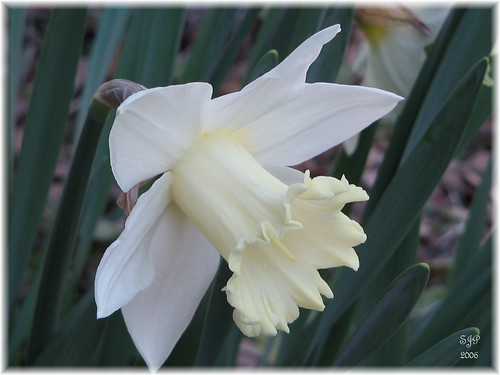
The main variety I chose was Mount Hood (div 1C) which has a white perianth that stands at right angles to a large white trumpet. Any hint of cream as the flower opens is soon relegated to a pure white.

white daffodil

Mount Hood dates back to the 1930s but remains the best known and most widely grown of the all-white trumpet daffodils. The flowers open creamy yellow and mature an even creamy white. They make a bright splash in early spring. Cream coloured Daffodils get whiter as the flowers age

White Daffodil

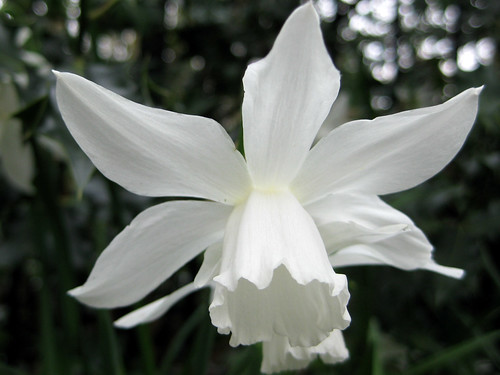
Another favorite is Thalia, a Div 5 Triandus narcissi with pure white flowers and a distinctive petals.

White daffodils

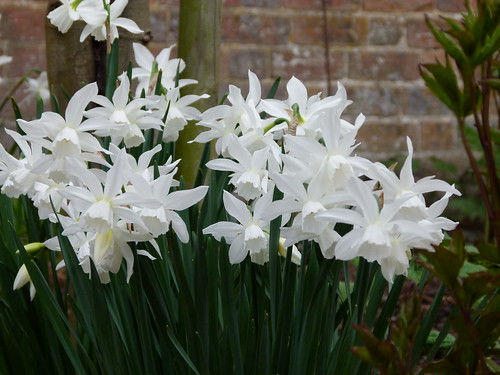
In the same division is Ice Wings and Silver Chimes which has a slight yellowing to the cup but both are best white daffodils.

daffodils / jonquils

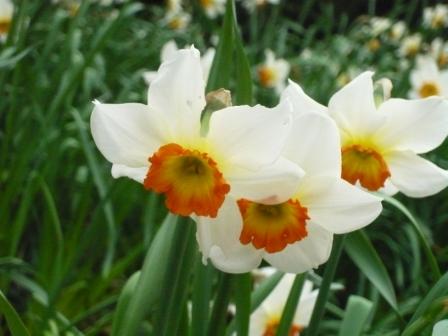
The Jonquilla family are well scented but I am unsure of the variety above as the red stamen are putting me off.  Pueblo and golden Echo are thought to be the best virtual white.

white daffodil

I like this shot of another unnamed Daffodil. Look out for a new Poeticus called ‘Cutless’

Erlicheer daffodil in the morning

This Erlicheer is excellent for indoors with 15-20 double florets per s6tem. It may be flecked with some yellow but is essentially a white variety well known in Israel.

Photo Credits
white daffodil by steve p2008 CC BY 2.0
White Daffodil by ptc24 CC BY 2.0
White daffodils by ramson, CC BY-NC-SA 2.0
daffodils / jonquils by cskk CC BY-NC-ND 2.0
white daffodil by puddytat30141 CC BY-NC-SA 2.0
Erlicheer daffodil in the morning by knoxilla CC BY-NC-SA 2.0
“Paper Whites”, Narcissus cv CC BY-NC-ND 2.0

"Paper Whites", Narcissus cv.

Other Daffodil Links
Tips for Growing Daffodils
Top Ten Miniature Daffodils and Narcissus
Daffodil society top tips
The society
The international Daffodil register
Bulbs from Thompson Morgan  including Narcissus ‘White Diamonds Mixture’  an elegant departure from the traditional yellow daffodil. It adds a dazzling white sophistication to spring borders and containers. This superb mix combines some of the best forms, including some rarities, to give a wonderful range of shapes and sizes. Plant them in bold drifts for a beautiful, naturalistic display. Height: 35cm (14”). Spread: 15cm (6”).
The American Daffodil Society

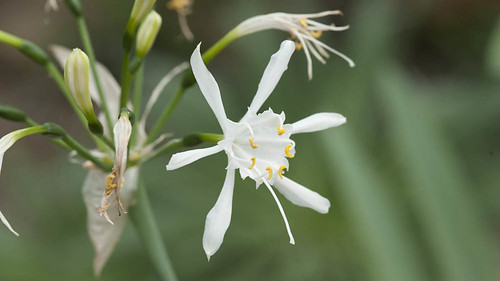
Canary sea daffodil
‘The Canary sea daffodil, Pancratium canariense, is endemic to the Canary Islands – meaning it is native only to that region. Catch the last of its flower in the Princess of Wales Conservatory during September’ Kew CC BY-NC-SA 2.0

Blight in Blighty from Sky News

Blight in Blighty from Sky News

Veg growing gardeners get it in the neck for growing potatoes. Emma Birchley the East of England Correspondent for Sky News’ has got a new blight story, it is either feast or famine when it comes to the potato.

Late blight of potato

‘Allotment holders who fail to deal with blight-ridden potato plants have been blamed for spreading the fungal infection to farmers’ fields.

If it is not detected, blight can destroy crops and the spores can quickly spread 30 miles or more in the wind.
Tackle it the right way and it can be controlled, but the Potato Council says some home and allotment growers are failing to spot the signs in time.

“If someone on an allotment has a blighted plant, a single leaf on that plant can produce 120,000 spores,” said the organisation’s director Rob Clayton.

“They can blow around in the wind and in warm, wet conditions they can infect neighbouring plants, neighbouring allotments and the whole neighbourhood.”

The muggy, damp conditions of this summer have been the perfect breeding ground for the fungal infection.

Susanna Colaco has had an allotment in Cambridge since 1986. She has never known a year like it for blight. But she is angry that the finger is being pointed at growers like her.

“I think allotment holders are very responsible.
“On this site we purchase certified seed stock from our allotment trading hut and we are very careful that at the first sign of blight we inform all the members on site and ask them to remove foliage and to be vigilant.”

That foliage must then be burnt, deeply buried or binned. It can even go in the council’s compost bin as the contents are heated to a high temperature.

But infected leaves or rotten potatoes must never be put on the compost heap.

“If somebody throws a rotten potato on a compost heap at this time of year it can sprout … and it can kick off a whole cycle of infection from next year on,” said Mr Clayton.

Late blight, as it is known, or phytophthora infestans, is the type which destroyed vital potato crops in Ireland in the mid-19th century causing the Great Famine. A million people died.

Farmers expect to lose around 7% of their crop to blight, but this year the loss is predicted to be more like 10%.
And the usual £55m cost of coping with the fungal infection is likely to increase to around £80m.

Potatoes are already 11% more expensive than they were this time last year and the price is expected to rise significantly higher as the impact of the increased farming costs filter through to the shops and markets.’ Thanks Sky

Blighted potatoes

You can get blight buster potato tips and information for gardeners here….
Photo Credits
Blighted potatoes by Kai Hendry CC BY 2.0
Late blight of potato by Ben.Millett ‘This is a Dark Red Norland potato tuber that is infected with late blight (the disease that caused the Irish Potato Famine), caused by the pathogen Phytophthora infestans. If you start peeling a potato and see this, consider yourself lucky that the soft rot hasn’t set in yet. Although this disease looks bad (it is bad), what makes it particularly bad is that it allows other pathogens, such as the bacterium Erwinia carotovora, to get in and ‘ CC BY-NC-ND 2.0

Plants I Grow from Cuttings

Plants I Grow from Cuttings

It is still not too late to take semi ripe and hard wood cuttings. Many perennials are short lived, like Penstemon, Pelargoniums and Pinks but they can be reinvigorated from new cuttings. Plants are not at their best in Autumn so results may not be perfect but I find it pays to experiment.

Semi-ripe cuttings should be hard at the base while the tip is still soft. Late summer to winter are good times to find material. Evergreens like Ceanothus, Choisya, Cistus, Erica, and Hebe have all grown well for me from cuttings.

Gardeners Autumn Cutting Tips

  • Take more cuttings than you need to cover losses.
  • Add perlite to your compost or use damp sand and peat
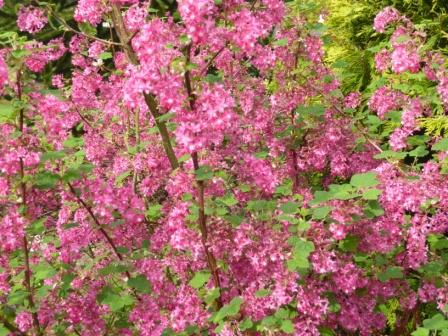
  • Hardwood cuttings of shrubs and trees can be taken and left outside under some shelter from a hedge. Buddleja, Cornus, Forsythia, Philadelphus and Ribes the flowering currant seem to do well overwintered as cuttings. Do not rush to look for roots give them time.
  • Pelargonium and decorative Fuchsia need to be over wintered away from frost and I find it easier to do this with soft cuttings rather than large plants.