Browsed by
Author: hortoris

Watering Using Capillary Matting

Watering Using Capillary Matting

Capillary action or ‘wicking’ is the upward movement of a liquid via a surface such as from one bit of compost to another.
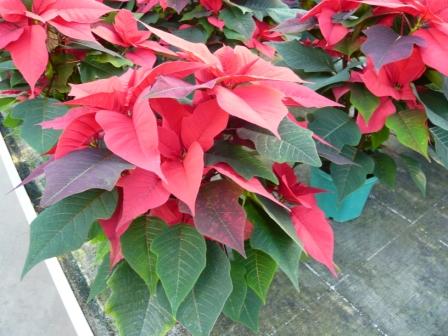
These Poinsettias have been placed on a micro perforated matting that allows water to be taken up by the plants in a capilliary action. From the mat the water is slowly drawn up to the pot and soil in the pot to water your plant.

It is a simple process to water the matting, set up a dripfeed system or syphon and the plant will then take up what it needs.

Benefits and Tips on Capillary Mats

  • Water is taken up at the temperature of the matting so you avoid the shock of cold water.
  • Plants shouldn’t become water logged as the capillary process slows as soil become wet.
  • A bed of wet sand can be used as your own home made capillary watering system
  • Advantages of capillary action include plants with delicate leaves not being damaged by the overhead watering and an even supply of water being consistently available.
Tips for ‘Wicking’

…

Read More Read More

Autumn Lawn Care and Artificial Grass

Autumn Lawn Care and Artificial Grass

I have attempted to kill off the moss before autumn and must now rake out the dead brash and give the grass a tonic. The gin I will keep for myself.
Lawn Leaves

Lawns can be one of the most neglected parts of your garden. Everytime we mow the lawn and remove clippings we are cropping the ground. Goodness needs to be replaced by top dressing and fertilizer.

Lawn Care

  • Keep mowing established lawns once a fortnight until it stops growing. The blades should be raised for the final few cuts.
  • Collect fallen leaves and brush away worm casts.
  • Scarify by raking out the old dead grass and moss then spike to improve drainage.
  • Feed with autumn weed and moss killer. This low-nitrogen preparation strengthens grass roots for winter.
  • Repair bumps, hollows, bald patches and broken edges.
  • Top dressing of soil, sand and compost mixed and brushed over your lawn is a good improver.
  • …

    Read More Read More

Digging out and Spreading Compost

Digging out and Spreading Compost

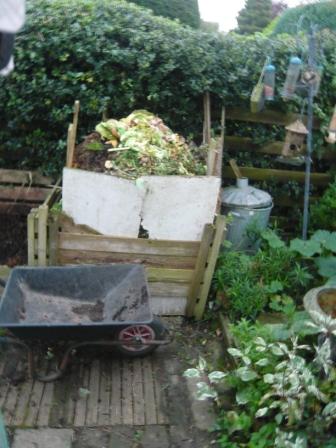
Three years ago this was how my compost heap looked. Today I restarted the job of spreading the good stuff 2013 in my veg garden.
014

My arms and back ache as I have spent most of today’s daylight hours emptying a compost heap. Not before time my wife thinks when she sees the other heap (below).

Even with ‘greedy boards’ to hold extra compostables the heap is too high. The last grass clippings of the season won’t fit even though the soft, nitrogen rich texture will help rot the dryer brown material available in quantities during autumn.

The greedy boards are the home made extension to the front and sides of the heap. The sort of thing you see on waste skips that are overfilled. The difference is my compost will shrink to half it’s current size. Then it will be turned into the now empty sister bin no.2 to aerate and mix the compost.

No Dig Composting and Spreading

…

Read More Read More

Moneymaker The Tomato to Grow

Moneymaker The Tomato to Grow

The clue is in the name – with Moneymaker you get a large, reliable crop of juicy tomatoes

What Tomatoes to Grow

  • New growers need to select reliable varieties to grow to develop their enthusiasm.

  • Moneymaker crops so well and regularly in my greenhouse that I will be growing it again.

  • Thompson Morgan have over a dozen varieties with the AGM so if I was looking for a new variety I would try one or two of them. Seeds from Thompson & Morgan

  • If you are a regular grower you may be tempted to something different and there are 280+ varieties of Tomato at Totally Tomatoes

  • Personally I do not grow tomatoes outdoors perhaps I am missing something .
  • Get your seed selected and bought early for planting and germination in late February.
  • Companion plant tomatoes with French marigolds to deter whitefly, and basil, chives or mint to deter aphids and other pests.

Selection

Tumbler for containers or hanging baskets

Beefsteak for large 1lb tomatoes

Gardeners Delight for sweetness and abundance of smaller fruit

Ailsa Craig an heirloom variety tried and tested through the years

Golden Cherry F1 thin skinned as it says on the label

Heirloom varieties are popular but often need more care and produce smaller but special crops

Cordon varieties are also called indeterminate like moneymaker and Gardeners delight need to grow a single stem up a cane or string support.
Determinate or Bush varieties can be left without support although some fruit will trail on the ground and stop growing sooner than indeterminates.
Semi determinates are shorter plants but as with all indeterminates they need side shoots pinching out and stopping at the top of the support.

Giant Pumpkin Growing

Giant Pumpkin Growing

Third in a short series about Curcurbits.

The British record for the heaviest pumpkin weighing 1,725 pounds can be beaten and you can win local shows next year by striving for this level of achievement.

Growing Tips for Giant Pumpkins

  • Start in February with a large hole filled with up to a ton of well rotted horse manure
  • Buy ‘giant seed’ via the internet or use Atlantic Giant seed.
  • In March sow the flat seeds, edge downwards not flat, in good sized pots in the greenhouse.
  • Plant out on top of the compost or manure pile when the risk of frost has gone. Keep a cardboard box to cover the plant on nights when frost is a danger.
  • Remove all but one (the chosen one) of the pumpkin fruits. If there are several, choose one that is about 8 feet from the roots.
  • Cull all further fruit regularly.
  • …

    Read More Read More

Winter Squash From Seed

Winter Squash From Seed

Want to grow through autumn to eat during winter try sporty Squash!
Squash

You can grow winter squash from seed and the plants will grow well outdoors in the UK during summer and early autumn. Squash can be damaged by frost so bear this in mind. However they store well so winter squash are a garden crop worth growing from seed.

Sowing Seed of Winter Squash

  • Sow individual seeds an eighth of an inch deep in 3″ pots filled with good seed or cutting compost.
  • Sow at the beginning of May and keep in the greenhouse or on a warm windowsill.
  • If the weather turns cold put them in a propagator set at 22-30 degrees C.
  • During the first half of June harden the plants off and transplant them when the roots have filled the pots.
  • Germination is quick 7-10 days and is reliable with fresh seed.
  • Do not exclude light as this helps germination.
  • …

    Read More Read More

Growing Pumpkins and Squash

Growing Pumpkins and Squash

To calculate the circumference of a Pumpkin use Pumpkin Pi

Squash

On Halloween I am not alone in writing about growing Pumkins and some of my notes are from Sarah Ravens recent article in the Telegraph.

Pumpkin Growing Tips

  • Sow seed vertically into very rich soil.
  • Pinch out all the growing tips in mid August and keep doing so to send energy into fruiting.
  • Keep well watered and the soil full of humus.

Pumpkin Varieties for Next Year

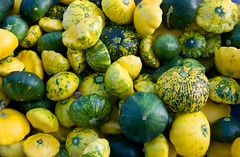
  • Crown Prince is a large heavy Pumpkin with blue-green skin that can exceed 10lb in weight.
  • Kabochas F1 hybrids and Sunspot are good orange skinned varieties.
  • Butterboy, Sunburst, Sweet Dumpling and Uchiki Kuri seeds are on offer ref TL840 with Crown Prince in a mixed pack of 5 from the ‘Squash Offer’ Rookery Farm Holbeach PE12SG 0844 7704653
  • …

    Read More Read More

Ecology of Water in the Garden

Ecology of Water in the Garden

Watering

Why is Water Important in the Garden

  • About 90% of active plants cells are water.
  • Water is the means of a plant obtaining dissolved nutrients to feed the plant
  • Water moves chemicals and hormones from the roots of plants to the growing parts of the plant
  • Water maintains a plants health
  • The presence of water can be necessary to germinate seeds or stimulate natural growth.

Water for Plants and Trees

  • Precipitation in the form of rain, drizzle, dew, and fog all have a place in providing water
  • Hail, snow, sleet and hoar frost also provide limited amounts of water.
  • Ground water from springs underground streams and the natural water table can contribute to the soils water content.
  • Gardener introduced water augments the natural systems.
  • Irrigation is a form of transporting water through channels or pipes.
  • Foliar feeding can provide limited amounts of water via a plants leaves.
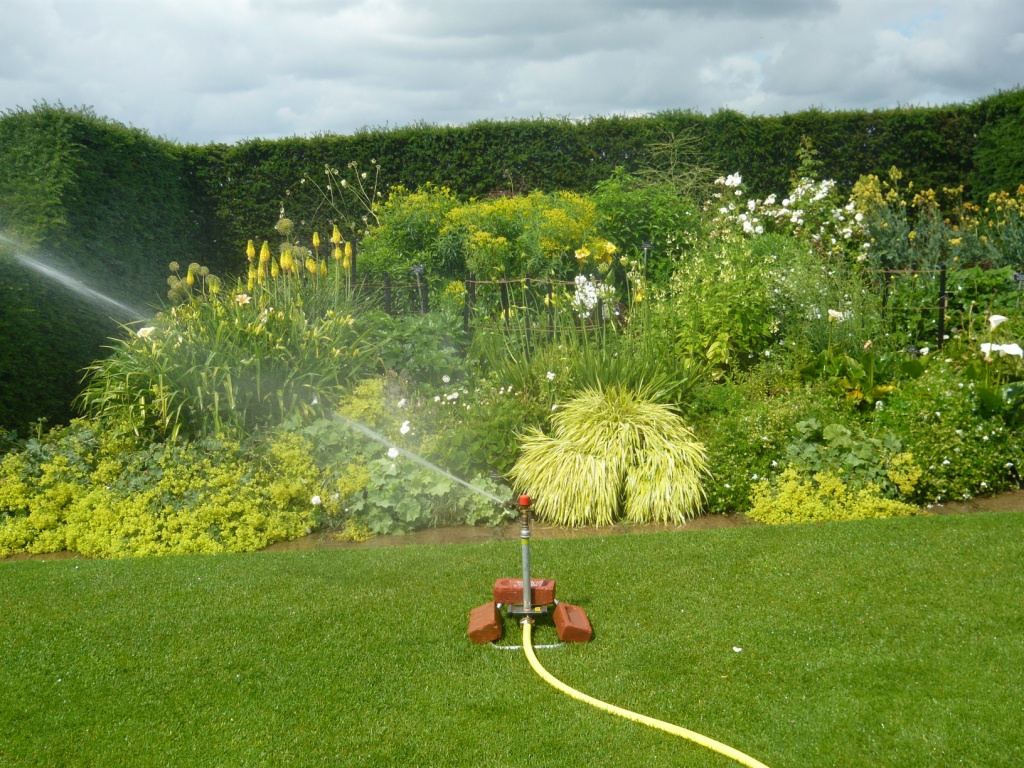
  • Watering devices, sprinklers, hosepipes and watering cans are the gardeners best friends in dry or drought conditions.

Problems Caused by Lack of Water

  • Deprived of water to transport food a plant may starve
  • Biological malfunction caused by lack of water can cause irreparable damage to a plant cells leading to loss of turgidity and death.
  • Lack of water may cause structural instability in the plant.
  • Water shortage can make a plant more susceptible to heat.

Rain Zones in the UK

  • High ground in the west of Scotland, Wales and Cumbria has the most rainfall. .
  • Cyclonic or convection rain can occur over low ground such as East Anglia but this is low in frequency and volume so flat areas have low or very low average rainfall.
  • 30″-45″ are annual average levels of rain but there are many surprises within averages. London with 25″ pa is drier than Rome or New York. Colchester can be drier than Beirut or Jerusalem
  • Thunderstorm rain can be damaging by flattening crops or causing excess splashing back off the soil. This is not zone specific.
  • In addition to volumes of rainfall the frequency or consecutive number of days without rain can be crucial. Apart form the south east most zones seldom exceed 30 days without rain and in Scotland and Ireland it rains even more regularly.

Water Retentiveness

  • Water retentiveness is crucial for a healthy trouble free garden.
  • Improved soil structure by the addition of compost and manures increases the water in the soil.
  • The addition of a top layer or mulch holds water in the soil reducing evaporation
  • Alginates like seaweed increase water retention and improve the crumb structure of the soil.
  • Retentiveness is damaged by compacted soil that water is unable to penetrate.

Gardeners Water Tips

  • Understand your plants and select them based on their need for water. How much and when are valid questions
  • Too much water can be as bad as too little so ensure you have the right drainage in your soil not a sticky mess.
  • When augmenting natural supply of water do a thorough job of watering then leave for a few days. Little and often can bring roots to the surface and not penetrate to the deeper drinking roots
  • Do not plant water hungry plants in heavy rain shadows caused by walls hedges or other plants.
  • Be aware of the prevailing wind that brings the most rain from the west.

What is in my Water

  • Oxygen and hydrogen are the elements that have combined to form water. They are not available separately except for an amount of oxygen that may have been dissolved in the H2O. Pond fish and algae need this dissolved oxygen.
  • Hard water contains dissolved mineral salts (this is what makes up the fur or limescale on a kettle). Hard water may be drawn straight from the tap in many districts of the UK where calcium and magnesium are present. This water is often detrimental to young plants.
  • Soft water has little or no dissolved mineral salts and like rain water is better for seedlings and young plants. Distilled water and ionised treated water is rendered soft by the process.
  • Sea water and brackish water contains dissolved salt (sodium chloride)that will kill most plants. It is no use in gardens.
  • Stagnant water and old water from butts will contain algae or microscopic life. I have found that this often results in moss or growth on the top of seed pots before the seeds germinate. Clean water is best for seeds and greenhouses.


Top ten green garden habits
See our report on ‘Organic pond habitats for green gardeners’.

Daffodil Divisions and top Twelve Tips

Daffodil Divisions and top Twelve Tips

Autumn is the time for thinking about more daffodils for next spring.

Daffodil Exhibition display
Now is the time to look closely at your Daffodil flowers and identify details of the parts you can see. Then learn to classify the flower into one of the Divisions experts use when showing or selling Daffodils. Finally remind yourself of the top tips for growing great Daffodils.


Detail Parts of a Daffodil Flower

The spathe is the protective green bract that covers the flower before opening time – cheers when it becomes papery.
The neck or pedicle is the section of stem that carries the flower whilst the main stem carries the chemicals from the bulb to the bloom.
The seedpod or ovary is close behind the developing flower, after pollination it begins to swell.
The petals, normally six in number, are the showy part of the flower also called the perianth.
The Corona is the central part of the daffodil flower. Also known as the trumpet or the tube it can be found in many shapes and colours.
The Stamen and stigma are the male and female organs that are surrounded by the corona.

Divisions of Daffodils

Division 1 – Trumpet Daffodils The cup is as long or longer than the petals. There is one bloom per stem.
Division 2 – Large-Cupped Daffodils The cup length measures more than 1/3 of, but less than or equal to, the length of the petals. There is one bloom per stem. …

Read More Read More

Autumn Buying Time for Tulips

Autumn Buying Time for Tulips

This post may be an excuse to show photos of some good looking Tulips or it may be a timely reminder to buy some new bulbs.
Blown Tulip

Why Order and Plant Tulips

  • Best quality Tulips give the best display. Order early from a specialist or renown supplier.
  • Tulips can supply that wild dash of colour in a spring garden or vase of flowers.
  • Several Tulips have a scent that is worth cultivating.
  • Botanic and species Tulips offer something a bit different in your gardem

Tip toe through the tulips

A selection of tulips are available from Thompson & Morgan

Colour and Tulips

…

Read More Read More