Browsed by
Author: hortoris

Cactus House Durham Botanic Garden

Cactus House Durham Botanic Garden

cactus

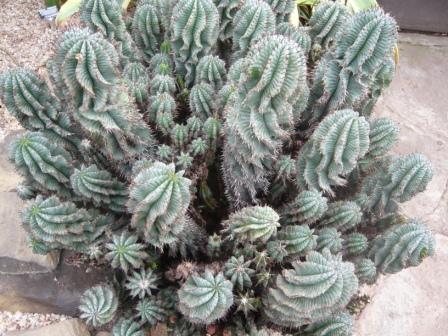
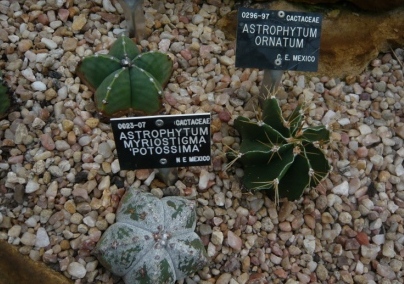
Why are Cacti raised in a Cactus House and not a Cacti House? A prickly question if you are pedantic but if you are just interested unusual forms of plants then the Cactus family will interest you. Originally all  Cacti are of American origin from Patagonia in the South to the 50th parallel in the USA. Some have reached an age in excess of a thousand years. Mexico is famous for old globose cacti Echinocactus ingens.

Cacti Propagation Tips

  • Growing from seed needs patience but plants started in this way adapt to the conditions and give pleasure as they grow and develop. Sow on the surface of porous sandy soil at 20-30°C and cover with glass to retain heat and moisture.
  • Take vegetative cuttings in summer from side shoots root as long as the cutting is not too small. To encourage shoots cut off the top of a cactus to disrupt the growing centre. Many varieties like the cut surface to dry before they are potted up when rooting can then be rapid.
  • Grafting is a popular commercial technique as it helps speedier growth. Even small seedlings can be grafted uniting in a few hours. Stock and sion are cut at right angles and can be held in place with rubber bands.

astrophytum-mexico

Single Colour Hanging Baskets

Single Colour Hanging Baskets

Good hanging baskets with a bold statement can be achieved by using one type of plant in one colour.
Think about the volume of colour from your chosen flowers over the life of the hanging basket. Keep it simple and you will only need one watering and feeding regime.
The hanging baskets below generally fit into the single colour category with the odd liberty.

Lobelia

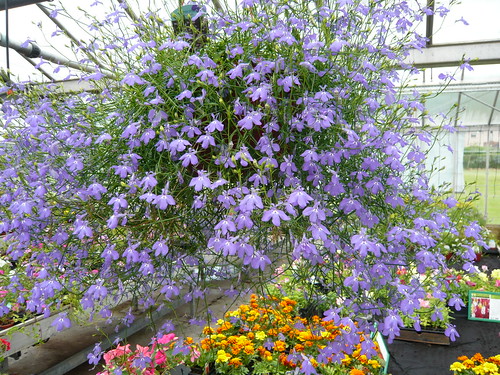
I like the powder blue Lobelia. It is far more stunning than the more traditional purple in this large hanging basket.

Petunia

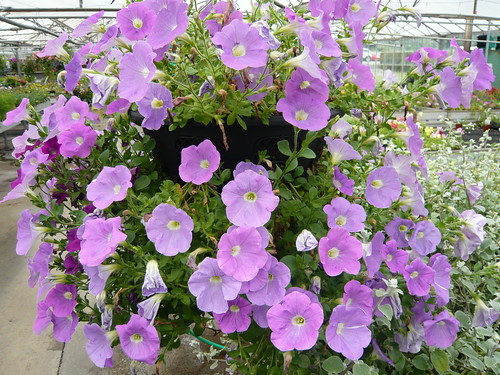
Petunias in purple, or would you call it mauve, are great for hanging baskets as they produce lots of flowers and self-deadhead.

Hanging Basket 2009

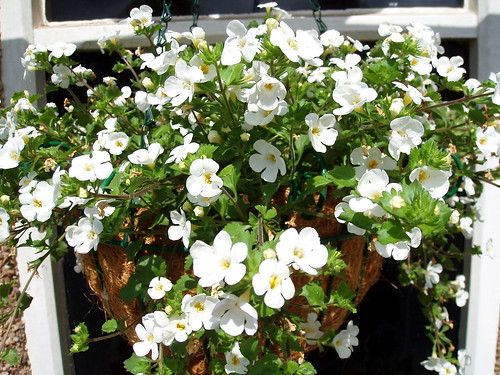
I have not grown Bacopa but like the clean white colour scheme on this hanging basket.

Hanging Basket

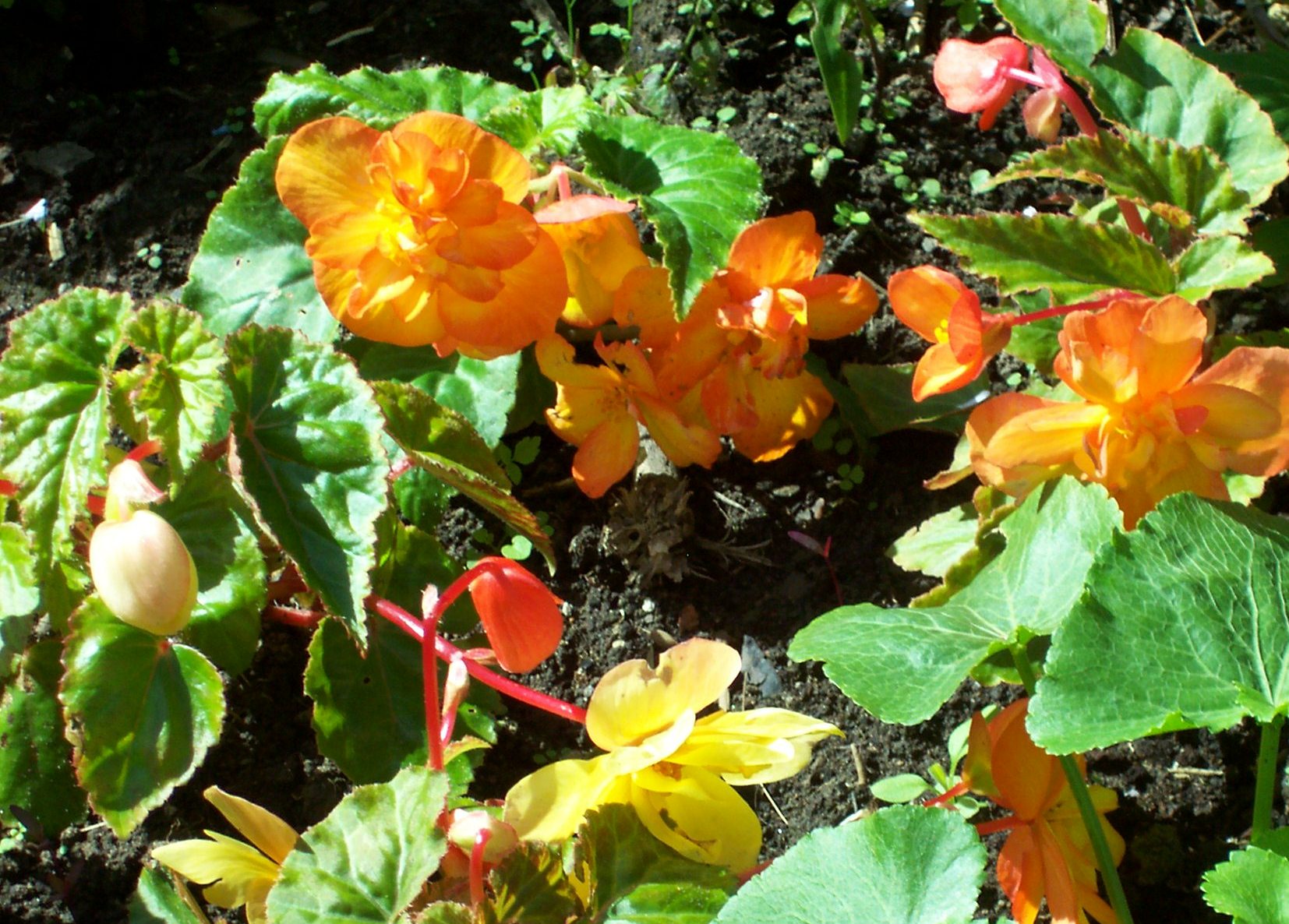
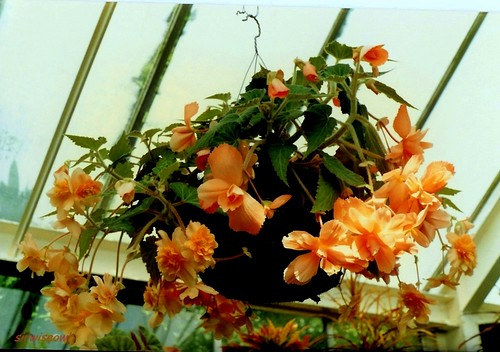
Orange is an ususual clour for a hanging basket but there are now some brilliant begonias like these.
Begonia x tuberhybrida ‘Illumination Apricot Shades’ F1 Hybrid is fantastic but would produce a mix of yellow & orange.

Beautiful hanging baskets

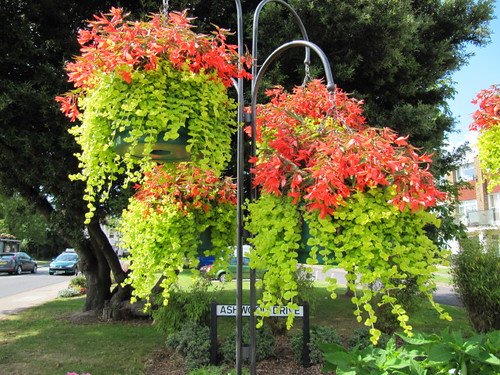
Now we get to a cheat with a trailing Lysimachia to under pin the base of the hanging basket which contains red begonias.
Begonia from Thompson & Morgan

petunias

Is it fair to call this a single colour. Certainly this veined petunia in pink to purple makes a bold splash of colour.
Petunia Million Bells or Calibrachoa are very floriferous plants to try in hanging baskets.
Petunia seeds at Thompson & Morgan

Hanging hydrangea hallway - Longwood Gardens, 2 May 2011

This would be my hanging basket display of choice. Hydrangeas drink large volumes of water and would not normally feature in baskets but this USA garden at Longwood makes do.

Colour Photo Credits
Hanging Basket 2009 by amandabhslater CC BY-SA 2.0
Hanging Basket by sirwiseowl CC BY-NC-ND 2.0
Beautiful hanging baskets by wallygrom, CC BY-SA 2.0
petunias by NapaneeGal CC BY-NC 2.0
Hanging hydrangea hallway – Longwood Gardens, 2 May 2011 by mmwm CC BY-NC-ND 2.0
Cheerful pelargoniums by tsheko CC BY-NC 2.0

Cheerful pelargoniums

In Praise of Clover in your Garden

In Praise of Clover in your Garden

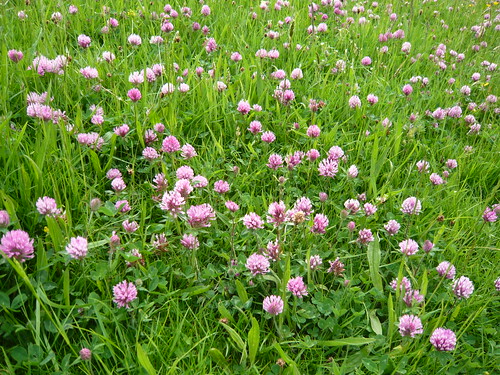
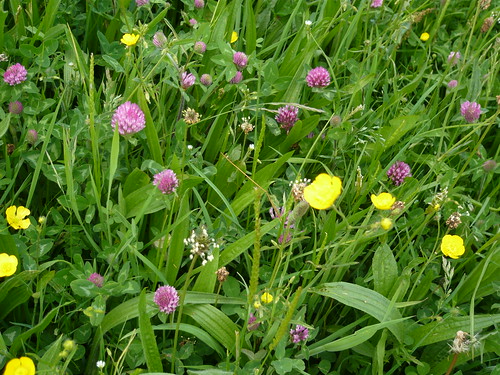
The wet weather in May and June has brought out a good crop of clover and meadow flowers for our local farmers. Praise be the hay making will produce some juicy animal feed and the fields have looked particularly good.

Clover

Good Clover for Gardeners

  • Clover can be used as a green manure if you have a large patch in your garden. Grow it then dig it or rotovate it back into your soil.
  • Green manure acts as a good soil conditioner increasing the humus content.
  • Clover adds or fixes nitrogen into the soil via its roots.
  • Clover is a beneficial weed because it attracts good insects particularly species of wasp, which do not sting but do eat aphids. Bumble bees will also be attracted in to your garden.
  • Red or white clover can create a green, low-maintenance lawn or groundcover as it did before herbicides were used in great quantities to manicure lawns.

Wild Flowers

There are circa 250 species in the genus Trifolium or Clover aka Trefoil of which Trifolium repens is the common white variety.
Trifolium rubens is a hardy perennial clover sold as seed by Thompson & Morgan who say it is a ‘soft to the touch flower spikes of dusky pink which bees love and can been used as cut flowers. The mid green leaves are unusual and almost resemble peanut foliage.’ seeds at Thompson & Morgan

Plant Hardiness Ratings

Plant Hardiness Ratings

You want your plants to survive our British climate so it is worth understanding the hardiness ratings. Plant hardiness is based on the lowest temperature that a plant can normally withstand during  winter.

Categories of Hardiness

  • Hardy plants are those capable of coping with temperatures as low as -15º C.
  • Frost-hardy plants tolerate temperatures down to -5º C
  • Half hardy plants should survive in temperatures above zero.
  • Frost tender plants may be at risk below 5º C.

Hardiness Zones

  • The USA is so large and covers many different climates that it relies on Hardiness zones for horticulture and gardening.
  • These hardiness zones are geographically defined areas where temperature  will dictate what plant life is capable of growing.
  • Zone 1 is -50º C,   Zone 8 equates to -7º C   and Zone  10 is zero.
  • England is generally in zones 7 – 10 Scotland is cooler and Ireland warmer due to the warming effect of the gulf stream.

Plan Your Hardy Garden

  • Frost will run or fall down slopes and collect in ‘frost pockets’. Be careful what plants you put at the bottom of slopes.
  • Frost on young buds may not hurt but a rapid thaw caused by spring sunshine probably will. Camellias get frost burn and loose their buds if facing an easterly rising sun.
  • Your garden will have a series of micro climates so map out those areas that are suitable for special plants.
  • Allow your plants to acclimatise. Sudden drops in temperature can be more deadly than cold.
  • Be aware of heat hardiness as some plants will not survive hot temperatures.
  • Fertilizer hardiness is an issue not fully understood so watch out for sufferers.

Tactics of Hardy Plants

  • Hardy herbaceous plants allow the foliage to totally die back in autumn. The roots remain viable under the soil and regrow in spring.
  • Some hardy plants allow the stems and leaves to fall on the root crown to create a warming mulch until next spring.
  • Sappy growth is a target for frost so hardy plants stop growing in summer allowing the twigs to toughen up. Do not feed plants with high nitrogen feed in late summer if you want them to remain hardy.
  • Trees and shrubs take the sap back down into the plant and branches so that twigs are too dry to be damaged if they freeze.
  • Plants will grow less well and be prone to winter injury if the soil is heavy, wet, of low pH or low fertility, or in general not suited to the plant.
  • Some plants grow more sugars in summer to sustain them through cold winters.
  • Thermal insulation from snow cover helps plants survive normally deadly winter temperatures

The Hardy Plant Society

  • The Hardy Plant Society is a UK charity that was formed to foster interest in Hardy Plants.
  • The Society informs and encourages the novice gardener.
  • There are 40 regional groups so you can join one near you.
  • They have specialist societies for Geraniums, Peony, Pulmonaria, Variegated plants and Ranunculaceae

Sources of further information

It is hard to address the ‘question asked by everyone with ambitions to grow hardy and semi hardy tropical plants in the UK’.

The British Fuchsia Society
has an official list of fuchsia plants that are capable of being over wintered in the garden

Growing Chirita as House Plants

Growing Chirita as House Plants

Chirita micromusa 040919-1032

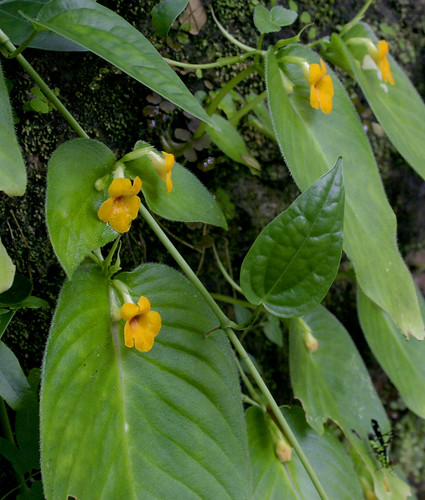
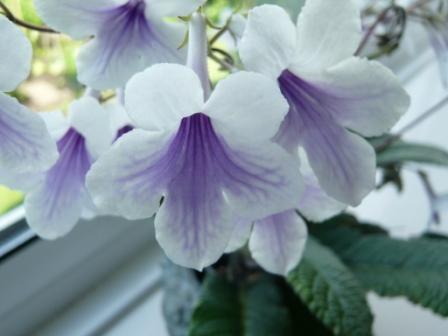
If you have tried Cape Primroses, also called Streptocarpus, then you may also want to try the cousin Chirita. They have hairy leaves similar to African violets and flowers that are similar Streptocarpus. In fact they all belong to the little know Gesneriad family


  • Chiritas can be acquired from the specialist www.dibleys.com They also produce an excellent compact A5 plant catalogue
  • Propagation is easy from leaf cuttings in an equal mixture of compost and vermiculite, pearlite or sharp sand.
  • Keep plants out of direct sunlight, a north facing windowsill or porch is ideal
  • Plants can stay in the same pot for several years if they are give a regular week feed.
  • Keep plants a bit on the dry side and treat like African violets
  • Chirita Akiro as shown above has marbled leaves
  • For small neat pure white Chirita taminiana is recommended by Anne Swithenbank
  • For larger flowers try C. Keiko shown below with upto 25 two inch flowers from

C. Keiko

Chirita Growing Tips

  • Do not drown your Chiritas only water when the compost is dry.
  • Deadhead flowers and do not let spent blossoms drop onto the leaves. They may cause rot and disease.
  • Chiritas like plenty of light but avoid mid day sun which can burn through a window.

Chirita sinensis is most frequently grown as a house plant. The genus chirita belongs to the gesneriaceae family and contains approx 150 species.

Photo Credits
Chirita micromusa 040919-1032 by Tony Rodd CC BY-NC-SA 2.0
Primulina (Chirita) tamiana, Saintpaulia ‘Cirelda’ and Sinningia ‘Country Tiger’ x self by nipplerings72 CC BY-NC-ND 2.0
Read Chirita a housepalnt with a future

Book Cover“>Amazon

Gesneriaceae: Cyrtandra, Didymocarpus, Streptocarpus, Alloplectus, Achimenes, Chirita, Henckelia, Gasteranthus, Sinningia, Kohleria, in Portuguese, an English version may now be available!

Laburnum Golden Rain in Chains

Laburnum Golden Rain in Chains

laburnum

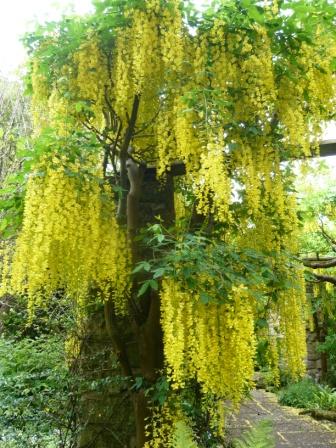
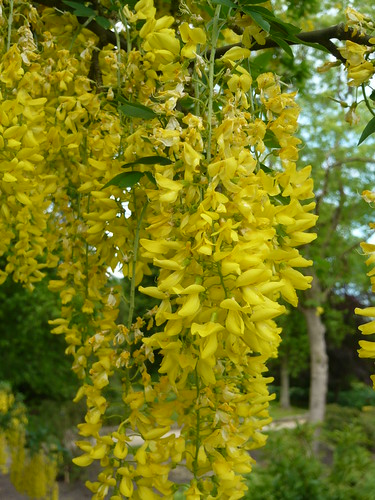
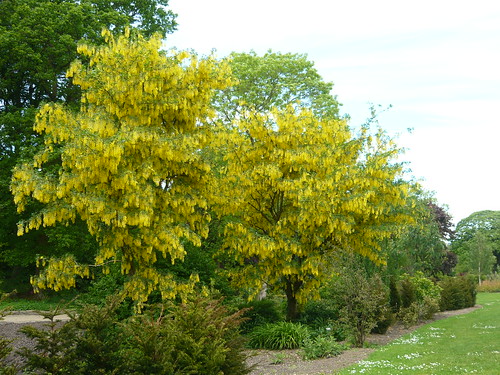
Fantastic festoons of  floral racemes give this Laburnum its common name of  ‘Golden Rain’. The drooping clusters of small yellow flowers are produced in spring and early summer.

Describing Laburnum

  • Laburnum trees produce yellow pea like flowers and pea shaped seed pods.
  • These small ornamental trees are easy to cultivate and produce flowers in May & June.
  • The deciduous leaves are trifoliate usually dull green and slightly hairy.
  • Laburnum watereri Vossii is this free flowering form with extra long racemes of flower. Alfords Weeping is a small vigorous tree with a wide spreading head.
  • Common Laburnum Laburnum anagyroides can grow to 30 feet tall, Aureum is a golden leaved variety and Autumnale often flowers again in the autumn.
  • Laburnum alpinum ‘Scottish Laburnum’ is a small tree with fragrant flowers.
  • Common laburnum vulgare  flowers earlier and has shorter racemes with the same pea shaped flowers but hairy pods.
  • Laburnum also  has Erect and Pendulum varieties

Flowers in May

Growing Tips

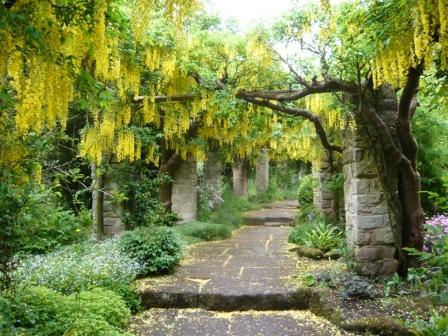
  • Below is a Llaburnum walk way that is many years old. Such decorative walks are replanted from cuttings but most Laburnums are propagated by seed.
  • Plant your laburnum tree in full sun. The more sun the better
  • Laburnum are not fussy about the type of soil
  • Try removing the drying seed pods on small trees to encourage a good show of flowers the following year.
  • The trees are not very long lived and I have recently taken out a tree that was 30 feet high because I hadn’t kept it in check.

laburnum-walk

Health Warning on Laburnums

  • All parts of Laburnum are poisonous particularly the seeds -Stop children from eating them.
  • Symptoms of poisoning by Laburnum root or seed are intense sleepiness, vomiting, convulsive movements and dilated pupils.
  • The seeds look tempting shiny black but are bitter alkaline to taste.

Flowers in May

Alpine Vista Mista

Alpine Vista Mista

alpbach 207

Missing posts on this site can be put down to my Alpine holiday in Austria. Mist on the hills was a small problem for my photography but it meant there were fewer walkers around to disturb me and the cattle on the Alpine pastures.

The surprise for me was the volume of Rhododendrons clinging to the mountain side at over 6000 feet. No soil to speak of, so that is one reason Rhododendrons and Azaleas are comparatively shallow rooted I suppose. They also like to get a fair share of water in spring and summer to help next years bud formation, no problem on these hills, (Get out the rainproofs again).
Nature usually has a reason for plants developing the way they have.

In Austria the seasons seem to be compacted together and at the end of June there was a festival of colour in the villages and hillsides to say nothing of the mountain tops.

alpbach 092

Flowers are used extensively in the neat well kept grave yards. However this shrine shown above was on one of the walking routes and the red rose seemed very apposite.

Candelabra Primula Bulleesiana & Hybrids

Candelabra Primula Bulleesiana & Hybrids

Flowers in May

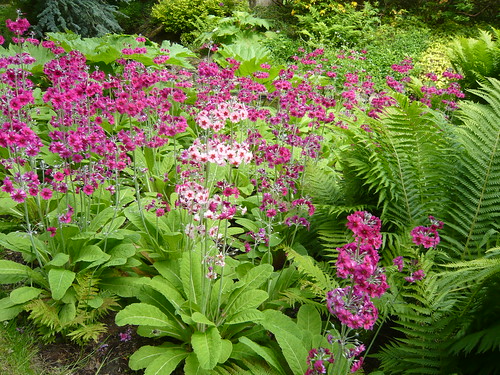
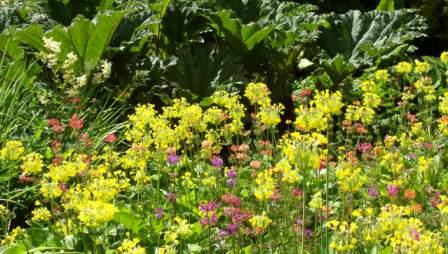
Primula x bulleesiana is being recognised as one of the great Primulas to grow in your garden. These Candelabra Primulas are great plants that originate from China and the Himalaya. They are ideal for woodland, damp or even extremely wet places.

Description of Candelabra Primula Bulleesiana

  • Candelabra Primulas make clumps of strong oblong shaped leaves often persisting through the winter .
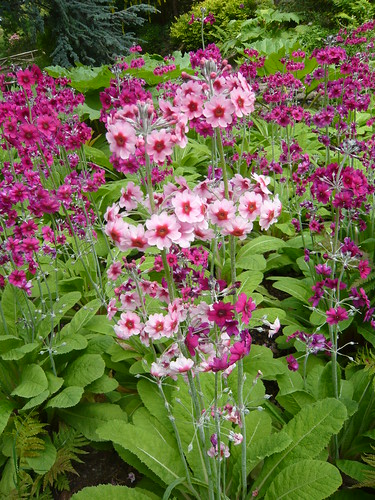
  • They send up their tall stems on which there are whorls of ten flowers, each ring opening in succession, perhaps one every five or six days.
  • There can be up to six or seven whorls that gives a long flowering period.
  • There is a mass of colour from brilliant orange or yellow, red, pink, white, even dark maroon.
  • There is a powdery white ‘farina’ or white meal on the stems and leaves.
  • Plants can grow and flower 24″ tall.

Flowers in May

Simple Primula Tips

The best book currently available is Primula by John Richards

Book Cover

  • Candelabra Primulas or Bulleesiana are easy to grow from seed that can be bought from RHS shops. Many primulas do not come true to seed.
  • From Harlow Carr hybrids you get a range of pastel colours which themselves self seed.
  • They like damp roots and these particular primulas were growing on the banks of a stream
  • Candelabra primulas get there name from the whorls  of flowers blossoming in a tiered effect part way up the stem as well as at the top.
  • There are over 350 species of Primula and they would  make an excellent subject for building a collection.
  • Primulas can be divided if you want a  plant true to type
Primulas at Harlow Carr

This photo was taken during summer  at RHS Harlow Carr in Yorkshire. The garden is renown for its variety of Candelabra Primula Hybrids.

Growing Primula

  • Candelabra Primulas prefer partial shade and can only be grown in a sunny position if the soil is always moist.
  • Plants grow best in deep, peaty soil or any soil rich in well rotted organic matter.
  • Primulas prefer winter and spring light values that are weaker than in high summer
  • A hybrid between Primula bulleyana and Primula beesiana flowers in varying cerise shades
Top Ten Miniature Daffodils and Narcissus

Top Ten Miniature Daffodils and Narcissus

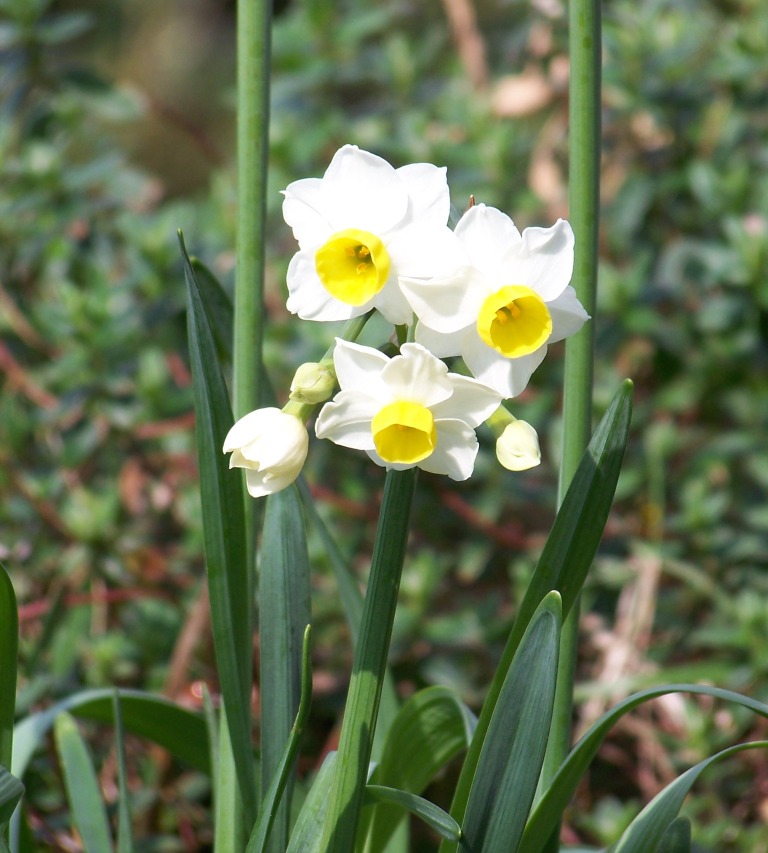
canaliculatus
Miniature Daffodils and Narcissus are easy to grow with these simple tips that includes a top ten variety list.
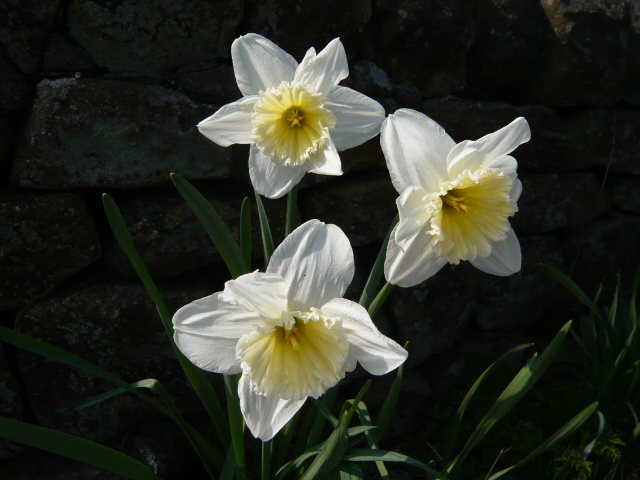
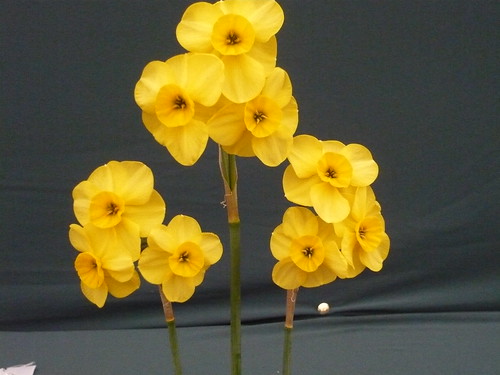
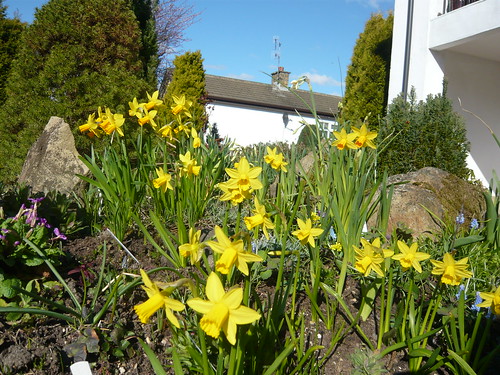
Miniature daffodils grow from 4 inches to just short of a foot. Varieties Minnow, Toto and Canaliculatus have several flowers on the one stem and are particular favourites of mine. Try growing some in pots in the cold greenhouse or as welcome additions to your alpine plants.

Daffodil selection

Top Ten Selection

  1. Little Beauty 5″ with white perianth and yellow corona
  2. Rip Van Winkle
  3. Sun Disc a consistent bulb with round disc shaped yellow flower.
  4. Hawera with reflex bachward pointing petals
  5. Petrel has several ivory-white hanging flowers per stem.
  6. Segovia -with a white perianth contrasted by a neat lemon cup
  7. Snipe A classic 5″ tall white cyclamineus type with a green tinge.
  8. Baby Moon late flowering and scented jonquilla type.
  9. Baby Doll with pink cups and a nice scent.
  10. La Belle with yellow flowers and shallow coronas in orange-yellow with a distinct reddish-orange rim

Daffodils are organised into groups and classes called divisions. Read more about Daffodil divisions that encompass miniature daffodils and narcissus varieties.

miniature daffodil

Tips on Miniature Daffodil and Narcissus

  • Look in spring for successful varieties that you may want to buy for planting this Autumn.
  • Buy pots in bloom this spring so you know what you are getting. Deadhead before the seedheads start to develop and feed the bulbs with a high phosphate feed.
  • One of the smaller varieties is Bulbocodium Conspicuous, yellow hooped petticoat at 4 inches tall with golden yellow flowers.
  • The scented Jonquilla has a couple of varieties that are low growing including Jonquil Single, Sugarbush and the ivory white flowered apricot cup of Waterperry.
  • Cyclamineus varieties tend to be low growing. One of the most popular is the Tete-a-Tete with fluted golden trumpets which bulks up quite well year on year.
  • For something different try the double Rip Van Winkle or the pinky yellow Nanus.
  • Place your order from a reputable bulb supplier during summer so that you get the varieties you want before the best bulbs are sold out. The best time to plant miniature daffodils is from September until mid October. They like to make long roots before flowering and fully produce their leaves first. .

Try growing Narcissus bulbocodium ‘Golden Bells’ commonly called the Hoop Petticoat Daffodil! Bulbs from Thompson & Morgan

Cyclamineus – Div 6 are eye-catching daffodils with reflex petals.
Triandrus Daffodils – Div 5 are a result of breeding from the species N.triandrus. There are mid flowering height and usually 2 to 5 delightful hanging flowers per stem. Available from the Miniature Bulb Co
The Daffodil Society has a list of other bulb suppliers

Five Senses For Gardeners

Five Senses For Gardeners

golden acre gardens leeds

If we are lucky to have a full complement of all five senses we are fortunate gardeners. At different times of our life these senses may wax and wain, I for one can no longer read the small print on seed packets nor hear my wife when she asks me to do something other than gardening.

Gardeners would garden just for the sheer pleasure but they also want to take into account and compensate for those with impaired senses. Here are some suggestions to help focus on the five senses one at a time but the pleasure is doubled by combining plants that augment all the senses. I you have focal points for viewing what do you call points for touching, smelling, hearing and tasting?

Himalayan garden Grewelthorpe 144

Five Senses – Sight

  • Bold colours spring to mind and one favourite is the brash Sunflower but in the veg garden Swiss Chard ‘traffic Lights’ is most colourful
  • Different shapes and contrasting leaves can be added via Heuchera or Hostas. Ornaments and statues are good for creating focal points.
  • White and yellow flowers start in spring with Snowdrops and Daffodils and continue through a variety of annuals and perennials. I suggest a range of Marigolds and Roses will give pleasure.
  • Birds and butterflies are natural sights in a well balance garden

Himalayan garden Grewelthorpe 152

Five Senses – Sound

  • Close your eyes and listen to your garden. Birds and insects add a vibrancy to your garden so attract them with appropriate plants.
  • Trees with open canopies like birch and beech are great rustlers in a breeze.
  • Bamboos sway in the breeze and if you can stand the added noise make a wind chime from the dried hollow stems.
  • If you have running water so much the better. I saw a deer scarer run by solar power in a garden this week.

Lincoln 088

Five Senses – Touch

  • Use pathways and lawn edges for the plants you most want to touch and hide away the spiky and prickly devils.
  • Textured leaves like the hairy Lambs tails or Silver Sage are very touchable.
  • Flowering grasses are airy and good for running your hands through.
  • Again an appropriate statue can be stroked and petted.

alpine strawberry

Five Senses – Taste

  • Herbs and vegetable come out strongly in the taste sense. Who would be without strawberries some varieties of which can now be grown in hanging baskets or containers.
  • Mint, Rosemary and Lavender are old fashioned stand-byes for strong taste and the plus of scent.
  • Members of the onion family including chives garlic and shallots have there own appeal.

indian pink

Five Senses – Smell

  • Sweet smelling garden Pinks and Chocolate Cosmos attract more garden visitors than you would imagine.
  • Sweet Peas are my all time favourite and you can pick bunches for indoors throughout the flowering season.
  • Over breeding has reduced the scent of some plants so smell before you buy at your local nursery or scrounge plants from other gardeners where you know the pedigree of the smell.

Sixth Sense

  • This plant was expensive so it will die
  • This nice plant will turn out to be a weed
  • The weather is going to get better
  • The bugs will eat my best veg