Browsed by
Month: March 2024

My Ground Cover Ideas

My Ground Cover Ideas

Ground cover plants are designed to do what they say in the title. They can cover the ground by design, happy accident or conscious neglect.
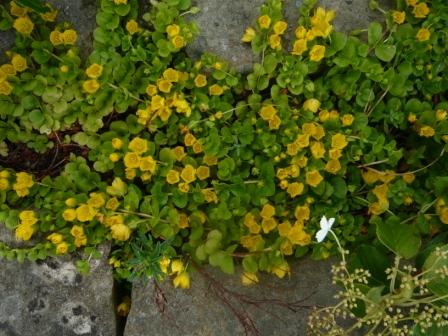
Creeping Jenny

Benefits of Ground Cover

  1. Treasure the ground cover plants that clothe the soil and rocks with leaves or stems preventing wasteful moisture loss.
  2. Ground cover reduces weed seed germination as the seed can’t reach the soil. Any weeds that do grow will likely be smothered or hidden from view.
  3. Most ground cover will flower and even foliage only plants are more aesthetically pleasing than bare or patchy ground.
  4. Ground cover is useful on hard to access land such as scree or steep slopes.
  5. Ground cover may creep or mound but most will grow lower than one feet high and be ornamental.
  6. They are easy to maintain with an occasional clipping after flowering or an edging trim to keep them in control.
  7. Ground cover can support wild life and help create a special habitat.
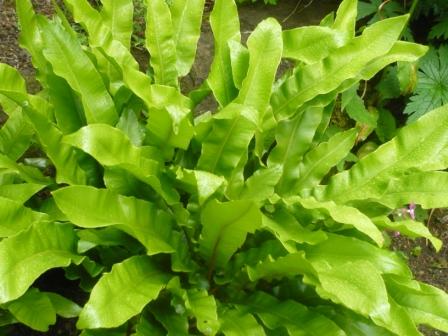
Hart’s tongue fern Asplenium scolopendrium

Selected Ground Cover Plant Species

    1. Ajuga reptans like plenty of water to produce purple-green leaves and spring flowers of blue spikes.
    2. Erigeron karvinskianus has small white flowers like lawn daisies. A copious self seeder.
    3. Lysimachia nummularia also called creeping jenny for reasons you will discover as it moves around your garden. In summer it has numerous smal,l yellow flowers.
    4. Sedum acre or Stone crop is a popular low growing succulent for ground cover.
    5. Stachys byzantina has grey wooly leaves on 6″ high stems. They look like Lamb’s ears hence the common name.
    6. Often excluded from ground cover plant list is lawn grass. I guess meadow achieves a similar purpose.
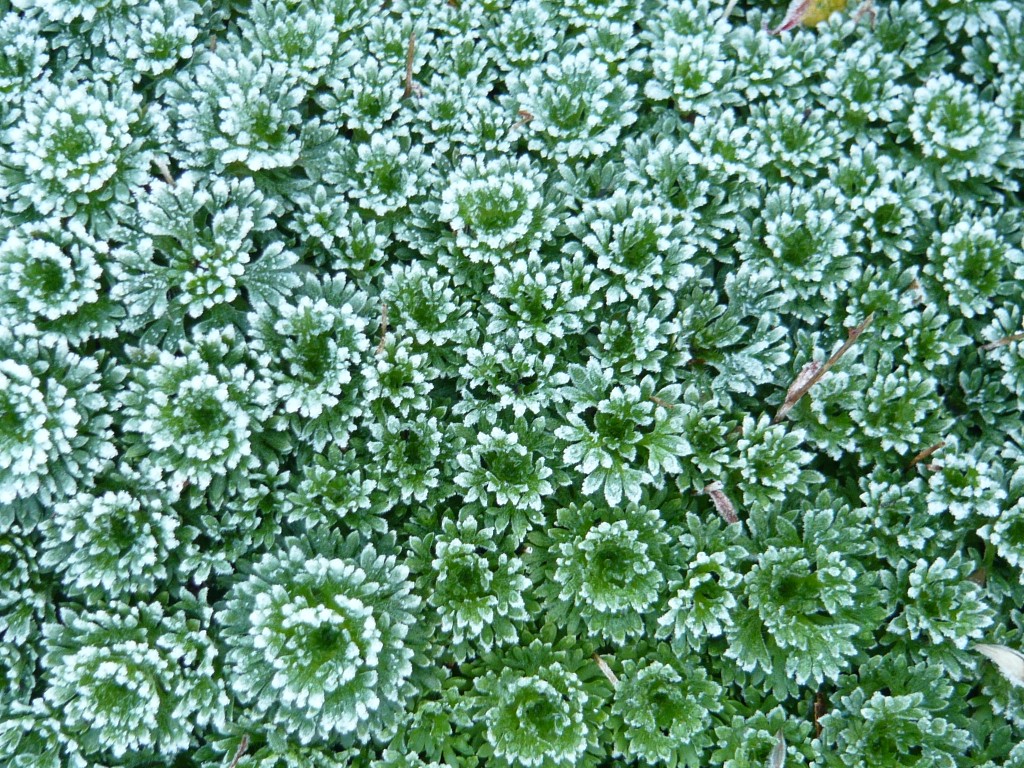
Saxifraga

Happy Accidents

Many times a garden will develop its own style with a series of what I call ‘happy accidents’. Looking at ground cover I would include the semi-evergreen strawberry with its habit of forming runners in my list of accidents. Other ground hugging evergreen plants include a range of recumbent or prostrate dwarf conifers such as Juniper horizontalis or Juniper squamata blue carpet.

Whilstnot planted as ground cover I notice saxifrage, Euonymus, Bergenia and even clumpy Dianthus are all fulfilling the cover role. The special evergreens have the edge over plants that loose there leaves in winter but I have some great covering clumps of cyclamen at the moment. Ivy, I would not consider a happy accident more a gardening disaster.
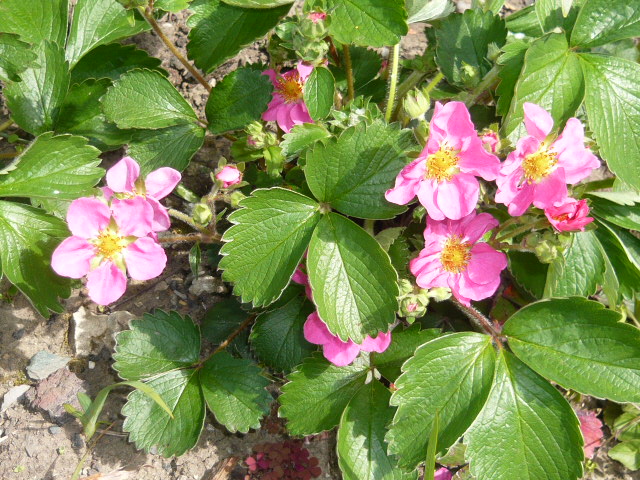
Pink Flowered Strawberry Lipstick

Conditions for Good Ground Cover

  1. There are plants for most circumstances and conditions. Problem areas of poor soil and poor access are often the drivers of the decision to plant ground cover.
  2. Heaths and heathers are good for soils with acidic ph and will cope with a comparatively low top soil on top of stone or rubble. Some ferns may be suitable in these conditions.
  3. Flowering ground cover generally appreciate full or partial sun with a soil that retains some moisture.
  4. Damp conditions offer there own challenges and plants from the primula, iris, polygonum or marsh marigold families may suit.
  5. Once the ground is virtually covered you may not want lush growth and for that a reason I do not apply extra fertiliser as it is not required.
  6. Delineate the boundary of the ground cover to give a smart appearance.
  7. If you are happy with an informal aspect allow several varieties to inter-mingle.


My Ground Cover

When I moved into my new house in 2004, I dug up a lot of grass to increase the size of the borders. However, having done that I found I had less time for gardening than I expected. This meant it has felt hardwork keeping on top of the weeding. Therefore I have come to really appreciate the role of ground cover plants. The best thing about ground cover plants is that they reduce the time of weeding and prevent weeds from seeding. When you are ready to plant specific plants these ground cover plants are easy to cut down and replace. But, it is much better to have these ground cover plants than leaving blank soil. Blank soil is an invitation to nature to send some weeds along!

  1. Comfrey. The plant pictured here is comfrey. It really is an excellent plant and worth growing for its own sake. It has nice delicate flowers which attract bees. It also helps to make excellent compost, you can regularly cut down its leaves to add as accelerator layer to your compost and it will quickly grow back. As you can see from its dense coverage, it is also an excellent weed suppressor.
  2. Geraniums. Great at low growing ground cover. Just cut back after flowering
  3. Pulmonaria officinalis: Lungwort
  4. Mahonia aquifolium: (oregon Grape) shrub
  5. Hosta species as long as they don’t provide cover for slugs..
  6. Campanulas
  7. Strawberries
  8. Peltaria alliacea: Garlic cress
  9. Sedums
  10. Lamiums
  11. Winter heathers
  12. Ivy – though can become invasive

Read More Read More

Allotments Replaced by Trees

Allotments Replaced by Trees


allotments

We used to have allotments in our village until the blight. That was not a gardening blight or a problem growing anything but a planners and local politicians blight.

A large green open space surrounding an old hospital ‘High Royds’ was too good an opportunity for power broking and developers profits so the old hospital and the village allotments all had to go. I blame ‘care-less in the community’.

Now the ‘new’ village is built and called Chevin Park (not High Royds because the hospital was a former lunatic asylum. Other name changes such as Windscale to Sellafield also springs to mind.)   Many properties are empty partly due to the property recession but also due to the paltry size of the gardens and lack of allotments that could so easily have been restored.

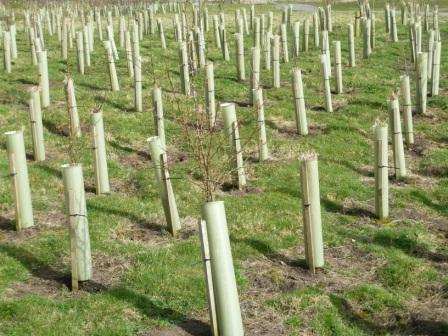
What has replaced our allotments? As you can see a veritable forest of plastic tubes protecting newly planted trees and the flimsiest stakes you could imagine after 3 foot canes. As I said earlier this week this is an updated post for National Tree Week 2018. The plastic tubes are now litter around some decent young trees.

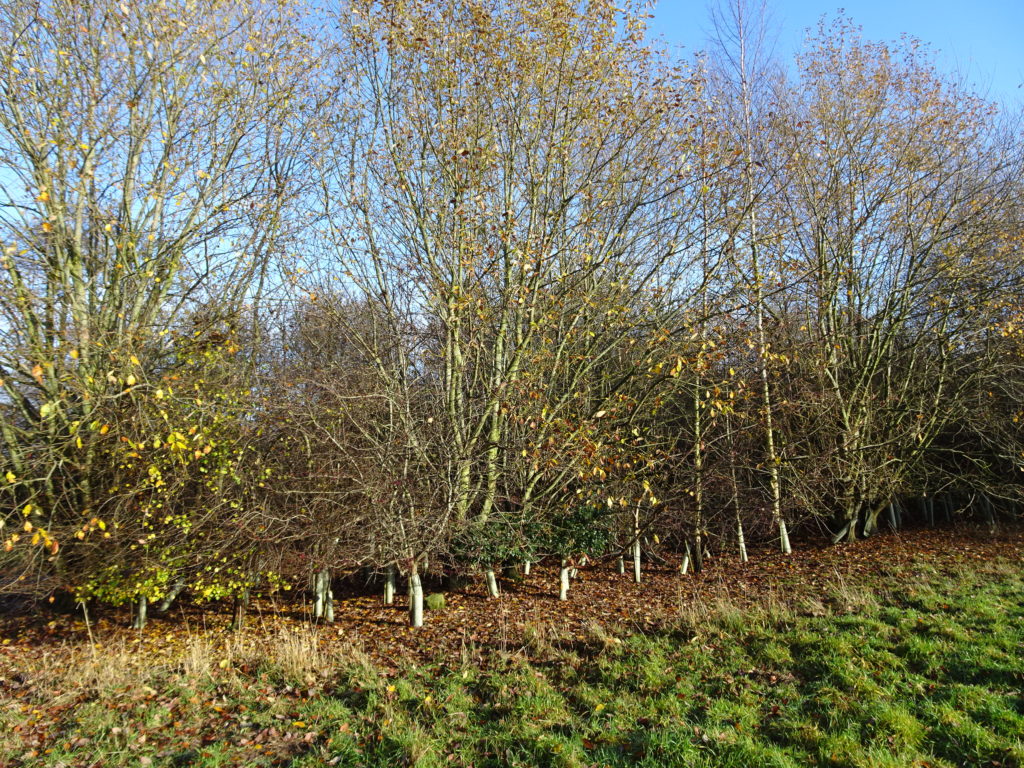
6 Years on and the trees are growing well as if to proove the allotment soil was in good condition. Unfortunately much of the area has suffered from flooding after intensive housing building.

Tips for Planting Trees

  • Dig a good sized hole and incorporate some slow release fertilizer like bone meal. The tree should be there for a long time.
  • Spread the roots of a bare rooted tree or tweak the edges of a container grown tree to give roots the encouragement to spread. Trim off any broken roots.
  • Plant at the same depth to which the tree has been grown.  There is usually a soil mark on bare trees to help. Do not bury any graft.
  • Drive the stake into the bottom of the planting hole before planting the tree and try to ensure that 2/3rds of the stake is underground when the soil is returned to the hole.

    Read More Read More

A Plantsman’s Nursery – Holden Clough

A Plantsman’s Nursery – Holden Clough

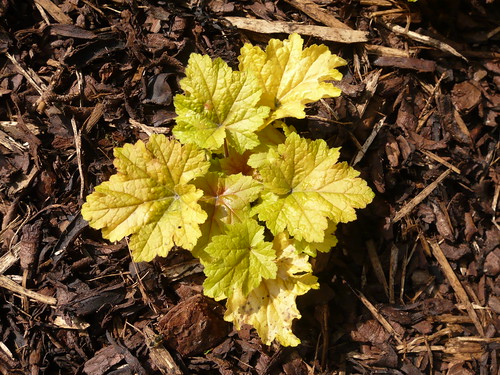
Heuchera
Heuchera

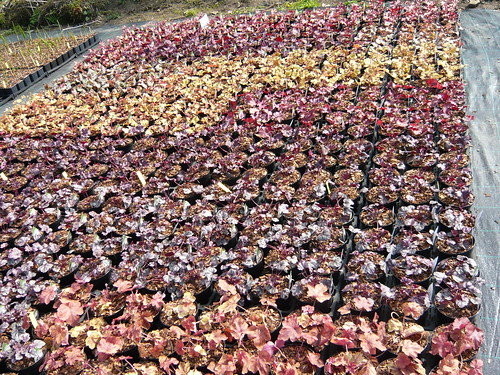
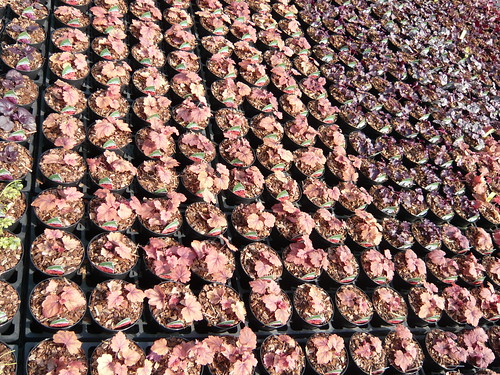
A nursery should grow there own or at least a good proportion of the plants they sell. Well you can’t complain at the sight of these Heuchera growing in Holden a small hamlet near Bolton by Bowland in Lancashire.

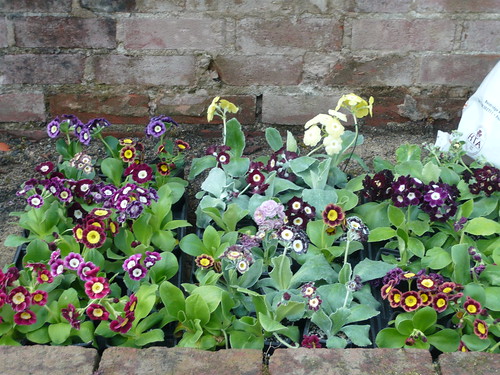
Auricula
Holden Clough nursery has a great reputation and tradition for alpines that survive the wet local conditions.

Unfortunately these glowing Auriculas were in a quarantine area having already been sold but awaiting collection. Still with an eagle eye I could look at the special varieties someone else had chosen and consider my needs for the next visit. (I got a 10% off voucher for registering for the newsletter that I can use with my next purchases.)

Heuchera

I was impressed with the amount of bark chippings used to mulch and trim the pots. At check out I was told is saved the staff weeding but that in this location watering was no real problem due to the amount of rain.
Thinking about grit or chippings I wondered if the former compacted the soil more than the chippings and I think I will run some tests when I get home.

Passion flower

For 95 years the nursery has nestled in a charming hillside spot growing alpines and it is still going strong! Now they not only grow alpines, but also a larger range of plants including many new and unusual perennials.
The one drawback was that the new young team are keen to show their plans for site development which include a tearoom. Welcome though tea may be they could leave that to the ubiquitous garden centres and keep the nursery focus.

Heucherella

Photo above is of Heucherella Tapestry a hybrid between Heucheras and Tiarellas with many of the best qualities of both parents. This and a limited display of plants in their own small garden area show how and where a good plant can grow.

Compared with my visit on the same day to my local Garden Centre  the range of plants at Holden Clough just what I wanted.

Hydrangeas At Thorp Perrow

Hydrangeas At Thorp Perrow

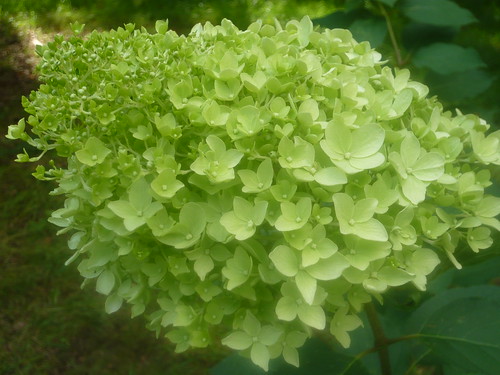
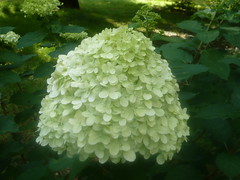
This Hydrangea panniculata Limelight was one of several under-planted trees at Thorp Perrow Arboretum. In full flower at the beginning of September this Hydreagea was one of 70 or so species and varieties planted in the grounds. Different parts of the arboretum have soils with PH values of 6.7 to an acidic 4.6 . There is marshy and wet ground despite the 15,000 trees drawing water from the land.

Paniculata

This Hydrangea quercifolia or oak leaved hydrangea looks a bit bedraggled in the photograph but it looked marvelous insitu. Quercifolia are medium sized shrubs worth growing for the leaf colour in autumn.

The volume of flowers and bracts on the one head was astonishing. There are many interesting Hydrangeas to see at Thorpe Perrow and I recommend buying the authoritative catalogue (£3.75) listing the featured trees and shrubs by location, name, origin and often age.

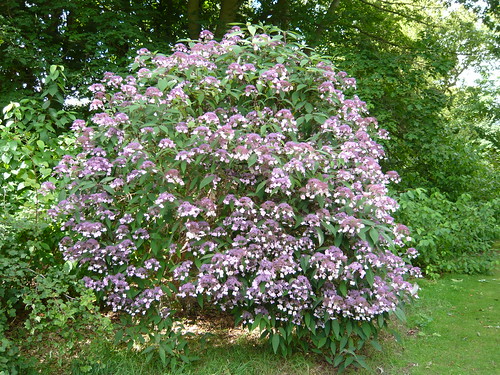
Hydrangea Villosa group are hairy leaved shrubs. This glorious specimen was at least 8 feet high and made a startling feature in moderately acid soil.

Hydrangea

For more information on Thorp Perrow see Gods Own County

Thorp Perrow

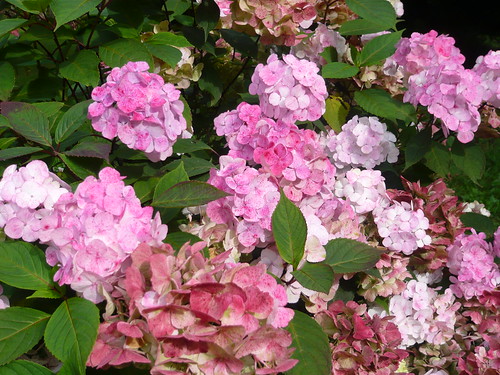
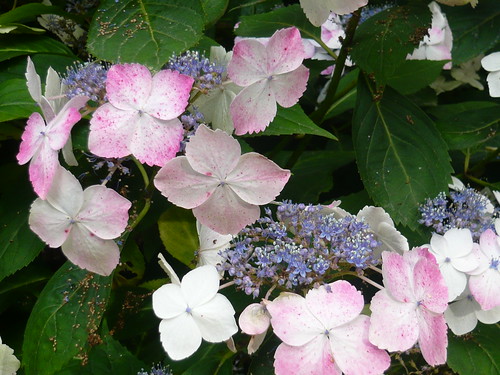
After a good wet year for Hydrangeas,  please can we have more sun next summer.

This was first posted  in September 2012 now with updates

The Climbing Clematis Family

The Climbing Clematis Family

Clematis

Clematis is one of the worlds favourite flowers for climbing over fences and trellis.

The Family of Clematis

  • The Clematis genus is from the family Ranunculaceae which is the same as the buttercup and many other plants. Winter Aconites – Eranthis hyemalis and Adonis amurensis start the flowering year along with other family members the Hellebores.
  • In spring Anemone, Marsh Marigolds and buttercups take over.
  • For summer consider Globe flowers or Trollius, Rue Thalictrum, Acquilegia, Delphinium, Aconitum, Larkspur and Love-in-a-mist or Nigella.
  • Baneberries, Bugbane and Japanese Anemones round off the Ranunculaceae display in autumn.
  • What a versatile and wide spread family.
  • As with other members of the Ranunculaceae family there is a Clematis species or variety to flower in most seasons.

Clematis

Why do Botanists make Choice So Complex?

  • As a youngster I knew there was a plant called Clematis
  • After a while I heard about three groups of clematis with different pruning rules. Group 1 are early flowering  species Group 2 are early flowering large flowered hybrids and Group 3 late flowering large flowering hybrids and species.
  • Then in my latest gardening book there are a dozen groups and I particularly go for the C.Viticella
  • Clematis cirrhosa flowers in December and if covered to protect from winter snow will survive our climate.
  • The Clematis Montana rubens like Nelly Moser and Ville de Lyons are firm May favourites. C. jackmanii are large late flowerers
  • C. Tetrosa has larger flowers. Small flowers Clematis tangutica and flammula are interesting varieties to seek out from your suppliers or friends.
  • Clematis vitalba flowers in late autumn and produces interesting seed heads
  • C. armandis are evergreen

Read Tips for Growing Clematis and Clematis Pruning