Gardeners Against Deforestation


I have previously posted about snapdragons in 2011, 2016 and 2015
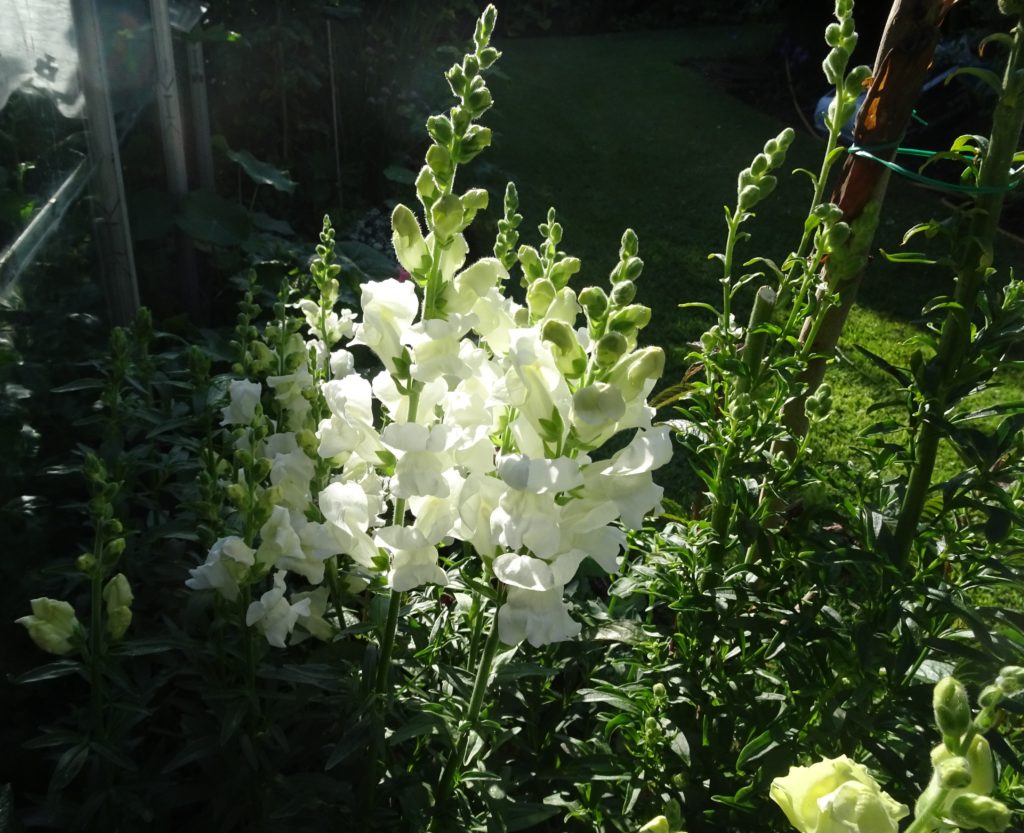
This is just an update on one of my favourite little cottage garden treasures. This years winners have been a 3’6″ tall, white F1 variety and the multi coloured swap shop warm coloured variety shown. Add to this some self-sown plants or last year survivors and a good show has been delivered.
This encouraged me to sow some mixed seeds early to be over wintered. I kept half a packet back to be sown in spring in case I loose all my early sowing. Germination has been fast and furious. As this variety are said to be rust free I hope for more cottage garden blooms next summer.

Irena Dorney a reader of my chrysanthemum post has asked ‘ Tell me do you overwinter your plants? I can no longer afford to keep buying new plants for my planters so I want to invest in plants with a perennial habit that will work hard in my raised bed.’


First introduced in the 19th century the lineage of Hybrid Tea roses goes back to crossing or hybridising a tea rose with a hybrid perpetual rose. The first example was supposedly ‘Madame Bravy’ x ‘Madame Victor Verdier’ but many more have followed to great acclaim. One such was a rose called ‘Peace’ which has sold, under several marketing names, over 100 million plants world wide.

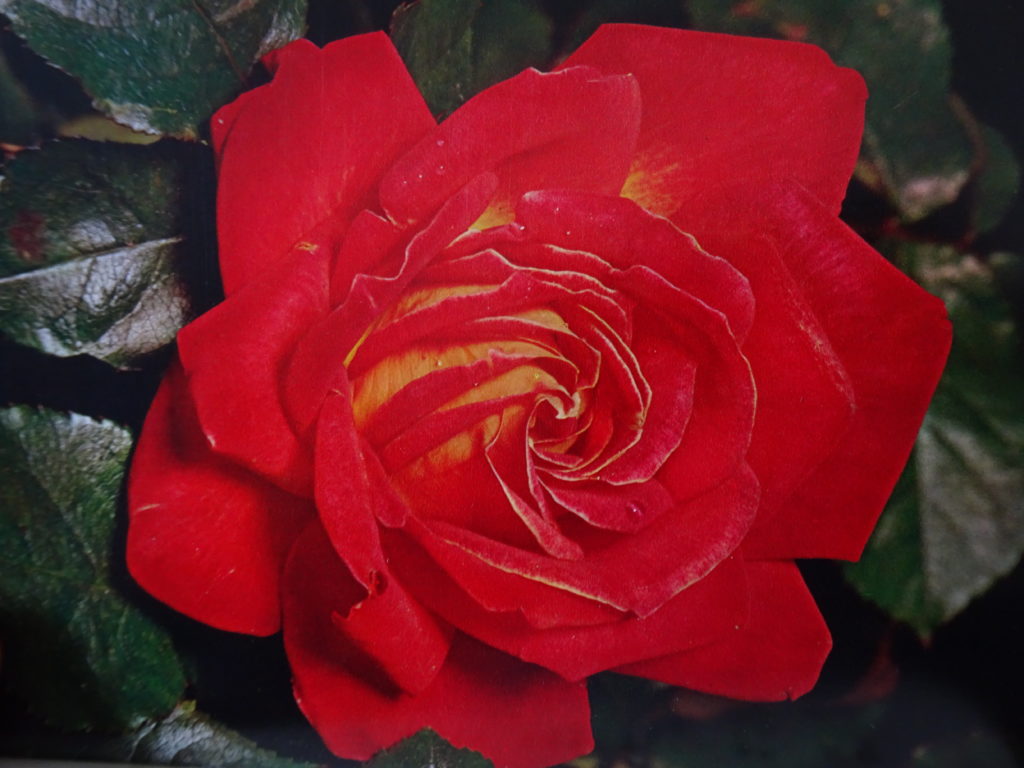
Hybrid Tea roses like this example of Brasilia are a group of roses that are crosses between one rose and another. In this case Piccadilly x Perfecta produced this Brasilia flower with scarlet petals reversed in pale gold. The grandparents were McGredy’s Yellow × Karl Herbst and Golden Scepter x Karl Herbst respectively. With 2 grandparents the same it shows how complex cross breeding became during the heyday of new rose introductions.

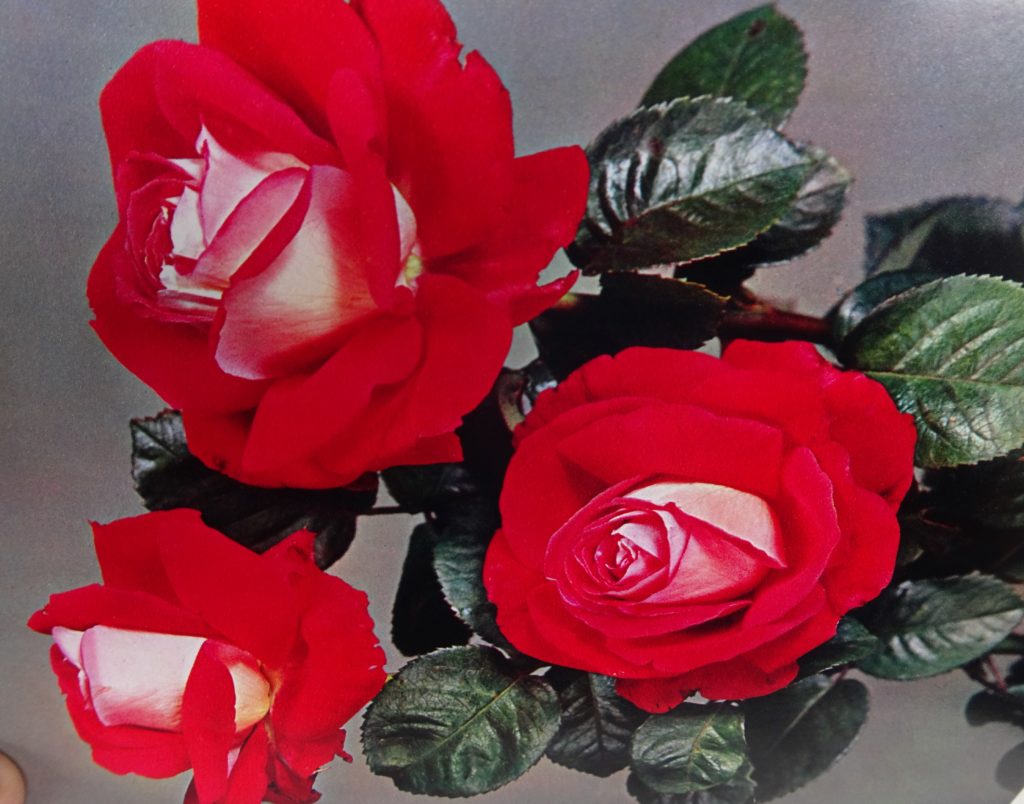
Another flower with reverse colour on the petals was Caramba with cherry red petals reversed with silver. It also has very dark glossy leaves. The parentage of this specimen is unknown! The name has also been sub-sumed by a ground cover rose with far less appeal.
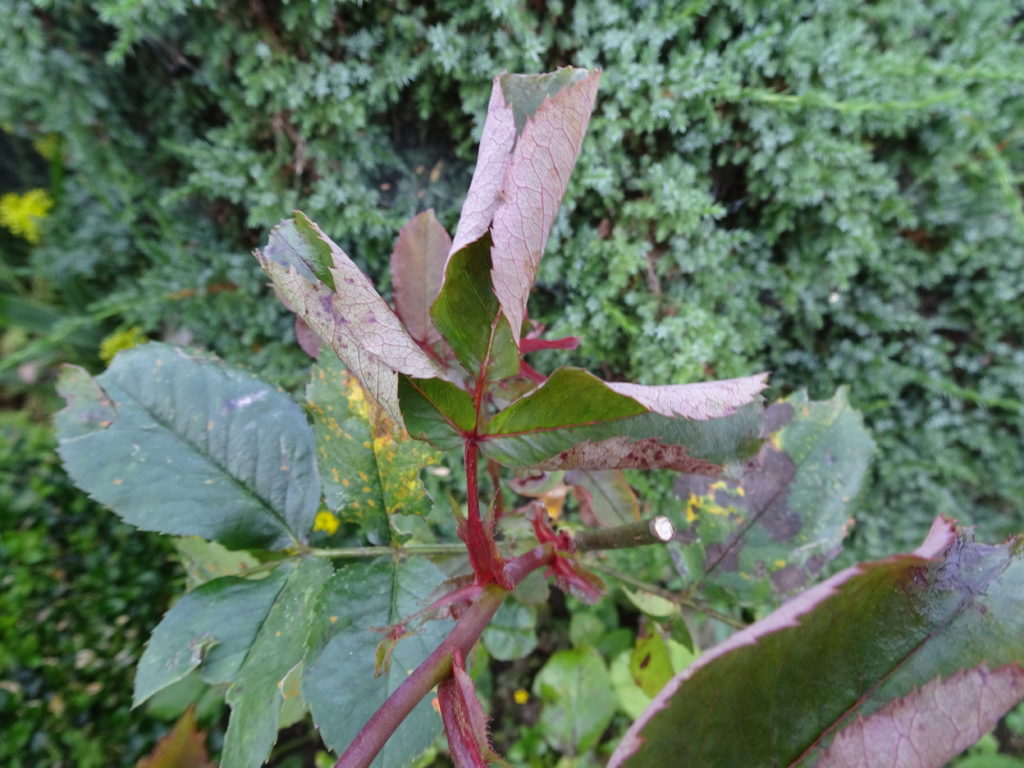
I do not want to start by worrying you but I am probably going too anyway! After an early summer of brilliant rose displays the down side is the number and volume of enemies our roses are having to contend with.

Another digitised version  . The Enemies of the Rose by George Massee Frederick Vincent 1868- Theobald National Rose Society …
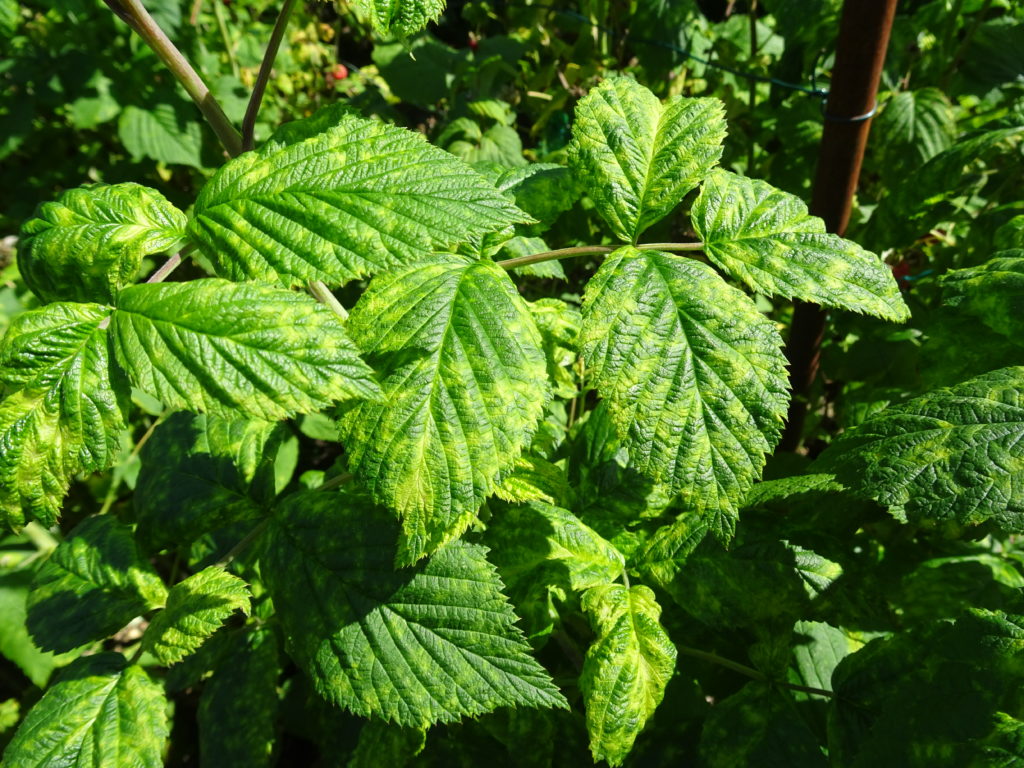
A virus has struck my favourite raspberries and the leaves have gone mottled. The light lemon green could have been a sign of magnesium deficiency but that turns out to be wishful thinking on my part. One variety partially effected last year is now in full denial and full of virus (its not just raspberry flu either.)
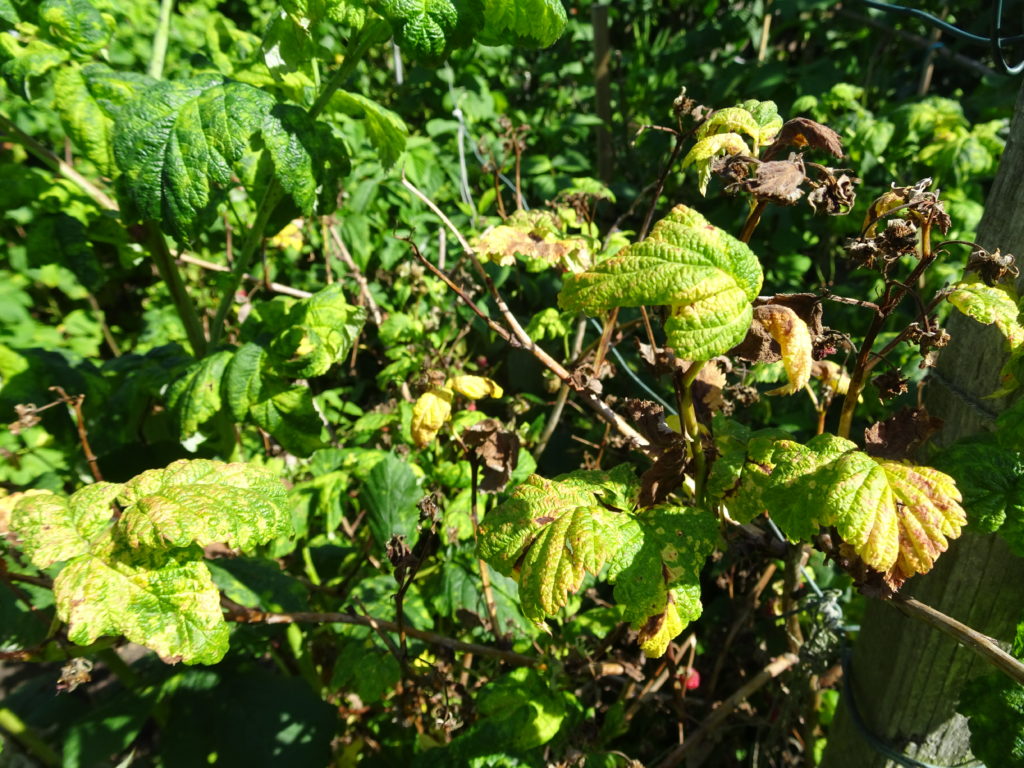
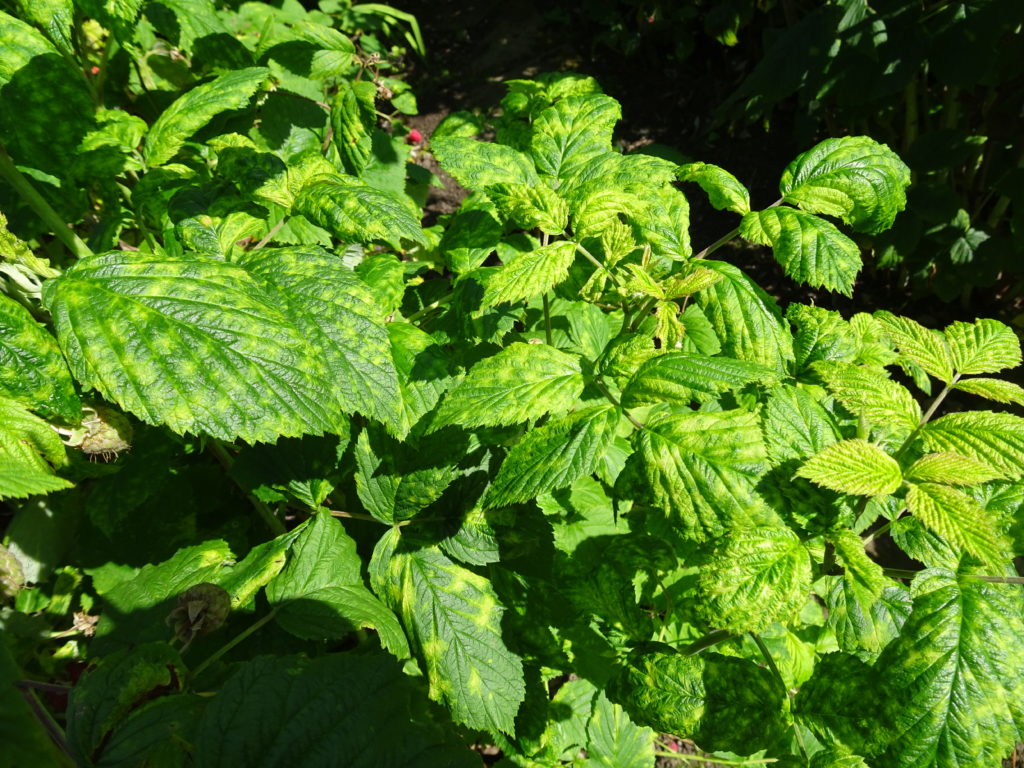
As can be seen below full symptoms of my raspberry virus are obvious.

I originally planted 3 varieties at the same time from a fruit tree specialist. ‘Glen Moy’ (Early season summer fruiting) – produced an abundance of firm, medium sized fruits from June to July on virtually spine-free canes, which made harvesting a pleasure (and jam eating ed.)
Raspberry ‘Glen Ample’ (Mid season summer fruiting) gave larger berries and some new canes a fair distance from the parent.
Tulameen was a wash out and most canes died. The supplier replaced them without any fuss but the cropping has remained below par. Not what I hoped for or expected but now I am worried about all my chosen varieties catching the virus.


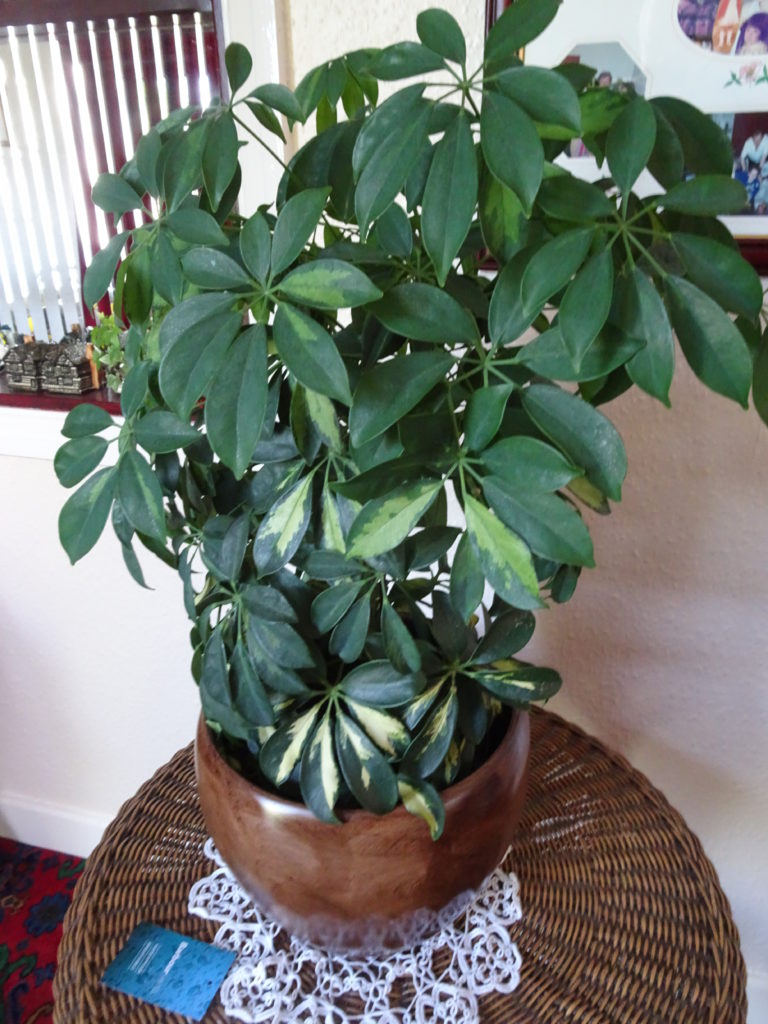
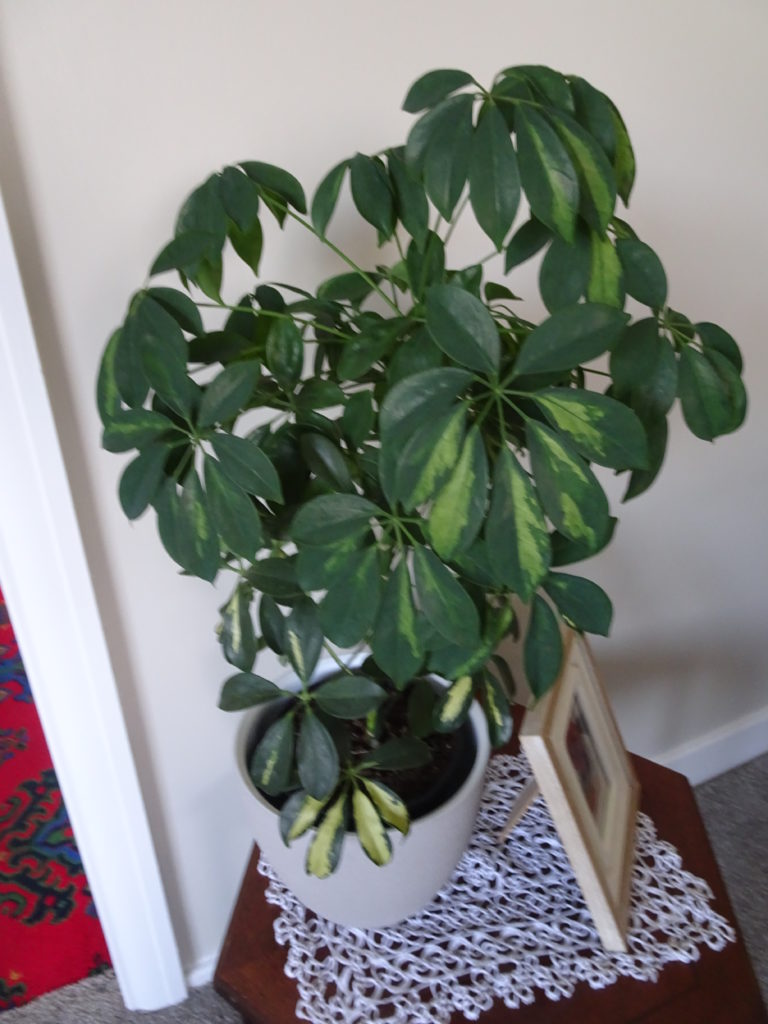
 Schefflera arboricola, known as the “dwarf umbrella tree,†has small green leaflets attached to stout petioles. Indoors it will have a mature height of 3 to 4 feet.
Schefflera arebold make good individual plants as indoor specimens in large decorative containers. The palmate leaves have 5 to 9 finger leaves from a central stalk.
Schefflera actinophylla can grow to heights of 8 to 10 feet inside and up to 40 feet outside in very warm climates. As well as being called the ‘octopus plant’ it also shares the common name of umbrella plant. For a 4th name it is sometimes botanically named Brassiaia actinophylla.


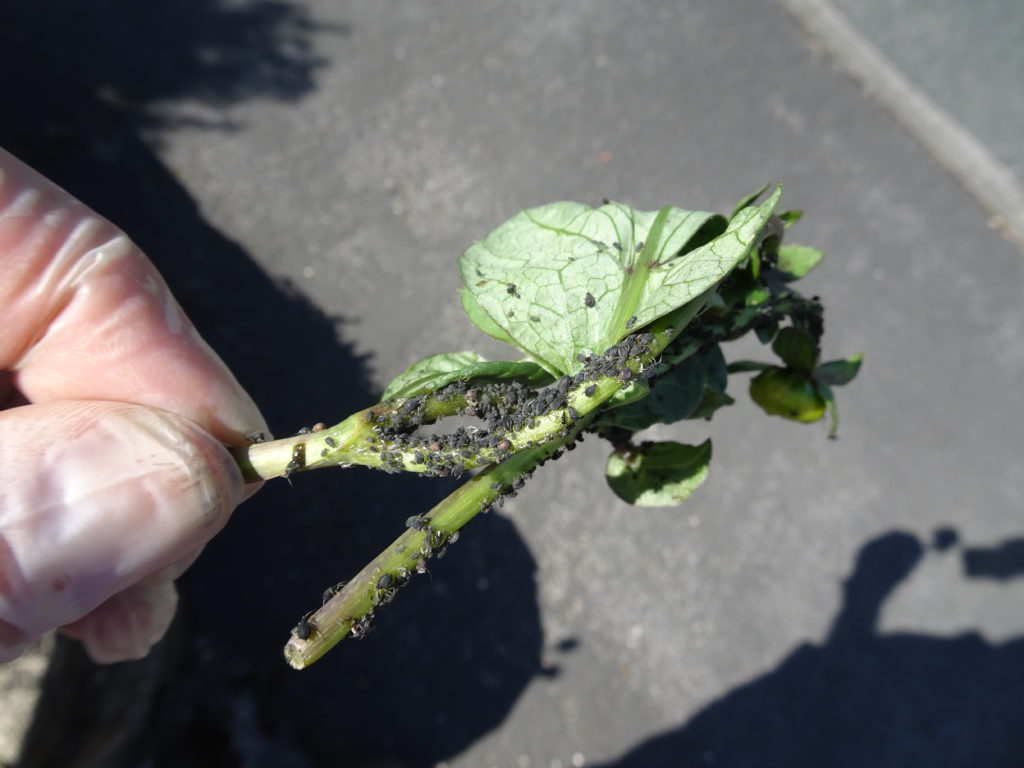
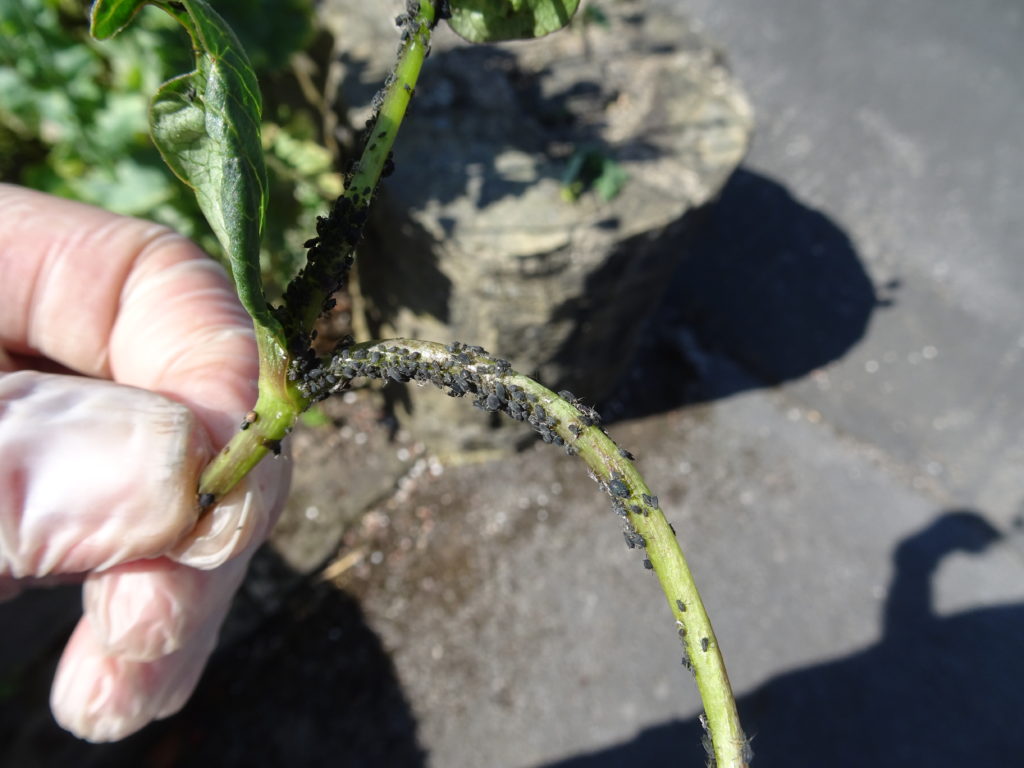
These little breeders have been having a banquet on some of my Dahlias. They go for the soft new shoots and nascent flower stems which must be easy to get their teeth into. For some reason they have been quite selective on the plants they choose (As has been the spray I have used in a prophylactic manner). I hope the rest of the summer is black fly free but you never know.

Lulled into a false sense of security by the low level of greenfly around my garden I wasn’t expecting black fly. I only left my dahlias alone for a few days and the flies multiplied like rabbits. I am on a more frequent look out patrol now. The muggy weather is one reason for the outbreak of black fly.
Dried out plants can become distressed and look to be in terminal decline through lack of water. They may wilt and the leaves drop off or go crispy.