Browsed by
Month: August 2016

Roses on April 1st

Roses on April 1st

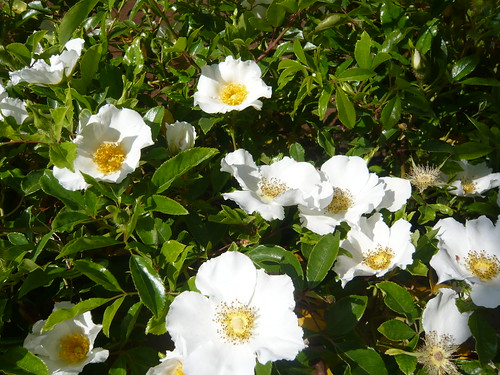
You may wonder how roses flower on 1st April when your favourite flower is just at its summer best
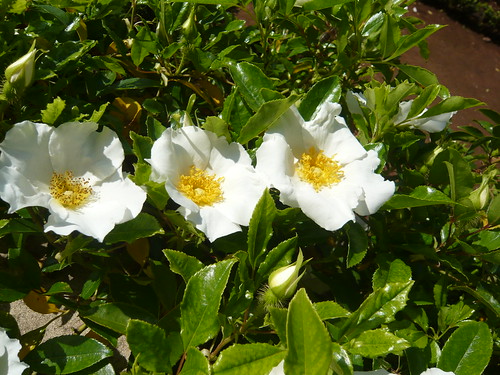
Madiera mch11 269

This is not a joke or April fools day prank but the pictures of all these roses were taken in Madieria on that date.

In sheltered spots old fashioned roses will bloom earlier than HT or Floribunda roses. I am told that by the end of April the Cornish gardens will have roses in bloom.

Meanwhile we will have to be content with these photographs, our memories and the work still to be done on roses in our gardens.
Madiera mch11 268

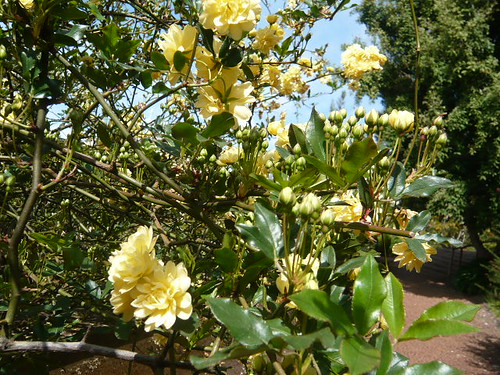
I was impressed by the volume of rose buds on this rose. It had a slightly rambling appearance and I regret it was not labeled.
Madiera mch11 274

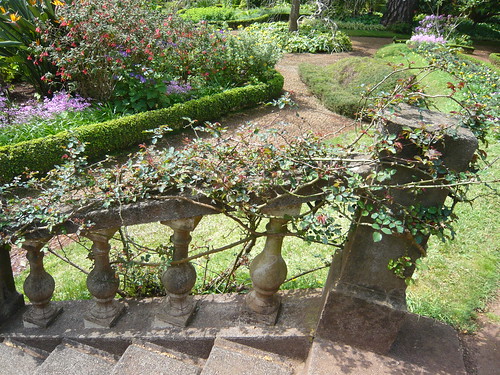
Training climbing roses can produce some great shapes and flowers. The balustrade for these steps will be strewn with blossom in a month or so’s time.
Madiera mch11 278

Growing Convolvulus Cneorum

Growing Convolvulus Cneorum

Madiera mch11 220

Convolvulus is synonymous with bindweed that grows in poor soil and is notably hard to eradicate. However there are some species of Convovulus that are worth a space in a Mediterranean style garden.

Convolvulus cneorum is a compact evergreen shrub with narrow, oblong, silvery leaves. The numerous flowers are funnel-shaped white flushed with pink when in bud.
Grow in well-drained soil or gritty compost in a sheltered spot in full sun.
The plants are not frost hardy.

Convolvulus White Ensign (Flash Seeds) is a dwarf Morning Glory with clusters of white, trumpet flowers with yellow centres!

Convolvulus Eneorum will withstand a north facing or east facing wall but also dislikes heavy frost. The grey leaved shrubs can grow to 3 foot high and wide.

Resources

Organic Control of Bindweed

Weedkillers for Bindweed

Book Cover

Roundup Weedkiller concentrate

Book Cover

Handy spray gun,

Marguerite or Purple Ronnies

Marguerite or Purple Ronnies

Madiera mch11 109

Daisy is the name applied to many flowers of the Asteraceae or Compositae family. Flowers in this group include Aster, Bellis daisy, or Sunflower family plus Chrysanthemum, Gerbera, Calendula, Dendranthema, Argyranthemum, Dahlia, Tagetes, Zinnia even Lettuce and many others.

Marguerite is botanically called Chrysanthemum frutescens meaning shrubby. Native to the Canary Isles, they have been cultivated in England since 1699 as a white and sometimes pink flower.

Madiera mch11 107

These plants are especially common in open and dry environments where these purple plants were found.
The yellow centre attracts all the pollinating insects that the plant needs to reproduce seed.

Madiera mch11 108

Nuts and Drupes

Nuts and Drupes

Book Cover

True nuts include Pecan, Sweet Chestnuts, Beechnuts, Acorns, Hazel nuts and Hornbeams. True nuts are a simple dry fruit with one seed in which the seed case becomes very hard on maturity. True nuts do not split apart like Brazil nuts or horse chestnuts but the seed and the fruit are one and the same.

Peanuts are not nuts, it may be hard to believe but they are peas or at least part of the Pea family. If you compare the pods of peas and peanuts you will see what we mean. Monkey nuts, groundnuts, Manila nuts, earthnuts and goobers are all just other names for peanuts.

Walnuts are not nuts but are botanically called ‘drupes’. This is a fruit with a fleshy outer coating enclosing a hard shell that contains a seed. Cashew nuts are drupe seeds from the poison ivy family and the seed lining contains an irritating lining. Almonds, pistachios and pine nuts are not nuts either.

Coconuts must be nuts then, no I am afraid not they are another drupe. Nor do coconuts contain coconut milk but coconut water. Coconut milk is made by grating the flesh into water then straining it.

Macadamia nut is just a creamy white kernel and Brazil nuts are seeds in a pod.

Drupes are also fleshy fruit, such as a peach, plum, or cherry, usually having a single hard stone that encloses a seed which may be why they are also called stone fruit.

Resources

QI researched by Molly Oldfield & John Mitchinson

Foliage of Spring Greens and Bi-colours

Foliage of Spring Greens and Bi-colours

Madiera mch11 319

Greens are vibrant in your garden during spring and with careful plant selection good foliage can be grown throughout the seasons.

Many shrubs flower before or as the buds are breaking. The greeny yellows and the limes are a joy to behold

Some variegated shrubs give double the value with the greens and yellows blending so well. Who need flowers?

Madiera mch11 361

Leaf shape, leaf colour and overall plant form are worth considering when opting for a new plant in your garden.

Madiera mch11 362

Inside our house we have a large number of plants that have been chosen for their leafy green appearance. This is a calming colour and the moisture around the plant improves the humidity levels.

Madiera mch11 360

More exotic colours are not always difficult to cultivate but access to sunlight generally helps.

Book Cover

Succulent Rosette Rock Plants

Succulent Rosette Rock Plants

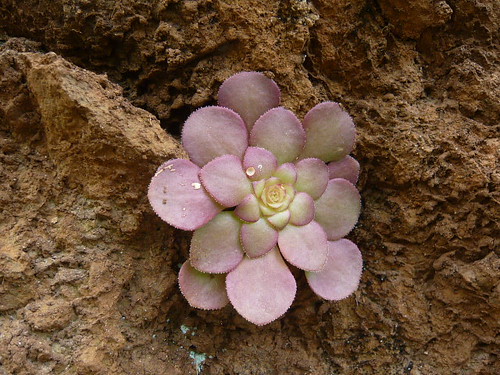
Botanically we refer to a rosette as a circular arrangement of leaves with all the leaves at a single height. On Succulents these rosettes usually sit near the soil.

Madiera mch11 050

The succulent Echeveria can drive you up the wall. High on a rock face these plants cling to the rock with little support from their roots. On Maderia the ground was former volcanic rock and seemed porous.

  • Echeveria are drought-resistant, although they do better with deep watering.
  • Most will tolerate shade and some frost, although hybrid species tend to be less tolerant.
  • Foliage is arranged in a rosette in a variety of shapes and colors.
  • Flowers will appear on the top of stalks that grow from between the leaves.
  • Suitable for crevise gardens or a rockery.

Book Cover

Other Rosette Forming Succulents

Madiera mch11 052

Read about Growing Echeveria and check out Australian site  The Succulent Garden

Rice – No1 World Food Crop

Rice – No1 World Food Crop

Wheat is grown in large part for livestock but the majority of the world population survives on rice as its main food source.

There are thousands of varieties of rice preserved at the International rice research institute. (IRRI). There are potentially 120,000 cultivated rice species of Oryza sativa the grass that produces rice.

The IRRU Heirloom Rice Project is an initiative in the Philippine’s Department of Agriculture (DA).  The project aims to enhance the productivity of and enrich the legacy of heirloom or traditional rice handed down for generations.

China India and Indonesia are the largest producers by weight and the biggest consumers. Thailand is the biggest exporter of rice as a food.Most production is done by transplanting seedlings to give plants a head start over weeds. Dwarf rice has been bred as part of the doubling of yeilds over the last 25 years. It is the shiny white kernel and embryo that is left after the milling has scraped the layers of bran from the seed hull. The bran has a range of uses including cattle feed, cooking oil, soap and pharmaceuticals and medication.

As well as sushi and sake rice is used in American brewing like Budweiser

Royal Bridal Flowers

Royal Bridal Flowers

Madiera mch11 135

White was the order of the day for Kate Middleton’s bridal bouquet.

Previous Royal Weddings

  • The Queen chose white Orchids in 1947.
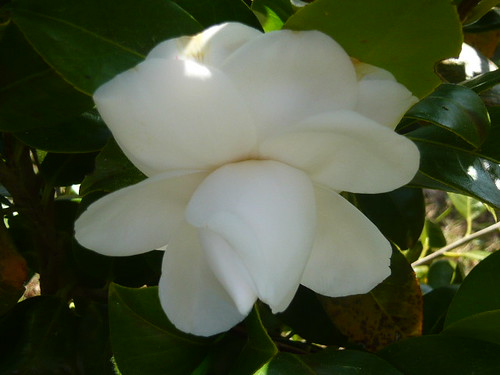
  • Diana The Princess of Wales had Gardenias and Stephanotis the waxy strongly scented white flowers.
  • Princess Anne stepped most out of line with cream Roses, White Heather for luck and Scotland, plus the strongly scented Lily of the Valley.
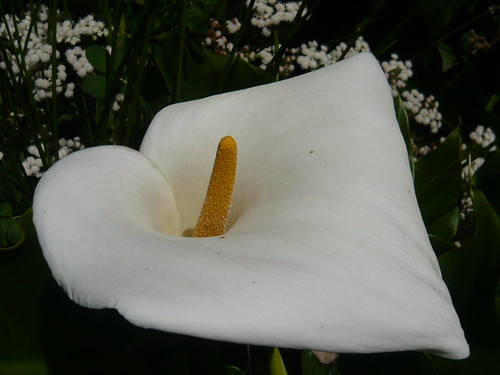
  • The Countess of Wessex had Arum lilies, Fressias for scent and again Roses.
  • Sarah Ferguson carried a bouquet with perfumed Gardenias, cream Lilies, pale yellow Roses, Lilies of the valley and a sprig of myrtle.
  • Camilla Duchess of Cornwall was slightly different in adding grey and cream Auriculas to a traditional bouquet.

Madiera mch11 171

Turn your arrangements into botanical works of art – here are some examples and clubs you could join.

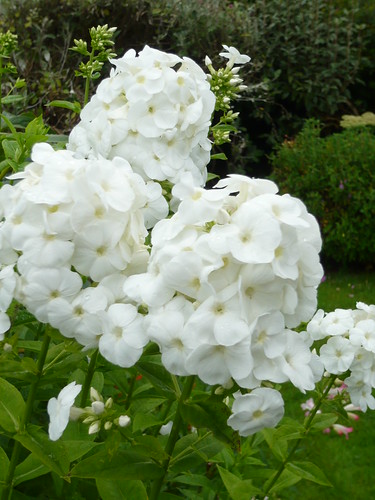
For a recommendation that is a bit different but scented and locally grow Kate could try Phlox. Something for her future father-in -law to talk too during the lengthy ceremony.
Phlox

Top 10 Easy Flowers To Grow

Top 10 Easy Flowers To Grow

sunflowers
1. Sunflowers. One of the most rewarding plants to grow from seed is the sunflower. You can sow seed in March – May. April is a great time. For best results. Try sowing seed in 3 inch pots. Protect from slugs and keep well watered. After a few weeks the seedlings can be planted out. Sunflowers will need staking. But part of the fun is seeing them grow so rapidly. – Growing Sunflowers

2. Daffodils. Bulbs tend to be very easy to grow. The main thing is to plant at the correct depth in the autumn. If the bulbs are in good condition and disease free they will flower for several years. They can be helped by a liquid feed and dividing when overcrowded. Growing from seed requires great patience and expertise. Growing Daffodils

3. Sweet Peas. Sweet Peas aren’t the easiest to grow, but they are wonderful. You can sow direct outdoors but you will have to watch out for slugs. Sowing in 3inch pots will give better results. They also need something to grow up. They will soon reach 6 feet. The other secret of sweet peas is to keep cutting the flowers – this will give you wonderful cut flowers for the house and extend the flowering season. Growing Sweet Peas

4. Nigella – Love in a Mist. If you want a really easier flower to grow try ‘Nigella’ common name ‘love in a mist. You can just scatter seed in the garden and it tends to look after itself. You can sow the seed in either autumn or spring. Once it gets going, it will set seed. It is resistant to many pests as well.

5. Iris.
Spring Flowers

See: Growing Spring IrisBearded Iris

Read More Read More

Willow as a Crop

Willow as a Crop

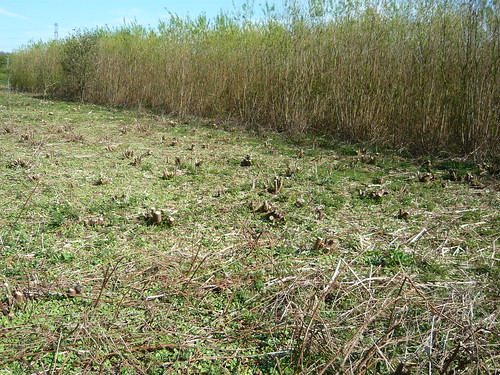
copiced land

Willow can be grown as a crop and used for many purposes. It is not a garden crop as it needs a lot of water and can be a bit of a thug as a tree.

This Willow is growing on the flood plain at Rodley nature reserve. At the back you can see 8 feet high trees growing away. You can also see how some trees have been coppiced or cut to the ground and the uprights taken away.
The stool or remaining root will regrow a further crop of willow for next year.

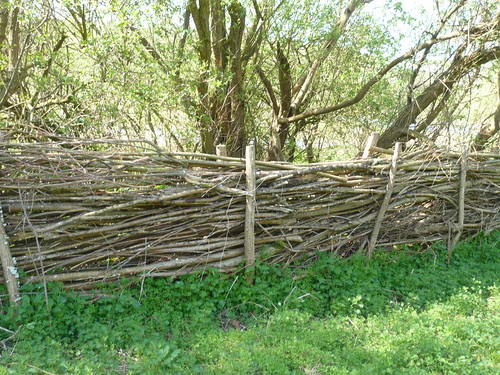
Fence from coppiced willow

Willow can be woven to form hurdles or fences. Willow is supple and will bend when green and can be watered to increase suppleness.

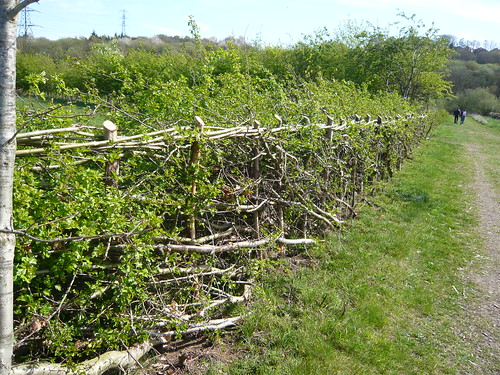
Laid hedge

Laid hedges are made by partially cutting through uprights and laying the young growth at a slant. Willow is used to offer an upright support against which the laying can be joined.

In addition to traditional uses Willow Weaving has become an interesting pastime. Garden supports, arches and frames can be built from willow and sculptures can be created by the artistically or practically minded. Grow sweet peas up a willow frame.
A step guide DVD is available from amazon

Willow can be grown in rows of bushes and cropped for making basket weaving willow. Grow your own trug!

Book Cover