Browsed by
Month: July 2016

How to attract wildlife into your garden

How to attract wildlife into your garden

Attracting wildlife into your garden can help deal with types of pests and increase the diversity of life in the garden. Some methods for increasing wildlife are quite easy.

Bucket of water
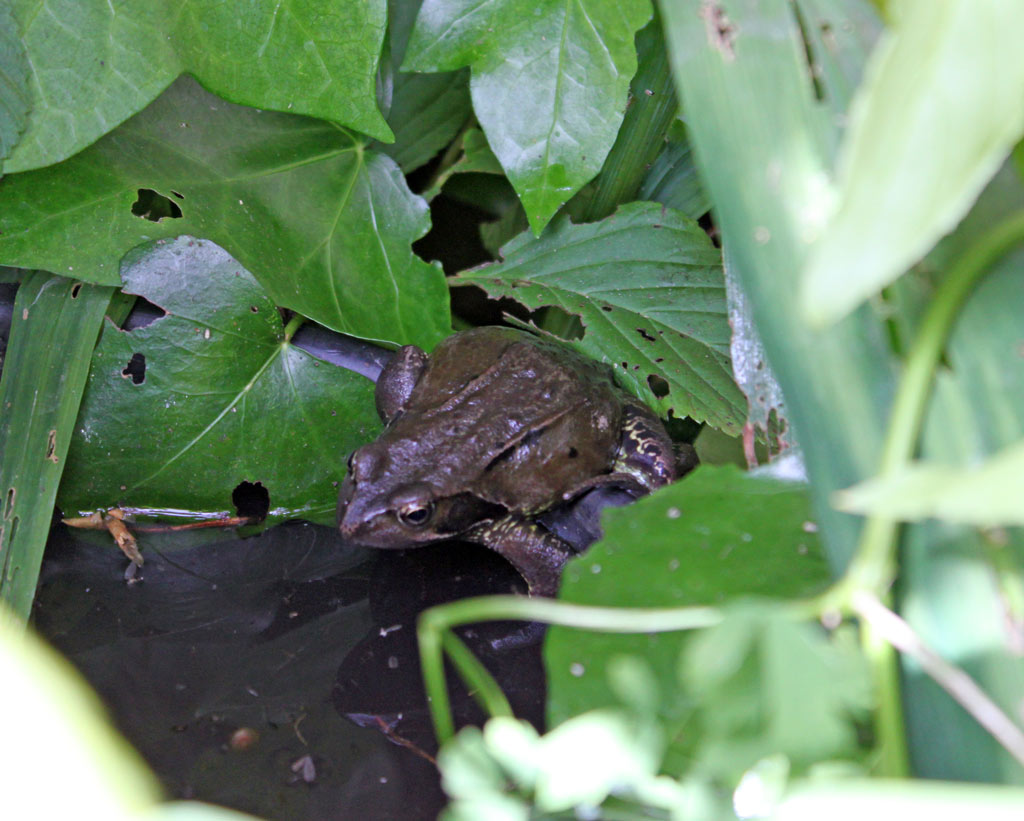
frog

This bucket got left under a shrub and was forgotten about until a few years later, when I saw frogs using it as a base. It had filled up with rainwater and  was colonised by a few slug eating frogs. Because it is in shade, it doesn’t lose too much water, but in dry conditions, I top it up with water to keep the frogs happy. I also have put a few dead twigs around the bucket, to make it easier for frogs to climb in.

Read More Read More

Tips for Growing Ipomea – Morning Glory

Tips for Growing Ipomea – Morning Glory

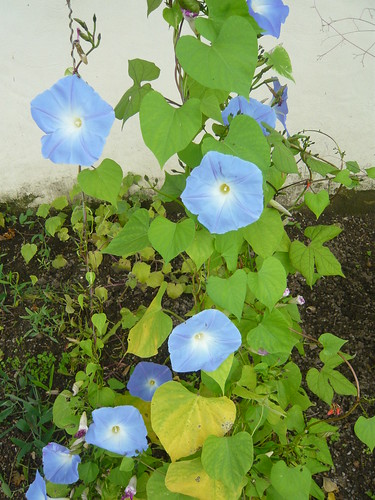
ipomea

Ipomea indica the blue form of Morning Glory is a cool clear blue, a startling colour in the garden. As you would expect from a member of the Convolvulous clan it is a strong twisting and binding climber.

Uses of Morning Glory

  • The plant was originally used to produce cloth die.
  • The seeds should not be eaten as they produce hallucinations
  • In the garden they are very good for screening walls and ugly sites during summer.
  • They do not last as cut flowers.

Morning glory
Growing Ipomea Morning Glory.

  • Grow from seed and collect your own seed for next year.
  • Pick off dead leaves.
  • Try some of the other colours including rose and red plants.
  • Do not allow white Convolulous to grow as it spreads and throttles other plants

ipomea

  • Thompson & Morgan search for Morning Glory seeds and plants
  • Morning Glory ‘Carnevale di Venezia’ Ipomoea purpurea, Convolvulus purpureus,
  • A half-hardy annual which climbs to 6′ tall and flowers through summer with striped blue and pink blooms with intricate markings.

Credits
Morning glory by Arenamontanus CC BY 2.0

Growing Succulents And Hawarthia

Growing Succulents And Hawarthia

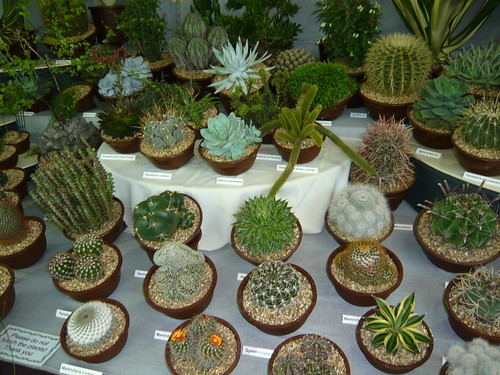
Cacti

What are Succulents

  • Succulents are a wide group of plants that have evolved from ancient tropical forests to combat the feast and famine of water supply.
  • Succus is the latin for juice.  Succulent plants have   stems,branches, roots, stalks, leaves or flowers that are juicy, fleshy or thick to retain moisture.
  • Parts of succulents above the ground act as reservoirs of water.
  • Succulents are varied plants not one or even related groups or families of plants.
  • All cacti are succulents but all succulents are not Cacti.

How do Succulents Preserve  Water

Read More Read More

Blight Buster Potatoes

Blight Buster Potatoes

Potatoes

Potato blight, also called late blight, is a destructive fungal disease that is caused by spores of Phytophthora infestans. Potato blight spores are spread on the wind and may also contaminate potato tubers in the soil. It can ruin a crop in 10-14 days and there is little that can be done to save an infected crop. It was the original cause of the Irish Potato Famine.

How to Recognise Blight on Potatoes

  • If you want to be a blight buster be aware that it is particularly prevalent during warm humid weather. It can be especially problematic in summer from June onward during wet weather.
  • Dark brown blotches appear on the leaves, particularly towards the leaf tips and edges. White fungal spores develop around these lesions on the undersides of the leaves, and further lesions develop on the stems.
  • Leaves and stems rapidly blacken and rot causing plant collapse.

Prevention of Potato Blight

  • Always plant healthy disease free seed potatoes from a reputable supplier.
  • Choose blight resistant potato varieties such as the Hungarian Sarpo range developed specifically for their superb resistance to late blight and other viruses.
  • Blight resistant varieties allow the gardener to produce reliable disease free crops without the need for constant spraying.
  • Always choose an open planting site with good airflow and leave sufficient space between plants. Better airflow will allow the foliage to dry quickly after rainfalls and therefore slows the spread of blight between plants.
  • Crop rotation will help to prevent a build up of disease, and will avoid infected plants springing up undetected from potato tubers that were missed during last year’s harvest.
  • Spray potato crops with a protective fungicide such as Dithane 945 before signs of blight become apparent.

Blight Resistant Potatoes

  • Maincrop Potato varieties Kifli, Blue Danube, Shona, Verity and Cara a pinkish red-eyed tuber.
  • First Early Potato varieties Orla and Lady Balfour
  • Potato ‘Sarpo Mira’ – Huge yields of tasty, floury tubers. A real all-rounder for all cooking purposes.
  • Potato ‘Sarpo Axona‘ – Sister line to the phenomenally popular Sarpo ‘Mira’. The tubers are more regular in shape and the flesh is slightly more creamy. Superb flavour for all culinary uses.
  • Potato Valor an oval white skinned tuber with eelworm and blight resistance.

Cultivation for Blight Buster Potatoes

  • If plants become infected they should be removed and destroyed not added to the compost heap.
  • Where potato crops have already developed tubers then these can be saved by cutting away the foliage and stems. Leave the soil undisturbed for 2/3 weeks to kill off any lingering spores so that they don’t infect the crop when it is lifted.
  • Given that old potato tubers can harbour blight spores over winter, it is important to destroy any unwanted or diseased tubers.
  • Spores may also be washed into the ground by heavy rainfall to infect tubers growing there causing a red-brown rot directly beneath the skin which slowly spreads towards the centre of the tuber.
  • The spores are released on the wind and quickly spread to infect neighbouring plants.

Credits
Potatoes by Buzz Hoffman CC BY-NC-SA 2.0


Growing Blue & White Delphiniums

Growing Blue & White Delphiniums

delphiniums

Delphiniums are stately border perennials which come in a wonderful variety of colours. Strong blues and clear whites are colours which are often hard to find in the garden. The delphinium is one of the few plants to give a true blue colour. The delphinium also adds greatly to the height of the garden. If well staked it can tower above the other foliage to give an eye catching display.

Growing Delphinium from Seed.

Delphinium seed is expensive. A packet may only have a few seeds in. But, they are good fun to grow from seed. Make sure you get a good variety from a reputable supplier.

delphiniums

Soil Preparation for Delphinium

Like many plants delphiniums like well drained fertile soil. If possible work in leaf mould / well rotted compost into the soil to improve the humus  / organic content. Top dresser with a general fertiliser. If the soil is clay based then drainage may be a problem, in this case work in sand or grit to the place where they will grow.

Staking Delphiniums. The flower stems of Delphiniums are so dominating they are unfortunately top heavy. Therefore, they need appropriate staking to prevent blowing over.
Book Cover

Read More Read More

Spiral and Cloud Pruning

Spiral and Cloud Pruning

Conifers can be kept neat and tidy by regular pruning.
Equally Conifers can become feature plants with there own personalities.

Spiral Pruning

  • Interesting patterns and shapes can also be created like this double spiral on a Golden Yew.
  • Two conifer types were used the low growing ball shaped shrubs to make the spiral at ground level. Abies balsamea ‘Hudsonia’ is a bun shaped, slow growing conifer.
  • The tall spiral was cut into a Chamaecyparis lawsoniana ‘Columnaris’ which can grow to 20′ high. Golden Yew could also be trained to grow in this shape.

Cloud Pruning

  • Cloud pruning was a fad some years ago but it takes dedication to keep up to it.
  • Ilex crenata, the small leaved holly is popular in Japan
  • Taxus Yew is without equal when clear geometric shapes are required.
  • Even Leylandii can be pruned into cloud shapes.
  • Pines are more difficult and time-consuming to prune this way.
  • Leylandii are forever needing extra trimmi9ng but if you enjoy pruning then it may be the plant for you.

Topiary Shears

brassy-gardener

I called this female statue ‘Lady Gardener’ due to the implement she was carrying that looks like Topiary Shears. In truth the shears are used in the woolen trade for shearing and working cloth. (The clue was seeing her in Dewsbury the Heart of the Woolen District of West Yorkshire.) She looks a bit too formidable to use as a garden statue but if my garden (and pockets) were big enough she could feature.

I have a large and small pair of these shears for light trimming and training of shrubs. I particularly use them to keep Lonicera nitada ‘Baggins Gold’ under control as trimming encourages new yellow leaf.

new-picture

Shears by Burgon & Ball

Growing Cacti

Growing Cacti

Cacti come in all sorts of shapes and sizes with differing textures and flowers. Desert cacti are usually covered in spines and jungle or rainforest cacti are often without spines.

Book Cover

Tips for Growing  Cacti

  • Getting the watering right is the key issue. All plants need regular water during their growing period in spring and summer.
  • I water weekly in spring and early summer cutting down drastically by autumn leaving winter almost watering free.  Provide a weak fertiliser solution in spring and early summer.
  • Good drainage is as important as watering. Most succulent prefer a free draining sandy or gritty soil. Do not stand in water.
  • Keep most varieties free of frost.
  • Plants can be grown from seed and many root well from cuttings or grafting.
  • Cacti are trouble free but like adequate light, warmth and ventilation in order to thrive.

Repotting Cacti

  • Cacti should be repotted as soon as roots show through the bottom of the pot.
  • Repot in the spring every 2-3 years for fast growing plants.
  • Water 2 days before repotting so the roots are moist but no saturated.
  • Remove from the pot and discard top dressing and any dead or damaged roots.
  • Increase the pot size only marginally and add slictly acidic compost.
  • Plant at the original depth and trickle a thin layer of grit on the surface which will help water drain quickly.


Olympic Flowers and Plants

Olympic Flowers and Plants

Book Cover
It shows how long this blog has been operating. The Rio Olympics 2016 will be the third time we have commented on suitable Olympic  flowers. See Beijing 2008 and London 2012 below. Today is the ‘Anniversary Games’ in London a curtain raiser for the Brazil games.
For Brazil we should start with the nut (OK so that is the author) and then the Cacti as he is a prickly sort of guy.
Feeding plants and flowers with fertiliser or hormone treatment will not fall foul of the drug testing rules – there are no plant urine samples to test!

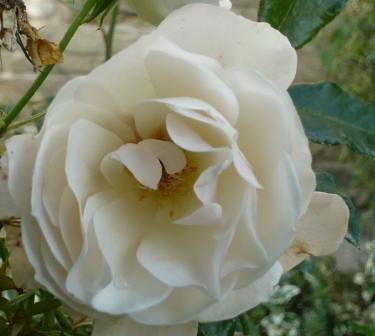
White Rose of Yorkshire

London Olympics 2012

  • Back in 2008 I wrote about the flowers and plants to be used at the Beijing Olympics.
  • ‘Budding companies’ for London Olympics can now demonstrate they have the skills and resources to design, assemble and deliver bouquets and floral arrangements. Olympics tendering authority Locog.
  • Approximately 29 London venues need 6,700 identical bouquets for the London 2012 Victory Ceremonies.
  • 30 arrangements for the Opening and Closing Ceremonies, and 130 arrangements for conferencing facilities are also in the tender.
  • They will be delivered every other day during the Olympic and Paralympic Games.

Read More Read More

Soya Bean Superfoods ‘Glycine max’

Soya Bean Superfoods ‘Glycine max’

Grow and Crop your own Soya Beans

  • For a little grown vegetable Soya are an easy and attractive crop to grow.
  • Sow in a propagator or into warm soil May or June if sowing direct outside.
  • Plant in well-drained, moist rich soil, 6 inches apart. Keep well watered, particularly as pods are setting.
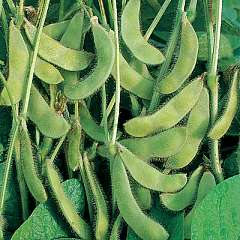
  • You will get 3-4 beans to a pod but you get lots of hairy self pollinated pods at the top of the plant.
  • Plants are virtually pest and disease free.

How to Use Your Soya Beans

  • You can pick pods whilst beans are still green and boil them in the pods with salt. Butterbean & Envy are good varieties for this purpose available from organicseedsonline.com
  • Shelled the green beans can be treated like broad beans
  • When pods turn brown harvest the dry beans and they can be stored in an airtight container. Soak them for 12 hours before using.
  • Good varieties include Ustie, Butterbean and Elna.
  • Commercially grown Soya is often GM but produces oil, Soya milk, Bean Curd or Tofu and can also be fermented to make Soya sauce.

Japanese Beans

  • Azuki beans are a hairy annual similar to Soya beans. They have yellow flowers and longer pods.
  • Daizu is the Japanese Soya rich in oil and protein. Flowers are violet or white and pea shaped.
  • Miso is a bean paste made from Soya beans rice and salt.
  • Tofu is an easily digested protein made from soaked and curded soya beans.
  • Natto is fermented Soya beans often eaten at Japanese breakfasts.
Primary Coloured Spring Bulbs & Primula Bed

Primary Coloured Spring Bulbs & Primula Bed

If you are looking for a show stopping display of spring flowers then why not try planting   primary colours of Red, Blue and Yellow in the same bed.

A sweeping display of blocks of colour contrasting with the other primary colours can have a stunning effect. Over planting with primary-coloured annuals will help the design continue through summer. This list starts off with bulbs in the primary colours but you can use whatever takes your fancy,  as you will see, I like Polyanthus.

More Primula seeds from Thompson & Morgan

Reds mainly Tulips

  • Small early red Tulips are Daylight and Show-winner.
  • For elegant Tulip shapes try Fosteriana Red Emperor, Charles or the more muted Rosy Dream.
  • Abba and Carlton are doubles to sing about.
  • Appledorn, Hollands Glory and Red Impressions remind you where most tulips come from but Barbados is a stunning fringed red to add to your selection.

Blues avoiding Purples

  • Muscari Azureum or other Grape Hyacinths are some of the best blues. I like Blue Spike, Super Star and Valerie Finnis.
  • Hyacinths, Crystal Palace, Blue Star, Delft Blue, Ostara and Kronos are just some of the blue varieties to try. Personally I would not bother with the yellow Hyacinths such as City of Harlem
  • Camassia, Chinodoxa and Anemone ‘Lord Lieutenant’  are varied bulbs flowering blue.
  • Dutch Iris are some of the finest blue flowers, Hildegard and Sapphire Blue. Iris reticulata, Joyce and Cantab are also well worth growing.

Yellow Aconites to Zantedeschia

  • For something a bit different try yellow Iris Danfordiae, Fritilliaria Raddena or Ixia Yellow Emperor.
  • Crocus species Chrysanthus Dorothy, Fuscotinclus and Romance are small yellow crocus whilst Golden Mammoth is just what it says, Golden and Mammoth.
  • Jonquilla Daffodills grow to about one foot and bloom freely. Baby Moon, Trevithian and the double Pencrebar are worth trying.
  • King Alfred did more than burn the cakes he had ‘the’ yellow Daffodil named after him.
  • Tamara, Carlton and Fortune are worthy substitutes