Browsed by
Month: February 2016

Spring Flower Photos

Spring Flower Photos

Here in the UK it feels very much like the depth of a wet winter. It is gwetting a bit lighter in the morning and there is little colour in the garden. It’s hard to imagine in a few more weeks, the garden will spring to life. I hope the gardener springs into life too!

These are a few spring scenes to give us a taste of things to come.

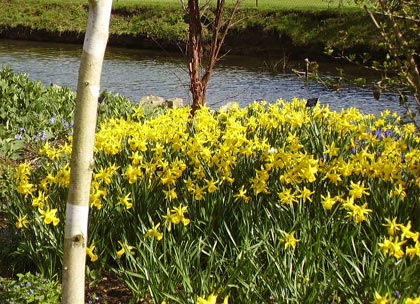
daffodils

Daffodils by River.

Read More Read More

Floral Vistas Plan Before Planting

Floral Vistas Plan Before Planting

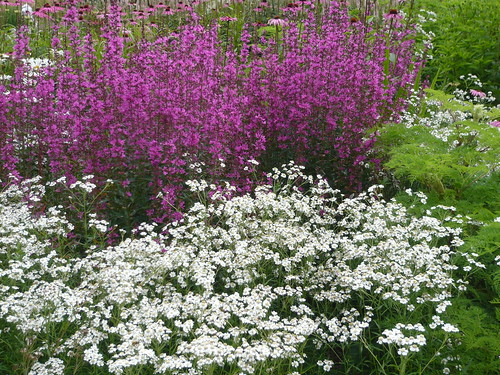
floral vista

Greenery is all very well but I like to see swathes of colourful flowers.
I try to envisage how mixed planting will shape up in terms of colour but generally my minds eye falls short when it comes to the imagination department.
The best tip is to keep it simple with only a very limited number of varieties chosen because they are due to flower around the same time.

By contrast my wife, on the other hand, is wedded to green leafed houseplants, green conservatory plants and even green outdoors. (She is also wedded to me and I am not as green as I am cabbage looking so at least I get some colour into the garden)
Perhaps she should grow Gloxinia
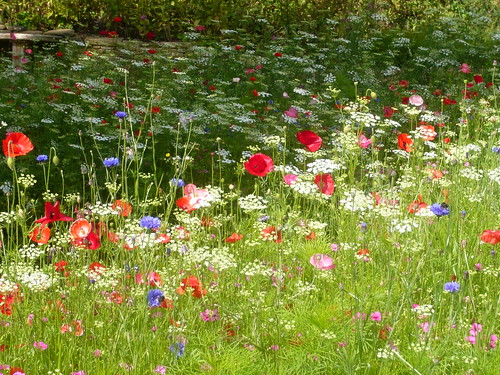
Meadow

I do not mind seeing my colour in wild meadows or just as yellow in a field of buttercups. This photo looks like a pointillist painting rather than a snap shot but it was planned by RHS gardeners to look something like this when the ground was laid out.

A friend at our village gardeners club insists she only grows flowers that avoid yellow – I guess she thinks it too garish and she misses out on some grand flowers.
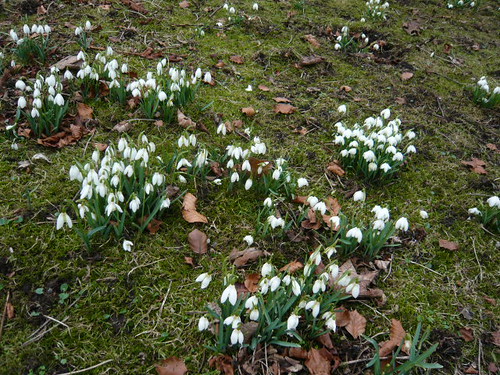
Snowdrop park

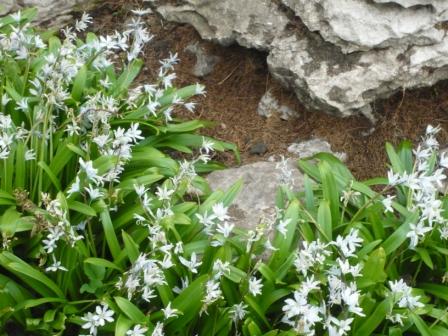
Woodland walks in Spring would not be the same if it wasn’t for the Snowdrops, Aconites and Narcissus.
Even wild garlic is better when you can see the white flower.
Is white really a colour some folk ask – to me a resounding yes, just consider a rainbow.
White Flowers and Features in the Garden

White Flowers and Features in the Garden

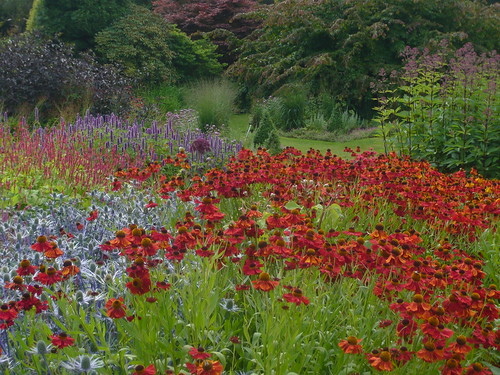
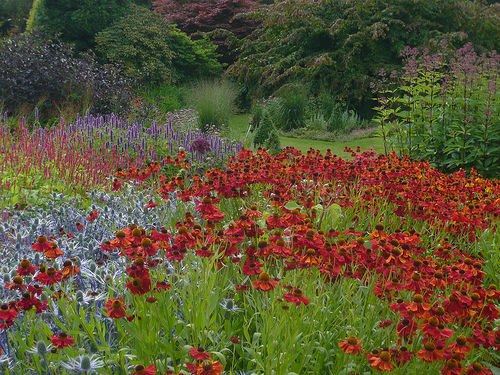
Colour bed

White is the second most useful colour in the garden after green. I am progressively increasing the number and variety of white and grey plants that I grow.

White Flowers

  • Roses are a current favourite and there are white Species Roses that are worth seeking out. Rosa: arvensis, banksiae, fedtscenkoana, helenae, longcuspis and multiflora just as examples.
  • The early flowers of Snowdrops and the Christmas Rose Heleboris niger start the flowering year.
  • Camellia japonica Nobilissima and Tulip Purissima are pure spring whites .
  • Personally I like Cistus Corbariensis and Malva moschata Alba to contrast with green leaves and pink stamen.

Read More Read More

White Garden Flowers

White Garden Flowers

Some of the best garden flowers are white! See our selection.
whiteflower

White Lily. A very delicate white with yellow stamen.

One of the favourite coloured flowers in the garden is white. The good news is that there is a huge variety of plants and flowers to choose from. White is admired for its simplicity and purity. White can go anywhere in the garden and will mix with any colour. Even on a dark day, white flowers can brighten up a darks spot of a garden. In addition to white flowers, also consider white / silver leaves and bark. For example, the lovely silver birch tree.

whiteflower

Small Chrysanthemum perennial

whiteflower

Snowdrops. Pure white in the depth of winter

whiteflower

Lupin.

Note this looks even better in early morning / late afternoon when the sun is less strong. Here the white stands out more. In the mid day sun, it can look a bit bleached by intensity of the sun.

Read More Read More

Snowdrop Tips and Locations

Snowdrop Tips and Locations

Snowdrops are officially called Galanthus. This snowdrop is Galanthus elwessii with larger than normal blooms and a honey scent the other main species are Nivalis and Plicatus. The snowdrop is very hardy, grows in most soils and prefers partial shade.

Gardeners Snowdrop Tips

  • Other AGM snowdrops include Galanthus nivalis and the double flowered version pleniflorus ‘Flora Pleno.’
  • For late flowering Galanthus there is a bell shaped flower Diggory or David Shakelton, Ikariae or Hill Poe
  • One of the earliest flowering is called Atkinsii.
  • For double varieties there is Lady Elphinstone, Nivalis  Flore Peno,  Hill Poe and Mrs Thompson.
  • Reginae-olgae can prove tricky to cultivate and seems to appreciate a drier and sunnier spot than but it is autumn flowering
  • There are some 75 species of snowdrop and many more cultivars and hybrids. Well worth making a collection of your favourites.

Cultivation

  • Snowdrop bulbs should not be allowed to dry out or they die.
  • Plant  with green leaves shortly after flowering no later than mid summer as they go dormant.
  • You can do worse that scrounge off neighbors when they split clumps as snowdrops spread quite effectively.
  • Snowdrops do not come true to seed except species but you can propagate by twin scaling.

The process was originally developed for narcissus, but works well with galanthus producing 10-30 new bulbs from one old one.

Read More Read More

Patterns from Alpine Plants

Patterns from Alpine Plants

Art can be found in many situations and you don’t need to look too far in the alpine house.

See my many magnified, magnificent and magical mushrooms and alpines for startling patterns.

 pattern

Getting up close and personal is one of the main ways to enjoy Alpine plants and succulent species.

Houseleeks seem to grow for the sake of making patterns from Hens and Chickens through to this rapidly reproduced colour scheme.  Other images on Google

Read More Read More

Rhodohypoxis for Massed Flowers

Rhodohypoxis for Massed Flowers

Tale Valley nursery hold a national collection of these floriferous plants.

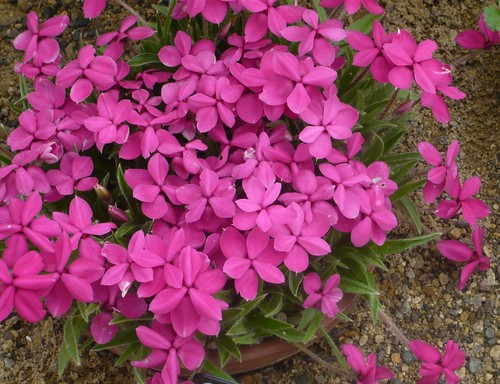
Rhodohypoxis

For a short intensely coloured alpine or pot raised plant there is little to touch Rhodohypoxis. The flowers are thick and wax-like white or shades of pink to purple. Interesting doubles are now being bred such as ‘Lilly Jean’,  ‘Hope’ or ‘Kiwi Joy’.
Rhodohypoxis grows to 2″ in height although Rhodohypoxis deflexa only reaches 1″ or less depending on position in your garden and Rhodohypoxis ‘Tetra White’ can be 4″ tall.

Cultivation Tips

Regular dead-heading of the spent flowers helps to improve flowering performance.
Grown in plastic or terracotta pots, they are best re-potted every year.
Add a high potash slow release fertilizer into the compost at potting time.
Compost should be relatively free draining by adding from 30%+ grit to the growing media
Around May the first lance-shaped leaf growth appears. They are quite short and form a spikey matting until covered in flowers for the rest of summer.

Watering and Feeding

Rhodohypoxis will happily withstand freezing cold provided the plants are kept almost dry through winter.
Their chances of survival outdoors can be enhanced by placing a pane of glass over the top of them during their dormant period.
‘Containerised plants require plenty of moisture in the spring and summer which is reduced as the leaves start to die down in August to October depending on the variety.’
Provide a liquid feed to build up the, small corm like, root stock during the growing period.
Trim off dead foliage and store corms through winter in a cool environment.
Propagate by division when dormant.

Rhodohypoxis

Species

Rhodohypoxis baurii
White flowers with shorter but wider leaves.

Read More Read More

Making A Rock Garden or Rockery

Making A Rock Garden or Rockery

A rock garden is a grand place to display your alpine plants. You can shade them with rocks, provide deep root runs and provide rain cover with perspex roofs
rockery

In Alpine conditions plants can shelter behind rocks that give them protection from wind and rain and help with drainage. Try to give your plants similar conditions to there original habitat and they will repay you for your attention to detail.

Tips for Making a Rock Garden

  • A rock garden should be open and unshaded by over hanging trees
  • There should be a slope either natural or built up. This allows plants on the North facing slope to receive 25% of the sun (and heat) of those on the South slope so those delicate plants don’t fry.
  • Study the prevailing wind so you know where most rain will fall and plant the rain shadow area with plants that need to stay dry.
  • If in doubt about drainage improve it by adding grit. If the soil is clay, a pile of brick rubble 15 inches below the surface will aid drainage no-end.
  • The soil can be average soil but will not need extra nutrients or fertilizer except for special situations. Pack all crevices tightly with soil to prevent unwanted pests like mice.
  • Plan your rock positions and lay the grain or style of rock all in the same direction. Do not mix rock types or the harmonious effect can be lost.
  • Do not plant higgledy piggeldy but select plants that fit into a simple plan. Keep slow growing plants needing similar conditions together. Consider haveing zones in the rockery for different plant requirements.
  • Mulch new plants with pea gravel

Read More Read More