Browsed by
Month: October 2015

Tip for Sowing Peas and Sweet Peas

Tip for Sowing Peas and Sweet Peas

An excellent way to start off sweet peas, is to use a piece of old guttering.

  • Fill the gutter with compost and place seeds at appropriate intervals (3cm apart). They can be sown from March to May
  • Place the piece of guttering at a slight angle so that excess water will drain away.
  • Keep well watered and when the seedlings have reached a height of 5-6 inches they can be planted out.
  • The advantage of using plastic guttering is that it becomes easy to plant out. Just push the seedlings out of the guttering and drop into a hole and the appropriate planting distance.
  • Growing in plastic guttering makes it easier to protect the vulnerable seedlings from slugs and snails. They can also be grow indoors to give the seedlings a head start.
  • Sweet peas grow long roots and need a deep pot
How To Encourage Wildlife into Your Garden

How To Encourage Wildlife into Your Garden

winding path

Some Tips for Encouraging wildlife into your garden:

Stack of Logs.

If you make a small stack of logs and cones, you will provide shelter for a variety of small creatures such as frogs, insects and small mammals. The stack of logs can be attractive in its own right and helps to build up an eco system in the garden.

Nesting boxes.

Choose a variety of nesting boxes for birds and also insects. One of the most useful creatures in the garden is the hoverfly. Former BBC gardeners world presenter, Geoff Hamilton, used to provide nesting boxes especially for hoverflies and ladybird, he even used to harden off the nesting spaces.

Water.

A pond with easy access from the side will be much appreciated by birds, hedgehogs and frogs. Make sure it is easy to access from the sides. In summer keep the pond topped up; this can be very important during very dry periods, when many water sources may dry up.

Read More Read More

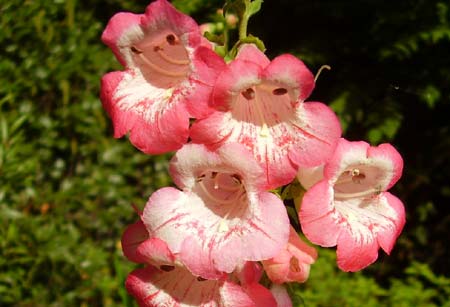
Growing Penstemon

Growing Penstemon

penstemon

Penstemon are one of the most underated herbaceous perennials. Relatively easy to grow they can give an uninterupted display of flowers for several months.

The growing requirements of penstemon are fairly basic

  • Like a well drained soil. Penstemon do not like a heavy waterlogged clay
  • Like full sun. or at least sun for part of the day.
  • Penstemon are hardy, but, early growth may be caught by late frosts. It is advisable to cut back Penstemon in spring time – April /early May This means old growth will provide some shelter from frost. It is important to cut back otherwise they will become woody.
  • Benefits from general fertiliser in early May

Read More Read More

Creating a Fountain in the Garden

Creating a Fountain in the Garden

fountain

Fountain in Oxford Botanic gardens.

One of the best ways to enhance a garden is through the addition of a water feature. Water brings a new element to the garden. In this photo the sunlight has caught the spray from the fountain, lighting up the picture.

Benefits of Adding Water Feature to garden

  • Water helps create interest
  • Creates a focal point in the garden
  • Sound is reassuring soothing; it adds an extra element to the garden
  • Children will love them.

Downside of Fountains

  • Moving water can damage plants. Water lilies prefer  still or slow moving water.
  • There is a cost of running and maintenance of a fountain.
  • You need to keep an eye on safety


Sunlight Through Autumn Leaves

Sunlight Through Autumn Leaves

sunlight

I took this photo in Autumn last year, outside Merton College, Oxford near to Christchurch Meadow. The natural sunlight highlights the colours of the changing leaves.
The sugars in the old leaves can create wonderful colours ni autumn

Espallier Fruit Trees

Espallier Fruit Trees

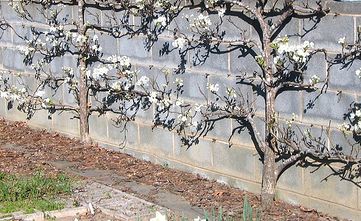
source pear-espallier-in-blossom

Easy Espalier Trees

  • Buy a tree that has two tiers already trained and in place. This will fruit earlier and benefit from the work already done by an expert.
  • Make the most of your wall space by planting apple and or pear trees to be trained against the wall.
  • Before planting stretch three or more wires horizontally along the wall about 18 inches apart matching the two lower tiers to the branches on the tree you have bought.
  • Use sturdy, pressure treated supports driven in to the ground and galvanised wire fixed with vine eyes.
  • Plant trees 10 inches away from the wall and lean it slightly inward towards the wall to help tie in the branches.

Training and Cultivating the Trees

  • In the first winter cut back the main stem to just below the third wire where there are buds growing on either side of the trunk
  • As the buds develop train each of them by tying to a cane which is gently lowered progressively so that by autumn you can tie them to the third wire
  • To get even growth and girth raise or lower the cane to stimulate or check growth. Eventually you will have branches 5-6 feet long.
  • For subsequent tiers support the central growth with another cane then repeat the process. Five branches are an optimum size though you can have more tiers if you narrow the width.
  • If you are only growing one variety use a self pollinating type or a family tree with two sorts grafted on to the same stock.
  • Peach trees may produce good crops if maintained on a south-west facing wall in a sheltered spot

Related

Training Fruit Trees

Chestnuts & Pomegranate in Climate Change

Chestnuts & Pomegranate in Climate Change

More exotics can be grown in the UK as we get hotter summers and temperate winters. Why not try a Pomegranate or Punica granatum a large shrub or small tree.

Pomegranate tips

  • Good drainage and a warm sunny wall position will help.
  • The leaves are green coppery when young changing to yellow as they age with brilliant orange flowers.
  • A showy variety Flore Pleno is worth growing even if the fruit don’t have time to ripen in poor summers
  • Nana is a very low growing dwarf variety.

Growing Chestnuts

Read More Read More

Cardoons Thistle be a good Plant

Cardoons Thistle be a good Plant

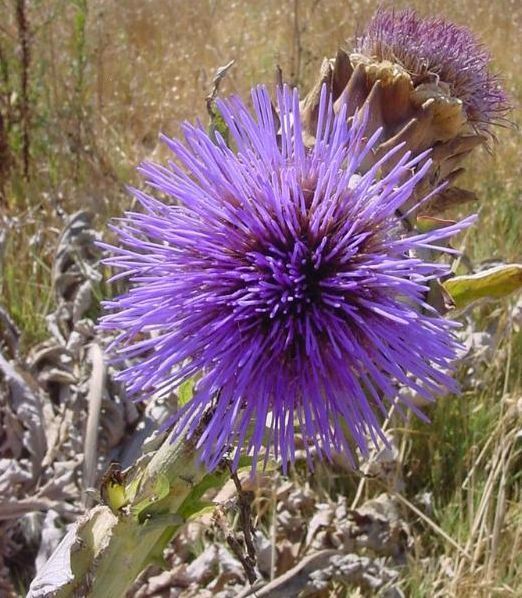
artichoke-thistle

Plants of the thistle family and close relatives are particularly good for wildlife. When in flower they attract Bees and Insects and the fine seeds provide bird food particularly for Goldfinches. In many cases the Thistles can and have provided food and medicine for human consumption.

Cirsium Vulgare and Common Thistle

These plants are hardy and the flowers, leaves, root, seed and stem are all edible. The root is best mixed with other vegetable due to it’s bland taste,  leaves and young flower stems can be removed of prickles, cooked and used as vegetables.  The stem base of the flower buds can be used like the heart of a globe artichoke.  The seeds of milk thistle  have  been used for 2000 years to treat chronic liver disease and protect the liver against toxins.

Cirsium rivulare Atropurpureum is popular with gardeners as it flowers 4-5 feet tall. It has spreading roots and the flower heads should be cut off before being allowed to seed unless you are feeding birds and prepared to weed. ‘Atropurpureum’ is a tall statuesque plant that is perfect for the back of the herbaceous border. It produces elegant, long, leafless stems, each topped with a huge magenta-pink thistle head.

Cardoons

A perennial plant of the Cynara family they are an old favourite. Originally grown as a vegetable and blanched for use rather like celery, the cardoon is now valued for its striking silvery, thistle-like foliage which adds a theatrical touch to the border. In summer, tall flower stems are topped by fat thistle buds which resemble small globe artichokes. The buds open into large purple thistles which attract lots of bees. The dead flower-heads can be left on the plants and will provide an attractive feature over the winter months.

Tips for Potatoes in Sacks

Tips for Potatoes in Sacks

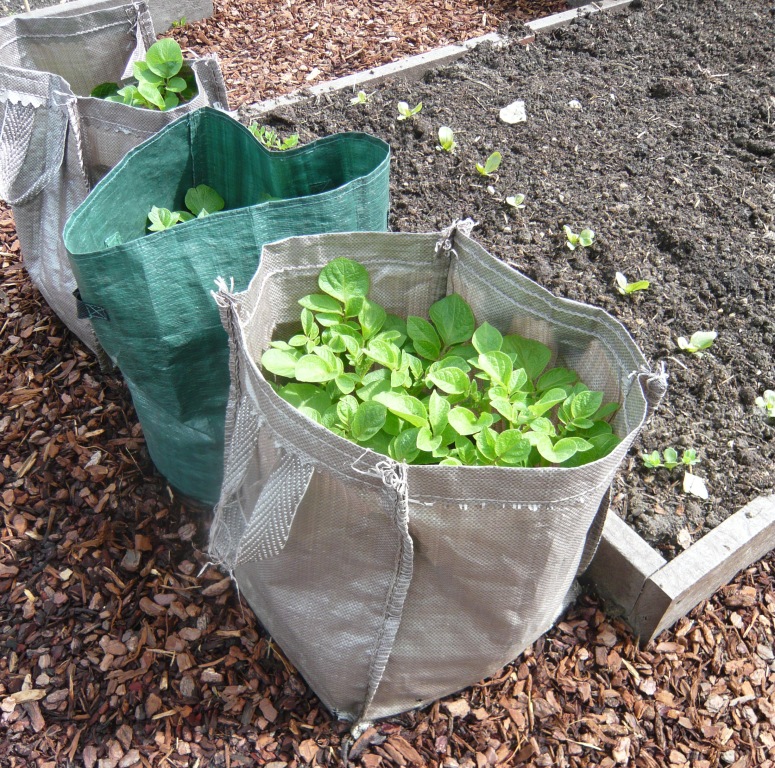
potato-sacks

I am growing my early potatoes in various containers but these canvas sacks look to me to be a great idea. You can buy specially made potato sacks from seed merchants and garden centres but any large bag can be adapted with enough drainage holes.

Tips and Benefits

  • There is virtually no chance of eel worm or soil borne infection if you use clean sacks and fresh or sterilized compost.
  • The sacks can be placed where there is spare space increasing your cropping area, particularly useful if ground is scarce.
  • These polypropylene sacks drain to avoid soggy conditions yet have space at the top to ‘earth-up’ by adding extra soil.
  • All the fertilizer will be focused on the plants.
  • Crops are clean and tasty with one plant producing at least enough for a meal for four.
  • You can start extra early crops in the greenhouse and move them outside later.

Tips from Experience

  • I have used sacks for several years now. The plants need plenty of water as they grow without becoming waterlogged.
  • I put 3 spuds in one 2 foot diameter sack.
  • Top up with extra soil as the plants surface until the bag is full.
  • I mixed in some rotted horse manure this year and the crop benefited and the soil residue was great for the garden.
Kiwi Fruit the Chinese Gooseberry

Kiwi Fruit the Chinese Gooseberry

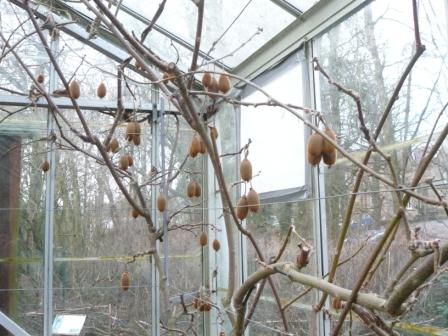
kiwi-fruit

Kiwi fruit known as the Chinese goodeberry grow on the woody vine Actinidia deliciosa and its hybrids. The vines should be grown on sturdy support structures as it crops more than the rather weak vines can support.This plant has a cold greenhouse for protection but they can be grown outdoors in a sheltered spot.

Growing Tips

  • Plants are prone to frost damage.
  • Fruit is borne on one-year-old and older canes, but production declines as each cane ages. Canes should be pruned off and replaced after their third year.
  • Kiwifruit vines require vigorous pruning similar to that of grapevines.
  • Only female plants bear fruit, and then only when pollinated by a male plant.
  • The cultivar ‘Issai’, a hybrid  Actinidia arguta x polygama from Japan can self-pollinate; unfortunately it lacks vigour, is less hardy than most Kiwi fruit and is not a large producer. ‘Jenny’ is partly self-fertile and so is worth trying where space is limited.
  • ‘Hayward’ is the most widely grown, least vigorous and latest-flowering female cultivar with oval fruits of a good flavour.
  • Of the male varieties ‘Tomuri’ is the latest to flower so is the best to partner ‘Hayward’.

Read More Read More