Browsed by
Month: August 2015

Blackcurrant Cultivation Tips

Blackcurrant Cultivation Tips

Recommended AGM Varieties

  • Ebony’s large berries can be ready as early as June. Branches may need support.
  • Big Ben crops well and a good all rounder.
  • Ben Connan compact bushes with easy to pick fruit. My choice for my small garden
  • Ben Sareksaid to acidic and have short strings.
  • Ben Hope Not a strong currant flavour
  • Ben Tirran easy to manage with late fruiting and good flavour – I have just picked a good crop

Quick Tips

  • Plant new bare rooted blackcurrants 2-5 inches lower than they were grown in the nursery to encourage branching from the bottom. This helps to create a strong shrub.
  • Best fruit yields are obtained from wood grown in the previous year so one third of the older wood can be pruned out to an inch from the ground each year.
  • Read More Read More

Lavatera Tree Mallows

Lavatera Tree Mallows

This tree Lavatera arborea ‘Olbia Rosea’ is a deciduous shrub growing 10 ‘ tall. It has a profusion of deep pink veined flowers, two inches across, that appear throughout the summer with lobed, mid green leaves.
There are a range of Lavetera species or Mallows from the tree and shrub varieties to annuals called Lavetera trimestris. The annual Ruby Regis is a ceris colour whilst Mont Blanc is pure white and pink Silver Cup has an AGM. All are easy to grow from seed and produce lots of hibiscus like flowers.

Lavatera davaei is a Portuguese shrub, up to four feet high, with clusters of violet-rose flowers.
Lavatera mauritanica, from North Africa, is an annual of two feet, with violet flowers, shaded darker at the base.
Lavetra maritima bicolour is a small evergreen shrub with grey-green foliage that produces a profusion of large, pink, lilac and white flowers with magenta veins from late summer.

* Tip 1 Grow perennial Lavetera from cuttings and annuals from seed.

* Tip 2 Prune hard in the spring to encourage flowers on the new wood.

Lavetera Barnsley is a popular and readily available plant. The lower growing Lavatera Barnsley Baby is useful for borders and patio containers, where the branching plants give racemes of hollyhock-like, soft pink blooms.
Annuals and mallows from Thompson & Morgan

Growing Good Crocosmia

Growing Good Crocosmia

The national plant collection of Crocosmia in Lincolnshire has 270 different varieties.
Most are grown in containers to make use of the available growing space.

Growing Hints and Tips

  • The bronzed leaf varieties are a bit tricky being more tender and slower to bulk up. Given good drainage and a warm sunny spot then Nigricans or Dusky Maiden may be OK. ‘Dark Leaf Apricot’ (Coleton Fishacre) should be even easier.
  • Crocosmia like plenty of water in the growing season and are hardy in winter as long as they do not get too wet.
  • A warm sunny spot suits Crocosmia best but do not forget the water.
  • Crocosmia attract insects and if possible leave the leaves on through the winter as wildlife utilise these leaves to make their homes. The old leaves also help protect emerging shoots from spring frosts but you can mulch instead if you wish.
  • Montbretia can be rampant and others you should watch out for include Red King, Meteore, Red Star and Marcotijn.

Choice Varieties

Read More Read More

Growing Ghosts – Eryngium giganteum

Growing Ghosts – Eryngium giganteum

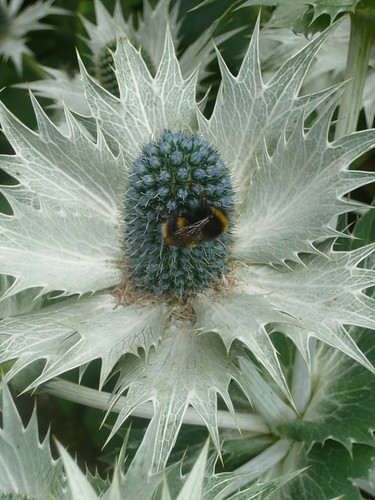
Mrs Willmott a formidable gardener is said to have secretly sown seeds in other peoples garden, an idea that appeals to me as a guerrilla gardener. Growing Eryngiums that look spooky in the moonlight is how they got the name Mrs Willmott’s ghost plants.

Growing Tips

  • Sea Holly or Eryngium giganteum is an odd looking perennial with prickly, silvery-grey bracts under steel-blue cones.
  • Wonderful for dried arrangements, especially at Christmas.
  • Happy in sandy dry soils this draught tolerant plant has spikey growth can deter unwanted visitors! I have a few scars this year to prove it. Suitable for exposed coastal planting
  • An architectural plant that attracts wildlife to feed or nest.
  • Suitable for container growing; – ideal as a ‘stand out’ plant.

Raising Plants

  • Surface sow and just cover with vermiculite. Do not exclude light. Germination can be slow.
  • Sow in February to get a bit of frost or place in a refrigerator (not freezer) for 3-6 weeks.
  • Transplant to a cold frame then grow on in full sun
  • Prefers a rich, light, well drained soil.

Chiltern Seeds have 18 different varieties of seed or try Eryingyum from Thompson & Morgan

Honesty seed heads look a bit ghostly once the seeds have gone and the coin shaped, white paper disc is left to reflect low winter light. If you want a ‘ghost of Christmas past’ combine these two in a dry flower arrangement.

Read Plants for dry gardens

Lawn Games for Summer

Lawn Games for Summer

Book Cover

The top ten garden games need a Lawn and a gardener who bites their tongue occasionally.

French Cricket the game where the feet must stay still and together and the ball is bowled at the feet from wherever it lands. Hitting the ball into another garden or favourite bush is 6 and out except there is no scoring anyway.

Tip it and Run is a short version of cricket with an L shaped pitch where the bowler bowls at the wicket as soon as they have the ball and a batter has to run at right angles a defined distance and back if he tips or hits the ball anywhere.

Croquet need some equipment similar to that show which can be bought from a sports or toy shop or from Amazon.

Carpet Bowls or even bowls if your lawn is large enough. The fun is in the bias that makes the ball roll in a curved line. Unless the grass is very wet it is unlikely to damage the lawn.

Read More Read More

Improve Your Garden

Improve Your Garden

Despite the lack of sun this summer there has still been quite a splash of colour in the garden. In my case a bit too much colour perhaps. I have several desires when it comes to changing my garden and it is time I put thoughts into action.  If I do not act this Autumn next season could be a frustrating repeat.

Masters Degree in One Plant

  • First I have to graduate from GCSE grade D but there is aspiration – so watch this space.
  • I would like to get the best out of one type of plant. Genera, family and even species may be too wide ranging to start with but who knows.
  • A real best of class performance would be a good start. Good show winning characteristics from good perennial flowers or fruit rather than vegetables.
  • Due to my acquisitive nature a selection of varieties a ‘mini national collection’ is what may be in my mind.
  • First chose your subject! I started with ‘P’  plants, primula, pansy, pelargonium and peony.

Better Colour Schemes

  • I should be able to organise more harmony with less sharp contrasts.  I must discipline myself not to squeeze in more plants of the wrong sort just because I like the individual plant but  thereby destroying the main theme.
  • I would like to have a natural flow of colour, not as in your face as purples, pinks and yellows all mixed in.
  • Separating blocks of colour may be the answer and I will try with annuals. Self colour seeds rather than mixes would be a start. There are some good selections in the new  catalogues.

Shock and Awe

  • More unique eye catching or even startling features that make passers by want to pause
  • Grow some unusual or unexpected plants to display their full pomp.
  • Exploit the clever use of garden hardware as containers or weird features (like the eponymous, continually pouring watering can )

Other Resources

Royal Horticultural Society RHS ‘Gardening for All’
National Council for Conservation of Plants and Gardens ‘Conservation through Cultivation.’
Garden Organic National Charity for Organic Gardening.
BBC Gardening

Growing Hydrangea

Growing Hydrangea

Hydrangea at Sunset
Hydrangea at Sunset

Hydrangea is a great plant that offers a long flowering season on a nicely shaped bush. Books suggest sun / partial shade. But, our experience is that it can thrive in full sun, but heavy shade will leave it stunted. It is relatively pest free which is a real boon. It is also fairly resistant to frosts, though new blooms may get damaged in a heavy frost. It is a heavy feeder, especially when in bloom. Give a good feed in spring with a general plant fertiliser.

Flowers come from new shoots, so you can prune back the old shoots in Autumn. But, we like to just dead head to encourage more flowers.

Getting More Flower Heads

  • Feed with phosphorous rich fertliser like bone meal.
  • Water well from early spring to encourage growth but remember Hydrangeas flower on old wood.
  • Prune with care I repeat ‘remember Hydrangeas flower on old wood.’
  • Blooms come from buds set in the autumn at the tips of stems.
  • Reduce the number of stems on the plant in early autumn.

Read More Read More

Garden & Allotment Safety

Garden & Allotment Safety

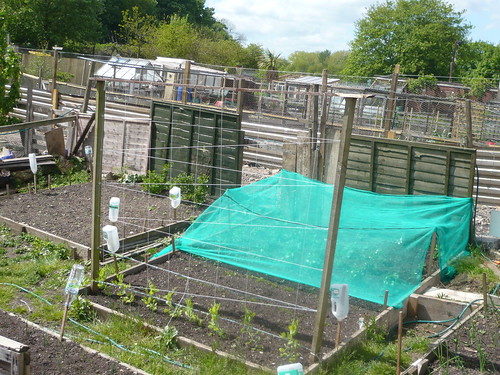
This allotment goes someway towards safety for the gardener, the allotment and the plants.

For personal safety the canes can poke out your eyes so the upturned bottles offer ugly protection. In a garden you can buy designer cane tops and if you spend a lot on the garden this may be a worthwhile finishing touch.

The trailing hose pipe could cause a trip but at least these paths are clearly marked out with the tanalised boards that also raise soil levels. Good well maintained none-slip paths are a must in the garden. Poor paths reflect on the plants, no matter how good they may be and paths are visible all year.

Most things and activities can be dangerous if used incorrectly but a bit of garden common sense particularly with sharp objects can save a lot of pain.

Get an upto date tetanus injjection just incase to prevent wound infection leading to lock jaw.

Bend the knees not the back when lifting and do not strain by over reaching.

For crop safety the mesh netting is keeping the birds off the strawberries underneath. The sun and rain can still get through and this type of fruit cageing is popular for all soft fruit.

The support for Sweet Peas is essential to help them get off the ground and support them whilst growing. They would not be safe from slugs, twisted flower stems and a poor crop yield without some protection.

Beware of communally supplied animal compost it may contain chemicals you do not want on your crops. Hormones and selective weed killers used by farmers and stables are often present in manure.

The site protection has linked fencing, barbed wire along the top and numerous fences and barriers. A bit over done for a garden but essential for an allotment that is unmanned and often out of sight.

Take valuable tools home and have a strong lock up at the allotment and or home. An old rickety shed wont stop the determined.

Valuable features like sculptures and fountains may need to be firmly fixed into the ground using special fittings to frustrate the thieves.

Grow Acanthus Varieties

Grow Acanthus Varieties

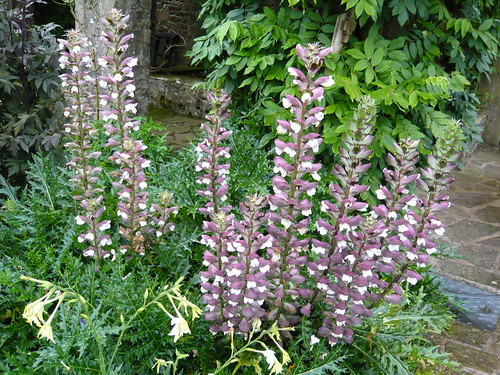
A large clump of Acanthus can produce many flowers on the 2-3 foot stems and you get the architectural leaves thrown in as an extra. The sturdy stems carry a whorl of 30 or so flowers, each producing a shiny, rich-brown, elliptical seed capsule.
Acanthus common name Bears Breeches is a genus of flowering plant named from Greek Akanthos, thorn plant.They were brought to the UK by Romans. An old herbal credits the following treatments which a Roman soldier may have needed:

“The leaves, being bruised or rather boiled and applied like a poultice are excellent good to unite broken bones and strengthen joints that have been put out. The decoction of either leaves or roots being drank, and the decoction of leaves applied to the place, is good for the king’s evil that is broken and runs; for by the influence of the moon, it revives the ends of the veins which are relaxed.”

“There is scarce a better remedy to be applied to such places are burnt with fire that this is, for it fetches out the fire, and heals it without a scar.”

Why are they named Bears Breeches or the Oyster plant?

In the 17th century, these were called Brank-ursine, meaning bear’s claws, which referred, possibly, to the shape of the flowers. They contain mucilage and tannin, which makes or rather made them useful in traditional medicine systems in Europe.

Acanthus in Cultivation

  • Acanthus grow in well drained soils, they don’t like to sit in water especially during winter.
  • The herbaceous species are native to dry rocky hills and make striking border plants. They thrive equally well in both sun and dense shade, although they tend to be more compact and flower more prolifically in sun producing more leaves in shade.
  • Acanthus have distinctive leaves at the base and some have fragrant flowers. The flower spikes are useful, when dried, for winter decoration.
  • Acanthus make excellent specimen plants in tubs and pots.
  • Slow to get a hold they can become hard to eradicate once they get going as they grow strongly from bits of root.

Acanthus Varieties

Read More Read More

Autumn Crocus & Fast Flowering Bulbs

Autumn Crocus & Fast Flowering Bulbs

Fast flowering bulbs can be planted now and will rapidly create an exotic display.

  • Colchiums and Autumn Crocus flower within days or at most weeks, producing flowers before the leaves. They can even be planted when in flower or left on a sauce to flower before planting out.
  • Cyclamen also flower from the corm before the low growing leaves push through to the surface.
  • Nerine will benefit from having a longer growing period  but, like their cousin the Amaryllis,  they flower quickly.
Type of Bulb When to Plant Flowers
Colchiums Aug/Sept Sept/Oct
Nerine Aug/Sept Sept/Oct
Autumn Crocus September October
Cyclamen September October
Amaryllis September January
Aconites September January
Dwarf Iris September March
Anemone Blanda September March
Muscari September April
Daffodils September March
Narcissi September May
Camissia September June

Other September Planted Favourites that will flower in Spring.

  • Iris reticulate are easy to plant and grow. They look excellent when grouped together in a pot or border.
  • It is too soon to plant Tulips but Daffodills and Narcissi like there time in the soil before flowering between March and May.
  • Anemone blanda and the blue Muscari are small plants that produce a good show and then leave the area clear for some annuals.

Bulbs for Later Planting.

  • As mentioned the Tulips do not need to develop strong roots in autumn and to avoid rotting I plant them in October or November.
  • Plant forced Hyacinths as soon as they are available in the shops for indoor displays or containers under shelter.
  • For more exotic flowers, plant Lilies and Fritilliaries in October to over winter and flower in early summer.
  • For indoors you will find Gloxinia are quick to grow and flower

Read Growing Habranthus