Browsed by
Month: June 2015

Dahlia Profusion, Propagating and Pointers

Dahlia Profusion, Propagating and Pointers

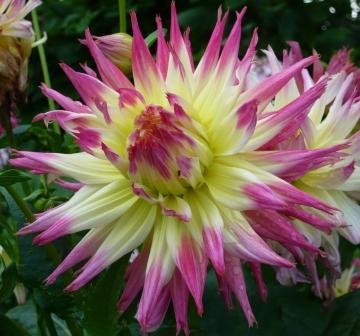
Pink dahlias

Pretty, perfect, pink Dahlias are alliterative with the title of this post. What is more Dahlias are easy to grow and they produce prodigious posies of pickable flowers (enough with the P’s, Dahlias make a big vase-full not a posy.ed.)

Top Ten Dahlia Pointers

  1. Plant good clean tubers in a large hole that has been well dug and improved with manure or garden compost.
  2. Give each plant plenty of space. Dahlias do not appreciate over crowding.
  3. Support your growing plants with a good stake and string frame work. Dahlias get heavy with all the flowering.
  4. Water regularly and add soluable fertiliser. Dahlias are gross drinkers and feeders.
  5. Pinch out the first early buds to keep the plant growing and not putting early energy into flowering.
  6. To get big individual blooms pinch out any side buds and weak side shoots.
  7. Pick the blooms regularly and new ones will follow. At worst deadhead promptly and regularly.
  8. Plant a range of the many types and varieties – see below.
  9. Flowers will continue until the first frost. Cut back when the leaves are frosted to black.
  10. Save the best tubers for next year in a frost proof shed. In mild zones they can be left in the ground but I prefer replanting in fresh composted soil for the following year.

Top Dahlia Posts

Dahlia Propagation

Cactus Dahlia

Credit
Pink dahlias by robynejay mosaic CC BY-NC-SA 2.0
If in Drought – Try Xeriscaping your Garden

If in Drought – Try Xeriscaping your Garden

Lithrope

If you are doubtful about this summer’s British weather, and how can you be otherwise, then you may need some tips on watering your garden.

Xeriscaping is the creation of a garden that uses less wate
r. No grass to cut, drought tolerant plants and appropriate landscaping are what you need.

Xeriscaping and Other Watering Tips

  • Pull up weeds as soon as they start drinking your water.
  • Plan and plant wind breaks to stop drying winds.
  • Use plants that generally require less water. Grey and silver plants often need less water.
  • Give one good weekly soaking not daily dribbles.
  • Add humus to the soil to retain water and mulch the surface of the soil.
  • Use larger containers rather than hanging baskets, they are easier to water.
  • Use capillary matting in the greenhouse to aid watering

Water Saving Tips

Read More Read More

Plants on Windowsill

Plants on Windowsill

Houseplants in pots are popular windowsill subjects but broaden your horizons.
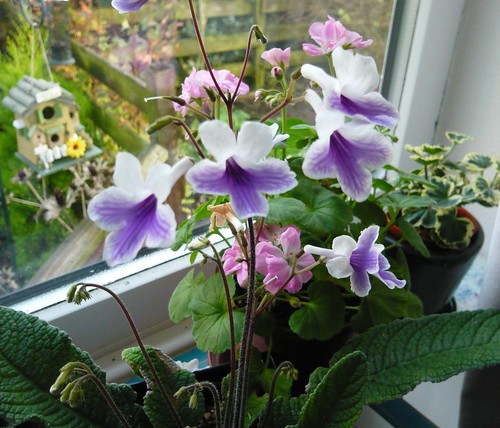
Cape windowsill

No greenhouse or conservatory but lots of windows? Then you can grow a range of plants using the windowsills or a shelf under a window. Chose small plants and pots that are and will be in proportion to the width of the windowsill.
Tender plants may suffer in winter behind curtains but with good double glazing I do not bother moving most plants at night.

On the Kitchen Windowsill

Herbs will be many gardeners first choice and curly or flat leaved Parsley are likely to figure most frequently. Basil  can be used as cut and come again and is available in several varieties so I would add this to any list of windowsill plants.
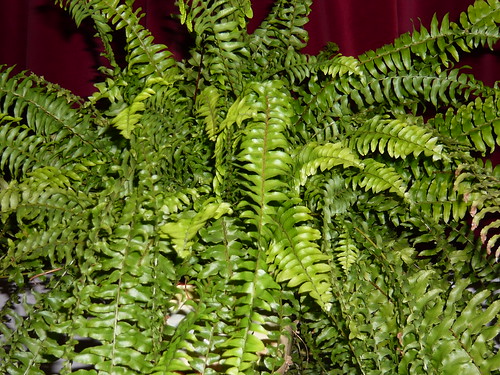
The hot and steamy conditions of many kitchens don’t help all plants but ferns and Orchids usually like these conditions particularly on North or East facing window ledges.
We currently have a white Saintpaulia which enjoys humidity but it will be moved when the flowers go over to be replaced by a Christmas cactus in flower.

Read More Read More

Watering Houseplants – Best Watering Tips

Watering Houseplants – Best Watering Tips

Water is a natural element in the care of houseplants and the tips below give some simple pointers that will help your plants excel. Humidity is water in the surrounding air and can help many houseplants. I stand most of my plants on moisture retaining clay granules of Hortag.

Houseplants 018

Tips for Watering Houseplants

  • Modern composts tend to dry out, shrink and become light weight when they dry out. Top watering will not always soak down and wet this compost. Best tip is to immerse the whole pot in water until it is level with the top of the pot and leave it until the compost looks wet on the top. Water will be drawn up from the bottom soaking all the compost. In extreme circumstances repot with fresh damp compost.
  • Your finger pushed in the compost can tell you if the pot needs watering. If your finger remains dry give the pot some water.
  • Do not have a fixed schedule for watering. Each plant has different needs and each pot and compost may vary. Treat each plant on it’s merits.
  • Heavy and excessive watering can waterlog the soil. More plants are killed this way than from thirst. Excessively heavy pots with water always dripping out of the drainage hole is a sign of waterlogging. Knock the plant out, clear off the waterlogged compost, trim off any dead or rotting roots and repot in fresh compost.
    Leaving a plant out of the pot to drain a wet root ball may work if the waterlogging is recent and the compost has good drainage.

CACTUS

Problems Watering Houseplants

  • Plants that are wilting may be short of water but plants can also wilt when they are over watered.
  • Some house plants need special watering treatment. see below
  • Frequent but light watering can wet the top of the compost but never reach down to where the roots need the moisture.
  • Watering at the wrong time can cause problems. Many house plants need less water when not in active growth eg during winter.
  • Beware drying conditions caused by central heating, porous pots or direct sunshine.

Brilliant Bromiliad

Special Houseplants Watering Tips

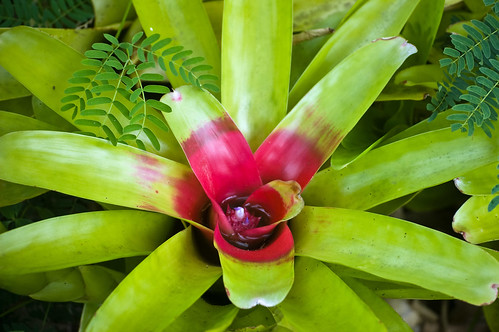
  • Vase plants like Bromiliads need water in the central core of leaves. Use rainwater if possible and clean out the water 3-4 times a year and restart with fresh
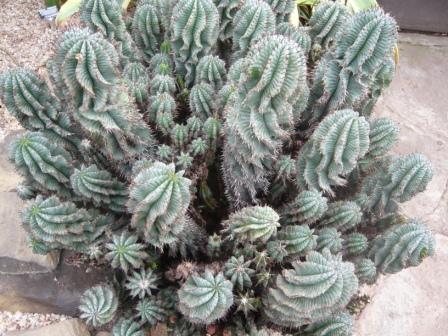
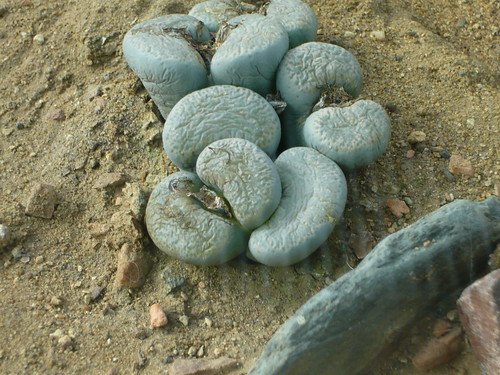
  • Cacti and succulents need to alternate from moist to dry during spring and summer but can be left short of water in winter
  • Azaleas do not mind having the pot standing in a saucer of water. Their compost is usually free draining and Azaleas need regular watering
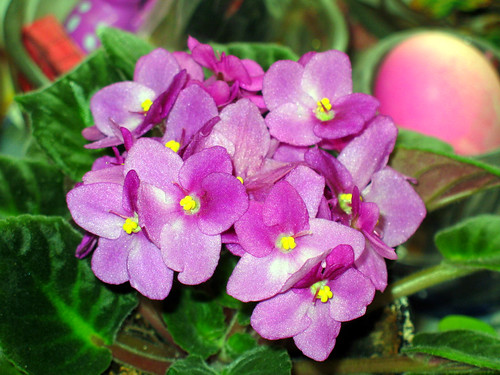
  • Saintpaulias (African Violets) need watering from the bottom of the pot to protect the fleshy leaves from rotting. This also works on Gloxinias, Chirita, Acorus and Cyclamen

African Violet
Photo Credits
“CACTUS by lcrf CC BY-NC-ND 2.0
Brilliant Bromiliad by kretyen CC BY 2.0
African Violet by dog.happy.art, CC BY-NC 2.0
Windowsill Gardening

Cactus House Durham Botanic Garden

Cactus House Durham Botanic Garden

cactus

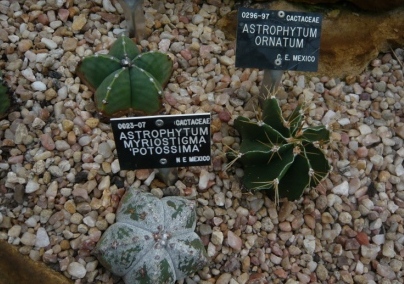
Why are Cacti raised in a Cactus House and not a Cacti House? A prickly question if you are pedantic but if you are just interested unusual forms of plants then the Cactus family will interest you. Originally all  Cacti are of American origin from Patagonia in the South to the 50th parallel in the USA. Some have reached an age in excess of a thousand years. Mexico is famous for old globose cacti Echinocactus ingens.

Cacti Propagation Tips

  • Growing from seed needs patience but plants started in this way adapt to the conditions and give pleasure as they grow and develop. Sow on the surface of porous sandy soil at 20-30°C and cover with glass to retain heat and moisture.
  • Take vegetative cuttings in summer from side shoots root as long as the cutting is not too small. To encourage shoots cut off the top of a cactus to disrupt the growing centre. Many varieties like the cut surface to dry before they are potted up when rooting can then be rapid.
  • Grafting is a popular commercial technique as it helps speedier growth. Even small seedlings can be grafted uniting in a few hours. Stock and sion are cut at right angles and can be held in place with rubber bands.

astrophytum-mexico

Single Colour Hanging Baskets

Single Colour Hanging Baskets

Good hanging baskets with a bold statement can be achieved by using one type of plant in one colour.
Think about the volume of colour from your chosen flowers over the life of the hanging basket. Keep it simple and you will only need one watering and feeding regime.
The hanging baskets below generally fit into the single colour category with the odd liberty.

Lobelia

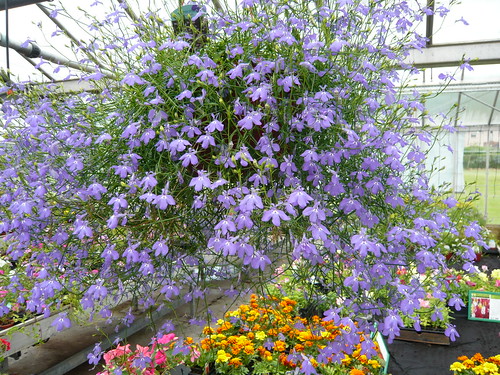
I like the powder blue Lobelia. It is far more stunning than the more traditional purple in this large hanging basket.

Petunia

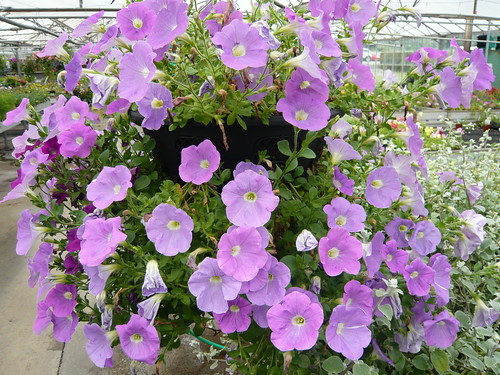
Petunias in purple, or would you call it mauve, are great for hanging baskets as they produce lots of flowers and self-deadhead.

Hanging Basket 2009

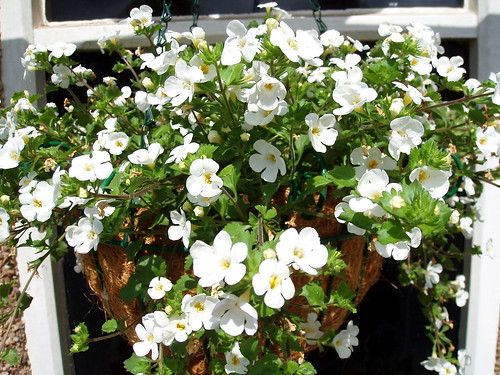
I have not grown Bacopa but like the clean white colour scheme on this hanging basket.

Hanging Basket

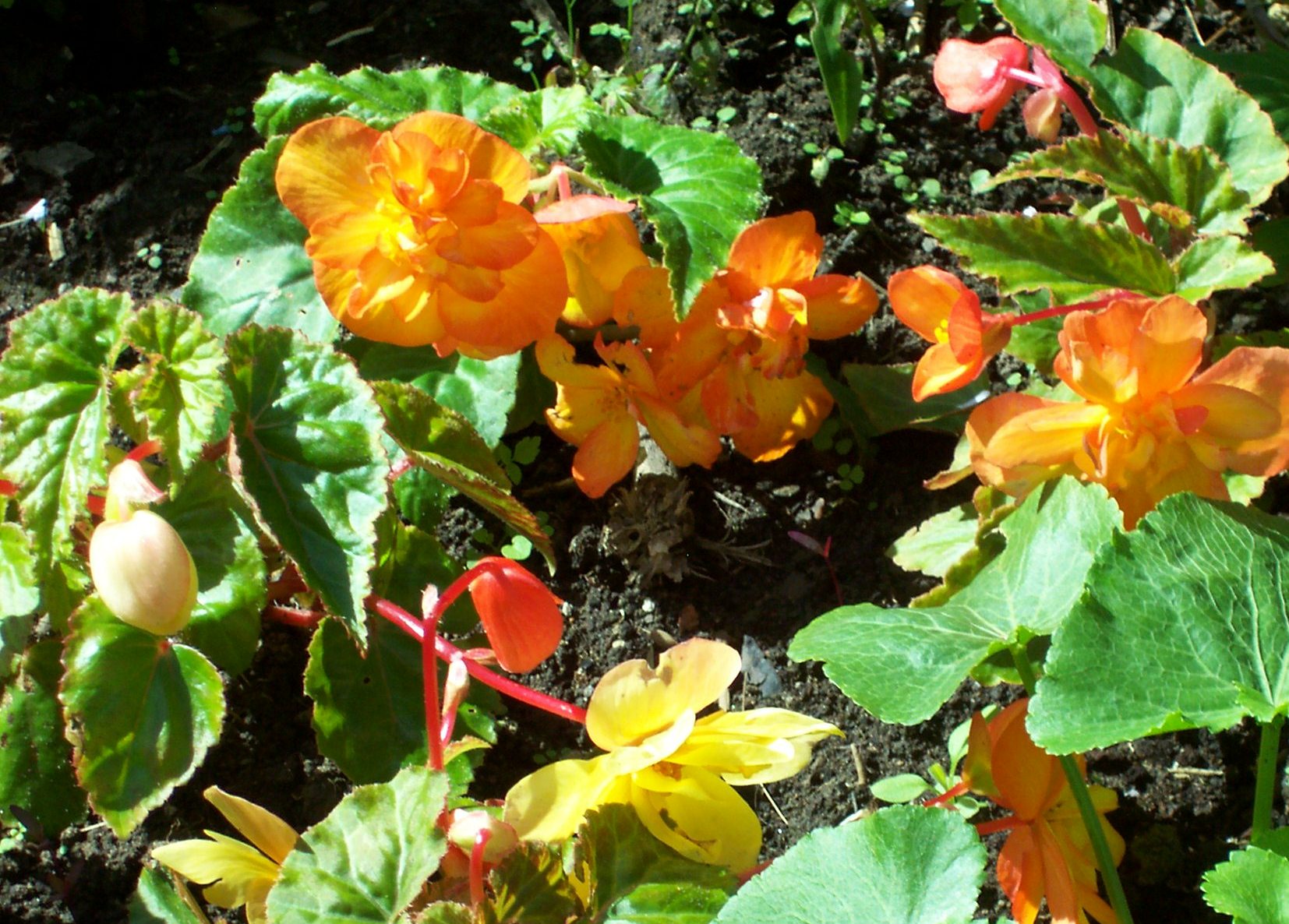
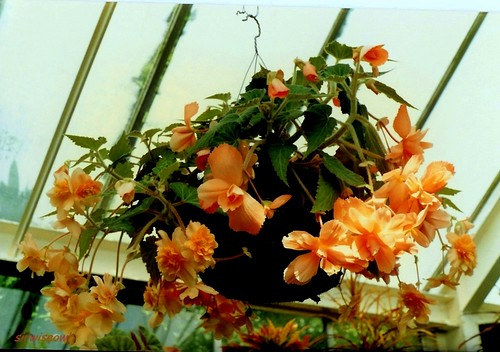
Orange is an ususual clour for a hanging basket but there are now some brilliant begonias like these.
Begonia x tuberhybrida ‘Illumination Apricot Shades’ F1 Hybrid is fantastic but would produce a mix of yellow & orange.

Beautiful hanging baskets

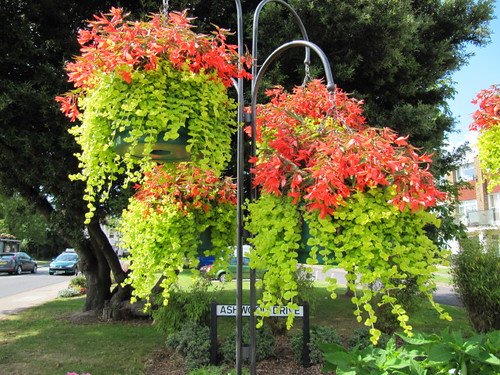
Now we get to a cheat with a trailing Lysimachia to under pin the base of the hanging basket which contains red begonias.
Begonia from Thompson & Morgan

petunias

Is it fair to call this a single colour. Certainly this veined petunia in pink to purple makes a bold splash of colour.
Petunia Million Bells or Calibrachoa are very floriferous plants to try in hanging baskets.
Petunia seeds at Thompson & Morgan

Hanging hydrangea hallway - Longwood Gardens, 2 May 2011

This would be my hanging basket display of choice. Hydrangeas drink large volumes of water and would not normally feature in baskets but this USA garden at Longwood makes do.

Colour Photo Credits
Hanging Basket 2009 by amandabhslater CC BY-SA 2.0
Hanging Basket by sirwiseowl CC BY-NC-ND 2.0
Beautiful hanging baskets by wallygrom, CC BY-SA 2.0
petunias by NapaneeGal CC BY-NC 2.0
Hanging hydrangea hallway – Longwood Gardens, 2 May 2011 by mmwm CC BY-NC-ND 2.0
Cheerful pelargoniums by tsheko CC BY-NC 2.0

Cheerful pelargoniums

In Praise of Clover in your Garden

In Praise of Clover in your Garden

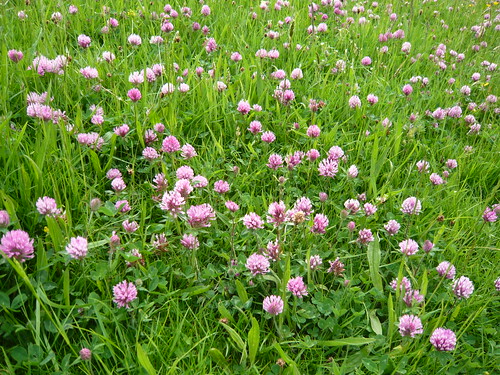
The wet weather in May and June has brought out a good crop of clover and meadow flowers for our local farmers. Praise be the hay making will produce some juicy animal feed and the fields have looked particularly good.

Clover

Good Clover for Gardeners

  • Clover can be used as a green manure if you have a large patch in your garden. Grow it then dig it or rotovate it back into your soil.
  • Green manure acts as a good soil conditioner increasing the humus content.
  • Clover adds or fixes nitrogen into the soil via its roots.
  • Clover is a beneficial weed because it attracts good insects particularly species of wasp, which do not sting but do eat aphids. Bumble bees will also be attracted in to your garden.
  • Red or white clover can create a green, low-maintenance lawn or groundcover as it did before herbicides were used in great quantities to manicure lawns.

Wild Flowers

There are circa 250 species in the genus Trifolium or Clover aka Trefoil of which Trifolium repens is the common white variety.
Trifolium rubens is a hardy perennial clover sold as seed by Thompson & Morgan who say it is a ‘soft to the touch flower spikes of dusky pink which bees love and can been used as cut flowers. The mid green leaves are unusual and almost resemble peanut foliage.’ seeds at Thompson & Morgan

Plant Hardiness Ratings

Plant Hardiness Ratings

You want your plants to survive our British climate so it is worth understanding the hardiness ratings. Plant hardiness is based on the lowest temperature that a plant can normally withstand during  winter.

Categories of Hardiness

  • Hardy plants are those capable of coping with temperatures as low as -15º C.
  • Frost-hardy plants tolerate temperatures down to -5º C
  • Half hardy plants should survive in temperatures above zero.
  • Frost tender plants may be at risk below 5º C.

Hardiness Zones

  • The USA is so large and covers many different climates that it relies on Hardiness zones for horticulture and gardening.
  • These hardiness zones are geographically defined areas where temperature  will dictate what plant life is capable of growing.
  • Zone 1 is -50º C,   Zone 8 equates to -7º C   and Zone  10 is zero.
  • England is generally in zones 7 – 10 Scotland is cooler and Ireland warmer due to the warming effect of the gulf stream.

Plan Your Hardy Garden

  • Frost will run or fall down slopes and collect in ‘frost pockets’. Be careful what plants you put at the bottom of slopes.
  • Frost on young buds may not hurt but a rapid thaw caused by spring sunshine probably will. Camellias get frost burn and loose their buds if facing an easterly rising sun.
  • Your garden will have a series of micro climates so map out those areas that are suitable for special plants.
  • Allow your plants to acclimatise. Sudden drops in temperature can be more deadly than cold.
  • Be aware of heat hardiness as some plants will not survive hot temperatures.
  • Fertilizer hardiness is an issue not fully understood so watch out for sufferers.

Tactics of Hardy Plants

  • Hardy herbaceous plants allow the foliage to totally die back in autumn. The roots remain viable under the soil and regrow in spring.
  • Some hardy plants allow the stems and leaves to fall on the root crown to create a warming mulch until next spring.
  • Sappy growth is a target for frost so hardy plants stop growing in summer allowing the twigs to toughen up. Do not feed plants with high nitrogen feed in late summer if you want them to remain hardy.
  • Trees and shrubs take the sap back down into the plant and branches so that twigs are too dry to be damaged if they freeze.
  • Plants will grow less well and be prone to winter injury if the soil is heavy, wet, of low pH or low fertility, or in general not suited to the plant.
  • Some plants grow more sugars in summer to sustain them through cold winters.
  • Thermal insulation from snow cover helps plants survive normally deadly winter temperatures

The Hardy Plant Society

  • The Hardy Plant Society is a UK charity that was formed to foster interest in Hardy Plants.
  • The Society informs and encourages the novice gardener.
  • There are 40 regional groups so you can join one near you.
  • They have specialist societies for Geraniums, Peony, Pulmonaria, Variegated plants and Ranunculaceae

Sources of further information

It is hard to address the ‘question asked by everyone with ambitions to grow hardy and semi hardy tropical plants in the UK’.

The British Fuchsia Society
has an official list of fuchsia plants that are capable of being over wintered in the garden

Growing Chirita as House Plants

Growing Chirita as House Plants

Chirita micromusa 040919-1032

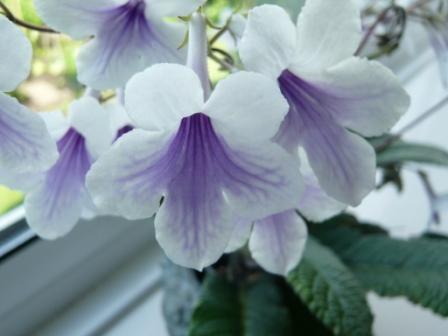
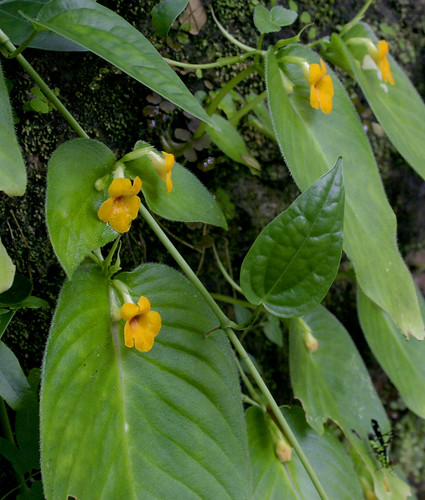
If you have tried Cape Primroses, also called Streptocarpus, then you may also want to try the cousin Chirita. They have hairy leaves similar to African violets and flowers that are similar Streptocarpus. In fact they all belong to the little know Gesneriad family


  • Chiritas can be acquired from the specialist www.dibleys.com They also produce an excellent compact A5 plant catalogue
  • Propagation is easy from leaf cuttings in an equal mixture of compost and vermiculite, pearlite or sharp sand.
  • Keep plants out of direct sunlight, a north facing windowsill or porch is ideal
  • Plants can stay in the same pot for several years if they are give a regular week feed.
  • Keep plants a bit on the dry side and treat like African violets
  • Chirita Akiro as shown above has marbled leaves
  • For small neat pure white Chirita taminiana is recommended by Anne Swithenbank
  • For larger flowers try C. Keiko shown below with upto 25 two inch flowers from

C. Keiko

Chirita Growing Tips

  • Do not drown your Chiritas only water when the compost is dry.
  • Deadhead flowers and do not let spent blossoms drop onto the leaves. They may cause rot and disease.
  • Chiritas like plenty of light but avoid mid day sun which can burn through a window.

Chirita sinensis is most frequently grown as a house plant. The genus chirita belongs to the gesneriaceae family and contains approx 150 species.

Photo Credits
Chirita micromusa 040919-1032 by Tony Rodd CC BY-NC-SA 2.0
Primulina (Chirita) tamiana, Saintpaulia ‘Cirelda’ and Sinningia ‘Country Tiger’ x self by nipplerings72 CC BY-NC-ND 2.0
Read Chirita a housepalnt with a future

Book Cover“>Amazon

Gesneriaceae: Cyrtandra, Didymocarpus, Streptocarpus, Alloplectus, Achimenes, Chirita, Henckelia, Gasteranthus, Sinningia, Kohleria, in Portuguese, an English version may now be available!

Nerium Oleander Review

Nerium Oleander Review

Nerium Oleander is an evergreen shrub widely distributed and cultivated. Originally from South East Asia though its exact origins are hard to pinpoint.

Cultivating Nerium Oleander

  • Nerium is a fairly easy shrub to look after. It thrives in hot dry conditions and needs little in the way of care.
  • It can grow to 2-6 metres tall, but can be pruned to keep in shape suitable for your back garden.
  • No special preparation is needed for planting. Best to choose a sunny, well drained position.
  • The main threat to Nerium comes from a hard frost. It is said to be resistant down to temperatures of -6. On particularly cold winters you could give fleece protection or choose a sheltered spot.
  • Nerium is a good choice for coastal areas as it is resistant to salt spray.
  • The species can be propagated by semi-ripened cuttings in summer or seeds.

Nerium as a Garden Plant

nerium

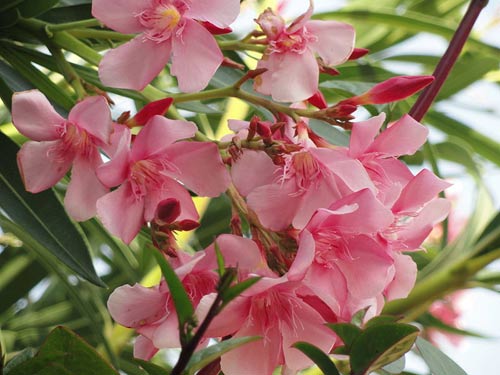
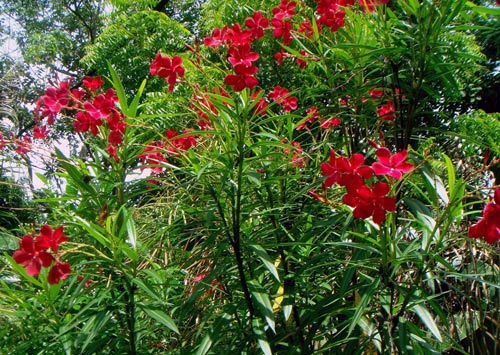
Nerium adds a touch of tropical colour with bright pink or red flowers providing a strong focal point to any garden. Make sure it fits in with surrounding plants. It’s not a plant for a white or blue border. But, if you’re looking for a bright colourful plant to add a touch of the exotic, this is a great value shrub.

Nerium
Nerium

Note: The Plant leaves are poisonous and should not be ingested. Also avoid contact with sap.

Historical Notes:

  • Nerium features in many of the Roman wall paintings in Pompeii.
  • Alexander the Great in his military campaigns is said to have lost men as a result of eating meat skewered on the highly poisonous Nerium twigs.

Related