Browsed by
Month: July 2014

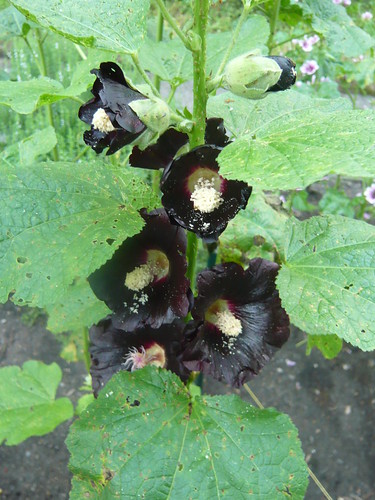
Sweet William Organic Seeds

Sweet William Organic Seeds

In addition to collecting my own seed I like to try new varieties.
Suttons seeds have a ‘Kaleidoscope mix that I have just bought as an experiment. They were half price in the Wyvale sale and look as though the flower heads will feature white and a range of other pastel colours.
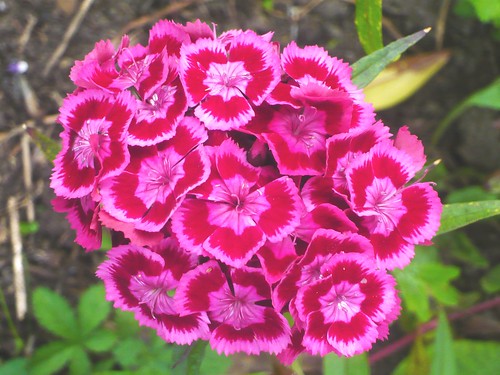
Cottage garden favourites are now running to seed in my garden. I am glad I dead headed the plants earlier and got a second flush of flowers but now is the time to collect seed.

Sweet William Seed.

  • Each pollinated floret will generate seed which is held in a firm upright cup.
  • As the seed dries and gets ready for distribution the cup opens and the black ‘gritty’ seeds can be shaken out. I use old envelopes to collect the seed into so I can keep and name different seeds.
  • If only a proportion of the seed capsules are open gently shake the plant into your container. If the majority are open I cut the head off, invert it over some paper and gently shake and squeeze to extract the seed.
  • Sweet Williams are quite promiscuous so do not always grow just like the parent you collected from. They will have many of the characteristics so select from the colours you like. The red flowered, red leaved types are my favourite but you may prefer the pastel or chocolate kinds.
  • Nature knows what it is doing and the seeds can be sown now to germinate and grow before the ground gets too cold. If you want an informal effect you can just shake your seedheads over a soil patch and wait.
  • Other members of the Dianthus family such as Pinks and carnations can be treated in the same way

The seed I collect will be organic as I have not used any chemicals for the last two years on or around my Sweet Williams. However they will not be certified by the soil association but in the scheme of things that wont matter.

Sowing & Growing Tips
As I have just bought the seeds I am sowing them to overwinter and flower next year.
If sown in February or March they should flower the same year.
They like a bit of space to excel so allow 6-9 inches apart when planting out in the final sunny positions.
Five June Garden Photographs

Five June Garden Photographs

A big bright month for flowers following a lush spring in Yorkshire. Not all plants behave to the seasonal timetable buy the Poppies are still stunning.

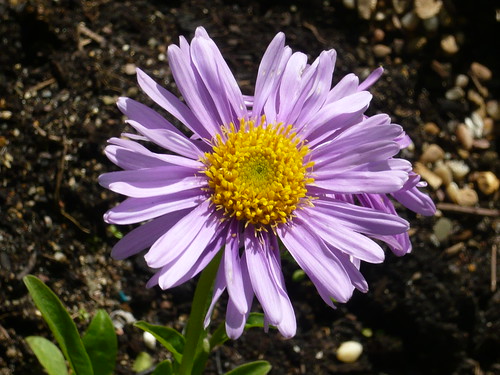
Alpine Aster
Aster alpinus the Alpine aster – bought from the nursery at Newby Hall in blue, white and purple varieties which are still to flower.

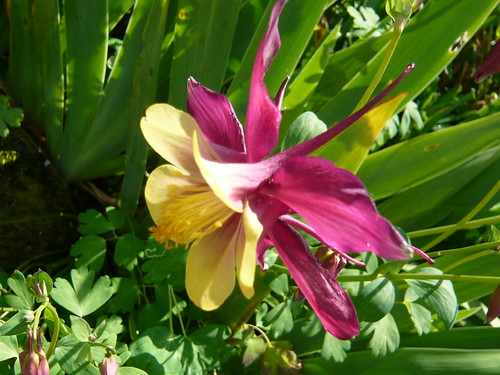
June garden Aquilegia
Selfsown Aquilegia or columbine, set off by broad Bearded Iris leaves.

June garden Oriental Poppy
Oriental Poppy that looks blood red late in the day but was glowing in the early sunshine.

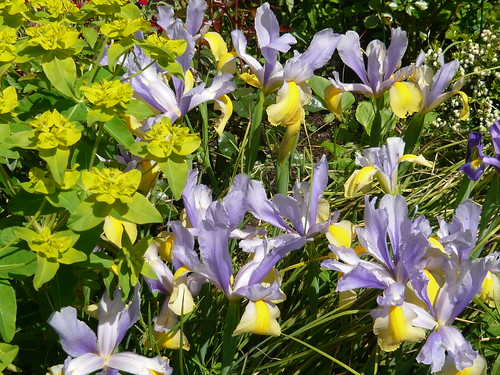
June garden 040 Iris reticulata
Iris reticulata with self sown Euphorbia

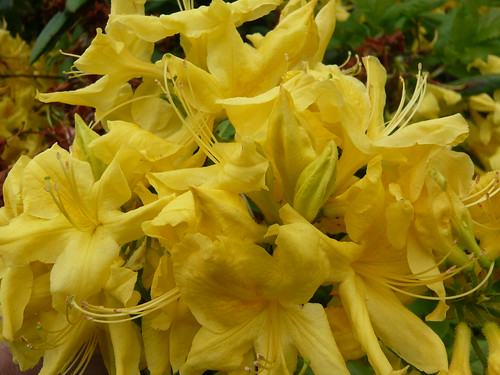
June garden Azalea
Deciduous Azalea in Late spring yellow. One of the Rhododendrons in the Pentanthera group

More Garden Mosaic Photos

More Garden Mosaic Photos


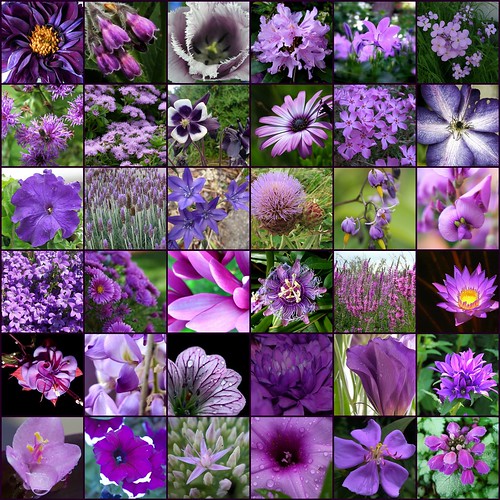
Robyne Jay scores again with more marvelous mosaics  made available under CC BY-NC-SA 2.0 license.

The Iris, part of the Iridaceae family, are my all-time favourites.  A shame they do not last long as cut flowers – all the more surprising all these photos were collected.

Irises

Purple flowers

Read More Read More

A Bunch of Flower Photos

A Bunch of Flower Photos

Nothing in the flower world says more about the season than a Sedum like this bunch of Autumn Joy. As a careless gardener I seem to have lost my Sedum with dark purple, fleshy leaves but it was never as robust as Autumn Joy.

sedum

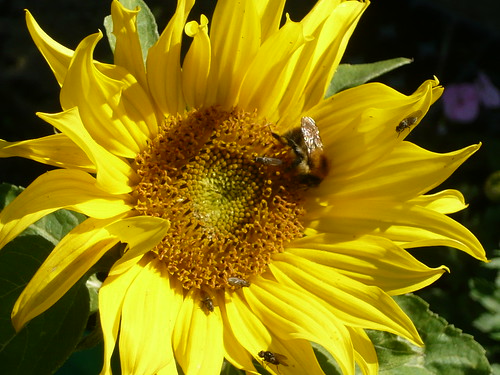
Due to a lack of sun and summer warmth our Sunflowers have been very tardy this year. It is hard to believe that I have only one flower on display at the beginning of September.

sunflower and bee

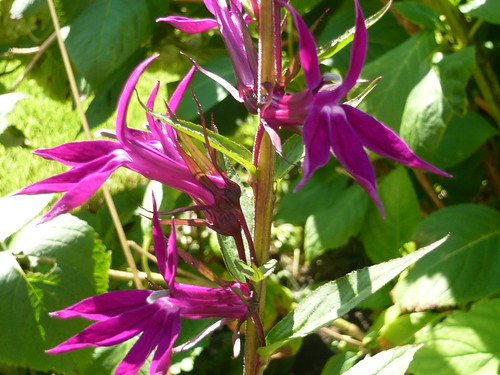
I planted some perennial Lobelia and they have thoroughly enjoyed the wet conditions during summer as they built up strength for this sort of floral display.
This variety may be Lobelia speciosa ‘Grape Knee Hi’ or Hadspen Purple and I have several Lobelia cardinalis that have prevoiusly defied my gardening skills.

Lobelia

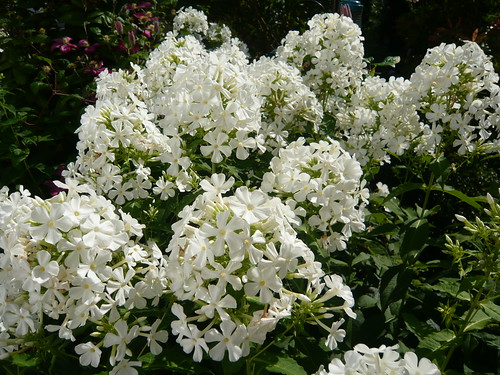
Another monster this year has been the Phlox paniculata. White and pink varieties in particular have shown spectacular flowers and scent.
Bunches of flowers indoors are still giving delightful aromas even though we have hidden the flowers on top of tall cupboards as the vases are a bit naff and there are so many other flowers deserving display.

Phlox

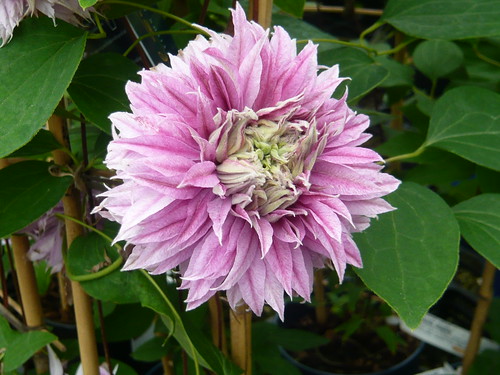
The late flowering double Clematis has just made it into my autumn photos. Clematis Josephine Evijohill is a ‘florida’ type that was on sale at a local nursery. I resisted the temptation to buy and so I will not have any genuine garden photos to show in future.

Clematis Josephine Evijohill

Yellow & Lilac
Tejvan took this photo in Oxford Botanic Gardens. On the left is an imposing Verbascum. I love the way its tall yellow spikes contrast so well with the purple spikes in the background. Just to add a bit of interest there is the odd splash of orange from a rogue intruder.

Protecting Vegetables from Pigeons and Rabbits

Protecting Vegetables from Pigeons and Rabbits

Unfortunately, the vegetable gardeners’ best laid plans can be spoilt be two large pests – rabbits and pigeons.

Rabbits are on the increase in our local area, and if not careful, they can decimate a crop overnight. Scent barriers have limited success and need regular replenishment. Noise barriers are even less effective in my experience. Fencing has some protection but burrowing and jumping are sports in the Rabbit Olympics.

Pigeons can also pick at vegetables, especially in the winter months they will attack your purple sprouting broccoli.

The best solution, short of standing outside all night with a shotgun is to cover up the vegetables in netting. It’s not ideal if you are aiming for an ornamental vegetable garden but, it is less unsightly than leaves with big holes in veg.

This is a simple contraption with six stakes topped off with a flower pot. A net is then secured over the top, providing an effective barrier against wild animals.

Floral Mosaic Garden Photos

Floral Mosaic Garden Photos

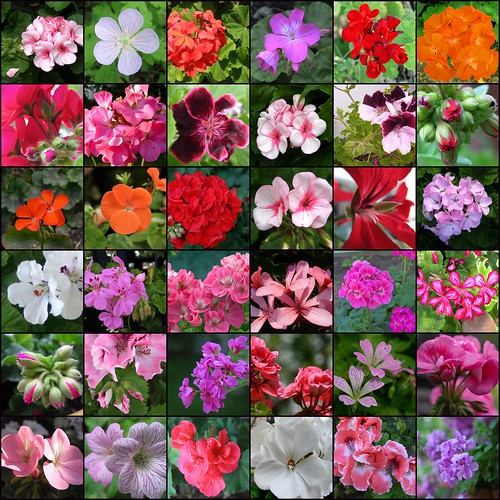
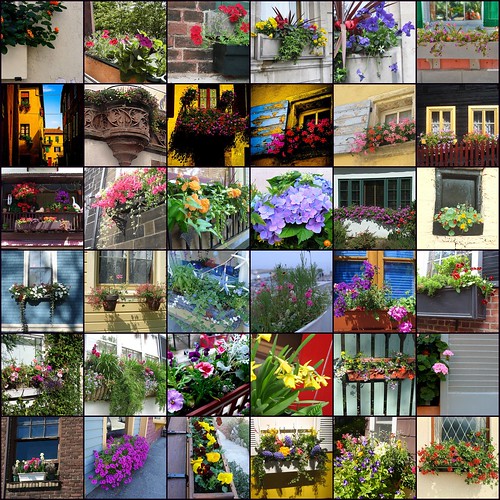
Thirty six photos arranged as six by six pictures of perfect plants are formed together by robynejay to produce these stunning mosaic patterns.
I am hard pressed to select a favourite but will opt for the red Poppies.
No true gardener would want to see all those hungry caterpillars but aren’t they fantastic?

Geraniums

Window Boxes

Read More Read More

The Spider Plants Cleome and Chlorophytum

The Spider Plants Cleome and Chlorophytum

Common names can be used for more than one species.

Cleome

Cleome hassleriana

If you are looking to grow something a little unusual, it is worth having a go at growing Cleome, sometimes known as the ‘Spider Plant’

The genus Cleome encompasses about 170 herbaceous annual or perennial plants. A common garden variety is Cleome hassleriana.

  • Cleome’s can grow quite tall, upto 4 feet in some cases. It has attractive spider shaped leaves and after flowering leaves seed pots streched out horizontally. The flowering season can last for 2-3 months.
  • In the beginning they are susceptible to the usual pests like slugs and snails and will need protection. Once established Cleomes can reproduce at a quick rate.
  • They may need staking as they become susceptible to windy conditions.

Cleome spinosa is good for dry conditions.

Houseplant called Spider Plant
Chlorophytum comosum is often called the spider plant. It has interesting, frondy, generally bicoloured leaves and they are the main reason for growing this plant. Small white flowers are found on mature plants.
Plantlets form on the end of arching stems and these spidery stems make propagation simple.

Giant Black Hollyhocks

Giant Black Hollyhocks

Elegant Hollyhocks can grow and flower up to 9 feet tall on slender stalks that do not take up too much space. Cottage gardens thrived on the added height that Hollyhocks provide and many old varieties survive close to walls in these gardens.

General Tips on Hollyhocks

  • Hollyhocks like a moist soil but a dry air to avoid rust. Only water at the base of the plant.
  • The top half of the Hollyhock bears a spike of large showy flowers either single, semi-double as well as double.
  • If growing from seed use the freshest seed you can get. I sow in summer after flowers have set seed but you can wait until May the following year.
  • Hollyhocks are perennial (although I treat them as biennials) and if they stay free of Rust Virus (and some are better than others at this) then you can take cuttings or divide the plants to get more stock.
  • Fertilise a couple times during the early part of the season with a general purpose fertiliser.
  • When the 3-4 inch flowers fade cut them down to the ground.
  • Seeds can be found under the name Althaea rosea in self colours of white, yellow, rose, scarlet and black.

    Read More Read More

Tips for Achillea or Yarrow, All Heal, Bloodwort.

Tips for Achillea or Yarrow, All Heal, Bloodwort.

I have to admit I do not like the smell of Achillea but some of the new hybrid varieties are making me reconsider growing the plants. Achillea ‘The Beacon’ looks brilliant in large groups of 2′ high, swaying flowers.

Achillea Growing

  • Growing conditions and variety influence eventual height from 18″ to 6′.
  • These perennial plants get taller each year if not divided and replanted each Spring.
  • The leaves are ferny, attractive grey green and sometimes silver or woolly white. The leaves give Achillea millefolium it’s name meaning thousand leaves.
  • In the Iliad, Achilles’ soldiers used yarrow to treat wounds hence the common names “All Heal” and “Bloodwort”.

Flowering Conditions

  • The flower heads are long lasting and attract hoverflies, bees and other beneficial insects.
  • Most Achillea have flat flower heads in a range of shades with many yellow varieties.
  • Achillea are hardy and drought tolerant, preferring free-draining soil in sun or light shade.
  • Deadheading will result in more flowers with repeated flushes of flower.
  • Most varieties gradually fade in colour after opening or pollination, giving a pleasing harmonious effect.
  • To vary flowering time, usually June to September, practice the Chelsea Chop by cutting plants back by about 6in in late May.

Read More Read More

Ride on Mower Tips

Ride on Mower Tips

Sit back and enjoy cutting your grass.

husquvanna

So your grass covers too much area for your small mower and you want to ride in style whilst you cut the lawn, then a ‘ride on mower’ may be what you need.

Ride On Mower Tips

  • Do you plan to cut & collect the grass or just have built in mulching that then distributes it back onto the grass. I would go for one of the hybrids so you can collect long grass at the beginning of the season then turn on mulching to reduce the trips to the compost heap.
  • Ride on mowers are available from Argos at below £1,000, better mowers can be good value around £4,000 but larger more professional models go up to £10,000+. Equate your budget to the amount of work to be done – you don’t need a sledge hammer to crack a nut nor should you send a boy to do a man’s job (these metaphors need mulching).
  • From the large variety of models available make sure you can mount the machine, drive in comfort and feel safe.
  • You can save money buying secondhand. Try retailers who have a good trade in policy and a large throughput.

What you get for your Money

Read More Read More