Browsed by
Month: April 2014

More Space for More Crops
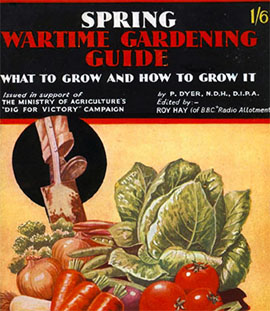
More Space for More Crops

new-picture-2

Gardening will help in the war against economic recession. These tips give you some ideas how to increase the area you cultivate and the number of crops you can grow even if your garden space is restricted.

More Growing Area for a Small Garden

Grow Bags and Containers

  • Grow bags can be stood on paths or waste land and can be used for many crops like onions, salads, tomatoes or courgettes.
  • Make your own grow bag, if they are too expensive, with ordinary soil in a plastic bag. To help water retention I have used those packets of silica they use to keep electrical products dry.
  • To get a deep grow bag I cut them in two and stand them on there ends for crops I want to cosset.
  • There are a wide range of baskets and boxes that can be fixed to a wall or fence to increase your growing area.
  • You can make a raised bed on hard standing. I have put 10 inches of soil over an old tarmac drive and it is fine for leafy crops.
Read More Read More

Growing Puschkinia

Growing Puschkinia

puschkinia scilloides

Puschkinia Schilloides comes from the Hyacinthaceae family and are very similar to Scilla. They look like a mini Hyacinth.

  • They are hardy and relatively easy to grow from bulbs.
  • Growing in a raised alpine bed with gravel for top dressing helps give best display for flowers.
  • They are fine in full sun or partial shade and flower in April.
  • They grow from seed and may be naturalised in grass.
  • After seeds ripen in summer, the plants go dormant until next spring, when flowers push through the soil between Feb and April.

Read More Read More

Growing Young Courgettes

Growing Young Courgettes

Italians call them Zuccini and there is a tasty variety of that name but we call them courgettes or baby marrows. Left too long before picking they become less tasty marrows but young Courgettes are great Veg!

Growing Courgettes is easy if you follow a few simple tips.

  • Sow on the edge or point down, to avoid wet rot, in April-June.
  • Allow 2-3 feet between plants
  • Seed can be quite expensive 25p each but a couple of plants will feed a family.
  • Keep Courgettes well watered and fed, they grow quickly and their main constituent is water.
  • Feed twice a week with a liquid  feed such as Tomorite or Phostrogen
  • Keep them slug free or the fruit will be eaten first. The spiny leaves will be left for a later snack but that won’t help you.
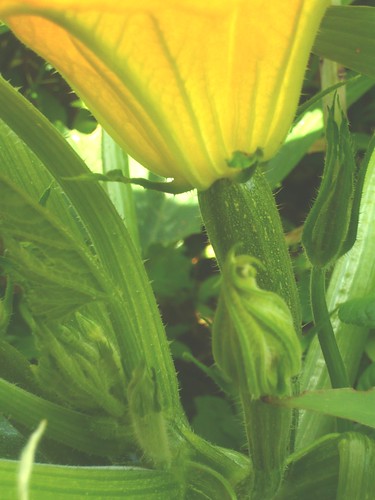
  • There are male and female flowers on each plant. The female has a baby fruit behind it see picture above and when pollinated it will swell and grow.
  • The male flower just has a slim stalk but can pollinate several females. (see below).

Read More Read More

Selecting, Siting, Planting and Growing Rhubarb

Selecting, Siting, Planting and Growing Rhubarb

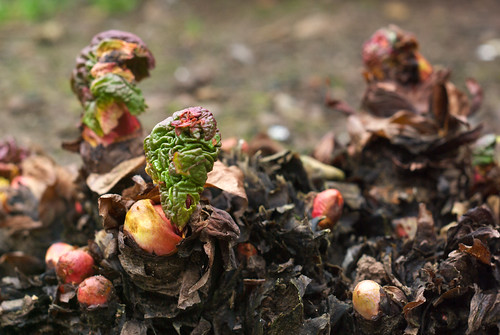
Plan your planting of Rhubarb and prepare the ground then you will be growing crumbles and pie fillings for years.
Select a variety or two, chose the growing site and care for your plants then ‘the jobs a good one!’

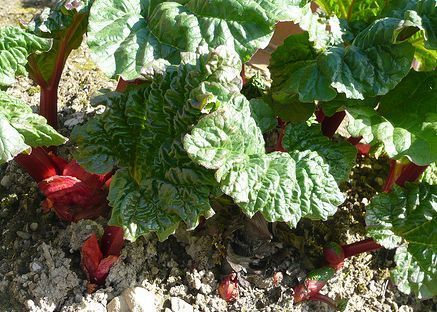
Unforced Rhubarb

Varieties of Rhubarb to Select

  • Victoria, with thin stalks of rosy red that turn pink and green towards the tip is a late season cropper.
  • Timperley Early AGM is the earliest to be harvested with long stems and a good flavour.
    Raspberry Red is a mid-late season variety of deep red stalks.
  • Stocksbridge Arrow, is an old favourite in the West Riding of Yorkshire the home of there rhubarb triangle.
  • Champagne (shown above) is one of the best varieties.
  • Read More Read More

Wallflowers for Scent

Wallflowers for Scent

Good wallflowers are not to be sniffed at – well actually they are as I find them one of the most aromatic flowers.
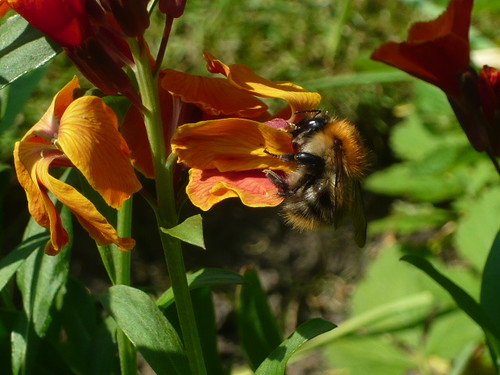
Oh to Bee a Wallflower

You can’t beat wallflowers for scent in the spring garden. On a still morning and through the day the aroma is quite intoxicating. I am looking at seed catalouges now to buy the seeds I want to sow in June – July 2009 to grow sturdy bushy plants to flower next spring 2010. In truth most varieties will do and I will probably get some cheap packets from a local store.

  • The bushy plants will be grown by pinching out the growing tip in September to encourage the bushy growth and they will be planted in the flowering position in Autumn when the space is cleared.
  • Plants may survive more than on flowering year but become very leggy so treat as biannuals.
  • Wallflowers are related to brassicas like cabbage and cauliflower so do not plant them where you want to grow these vegetables next year

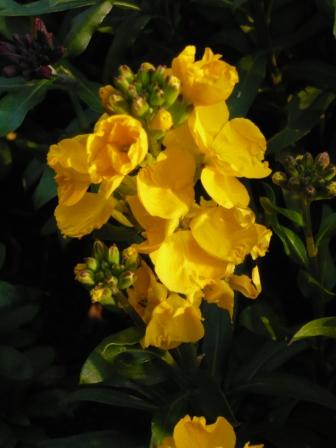
yellow-wall-flower

121

As wallflowers pass their best they need to be turfed out to make room for new annuals or plants such as Dahlias.

Tips for Growing Wallflowers.

  • I can’t wait for Wallflowers to self seed as they look very leggy and seldom do as well as newly sown plants.
  • If some plants have grown in neglected spots you can leave them as they often survive several years.
  • Sow Wallflowers for next year from July onwards – they are best grown as biennial plants.
  • In Autumn pinch out the growing tips of seedlings to make bushy plants.
  • Try growing Wallflowers in tubs or old pots. They can be moved into place for the scent and colour in spring, then the pots get replanted for summer.
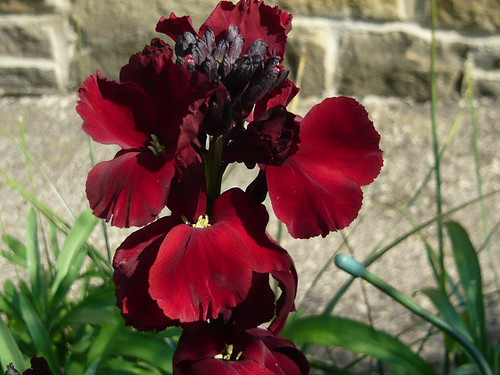
  • I think the red bedder varieties smell the best but scent is in the nose of the sniffer.

Thompson Morgan’s Wallflower collection is available by mail order from this list.

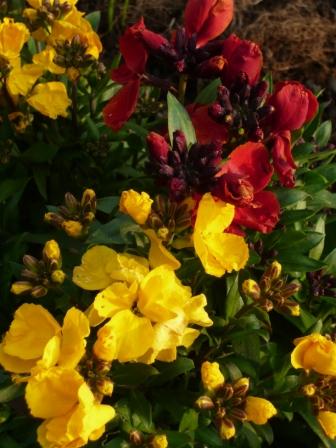
wallflowers

Snowdrops at the Harrogate Orchid Show

Snowdrops at the Harrogate Orchid Show

Snowdrop woods

At month I visited Bramhope and the local Harrogate Orchid show. I guess I could post quite a few pictures of Orchids but the grounds of the hotel were full of Snowdrops hence the photo above.

Wether it is growing naturally outdoors or displayed indoors the visual impact is one of the key areas where we seek perfection.The way an item is displayed or shown to others is one of gardening’s greatest skills.

So I have succumbed with these display shots

Orchids show 2010
The host societies display in the main room.

The display case below had a deep recess but with a matt black backing it looked more like a picture frame. Also ideal for Auriculas I would imagine.

Orchid display case

For me and many others visitors to the show it was the scented Orchids that seemed to attract the most attention. For me the star of the show was Dendrobium kingianum with a very strong hyacinth-type scent to the flowers. The flowers were less than an inch across and pure white with a hint of purple.
Dendrobium like plenty of bright filtered sunlight but not direct sunlight that may burn the leaves. They can be difficult to re-flower if they do not receive sufficient light.

As usual there was a good mix of suppliers and other interested parties. For a small show the number of exhibits seemed to fill every nook and crannies in the hotel. Next year look out for the dates or consider joining.

New Plant Ideas

New Plant Ideas

Auricula

Try something that you don’t often see in your neighbours garden for this summer. There are many new varieties of traditional plants like this fancy Auricula or new seed packets on sale.
Horticultural suppliers are always breeding new stock and launching plants when they have built up salable stock levels. My guess is that the multi-coloured Coreopsis will be popular this year. The Limerock series is being pushed by the RHS with Lavender Pink ‘Passion’, Apricot Pink ‘Dream’ and Ruby Red ‘Ruby’ available at £14.99 each (not quite a snip).

Gerbera ‘Sweet Hardies’ are the new form of hardy Gerbera. Up to now the flowers have been smaller and less attractive than the tender types.

Frilly petaled Roses are being imported from USA for this years Chelsea show. If  Harpageant ‘Easy Does It’ catches the eye, with its range of colours that blend through Red, Peach and Apricot at different stages of the flowers life, then I would seek out one for my garden.

Variegated Impatiens Masquerade has unusual lime green and green foliage to offset the red flowers.

Read More Read More

Growing Hepaticas The Japanese Way

Growing Hepaticas The Japanese Way

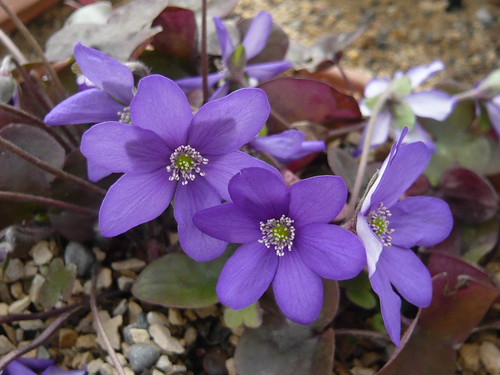
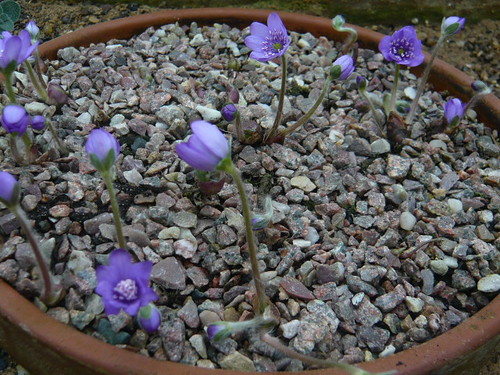
Hepatica nobilis Cobalt

Hepaticas deserve the cult status they have long enjoyed in Japan. In early spring the most beautiful cultivars are displayed in all their glory.

Japanese Methods of Growing Hepaticas

  • Hepaticas are strongly grown in Japan where new cultivars and hybrids can change hands for large prices.
  • Growers in Japan developed special pots called Tanba-Yaki pots (similar but smarter than our ‘Long Toms’) for their Hepaticas. They are made from clay and deeper than our traditional pots.
  • Hepaticas enjoy sunshine whilst in flower but the Japanese move the pots into the shade for the rest of the year.
  • The Japanese name for Hepaticas is Yuliwariso which translates as ‘the plant that breaks through the winter snow’.
  • Grow in moist well drained soil containing leaf mould. Woodland slopes can work very well.
  • Hepaticas are still a Japanese cult plant and there are several hundred forms available to collectors. British alpine specialists are beginning to obsess about these little flowers, which belong to the Ranunculus family and come in various colours and forms.
  • There are more than 650 forms of these rarefied Japanese miniature forms in cultivation.

Hepatica nobilis

Hepaticas Cultivation

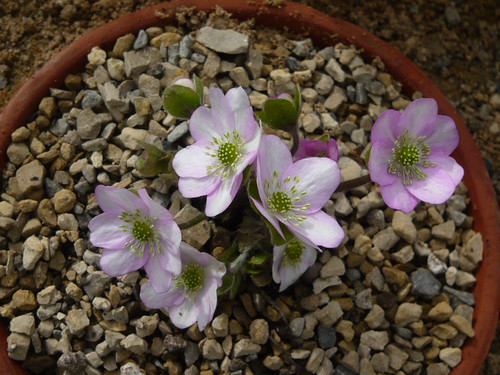
  • This photograph was snatched at Harlow Carr alpine house. Such an environment saves them from becoming water logged.
  • On bright sunny days Hepatica flowers open wide to display their simple beauty and unobtrusive charm.
  • The colour range includes mainly blue, pink and white in single, semi-double or double forms.
  • The colour and form of the stamens also vary so that all sorts of delightful combinations are possible.
  • Hepaticas are small clump-forming, almost evergreen herbaceous perennials with attractive lobed leaves, usually green, but some varieties having beautiful variegations or marbling on the upper surface.

Hepatica pyrennaica Apple Blossom

Hepaticas Growing Tips

  • Hepaticas are among the most beautiful flowers of early spring. February and March is the best time to see them in flower.
  • Also known as liver-leaf they are small herbaceous perennials of the buttercup family (Ranunculaceae).
  • Hepaticas are tolerant of alkaline limestone soils.
  • Hepaticas grow in deeply shaded deciduous woodland and scrub or grassland in full sun.
  • They like cool roots and a humid atmosphere.
  • Bare rooted plants can be bought from February to October.
  • Seed is dispatched mid April – May, within 48 hours of gathering as it must be sown fresh. Even then it is slow to germinate taking 9-24 months so be patient.
  • Pollination is by butterflies, moths, bees, flies and beetles.

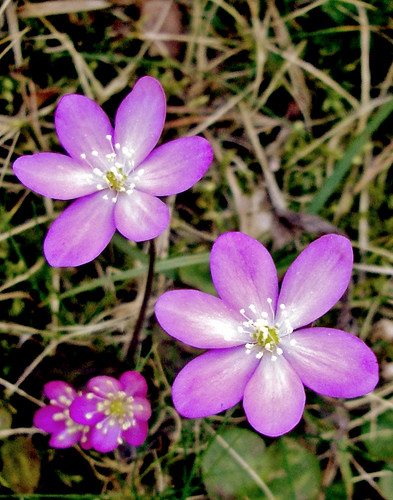
Hepatica nobilis rosa (II)

Varieties and Species of Hepatica

  • Hepatica nobilis the blue flowered are the easiest variety to grow. They may be slow to become established but are long lived plants.
  • Hepatica pyrennaica Apple Blossom or Elison Spence varieties
  • Hepatica japonica is a variety or range of cultivars that are based on Hepatica nobilis
  • Hepatica transsilvanica has larger blue, white or pink flowers.
  • Hepatica acutiloba looks like a cluster of small Hellebores.

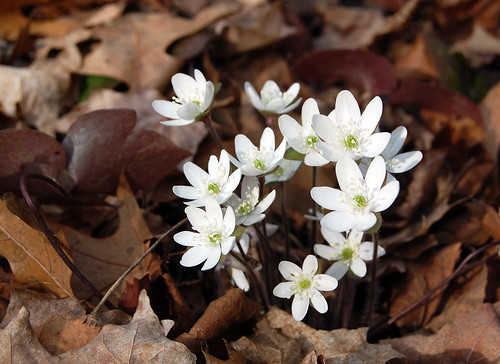
Sharp-lobed Hepatica

Credits
Hepatica nobilis rosa (II) by .Bambo CC BY-NC-SA 2.0
Sharp-lobed Hepatica by pchgorman CC BY-NC-SA 2.0

Source of comments, tips, plants and seeds Ashwood Nursery

Read Hepatica Old new kid on the block

Hepatica the Old ‘New Kid’ on the Block

Hepatica the Old ‘New Kid’ on the Block

A pot grown favourite is still trying to make its mark in main stream gardening.

Hepatica pyrennaica Apple Blossom

Hepatica nobilis cultivation has been popular as a ground cover plant. Blue purple flowers like a simple Anemone flower in blue/purple at about 4 inches high. Now special varieties are capturing the hearts of British growers and alpinists.
They are named after their leaves which look like the three lobes of the human liver.

Leaves and Foliage

  • The leaves are basal and dark leathery green, each with three lobes.
  • The foliage, which follows the flowers, can be almost as interesting as the blooms.
  • Some leaves are arranged in glossy green clover shapes with delicate, dark markings. Others are almost bronze, or marbled, with a pale variegation.

The Flowers

  • Flowers with doubled petals and a range of colour patterns have been developed
  • Hepatica reaches a height of 3-4” and flower from February to May. Flowers may be white, bluish purple or pink; they are supported singly on hairy, largely leafless stems.
  • Hepatica var. japonica f. magna flowers are large and come in shades of blue, purple, red and white, green and occasionally yellow, with contrasting colours for the stamens.
  • Some Hepaticas come with frilly centres, or totally double. Some have two-tone petals and their variations are even more subtle than those seen in auriculas, but you do have to peer closely to appreciate them.

Hepatica nobilis Cobalt

Growing Conditions

  • Hepaticas are not easy to grow and dislike dry conditions.
  • In the wild they grow on sunny mountain slopes and under deciduous trees up to 3,300ft high.
  • Hepaticas are renown for their tolerance of alkaline limestone derived soils
  • Hepatica will grow in both sandy and clay-rich substrates in deeply shaded deciduous woodland and scrub associated with limestone.
  • Moist soil and winter snowfall is a requirement but they dislike dry frost.
  • In spring they need shade and to be kept a little drier through the summer.

Varieties and Species

Hepatica nobilis var. pyrenaica (H. pyrenaica) – Pyrenees slightly easier to grow
Hepatica nobilis var. japonica (H. japonica) – Japan
Hepatica nobilis var. nobilis – European Hepatica – Alps north to Scandinavia
Hepatica nobilis var. pubescens (H. pubescens) – Japan
Hepatica nobilis var. acuta Sharp-lobed Hepatica –
Hepaticanobilis var. obtusa Round-lobed Hepatica – North America
Hepatica transsilvanica – Carpathian Mountains and Transylvania slightly easier to grow

Read Growing Hepatica in Pots or Gardens