Browsed by
Month: June 2013

Indoor Daffodil and Narcissus Tips

Indoor Daffodil and Narcissus Tips

In some ways the Narcissus is easier to grow indoors than the Hyacinth.
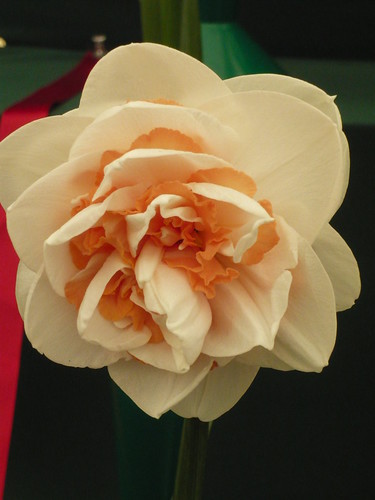
There is nothing fresher than the scent of spring flowers that you have grown yourself and Narcissus and Daffodils can be ordered now then planted in September/October. Daffodils are available as Multifloras, Doubles (as above) and recommended miniatures: Jonquilla are a particular scented favourite of mine flowering 4″ to one foot high with names such as Pipit, Suzy, Sugar Bush, Baby Moon and Martinette, then there are Tete-a-tete which are dead easy if you leave them in the cool to develop good roots.

Growing Tips

  • Grow in pots of bulb fibre with a deep root run and the nose level with the surface or the roots may push up the bulbs. Buy new bulbs each year and plant old stock in the garden.
  • You need to mimic a three month winter’s nap in the cold for hardy daffodils to ripen their flower buds. Keep cool to allow roots to form and avoid excessive warmth as that inhibits flowering.
  • Look for prepared bulbs specially supplied for forcing but keep in the cold until ready too flower.
  • Water the pot when planting and keep moist when in flower.


Experiment with varieties available.

Daffodils requiring a shorter cold period are Monal, and Rijnveld’s Early Sensation.
Cyclamineus varieties are good for forcing.
Most of the early to mid-season miniatures are also good forcers.
Traditional favourites include Paperwhites and Cheerfulness.
Ornamental Horse Chestnuts Shrubs

Ornamental Horse Chestnuts Shrubs

Grow your own conkers but small may not win too many conker contests.

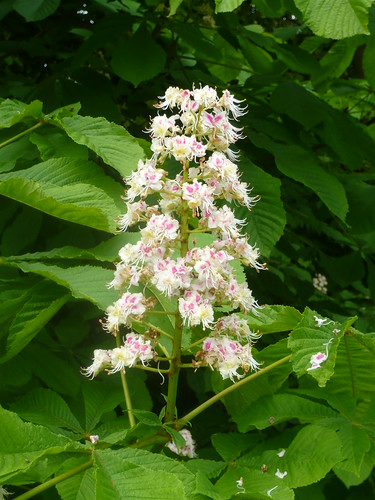
Most people recognise the large ornamental Horse Chestnut trees with the palm-shaped leaves and spring racemes of flowers that lead to conkers in Autumn. Unless you have a large paddock or personal woodland it is unlikely that you grow Horse Chestnuts (Aesculus Hippocastanaceae) but the family contains some smaller varieties.

Aesculus x mississippiensis and Aesculus mutabilis are large shrubs or small trees with flowers that are dark red and yellow.
The Aesculus pavia in USA is called the Dwarf Red Buckeye tree. It is early to leaf and starts blooming when it is just 3 feet tall. This 3-10′ deciduous tree is a wonderful little red flowering tree to plant at the edge of a woodland garden or as the focal point on the curve of a path.
Aesculus Parviflora or Bottlebrush Buckeye is an attractive shrub, up to 10 feet high. The white flowers are borne in erect spikes or racemes.
Aesculus sylvatica is a rounded shrub or small tree, up to 25 feet high and wide that has yellow to reddish coloured flowers on the spikes.

Buckeye is the State flower of Ohio and has its own web site

Book Cover
Not particularly a gardening book Horse Chestnut ‘is a study of the commonest species in Britain. Do you know why it is called the ‘horse’ chestnut and that it is used in shampoos and how you take it on holiday with you? British forces would not have kept Germany out of England during the First World War without this tree. There would not be a State of Israel without it either. Remember learning Under a Spreading Chestnut Tree? Well who wrote it and how many versions are there? Bet some of you have played ‘Conkers’ but how old is the game? Which artist has painted the tree more than any other and do you know about ‘Chestnut Sunday’ in Bushy Park?’

Mind Your Own Business Plants

Mind Your Own Business Plants

Do not get nettled if you are given a mind your own business plant even though it is in the same family.

Mind Your Own Business is not an instruction but a mat-forming plant also know as Baby’s Tears. It is a creeping perennial that bears minute flowers and forms a mat or small hummock of green foliage that creeps along the soil on thin stems and hangs down over the side of a plant pot. Indoors ‘Mind Your Own Business’ grows best in a cool room and will grow well with high humidity although that is not essential. Never let it dry out and the brighter the position the more water it will need.

There are 3 cultivars of Mind Your Own Business, Soleirolia soleoirolii the species which has green foliage, Variegata Silver Queen with grey-green foliage and Aurea Golden Queen.

Read More Read More

Bud Blast Rot and Botrytis on Roses

Bud Blast Rot and Botrytis on Roses

171

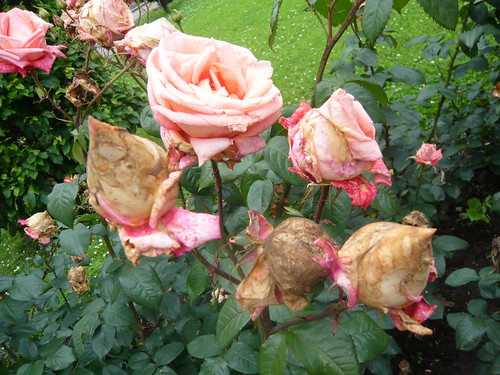
Roses are very susceptible to fungal diseases. Whilst you can cope with a bit of  mildew a bud that fails to open is somehow more annoying. These buds had been hit by a lot of rain and a long period of humidity and nothing was going to help them.

  • Try to water roses in the early morning so that any excess water on the leaves and blooms will evaporate quickly.
  • Water the roots not the buds and leaves, it takes less water to do more good that way.
  • Your roses will be happiest if you remember to mulch! mulch, mulch, mulch!

Read More Read More

Aroid or Alcea Family

Aroid or Alcea Family

You may be wondering what is an Aroid? According to my Gardeners Encyclopedia it is any plant belonging to the family Aracea such as Arum Lilies, Anthuriums, Philodendron or Monstera. They are characterised by the cylindrical Spadix densely packed with tiny flowers, with the male on top of the female and having a single Bract known as a Spathe.
Aroids are grown primarily for the Spathe which is the most showy part of the plant. It may be flat as with the Anthurium below or rolled around the Spathe as with Calla Lilies or Lords and Ladies.

Read More Read More

G. T.’ S Top Ten Waterside Flowering Plants

G. T.’ S Top Ten Waterside Flowering Plants

If you need a stream of ideas of plants for your waterside look no further.

For bog gardens or the streamside there are many plants that will be happy with damp roots. This is our selection of the flowering plants that will grow well in a waterside position.

Flowering Waterside Plants a Top Ten

  1. Iris is one of the most popular waterside plants with several varieties suitable for this position including, Iris ensata Gracieuse’, Iris pseudacorus and Iris sibirica ‘Silver Edge’ .
  2. Snowflake or ‘Leucojum vernum’ is much larger than its relation the snowdrop. The flowers are held on long stems that droop gracefully. It is easy to grow  and multiplies freely in most gardens provided the soil is moist enough. Plants have been known to withstand flooding and standing water so it is an ideal choice for bog gardens
  3. Ligularia The Rocket has yellow flower heads held well clear of the foliage. Very architectural with its sturdy, upright habit giving good reflection in the water.
  4. Astilbe ‘Rheinland’ or Astilbe x arendsii ‘Spinell have wonderful plumes of flowers and love the damp conditions.
  5. Lysichiton camschatcensis The Giant white arum has beautiful white, arum-like flowers which are slightly later than yellow Lysichiton americanus. With smaller leaves it is a better plant for a small pond or bog garden. Slow to establish but very hardy.
  6. Read More Read More

Brash Gardening

Brash Gardening

Shock and awe your gardening friends with these brash ideas.

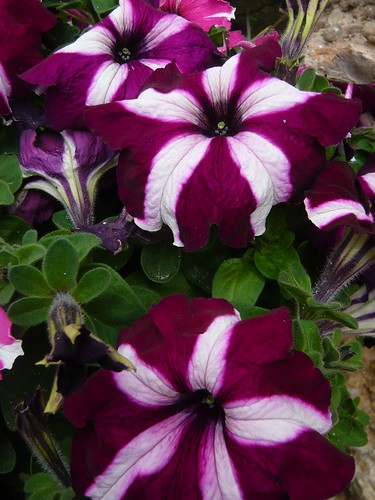
Petunia

Brash Gardening.

  • Put some colour in your cheeks!    Garden naked.
  • Use brash colour schemes that are ‘rash, cheeky, saucy, or vulgarly self- assertive’
  • ‘Loose hedge refuse,  clippings etc’ will be composted – wont they!
  • Do not succumb to Summer Vomiting Virus -  ‘ Brash eruption of fluid from the stomach’.
  • Put a Petunia in your Onion Patch.
  • Dare to be different
  • Garden whilst listening to Brash radio

Ninja Radio #5 (PhotoG / Brash Lion)
‘Quotes are from the OED

Who is Growing in Your Garden?

Who is Growing in Your Garden?

Flower varieties are often named after famous personages – Queen Elisabeth is probably one of the best known. Her is just a selection of others.

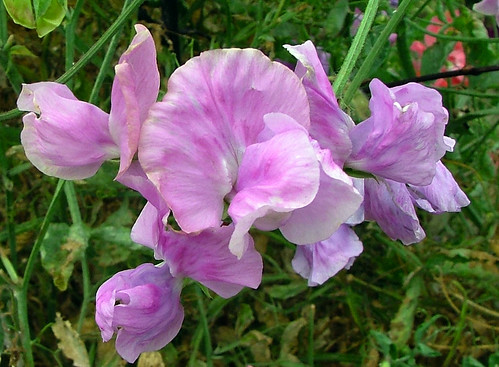
Terry Wogan,  King Edward VII, Charlies Angels, Alan Titchmarsh and Charles Unwin all have had Sweet Peas named after them and that is a lot easier to say than Lathyrus Odoratus. So surprise your neighbours with a patch of Terry Wogans or 3 Charlies Angels.

Leucanthemum x superbum ‘Esther Read’  now referred to like many Shasta Daisies just as Esther Read was first grown from a stolen railway embankment as a single daisy crossed with the bigger Chrysanthemum maximum by Horace Read. The Read family were plantsmen for over 200 years but it was in 1931 that this plant of it’s time was exhibited. Now the name is eponymous although the original cultivar is seldom available you may have an Esther Read derivative in your garden.

John Baggensen was brought up in his family nurseries in Cardiff and Pembury Kent before introducing a widely used honeysuckle Lonicera nitada ‘Baggensen’s Gold’.

Read More Read More

Rip van Winkle and Miniature Daffodils

Rip van Winkle and Miniature Daffodils

Start early tpo plan your miniature daffodils for next year. The best bulbs sell out early and there is definately more to miniature daffodils than Tete-a-Tete.

Rip Van Winkle

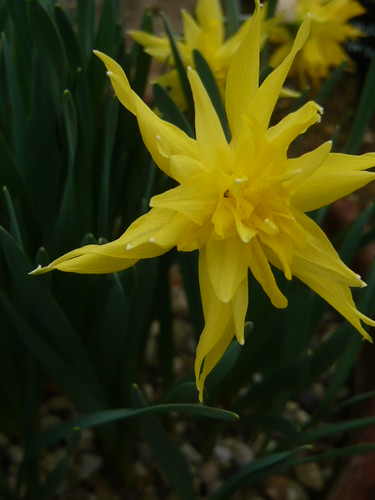
Rip van Winkle is a miniature Daffodils correctly called Narcissus minor pumilus ‘Plenus.’ It grows 6-8″ tall and the yellow spiky petals that are about half an inch wide.

Cultivation

  • Rip Van Winkle look particularly eye-catching when grown close together in drifts in borders.
  • They are particularly good for growing in pots in a cold greenhouse. This facilitates close inspection of the flowers which is well worthwhile due to the shredded ribbon nature of petals.
  • For houseplants pot in bulb fiber and water when necessary to keep the compost moist. As the growing shoots reach a height of 2” move the containers to a cool bright position indoors. Buy new bulbs each year.
  • When growing narcissus outdoors allow the foliage to die back naturally before removing it in June/ July to feed the bulb for the following year.
  • Rip van Winkle will bloom even in partial shade, though generally speaking the more sun the better.

Miniatures have the same descriptive divisions as the standard daffodil, only with smaller blooms.
Read more about Miniature Daffodils on Gardeners tips.

Read More Read More

Growing Scindapsus Aureus

Growing Scindapsus Aureus

Scindapsus Aureus is also called Devil’s Ivy due to its invasive nature in tropical climates. In the UK it is an evergreen house plant and the Devil can take the hindmost.

Epipremnum aureum (Linden & André) G. S. Bunting

The vine like plant has variegated leaves of yellow or white (Marble Queen)and Scindapsus is very similar to Epipremnum a sister plant in the Araceae family.

Growing Tips
This climbing plant will thrive on a moss pole or grow down from a basket.
The stems can reach 6 feet high.
Avoid burning from direct sunlight but variegation will fade in poor light.
Watering. Let soil dry out between regular watering in spring and summer.
Be very sparing with winter watering.
Minimum temperature 10 degree centigrade.
Scindapsus Aureus is often used in offices to help purify the air.
It is alleged that the plant can be stood on an aquarium with its roots in water to clean up the tank.

Scindapsus aureus tutor

Photo Credits
Epipremnum aureum by adaduitokla, on Flickr CC BY-NC-SA 2.0
Scindapsus aureus tutor by floresyplantas.net