Archive for Garden Design

Vivid Ground Cover Plants and Ideas

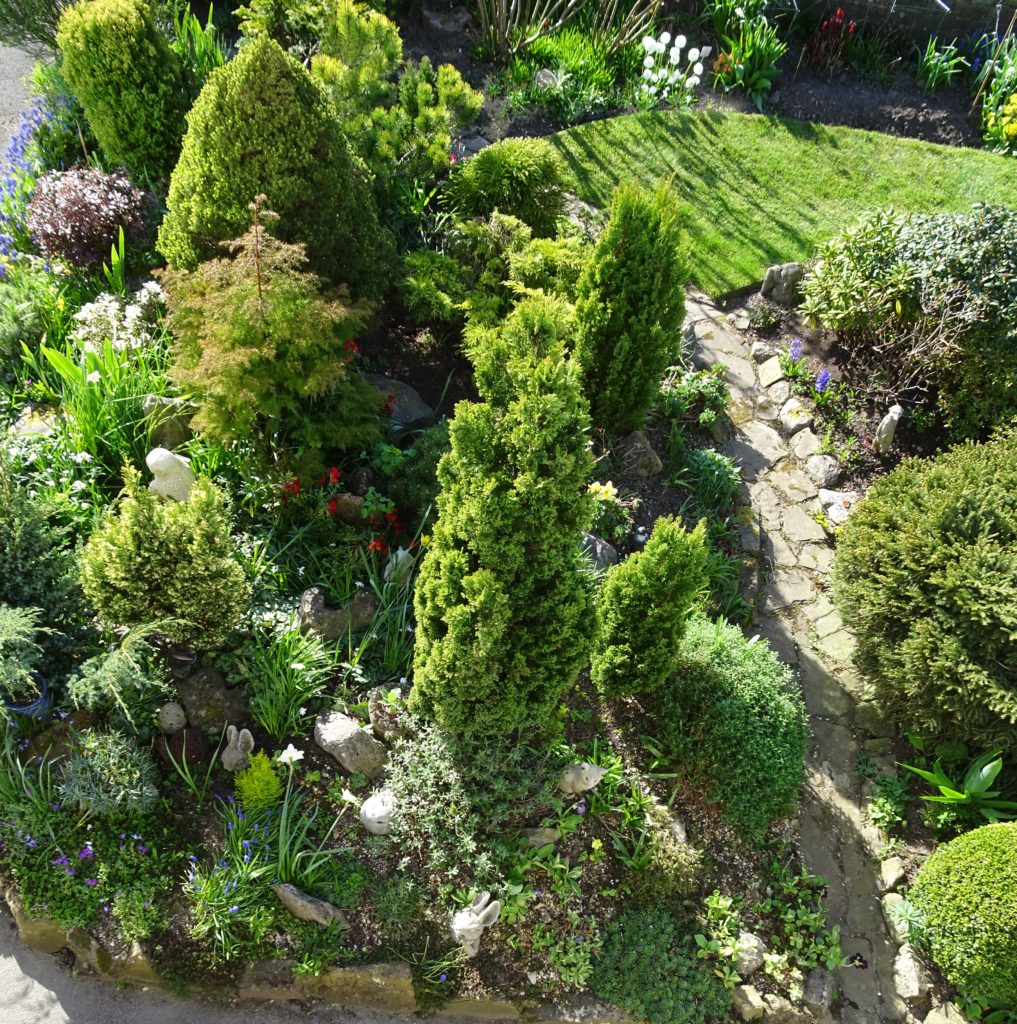
A colourful carpet of ground cover plants may be a creative, low maintenance alternative to a lawn. Alternatively a pattern of coloured stone or chippings with feature plants in containers may be your preference.

Collection of Low Growing Plants

  • A mix of flowers and shrubs can include conifers like Golden Juniper Juniperus x media ‘Golden Sovereign’, Juniperus horizontalis, Juniper squamata ‘Holger’ and Picea pungens ‘Glauca Prostrata’ all around one foot tall with varying spreads.
  • For colour in summer you can’t beat some Petunia multiflora and vibrant Busy Lizzie Impatiens. Try the ‘accent’ series from Thompson Morgan
  • Bulbs of Dutch Iris, Cyclamen, Crocus and Muscari can provide spring and autumn colour.
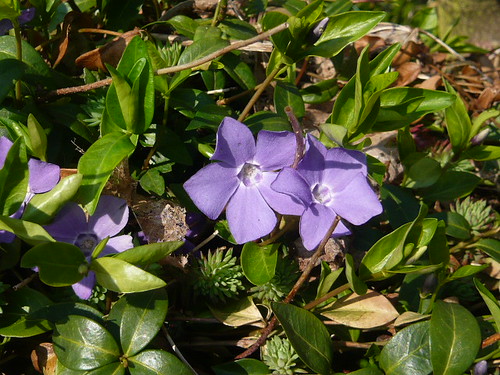
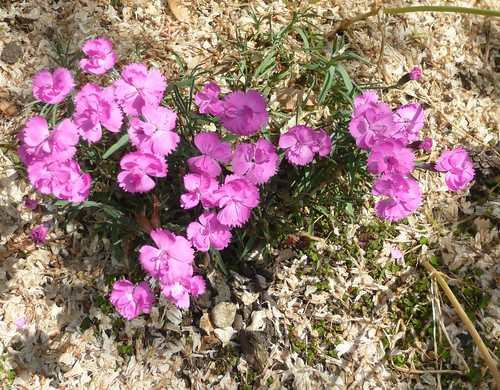
  • Fillers and good doers include Bugle Ajuga reopens, Pinks Dianthus Indian hybrids, Geranium, Sedum and Vinca.

Design Features

  • Wide flat rocks can break up the verdant space and give the gardener a place to stand and weed.
  • Think in terms of 8-12″ as the average height with accent plants if required.
  • Create a backing or edging with taller uniform plants. Roses box or taller Conifers may suit.
  • Plant in bold blocks of colour with annuals close together for maximum effect.

Patterns of Gravel

  • Ground cover of pebbles, chippings or gravel can add colour. I like plum coloured slate chippings.
  • The covering can be used to stand elegant containers perhaps containing trailing plants like lobelia or geraniums.
  • Make sure you have a weed barrier under the gravel.
  • Gravel should be comparatively low maintenance but keep it spruce and moss free.

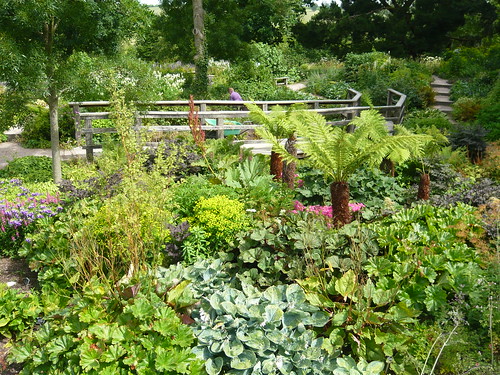
Similar rule apply when planting ground cover that grows taller. Select a height 18-24″ in this case and plant appropriate plants in the designated area. Tree ferns have been used as accent plants in this design.

Comments

Primary Coloured Spring Bulbs & Primula Bed

If you are looking for a show stopping display of spring flowers then why not try planting   primary colours of Red, Blue and Yellow in the same bed.

A sweeping display of blocks of colour contrasting with the other primary colours can have a stunning effect. Over planting with primary-coloured annuals will help the design continue through summer. This list starts off with bulbs in the primary colours but you can use whatever takes your fancy,  as you will see, I like Polyanthus.

Reds mainly Tulips

  • Small early red Tulips are Daylight and Show-winner.
  • For elegant Tulip shapes try Fosteriana Red Emperor, Charles or the more muted Rosy Dream.
  • Abba and Carlton are doubles to sing about.
  • Appledorn, Hollands Glory and Red Impressions remind you where most tulips come from but Barbados is a stunning fringed red to add to your selection.

Blues avoiding Purples

  • Muscari Azureum or other Grape Hyacinths are some of the best blues. I like Blue Spike, Super Star and Valerie Finnis.
  • Hyacinths, Crystal Palace, Blue Star, Delft Blue, Ostara and Kronos are just some of the blue varieties to try. Personally I would not bother with the yellow Hyacinths such as City of Harlem
  • Camassia, Chinodoxa and Anemone ‘Lord Lieutenant’  are varied bulbs flowering blue.
  • Dutch Iris are some of the finest blue flowers, Hildegard and Sapphire Blue. Iris reticulata, Joyce and Cantab are also well worth growing.

Yellow Aconites to Zantedeschia

  • For something a bit different try yellow Iris Danfordiae, Fritilliaria Raddena or Ixia Yellow Emperor.
  • Crocus species Chrysanthus Dorothy, Fuscotinclus and Romance are small yellow crocus whilst Golden Mammoth is just what it says, Golden and Mammoth.
  • Jonquilla Daffodills grow to about one foot and bloom freely. Baby Moon, Trevithian and the double Pencrebar are worth trying.
  • King Alfred did more than burn the cakes he had ‘the’ yellow Daffodil named after him.
  • Tamara, Carlton and Fortune are worthy substitutes

Comments

Design Tips for a Physic Garden

Chelsea Physic garden

The design of the Chesea Physic Garden dates back to 1673 when it replaced market gardens and orchards on the same spot alongside the Thames. Intended to be a physic garden ‘pertaining to things natural as distinct to metaphysical’ it is exceptionally practical rather than being design led.

Design Features With Appeal

  • Many excellent descriptions of plants with their practical or medicinal uses, in my view put it ahead of the RHS show gardens.
  • Rectilinear beds are arranged and labeled in botanic classification.
  • Old walls and old trees give shelter and help create a micro climate but there are also hot houses for exotic tropical plants.
  • Because the garden is not about gardening in a modern sense there are many features that need to be studied to take in the benefit from a visit to the garden. I liked the slate beds for pot plants, the variety of berries and seedheads (see below) and the statuary.

Incorporate Helpful Plants

  • Plan your garden with a good herbal or read up on plants before you select your range of subjects.
  • A few of the plants that profit from being grown together include:
    • Marigolds and roses, aphids are lured naturally by roses, and these feed on the flowers and leaves. By planting marigolds around the roses, they will keep at bay insects.
    • Garlic, when grown in annual and perennial gardens, aids in warding off insects that feed on leaves.
    • Monarda or Bee Balm is not only an herb but also a striking flower, and this plant draws bees, and butterflies to the flower garden to assist with pollination.
    • Dahlias hold off insects and enrich the soil with nitrogen but otherwise are big drinkers and feeders. Read the rest of this entry »

Comments

Japanese Garden a Gardeners Project

043

Despite my garden being full to overflowing after the spring rain I have decided to create a new area for a Japanese Garden. This will be a long term project and I won’t rush it as I have on other projects in the past.

Action Plan for my Japanese Garden

  • Read up on the various forms and the nature of Japanese gardens.
  • Book Cover

  • Decide which area is going to be sacrificed to provide space for the Japanese garden.
  • Draw a rough plan  on a piece of paper and list the features to be incorporated.
  • Walk the patch and see if any plants need to be left in situ. I have a couple of Azaleas that I want to keep.
  • List the gardening problems I have caused in the past that I hope to avoid on this project.

Past Problems to Avoid

  • I generally leave too little space for paths and access.
  • Forgetting  to label or record the location of a particular plant  has meant I do not give any individual treatment until it is too late.
  • Many Japanese favourites are long lived such as Acer, Wisteria and Peonies so I must leave enough space for them to grow and develop. Read the rest of this entry »

Comments

Ideas for a Shady Border

Cotinus

Plant selection

  • Plant tall flowering shrubs to bring a splash of colour to a dull corner or to make a shady border come to life. Hydrangea macrophylla or Rosa Rugosa will suit. More shrub ideas
  • Taller perennials and other to consider include Astible, Lilies, Ligularia or Foxglove.
  • Hostas and Hebes both do well in shade and if it is dry Eupohorbia polychroma and Iris foetidissima would work.
  • Try something a bit architectural such as Bears Breeches Acanthus mollis with tall flower spikes in summer and famous shaped leaves. Echinops globe thistles would be an alternative and Crocosmia has sword shaped leaves.
  • A smoke bush tree Cotinus coggyria is a good purple leaved shrub with airy pink/white

Planting Tips

  • Avoid planting too close to large trees as the roots take all the water. Anemone hybrids survive the dry but may not reach their full 3′ height.
  • Remove weeds and incorporate compost or manure to retain what moisture it can.
  • Plant shrubs in Autumn to give the roots chance to become established. Read the rest of this entry »

Comments (1)

Red and Green in the Garden

Geum

Red and green are complementary colours that draw plenty of compliments in the right setting. This Geum looks better against the green leaves than it does waving around on its long stems (although it is fine then as well).

Poppy

Another moody shot of a red Oriental poppy against it’s slightly greener leaves. For great artistic paintings you can’t beat red poppies and green leaves.

Hibiscus

Perhaps it is the yellow stamens that catch the eye on this Hibiscus but the glossy green leaves are also a major part of the charm.

Read the rest of this entry »

Comments (1)

Wild Flower Bed with Companion Plants

Meadow

An effective way to use wild flowers  is to mix in some trusted garden plants. Using some  trusted garden stand-bys will provide extra colour and structure to a wild area.

Plants to Support Wild Flower Beds

  • After the Aconites, Snowdrops and Marsh Marigolds the first blooms may be from Primroses or Day Lilies followed by Dianthus to give a mix of vibrant colour.
  • Evening Primrose has yellow bell shaped flowers. Oenothera tetragona flowers in spring on reddish green stems, Oenothera missouriensis  later in the year
  • Campanula the blue white or sometimes pink Bellflower can also look good.
  • Foxgloves give height and structure and you could add some Delphiniums.
  • For some white flowers choose Sneezewort ‘Acillea ptarmica’, Candytuft , Ox-eye daisy or Anthemis punctata
  • Heliopsis, Rudbeckia and Achillea are good looking yellows.
  • Cranesbill geraniums and Columbines can also complement wild flowers.

Wild Flowers

  • You can buy seed mixtures aimed at different locations such as Cornfield mix from Thompson Morgan
  • Many individual plants appeal as wild flowers particularly the daisy and buttercups
  • The red Poppy is potentially one of the most popular varieties and I would opt for Papaver rhoeas.
  • Wild Orchids are harder to grow but if you have the patience they can be rewarding
  • See also Wild Seed Suppliers
  • Do not forget the humble Dandelion in various leaf forms.

Tips on Wild Seed Sowing

Comments (1)

Shrubs for Dry Shade

One of the toughest spots to grow plants is in dry shade. Here is my pick of those shrubs that will be ‘good doers’ in these conditions.

Box or Boxus sempervirens will grow up to 12 feet high and wide in dry shady conditions. The variety Latifolia maculata, with it’s agm, has bright yellow, young leaves becoming dark-green, blotched with yellow when mature (this gives it the common name Sunshine box). It is good a good evergreen for topiary and hedges.

Hypericum calycinum, Great St Johns Wort or Rose of Sharron is a low growing shrub with yellow flowers followed by black seed bearing berries. It grows up to 2′ tall but can spread 10′ or more.

Lonicera pileata is a species of honeysuckle used for hedging. It is called the Privet honeysuckle and can grow up to 8 feetwide and a couple of feet tall.

Euonymus fortunei is an ideal evergreen shrub available in several leaf colours. I find the yellow leaves perform well in the cool shade.

The following selection may also be fine but the above plants were recommended by the RHS

Daphne laureola and Laurel Read the rest of this entry »

Comments (1)

Plants for Walls

Campanula

I am fortunate to have a boundary wall that has two skins of stone filled with soil. This makes an habitat for plants that I can use to grow something a bit different.

The Pros & Cons of a Filled Wall.

  • The wall raises the working height and brings plants nearer to eye level.
  • The soil is of poor quality as goodness is leached away. This suits some alpines and nasturtiums.
  • Due to holes somewhere the soil washes out in some spots and I am always looking to refill or stop the leak.
  • The wall is dry and gets hot in the sun although the stone provides some cooler protection for roots.
  • Slugs do not like to climb the wall (just send gardeners up it)
  • wall plants

    Suitable Plant Types for Walls

    • Dry condition lovers and sun seekers like Thyme
    • Plants that like a baking like Pulsatilla
    • Plants that hold there own water store like Sedums and Houseleeks.
    • Alpines and similar plants with long roots.
    • Trailing plants and poor soil plants.

    Pasque Flower

    Some Plants recommended by Cambridge University Gardening services site
    Crassula sarcocaulis
    Helichrysum ‘Sulphur Light’
    Sedum acre
    Sempervivum ciliosum
    Saxifraga species Read the rest of this entry »

    Comments (1)

    Interesting Garden Design Tips

    Will Over-Scale be a design feature for the next decade. Some at Chelsea think so!

    Consider opting for ‘Over-Scale’ in your Garden.

    • Lots of small plants, beds and ornamentation looks cluttered and uninteresting.
    • Large or very large features can grab the attention and start off a steady exploration of your garden space.
    • A large structural object or disproportioned feature will supply key structure.
    • Over-scale can work irrespective of the size of your garden.

    Key Design Concept Tips

    • Aim for a strong and simple structure that frames your best features.
    • Create elements of mystery and surprise using trees, walls or corners to make  distinct areas.
    • Use diagonals and asymmetry to create interesting routes through the garden.
    • Vary the levels of soil with sleepers or raised beds and of plants with discreet layers of plants. This will get lots of plants into a small space.
    • Think about interesting shade when laying out your garden. Winter gardens may rely on varying shadows.

    Comments

    Next Page »