Browsed by
Category: Flowers and Plants

Annual, perennial and interesting flowers with advice on culture, information, tips and recommended varieties

Beginners Seed Tips

Beginners Seed Tips

Easy Annuals ‘Fairy Mixed‘    by Thompson Morgan

Beginners and novices can grow some colourful annuals quickly and cheaply. If the packet instructions says ‘can be sown direct outdoors then do so when the soil warms up.  If you want to get a quick start use a tray on a warm window ledge.

Starting  with Seeds

  • Always read the instructions on the packet of seeds.
  • Use a good quality seed or potting compost with a level surface.
  • Water with a fine spray and leave to drain.
  • Scatter seed evenly or place individual seeds in each cell and use a clear lid to maintain humidity.
  • Maintain an even temperature, generally 20º C will suit most seeds but again read the instructions.
  • Allow air to circulate once leaves start to appear.

Read More Read More

How to Prune Rambling Roses.

How to Prune Rambling Roses.

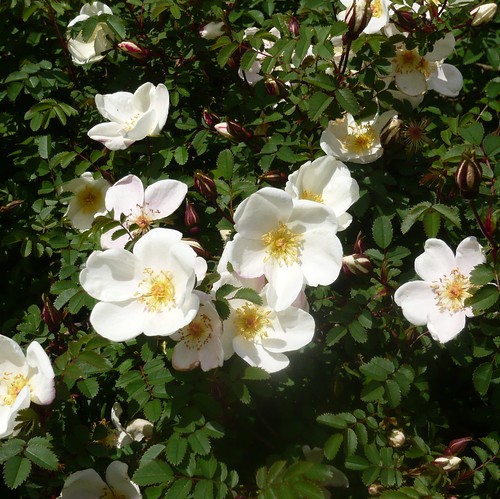
Rambling Rose

Rambling roses tend to flower only once a year (not once a season as I once heard). Therefore it pays to optimise the flowering for next summer by judicious pruning and training.

Gardeners Tips for Pruning Rambling Roses

  • Prune from November to February, ramblers are pruned earlier than most other roses.
  • Choose a still day or the branches will lash into you and the thorns can hurt. This is a job where protective clothing including a face mask may be worthwhile.
  • Use sharp secateurs and a pruning saw for thick stems.
  • Remove dead, dying or diseased wood and any stems that cut across one another. This improves air flow and reduces the chance of disease.
  • With ramblers you are aiming to replace upto 3 older stems from the base and to encourage new growth that replaces them. Best blooms flower on this new growth.
  • The newer olive-green stems should be supple enough to bend and they should be tied in or coiled around upright supports. This bending restricts sap flow and encourages more flowers so it is worth spending some time on.
  • Ramblers are vigorous so reduce the laterals if you need too.
  • Clean up all the debris after pruning.
Growing Anemones

Growing Anemones

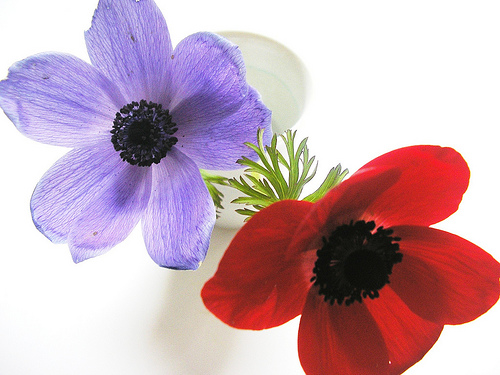
phot by Lynne Pettinger

Anemone has over 100 species with several interesting varieties that produce colour and a light form. I have picked out 3 contrasting sorts that are worth seeking out.

Wood Anemones, Wind Flower and Anemone Blanda

  • Daisy-like flowers in white and purple to form a carpet of dazzling colour.
  • These low-growing Anemones are extremely free-flowering and produce an eye catching mass
  • With lush, fern-like foliage, they’re great for planting beneath Daffodils and Tulips, shrubs and trees.

Japanese Anemone

  • Named varieties to look our for Prinz heinrich a semi-double with purple flowers. Queen Charlotte semi-doule pink, September Charm pink, Whirlwind semi-double white and Honorine Joberet the popular white with golden stamens
  • Unlike the spring varieties they flower in Autumn on long stems up to 5′ tall
  • The white Honorine Jubert is a striking plant and flowers in a shady position
  • Propagate economically by root cuttings from established plants

Blousey Florists Anemones

  • Anemone De Caen ‘Hollandia’ a scarlet flower on 10″ stems and St Brigid The Governor have performed exceptionally well this year. I have grown them in peat and peat with some grit to keep the compost open and they have remained reasonably moist.
  • In pots the flowers are less robust than those in the garden.
  • You can grow them from dark wrinkled tubers bought later in summer.
  • Soak overnight in rain water before planting will speed up germination.

Anemone de Caen at T&M

Blue and white wind flowers

Anemone blanda

Send Your Us Favourite Gardener

Send Your Us Favourite Gardener

Harlo 121

Use the comments section
below to send us the name of your favourite gardener (not the gardener themselves).
We will add it to our list of 100+ Top Gardeners

Your nomination may be a gardener who inspired you or has left a legacy in the form of an outstanding garden. Both are true for me with Geoffrey Smith and his Rhododendron garden at the Royal Horticultural Garden Harlow Carr where this memorial stone is displayed.

Celebrity gardeners are well represented in our list but you may know of one we have forgotten. As we admit the plant hunter/gatherers are not well represented and we would appreciate nominations is this category.

Sponsors of gardens are becoming a regular feature at shows like Chelsea but the well-to-do have long financed the gardening exploits to create beautiful surroundings for their homes and estates. Do they deserve more recognition or should that only go to the more earthy recipients of the Victoria medal (VMH).

International gardeners deserve a bigger profile and multiple nominations would be welcome. We would all like to know whose work to look out for when visiting new places.

Alpine Plunge Bed

Alpine Plunge Bed

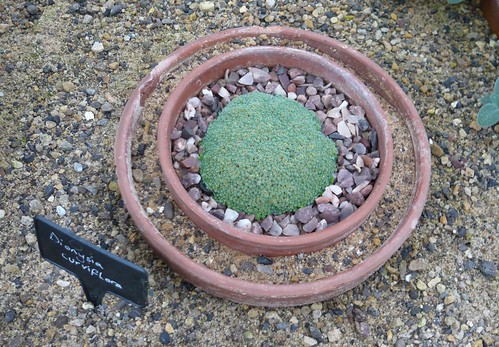
Double Plunge Bed

The new Alpine House at Harlow Carr has a plunge bed to be proud of as you may expect from the RHS. This Dionysia Curviflora has been double potted to facilitate watering and it’s flowers will be purple with a white inner ring and dark centre.

The plunge bed is at a good viewing height and the display can be changed as plants develop and seasons change. As a purpose built, alpine house plunge bed there are several features it would be hard to incorporate in my glasshouse but the rake from front to back and the use of rocks builds up height to provide a landscape rather than a flat two dimensional display.

The sand and gravel mixes vary depending on the plants being grown. Some free planting around the plunged pots adds to the attraction of this type of alpine display. The alpine house is climate controlled but much of the daily watering is done by hand before visitors arrive to view the gardens.

I am now keen to develop a better plunge area for my alpines. That is one of the joys or costs of visiting a best of class display like RHS gardens.

Tip – Study the best and think how you can incorporate new ideas in your gardening. The photo below shows how different coloured chippings and grits can work with your display.

Plunge Bed

Alpine Troughs and Plant Selections

Alpine Troughs and Plant Selections

Alpine trough

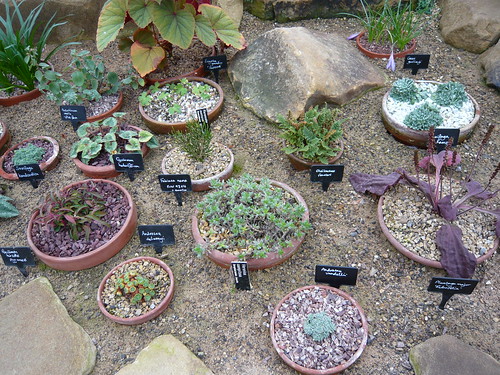
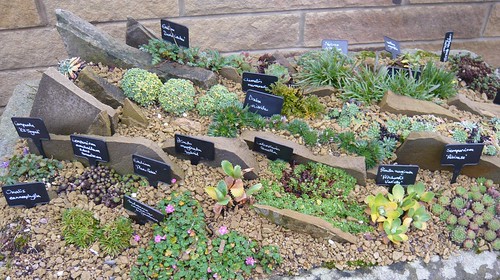
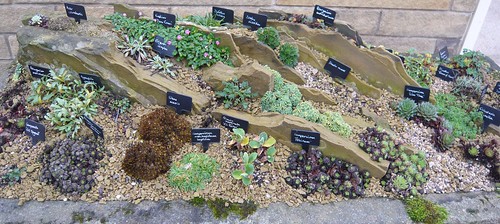
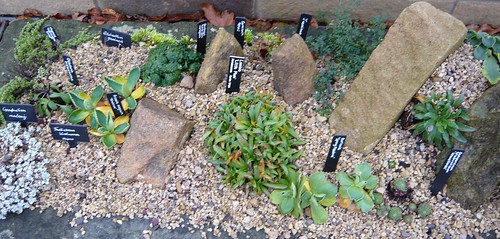
Outside Harlow Carr’s new Alpine house are a collection of troughs, stone sinks and other containers suitable for a collection of Alpine plants. The planting varies and is related to the soil and rock conditions each plant prefers. One container has old rotting logs and a richer soil for small rhododendrons and other species. Others have carefully inserted rock slivers to replicate mountain conditions giving shade and more importantly deep root runs and drainage.

Alpines in trough

Whilst the troughs vary in size they are all less than 6 feet by 4 feet and could fit into virtually any garden. There is also many more outdoor containers full of selected plants. I was amazed at the number and variety of plants on display in the middle of November. They are all carefully named on these black labels with a white fiber tip pen which I resolved to try in my garden. On some plants there is a topical note that explains why it currently features or how it is grown. ( An autumn flowering variety of snowdrop fit into that category)

Trough for alpines

The photographs can be enlarged using flickr by double clicking on the image and going to all sizes. I hope the name tags are then visible.
A picture inside the house is available on the RHS website. and for Alpine plant lovers Harlow Carr is now worth a special visit.
The Alpine garden society have a good article on your own Alpine trough

Scented Phlox Give Gardens Aroma

Scented Phlox Give Gardens Aroma

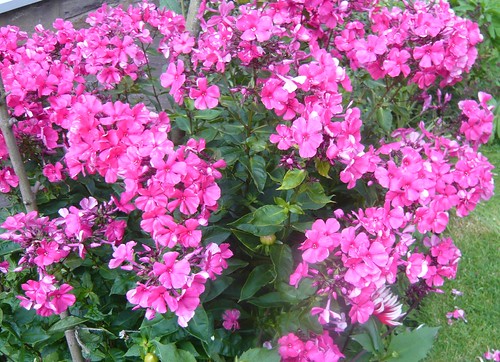
What is the flower that groups of people look at and sheep meet in ? Well it has to be Phlox and in this case the perennial Phlox paniculata.

Top Variety Tips

  • Only 3 feet tall but the pure white Phlox of Mount Fuji earns its AGM. the flaring petals open out from twisted buds to form clusters of flat white scented flowers.
  • Another AGM winner is Bright Eyes with pale pink flowers having a deeper red centre. The foliage may take on the red tinge during summer and it grows to about 4 feet tall.
  • Phlox paniculata ‘Dodo Hanbury-Forbes’ AGM just for its name or Blue Ice or Blue Paradise to balance up the colour scheme.
  • Alpine phlox can also be strongly scented try Pholx divaricata

Read More Read More

Choisya Bonsai

Choisya Bonsai

025

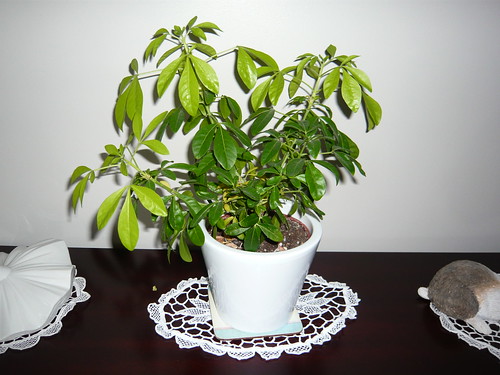
This small pot containing an even smaller Choisya ternata is growing happily in our front room. New leaves of light green are almost translucent and provide clean foliage. The leaves when crushed give off a very pleasant scent.

This plant was one of many grown from cuttings the siblings are now in the garden. Also called Mexican Orange Blossom I do not expect it to flower indoors but you never know and it is providing some interest in this quiet pre-Christmas season.

I have cheated a bit with the title as this is not yet a true bonsai plant but the restricted root run is constraining how it develops. I will prune and trim it carefully if it survives the dry conditions. That reminds me to water all the houseplants now the central heating is on full bore most days. Flushed with one success I may grow some Chiosya in bonsai pots for a miniature outdoor garden.

Gardeners Sowing the Seeds of Success

Gardeners Sowing the Seeds of Success

Rose Hip

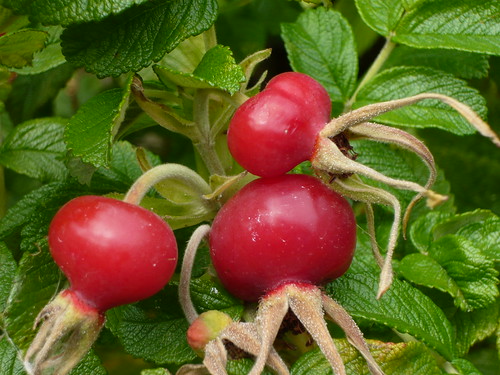
Sowing the Seeds of Success – Rose Hips containing Seeds

All good gardeners know that seeds are on your side they want to grow and thrive. Apart for some weedy exceptions that I will save until the end of this article seeds can be coaxed into blooming excess with only a little know how.

Help From the Seeds.
Every seed tells a story and you can learn to read that story by considering the parent plant and the seed itself. To set seed most plants need to be pollinated male to female and many plants are self-fertile. Having taken a deal of trouble to attract pollinators or pollination most plants package up the seeds and plan how to distribute them.

Berries and fruit have a soft or pithy outer case to help. Birds ingest elderberries and deposit the seed where they will.
Poppies have a pepperpot shaker type seed head that allows some ripe seed to be sprinkled each day over several days or weeks.
Aquilegia seed pods contort and twist to ping out seeds in a squirting motion so they travel a distance.
Dandelion seeds have feathery tufts to allow the wind to blow them where you don’t want them (but I said I would save these comments to the end)

So from these examples you can see seed pods protect and help distribution of the seed.

Seed Size and Features
Seeds vary in size and shape and many will become familiar to the regular gardener. A conker, pea or a grain sized Mesembryanthemum all have the same function to reproduce plants and maintain the survival of the species.

A good big one beats a good small one is a modern quote and in the vegetable garden leek and runner bean seeds are saved from good parent plants. Note it is the plant not necessarily the seed where size counts. Flower seeds should all be sown to get a choice of seedlings to plant out.

Some seeds have hard coats to protect them and legumes like Lupins or Sweetpeas may need the coat soaking in water or chipping or sanding the outer coat to allow moisture to start the germination phase.

Seeds from Alpines or bulbs generally need a period of cold so are sown in autumn or stratified in the fridge and brought into gentle heat in spring.

Special Treatment
Seeds are programmed to germinate when they expect conditions to suit. You can help provide the growing conditions they need.
Moisture or water is the first key ( so do not save seeds in damp conditions for later sowing they may have germinated and died before you get to sow them).    Temperature is the second issue as seeds are programmed to germinate when the seedling has a chance of survival. So tropical plants will need more warmth than say native Cornflowers.

Read More Read More

Heritage Seeds and Varieties

Heritage Seeds and Varieties

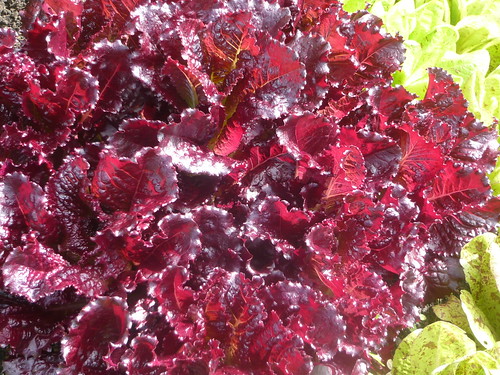
Lettuce -  Bijou & Freckles

Radishes not tasting like they use too?  Blemish free supermarket crops without taste or aroma?  A bland selection of seeds from your nurseryman to grow the same varieties as your neighbour? Well there is a movement to bring back and promote the old varieties that would change all that. Heritage varieties are an imposing collection of ancient vegetable and other varieties saved and collected by specialist companies to tempt our taste buds and maintain our heritage plants.

Here are some  UK seed supplier links together with many other international seedsmen offering specialist heritage and heirloom varieties.