Browsed by
Month: April 2009

Flowers in Salads

Flowers in Salads

nasturtium
An interesting article at the Independent – Is Gardening the New Cooking?

Many top class restaurants are using a variety of flowers to spice up their menus. It has led the public to remember old fashioned methods of collecting flowers to add to salads or meals. A free and colourful way to add a little extra to your meals.

Whilst many flowers are edible, it is always important to remember a  child could become very ill if they were not educated about the dangers of plants such as foxgloves and laburnums.

Which Flowers can go in Salads?

  • borage,
  • pansies,
  • violas,
  • honeysuckle,
  • garlic chives,
  • nasturtiums,(all parts are edible)
  • beans and peas (including their black and white flowers)
  • Rose Petals
  • Herbs from Basil to Rocket
Garden Water Features

Garden Water Features

A pond makes a great addition to any garden creating new interest and providing a foil for the plants and flower.

water
Tulips next to fountain

A pond also helps create a greater sense of life and vibrancy attracting more insects, frogs and birds to the garden.

Read More Read More

Growing Hardy Orchids

Growing Hardy Orchids

Butterfly Orchids

This wonderful variety of Orchids is known in its native Japan as ‘Butterfly Wings’ Its delicate and beautiful flowers bely its relative hardiness. This variety can stand temperatures down to 0 degrees or even lower if not over watered.

Like other orchids it benefits from bright conditions but needs to be sheltered from direct sunlight. An east facing window is ideal.

Orchids need careful watering in free draining soil.

In the growing season, you want to feed them with a proprietory orchid feed once a month – following instructions to avoid over feeding.

This variety of Ponerorchis are supplied as naturally small tubers. Their flowering season is from April to early June. As well as beautiful flowering, they provide a delicate vanilla fragrance to fill any room.

Always use special (usually bark based) orchid compost. These composts help provide the free draining conditions orchids need.

Extended Flowering Season. One of the delights of orchid growing is the length of blooms that can be maintained. After a flowering stick has faded, try cutting it just above the second node to try and encourage a second bloom.

The Orchid family is very large and diverse and it is advisable to take note of particular requirements of different varieties. But, don’t let their reputation of being difficult put you off!

Special Orchid Offer

Related

Skunk Cabbage for the Waterside Lysichiton americanus

Skunk Cabbage for the Waterside Lysichiton americanus

skunk-cabbage

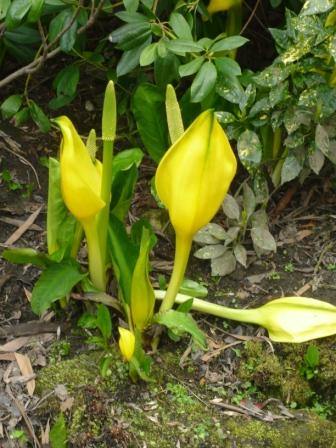
American Skunk Cabbage Lysichiton americanus is planted in groups along the streamside at the Valley Garden Harrogate. Over the years the plants have seeded themselves freely and now make a fantastic display covering the full length of the stream and beyond. The yellow flame-shaped flowers really called spathes, are 18 inches high and look magnificent reflected in the water in April and May. Then the flowers are followed by enormous paddle-shaped, leathery green leaves which remain until dieing back in autumn.
Lysichiton camschatcensis has a hypnotic white spathe and lime green flowering head and a cross between the two species produces a cream spathe (I like to call a spathe a spathe). This spathe surrounds a cigar shaped stem called the spadix which bears many small, bisexual green flowers.

Read More Read More

Taking Delphinium Cuttings

Taking Delphinium Cuttings

delphiniums-skipton-richard-sara

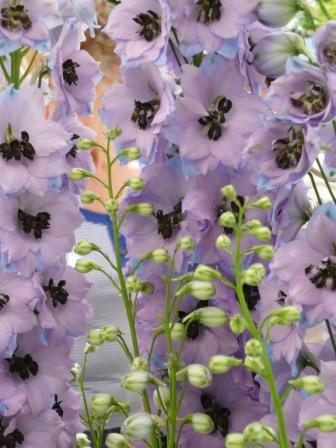
The towering spires or spikes of Delphinium are to be admired from near and far. How much better if you can increase your stock of a favourite plant by ‘Vegetative Propagation Methods’.

Method 1
April is a good time to take a cutting from the base of the plant below soil level. Cut out a sturdy 3-4 inch shoot that is about pencil thickness. Too thin and the shoot wont make a sturdy plant and to thick and it will be hard to root. Make sure you get low down taking a shaving of the old root with the cutting. Failing to do this will encourage a rapid but spindly growth that wont last the summer. A bit of hormone rooting powder can be used but the cutting should root quite easily. Pot on or plant out when healthy and strong growth is showing.

Read More Read More

Fringed Tulips a Crispa Flower

Fringed Tulips a Crispa Flower

fringed-1
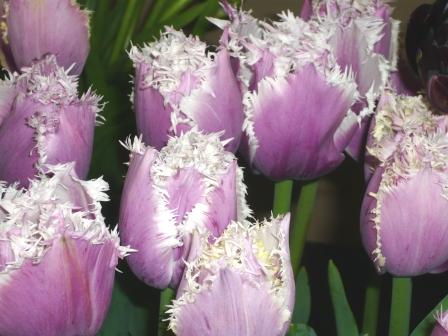
Tulip Crispa or the fringed Tulips looked really good at our Spring show so I have planned to grow some next year. These photos were taken on the bench demonstrating what good cut flowers Tulips can be. The fringed or lacerated petals are unusual yet elegant and add to the attraction of these strongly coloured flowers.

Tips on Fringed Tulips

Read More Read More

Garden with a Bird Bath

Garden with a Bird Bath

bird-bathsource

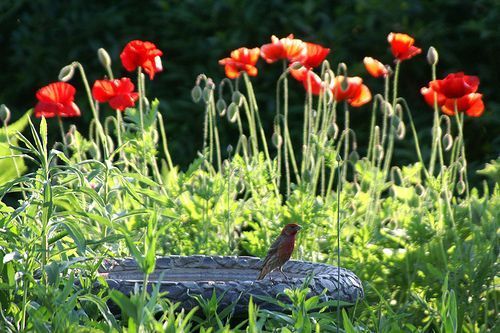
A bird bath can be popular with our feathered friends and be a focal point in the garden. If creating a new bed, for plantings, that will have a bird bath as a centre piece locate the bath just off centre. Work into the soil suitable compost  about 4 inches of garden compost will give the bed a good start.

Plant suggestions

  • Use plants of varied heights and colours and bear in mind you are trying to attract native bird species.
  • For the back of the bed try a Persian lilac growing upto 10 feet. Syringia Persica has fragrant mauve flowers.
  • If there is a wall or sturdy fence try Virginia creeper Parthenocissus tricuspidata with it’s red autumn leaves and hiding place for the birds.
  • Read More Read More

Tips for Growing Acer – Japanese Maples

Tips for Growing Acer – Japanese Maples

acer

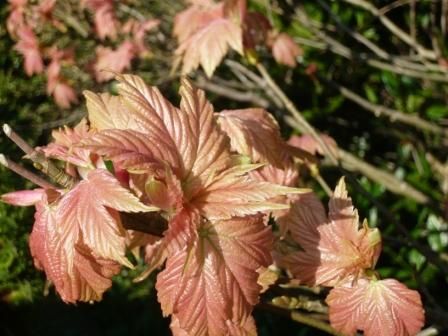
Acer trees and shrubs can be spectacular from Spring through Autumn due to the leaf colours and patterns.  This Acer Palmatum Taylor’s leaves with pink foliage will last through summer turning into rich Autumn colours at the backend. It will grow to about 10 feet in 10 years and is suitable for even a small garden.

Top Low Growing Acers

  • The cut leaf  maple Acer Palmatum Dissectum is an umberella shaped shrub with unusually shaped fresh green leaves. The leaves develop a red stripe in the Autumn. The name gives away a description of the shrub – Palmatum refers to the 5 segments of the leaf like the palm of your hand. Disscetum indicates that the leaves are disected into thin often feathery shapes.
  • Acer Pamatum Orange Dream is a slow growing Japanese maple with vivid orange spray foliage which turns golden yellow in Autumn.
  • Acer Palmatum Atropurpureum is a slow growing purple leaved variety grown for both the colour and the attractive shape of the tree. There is a Dissectum variety Garnet which combines the leaf colour with the feathery foliage.
  • Beni Maiko is a dwarf Acer Palmatum growing to  2-3 feet in 10 years and can be kept in a large pot or used in even a small garden. The scarlet leaves progressively turn dark red and green.

Top Tips for Acers

Read More Read More

Plum Blossom

Plum Blossom

plum-blossom-2

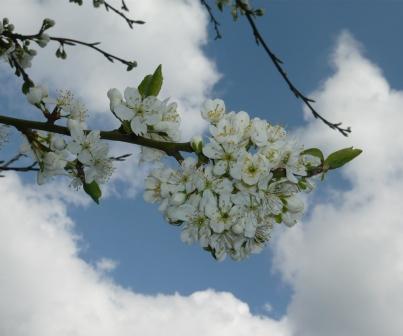
Spring is well underway but I must take care of my blossom on the Victoria plum. It looks fantastic at the moment and speaks of a good crop this summer but a nip of frost just now would be a real let down. Plums are prone to frost damage and as I am prone to eat Plum jam I will try protect this tree and its blossom.

As the tree has grown above a safe picking height I will trim the upper branches later in summer when the danger of silver leaf disease is much lower.

To augment my plum crop I planted a Czar plum (see below) at the beginning of 2008 and it is showing a very upright habit. This I will encourage into a bowl like shape to get air and light into the centre of the tree for future years. At the moment the rhubarb is a bit too rampant under the plum so I think it will have to come out .

Read More Read More

Topical Gardening Tips – Mid-Spring

Topical Gardening Tips – Mid-Spring

file-1-250
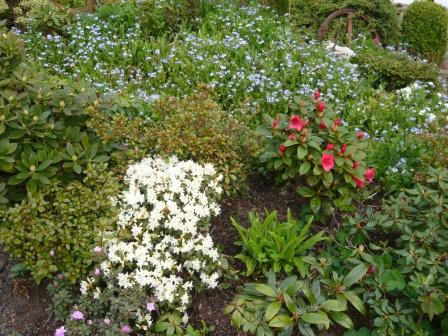
Mid Spring Garden

Garden waste composts best and quickest in a hot heap. Cover the heap and insulate the sides if practical. Mix hard and soft waste if you have mainly grass clippings tear up some cardboard or newspaper to avoid a soggy mess.

Keep sowing summer bedding indoors. Half hardy annuals can be sown out doors in May. Prick out seedlings as soon as they are large enough to handle.

Start a weed suppression routine. Hoe out any weeds or hand remove any pernicious perennials. Mulch to suppress and avoid weeds.Spot spray weed killer on hard to get at weeds in paving and wall cracks. Treat patios and paths with algicide or moss killer to remove slippy green paths.

Read More Read More