Specimen Eucryphia in Yorkshire Dales

Specimen Eucryphia in Yorkshire Dales

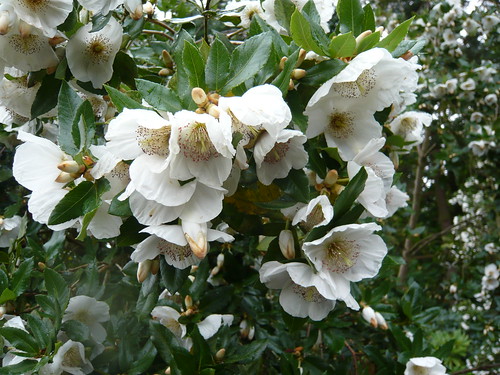
Eucryphia can be amongst the highlights of  summer flowering trees and shrubs. Performing in late summer the profusion of scented white flowers on a conical tree can be exceptional. The flowers also have a further profusion of interesting stamens, distinctly coloured pink or yellow.

Specimen Eucryphia Varieties

  • Eucryphia Nymansay has cup-shaped, fragrant white flowers 3inches across, with very prominent bosses of yellow stamens, and elliptic leaves that are strongly toothed
  • Eucryphia glutinosa, is particularly recommended as it makes a fine 25 foot tree with lots of handsome flowers and leaves that colour up in the autumn.
  • Eucryphia milliganii is a smaller evergreen tree with a narrow growing habit. Even young specimens have freely produced flowers.
  • Eucryphia intermedia is frost hardy and extremely free flowering.

Growing a Specimen Eucryphia.

  • Eucryphias are upright and columnar in shape and make natural specimen plants if given the right conditions.
  • Plant it in early spring in moist acidic soil in a sheltered position where the roots are shaded from the sun yet the branches are in good light.
  • Underplant to cover the roots if necessary to avoid warming sun.
  • A good parent should produce good offspring so select from the species above. There are some Eucrphia that can grow to 120 feet tall in there natural habitat.

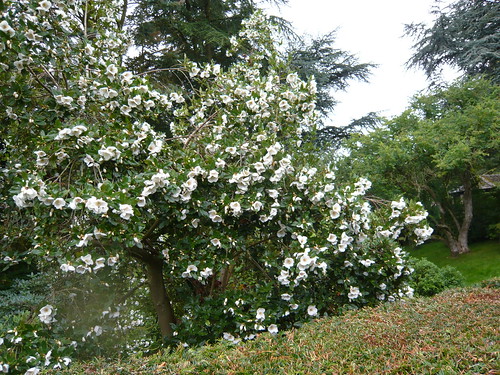
Eucryphia growing above a hedge at Parcivall Hall North Yorkshire. The grounds contain several acid loving plants and the under planting included several Hydrangeas. Whislt the gardens are nearly 1000 feet above sea level the shelter of the dales hills and damp conditions suit the Eucryphia down to the ground (Oops)

Growing Ferns

Growing Ferns

A Fernery can be a fine thing Evergreen Hart’s Tongue Fern

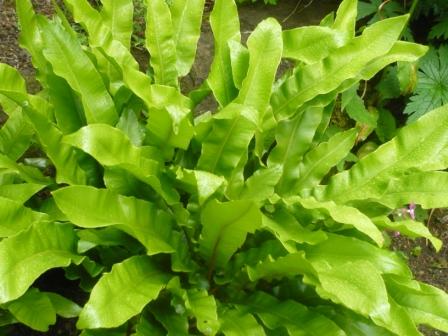
Asplenium scolopendriums or spleenworts are a good contrast plant in a shady fern border. The shape of the long evergreen fronds gave rise to the common name Hart’s Tongue Fern.

Growing Hart’s Tongue Ferns

  • They provide year round interest being ferns with simple, undivided fronds. The leaves are 4-24 ” long and 2-3″ broad.
  • Once planted, hart’s tongue fern grows slowly and needs little attention apart from annual mulching and tidying in spring.
  • Plants grow on lime-rich substrates including moist soil and damp crevices in old walls, most commonly in shaded situations.
  • In sunny sites the leaves turn a sickly yellow.
  • They are not suitable for growing in pots and containers.

Stream
Varieties of Asplenium

  • Crispum group have fronds with crimped margins making them appear plumose or feather like. Boltons Needle is one specific form.
  • Asplenium scolopendrium muricatum has narrow dark green fronds with raised wrinkly edges.
  • Asplenium trichomanes have glossy green oval, pinnae paired along the length of a purplish stem. Ideal for walls and crevices.
  • Asplenium scolopendriumLaceratum Kays is a form with wide open, ovate fronds with deeply cut margins and miniature crested tips.
  • See others at World of Ferns

In the Yorkshire Dales National Park the ferns make an important contribution to the local flora. Hart’s-tongue fern is shade-tolerant and prefers lime-rich soils and can be found in dark and damp environments including the grykes of limestone pavements.

Woodland

Bracken or Pteridium is a genus of large, coarse ferns in the family Dennstaedtiaceae. Historicallly bracken was used to produce thatch, animal bedding, compost and used in herbal medicine.

Yorkshire Gardens Top 10 Visits

Yorkshire Gardens Top 10 Visits

Wentworth Castle 122

Cornwall and the west coast of Scotland have some fine temperate gardens well worth a visit but Yorkshire has the grandeur of the stately home garden.

Starting with an old site a must visit is Yorkshire’s first World Heritage Site, Fountains Abbey and Studley Royal a huge estate of beauty, contrasts and surprises including the largest abbey ruins in the country and one of England’s most spectacular Georgian water gardens.

Castle Howard’s 1,000 acres of Gardens are stunning whatever the time of year, and visitors can find peace and tranquility whichever path they choose. Delightful walks reveal in turn hidden glades and breathtaking views with Azaleas, Rhododendrons and Magnolias to dream about.

RHS Harlow Carr the northern mecca for Royal Horticultural Society members there is much to learn and see with the upgraded facilities now on display. I am looking forward to the opening of a new library in 2010.

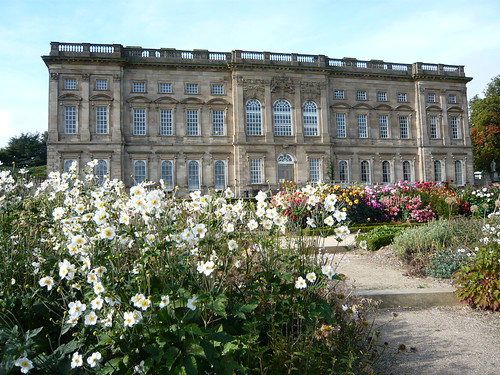
Parcevall Hall Gardens, up in the true dales on a steep hillside near Appletreewick, are planted with many specimen trees and shrubs collected from Western China and the Himalayas. Far from main roads this is a retreat in more senses than one.

Helmsley Walled Garden and Duncombe Park can be visited as one but the Parkland was closed when I last visited. The walled garden dating back to 1758, and set against the spectacular backdrop of Helmsley Castle was more than enough to hold my interest.

Thorpe Perrow Arboretum is open all year and has 85 bacres of woodland walks and a display of Falcons and other birds of prey. Look out for spring bulbs and blossom or wait for the autumn foliage.

Ripley Castle has been in the Ingleby family for 700 years but is now open to the public. The walled kitchen garden contains an extensive herb bed and an extraordinary collection of rare vegetables. The pleasure grounds contain a collection of specimen trees from around the world and thousands of spring flowering bulbs, daffodils, narcissi, snowdrops, aconites and bluebells.

York Gate is a one-acre garden tucked away behind the ancient church in Adel that is opened for Perennial the Gardeners Royal Benevolent Society a charity that has been helping horticulturalists since 1839

Newby Hall has sweeping long herbaceous borders and is my current favourite garden to visit. The national collection of Dogwoods is spectacular when in flower.

Burnby Hall Gardens at Pocklington has a national collection of waterlilies and the Stewart Museum. look out for heathers and the old Victorian gardens.

Wentworth Castle’s 50 acres of Grade 1 listed gardens are, historically, some of the most important gardens in the country. There is a fine Fernery and some great Holly behind the castle pictured above.

Gardeners
I didn’t have space for Harewood house (above) in my top ten (which became eleven, so I wonder what else I may have missed, please tell me.

Himalayan Gardens in Yorkshire HG4 3DA

Himalayan Gardens in Yorkshire HG4 3DA

In Yorkshire we are lucky to have several gardens designed using the theme of a Himalayan Garden. The Hut near Ripon at Grewlthorpe is   ‘The Himalayan Garden’ with all the plants you would expect in such a setting including

Rhododendrons both Hybrid and Species over 50 varieties
Evergreen and Deciduous Azaleas
Eucryphia varieties growing 10′ – 30′ as trees and large shrubs
Magnolias and Camellias
Cornus
Bamboo
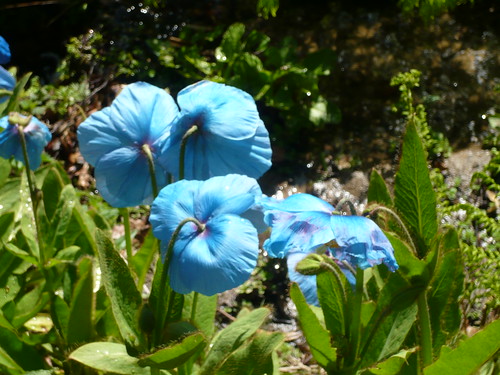
Primulas and Meconopsis
Himalayan garden Grewelthorpe Meconopsis7
Visit between April and June for the best colour display.


Read More Read More

Himalayan Gardens in England

Himalayan Gardens in England

Book Cover

First read the authoritative book ‘The Himalayan Garden: Growing Plants from the Roof of the World ‘ by Jim Jermyn

This book will provide tips and advice about cultivating species indigenous to the Himalayas. Understanding the ecology of the area gives a better appreciation of the Himilayan garden. It covers all the usual species including but not limited to Daphne, Euphorbia, Gentiana, Meconopsis, Primula and the classic Rhododendron. The book also considers different zones that are worth bearing in mind as we only associate Himalayas with big mountains. Jim covers chapters on Temperate, Sub-alpine and Alpine zones.

So now you are better prepared where can you visit?

  • The Himalayan garden The Hutts, Grewelthorpe, near Ripon Yorkshire not only has an interesting address but a good display of hybrid Rhododendrons. Also on display are Eucryphia, Bamboo and Cornus.
  • Also in Yorkshire is Harewood Himalayan garden opened by Alan Titchmarsh, in May 2009, says ‘The Harewood Himalayan Garden is a hidden gem and second to none in the UK…’
  • At Muncaster in the lake district check out the wonderful Sino-Himalayan Garden featuring many specimens rarely seen in the West.
  • If on the other hand you want your kids to have fun seek out Yeti at Riverhill Himalayan garden or climb the summit of Little Everest (the biggest hill in Sevenoaks)

Suppliers and other locations are listed on Rhododendron growers Glendoick’s web site.

See also Himalayan Gardens near Home

What does Self-Sown Mean?

What does Self-Sown Mean?

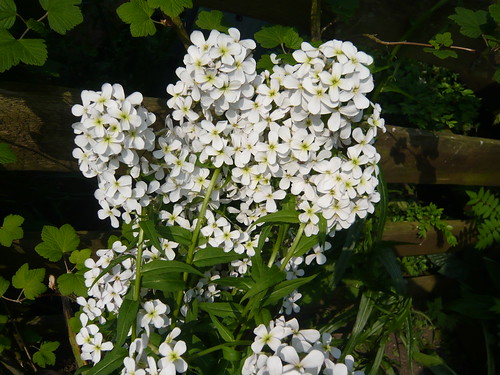
Hesperis matronalis Alba

Seeds are self sown when seeds germinate and grow without the help of a gardener. The majority of plants grow, flower, get pollinated then set seeds. If seeds are then distributed naturally from the plant they are self sown.

What Plants are Self Sown

  • Weeds are among the most common self sown plants. I am thinking of Dandelions, Daisies and Buttercups but unfortunately there are lots more.
  • Before cultivated gardens anything not grown for food was probably ‘nature sown’ in that the plant did it for it’s self.
  • In a broadleaved wood you may get Oak trees growing from self sown acorns whilst Rowan and Elderberry are sown by birds eating berries and dropping seeds.
  • Garden flowers that are commonly self sown include Foxgloves, Nigella, Candytuft, Poppy, For-get-me-not and Nasturtium.

How are Seeds Self Sown

  • Wind distributes seeds that are very light or have a float mechanism like a Dandelion clock or Sycamore seed’s wings.
  • Some seeds are expressed from seed pods by firing. Pansy seedpods tighten up and the ripe seed is squirted a good distance from the parent plant.
  • Birds and animals including humans can be responsible for spreading seeds. Some stick to your clothing others are eaten but not digested like Tomatoes.

Top Ten Self-Sown Garden Plants

  1. This list was compiled with the help of Crocus whose first choice was Alchemilla mollis aka Lady’s mantle, good for edging sunny and shady borders and filling cracks in paving.
  2. Aquilegia ‘Nora Barlow’ or Columbines self-seed readily and are very easy to grow in sun or partial shade.

Read More Read More

Living Stones – Growing Lithope

Living Stones – Growing Lithope

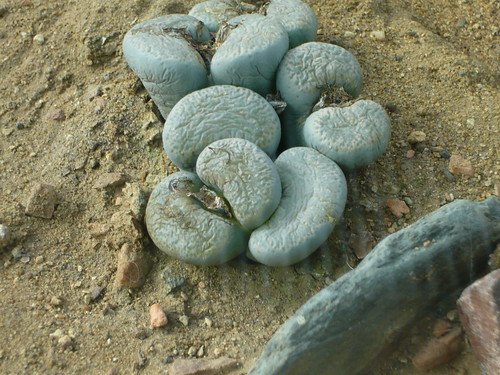
Lithrope

As a child I tried with seeds to grow stones – daft kid or what? Now I do not see the fun in growing Lithopes, due to the early aversion thereapy, but each to their own.

Lithopes are succulents often collected by Cactus growers. Plants consist of one or more pairs of bulbous leaves and hardly any stem. The slit between the leaves   produces white or yellow flowers and new leaves. During winter a new leaf pair grows inside the existing fused leaf pair. The old leaf pair parts to reveal the new leaves and the old leaves will then dry up

I can’t beat the full description, history notes and cultivation report on the BBC web pages. In case the page gets taken down in a cost cutting exercise I have repeated some of the key content.

Growing Lithops at Home

Read More Read More

About Single and Double Flowers

About Single and Double Flowers

034

What is the difference between Single and Double

  • On single flowers there is a layer of petals forming the flower
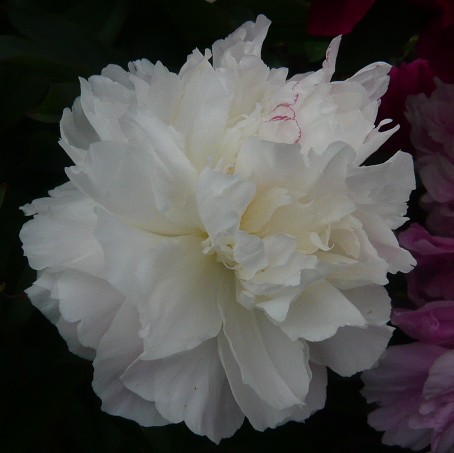
  • Double flowerheads have multiple petals forming around and covering or replacing the stigma and stamen.
  • Semi-double flowers have two or more layers of petals but the centre of the flower is still open.
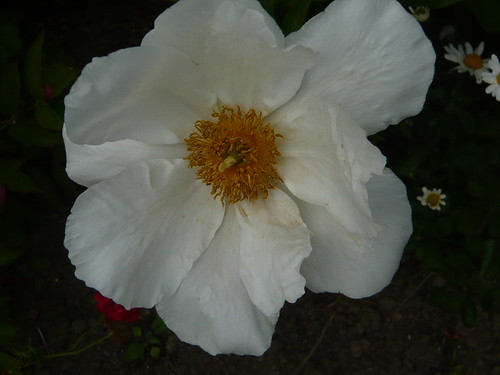
  • Roses with 5 petals are one of several species known in both single and double varieties as are Poppies (below) and Peonies as shown above.
  • An inflorescence is a group or cluster of generally single flowers arranged on a stem.

035

Design of a Flower

  • A bloom has four components which are clearly visible, the outermost parts are the  green leaf-like structures called sepals that enclose and protect the bud prior to opening.

Read More Read More

Centaurea Montana for Aficionados

Centaurea Montana for Aficionados

 Centaurea

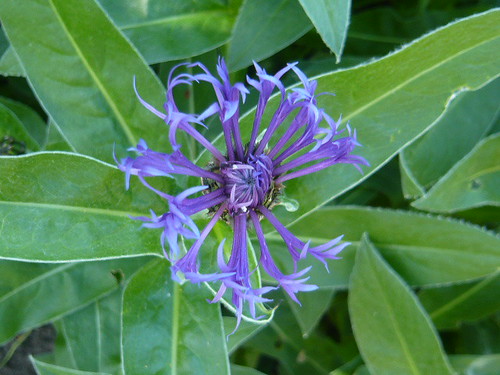
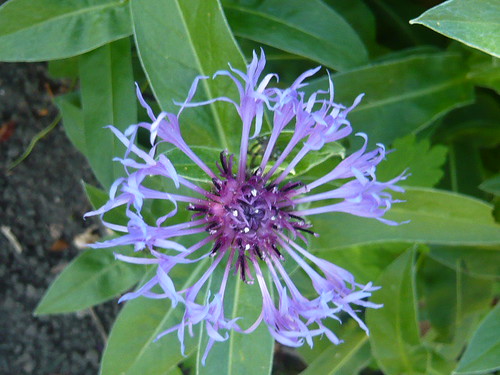
The colour of this young Knapweed is dark almost purple. As it opens fully it will become blue and then fade as the flower ages. The colour helps Centaurea montana earn its nickname of Mountain Cornflower or perennial cornflower.

 Centaurea

National Collection of Centaurea

  • There are many species of Centaurea in the National collection.
  • Centaurea Montana varieties held at Bide-a-wee Garden include
  • Centaurea montana alba
  • Centaurea montana carnea
  • Centaurea montana Dark form
  • Centaurea montana`Gold Bullion`
  • Centaurea montana `Grandiflora`
  • Centaurea montana `Joyce`
  • Centaurea montana`Lady Florence Hastings`
  • Centaurea montana `Lilac Strain`
  • Centaurea montana from Mark`s house
  • Centaurea montana `Ochroleuca`
  • Centaurea montana `Parham`
  • Centaurea montana `Parham`
  • Centaurea montana`Puurple Prose`
  • Centaurea montana violacea
  • Centaurea montana`Violetta`

Also see Centaurea Garden Gem or Invasive Weed and Growing Centaurea

New book from Amazon – Diffuse Knapweed Centaurea Asteraceae, Anatolia, Balkans, Biennial plant, Annual plant, Taproot, Head (botany), Leaf, Flower, Seed

Rhododendrons and the Danger of Frost.

Rhododendrons and the Danger of Frost.

Frost damaged Rhododendron
My Rhododendrons were in full bloom when a late frost caught them quite badly.
Winter has been wet and mild but if the USA is anything to go by hard frosts may still be on the way so look after your early flowering Rhododendrons.

early-rhododendron

Although Rhododendron ‘Nobleanum’ displays its pink flowers intermittently throughout the winter, the season really begins with a few early bloomers like Rhododendron dauricum after Christmas and continues until Rhododendron ‘Polar Bear’ calls it a day in August. The main flowering period tends to be late April and early May. This unnamed plant was in full bloom in Durham botanic garden on 1st March 2009.


frosted rhododendron
‘More frost damage on an Early Rhododendron’

Tips to Avoid Frost Damage

    • There is no cure after frosting has occurred but waiting for next year.
    • Avoid planting in a frost pocket. Frost flows, like water, downhill
    • Plant under light shade which will offer some frost protection and the Early Rhododendrons will still flower and thrive.
    • For small specimen shrubs it may be worth covering with horticultural fleece if a cold snap is predicted.

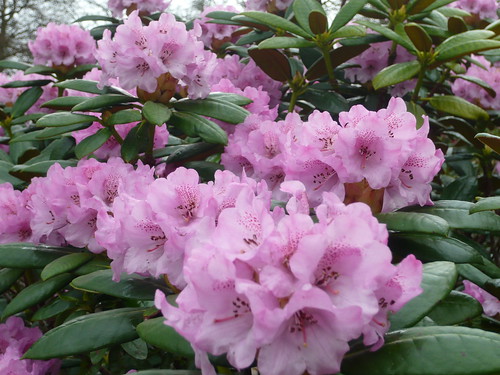
Himalayan garden Grewelthorpe Rhododendron

Ancient Mariners Rhododendrons

Frost Hardy

This picture shows what I call the rime of the ancient mariner as I groweth one of three. Most Gardeners look after the great and small, both bird and beast……

Farewell, farewell! but this I tell
To thee, thou Wedding-Guest!
He prayeth well, who loveth well
Both man and bird and beast.

He prayeth best, who loveth best
All things both great and small; ……