Growing at School (a Gardening Scheme)

Growing at School (a Gardening Scheme)

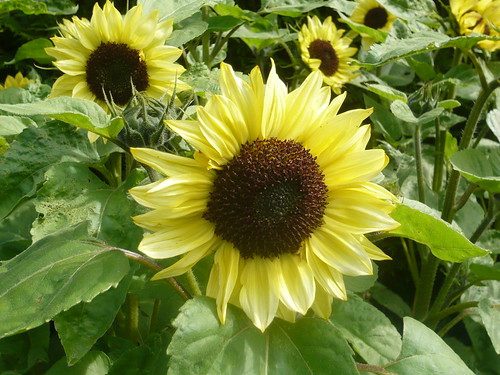
Sunflower -Valentine

Gardening is not lesson time but fun time even if you do the growing at school. ‘The ‘RHS Campaign for School Gardening’ aims to inspires and supports schools to provide children with gardening opportunities to enhance their skills and boost their development.’

Quick Result Seeds

  • Sprouting seeds that grow in a jar without any soil.
  • Mustard and cress a salad crop you can grow on a wet facecloth or old sponge.
  • Annual seeds flower for just one year. They can be bought in mixtures containing lots of different plant seeds.
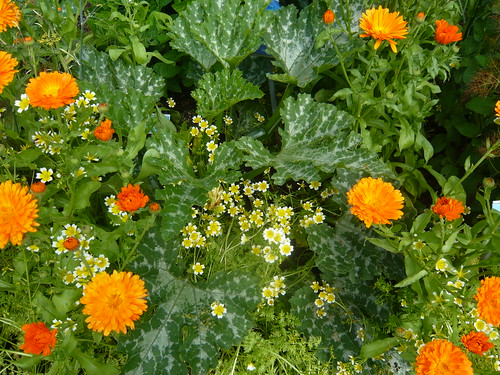
  • Pot marigolds also called Calendula have big seeds,  bright yellow or orange flowers and flower the same year they are planted.
  • Sunflowers are ever popular link
  • Annual seeds from Thompson & Morgan

More about the Scheme

Companion Planting

  • Waitrose, Marshalls, Dorset Cereals and the RHS are promoting a Campaign for School Gardening. The aim is to provide pupils with hands-on learning opportunities in school grounds to grow plants and garden sustainably.

Read More Read More

Liverwort Problems and Cures

Liverwort Problems and Cures

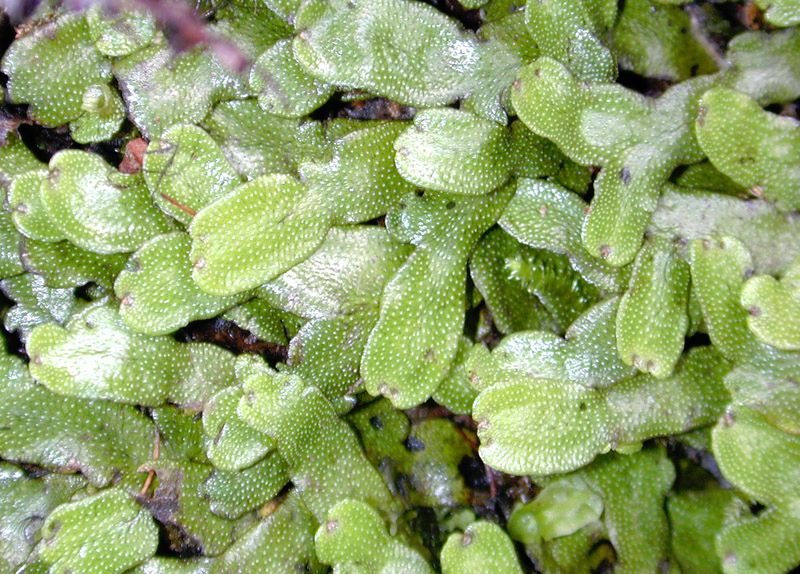
Liverworts are primitive plants that can become a nuisance in plant pots and lawns. Liverworts are related to mosses and can look like slimy Algae.

Liverwort Varieties

  • There are 300 species of Liverwort native to the UK and up to 10,000 worldwide.
  • Thallose Liverworts have a flattened, plate like body, called the thalus, and no leaves.
  • A common thallose is Marchantia which is topped with an umbrella like sexual organ.
  • Leafy Liverworts have two ranks of flattened leaves growing out from a stem and a third under-layer.
  • Instead of bearing regular roots, liverworts anchor themselves with simple appendages known as rhizoids

Liverwort Problems and Cures

  • These plants are a nuisance because they colonise a pot plant and form a crusty surface layer.
  • Liverworts like acidic, moist, shady  conditions so deny them these luxuries where practical.
  • Use free drainage in pot plants especially at the top couple of inches.
  • Liverworts can grow on hard surface and can be treated with acetic or pelargonic acid, (Doff Fast Acting Natural Weed Sprayor Finalsan moss killers)
  • If they infest a damp lawn scrape off the excess and spike to improve drainage. Add lawn sand if desired.
  • Some thallose Liverwort species are aquatic and grow on ponds like flecks of lettuce.
  • Liverworts reproduce by spores or gammea often transferred by water. Water pots from the bottom.
  • Glyphosate and several weed killers will work. Add a few drops of detergent in the water to try to penetrate the waxy surface of the Liverwort.


Read More Read More

Top 500 Gardening Books at Gardeners Tips HQ

Top 500 Gardening Books at Gardeners Tips HQ

400 gardening Books

My Top 420 Gardening Books

I wish to pay tribute and offer thanks to all those who have contributed to the tips on this web site through their words and wisdom in numerous books and published works. It is the inspirational gardeners, plantsmen and horticulturalists that are celebrated by authors, publishers and photographers, that deserve the praise.

If I have failed to cite or reference a particular comment in the past I apologise. I have tried to give appropriate credits and increase sales of some books by offering a link to an appropriate page on Amazon. This should cover the other 80 or so titles that go to make up the top 500.

Gardening Books a pdf  file highlights over 420 gardening books that I dip into from time to time.

If you have a preferred book that I have missed, or if you have written a gardening book yourself let me know and I will add it to our list.

I am an acknowledged hoarder and collecting gardening books became a passion several years ago. Most of my 12 book cases are overflowing as you can see from the picture.

The internet has made information so ubiquitous and freely available that it is good to remeber the fun and tactile joy you can get from thumbing through a specialist book.

RHS Books and Libraries

  • Additionally I volunteered at RHS library at Harlow Carr and helped move the book collection from ‘the old potting shed’ to the superb new Bramall Learning Center.
  • The new library section at Harlow Carr stocks 8,000 books, DVDs, magazines and offers online facilities.
  • Members can borrow books from the RHS at any of the ‘Lindley Libraries’, Wisley, London, Rosemoor and Hyde Hall. I think this is one of the pleasures of RHS membership.
  • There is a web search facility available to members and non-member
  • Lindley Library in London was recently closed after a small fire but should now be reopen.

Notes on my Books file

  • I have tried to arrange titles in a way that highlights the subject matter.
  • The authors should be listed by surname followed by first names.
  • The year published, number of pages and publisher is self explanatory.
  • I have a personal scoring system to highlight how useful or pleased with the book I feel at the time of recording it on the data base.
  • I have suppressed several other columns that are of less interest.

Send us a comment with your favourite gardening book details.

Thank you to those who use our link to amazon when buying a book. The small commission we recive helps pay for the site maintenance.

With around 2000 web pages we have got as much content as many books.

How Stratification of Seeds Helps Germination

How Stratification of Seeds Helps Germination

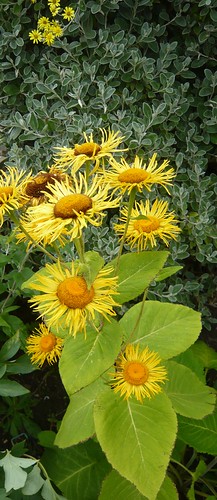
inula

Some seed needs a period of moist cold ‘to break dormancy’ and awaken them into germination and growth.

Many alpine plants, trees and shrubs require exposure to moisture and low temperatures for 30-90 days. This is the conditions they expect in their natural environment and gardeners need to replicate these conditions.

These requirements we call ‘Stratification’.


Methods of Stratification

  • Seed can be sown in January or February and left outside in the UK. Then depending on the species they can be brought into a temperature of 65-70ºF to germinate.
  • Mix the seed with some damp sand, vermiculite or small amount of damp peat. Place in a plastic bag and put the bag into a fridge for 6-8 weeks. Check for signs of germination (sprouting) by looking through the plastic bag.
  • Seed which then fails to germinate should be left outside for another winter. Sometimes they need two cold spells before germinating. Never give up as  seeds want to grow and are programmed to help the species survive.
  • Alternatively, the seed may be sown in small pots filled with moist soil and then the whole thing enclosed inside a plastic bag before placing inside a common refrigerator.
  • Juniper, Cotoneaster and some other species need a period of warmth followed by a cold stratification. So they are best sown in warmth for upto 3 months then placed in a fridge for 3-8 weeks.
  • After undergoing the recommended period of stratification, the seeds are ready to be removed and sown in the nursery bed for germination.

Stratification Tips

  • Use of a fungicide to moisten your stratifying peat or vermiculite will help prevent fungal diseases.

    Read More Read More

Pomegranate Growing & Health

Pomegranate Growing & Health

005

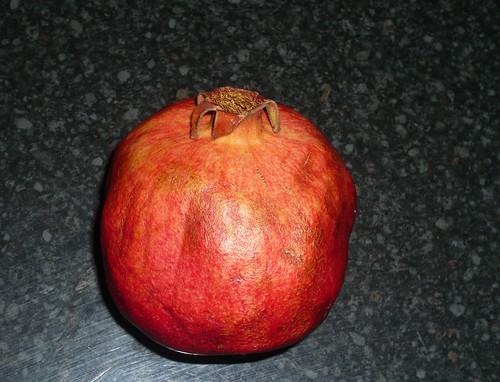
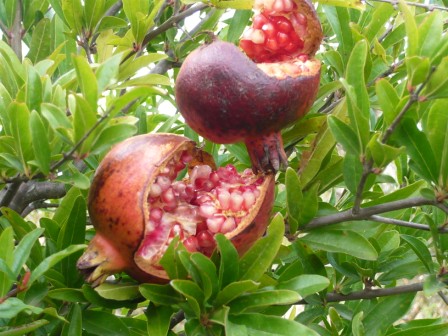
The pomegranate is a native of Iran and Pakistan. The shrub or small tree bears bright red flowers and juicy, if seedy fruit.
Even if placed in the sunniest, warmest part of the garden they will suffer in the UK but with global warming who knows.

pomegranite

The pomegranate Punica granatum can range from a dwarf shrub of 3′ to a small tree of 20-30′.
Pomegranate are supposed to be a frost-hardy bush with glossy green leaves.
I will stick to hot climate grown pomegranates for the sweetness and freshness.

Book Cover

Pomegranate for Health

Some claim recent research points to Pomegranite juice combating many of the conditions of ageing, Alzheimer’s disease, various forms of cancer, heart disease, stroke and hypertension, arthritis, and in protecting the foetus from brain injury. If only a small part was true what a wonder.

More conservatively pomegranate is ‘Naturally rich in Vitamins A, C, E, and Iron, that is great for your heart, circulation and protecting cells against free radicals. Pomegranate is believed to help support the maintenance of the body’s natural free radical defences and is great for your heart and circulation.

It is believed to be one of the most potent antioxidants available, providing Polyphenols and Elligatannins which may help to support the body against cell damaging free radicals.’

Pomegranate is believed to help support the maintenance of the body’s natural free radical defences and is great for your heart and circulation.

Also sold in seed form as Anardana Seeds

Datura, Brugmansia or Angels Trumpets

Datura, Brugmansia or Angels Trumpets

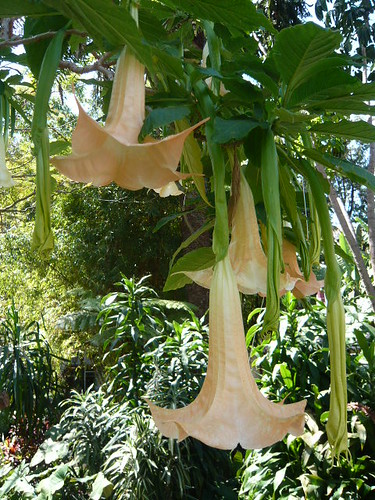
datura

My Datura last year were a perfect white when in flower and I collected fresh seed in good quantity.
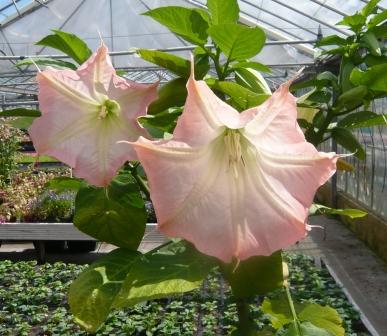
I couldn’t keep the plants frost free so they died. Unfortunately none of the seed have germinated so I am without these large trumpet shaped flowers. I was nearly tempted to buy this pink plant for the green house but resisted to spend the money on something more practical like a new Hoe.

The Brugmansia plant is poisonous and this is reflected in some of the common names; it is know by Devil’s Trumpet, Hell’s Bells, Devil’s Weed, Devil’s Cucumber, Sacred Datura, Angel’s trumpet, Moonflower, Thorn apple, Indian apple, Pricklyburr, and Jimson Weed.

Madiera mch11 152

Don’t let this put you off, Datura look great in a large container in a sheltered sunny spot in the garden, indoors or in the conservatory. The scent is fantastic and the scale extraordinary. Plants 6-8 feet high with 18″ trumpet flowers.

Brugsmansia and Datura are explained in far more detail in this book available from Amazon on this link.
Book Cover

Brugmansia Species

  • Brugmansia ×candida is an evergreen shrub growing 10 to 20 feet tall and has white trumpet flowers
  • Brugmansia arborea (tree)
  • Brugmansia aurea
  • Brugmansia insignis
  • Brugmansia sanguinea
  • Brugmansia suaveolens
  • Brugmansia versicolor
  • Brugmansia vulcanicola

More images

Brugmansia differs from Datura in that it is woody, making shrubs or small trees. Brugmansia have pendulous flowers, rather than erect ones. They are both from the Solanacea family.

Read More Read More

Grow Your Own Cheap Violas

Grow Your Own Cheap Violas

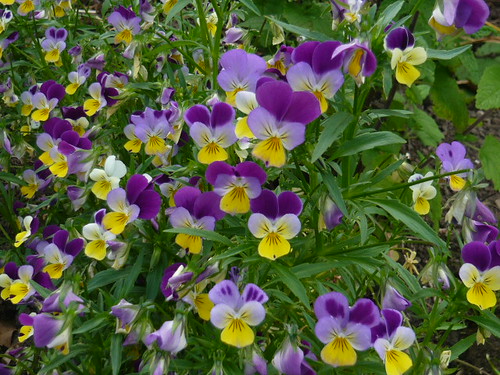
Viola self sown

Violas are perennial and grow best in well drained soil that has an open structure to encourage fibrous roots and promote many stems from the same root. They may get a bit leggy so cut back two or three times during the spring and summer to encourage new shoots and more flowers. Aid this by applying a liquid rose fertilizer or seaweed and keep watered.

Violas do not have the ‘blotch’ of the pansy but may have dark rays in the blue yellow or mauve petals. Violettas are very similar but with smaller flowers, compact habit and a good fragrance.

Many violas self seed but I try and collect seed from plants that I like. Sow the fresh seed on the surface of the compost but exclude light until they germinate in about 2 weeks.

Propagation to get more Violas for Free

  • In the second week of June cut plants back to within 2 inches of the soil.
  • When the shoots grow back to 3 inches long scatter some fine soil mixed with peat, amongst the shoots and keep well watered.
  • In two or three weeks the shoots will have rooted and can be replanted in a shady spot
  • Pinch out the growing tip to encourage branching
  • Divide plants every two or three years in Spring as they start to grow or in Autumn but the results may not be as good as the rooted cuttings.
  • Alternatively sow fresh seeds in July. Cover lightly but then exclude light for a few weeks until they have germinated. transplant in October to flower next spring.

Violas in Rockery

Read More Read More

Create a Stumpery from Tree Roots and Stumps

Create a Stumpery from Tree Roots and Stumps

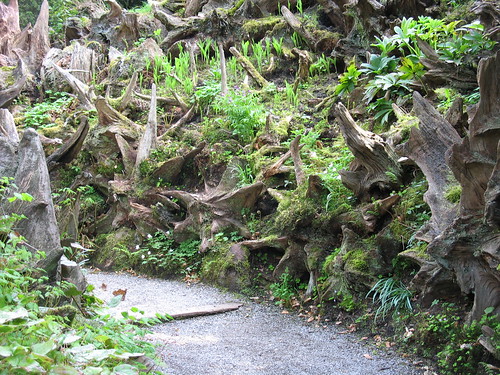
Stumpery - Biddulph Grange Garden - Biddulph

The objective of a Stumpery is to create a garden feature from ferns, logs and old tree roots. The Victorians started a trend to build Rooteries, Ferneries and Stumperies as romantic woodland places to grow exotic ferns and woodland plants. If you have a dark corner or want to collect ferns then you could start your own Stumpery quite easily and add to it as the fancy takes you.

Construction of a Stumpery

  • Old trees are the basic raw material.
  • Up rooted tree stumps like those after a big storm or pulled out by chains form a great base
  • Gnarled and twisted shapes work well to create form and shape
  • Just cutting trees down to stumps can be enough in a small garden
  • If you live in or near the countryside finding logs and tree stumps should be relatively easy.
  • In a suburban gardens a few pieces of trunk from felled sycamore can form the basis for a mini-stumpery.
  • Drift wood old branches or any wood artfully arranged can also be used
  • Bark chippings can unite the feel for the area

Eco-Friendly Stumps

  • Different wild life to that found in tidy gardens love stumperies.
  • Fungus can thrive on decaying wood and moist conditions.
  • Insects and small mammals have a place to hide, feed and multiply

Plant Up with some Ferns

  • Mosses and lichen can be encouraged by painting uncovered surfaces with yoghurt
  • Ferns should be planted in spaces between stumps and roots. They like dark places without fertiliser but some leaf mold can be added to the soil.
  • Chose a variety of ferns for shape, size and colour.
  1. Matteuccia Ostrich feather fern upto 3 feet
  2. Dyopterarias erythrosora has elegant fronds that emerge bright orange and change to lime-green as they age.
  3. Harts Tongue fern Phylitis has a smoother leaf and sword shape
  4. Athyriums like the Japanese painted fern (niponicum pictum,) and Lady fern are smaller but can  light up very dark places.
  5. Adiantum pedatum is a small maidenhair fern with a fragile appearance but a hardy nature. It has a running rootstock that quickly makes a respectable clump.
  • Snowdrops, celandines,primroses and foxgloves may grow well in semi shaded areas or on the edge of the Stumpery.
  • If planting Bluebells make sure they are the native kind not the hybrid or Spanish variety

More information on Ferns is available on http://www.ferns.com/

Photograph of Stumpery at Biddulph Grange Garden – Biddulph by westher, on Flickr under creative commons license.

What is a Coronary Garden

What is a Coronary Garden

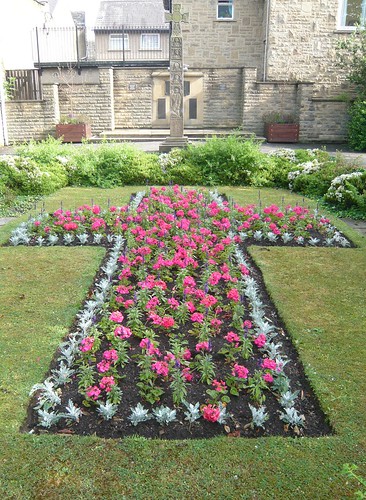
memorial

A Coronary Garden was more popular in late Victorian times but as I discovered it goes back beyond the 17th century.
Coronary gardens were  used to grow flowers that could be used for wreaths and garlands and take their name Coronary from the word crown not the health problem.

The modern day equivalent is probably the florist shop or stall located at Crematoria

This photograph is not a true Coronary garden but a memorial garden in front of the cenotaph at Otley.

Tips for the Coronary Garden (1686)

  • Do not separate off sets from Tulips until they are quite dry.
  • Cotton Lavender makes a foot high hedge or border if kept well clipped.
  • A layer of stable litter under the soil that is planted with Tulips, Anemonies and Ranunculus will help them thrive. They my survive without lifting.
  • To grow Stock Gillyflowers chose a plant with excellent double flowers. Make it beare one branch of flowers and collect the seed. Sow in February in the hot bed and transplant in Michaelmas (September).

Note about Stock Gillyflower. – I originally took it to mean Carnation or Pinks of the Dianthus family but other plant dictionaries include stocks like Matthiola incana, or say stock gillyflower is the Cheiranthus; the queen’s gillyflower is the Hesperis or even any of several Old World plants cultivated for their brightly colored flowers.

Wordswarmnet Dictionary for Stock Gilly Flower

Plants for the Coronary Garden

  • Lilies in red, white, Crown Imperial or Persian.
  • Tulips, Crocus, Narcissus or Anemonie for spring
  • Snap dragons, Sweet Williams and Gladiolus
  • Iris and Fritillaries.
  • Daisies, Pansies and Violets
  • Various annuals or exotics like Amaranthus and Heliotrop.

The tips and flower selection have been taken from ‘ Directions for The Gardiner at Says- Court in 1686’. They were published in a wider more embracing form in ‘Directions for the Gardiner and Other Horticultural Advice’ by John Evelyn the diarist and OUP available via Amazon

The original manuscript was first transcribed in 1932 by Sir Geoffrey Keynes

Book Cover

Daisy Daises a 20,000 Strong Family

Daisy Daises a 20,000 Strong Family

062

One gardeners Daisy is another gardeners weed. This Ox- Eye daisy is made up from numerous white ray flowers surrounding a bright yellow disk flower or florets the outer white petals are common in many daisies. Bellis perennis is the common daisy growing in meadows and many lawns. Lots of children will be familiar with the Daisy chains made by linking flowers together.

More exotic daisy plants can be discovered in this comprehensive guide.

Book Cover
Daisies are from the Asteraceae or Compositae family that has over 20,000 species from over 1500 genera that includes the Asters, Senicio and Sunflowers.

Read More Read More