Fruit from Cherry Trees

Fruit from Cherry Trees

Sweet Cherry are not often grown in UK fruit gardens. To get a good crop of cherries you need several varieties for pollination, it takes 10 years to get a good crop (then birds eat them) and the trees take up a great deal of space.  I will get lots of comments to the contrary now.

Going  Ahead with Cherries

  • Fan train your cherries against a wall and pinch out the growing shoots in June and again in September.
  • Add lots of Lime and Potash to feed your Cherry
  • Plant Standards 25 feet apart.
  • Opt for a self fertile Morello Cherry or Acid Cherry like Kentish Red or Flemish Red
  • For early Cherries in June try Early Rivers, Frogmore fruits  in July and Emperor Francis in late August.
  • For the above varieties check on the pollination requirements when you buy
  • Be content to grow Cherries for the blossom that can last 3 weeks in spring.
  • Smaller ‘Colt’ rootstock now allow trees to be controlled to 12 feet high.

I was lucky to be walking through this orchard earlier this month in Prague.

RHS

BBC Gardening Plant Finder

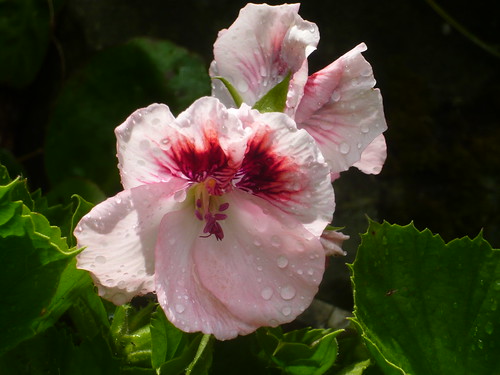
Build Your Regal Geranium Collection

Build Your Regal Geranium Collection

If you want to be a collector and build a Geranium or Regal Pelargonium collection to be proud off then start now for next year.

First Thoughts

  • Join the new Pelargonium and Geranium Society formed by the merging of the British Pelargonium and Geranium Society and the British and European Geranium Society on 1st January 2009.
  • Bone up on the best British suppliers of Geraniums like Fir Trees,  Gosbrook,  and Fibrex.
  • Scrounge cuttings from friends, neighbors and local gardening clubs.
  • Now is a good time to watch garden centres selling off old stock (cheaply) that can provide lots of material for cuttings.

Top Types to Try

  • Aztec naturally branching with attractive pale green leaves.
  • Grand Slam with rosy red florets to varying lavender shades
  • Sunrise needing stopping to get abush orange flowers with white throat
  • Fringed Aztec Askam or Arnside
  • Hazel ….. Cherry or Harmony, Stardust, Herald or Heather
Pruning Flowering Shrubs the Easy Way

Pruning Flowering Shrubs the Easy Way

rhododendron

Spring Flowering Shrubs that have finished flowering can be pruned in early summer. My Spirea were trimmed of flower heads and pruned of about one third of the old wood down to the ground this weekend. Hopefully also taking out weak growth and crossing branches will provide space for strong new stems to flower next year.

Forsythia was pruned after flowering back in April and other shrubs to now receive this treatment include Philadelphus, Ribes, Deutzia and Weigela. Weigela gets a lighter prune to encourage an Autumn flush of blossom. Rhododendrons (above) do not need pruning but I give them the once over to remove any problems.

Late summer flowering shrubs should be pruned next spring to encourage new flowering wood. Buddleja can be heavily pruned but avoid cutting into really old wood. Dogwoods should be stooled or cut bach to  about 10 inches high.  Choisya I just give a trim after flowering to retain shape and control the size but if they are putting on to much growth I will sacrifce flowers and prune early. Winter flowering Viburnum and Witch Hazel do not need much pruning so I tend to leave well alone.

Pruning Aims to achieve regular production of flowers and to keep a shrub healthy. A balance between old and new wood helps flowering. Creating space for light air and growth helps a plant remain healthy. Cutting back to a leaf or stem joint shapes and trains a shrub to do what the gardener wants.

After pruning care includes a dressing of blood fish and bone and a good mulch of compost. This will help the shrub replace all the wood it has grown and lost to my secateurs.

RHS

BBC Gardening Plant Finder

Growing Phormium or New Zealand Flax

Growing Phormium or New Zealand Flax

phormium

Spiky perennial plants sold as Phormium are available in variegated or self colours but all have striking sword shaped leaves. Phormium Tenax is the larger more commonly available variety but there are now approaching 100 varieties to choose from.

Growing Phormium

  • Phormiums are best growing in a sunny position although they will tolerate a fair amount of shade and like a stream side position.
  • Phormium have tough leaves that are resistant to desiccation so in the garden they rarely need any extra watering.
  • Varieties with upright leaves, such as ‘Sundowner’ and ‘Dusky Chief’ are reputed to be suitable for growing indoors
  • P. cookianum varieties are less hardy but with some bracken leaves for winter protection they should be OK. Try Black Adder or Maori Maiden.
  • Fernwood Nursery has a national Collection of over 70 varieties

flax

Yellow Foxgloves – Digitalis Lutea

Yellow Foxgloves – Digitalis Lutea

yellow-foxgloves

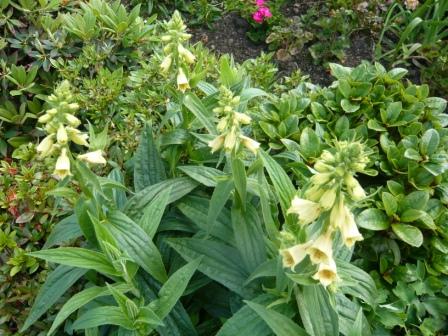
This Yellow Foxglove Digitalis Lutea is a hardy perennial and the clumps grow bigger and stronger each year. They are useful plants in sun or shade and reproduce from seed or the clump can be split. Foxgloves are species of Digitalis and most Foxgloves are biennial plants.
The tubular yellow flowers of Digitalis Lutea are plentiful and long lasting. The flowers are on shorter stems (up to 36 inches) than other Foxgloves and are easier to control in a garden setting.

Digitalis Lutea is recommended as a useful plant to grow in a mixed border

Read More Read More

Pansy Growing Tips

Pansy Growing Tips

pansy2

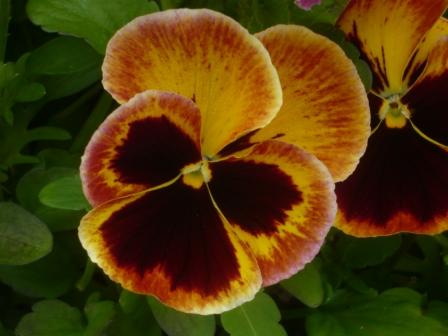
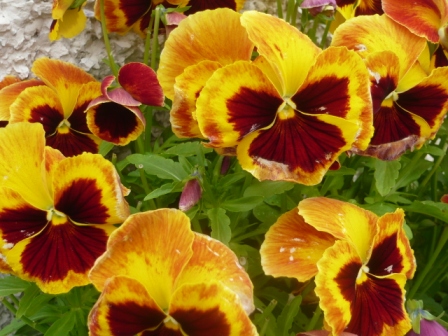
The typical Pansy face is shown in this golden Pansy. They are very accommodating plants and that is probably why so many are grown every year in the UK. Winter flowering Pansies can be sown now and planted out in October for flowering from February onward when a bright spell occurs.
Tip for sowing seeds cover the seed tray with a sheet of paper until the seeds germinate – do not bury the seeds in compost.
Tip Grow Pansies as biennial plants – they get leggy after flowering.

pansy-3

These Pansy faces are almost black and very deep and intense colours can be found in the Pansy family. Consider the viola family when planning a black garden.

Read More Read More

Creeping Jenny Good or Bad

Creeping Jenny Good or Bad

creeping-jenny

Beware Creeping Jenny
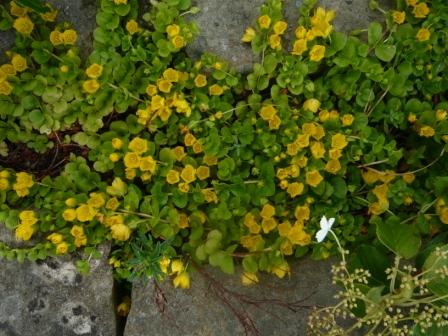
can invade your garden if you don’t take care. In the right place Creeping Jenny or Lysimachia nummularia is a useful plant as it retains a dark green leaf through winter but has bright green leaves from spring and flowers yellow from Spring through Summer. The prostrate, creeping stems make excellent ground cover but they can infiltrate plants and damp borders and even withstands walking on.

The stems root easily and spread by creeping. This picture shows Creeping Jenny in a dry wall and whilst the flowers are smaller the plant in thriving. I do not know if it arrived by seed or via a piece of broken root but it creeps me out at times.

Sometimes called Money Wort I would save your money (and not grow it) but if you are keen many people will give you a bit just to reduce the population in their garden.

Other Resources

Royal Horticultural Society RHS ‘Gardening for All’
National Council for Conservation of Plants and Gardens ‘Conservation through Cultivation.’
Garden Organic National Charity for Organic Gardening.
BBC Gardening

Collecting Seed from your Garden

Collecting Seed from your Garden

pansy

Do you like to grow your own plants from seed you have collected from your own garden. Well as you would expect it is as easy (or difficult) as nature intended but gardeners can certainly help with the selection and dispersal process.

When seed is ripe or ready to be distributed you can help with the distribution process and the timing to get optimum conditions. I have just collected lots of seed from a colourful Aquilegia that I want to establish in my garden. The seeds are presented in a tubular pod with 5 cells that turn from green to brown and then progressively twist to squirt out the seeds over a couple of days. The squirting or sprinting process is like us squeezing an orange pip to get it to fly and is a key way of seed dispersal in nature. Pansies use the same process from a triumvirate of seed husks.

I collect the seed just before the husk is totally brown and keep it in a paper bag or old envelope for a week. By then the seed will fall out and the husk can be thrown way. Seed can then be sown in good conditions in the right place my Aquilegia will go into seed compost in september for upto 3 months in full light to help germination.

Read More Read More

Hover Mowers & Safety

Hover Mowers & Safety

mow

Hover mowers are quick and easy to use but they do not leave stripes in your grass. The motor mowers for long grass are an excellent way of clearing space like a hovering scythe. The electric Hover mowers are fine for small lawns and are far lighter than most other lawnmowers but they are unlikely to collect up the cut grass.

Before Using Your Mower

  • Read the instruction book, it may seem obvious but best to be prepared.
  • Fill the petrol tank before you start as pouring petrol into a hot engine can be as dangerous as smoking.
  • Examine the area to be cut for stones, bits of metal, toys or pets.
  • Set the cutting height, not too short!
  • When starting the machine keep it still, perhaps by putting your foot on the hood.

While Mowing