Tidy Up Your Untidy Bluebells

Tidy Up Your Untidy Bluebells

spring

Bluebells can become invasive in the garden and become too much of a good thing. The bulbs go deep down into good soil and if you want to remove them they must be dug out totally. The white bulbs throw off little bulbils and they will grow back unless you clean up the soil to at  least 12 “. If your garden veers towards the more formal you may wish to tidy up by removing the bluebells.

After flowering the leaves of Bluebells loose the turgid nature and spread in a slimy manner over an 18″ diameter inhibiting other follow-on plants. To tidy up I pull up the clumps of leaves, stalks, seed heads and all to clear the ground. They come up very easily breaking off from the bulb and leaving that for future years. If I do it early enough the bulbs will weaken and flowers be poorer next year but as you may guess I am no great lover of Bluebells except in woodland situations.

Varieties of Bluebell


Spanish Bluebells
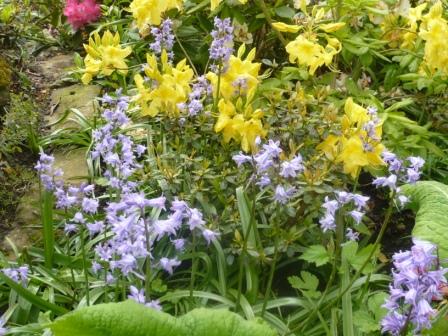
Hyacinthoides hispanica are more invasive and are pushing our own native species out. If the flower spike is stiff and upright, flowers broadly spreading and petals usually not rolled back with clear blue Anthers you have Spanish Bluebells Hyacinthoides hispanica. They are unscented. Italian Bluebells Hyacinthoides italic are quite similar but less invasive.

English bluebells Hyacinthoides non-scripta have narrow leaves with scented flowers of straight-sided bells, petals that are rolled back (recurved) and Anthers which are creamy-white. The nodding, violet-blue flowers of these hardy, native bulbs attract insects to their delicately scented flowers. Bluebells grow best under the dappled shade of deciduous trees. It is illegal to take these plants from the wild, they must be acquired from a reputable source.

There are also hybrids of the two key varieties and most of my Bluebells must be the Spanish variety so out they will come.

White Bluebells
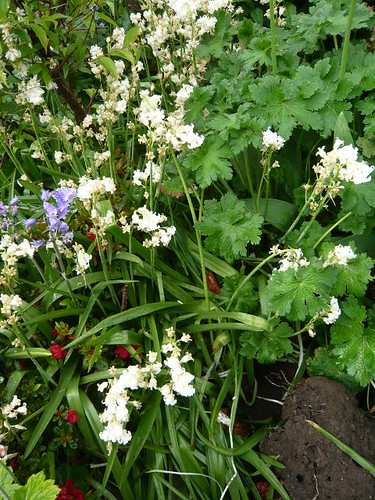
These White Bluebells are running to seed. Take off seed heads to stop profligate self sowing.

Naming The Bluebell

  • The botanic name is now Scilla campanulata and you can often buy bulbs under this name.
  • Previously they were classified as Endymion who was a mythical Greek. Endymion campanulatus, Endymion hispanicus, Endymion patulus, and Scilla hispanica have also been used.
  • Another common name ‘Wood Hyacinth’, seems to describe the plant and its preferred location.
  • There are now many hybrid ‘Bluebells’ mixed with these white bells with names that indicate the colour eg Mount Everest (white) and Azalea (pink).

Bluebells look and smell marvelous in a deciduous wood but the Spanish bluebell in your garden can be a thug that needs tidying up after flowering. If after all this you wish to buy Bluebells you can do so from Thompson Morgan
See also bluebells in flower

bluebells

Where to see Native Bluebells

Hackfall Wood Ripon.
Trench Wood Worcester
Winkworth Arboretum Surrey

Ashridge Estate, Berkhamsted, Buckinghamshire

Calke Abbey, Derbyshire

Duncliffe Wood, Stour Row, Shaftesbury, Dorset

Heartwood Forest, Sandridge, Hertfordshire

Burroughs Wood, Ratby, Leicestershire

Credenhill Park, Credenhill

Hardcastle Crags, Hebden Bridge, West Yorkshire

Coed Cefn, Chrickhowell, Powys, Wales

Glen Finglas (Brig o’Turk) Trossachs National Park, Scotland

Bluebells in Woods

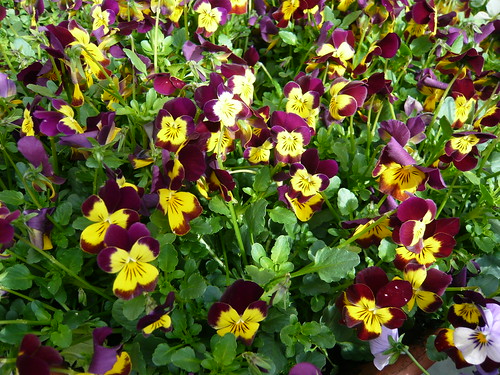
Violas Tug at the Heart Strings

Violas Tug at the Heart Strings

Viola profusion

Music to a gardeners ears from the Viola – no strings attached!

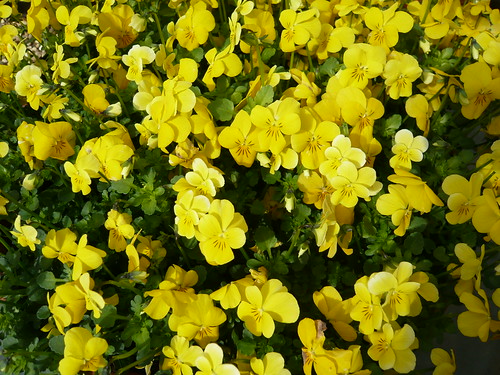
Viola profusion

A proper eyeful and no joking!

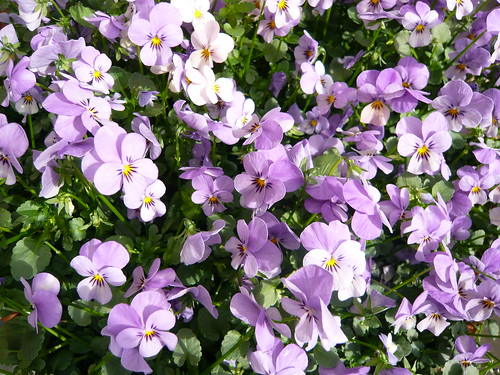
Viola profusion

Blue Violas generally have the best scent!

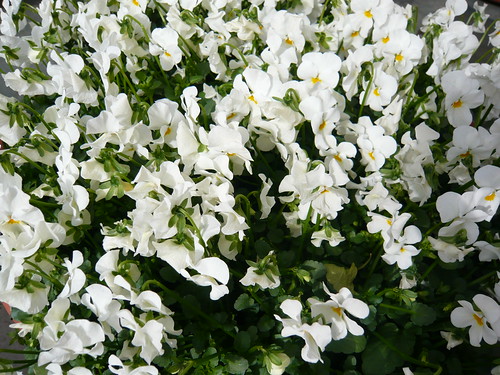
Ilkley 002

Massed bands of white Violas for the purist.

Different Methods For Dealing With Slugs

Different Methods For Dealing With Slugs

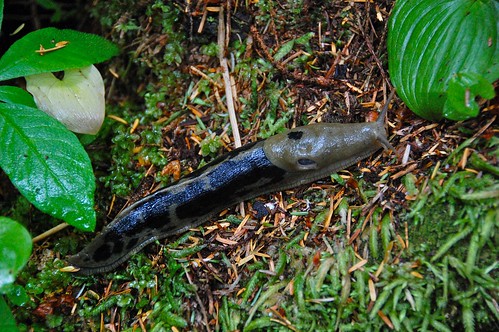
Slug

Do not be content with a single method of deterring slugs. Alan Titchmarsh told us years ago to ‘use several organic methods and reapply them regularly.’
Why settle for one remedy when you have a veritable arsenal of multiple methods for dealing with slugs.

Organic Slug Methods

  • Encourage more slug predators. Ground beetles are the thing and they love undisturbed clumps of Cocksfoot or Timothy grass. Frogs are also a useful predator to slugs
  • Read more about biological pest control methods with multiple nematodes to kill your slugs
  • There are now numerous packaged products to part you from your cash in return for parting you from your slugs.
  • Hoe the ground and bring the slug eggs to the surface for birds to eat.

Book Cover

Copper Based Slug Methods

  • Slugs dislike copper (unlike local metal thieves). You can use copper pipe hammered flat or lightening conductor.
  • Copper tape is sold for slugging it to slugs at most garden centers
  • Copper bands or collars can be very effective against slugs. Use them around your brassicas.
  • Copper tools like trowels are satisfying to use but may not do much to your slug population.
  • Slug and Snail Shocka is a large mat impregnated with copper.

Take extra care around slug favourites!

Chemical Slug Methods

  • If you want to know why you should slug your slugs with some form of chemical treatment look at my Hostas on this page.
  • For hard to find slugs and snails I still use a sprinkling of the old blue pellets.
  • Slug Pellets and Slug Exterminator at Amazon

slug
So Alan may be right a multi-punch mix and match approach may work. You can never do too much to deter slugs and snails from chomping your delicate plants.
If Frank Bruno was a gardener he would slug slugs with more than one punch at once.
However slugs were around before modern gardeners and you could adopt a policy of live and let live.

Credits
Slug by frankenstoen CC BY 2.0
slug by “Cowboy” Ben Alman CC BY-NC-ND 2.0

Spring Shoots of Dicentra

Spring Shoots of Dicentra

green-shoots-of-spring

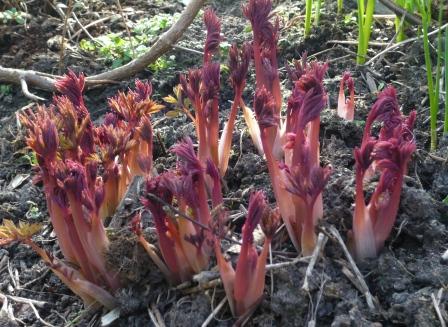
The economies of the world are waiting for a sign of the green shoots of a spring recovery. This Dicentra plant shows that not all good things are green and I love to seek out red shoots amongst my plants.

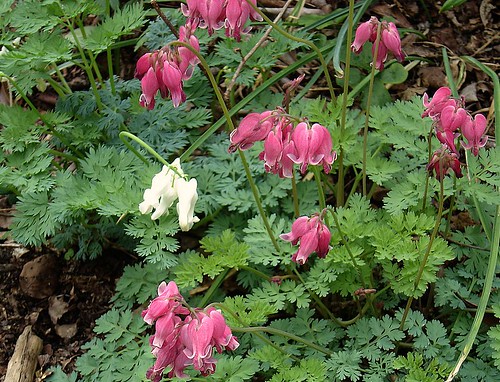
Other notable red shoots come in spring from the herbaceous Peonies and from Rhubarb plants but back to the Dicentra family or bleeding heart for a moment. The plants are easy to grow and reliable perennials whose clump grows each year. They resent disturbance so are hard to split for propagation but root cuttings from the edge of clumps are not too hard to strike.

Dicentra King of Hearts & Ivory Hearts

Dicentra Varieties to Try Growing

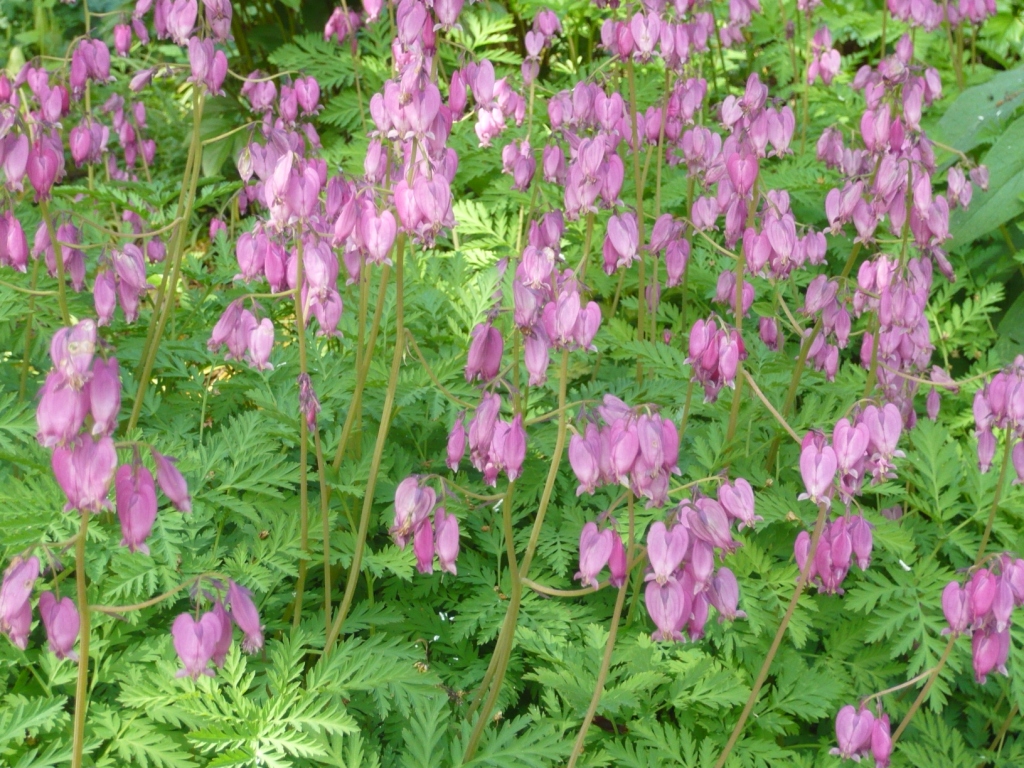
  • Dicentra spectabilis is the variety above that will flower with dark pink heart shaped flowers. There is also a white version sold under the unsurprising name of Alba but this is generally Dicentra eximia.
  • Dicentra formosa has cherry-red hearts that dangle like lockets on arching stems above mounds of fern like foliage. Also nicknamed Dutchmans Breeches.
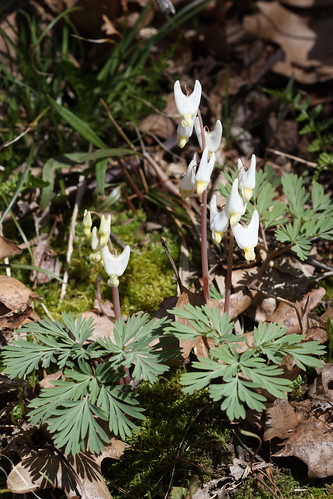
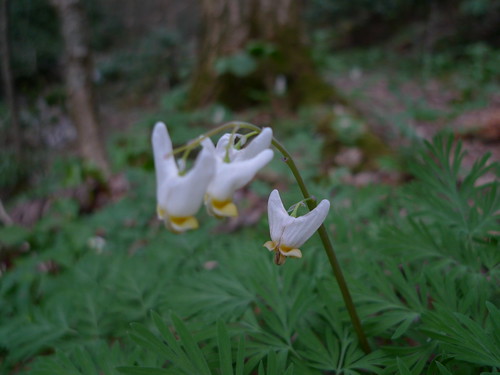
  • Bulb forming Dicentra cucullaria and Dicentra canadensis are cream or white in flower but retain the distinctive Dicentra fern like foliage.
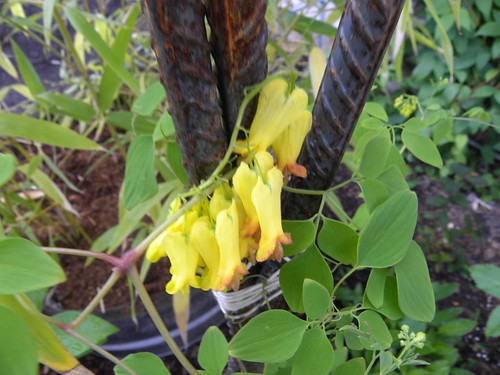
  • Dicentra scandens is a yellow flowered climbing species that I not found to be hardy.
  • There are 19 species of Dicentra from America and Asia.

Dicentra scandens

Growing Tips For Dicentra Formosa

  • The finer leaves grow well on the edge of woodland.
  • The grey leaved forms are OK under deciduous trees or shrubs but will stand more sun and can be used in alpine gardens.
  • Heavy clay soil needs improving with sharp grit and a granular feed in early spring.
  • The outer edges of plants are more vigorous than the centres. Use these to form new plants.

Dicentra cucullaria

Dicentra cucullaria (Dutchman’s breeches) is a flowering plant in the family Fumariaceae, native to North America. It occurs mainly in the eastern half of the continent, from Nova Scotia and southern Quebec west to eastern North Dakota, and south to northern Georgia and eastern Oklahoma; there is also a disjunct population in Idaho, Oregon and Washington. It typically grows in rich woods. The common name Dutchman’s breeches derives from their white flowers that look like white breeches.’

Dutchman's breeches - Dicentra cucullaria

Credits
Dicentra King of Hearts & Ivory Hearts by peganum CC BY-SA 2.0
Dicentra scandens by gnomicscience CC BY-NC 2.0
Dicentra cucullaria by aposematic herpetologist CC BY-NC 2.0
Dicentra cucullaria by dmott9 CC BY-ND 2.0


Herbaceous Helenium

Herbaceous Helenium

HÉLÉNIUM

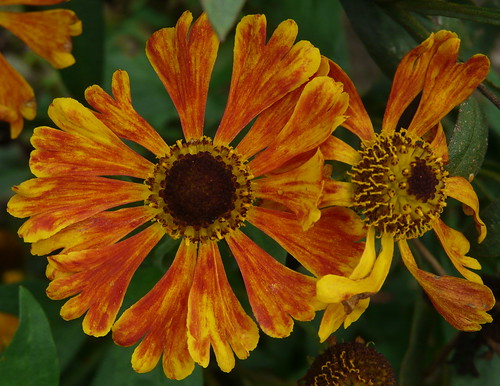
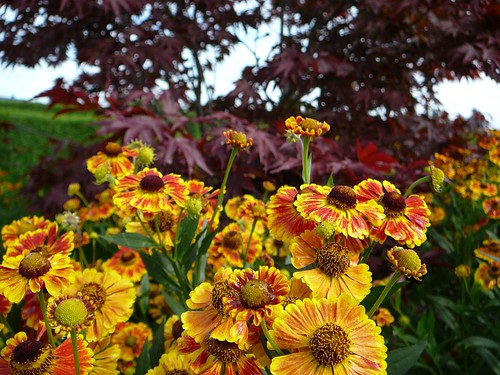
Helenium are a mainstay of the herbaceous border generally flowering from late summer into late autumn.
The colour range is warm and at times fiery with reds, browns, oranges, yellows and bi-colours. Very appropriate for the season and easy to grow from seed.

Common Names

  • Commonly known as Helen’s flower as they are believed to have been watered by Helen of Troys tears.
  • Some species are also known as Sneezeweed as the dried ground leaves were used in USA as a form of snuff.
  • There are 39 accepted species with over 220 known names.

Impression, Helenium "Waltraut"

Specific Varieties and Cultivars

  • Helenium Sahin’s Early Flowerer (agm) opens with rich golden ray-florets and a central brown disc-floret. It fades to burnt orange over time.
  • Helenium Ruby Thuesday is a new compact introduction with rich red florets
  • Helenium Wyndley grows to about 32″ with yellow florets overlayed with brown and orange.
  • Helenium autumnale ‘Sunshine Hybrids’ is a mixture of seed offering a dazzling colour range of flowers Height: 2-4ft.

Helenium autumnale, Sneezeweed

Growing from Seed

  • Sow February to June or September to October.
  • Germinate at 55-59F on the surface of a good free draining, damp seed compost.
  • Place in a propagator or seal container inside a polythene bag until after germination which usually takes 14-21 days.
  • Do not exclude light at any stage, as this helps germination.
  • Grow on in moist well drained soil.

Credits
HÉLÉNIUM by Mary.Do CC BY-NC-ND 2.0
Impression, Helenium "Waltraut" by e³°°° CC BY-SA 2.0
Helenium autumnale, Sneezeweed by KingsbraeGarden CC BY-NC-SA 2.0

Improving Garden Biodiversity Top Ten Tips

Improving Garden Biodiversity Top Ten Tips

Insect home

Every garden has the potential to do more for biodiversity. It need not cost and it may be fun to improve the biodiversity in your garden.
Just undertaking one item from the following top ten tips will help. If you already do all of them then give each one a make over or a little extra space and time.

Top Ten Biodiversity Tips

1. Log piles of dead wood host fungi and insects.
2. Pond life includes amphibians like frogs or newts but a pond also supports many insects and a variety of other creatures.
3. Compost heaps are not only good for creating compost but host worms and insects.
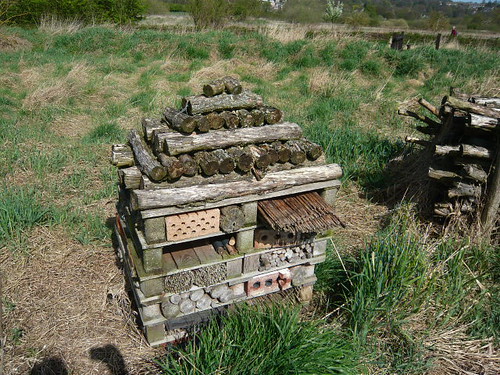
4. A Bug Bivi or multi-habitat insectarium can be made to a size suitable for all gardens. see photo
5. Wildflower meadows or just uncut grass develops wildflowers and grubs.
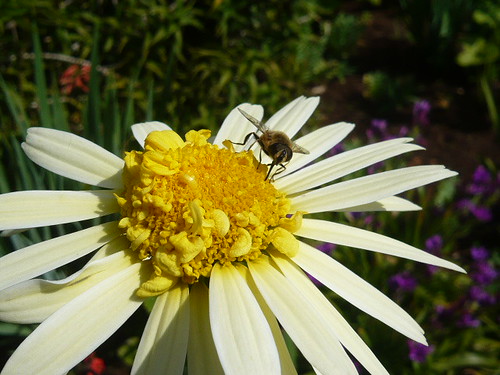
6. Single flowers preferably from UK native plants provide insects with pollen, nectar and food.
7. Mixed hedges are homes and security for birds and insects.
8. Climbing plants trained up walls help wildlife not catered for elsewhere.
9. Leaf piles can host over wintering hedgehogs and leaf mould from rotted leaves is good soil conditioner.
10. A mature tree can provide a habitat for a host of species and shade and shelter for ground dwellers.

Comment on Improving Garden Biodiversity

Balance in a garden is most important and I like the idea of ‘a bit of everything’ rather than a glut of one feature. However you need to start somewhere so have a go from the list.
Bees are important to pollination and currently receiving large amounts of attention but do not forget the worms and fungus that complete the recycling process.
Create a Butterfly Garden link
Get Butterflies in Your Garden link

Madiera insect

Uncommon and Common Garden Weeds

Uncommon and Common Garden Weeds

weeds

‘A weed is a plant that is growing in the wrong place.’
‘A weed has little virtue and lots of drawbacks!’
‘A weed aint necessarily weedy, it can be quite aggressive.’

Common Weed Problems

  • Some weeds grow in the expense of your cultivated plants taking nourishment, sun and space from more needy subjects.
  • Nettles and brambles not only invade but get their retaliation in first by stinging or scratching the unwary.
  • Weeds that self-seed freely such as dandelions and willow herb end up growing in the most inconvenient spots.
  • Lawn weeds like clover and common daisies advertise the gardeners lack of application and break up the nice green sward we are aiming to grow.
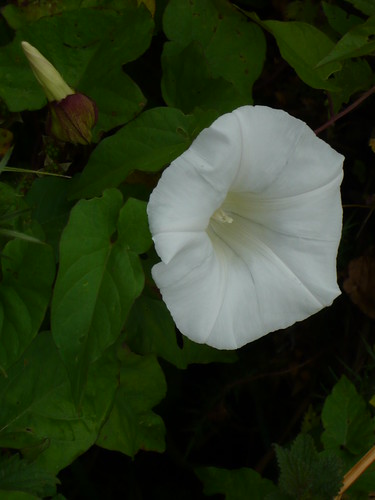
  • Bindweed can choke your prize flowers sooner than you can say columbine.

Sticky Weed

Common & Uncommon Garden Weeds

Below is a list of over 100 weeds . I think I will hand my garden over to nature and let them thrive. (well may be not all of them).

Meadow-grass, Barren brome, Black bent, Black bindweed
Black medick, Black nightshade, Black-grass, Bracken
Bramble, Broad-leaved dock
Bulbous buttercup, Canadian fleabane
Caper spurge, Cat’s-ear, Charlock, Cleavers
Cock’s-foot, Coltsfoot Common amaranth, Common bent
Common chickweed, Common couch
Common fiddleneck, Common field-speedwell
Common fumitory, Common hemp-nettle
Common mouse-ear, Common nettle, Common orache, Common poppy
Common ragwort, Common sorrel, Common toadflax, Corn chamomile
Corn marigold , Corn spurrey Cow parsley, Creeping bent
Creeping buttercup, Creeping soft couch grass
Creeping thistle, Curled dock
Cut-leaved crane’s-bill , Daisy, Dandelion
Dwarf spurge, Evening-primrose, Fat-hen
Field bindweed, Field forget-me-not
Mare’s or horsetail, Field Madder, Field pansy, Field penny-cress
Flixweed, Fool’s parsley, Gallant soldiers, Garlic mustard
Giant hogweed, Goat’s-beard
Greater plantain Ground elder, Ground-ivy , Groundsel
Hairy bittercress, Hairy Tare, Hedge bindweed , Hedge mustard
Hemlock, Henbit dead-nettle Himalayan balsam, Hoary cress
Hogweed, Ivy-leaved speedwell, Japanese knotweed, Knotgrass
Lesser celandine, Lesser trefoil, Long-headed poppy, Meadow buttercup
Mouse-ear-hawkweed, Mugwort, Nipplewort
Onion couch, Oxford ragwort, Pale persicaria, Parsley piert
Perennial rye-grass, Perennial sowthistle
Perforate St John, Petty spurge, Pineappleweed, Prickly lettuce
Prickly sow-thistle, Procumbent pearlwort
Red dead-nettle, Redshank
Ribwort plantain , Rosebay willowherb
Rough meadow-grass , Rushes, Scarlet pimpernel
Scented mayweed, Scentless mayweed, Selfheal Sheep’s sorrel
Shepherd’s purse, Slender speedwell, Small nettle, Smooth hawk
Smooth sow-thistle, Soft brome
Spear thistle, Spear-leaved orache Sticky mouse-ear, Stinking chamomile
Sun spurge, Swine cress Thale cress, Thorn-apple
Thyme-leaved speedwell, Volunteer cereals, Volunteer oilseed rape
Volunteer Potato, Wall Barley Wall speedwell, Weed Beet
White campion, White clover Wild radish, Wild-oat Water Avens
Winter wild-oat, Yarrow, Yorkshire fog

Bind Weed

Dealing With Weeds in Ponds

Book Cover

Weeds: The Story of Outlaw Plants by Richard Mabey

Book Cover
The Book of Weeds by Kenneth Thompson

Other Resources

Most Common Weeds
Common Lawn Weeds
Weed control of Avens
Horsetail and Mares-tail
Why war with weeds
For tips on Organic weed management visit Garden Organic
Royal Horticultural Society RHS ‘Gardening for All’
National Council for Conservation of Plants and Gardens ‘Conservation through Cultivation.’
BBC Gardening

Data Base Plant List

Data Base Plant List

Book Cover

Claiming to be the ultimate guide to plants and where to find them the new edition of the RHS Plant Finder 2012-2013 is now available from amazon.

Data Base Plant List

  • The internet has far wider reaching data bases of plants if you care to search.
  • The Plant List is the most comprehensive I have yet discovered.
  • 2011-2020 is the United Nations decade of bio-divesity and they sponsor ‘The Plant List’

The Plant List Data Base

  • The Plant List is the result of a collaboration between the Royal Botanic Gardens Kew and Missouri Botanical Garden
  • The Plant List provides the Accepted Latin name for most species, with links to all Synonyms by which that species has been known.
  • The Plant List aims to be comprehensive for species flowering plants, conifers and ferns. It also covers Bryophytes or mosses and liverworts.
  • The Plant List contains 620 plant families and 16,167 plant genera that currently includes 1,040,426 scientific plant names of species rank. Of these 298,900 are accepted species names.

Other Useful Plant Data Bases

Daffodils in Flower

Daffodils in Flower

daffodils

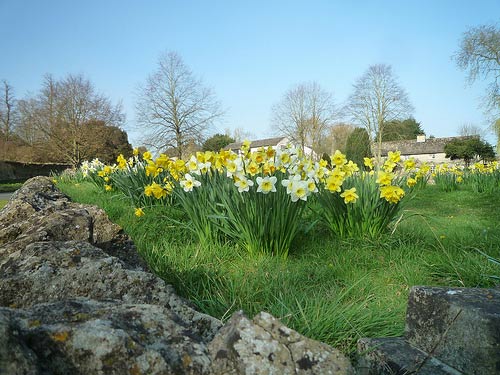
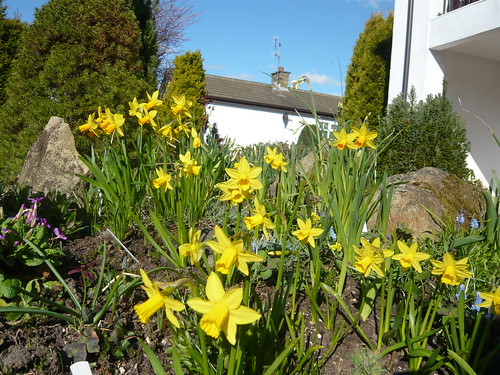
Daffodils in flower in Oxfordshire.

Helped by  good spring, daffodils have sprung into flower. These are some of our favourite daffodil pictures.

daffodils

Daffodils by ruins of Bolton Abbey

daffodils

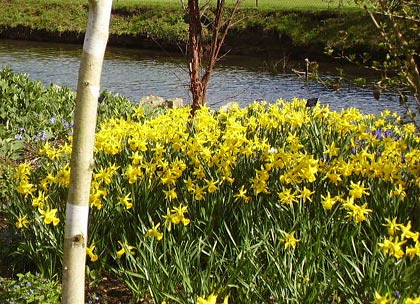
Daffodils by River Cherwell, Oxford

daffodils

Daffodil mixture

daffodils

Daffodils in front garden

daffodils

Daffodils against backdrop of Yorkshire Dales

daffodils

A magical carpet of Daffodils

daffodils

Naturalised daffodils

daffodils

Daffodils close up

daffodils

daffodils

next to a see of bluebells.

Tips on Daffodils

Perennials for The Seaside

Perennials for The Seaside

Thrift

Perennials that tolerate coastal conditions are hardened to a salt ladened atmosphere and blustery wind. It is still prudent to place delicate specimens in some shelter from the worst of the conditions. Perhaps that is why so many successful seaside perennials are mat or carpet forming plants.

Perennials for The Seaside

  • Erigeron glacus is not called the Seaside Aster for no reason. Hunt out these clump forming daisy plants such as variety Elstead Pink.
  • Knipfolia or Red-Hot Poker Royal Standard form clumps of sword like leaves and spikes of flower red turning to yellow. They do not like freezing winter conditions so cover the crowns if the plants are in the north of the UK.
  • Osteospermum jucundum are another daisy that is covered in cerise flowers during a seaside summer.
  • Centranthus ruber or Red Valerian is like a weed in my garden but the flowers are long lasting
  • Anthemeis is a reliable daisy flowering cream to yellow above silver grey foliage.

Red Hot Poker

Ground Carpeting Perennials for The Seaside

  • Armeria maritima Thrift or the Seapink
  • Carpobrotus edulis is an easy-to-grow succulent for seaside groundcover.
  • Eriogonum umbellatum is a herb also known as the sulphur flower.

Anthemis

Other Perennials Tolerant of Coastal Exposure

  • Agapanthus ASfrican lily
  • Allium christophii
  • Centaurea cineraria
  • Eriginum various species
  • Oenthera odorata
  • Phormium cookianum