Tips for Growing Tasty Tomatoes.
Tips for Growing Tasty Tomatoes.

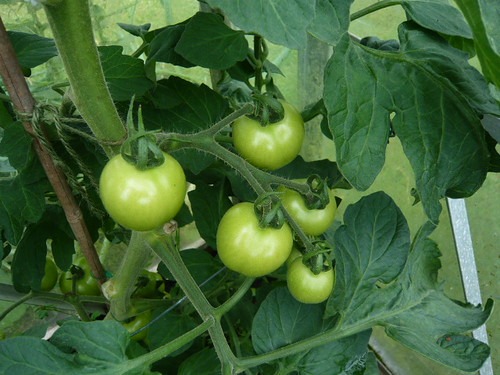
Green Tomatoes

There are few things that can beat the taste of home grown tomatoes. Growing tomatoes is not straightforward, they require constant attention throughout the year. However, they can be one of the most rewarding vegetables to grow. You will have no shortage of friends when you start to distribute home grown tomatoes…

Sowing Tomato Seeds

Sow seeds in Feb through to April. If you start them early they will need more early season protection, but, they will give a longer cropping season, rather than just a cropping season in late September / October.

In the UK, tomatoes will need to be grown under glass for most of the growing season. In the south, you will get some success from growing outside, but, you will gain a bigger crop by growing in a greenhouse.

Preventing Disease.

Tomatoes are susceptible to disease, especially when grown in greenhouses. These tips will help to prevent disease.

  • Avoid waterlogged soil
  • Replace the soil each growing season because many diseases remain in the soil. Use soil rotation techniques.
  • Keep the greenhouse clean and tidy of any dead and diseased leaves.
  • If any part of a tomato becomes effected with fungal rot make sure you remove it immediately to prevent it spreading.
  • Ensure good ventilation, remove lower leaves to give more air around the bottom of the plant
  • Deal with infestation of insects such as greenfly as they will help spread disease.
  • Disinfect the greenhouse at the end of the growing season with Jeyes Fluid

tomatoes

Watering.

  • After planting out your tomato plants do not water for 7-10 days so the roots start to seek nourishment and grow
  • Before fruits start to form, it is advisable to be moderate in watering. If you water and feed, you will just get more growth of the stem and they will be taller; this will not increase yields, but make them more unmanageable. However, once the fruits start to form it is important to ensure a good water supply, as it is essential for the formation of ripe fruits.
  • Tomatoes can need watering twice a day, if grown in growbags.
  • If you rely on a neighbour to water whilst you are away, make sure they are reliable and make sure they water in sufficient quantities.
  • Bury a plant pot alongside your tomato plants so watering is easy and it gets down to the roots
  • Tomatoes feed on roots near the surface and drink from deeper tap roots. Good watering makes for good tomatoes.

Feeding Tomatoes

Tomatoes are hungry feeders and definitely benefit from Tomato food during the formation of fruits once the first truss has set. This is particularly important if grown in grow bags

Support and Pinching Out.

For Cordon varieties of tomatoes, make sure you pinch out side shoots so that the plants focus their energy on a single stem. If you don’t you will get a lot of green growth and not many fruits. Also after about 7 branches develop, pinch out the top of the plant and focus on these 7 branches and their fruit.

This is an important tip, often forgotten by first time tomato growers. If you don’t have time to pinch out sideshoots, grow bush varieties.

Support your tomato plants with strong canes and string. They become very heavy with fruit.

Optimal Heat for Tomatoes

Tomatoes like a warm temperature. However, you should try to avoid temperatures above 85 F. In the height of summer, you will need to whitewash your green house and water down the floor of the greenhouse in the morning. The optimal temperature is around 75 to 80 degrees.

Tomatoes and Marigolds.

It is suggested growing marigolds or poached egg plants in between tomato plants to encourage hover flies who eat greenfly.

Tomatoes in grow bags.

Tomatoes in grow bags can be a good way of changing the soil every year. One tip is to use a double grow bag. cut a hole in the top of one and the bottom of another giving a double layer of growbag. This makes watering easier and gives the soil more reserves.

Popular Varieties of Tomatoes

My Tomatoes 2012

  • I like variety and am growing 5 types of tomato this year.
  • Moneymaker is my main cordon variety that I will keep in the greenhouse and pinch out.
  • Sunbaby yellow cherry tomatoes will go in the greenhouse along with the old favourite Gardeners Delight.
  • Garden Pearl is a new venture for me bred for hanging baskets I will try this cherry tomato in a container.
  • I expect least from an outdoor Marmande a beefsteak variety.

Cherry-Tomato-Plants_Autumn__55843
Cherry-Tomato-Plants_Autumn__55843 by Public Domain Photos CC BY 2.0

Gardening Holidays to Dream About

Gardening Holidays to Dream About

Real gardeners don’t want to go on holiday between April and September as there is too much fun to be had in the garden at home. There are other matters that come into play and well planed holiday can also give a keen gardener new interests and ideas.

Temptations are now wide spread in the form of organised tours
Alternatively you can make your own arrangements which retains flexibility and the opportunity to please other members of the family. In addition to UK resorts like  Cornwall and the Scilly Isles there are many hidden gardens in The Languedoc region of France, Monet’s Garden at Giverny, Gardens of Tuscany, the Italian Lakes, Sorrento, Ischia,  and Green Spain to list but a few.

Soil Management for Drought Conditions

Soil Management for Drought Conditions

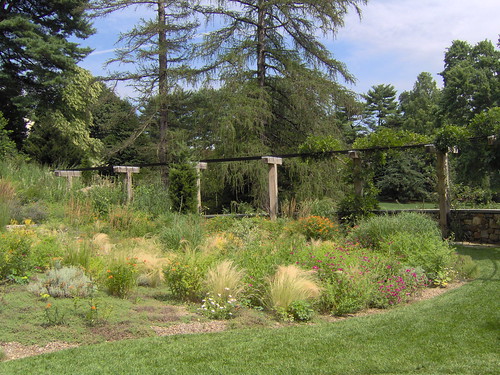
Dry garden with arbor

Much is said about collecting and conserving water during drought conditions. Careful management of your soil and garden structure can achieve many aims without recourse to extra water.
Increasing your soil’s water holding capacity and reducing the evaporation and consumption of water will make significant management improvements during drought conditions.

Soil Conditioning

  • Dig in organic matter which can dramatically increase the soils water holding capacity.
  • Mulch heavily – 3-4″ of composted bark or garden compost reduces evaporation and discourages weeds.
  • Do not walk on heavy wet soil in winter. This causes compaction damaging the structure and reducing the capacity of the soil to hold water.
  • Stop digging or cultivating soil by the end of March. Hoe only the weeds to reduce evaporation.
  • Erect barriers to stop valuable dry soil from blowing away

Management of Growing Conditions

  • Catch ‘run off’ on slopes by building up a soil damn to keep the water we do get.
  • Build a water retaining depression around plants to form a ‘water saucer.’
  • Remove weeds promptly as they suck water out of the soil.
  • Use fine compost in large pots and baskets with water storage granules

Soil & Crop Selection for Drought Conditions

  • Delay new tree and shrub planting until Autumn when more natural water should be available. If watering water at the base of the plant at cool times.
  • Choose drought tolerant plants like Mediterranean or arid region varieties.
  • Reduce ‘water greedy’ crops & bedding plants like begonia, fuchsia and lobelia to a minimum. Pelargoniums and Livingstone daisies need less water.
  • Lawns can be thirsty, keep the grass long to reduce evaporation and do not worry about brown patches.

Credits
Dry garden with arbor by ~My aim is true~ CC BY 2.0

Grow Dog’s Tooth Violet or Dog’s Tooth Lily

Grow Dog’s Tooth Violet or Dog’s Tooth Lily

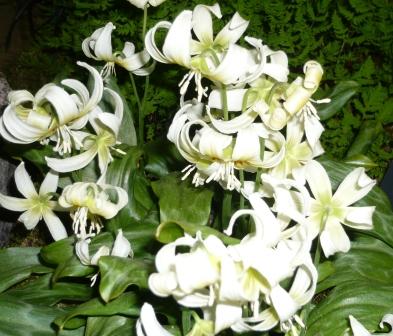
erithonium-2

Dog’s tooth violets are lilies that grow wild in cool shady locations and flower in spring. They can be grown to good effect in your garden.

What is a Dog’s Tooth Violet

  • The dog tooth violet belongs to the genus Erythronium and is a type of lily not a violet.
  • It gets its common name from the white oblong corm that resembles a tooth and the flower which resembles a violet.
  • Other names include trout lily, snow lily, Fawn lily or an adder’s tongue.
  • Dog’s Tooth Violets grow in shady cool conditions and flower at their best during March & April.

Varieties of Dog’s Tooth Violet

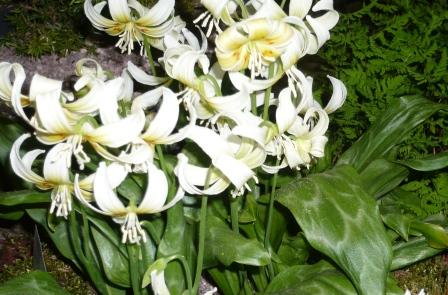
    Erythronium californicum ‘White Beauty’ is the easiest Dog’s Tooth violet to grow with its white flowers and a yellow centre. It is a classic spring flowering bulb with their Turk’s cap flowers that are an eye catching white. They delight in a humus rich soil either acid or alkaline and are good in dappled shade under deciduous trees in a soil that dries out in Summer. They like growing in similar conditions to Snowdrops, Trilliums and Cyclamen with which they partner quite successfully.

    Erythronium revolutum
    grows about 1 foot tall and has pink flowers. . The colour in this Dog’s Tooth Violet varies and it is worth getting a strongly coloured and vigorous form such as ‘Knightshayes’ Pink’. Buy seeds from Thompson & Morgan

    Japanese dog's tooth violet

    Erythronium ‘Pagoda’ is quite a vigorous hybrid which is easily grown with lemon yellow flowers and bronzed foliage. It has large leaf growth and looks a bit untidy after flowering but is amongst the best Dog’s Tooth Violet for trouble free growing. Citronella is another yellow variety to grow for naturalising.

    etithonium-3

    Erythronium Dens Canis (Dog’s Teeth) can be bought in mixtures and are excellent for naturalising given the right conditions of moist partial shade. They tend to be lower growing than the other species mentioned above and are often found in the wild.

    If you want to know more about Erythronium they are well covered in Gardening with Woodlands Plants

    Read about Sweet Growing Violets
    Book Cover

    Dog Tooth Violets

    Credits
    Japanese dog’s tooth violet by kamonegi_jp CC BY-NC-ND 2.0
    Dog Tooth Violets by RobMan170 CC BY-NC-SA 2.0

Senicio Daisies of the Pericallis Genus

Senicio Daisies of the Pericallis Genus

Last year I looked at the naming for one of my good doers under the title ‘Senetti, Cineraria or Senicio? No Pericallis’. Pericallis is the small genus of Daisy like flowers and Senicio is the name I will use until I know better.
I updated the post with my growing and flowering experience.

Now I have some colourful photographs of related Daisy plants growing as indoor pot plants.

sennico 026

Daisies with salmon petals with white inner rings and yellow pollen are one of my favourites.

sennico 024

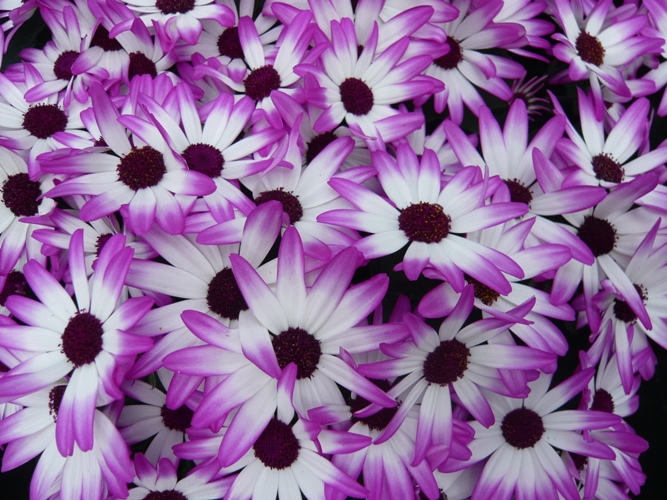
Senicio Daisies come in a variety of strong colours including deep pinks above, purples and electric blues.

sennico 021

Pericallis is not a common genus in horticultural use. These Daisy like plants have been bred of retail sale when in full flower so in those circumstances they need a trade name.

sennico 023

Whatever the name the inner disc displays the Compositae attributes of the daisy family.

sennico 018

Shocking Pink almost fluorescent pink on the plant below.

Senicio

Red Shoots of Growth

Red Shoots of Growth

Yes it seems strange but some of the new spring shoots in the garden are deep red.

Rhubarb buds

The bleeding heart or Dicentra Formosa is growing rapidly from red shoots to red stalks the plant will soon blossom with the heart shaped flower.

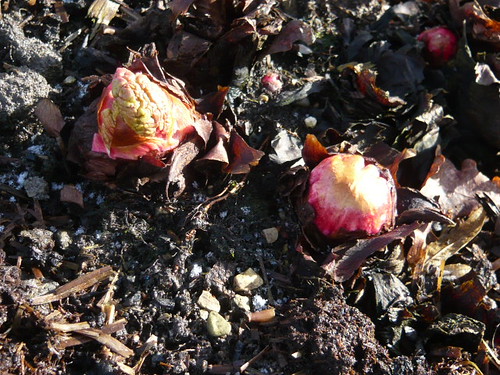
The strongest red and my favourite is the shoot of the paeony. When they are just breaking through the ground the look like little short domes of  a strong glossy red. Well established plants produce a large number of shoots which augers well for a show of blossom in June.

I have just seen frondy red stalks from a spirea in a neighbour’s garden and the red buds of my Rhubarb have just shot in to bright green leaf with swelling red stalks.

Don’t let anyone tell you spring is only for the yellows, look around at soil level and I hope you will agree.


Hot Compost Tips & Heaps

Hot Compost Tips & Heaps

layered aerobic compost

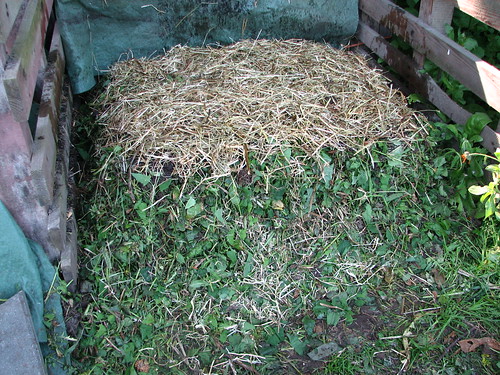
Heat in a compost heap is good. A hot compost tip will kill off pathogens and many unwanted seeds whilst it creates good friable compost.

What is a Hot Compost Tip

  • Hot compost heaps are just that, hot, they can be so hot you can’t keep your hand in (though why you should want to put your hand in the middle of a compost heap I am not sure).
  • The heat is generated by the decomposition process helped by all the biological activity. Microbes, worms and insects need food, air and water to generate this activity. They feed on the plant matter or one another so that takes care of food.
  • Much garden refuse contains enough water but if the compost is dry or the weather dries the compost out then some extra water can be added.
  • A hot compost process encourages quick breakdown and recycling of compostable waste.

Turning The Compost Heap

  • To get air into the compost as it rots down the heap needs to be turned after an initial decomposition period say 8-10 weeks
  • Special ‘Tumbler compost makers’ and spinners are now available so that compost can be turned within a plastic drum. You turn the drum daily or weekly to aerate the rotting compost. This speeds up the composting process significantly.
  • Turning the compost stops the top forming a crust that fails to rot
  • The compost should be turned so that any compost at the sides or back is brought into the middle so decomposition is even and homogenious
  • Turning the compost gives a chance for excess water to be redistributed so the heap doesn’t smell
  • If the heap is large turning the top two thirds on to a separate pile may leave one third compost ready to use.
  • Compost compacts and reduces in size by at least a third as it rots. Without turning it can be more compacted than your own soil.

Credits
layered aerobic compost by adstream CC BY-NC-ND 2.0

Percy Thrower a Gardening Celebrity

Percy Thrower a Gardening Celebrity

Percy Thrower 1913-1988

One of the first iconic gardeners Percy was involved with most forms of media. Best remembered for his BBC appearances he was one of the first ‘personality gardeners’. He started on radio ‘Gardening Club’ in 1956 then TV’s ‘Gardening World’ through the 1970’s. As a regular contributor to the magazine ‘Amateur Gardening’ in the 1970’s and the Daily Mail he gave tips and information to a new generation of hobby gardeners. These gardeners were less interested in self sufficiency but had started to consider style colour and the aesthetics of gardening.

Percy started one of the first garden centres which was in Shrewsbury and is still open today. In addition to a range of plants he sold garden furniture, plastic pond liners and the like. At the time he said ‘You come in for a packet of seeds and something else catches your eye’. The centre was one of the first to develop container grown roses that could be sold out of season. Orthodox planting was November to March but growing roses in large tin cans enabled the roses to be offered through early summer for immediate planting and effect. His tips live on in his garden centre web site an example of which is given below

Garden Tips by Percy Thrower

‘If you fancy planting a magnolia, now is the time to do it. Choose its position with great care. Allow the plant plenty of space and prepare the soil well by digging in plenty of good quality ericaceous compost such as Miracle Gro Azalea, Camellia and Rhododendron compost or John Innes ericaceous compost. Water regularly over the coming months while the plant roots get established. Firm the soil, and support.’

Percy Throwers early training was at Leeds Parks and Gardens department before eventually moving to ‘The Magnolias’ in Shrewsbury. He was the gardening advisor to Blue Peter. The BBC dropped Thrower in 1975 when he agreed to a contract with ICI, for a series of commercials. He did this in the full knowledge of what the repercussions would be with the BBC. He had a good commercial sense and used his celebrity status to good effect.

He also wrote many books, which were published by Collingbridge and later Hamlyn including his memoirs ‘My Lifetime of Gardening’. Check them out on Amazon.

Top Peony Photographs & Images

Top Peony Photographs & Images

Peony
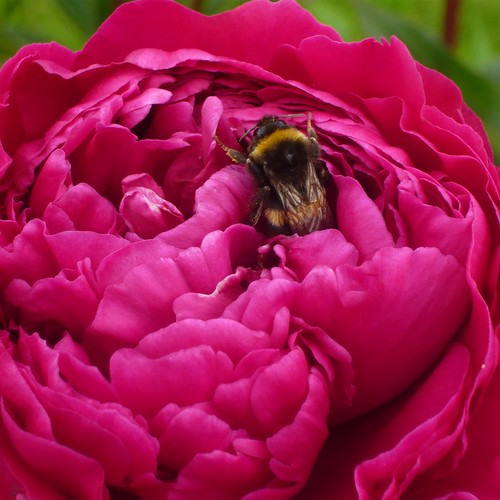
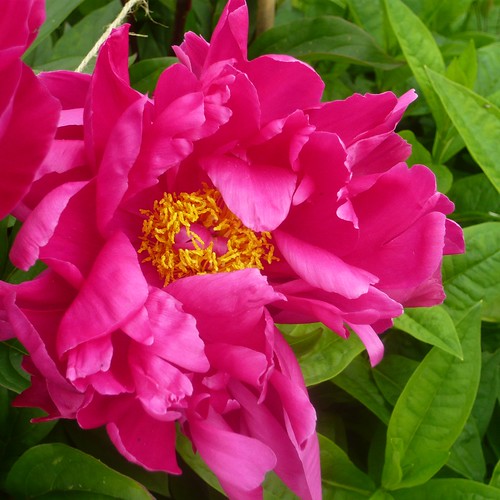
Busy bee image on my favourite magenta flowering Peony.
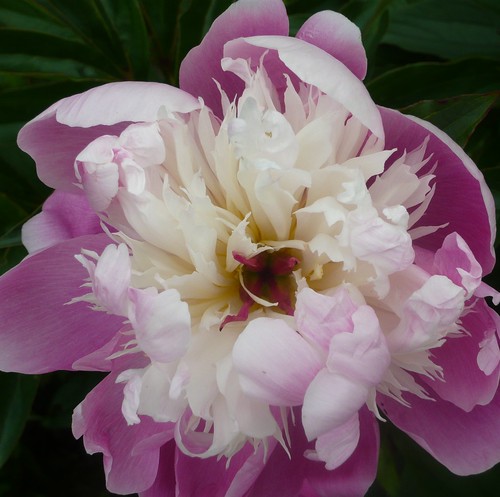
‘Peonies, Peony, Paeonia, Paeoniaceae In Profusion’ a Peony by any name would photograph as well!

Peony

Peony lactifolia a Bi-colour with pleasing habit and photogenic quality.

Peony

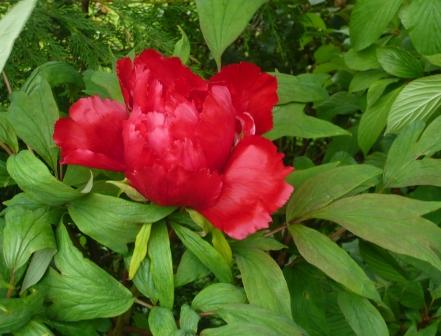
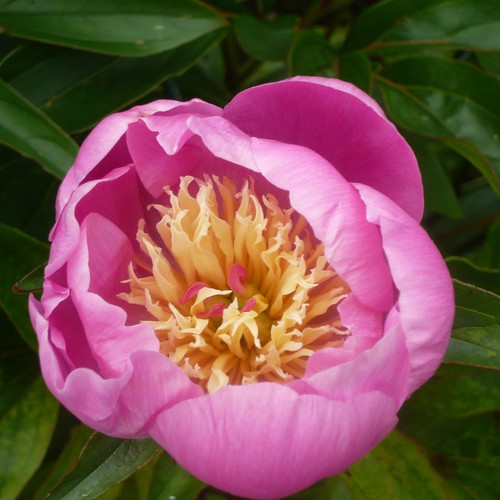
A single Peony that shows how well red flowers contrast with green leaves.

Frank Newbold peony

Peony Frank Newbold

Peony

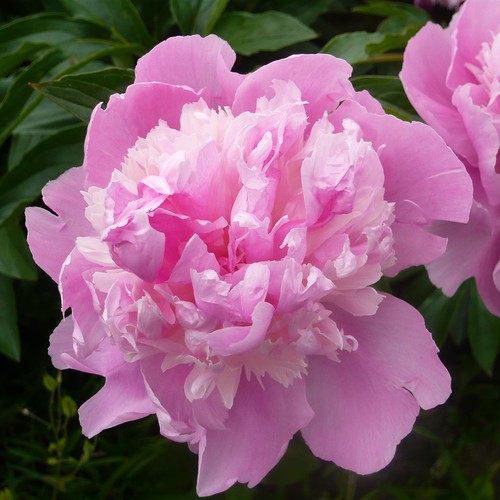
Peony Sarah Bernhart a fluffy pink photograph.

Peony Lutea

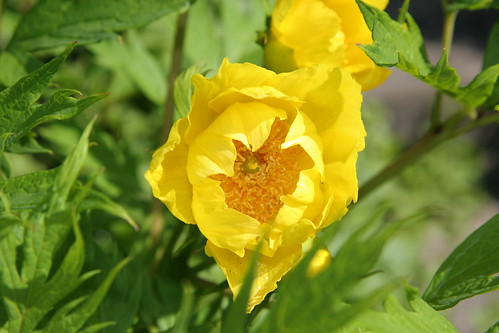
Peony lutea the parent of many Peonies and the best yellow image by far.
Growing Peony or Peonies

Tree Peony

peony

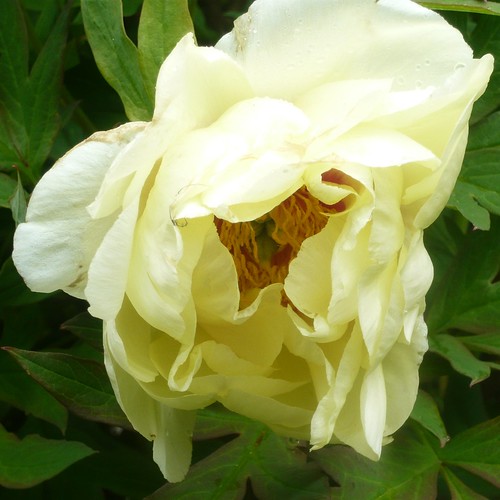
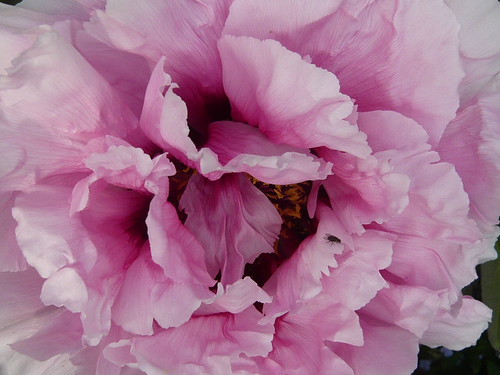
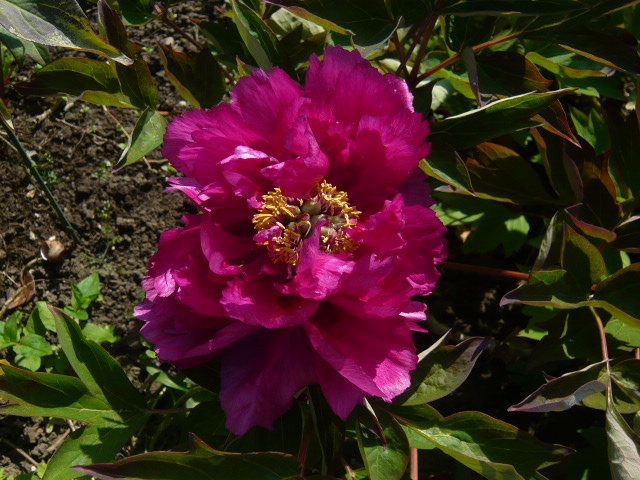
Intensly coloured, dinner plate sized flowers are an image to behold.

Peony

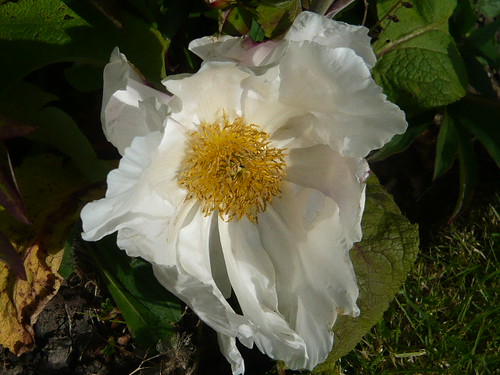
Pure and white from a root stock. Growing Tree Peonies

Peony

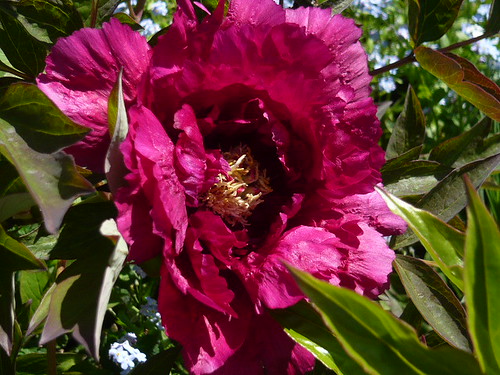
Less scented but still vivid photographs from this deep red-maroon.

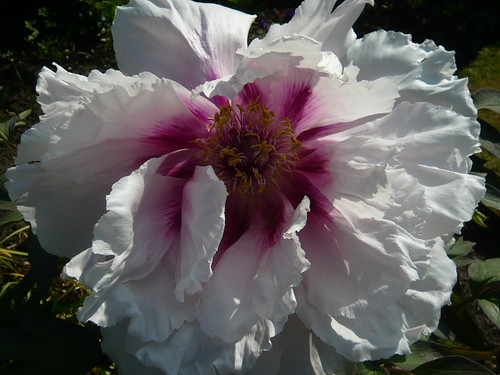
Tree Peony
Photograph credit Tree Peony by webmink CC BY-NC-SA 2.0

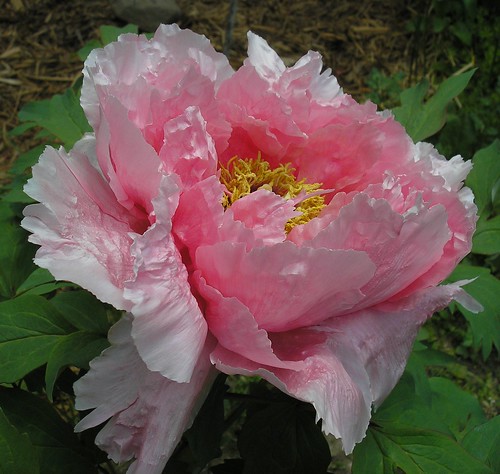
Pink Tree Peony

Photograph credit Pink Tree Peony by buttersweet CC BY-NC-SA 2.0

Book Cover
The Gardener’s Peony: Herbaceous and Tree Peonies by Martin Page
‘Over 200 photographs accompany detailed plant descriptions that will provide an invaluable reference source to peony enthusiasts….. Peonies are virtually unrivalled in a their ability to bring impact and drama to a garden. Once established they flourish for decades, bringing large quantities of flamboyant blooms in a magical range of hues and outstanding, often finely cut foliage. This informative guide highlights the best peonies for gardeners, paying particular attention to the tree peonies, herbaceous hybrids and the latest cultivars of Paeonia lactiflora. The Chinese have been growing tree peonies for 1600 years but these exotic plants still make a novel addition to the Western garden. A full-size plant bearing dozens of flowers is an awesome sight and the selection here includes the best of the Chinese and Japanese cultivar ranges, the classic hybrids and the sought-after hybrids raised by Arthur Saunders in the 1930s that range in colour from yellow to mahogany-red. Enthusiasts of herbaceous peonies will delight in the selection of Paeonia lactiflora cultivars along with the new complex hybrids between P. lactiflora, P. wittmanniana and P. macrophylla. Over 200 photographs accompany the detailed plant descriptions to provide an invaluable reference source. Advice on buying peonies along with detailed cultivation requirements for the individual groups will ensure success in the garden, while information on the history of peonies, conservation issues, and morphology complete this authoritative review. ‘

Also by Martin Page The Gardener’s Guide to Growing Peonies
Book Cover

Book Cover
Peonies: The Imperial Flower by Jane Fearnley-Whittingstall lavishly illustrated with paintings and photographs which are both informative and appealing.


The Peony Society formerly the British Peony Society link

Tree Peonies like Dinner Plates

Tree Peonies like Dinner Plates

tree peony

Fantastic, traffic stopping flowers at least 12 ” across are a wonderful feature of some Tree Peonies.

Tree Peonies

  • These slow growing shrubs reach around 4 foot high and wide.
  • They are drought tolerant but should not be made to compete with larger trees for water.
  • They are reasonably easy to grow in deep loamy soil.
  • In China they are mountain plants so survive our winters quite well.
  • Grafted shrubs are available in garden centres. They may send up suckers of herbaceous peonies that need cutting out (the leaves are greener and are not as finely cut as tree peony leaves).

Varieties of Tree Peony

  • I bought some varieties 2 years ago ‘Yu Lou Dian Cui’, above, looks white with pink overtones and ‘Shan Hu Tai’ is a strong pink really a red.
  • P Delavayi bears scented crimson flowers on 5′ stems whilst P lutea ludlowii has yellow flowers.
  • A good selection of Tree Peonies and Peony lactifolia are available from Peonies Thompson & Morgan

tree peony

Old Comments on Tree Peonies

Tree peonies These shrubs grow to about 4 foot square and are drought tolerant. Do not provide extra water or allow the roots to suffer from too much competition from other trees. P Delavayi bear crimson flowers on 5′ stems whils P lutea ludlowii has yellow flowers. They are reasonably easy to grow in deep loamy soil. In China they are mountain plants so survive our winters quite well. Grafted shrubs are now freely available in garden centres. I bought two varieties this weekend ‘Yu Lou Dian Cui’ what looks like a white with pink overtones and ‘Shan Hu Tai’ a strong pink. I have nipped out the flower buds that were showing and will wait until next year to see what colours I get.

Other Peony Comments
I am fond of the double peonies that flower so extravagantly in June. Over the years the plants give a great deal of pleasure lots of colour and a light and welcome spring perfume. That is not to say the single and specie Peonies are not also worth a place in the garden.

  • As plants mature they bulk up well and produce ever larger numbers of stalks and flowers.
  • Peonies dislike root disturbance and take a while to settle down
  • Provide a rich deeply dug soil well manured before planting and you will be rewarded for years
  • Water in dry summers and top dress in Autumn this well rotted compost
  • The single varieties include a yellow type Peony Mlokosewitchii
  • 6″ White flowers with yellow stamen P. Lactiflora varieties are readily available
  • The pink P. Sarah Bernhardt has an AGM award for the large scented blooms
  • The strong reds of the common Peony are very good for a cottage garden
  • Blooms make good cut flowers
  • Float one flower head in a bowl of water for an interesting table centre piece

Peonies and special fertilizer from Thompson & Morgan