Successful Staking for Perennials

Successful Staking for Perennials

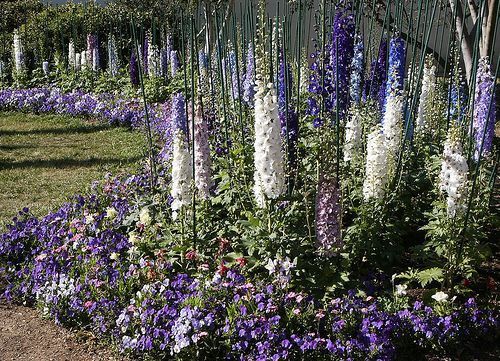
There is an art and a science to successfully staking your perennials and young plants. It can make a significant difference in a herbaceous border. Dahlias like space to themselves and can then produce a large individual plant, you may think these stakes are a bit optimistic.
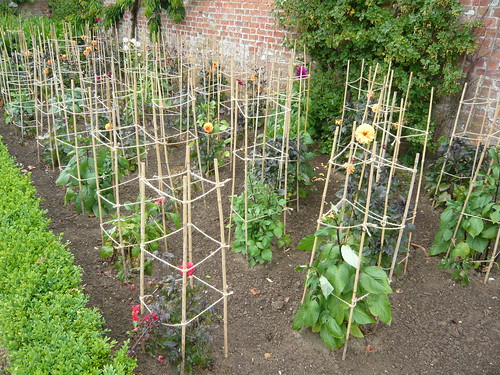
Dahlia stakes

How to Stake Perennials

  • Staking should be done when the plant is about two-thirds of its final size. This is often late April or May.
  • You need to judge how wide the plant will grow as well as how high.
  • Surround the plant with a ring of stakes about every 8-12 inches
  • If using Hazel stakes, weave the tops together to form a cage that the plant stems can grow through. Bought wire mesh can achieve the same effect and will be hidden when the plant completes its growth.
  • Cut the bottom of the stake at a sharp angle so it goes into the ground more easily.
  • The life of organic stakes can be increased if you shave off the bark and pith on the part of the stake that will be pushed into the ground.
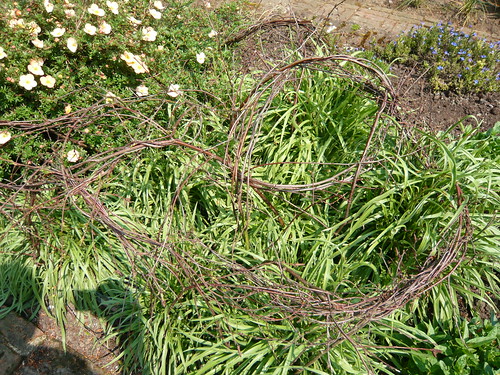
Newby Hall gardens plant support

Types of Stakes for Perennials

  • Birch, Willow and Hazel all make good stakes because they are pliable and twiggy.
  • Bamboo canes are popular and can last 2-3 seasons.
  • Plastic coated link stakes are designed to fix together. As long as the ground is even they work quickly
  • Do not forget garden twine to support the plant. I like to tie string across as well as round but that depends on the weight of plant material and flowers.
  • Tieing a stem to a single stake make a figure of eight loop around both to avoid cutting into the stem.
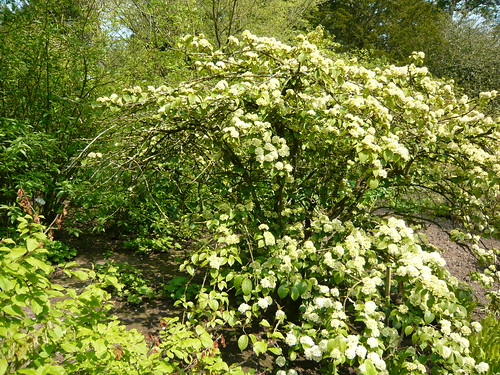
Newby Hall gardens 2012 116
This picture above is of a large arching cage built to support a climbing flowering plant like a clematis support. There are no hard and fast rules for staking but try to make the end result unobtrusive.

Below is an angled stake for use where the wind is high and you want the tree or shrub to be able to sway around to build up strength.
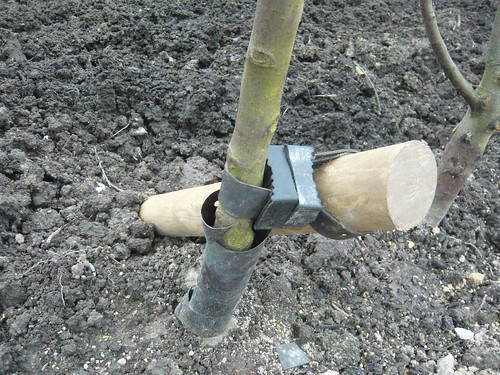
tree stake

Ten Plants for Sun Ten for Shade and Ten Tips

Ten Plants for Sun Ten for Shade and Ten Tips

You can grow in most kinds of light but some plants do better than others depending on the sun partial shade or available light. Knowing your conditions and matching them to the plants you use can increase the pleasure you get from gardening.
From a selection of thousands we give 10 plants for each light condition. Also below are our ‘Ten Tips about Light for Plants’

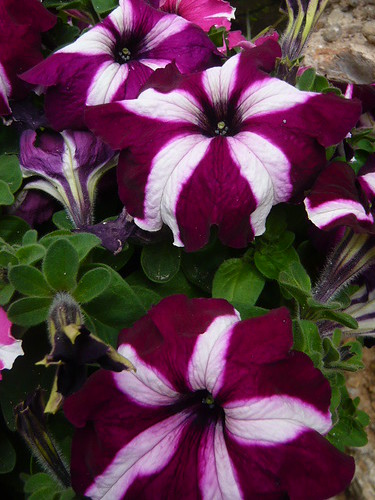
Petunia

Ten Plants for Sun

  • Petunia are treated as annuals that flower prolifically in a sunny spot.
  • Passion flowers show there true colours in the sun
  • French Marigolds, Tagetes and African Marigolds are vibrant after being baked in the sunshine for 6 hours a day
  • Olive trees and Figs need both the light and heat from the sun.
  • Lavender flowers best in full sun and this helps the natural scented oils to develop.
  • Sunflowers and Viola family members are plants that turn there flower heads to the sun to maximise the light they get.
  • Already I have covered 10 plants for full sun but add Fuchsias, Carnations and Phlox for cottage garden splendor.

Kew 327

Ten Plants for Shade

  • Shade plants are less likely to have strong coloured flowers but Foxgloves give a good splash of colour.
  • In deep shade think of good leaf shape and form from plants like Ferns or Hostas
  • Dog woods or Cornus are grown for their coloured stems but also have small flowers
  • Hebe like the variety Green Globe have a fresh green appearance in shade.
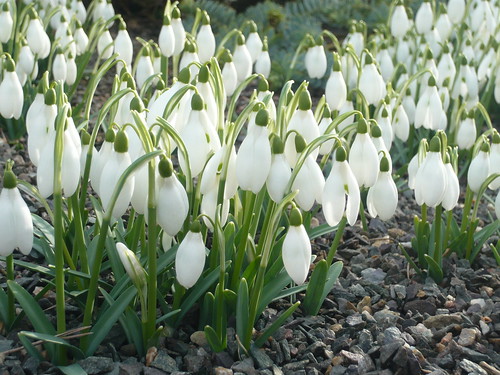
  • Snowdrops in late winter followed by Dicentrica Bleeding Heart offer show colour in shade.
  • Asters and Camelias will tolerate shade but prefer partial shade.
  • Japanese Acers, Bay trees and Box are OK in shade.

Burton Agnes Pocklington

Ten Tips about Light for Plants

  • All plants have an ideal exposure to light levels and ‘time in the sun’. Try to accommodate your best plants in appropriate areas.
  • As a rule of thumb 5 or more hours of direct sunlight is ‘full sun’, less than 2 hours is ‘shade’ and in between is ‘partial shade’.
  • No plants survive in total dark ( fungus and mushrooms may grow) but filtered dark will allow Ivy and Aspidistra to survive although probably not thrive.
  • Brightest coloured flowers are often those needing most sun but remember water also brings out the strength of colour.
  • Beware the shade created by taller plants and trees.
  • Shady areas can be quite dry so be prepared to water if needed. Most plants in shade like a fertile soil
  • Bought plants often have an indication on the label as to the amount of light/sun required. Read the label before you buy.
  • Dappled shade can be good for plants with ‘thin leaves’ like salad crops.
  • Compare other gardens to see what is planted where and how well plants do in shade or full sun.
  • Mediterranean and South African flowering plants generally enjoy sunny conditions at home so they expect that in our gardens

Low Maintenance Garden Shrubs and Trees

Low Maintenance Garden Shrubs and Trees

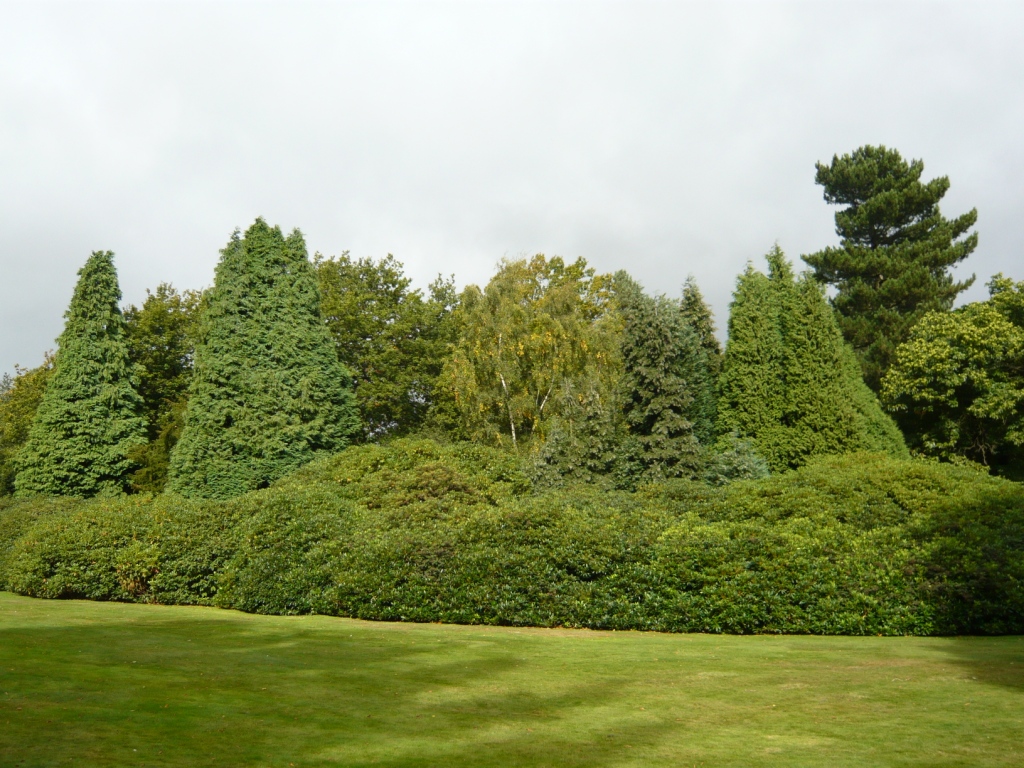
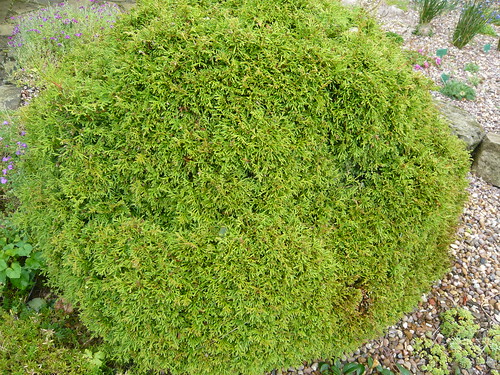
Dwarf Conifer

Shrubs heathers and conifers are great for reducing the amount of maintenance needed in your garden. Big shrubs can cover larger areas with height and spread and need very little care and maintenance.

Small Conifer for Low Maintenance

  • The prostrate forms of Juniper are good looking all year round and available in greenish blue needles as well as the more traditional greens.
  • Rockery sized Pinus and slow growing conifers are useful for filling gaps and do not become thugs in the garden for at least 10 years. With no need to prune and 10 years untroubled growth you can see why I class them as low maintenance and I do not even bother to feed them.
  • When a conifer starts to out grow its position and reach for the sky I turf it out and start again. It is not worth the time pruning and trimming although some topiarists would strongly disagree.

Berberis
Berberis can be low maintenance as the spines keep me away from the bush.

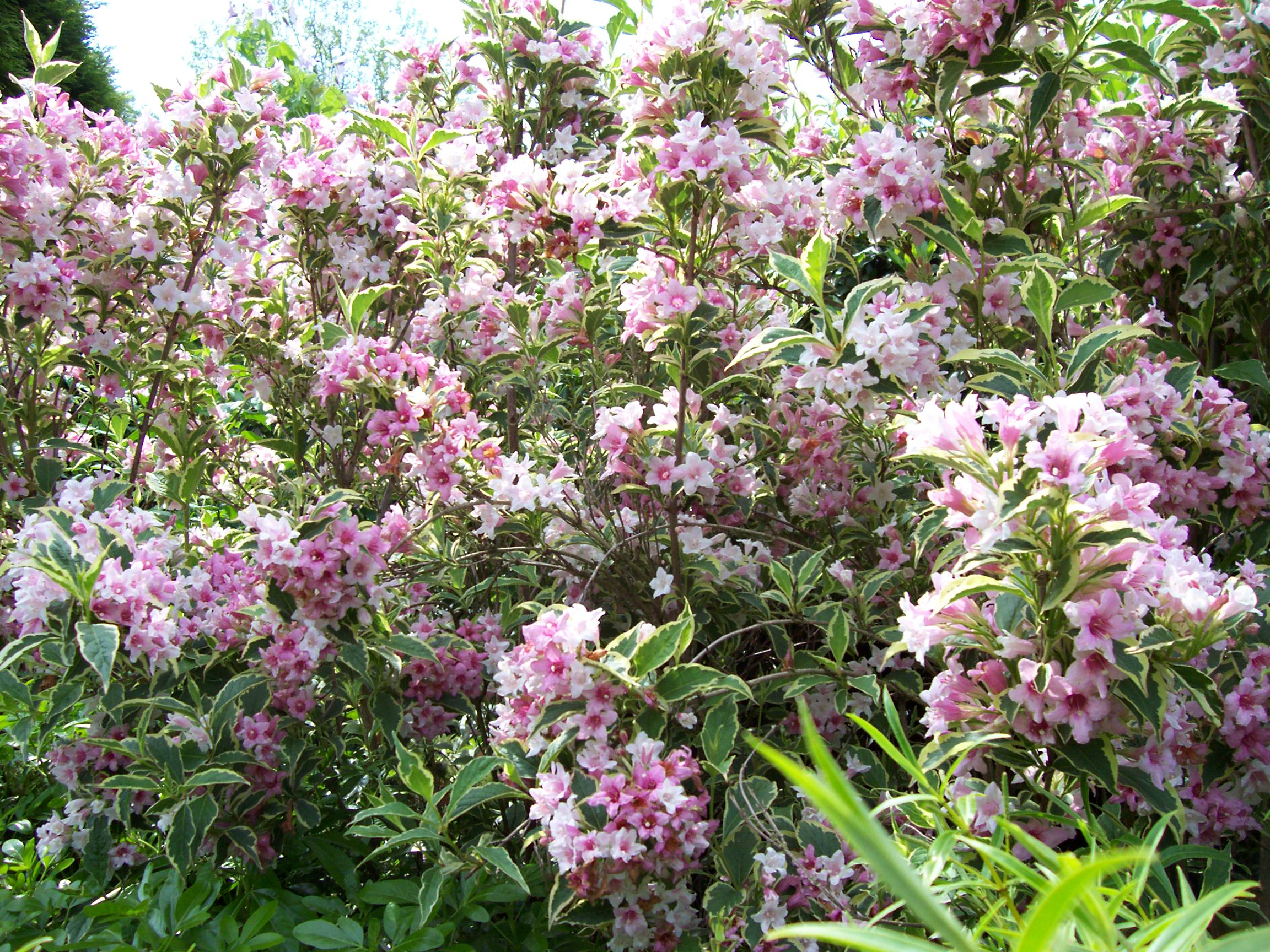
Weigelia Varigata

This shrub grows over six feet high and covers a four foot circumference. When in full flower it is very striking and the variegated leaves have interest through summer. It is easy to propagate from 12 inch long cuttings of semi ripe wood and it is a rapid grower reaching good proportions in two years. Other varieties like Bristol Ruby forsake variegated leaves for very strong coloured flowers in June and July with a late show if you cut off the old flowers but for low maintenance don’t bother.

Varigated Weigelia in the sun

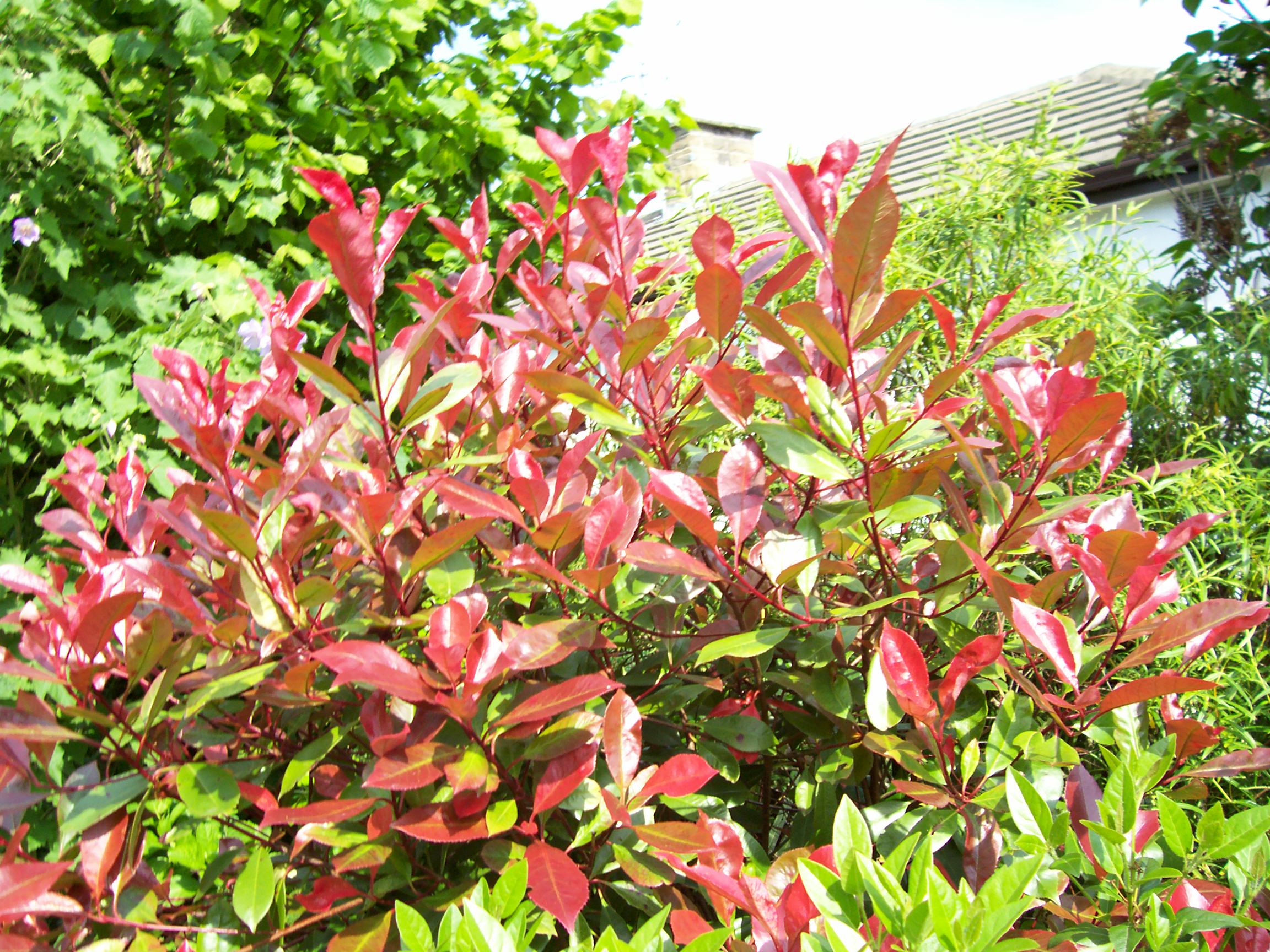
Photinia Red Robin

This is a shrub that can be left to develop or trained up a single stem. It is part of a family of Photinias that include small trees. For this variety of Photinia fraseri five feet is a reasonable size but it will continue to grow to a hight and spread to 10 feet. The shiny evergreen leaves are bright red in spring and apart from the danger of a bit of frost to the new leaves the shrubs are hardy. Again I don’t prune my photinia but when it gets to large i will cut it back which will encourage more red leaves at the expense of flowers

Two year old Photinia

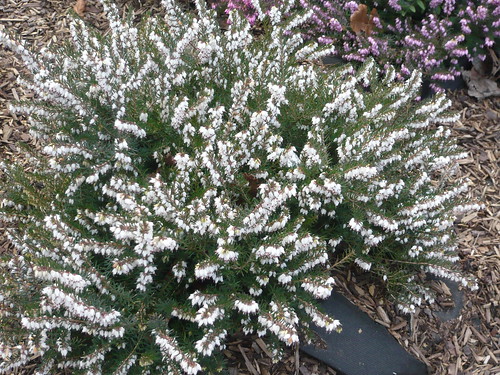
Heather can be very effective ground cover with low maintenance needs. They do benefit from having a trim after flowering.

White Heather

I find Osmanthus is slow growing and needs no pruning and little maintenance.

Three Coloured Shrubs with Photos

Three Coloured Shrubs with Photos

Shrubs

Sorry if you feel badly done too by the head line. The shrubs in question major on one colour but as there are three shrubs I called them three coloured shrubs. It seemed logical at the time but I recognise you could have been expecting tri-coloured shrubs.

The red leaves of the Photinia fraseri is often called Robinia which is really best reserved for the False Acacia or Robinia psuedoacacia ‘Frisia. In the spring the new waxy leaves are a vibrant and shiny red only slowly aging to light green. This plant copes well in the shade in a clay soil. I give it no special treatment and it forms a key part of my low maintenance area.

Behind the Photinia fraseri is another garden stalwart the Lilac. This small tree is just coming into flower and with a bit of sun each blossom will open a lighter colour and almost match the sky behind. As with the other shrubs here the Lilac likes the clay soil.

The Berberis Julianae has been very good this year which I put down to the sunny dry March and the cooler climate since then.

Shrubs

The angle of this photograph has changed and emphasis is placed on a white Hebe still to flower and the conical evergreen Picea.
The shrubs at the front cover the trunk of the Lilac that can be a bit uninteresting other than when the Lilac is in blossom.

Do not forget the evergreen shrubs like Osmanthus which has red or white young shoots often with colour variations to go with the leathery green leaves.

Courgettes, Gourds, Marrows and Squashes.

Courgettes, Gourds, Marrows and Squashes.

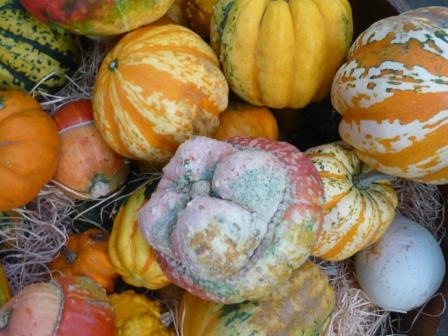
gourds

I have tried several varieties of Curcurbits this year but still haven’t got around to Cucumbers and Melons.

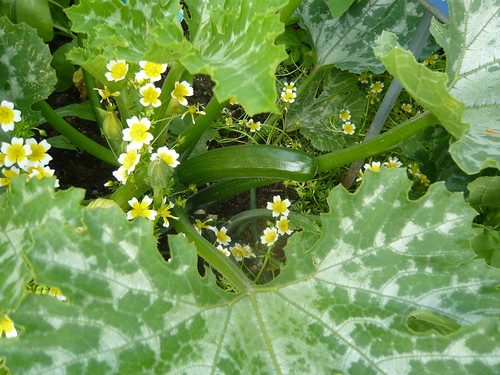
Courgette and Egg plant

Courgettes

  • I have planted one in half a grow bag cut across and stood on its end to keep it free of slugs (I hope) and make it easy to jeep watered.
  • The last bucketful from my old compost heap has gone under another ‘Green Bush’ courgette as they are voracious feeders and need some water retention within the soil.
  • An old trick was to grow courgettes on the top of a mound (of old compost) so the leaves did not become water logged and start rotting.
  • Courgettes are a family favourite vegetable when picked small and fresh and you can even eat the flowers.
  • Courgettes are of course young Marrows and if left to grow they will swell and eventually produce seed. In many varieties the flavour and texture suffers so I pick mine young.
  • Courgette seeds at Thompson & Morgan

Pumpkin

Gourds & Pumpkins

  • As a child I wanted to grow the exotic shapes colours and textures of the gourd family but seldom achieved a good crop.
  • In many cultures the fruit of the Gourd is used as a container or vessel.
  • Plant the seeds on their side so water runs away from the flat centre.
  • Some varieties to try include ‘Autumn Glory’ an attractive climbing/spreading variety, ‘Dinosaur’ a bottle-shaped gourd with wrinkled green skin, ‘Speckled Swans’ Intriguing gourds with lifelike crooked necks that can be dried and painted or  ‘Russian Dolls’ that can be harvested at various sizes, dried and painted.
Tips for Growing Spirea Japonica

Tips for Growing Spirea Japonica

spirea-goldflame

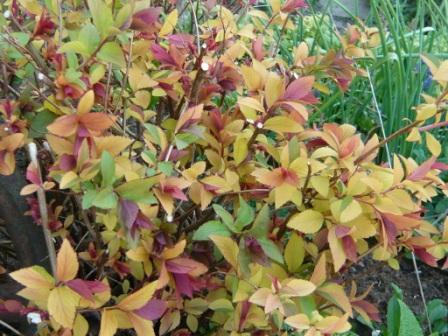
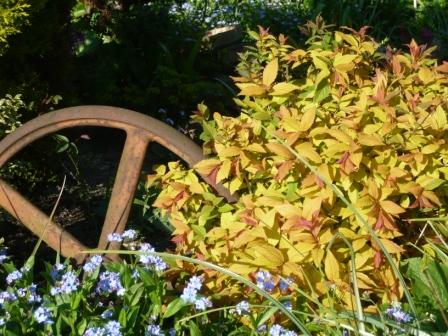
I was lucky to get some old cast iron wheels for the garden and I planted a Spirea ‘Goldflame’ close by to get my ‘Wheels on Fire’. In Spring the foliage is the main attraction but when the shrub blossoms the bees will be an added attraction.
This plant grows to 3 foot but I then prune it down hard so it can’t get any larger.

Tips for Growing Spirea

  • Beginners tips on Spirea
  • Buy dormant plants in containers for planting between autumn and spring.
  • Avoid buying plants that are too large or pot bound.
  • Plant in full sun and water during dry periods for the best results.
  • Plant roots can be divided in late winter to increase your stock of plants.
  • Prune to 1″ for more flowers or halve the length of stems for a more dense bush.
  • Spirea as a genus of flowering shrubs has around 100 species and hybrids cultivated by gardeners.
  • Spirea is a hardy genus that will grow almost anywhere.
  • Plants will tolerate part sun or shade and even poor soil.
  • Pot bound plants do not transplant very well so buy them when dormant and check the container by tapping the plant out.
  • Spirea japonica are easy to care for, fast growing shrubs with a floral interest to add to the strong leaf colour in Spring and Autumn.

Spirea

Spirea Varieties and Colours

  • Spirea japonica flower for 2-3 months in pink and white clusters of very small florets.
  • ‘Anthoiny Waterer has young cream and pink leaves and red flowers.
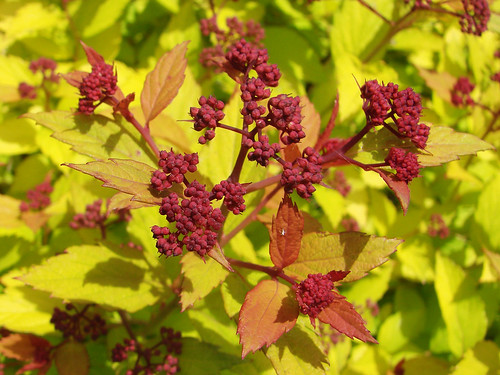
  • Golden flame is the variety shown above.
  • Nana and little Princess are smaller varieies 1-2′ tall.
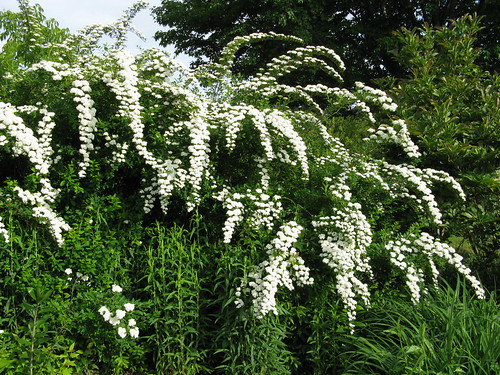
  • Bridal wreath Spirea Vanhouttei has masses of white blooms upto 6 feet high.


Images from Google

You may also hear plants in the spirea genus referred to as meadowsweet. These plants have small oval leaves which may be toothed to lobed, and they produce profusions of white or pink flowers in the spring and summer. A healthy spirea will bloom so profusely that it looks like an explosion of flowers in the garden, producing delicate clusters of small flowers. In the fall, spirea shrubs drop their leaves, returning with fresh green foliage in the spring. Read complete article on the Wise Greek

Spirea prunifolia, Bridal Wreath Spirea
Credit
Spirea by edgeplot CC BY-NC-SA 2.0
Spirea prunifolia, Bridal Wreath Spirea by KingsbraeGarden CC BY-NC-SA 2.0

Can You Gardening Green with Glyphosate?

Can You Gardening Green with Glyphosate?

Book Cover

Can you be a green gardener if you use Glyphosate?
Well I have come across one garden problem that is best tackled by the application of Glyphosate

Creating a New Kitchen Bed from a Turfed Area

  • The top mantle of your soil is the richest in flora and fauna.
  • This top soil is too good to be turned over and buried or sliced off for loam making.
  • An application of Glyphosate is the lesser of many evils and keeps the soils micro-organisms in tact where you need them.
  • Plants love the fibre left by old grass roots as do the earthworms.

Green Alternatives to Glyphosate

  • Black polythene can be laid over the new plot. It must exclude all light and be left down for at least a year.
  • If you must remove the turf, stack it face down and add a layer of manure every 12″. It will make good loam and a base for planting new fruit trees once it rots down.
  • I have had no reports about the flame thrower treatment but if you want to avoid all chemicals this may be the way to go. Initially give a light burn to the leaf surfaces, then follow up several days later with a stronger burn. You may also need subsequent burns for pernicious weeds.

Facts about Glyphosate

  • Glyphosate is a strong, systemic weed killer for stubborn, deep-rooted weeds.
  • It will not damage or leach into the water table
  • Glyphosate kills annual and perennial weeds leaving the area ready for replanting
  • Ground can be replanted 7 days after treatment
  • Children and pets will not be harmed once treated areas are dry
  • Glyphosate is biodegradable and quickly breaks down on contact with soil.

Glyphosate from Amazon“>Book Cover

Can you be a green gardener if you use Glyphosate?
Well I have come across one garden problem that is best tackled by the application of Glyphosate

Creating a New Kitchen Bed from a Turfed Area

  • The top mantle of your soil is the richest in flora and fauna.
  • This top soil is too good to be turned over and buried or sliced off for loam making.
  • An application of Glyphosate is the lesser of many evils and keeps the soils micro-organisms in tact where you need them.
  • Plants love the fibre left by old grass roots as do the earthworms.

Green Alternatives to Glyphosate

  • Black polythene can be laid over the new plot. It must exclude all light and be left down for at least a year.
  • If you must remove the turf, stack it face down and add a layer of manure every 12″. It will make good loam and a base for planting new fruit trees once it rots down.
  • I have had no reports about the flame thrower treatment but if you want to avoid all chemicals this may be the way to go. Initially give a light burn to the leaf surfaces, then follow up several days later with a stronger burn. You may also need subsequent burns for pernicious weeds.

Facts about Glyphosate

  • Glyphosate is a strong, systemic weed killer for stubborn, deep-rooted weeds.
  • It will not damage or leach into the water table
  • Glyphosate kills annual and perennial weeds leaving the area ready for replanting
  • Ground can be replanted 7 days after treatment
  • Children and pets will not be harmed once treated areas are dry
  • Glyphosate is biodegradable and quickly breaks down on contact with soil.

Glyphosate from Amazon0″>Book Cover

Can you be a green gardener if you use Glyphosate?
Well I have come across one garden problem that is best tackled by the application of Glyphosate

Creating a New Kitchen Bed from a Turfed Area

  • The top mantle of your soil is the richest in flora and fauna.
  • This top soil is too good to be turned over and buried or sliced off for loam making.
  • An application of Glyphosate is the lesser of many evils and keeps the soils micro-organisms in tact where you need them.
  • Plants love the fibre left by old grass roots as do the earthworms.

Green Alternatives to Glyphosate

  • Black polythene can be laid over the new plot. It must exclude all light and be left down for at least a year.
  • If you must remove the turf, stack it face down and add a layer of manure every 12″. It will make good loam and a base for planting new fruit trees once it rots down.
  • I have had no reports about the flame thrower treatment but if you want to avoid all chemicals this may be the way to go. Initially give a light burn to the leaf surfaces, then follow up several days later with a stronger burn. You may also need subsequent burns for pernicious weeds.

Facts about Glyphosate

  • Glyphosate is a strong, systemic weed killer for stubborn, deep-rooted weeds.
  • It will not damage or leach into the water table
  • Glyphosate kills annual and perennial weeds leaving the area ready for replanting
  • Ground can be replanted 7 days after treatment
  • Children and pets will not be harmed once treated areas are dry
  • Glyphosate is biodegradable and quickly breaks down on contact with soil.

Glyphosate from Amazon

Growing and Pollinating Sweetcorn

Growing and Pollinating Sweetcorn

Peaches and Cream | 191/365
Sweetcorn is one of my favourite vegetables. Even when it comes out of a tin it is OK but fresh Sweetcorn boiled then smothered in butter is a treat that makes these plants well worth growing.

Planting Sweetcorn (Zea Mays).

  • Each seed is the shape and colour of a pip from a sweetcorn cob. They germinate quickly in warm conditions.
  • Sow seeds in mid spring 4 weeks before the last frost in your area.
  • Plant out 18in apart in blocks rather than rows when all danger of frost has passed,
  • Sweetcorn seed is available from Thompson & Morgan
  • If you try F1 hybrids don’t grow next to standard varieties or the cross pollination may cause the cobs to lose some of its sweetness.

Pollinating Sweetcorn and Growing On

  • Pollen from the male flowers, above, falls or is blown onto the female flowers or tassels, below, which when fertilised will form the cob.
  • To get good pollen distribution it is worth growing plants in square or rectangular blocks not long rows.
  • Hand pollination can be tried, dust female tassels with an open male flower or run your hand down the male flower and transfer the pollen onto the female tassels.
  • Once the silks or tassels start to form on the cobs regular watering is helpful.
  • To check that the cobs are ready to be picked pull back part of leaves covering them and squeeze one of the grains, if the liquid is thin and creamy, not watery, the cob is ready.

Sweetcorn Mini Vegetables

  • Miniature sweetcorn Minor produces tiny corn cobs for Chinese cooking and casseroles and crops in 64 days
  • The baby corn of Sweetcorn Minor are harvested before pollination just as the ‘silk tassels’ begin to show.
  • Sow seeds in mid spring 4 weeks before last expected frost in your area, singly ½in deep in 3in pots of compost.
  • Plant out 4-5in apart in rows 8in apart when all danger of frost has passed in blocks of short rows rather than one long row.
  • A warm sheltered position in fertile, moist yet free draining soil is best.
  • Plants will still grow tall, the only thing miniature is the cobs.
  • Keep free of weeds and water regularly.
  • Harvest the tiny cobs when the silks first show above the husks. What you are harvesting is the immature corn on the cob.
  • Under ideal conditions each plant should bear 4-6 cobs. If you forget to harvest on time a normal sweet corn will be produced.

sweetcorn - mini pop

Eating Sweetcorn

  • Miniature cobs are ideal raw, steamed, stir fried or with dips.
  • Also very tasty cooked, then tossed in parsley butter or served with a cream sauce.
  • Maincrop Sweetcorn are good when barbecued or grilled.
  • Sweetcorn adds starch to chicken or fish soup.

There are ‘mini corn’, ‘super sweet’, ornamental and traditional sweetcorn varieties waiting for you to try.
I don’t recommend more than one variety per season to avoid cross pollination which makes the kernels tough and poor eating.

Tips for Tender Sweetcorn not Green Giant

  • Sowings should be kept warm and dark
  • Plants must be grown on in the warm & allowed to get to 4″ plus before being planted out.
  • Plant out in square blocks of say 7 by 7 plants so they can help pollinate one another
  • Plant with low growing beans or peas to provide nitrogen at the roots.
  • Give a feed of nitrogen when the tassels have formed
  • Test if the cob is ripe by pinching the top of the cob inside the protective leaves. If it is pointed it needs longer but if it is flat it is ripe.
  • The traditional ripeness test is to open and squeeze a kernel to see if it is milky
  • Eat sweetcorn soon after picking whilst the sugars are at there best

Credits
“Peaches and Cream | 191/365 by mfhiatt CC BY-NC-SA 2.0
flickr.com/4074/4850146990_2196ec5d68. and /4120/4850147310_da417ac2b8.
sweetcorn – mini pop by Lucy Crosbie CC BY-NC-ND 2.0

Photographs and Images of Purple Iris

Photographs and Images of Purple Iris

bearded iris

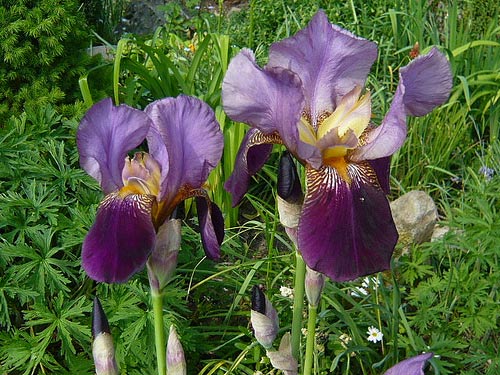
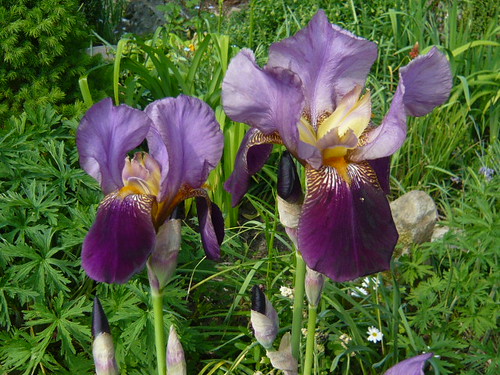
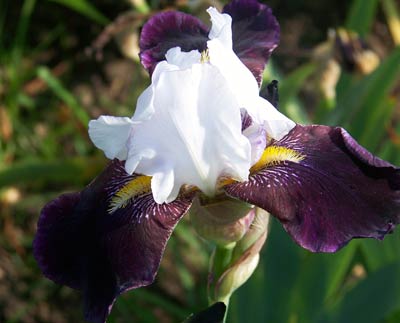
The Bearded Iris offers a huge range of colours. This is a deep purple variety growing in the Oxford Botanic Gardens. The furry hairs on the petal or ‘Fall’ give the plant the bearded image.

Bearded Iris do well in a sunny, well drained soil. They can provide years of spectacular colour in May – July.

Iris

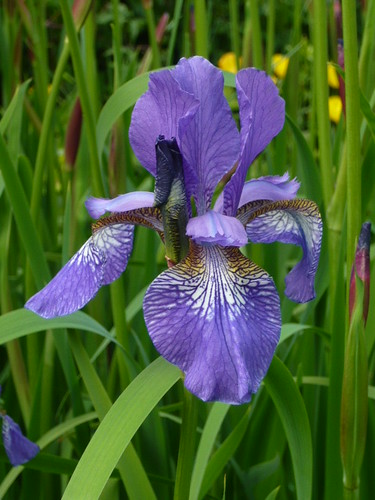
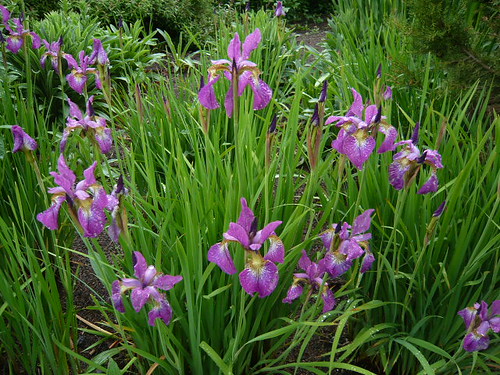
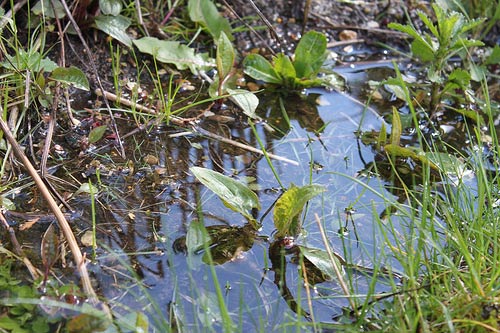
Other Iris are well adapted to grow in damp conditions.

Iris B

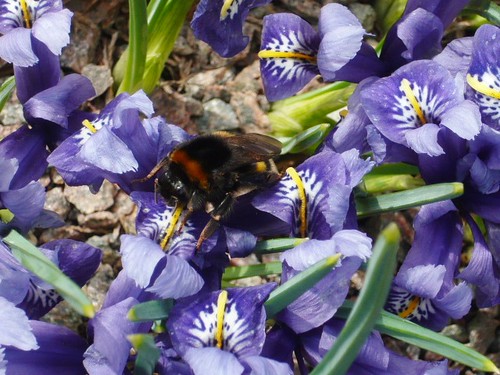
Bulb Iris are useful in rockery and Alpine arrangements and in this case are appreciated by passing Bees..

Iris

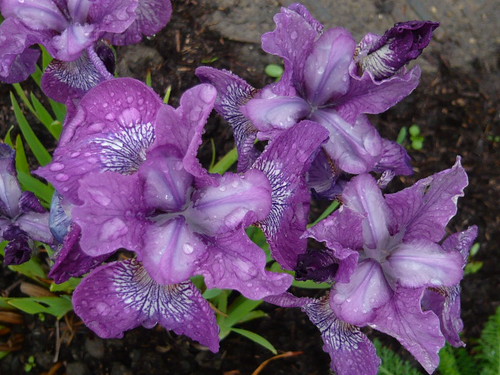
The next two pictures are taken as the rain stopped and the light improved.

Iris

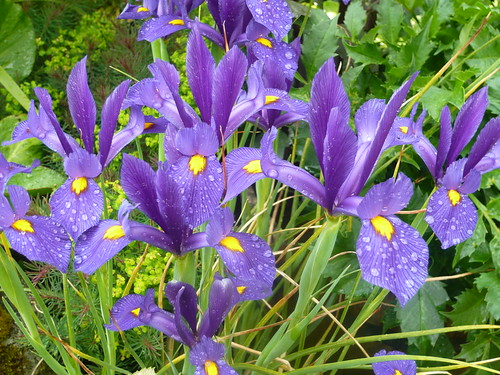
Some flowers veer towards the lilac in shade but just about fit into my purple patch.

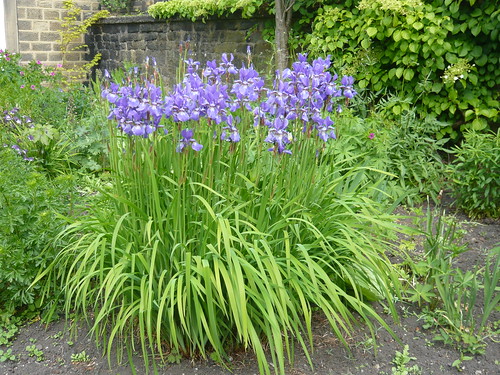
Iris
Iris are able to stand without staking as this large clump demonstrates.

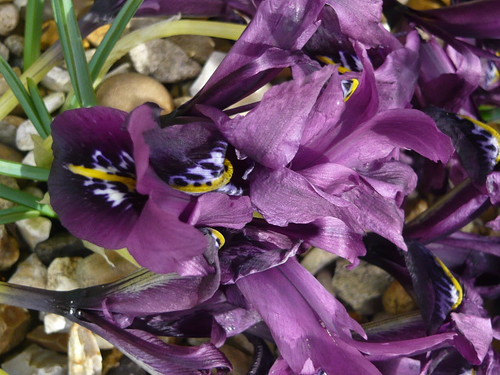
George Iris

Named varieties include George an Iris reticulata.

Iris reticulata

Another Iris Histroides looks similar to a Dutch Iris but smaller.

iris

Growing in the Oxford Botanic Gardens with the other Oxford beardies.
25 Iris bulbs from Amazon (the book people not the river).