Honeysuckle, Woodbine or Lonicera

Honeysuckle, Woodbine or Lonicera

You are my honey honeysuckle I am the vine……

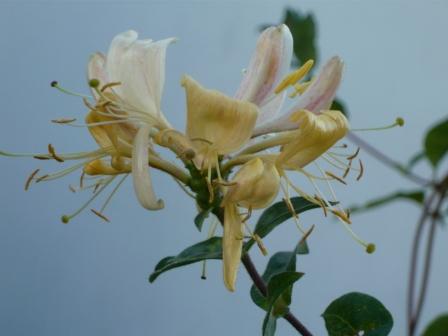
Woodbine (not the cigarette) is an old colloquial name for Honeysuckle the mainstay of the Lonicera family. It is a favourite of English hedgerows and now there are many varieties grown for colour and scent in a garden setting

Tips for growing Honeysuckle

Read More Read More

Moss in Your Lawn ? – You Are Not Alone

Moss in Your Lawn ? – You Are Not Alone

The dry spell may have stopped your moss in it’s tracks but beware once mossy always mossy.

Lawn Leaves

After a wet winter it is a good if your lawn has no moss but it is unlikely. The yellower green patches on the photo above are where the moss is beating the grass.

Moss Thrives in Lawns

  • If the ground and soil under the lawn is compacted
  • Waterlogging or poor drainage encourages lawn moss (and moss in other areas too)
  • The grass that has been scalped by the lawn mower which cuts too short is an open invitation for moss to grow
  • If moss has previously been growing it is likely to return.
  • Where the lawn is old and a thatch of dead grass has built up and not been raked out or aerated
  • Moss will grow if the lawn is in the shade or overhung with trees, if the soil is impoverished or if you are an unlucky gardener.

Book Cover

Treatments and Tips

  • Don’t try to compost old moss – a normal compost heap won’t help as moss wont rot it just goes into suspended animation. So the moss will be returned with the compost
  • Read More Read More

Cold Gardens and Winter Tints

Cold Gardens and Winter Tints

With gardens still sweltering in the summer heat it seems too early to plan for cold winters but better safe than sorry.

    Cold Garden Locations
    A survey of gardens which had the lowest temperatures that most frequently dipped below freezing point include Norfolk and Suffolk, Lanarkshire and Highlands and surprisingly Letchworth, Watford and Royston in Hertfordshire. Perhaps it is not a surprise to those who live there.

    The mildest gardens were in Cornwall, Devon, Somerset and Bath – no surprise there. More surprisingly St Andrews, South Uist in the Hebrides and Newcastle would not have featured in my list of mild gardens. The mildest only had three weeks when temperatures fell below freezing.

    Winter Tints – Top Five

  1. Not all evergreens actually stay green through winter but they do tend to keep the leaves like Mahonia japonica which has coppery tints and early white blossom.
  2. Read More Read More

Fritillaria Bulbs October

Fritillaria Bulbs October

October is a good month to buy and plant bulbs to flower next spring and Fritillaria is a species that you may want to try. There are over 60 species and varieties listed on the Pacific bulb society web site but only some of these will perform in your garden.

Fritillaria have elegant drooping bell shaped flowers and look good naturalised in grass or grown in a rockery. The most common colours are cream, purple, brown and purplish rose.

The Snakeshead Fritillaria above is comparatively cheap and easy to grow. The small species up to one foot tall include Assyriaca Uva Vulpis, Davisii and Elwesii.  The Imperial Fritilliaria on 3 foot stems with a cluster of drooping flowers often come in stronger colours of yellow, red and orange and are sold as Fritilliaria Lutea/Rubra/Aurora.
‘Snakes head fritillaries are a sight to behold when naturalised in damp woodlands or informal areas of grass. These charming wildflowers are protected in the wild and rarely seen in their native meadow habitats. ‘

Read More Read More

Colourful Climbers and Creepers

Colourful Climbers and Creepers

‘Late at night when sleeping poison ivy comes a-creeping.’

As Autumn beckons I thought it worth reviewing the top climbers and creepers for that startling colour that encourage passers buy to stop and gawp.

Virginia Creeper Parthenocissus quinquefolia is a large-leafed vigorous grower with brilliant orange and scarlet leaves in autumn.
Parthenocissus Veitchii ‘Boston Ivy’ from the same family is a vigorous self clinging vine also with rich crimson and scarlet leaves in autumn.

Vitis coignetiae Crimson Glory grape vine with green leaves turning crimson and scarlet in autumn with purple fruits.
Vitis ‘Brandt’ another hardy vine growing up to 25 feet. Large deep purple leaves and bunches of purple grapes in late summer.

Actinidia Kolomikta Chinese Gooseberry has young leaves that are tipped with a distinctive splash of pink and white. Not really an Autumn specimen but a good year round climber. To get fruit you need a male and female plant.

I would strongly recommend you avoid the Russian vine Polygonum baldschuanicum the mile a minute plant that strangles all in it’s path.

Ivy

Peas are Legumes Too

Peas are Legumes Too

What do beans, lupins, lentils, wisteria, peanuts and clover have in common? They like peas are all from the legume family.

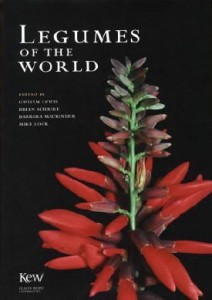
Despite photographing this plant if I could identify it I would not need to buy ‘Legumes of the World’ by Gwilym Lewis, Brian Schrire, Barbara Mackinder, and Mike Lock available from Kew
legu

‘This is the first comprehensive guide to world legumes, describing and illustrating all 727 genera. Legumes contribute enormously to the world’s economy – through food and drink, pharmaceuticals and medicine, biotechnology, building and construction, textiles, furniture, horticulture, paper and pulp, fertilizers, chemicals, pest control and ecotourism. This book spotlights as yet untapped economic potential and for the first time places genera in a modern systematic framework.
Containing over 1,000 illustrations – colour photographs and line drawings – this is a lavish yet much needed reference for botanists and other professionals involved with legumes.’ Ordered from Kew Books at Kew gardens this book costs a marrowfat sized £59.95 but it is still cheaper than Amazon.

Other Resources

Read More Read More

Best Pond Tips

Best Pond Tips

Water Lilies
If you are thinking and planning to get the best out of a new or rejuvenated pond than consider these quick tips

Design Tips

  • Design your pond so there are shelves around the edge of the pond for shallow and marginal plants. Water Lilies need to be planted at least 18″ deep.
  • If your pond has sheer sides you may want to grow marginal plants by submerging some staging (a weighed down inverted box). This can also be used as an escape route for amphibians to get out of the pond.
  • Keep good pond hygiene by preventing leaves and debris falling in the pond. Every two or three years have a good clean out reintroducing a small quantity of sludge at the bottom to get the process going again.
  • Locate the pond where you can see it preferably in a sunny position well away from any Pine trees. Koi fish need a shaded location.
  • Ornamental ponds may be best located in an elevated position to avoid run off filling the pond.

Book Cover

Planting Up

  • Plant in containers that you can hook out for plant maintenance. You can use a wire coat hanger on a stick if you use a basket with open loops. Invasive plants are constrained by the basket and you can rearrange the planting during the year.
  • Use good garden soil or special compost for planting and put a heavy layer of gravel on the top of the soil.
  • Unconfined plants can look more natural and are often wild life friendly but less showy as ypour best plants need to be containerised.
  • Consider a mix of Deepwater, Floating, Marginal and Oxygenating plants. Deepwater plants like cooler water and the floating leaves create this in a way that supports more life forms and restricts blanket weed.
  • Water hyacinth absorbs pollution particularly from fish waste. Skim off and compost excess plants as they multiply.
  • Bog plants and waterside plants are optional depending on your design and space. For a bog look in drier soil use Hostas and Bearded Iris or Iris Pallida that look like Bog Iris.

Book Cover

Berberis Decidious or Evergreen

Berberis Decidious or Evergreen

Berberis

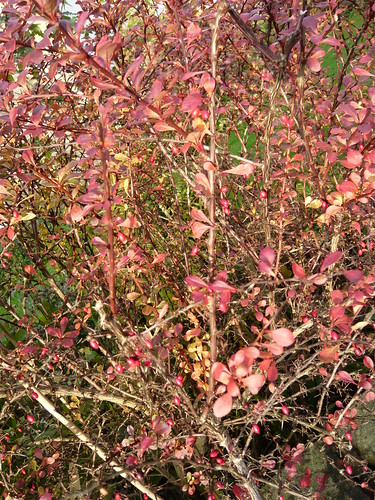
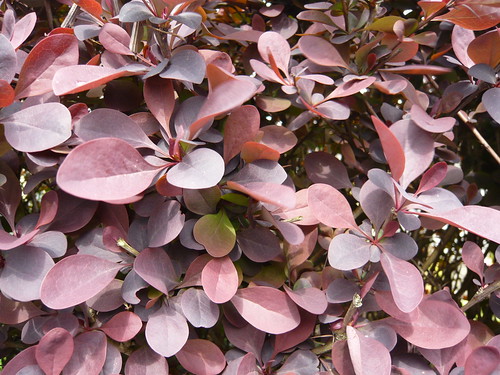
Your Berberis may loose their leaves or remain evergreen through winter. This purple leaved variety, Berberis Thunbergii has turned from very dark to red coloured leaves and after another frost they will be gone. The red berries wont last long either as they are feeding small birds which have already thinned them out. The spines will remain as a deterrent to unwanted intruders and fresh new leaves will reappear in spring.

Best evergreen varieties include Berberis candidula x carmine, Berberis dawinii (flowering orange see below) or one of the hybrid Berberis stenophylia.
Berberis and bee

Best for red or blue-black berries, include Berberis aggreata, Barbarossa, Micrantha, Berberis microphylla and Berberis buxifolia. Berberis vulgaris which used to be eaten in Victorian times plus Berberis heterophylla and Berberis darwinii are all worth considering for cooking or eating dried.

Best yellow flowered Berberis Dictyophylla, Berberis Koreana and Berberis darwinii.
Chose other Berberis varieties

With literally hundreds of species and varieties to select from you can experiment with a Berberis that is just right for your location. Many varieties are extremely prickly so be warned

Berberis

Book Cover

Decorative Bark on Trees

Decorative Bark on Trees

For texture and visual interest do not ignore bark. Some of my favourite trees have captivating bark that looks good through all four seasons.


When the leaves fall you get a chance to inspect the bark on your trees and shrubs. Some bark is outstanding and worth growing for it’s own sake.

Five Trees for Decorative Bark

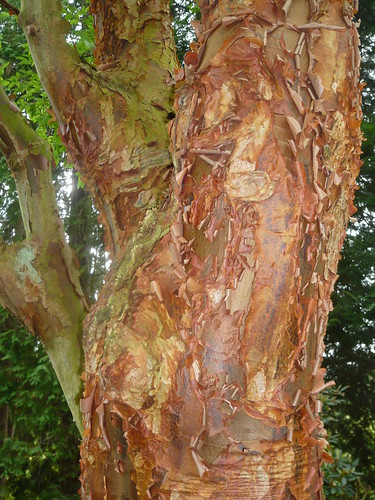
Acer griseum, paper bark maple, the outer bark peeling in papery flakes to show the copper-colored inner bark; opening leaves bronze colored, turning red or orange in autumn.

Paper-bark birch has shining white bark with large leaves turning pale gold in early autumn, making it more useful than other birches with colored stems.

Read More Read More

Plant Plants Together

Plant Plants Together

Massed planting, grouping and organised beds are just some ways of putting plants together to optimse impact.

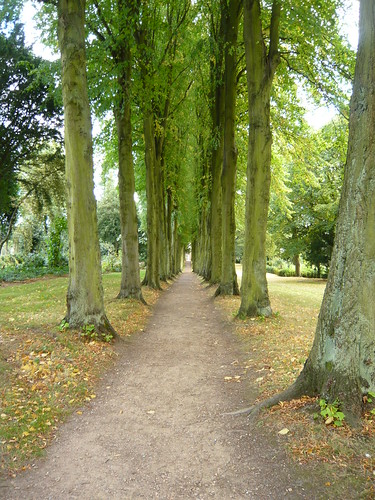
Sometimes a single plant looks a bit weak or out of place on it’s own but a group of one variety can vastly improve the overall image of your garden. This row of Lime trees is planted close together with a fairly narrow path in between but the effect is visually strong whatever the season.

Tips to Use Plants Together

  • When planting shrubs it is often said that groups of odd numbers 3, 5, and 7 have positive effects. There is more harmony and they are easier on the eye that way.
  • Read More Read More