Androsace Vitaliana primuliflora and it’s Other Names

Androsace Vitaliana primuliflora and it’s Other Names

How do flies smell? Not as nice as these flowers I be bound!

Fly on Vitaliana

This rock plant is a prostrate, evergreen perennial. The leaves are small, grey-green in appearance often enhanced by fine hairs. In spring  the scented, stemless flowers are buttercup-yellow which can smother the plant.

This fly found the scent on the open flowers much to his liking.

Naming The Plant

  • Androsace vitaliana, may now be the official name although I still call it Vitaliana primulifolia.
  • Historically it has been placed in various genera, including Androsace, Douglasia, Gregoria and Primula.
  • The prickly-appearing foliage is certainly reminiscent of a Douglasia, although the flowers are primula-like.
  • It is  a member of the primula family and was once known as the “Golden Primrose.”

Vitaliana primuliflora

Read More Read More

Easy Clematis Pruning

Easy Clematis Pruning

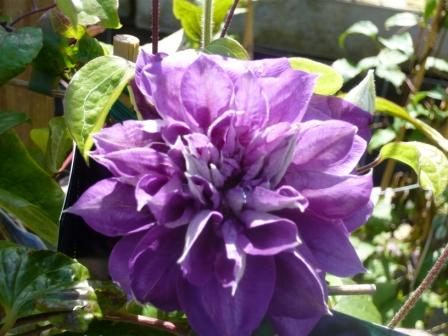
Do not sweat the problem of pruning clematis – do what seems right following these guidelines if you must.
c1

Easy Clematis Pruning Tips

  • Prune all Clematis in Spring, early Spring for late flowering Clematis that flower on new wood and late Spring after flowering for Clematis that flower on old wood.
  • The later in the year it flowers the harder you should prune it.
  • Treat your Clematis as a flowering shrub.

Read More Read More

Overkilling Slugs

Overkilling Slugs

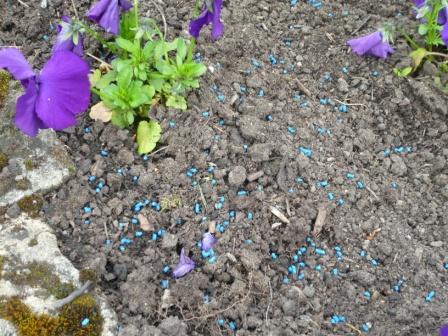
Slugs will feel blue after this diet.
growing-slug-pellets

Killing Slugs

This gardener has found a new way of killing slugs using pellets. I think it is called saturation bombing. Those slugs not hit on the head will die long before they have gorged on the little blue devils that have been broadcast around and over the Pansies.

If you use slug pellets I recommend little and often – two or three pellets near a small plant will be enough. Slug pellets work by being more attractive to slugs than the juicy green leaves. Except in heavy rain they should remain effective for a couple of weeks.

I have lost upto half of my Runner Bean seeds to mice and will have to sow again. A shame the mice won’t eat slug pellets.

On the bright side my sunken beer-laced slug traps are catching many slugs so I do not think the beer is totally wasted (and nor am I totally wasted).

Thrive in the Garden with Disability

Thrive in the Garden with Disability

newby-hall-009

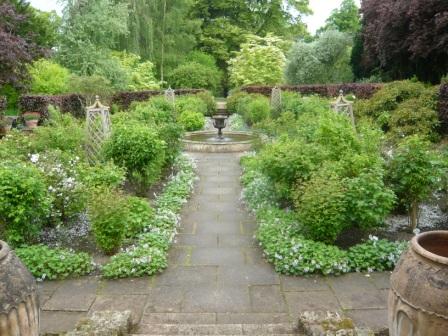
Thrive is a national charity that helps people with a disability to start or continue gardening. They have specific assistance for wheelchair users, those recuperating from heart disease or strokes and many other tips and assistance. I am indebted to them for these tips and ideas that we can all learn from.

Tips on Garden Design for all Disabled Gardeners

  • Garden layout can make a real difference to how you enjoy gardening. Depending on your disability, it might be easier to focus more on container growing. Make sure any ground level areas are low maintenance to keep the digging and weeding needed to a minimum. Plan plenty of seats around the garden to save your energy and have some shady areas where you can sit to garden on hot days.
  • Avoid large lawns and lawns with sharply curved edges as they will be more time consuming to maintain. Consider having a semi-wild lawn with mown paths to save time and effort. Lawns are difficult to manage so consider replacing some or all of the lawn with a hard surface.
  • Borders will be more manageable if you can reach across them easily. So make your flower borders no more than 2 foot wide if you have access from one side, or 4 foot wide if you can reach from all sides.
  • Containers and raised beds can look attractive and are ideal if you want to start gardening on a small scale. A raised bed can be raised just a few inches, or could be at a comfortable height for you to sit or even stand.
  • Ponds can be a delightful garden feature but be aware that maintaining a pond can involve heavy jobs like clearing weed, and open water can be a danger. A small raised pond might be safer and easier to maintain and it will be easier to enjoy sitting down than a ground level pond. Why not look at installing a low maintenance water feature instead of a pond so you can still enjoy the sound and visual interest of flowing water.
  • You’ll feel safer and will be able to get things done faster if all your paths are even, with a surface that gives good grip. A 3 feet wide path is recommended as a minimum. Changes in level are a common hazard in gardens so consider installing ramps.
  • Consider having a table outside for gardening jobs like seed sowing and potting up. A recess in the table will make it easier to reach things. Plan in water butts or stand pipes around the garden to save time and effort when watering.
  • Take time to choose any paving – it should be non-slip and non-glare.
  • Always choose safe power sources for any power tools or mower that you might want to use. All electrical equipment should be fitted with a residual circuit breaker.
  • Plan how you are going to move things around the garden. Twin-wheeled lightweight barrows, barrows to use one-handed, trolleys or flexible buckets are options that can save energy and strain. Choose a composting system that suits you – there are many different models and bins can be positioned at different heights to save bending.
  • Get rid of or avoid plants that cause you problems – rampant growers, plants that take up too much space, plants that are hazardous to you, or that cast too much shade.

Other Links

Royal Horticultural Society RHS ‘Gardening for All’
National Council for Conservation of Plants and Gardens ‘Conservation through Cultivation.’
Garden Organic National Charity for Organic Gardening.
BBC Gardening

More Spring Shrubs

More Spring Shrubs

Some of the first shrubs to flower, each year, produce the best show

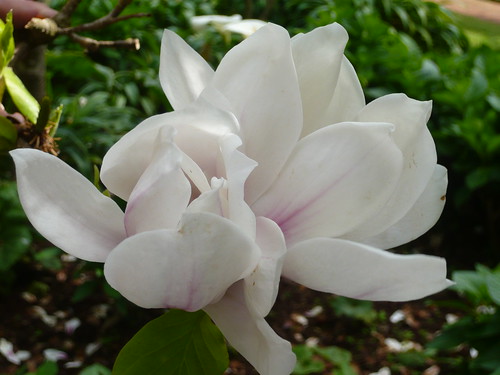
Magnolia 11

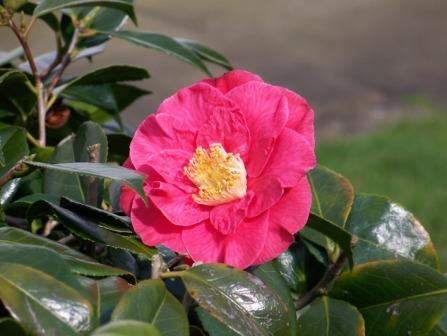
Magnolia buds are just bursting on the top picture. This single Camellia has a vibrant colouring but has dropped some buds. The Rhododendron is a shocking pink for this time of year but what showy flowers.

Magnolia

The Magnolia society promotes this astounding flowering shrub.

camellia

Camellia Bud Drop

Read More Read More

Gardening Society as a Christmas Presents

Gardening Society as a Christmas Presents

There are all sorts of presents you can give an avid gardener for Christmas. A concept present may be a small collection of garden ornaments or funny sayings. More seriously garden tokens are always useful.

Another present could be a subscription to the Royal Horticultural Society or a specialist plant or society or charity such as one of the following (other clubs are available):

I hope you aren’t spoilt for choice but if so there is still:

Lupins their Pests and Diseases

Lupins their Pests and Diseases

Dirty great clumps of greenfly can infest your Lupins.

lupin

Lupins can be grown from the seed you collect.
If buying a potted plant see what the colour and spike is like before you buy. A good plant will last several years with little fungal problems.
If you want a second flush of flowers it is best to dead head the spires of blossom. Deadheading saves energy in the plant.

Lupin Problems and Treatments

  • Slugs like the tender shoots and snails seem to have attached themselves to the stronger leaves this year in my garden. I need a lot of grit around the base of the plants before they start to grow or to buy some nematodes as the weather improves.
  • Green fly gather in great quantities on my second flush of blooms and need to be washed off in soapy water or a systemic insecticide used.
  • Read More Read More

Uses for Horticultural Fleece

Uses for Horticultural Fleece

fleece cover

How to Use Horticultural Fleece

I use horticultural fleece in the cold greenhouse to protect plants and particularly seedlings from cold snaps.
Fleece also shades from excessive sun whatever that is.
The fleece allows air and water to pass naturally but has little thermal value for heating soil.
I wear a fleece jacket to keep warm when pottering but they are to hot for serious digging.

This banana plant at The Garden Museum has had its stem wrapped up for winter in horticultural fleece. you could also wrap your tender specimen plants in a similar way such as Tree ferns or Cordylines. An alternative wrapping is hessian sacks filled with straw or polystyrene but Horticultural fleece is a very useful organic gardening tool.

I also use the fleece to cover vegetables from maurauding pests. It worked very well on brassicas to keep the pigeons away and insect numbers down. I covered young plants and they grew normally pushing the fleece up as they grew. I had left a bit of slack in the fleece for this purpose but I weighed it down at both ends of the row with a brick. You can make proper fleece tunnels if you wish.