Quirky One Off Gardening Tips

Quirky One Off Gardening Tips

Give slugs a slug of beer to drown in. Birds succeed in your garden if you give them seeds to suck!
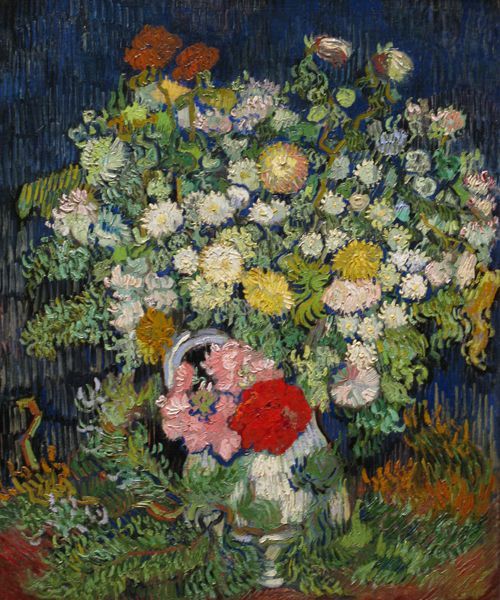
Gardeners Tips want to live up to its name but it is hard to make a full post out of some small tips. So here is a few uncodified items that may be of use.
Why not pay a visit to ‘the less fattening flower show’ your own Lo-cal flower show.

Vegetables
Parsnip seeds are often sown too early and rot. In April put seeds in the fridge for a week, to help break dormancy, before sowing. Bring back to room temperature, allow to dry, sow and mark the row with radishes that germinate quicker.
Grow green Soyabean seeds  ‘Envy’ or ‘Agate’  this May for 20+ pods per plant but add rhizomatous bacteria to the soil when sowing.
When herbs flower they loose some flavour so cut Chives and Fennel to the ground and other leafy herbs down by half as soon as they have flowered.
Pinch out the top inch of broad bean plants when you spot any black-fly.
Calendula ‘Pot Marigolds’ help keep green and black flies off your veg
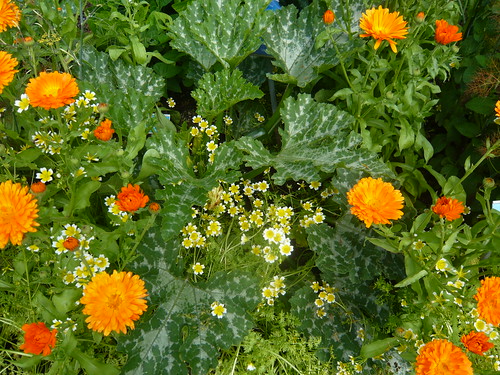
Coloured veg plot
Practical Gardening
Water plants from a water butt as any water direct from the mains is likely to be cold.
Black plastic pots get hotter than the terracotta equivalents by absorbing the suns heat. It suits some plants but dries out quicker so I use one size larger than normal.
If planting bulbs in pots the deeper the pot the taller the bulb and flower is likely to grow.

Pruning
Prune Lavender in August to remove old flowers and a couple of inches of new growth but do not cut  into old wood. Then in March lightly trim again to tidy up. Put August prunings in a sandy soil as cuttings to propagate new plants.
There is no law that says you must prune Roses. Left alone they will be fine, more roses are killed by over pruning than anything else.
Cutting dried or desiccated plums from a tree is not pruneing. Prune prune-plums in summer.

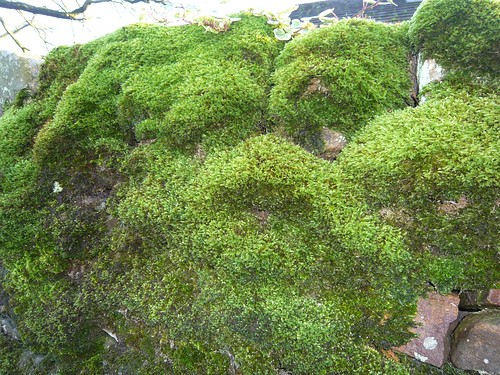
Moss is Green and Environmentally Friendly

Moss is Green and Environmentally Friendly

Moss in the right place can look good but in your lawn it is a no-no.

Moss

Whilst I am on an environmentally friendly kick I thought I would comment on Moss.
Mosses are bryophytes and there are over 10,000 species that grow from spores. Moss can grow on rocks, roof, lawns paths and many other places. Beware raking or removing live moss as you only spreads the spores.

Sphagnum moss is a group of several hundred mosses that can decay into peat over many decades and centuries. The sphagnum peat is the dead brown moss formed in boggy conditions that have now been exploited or over exploited for peat burning and garden purposes. Use peat substitutes to protect our old peat bog environments.

Moss Facts

  • Moss traps carbon and as peat locks up carbon gasses
  • Sphagnum moss can hold 20 times its own weight in water.
  • Moss is slow to rot as it contains carbolic acid and the boggy conditions where it grows remove oxygen. It also gets its only nutrient from rain water which adds to the acidity.
  • Read More Read More

Growing Scilla mischtschenkoana or Squills

Growing Scilla mischtschenkoana or Squills

More spring bulbs to try on for size.

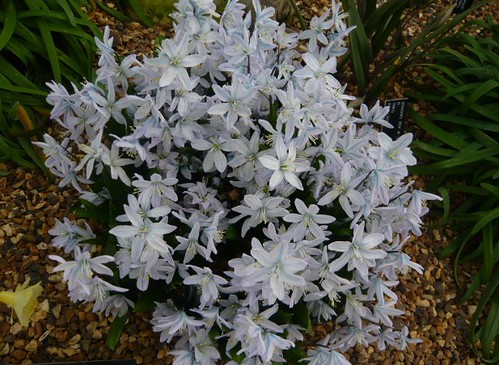
Scilla mischtschenkoana
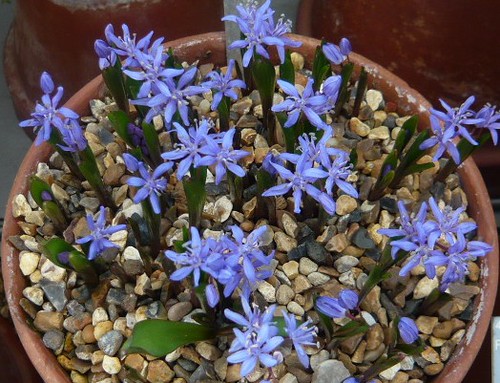
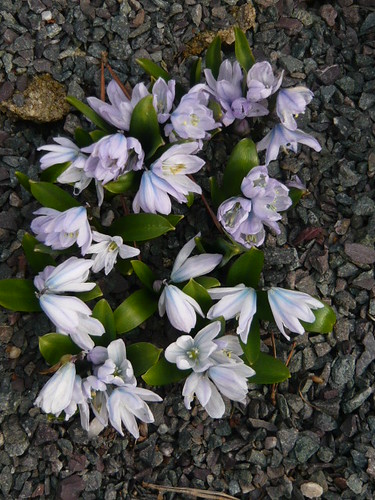
Scilla commonly know as Squills are a group of bulbs for outdoor and Alpine house growing. The ice-blue flowers of Scilla mischtschenkoana open out almost flat, first appear in February and continue well into March. Sunshine and a well-drained soil will make them at home in a bed or in thin grass.

Other members of the family include

  • Scilla bifolia -one of the earliest bulbs to flower, often with the snowdrops. It has a raceme of small, intense blue starry flowers.
  • Scilla sibirica ‘Spring Beauty’ is taller and has nodding flowers of intense royal blue during March or April.
  • Scilla peruviana has large heads of deep violet-blue flowers with strap like leaves.
  • Scilla lilio-hyacinthus. prefers woodland habitats with broad, fleshy leaves and pyramidal heads of sky-blue excelling in a cool, humus rich soil.
  • Scillia bifolia

    Scilla bifolia above and Scilla mischtschenkoana growing outdoors in a gravel bed below

Scilla mischtschenkoana

See ‘Why don’t my Scilla look like this?’

Chionodoxa Glory of the Snow

Chionodoxa Glory of the Snow

Get your bulbs planted asap, they like the autumn warmth and will reward you for years to come.

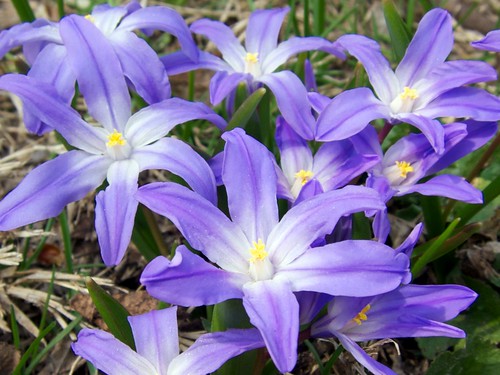
Chionodoxa forbesii 雪光花

An early bulb whose small flowers have an inner sparkle these Chionodoxa are also called Glory of the Snow. Judging by the current weather we are in for a good showing this spring. These bulbs can be planted under deciduous shrubs so they can catch early sun but like open positions. They can be grown in a lawn with crocus, in a container or a rock garden.
After flowering in February or March give the well drained soil a light sprinkle of bone meal to encourage offsets and build up the bulbs.

Read More Read More

Cyclamen my Top 22 Species

Cyclamen my Top 22 Species

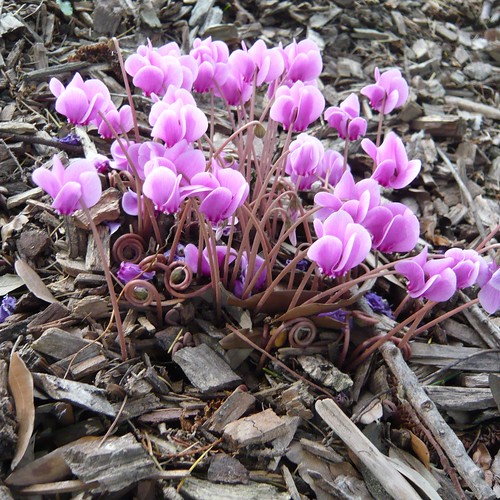
Interesting Cyclamen leaves compliment the flowers at this time of year.

Wentworth Castle Cyclamen

There are now 22 recognised species of Cyclamen. It is said that at least one variety is in bloom for every month of the year.
Cyclamen grow in a range of areas and environments from beech woodland, alpine meadows and windowsills through scrub and rocky areas. This tuberous family of plants are predominantly from North Africa, Turkey and Mediterranean areas.

Top Cyclamen Species

C. balearicum
C. colchicum
C. graecum
C. africanum

Read More Read More

Easy Carnivorous Pitcher Plants

Easy Carnivorous Pitcher Plants

‘Eat up your flies’ a mother would tell her baby pitcher plants.

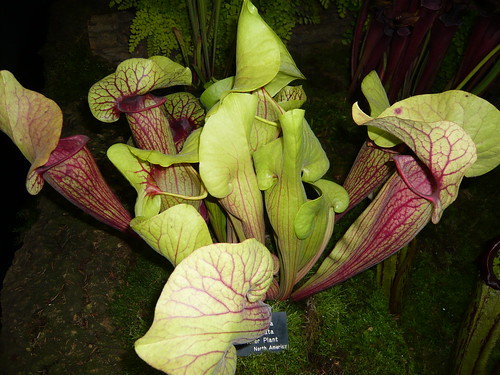
Sarracenia exornata

Sarracenia or Pitcher Plants are ideal for an unheated greenhouse, cool windowsills or a conservatory if grown in sphagnum moss with a little sand and peat. They are some of the easiest carnivorous plants to grow.
These carnivorous plants attract insects with nectar on the edge of the pitcher then the trap features a deep cavity filled with digestive juice. This provides Pitcher plants with sustenance from dissolved insects that are digested in a liquid known as a pitfall trap.

North American Pitcher plants belong to the genus Sarracenia and form upright, tubular leaves. The species in the genus Sarracenia readily hybridise, making a wide range of cultivars available.

Sarracenia species to grow:-

Yellow Trumpet Sarracenia flava
Hooded Pitcher Plant Sarracenia minor
Sweet Trumpet Sarracenia rubra
Purple Pitcher Plant Sarracenia purpurea
Pale Trumpet Sarracenia alata rubra below
Alabama Pitcher Sarracenia exornata above

Read More Read More

Hops For Your Garden

Hops For Your Garden

The best use of Hops is in the brewing of beer but there are some garden uses worth considering as you quaff your ale after a days gardening.

Common Hops, Humulus lupulus grow vigorously to 20 feet or more in a season. The heart shaped leaves over lap the stems and the plant makes a good screening climber. The female plants produce straw coloured flowering bracts.
Golden Hops Humulus ‘Aureus’ is not as vigourous and has soft golden foliage that looks good in sunshine. Frost tender Japanese Hops grow 12 feet in a season and can be used to make a screen to set off other  brightly coloured flowering plants. Nobel Hops refers to four varieties for beer production which are low in bitterness and high in aroma Hallertau, Tettnanger, Spalt, and Saaz named after the region.

Read More Read More

Primula & Polyanthus Seed Sowing Secrets

Primula & Polyanthus Seed Sowing Secrets

primulas

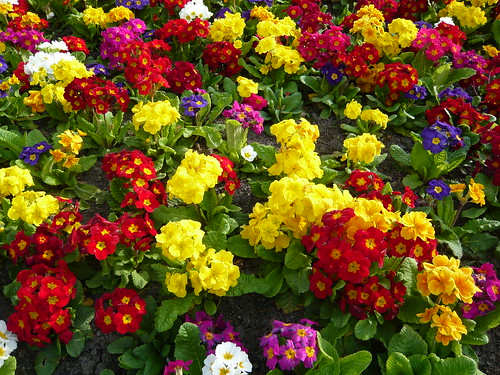
There should be no great secrets to sowing seeds of one of our favourite genus the Primula. However with in excess of 600 species and 30 different groups or sections you need to be on top of your seed sowing game.

Primula allionii

Secrets of Timing when Sowing Primula

  • Nature sows seeds soon after flowering. If it is good for mother nature it likely to be good for gardeners.
  • On the other hand most seed can remain viable for several years. Keep the seed in packets in a screw-topped jar and store in the cool & dark preferably in a fridge
  • If you sow before the end of May the plants have time to develop before winter.
  • Sowings can be made up to the end of July as long as you keep the seed compost cool and moist.
  • The later you leave it the more difficult it is for small plants unestablished Primulas through a winter season.
  • Primula seeds germinate best when they are fresh and ripe.
  • Alpine Species generally benefit from natural freezing and thawing to get them germinating so it’s important to sow as early as possible.

Read More Read More

Tips and Pics of Primula allionii

Tips and Pics of Primula allionii

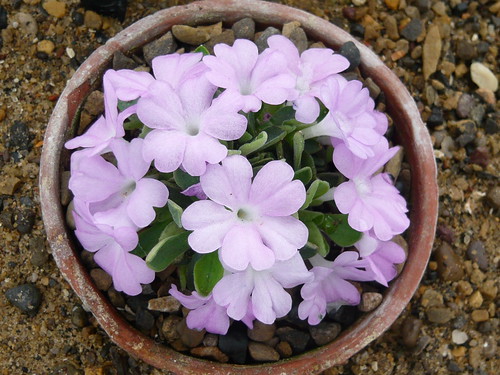
Primula allionii are easier to grow in pots than open ground but they repay a bit of effort. In an alpine house they can live for over 25 years providing many blooms in that time.
Primula allionii
Primula allionii have been cultivated for over 100 years and there are many forms some being more vigorous than others.
They are endemic to the French and Italian maritime Alps.
I have just bought a plant from the local AGS society Primuls allionii Anna Griffith.

Read More Read More

Primula Cabrillo as Potted Plants

Primula Cabrillo as Potted Plants

Cabrillo sound like a good name for a new car but it is just as good as a name for a bright zippy Primula.
Primula Cabrillo

Primula Cabrillo is closely related to the Cowslip but this variety is a bit special. As you can see below there were many Primula Cabrillo as Potted Plants for sale at our local nursery. (I think they were imported from Holland but there are several greenhouses behind the scenes at our local nursery Swincar Guiseley.) The flowers are well scented and that is one reason for thinking about them as potted plants for the house.

Read More Read More