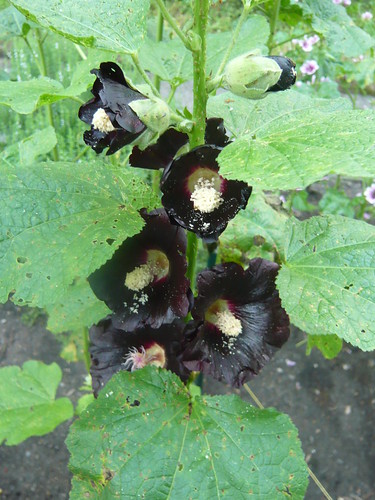
Giant Black Hollyhocks

Giant Black Hollyhocks

Elegant Hollyhocks can grow and flower up to 9 feet tall on slender stalks that do not take up too much space. Cottage gardens thrived on the added height that Hollyhocks provide and many old varieties survive close to walls in these gardens.

General Tips on Hollyhocks

  • Hollyhocks like a moist soil but a dry air to avoid rust. Only water at the base of the plant.
  • The top half of the Hollyhock bears a spike of large showy flowers either single, semi-double as well as double.
  • If growing from seed use the freshest seed you can get. I sow in summer after flowers have set seed but you can wait until May the following year.
  • Hollyhocks are perennial (although I treat them as biennials) and if they stay free of Rust Virus (and some are better than others at this) then you can take cuttings or divide the plants to get more stock.
  • Fertilise a couple times during the early part of the season with a general purpose fertiliser.
  • When the 3-4 inch flowers fade cut them down to the ground.
  • Seeds can be found under the name Althaea rosea in self colours of white, yellow, rose, scarlet and black.

    Read More Read More

Tips for Achillea or Yarrow, All Heal, Bloodwort.

Tips for Achillea or Yarrow, All Heal, Bloodwort.

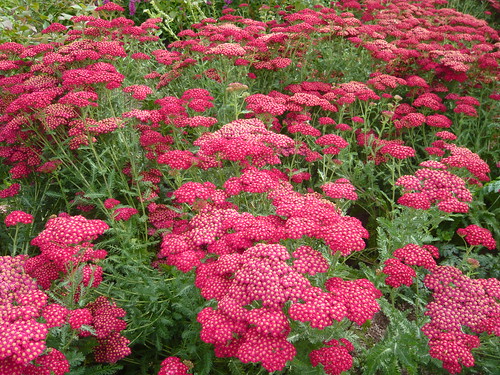
I have to admit I do not like the smell of Achillea but some of the new hybrid varieties are making me reconsider growing the plants. Achillea ‘The Beacon’ looks brilliant in large groups of 2′ high, swaying flowers.

Achillea Growing

  • Growing conditions and variety influence eventual height from 18″ to 6′.
  • These perennial plants get taller each year if not divided and replanted each Spring.
  • The leaves are ferny, attractive grey green and sometimes silver or woolly white. The leaves give Achillea millefolium it’s name meaning thousand leaves.
  • In the Iliad, Achilles’ soldiers used yarrow to treat wounds hence the common names “All Heal” and “Bloodwort”.

Flowering Conditions

  • The flower heads are long lasting and attract hoverflies, bees and other beneficial insects.
  • Most Achillea have flat flower heads in a range of shades with many yellow varieties.
  • Achillea are hardy and drought tolerant, preferring free-draining soil in sun or light shade.
  • Deadheading will result in more flowers with repeated flushes of flower.
  • Most varieties gradually fade in colour after opening or pollination, giving a pleasing harmonious effect.
  • To vary flowering time, usually June to September, practice the Chelsea Chop by cutting plants back by about 6in in late May.

Read More Read More

Ride on Mower Tips

Ride on Mower Tips

Sit back and enjoy cutting your grass.

husquvanna

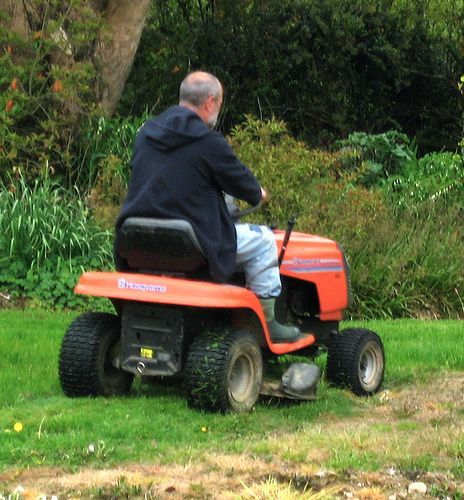
So your grass covers too much area for your small mower and you want to ride in style whilst you cut the lawn, then a ‘ride on mower’ may be what you need.

Ride On Mower Tips

  • Do you plan to cut & collect the grass or just have built in mulching that then distributes it back onto the grass. I would go for one of the hybrids so you can collect long grass at the beginning of the season then turn on mulching to reduce the trips to the compost heap.
  • Ride on mowers are available from Argos at below £1,000, better mowers can be good value around £4,000 but larger more professional models go up to £10,000+. Equate your budget to the amount of work to be done – you don’t need a sledge hammer to crack a nut nor should you send a boy to do a man’s job (these metaphors need mulching).
  • From the large variety of models available make sure you can mount the machine, drive in comfort and feel safe.
  • You can save money buying secondhand. Try retailers who have a good trade in policy and a large throughput.

What you get for your Money

Read More Read More

Taking Cuttings for Beginners

Taking Cuttings for Beginners

gera

Rooting cuttings of your favourite plants can help you get more plants for free. Here are some simple tips for beginners to get you started.
If in doubt I push odd cuttings into soil in a corner and hope. It is surprising what will root and grow.

Types of Cutting

  • Soft wood cuttings are made from new shoots and tips that are soft and tender in spring. Dahlias, Chrysanthemums, Penstemon, Fuchsia, and Aubretia can be rooted this way
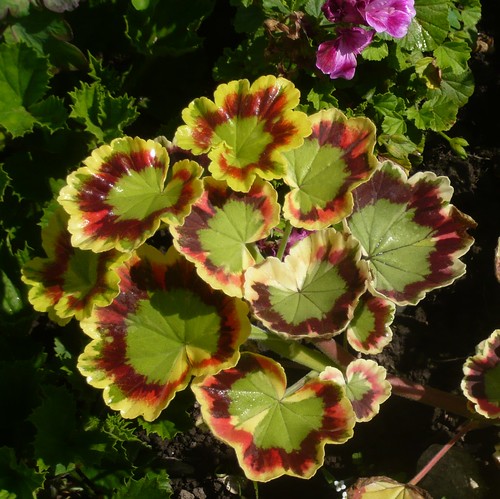
  • Semi-ripe cuttings are taken mainly in summer when the young shoots have just started to turn brown and harden at the base. Pelargoniums, Forsythia, flowering currant Escallonia are just some plants that will root with this method
  • Hard wood cuttings taken in autumn will take a bit longer to root but are used for roses, dogwood, black currants and many shrubs

General Tips

  • The day before taking cuttings give the host plant a good watering.
  • Choose strong healthy stems. Keep in a plastic bag whilst you collect other cuttings so they do not dry out.
  • Remove the lower leaves and trim to just below a leaf joint.
  • Place cuttings in a pot of cutting compost or soil with some sharp sand added.
  • Keep humid and add bottom heat where possible.
  • Adding grit to compost can stimulate roots

Tips for Soft Fleshed Plants eg. Pinks, Penstemon & Geraniums

  • When cuttings are rooted pinch out the growing tip to get a bushy plant.
  • Keep cuttings out of direct sunlight.
  • Cuttings should  be taken in spring and summer.
  • Cuttings should be 2″-5″ long depending on variety and available material.

Tips for Taking Hardwood Cuttings of Trees and Shrubs

  • Cuttings taken between July and October for semi-hardwood cuttings, and between September and March for hardwood cuttings produce the best results.
  • Cuttings take between two to twelve months to root well.
  • Hardy plants should be rooted in containers outdoors or in cold greenhouses.
  • Select  mature sections from the current growth at the base of the stem without  flowers, fruit or seed heads.
  • Cuttings can be 5-15″ long with at least two leaf joints attached.
  • How to take cuttings for big shrubs

Beginners Cutting Tips

  • These general tips are about stem cuttings but you can also take cuttings from leaves, roots, and buds for some plants. Check links to specific plants for special requirements. You can root some plants by placing the bottom of the cutting in water.
  • You can use a rooting hormone to encourage cuttings but I don’t and have tended to take more cuttings to compensate for failures.
  • A heated propagator will be useful if you intend taking a lot of cuttings.
  • Take enough cuttings so you do not have to worry if many of them fail to root. (But I bet you surprise yourself.)

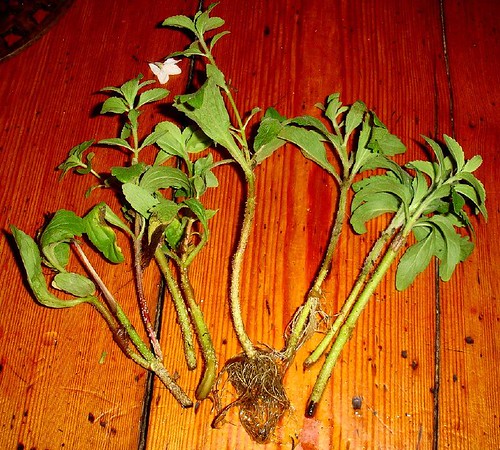
Stevia cuttings after 18 days in water : bouturage de stevia après 18 jours

Credits
Gooseberry cuttings by net_efekt CC BY-NC 2.0
Stevia cuttings after 18 days in water : bouturage de stevia après 18 jours by hardworkinghippy CC BY-SA 2.0

Worms for Gardeners

Worms for Gardeners

Book Cover

We all know worms are good for soil and they are an important part of the natural life cycle in your garden.
They help recycle fallen plant matter and excrete fertile worm casts.
Worms help air get into the soil.
Worms can help break up clay soil.
How often do we care for our worms?

What Kills Worms

  • Worms can drown in waterlogged soil.
  • Worms can die from drought in sandy soil.
  • ultraviolet light, lack of moisture, extreme acid or alkaline conditions.
  • Lack of food , lack of air and bad  drainage.
  • Some pesticides, chemical fertilizers, household cleaners and chemicals including detergents.
  • Birds, red spider mites, mole and other critters.

With that list it is surprising we have any worms at all. Still now you know what to avoid. For more help read Lorene Nancarrows book.

Wild Garden Must Haves

Wild Garden Must Haves

If worms live a a wormery where do bugs live?

RSPB Wildlife Stack
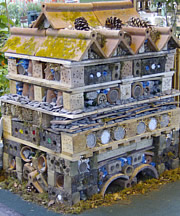
If you want a haven for wild life in your garden Mick Lavelle has ten ‘must haves’ for you to incorporate. This picture of a wildlife palace from the RSPB archive shows how to create food for birds by protecting insects – see construction details below.

Wildlife Shelters

  1. Log piles mimic fallen trees and provide shelter for wood boring beetles insects and amphibians.
  2. Hedgehogs need shelter in daytime and for hibernation. A Habitat stack can provide these if you create a mixed environment with a wood pallet basement followed by a brick pile and layers of tiles, rubble, twigs and logs.
  3. Leaf piles are usually rich in overwintering insects and form a loose structure for lots of wildlife.
  4. Bee and Bumblebee boxes can be as simple as bundles of open ended garden canes to provide a resting spot for Bees.
  5. Rock piles provide nooks and crannies for shelter and security. A mixed herediment will offer the best overall shelter with a bit of everything for lots of creatures

Wildlife Feeding Environments

  1. Wildflowers and grasses provide seeds as food and ‘escape cover’ for amphibians moving from a pond.
  2. Bird feeders are more commonplace than ever but make sure they are filled with appropriate food and kept clean.
  3. A clump of nettles provides food for leaf eating caterpillars and nectar for other insects.
  4. A pond should be at least 18 inches deep to prevent over heating. It provides drink, food and a living space.
  5. If space permits a bog garden of wet mud will be a habitat for invertebrates and provide mud for nesting swallows and swifts

Gardeners’ World”: 101 Ideas for a Wildlife-friendly Garden

Read More Read More

Killing Slugs with Kindness

Killing Slugs with Kindness

I grow slug food, not deliberately but that seems to be the fate of my Hostas. Now is a time to kill off the juveniles slugs before they start laying eggs for overwintering and I am considering organic nematodes that you just water in. Mix up a paste in a watering can, water in and young slugs will be killed in a matter of days.

Buy ‘Natural organic control’ slug killer for less than £10 or for a large pack at £17.95from Amazon

Help other natural predators particularly birds, hedgehogs and frogs to eat your slugs and their eggs. Keep the soil loose and tidy up dead organic material but provide safe havens for the predators. Nemaslug is harmless to children, pets and wild life only killing slugs.

It may be too late for this years Hostas which are now a ‘harvest festival for slugs’ but I shall have revenge.

Clematis as slug food

Do not feed your slugs and snails on your Clematis

Even in this wet summer there are better plants for them to snack on

Try the inverted grapefruit skin as I prefer to drink beer not drown slugs

Sweet Pea Problems and Cures

Sweet Pea Problems and Cures

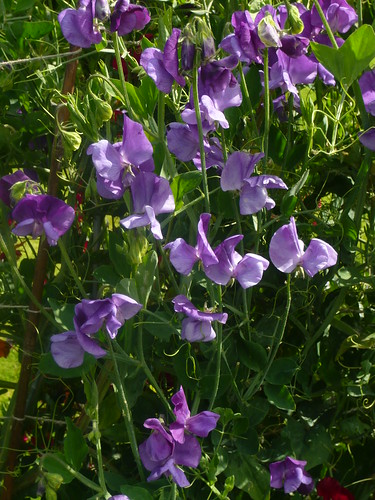
Sweet peas are not difficult to grow but they can be difficult to grow well.
Sweet Pea

Basic Problems with Sweet Peas

  • Leggy seedlings are caused by high temperatures of insufficient light. Move to cooler, brighter locations.
  • Powdery mildew and yellow mottling on leaves is caused by viruses. Control with a fungicide like Systhane.
  • Aphids can be controlled by an insecticide.
  • Scorched foliage can be caused by drought or temperature stress.

Read More Read More

Garden Control of Invasive Weeds

Garden Control of Invasive Weeds

Do not let the little blighters get a foot (or root) hold in your garden. Gardeners need to be on their guard when it comes to controlling pernicious weeds as little plants invade quicker than you imagine.
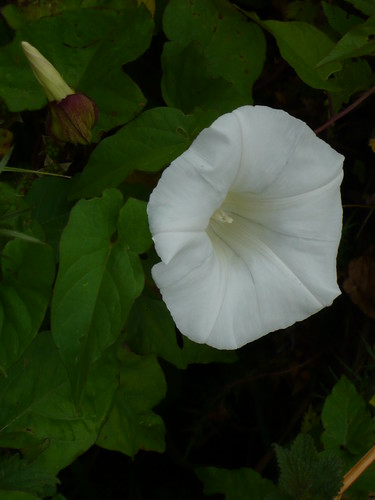
Top Ten Invasive & Pernicious Weeds

  1. Japanese Knotweed is a big thug – a really big thug! Beware!
  2. Convolvulus or bindweed (above)that grows as a twining climber and throttles the host.
  3. Mares (or horses) Tail a plant from the age of fossils, it is so hard to destroy once you have a colony.
  4. Giant Hogweed Heracleum mantegazzianum is covered by legislation and quite dangerous due to the burning effect of the sap.
  5. Rosebay Willow Herb once more feared than is now the case see picture below.
  6. Himilayan Balsam the new plant we love to hate, introduced by Kew gardens in the 1830’s. link
  7. Thistles of all sorts and varieties if not selected by the gardener
  8. Brambles particularly the hedgerow varieties with very small fruit and thus no redeeming features.
  9. Aquatic weeds named by RHS as invasive including New Zealand pygmy weed (Crassula helmsii) and Parrot’s Feather Myriophyllum aquaticum, Fairy fern, Floating pennywort , Nuttall’s pondweed, Curly waterweed and Curled pondweed
  10. Take your pick from Dandelion, Nettle, Buttercup any plant growing anywhere you didn’t want it to grow. Let us know your view
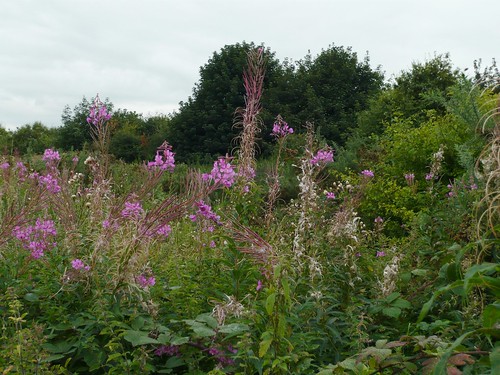
Rosebay-Willow Herb in flower and seed.

Tips for Controlling Invasive Weeds

  • Prevention is better than cure. Do not let them seed
  • Do not take plants or soil from the wild and take care with seed.
  • Dig up at the first sign of growth.Dig out all the root and I mean all!
  • Do not compost flowers which may contain seeds nor roots.
  • Cutting down or digging up weeds and burning the waste plant material are useful, low-tech means of control.
  • Pulling up Himalayan balsam before the plants flower is the most effective method of control. Cutting plants down before they flower can result in a more bushy plant that produces even more flowers. Young growth may be more susceptible  to weed killers.
  • Spraying invasive weeds with herbicide is the most effective form of treatment currently available. It can however take several years to get rid of some invasive species.The effectiveness depends on the type of herbicide used.
  • Apply sodium chlorate crystals to the hollow cut stems after cutting back is said to be effective. But be careful as sodium chlorate is highly soluble and any spillage can affect nearby plants.
  • Impermeable membranes like black plastic work on most plants by denying light and water. Unfortunately Japanese Hogweed can push through the toughest barrier.

Let us know if you have a fool proof method  – this fool needs all the help he can get!

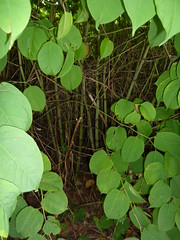
Below Japanese Knot Weed in a clump and a thistle ready with seeds.
Weedkillers

Book Cover

Roundup Weedkiller concentrate

Book Cover

Handy spray gun,

Himalayan balsam is enemy number one at Otley Chevin where this invasive weed is chocking our natural flora. Locals have been recruited to help with ‘Root it Out’ events to stop the spread of these seed propagated plants.
I have has seedlings in my garden as has my badminton partner but fortunately they are easy to up root if you get them before they seed.

Recognising Himalayan Balsam

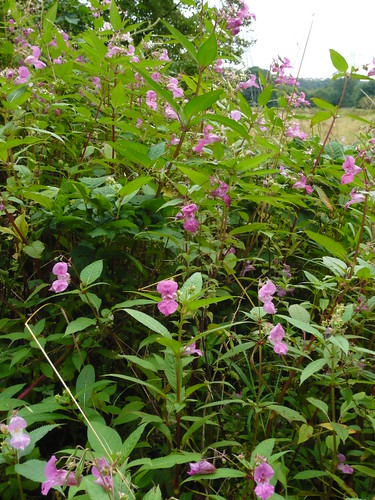
  • Himalayan Balsam is common on river banks with reddish coloured stems and dark green lance shaped leaves with jagged edges.
  • The brightly coloured flowers that are usually in variable shades of purplish-pink from June to October up to 6 feet in height.
  • The plant is annual and lasts for one year and dies at the end of the growing season.
  • Himalayan Balsam can produce around 2,500 seeds in explosive seed pods that throw seeds over 20 feet away from the original plant. The seeds can last in the ground for several years.
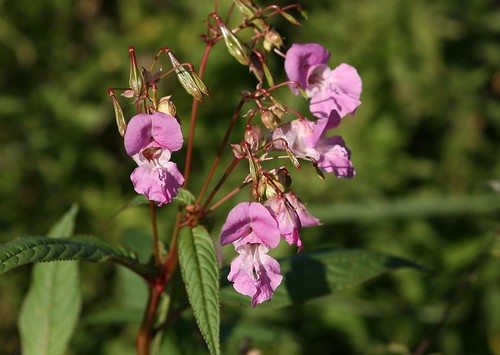
Himalayan Balsam
Treatments to Kill Himalayan Balsam

  • Do not allow invasive weeds to set seed.
  • Pull out the shallow rooted plants as soon as you see them.
  • Cut off below the last node near the ground and they shouldn’t regrow.
  • Animals can safely graze on the plants.
  • Himalayan Balsam should be sprayed in spring before flowering with Gylphosphate based weed killer

Book Cover Book Cover

Sprayer and Weedol by Amazon

Photo Credits
Himalayan Balsam by Deanster1983 CC BY-ND 2.0

Why do they grow ‘Shamrocks’ in Ireland?

Because St Patrick took all the ‘real rocks’ away so the snakes couldn’t hide.
Carl Linnaeus Father of Plant Classification

Carl Linnaeus Father of Plant Classification

It is over 300 years since the birth of a Swede Carl Linnaeus(1707-1778).  His father’s garden ‘inflamed his mind from infancy with an unquenchable love of plants’ that led to a nickname ‘Little Botanicus’.

In 1735 he published his first edition of ‘Systema Naturae’ a classification system for all living things followed by ‘Species Plantarum’ dealing with plants and horticulture. He authored many botanical books and his library was used as the basis to found the Linnaean Society of London which is still going strong and recently published:

‘Order out of Chaos’ Linnaean Plant Names and their Types

By Dr Charlie Jarvis

Linnaeus devised his class system for plants based on the number and arrangement of the male and female parts of a flower, his so called ‘sexual system.’ For example the ‘Sweet William’ – Dianthus barbatus has 10 stamens per flower and is in the Linnaeus class Decandria. The name Dianthus barbatus comes from Greek Di the god Zeus and anthos meaning a flower. barbaratus means bearded and refers to the hairs in the mouth of the flowers. The Sweet William was widely cultivated in the mid 18th Century and had a number of garden form of which Linnaeus lists at least 10 including albo white, roseo pink and flore multiplici a double flowered variety.

  • Let Linnaeus encourage you to look closely at plants and Flowers in particular
  • Consider what is behind the name of your plant and how and why it has been chosen