Growing for Vegetarians
Growing for Vegetarians

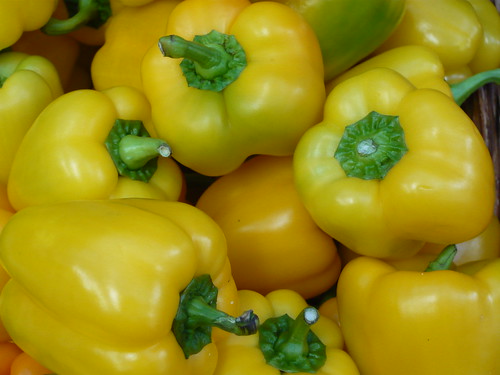
Pepper

What should grow in a garden to help feed  vegetarians. This is a conundrum posed for me by two of my children.
If I were a vegetarian I would want three things from my garden.

1.  Large and reliable crops from the space and effort

  • I would start with simple fruit like Raspberries.
  • Apples are heavy croppers for the space needed particularly if you grow on a small root stock. The added advantage is most apples can be stored, bottled or frozen.
  • Rhubarb is a personal favourite and a reliable cropper  to eat fresh or in jams.
  • Gooseberries or thornless Blackberries would also feature on my list
  • Then I would think about growing chips, mashed, new, roast, baked and mashed potatoes.

2. Tasty, flavoursome, appetising,  succulent produce

  • Herbs are an obvious choice. Whilst they may only be required in small quantities who would be without Basil, Parsley or Sage and Onion.
  • The Onion may be cheating a bit in the herb list but they are an easy vegetable to grow from sets.
  • Garlic is one of the strongest flavours (I have never grown Washabi) and I would plant several varieties in sunny positions.
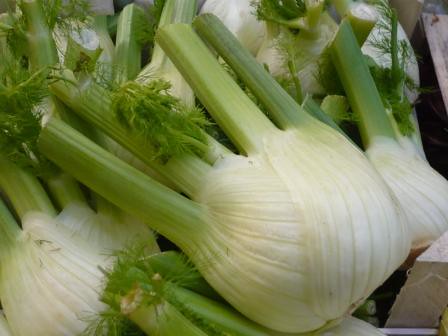
Fennel

3. Crops that are not easily obtainable from shops and supermarkets

Read More Read More

Growing Micro-Leaves

Growing Micro-Leaves

You have tried ‘Sprouting Seeds’ now try their slightly older cousins the micro leaves.

Healthy eating will be helped by using your garden, greenhouse and even window box to grow micro leaves.
Micro leaves are just leaves of very young plants that you would probably eat as full grown vegetables or salad crops. The key is to pick and eat them whilst they are young tender and full of vitamins.

What Are Micro Leaves

  • Micro Leaves are salads and vegetables harvested at a very young and tender stage.
  • Usually cropped at cotyledon or first true leaf stage.
  • Think Mustard and Cress from your childhood.
  • But expect stunning colours and intense flavour.
  • Eating all the pent-up energy contained within the seed makes a health flavoursome addition to salads or sandwiches.
  • Used and eaten whole, they take almost no preparation with very little waste.
  • Generally eaten 7-15 days after sowing, but before they take on additional nutrient this fresh crop is simple to grow.
  • Sow on an inert, moisture retentive substance and bring into full light when seeds have germinated.

Seed Selection to Try as Micro-leaves

Read More Read More

Growing and Sprouting Seeds

Growing and Sprouting Seeds

Germinated seeds of edible crops can be very tasty and full of healthy properties. Crops are ready from 4 days onward depending on the variety. Below are several lists of seeds and nuts for growing and sprouting at home.

Choice of Seeds for Sprouting

Red Cabbage Brassica oleracea
Attractive, pinkish tinge to stems adds colour to salads. Red Cabbage is easy to sprout in a warm dark place if white sprouts are required, or in the kitchen, out of direct sunlight, for green sprouts. This will give two slightly different tastes and textures. Sow all year round; fast growing, ready to eat in 2-4 days.

Spicy Fenugreek  Trigonella foenum-graecum
Fenugreek Sprouting Seeds have a strong spicy curry flavour. High in Vitamins A and C. Easy to sprout in a warm place. An airing cupboard is ideal if white sprouts are required, or in the kitchen, out of direct sunlight, for green sprouts. This will give two slightly different tastes and textures. Sow all year round; fast growing, ready to eat in 2-4 days.
Use raw to add flavour and texture to a salad and sandwiches. Blanch in hot water and add to stews soups, casseroles and curries or put in stir fries

Lentils   Lens culinaris
Lentil Sprouting Seeds have a slightly nutty/peppery flavour. High in iron and Vitamins A and C. Easy to sprout in a warm place. An airing cupboard is ideal if white sprouts are required, or in the kitchen, out of direct sunlight, for green sprouts. This will give two slightly different tastes and textures. Sow all year round – fast growing, ready to eat in 2-4 days.Sprout in a warm place for nutritious sprouting seeds.

Sprouting Seed Method

  • For growing indoors put 1 tablespoon of seed in a jam jar or seed sprouter.
  • Cover seeds with about 250ml of water and cover the jar with a piece of muslin and secure with a rubber band.
  • Soak seeds overnight and they will swell considerably.

    Read More Read More

Tips on Growing Thrift – Armeria Maritima

Tips on Growing Thrift – Armeria Maritima

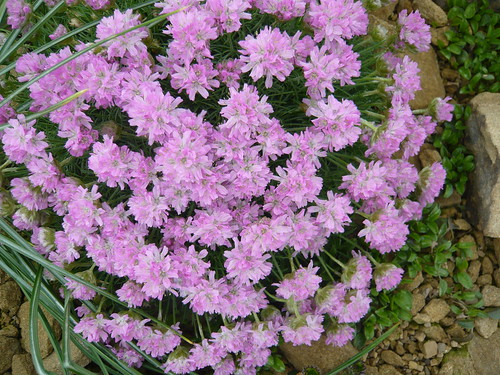
Armeria juniperfolia x maritima

Armeria maritima has many local names and is also known as Sea Pink, Cliff Clover, Ladies’ Cushions, Heugh (or cliff) daisy, Armeria juniperifolia or Marsh daisy and Sea thrift.
The colour of the 1″ ball shaped flowers varies from white Alba through pink and mauve to dark red.
The clumps of dark green foliage form good mounds useful for contrast of shape in a rock garden. The densely packed grass like leaves are up to 5 inches long.
Thrift is a perennial but if it browns in the center split the plant.

Cultivation Tips

Thrift grows well in dry, sandy soil or low fertility soil.
It is very salt tolerant hence its appearance as a wild flower along the coast.
Take basal cuttings in summer or divide large clumps in Autumn.
They need full sun all day but can tolerate dry, windy conditions.
Thrift flowers in spring through summer. Remove spent flowers to encourage more blooms.


Varieties to consider and Other Names

  • Thrift is also known as Sea Pink, Armeria Maritima, Sea Pink,
  • Armeria maritima alba is a white variety
  • Splendens is the best Pink variety.
  • Bloodstone is dark red.
  • Vindictive is light pink and has an AGM from RHS
  • Laucheana has dark green foliage with bright pink flowers
  • Rubrifolia ihas dark bronze grass-like foliage turning deep red in winter and a cluster of pink globe shaped flowers

Read More Read More

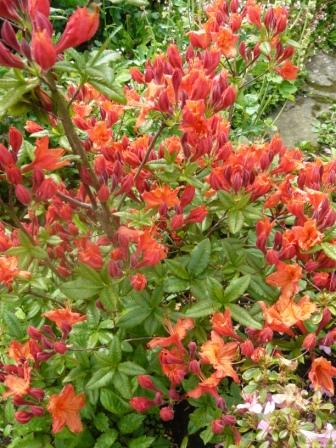
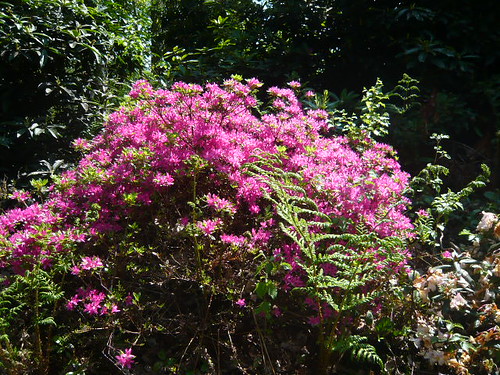
Inverewe Garden and Rhododendrons

Inverewe Garden and Rhododendrons

Rhododendron

Interesting Facts about Inverewe Garden

  • A National Trust for Scotland garden famed for its exotic plants despite being further north than Moscow and St Petersburg.
  • 100 acres of garden created by Sir Osgood Mackenzie and Lady Mackenzie in the 19th century.
  • The north of the garden around the shores of Loch Thurnaig have been occupied since the Iron Age.
  • The warm currents of the Gulf Stream help to create a micro climate that produces an oasis of colour and fertility where exotic plants from many countries flourish.
  • Himalayan rhododendrons, Tasmanian eucalypts and many Chilean and South African plants are featured, together with a large collection of New Zealand plants including the National Collection of the genus Olearia.
  • An area named the Bambooselem was planted in the 1880’s. Many of the Bamboos have since flowered and died but the name deserves to live on.

Read More Read More

Homemade Organic Garden Sprays

Homemade Organic Garden Sprays

If you do not want to use chemical sprays on your vegetables and plants, how will you protect your crops.
There are several organic sprays you can use and many can be prepared simply at home or in the garden shed.

Organic Tips

  • Well you could try mix your own but test them on single plants first, monitoring effects for a couple of days.
  • Several DIY recipes are available but I use a very weak solution of Comfrey water as a foliar feed. I put a good bunch of leaves in an old water butt for a fortnight then dilute the liquid to a weak tea colour.
  • For insect infestation try a stew brewed from rhubarb leaves and a bit of vegetable oil. Crush the leaves then poor boiling water over it and let is soak for a day or two then drain off and dilute to look like weak tea and spray of water it on after adding the oil to help it stick to the plants.
  • Recommended for Roses is a pyrethrum base home made from Chrysanthemum cinerariefolium or Dalmatian chrysanthemums. They are safe to use on vegetables and they are safe to eat after 24 hours if washed.
  • The soil association will allow farmers to use copper compounds on potatoes and sulphur isn’t totally banned.
  • ‘Organic’ products from garden supply companies can be bought from Amazon
  • Milk is a mild acid and has some fungicidal properties if you want to spray a 50% solution on mildew.

Types of Sprayer

Read More Read More

Special Ideas to Help Birds and Wildlife in your Garden

Special Ideas to Help Birds and Wildlife in your Garden

Bird Feeders

Feeding and Feeders

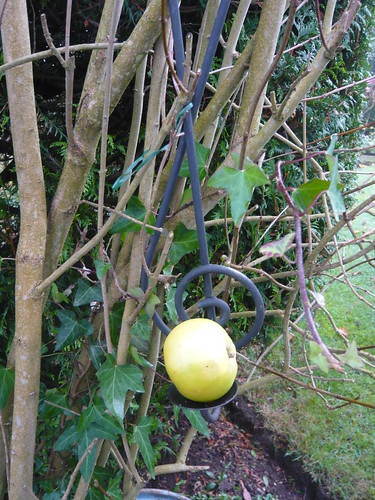
  • I like the use of a candle or tea light holder to carry a suet ball or piece of fruit on the spike that normally holds the candle.
  • Seed feeders come in various shapes. Look for one that allows the seed to run freely and not get wet in a sump. Wet seed will germinate and block the hole.
  • Include special feeds for special birds like meal worms, fruit even pasta as well as nuts seeds and your usual bird mix.
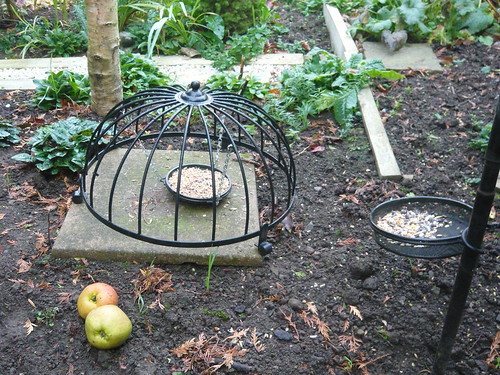
  • Put some feed on the ground. I put a cover over the seed and bird food. You can get different sized spaces for larger or smaller birds.
  • Make or buy a feeder that will stop seed falling on the ground in the slightest puff of wind.
  • Make your own fat ball food with seed and fat or suet.

Bird Feeders

Grow Plants That Help Wildlife

  • Grow bushes which produce berries.
  • Grow plants that produce plenty of seedheads for winter food. Leave them all winter if necessary.
  • Plant perennials that provide all year around habitats rather than short lived annuals.
  • Select plants that are rich in pollen and nectar chives nettles and Monardia for example.
  • Plant native species and not exotics and F1 plants

Special help for Special Visitors

  • Have more than one supply of water for drinking.
  • Add some sugar to water to attract butterflies.
  • keep water and food away from cats and predators.
  • Do not be too tidy, leave an area where wood can rot and feed insects.
  • Avoid chemical sprays.
  • Plant up winter hanging baskets to provide habitat and varied food sources.
  • Think vertically as well as horizontally. Birds like to be above ground for feeding and safety.
  • Keep feeders, water and food areas clean.
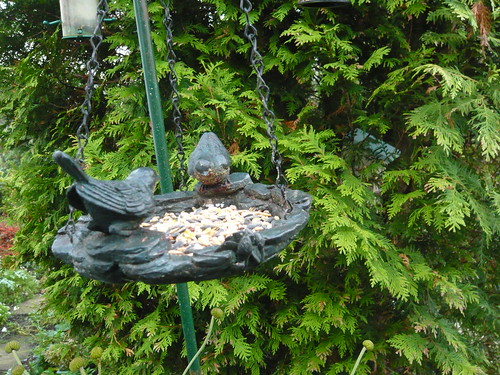
  • Donot bother feeding the sea birds in our picture.

Bird Feeders

Sources.
Ten Plants for birds

‘ * Centaura scabiosa – the seeds provide food for birds and other wildlife
* Taxus baccata – this native evergreen shrub produces berries which provide food for birds and other wildlife
* Campanula carpatica – a compact nectar-rich variety that sits well in gaps between paving
* Fagus sylvatica – a native tree that supports a number of insects and food for animals
* Anthriscus sylvestris – a nectar-rich plant attracting lacewings and hoverflies which eat aphids
* Ilex aquifolium – this evergreen shrub produces winter berries which provide food for birds and other wildlife
* Cotoneaster horizontalis – this deciduous shrub produces brilliant red berries in autumn which provide food for birds and other wildlife
* Buddleja davidii – the ultimate attraction for butterflies
* Achillea millefolium – nectar-rich plants which are wonderful for attracting bees and hoverflies
* Lonicera fragrantissima – a fragrant shrub which makes a nesting site for birds and a refuge for insects’

Lythrum Loosestrife

Lythrum Loosestrife

alt=”” />Lythrum_salicaria,_purple_loosestrife,

Lythrum is a group of herbaceous perennials that can be reproduced by division.

Plants grow 2-3 ft. high and flower in July and August .

Lythrum salicaria is a herbaceous perennial plant that   forms colonies

Lythrum like damp soil and often found growing alongside streams.

Other Loose Strife Species

More Gardening Books for Kids

More Gardening Books for Kids

Last month I listed three popular gardening books for children based on my observations at RHS library. Here are some other books that can be bought from Amazon by clicking on the cover.

Book Cover
‘Grow It Eat It’ is a book for adults and kids to work on together.

Book Cover
‘Starting Gardening’ sets out simple gardening skills in a fun manner.

Book Cover
If you think gardeners are getting younger then look at this Activity book for 3-5 year olds .
‘…All the activities are designed to develop important preschool skills and are based on the Areas of Learning for under-fives recommended by the Qualifications and Curriculum Authority.’ I am in favour of Kids learning but do we need gardening on the under 5’s curriculum?
I recently spent six months voluteering at the RHS library. I was amazed at the enthusiasm and interest of children in books and garden related matters.
Below is just a small selection of books that may make unexpected stocking fillers for Christmas.

Book Cover

‘Roots, Shoots, Buckets and Boots: Gardening Together with Children’ by Sharron Lovejoy includes themed gardens like the “Pizza Patch” and the “Moon Garden”, and a list of the top 20 plants for children.

Book Cover

‘The Playground Potting Shed: A Foolproof Guide to Gardening with Children’ by Dominic Murphy will inspire young people to get gardening whether at home or at school.

Book Cover

The RHS starts off with the ever popular Sunflower on the cover of ‘Ready, Steady, Grow’. The book includes details of quick and easy garden projects

Books can be ordered from Amazon by clicking on the images above.

Read More Read More

Growing Ginkgo or Gingko Trees

Growing Ginkgo or Gingko Trees

Young Ginkgo

Ginkgo trees are sacred trees planted around shrines and temples in China. They do not flower but have male and female plants with male catkins and long stalked ovules.

Leaves of Ginkgo

  • The deciduous leaves are  fan-shaped with veins radiating out into the leaf blade.
  • The sculpted leaves are usually  2-5 inches  long borne on short woody shoots.
  • The old popular name “Maidenhair tree” is derived from the leaves.
  • The green leaves turn buttery yellow in autumn.
  • Ginkgo leaf extract is used to treat a variety of  conditions, including memory loss, asthma, bronchitis,  and tinnitus

Growing Tips for Ginkgo

  • Most trees available in the UK are male. They grow 50-150 feet tall.
  • Ginkgo biloba do not tolerate shade and grows best in environments that are well-watered and well-drained.
  • Ginkgo retains a prodigious capacity for vegetative growth. One tree in Hiroshima regrew after the atomic bomb.
  • Ginkgo is capable of sprouting from buds near the base of the trunk. It also can develop aerial roots.
  • Fossils dating back 250 million years testify to the longevity of the species.

Read More Read More