Horse Chestnut – Root and Branch Review

Horse Chestnut – Root and Branch Review
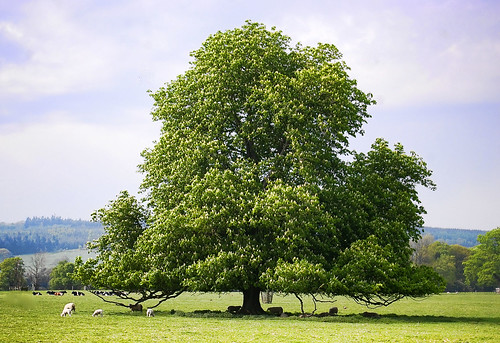
Horse Chestnut tree

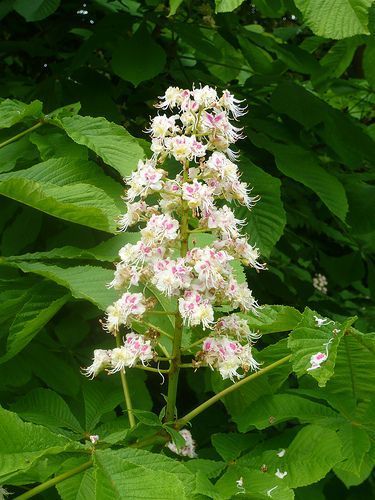
Conker collecting has encouraged many a stick to be thrown into a Horse Chestnut tree. The candle or flower heads are even more spectacular than the crop of conkers that they give birth too.

Key Features of the Horse Chestnut

  • Latin name Aesculus Hippocastanum buckeye in USA or Conker tree
  • Height up to 130 feet
  • Type of tree – deciduous –
  • Leaves – Large green palmate with 5-7 fingers or leaflets
  • Flowers White or pink candle shaped upright panicles
  • Fruit Green spiky spherical husks containing a glossy brown inedible seed or conker
  • Bark Dark brown, coarse and scaly when mature
  • Family Aesculus has about 20 species

Conkers

Origins and Distribution of the Horse Chestnut

  • Native to the Balkans.
  • Planted in temperate zones as an ornamental specimen.

Uses and Attributes of the Horse Chestnut

  • Distilled the conkers make acetone.
  • The seed extracts were used for fulling cloth and whitening hemp, flax, silk and wool.
  • Herbally used to treat varicose veins and haemorrhoids.

Gardeners Tips for the Horse Chestnut

  • Used along avenues, parks and in churchyards.
  • Horse Chestnuts can make large bonsai.
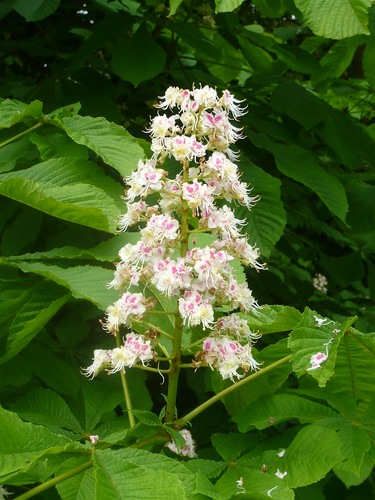
candles in the wind

Other types of Horse Chestnut and key species

  • Texas, californian and other american buckeye or Aesculus species.
  • Aesculus × carnea the red horse chestnut.

Horse Chestnut comments from elsewhere

In Britain, the return to school after the summer holidays is synonymous with conkers. Originally played with cobnuts or snail shells, the use of the horse chestnut in the popular children’s game was first recorded in 1848. Since 1965, the World Conker Championships have taken place every year in Oundle, Northamptonshire. Kew.org

The fruits of this tree vaguely resemble those of the (Sweet) Chestnut tree but they are not related. They develop in prickly cases, and are ripe in September and October – the ‘conker’ season.

Read about our series on British tree reviews with a bakers dozen fact sheets

Credits
“Horse Chestnut tree by JeanM1 CC BY-NC-ND 2.0
“Conkers by MamaPyjama CC BY 2.0
Olive – Root and Branch Review

Olive – Root and Branch Review

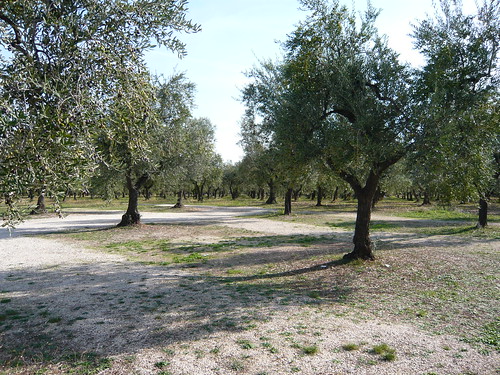
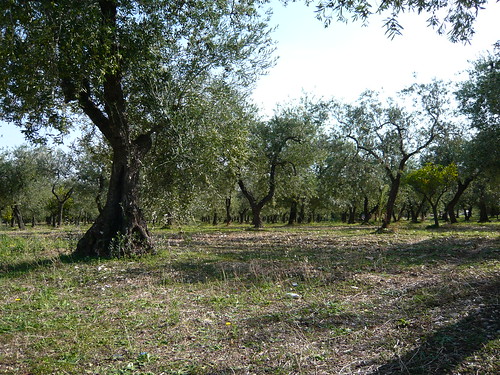
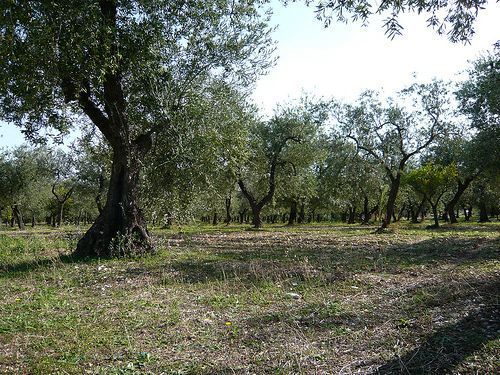
Olive grove

Key Features of the Olive Tree

  • Latin name Olea Europaea
  • Height up to 50 feet 15m
  • Type of tree – evergreen dictoyledons
  • Leaves Dark green with silvery green undersides. Leathery, lanceolate or ovate leaves –
  • Flowers Small white borne in axillary clusters.
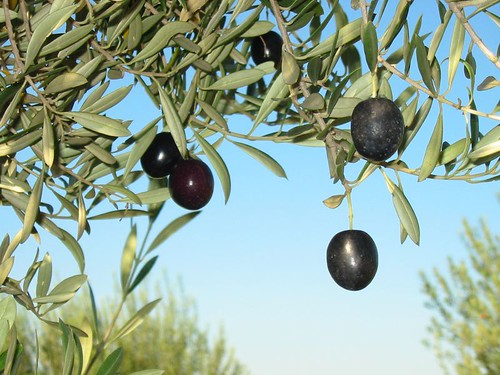
  • Fruit Egg shaped or ovoid drupe green turning black
  • Bark Grey with gnarled ridges and appearance
  • Family Oleaceae

Olives

Origins and Distribution of the Olive

  • Dating back at least 4000 years in tablets written in Cretan 2500 BC.
  • Cultivated in the Mediterranean where it flourishes.
  • References in the Bible to olive branches an anointing oil

Uses and Commercial Attributes of the Olive

  • The fruit is a staple part of Mediterranean cuisine.
  • The fruit is crushed or pressed to make olive oil.
  • The oil is used in cooking and historically as a fuel.
  • Olive is now recognised as a colour a dull grey-green or green-grey.

Gardeners Tips for the Olive

  • Olives are used to hot mediterranean climates and do not thrive in the UK
  • Recent attempts to make them specimen plants are led by the avaricious side of the horticultural industry and great conditions are needed for your Olive to survive.
  • Olives are often grown in groves although most varieties will self pollinate.

OLIVES

Other types of Olive and key species

  • There are thousands of cultivars of the Olea europaea olive tree.
  • The Iberian olives are usually cured and eaten after being pitted and stuffed with pimentoe

Olive comments from elsewhere

‘The older an olive tree is, the broader and more gnarled its trunk appears. Many olive trees in the groves around the Mediterranean are said to be hundreds of years old, while an age of 2,000 years is claimed for a number of individual trees’

Olive 1

Credits
“Olives by wollombi,CC BY 2.0
OLIVES by Sara Maino CC BY-NC-ND 2.0

Sausage Tree – Root and Branch Review

Sausage Tree – Root and Branch Review

Sausage tree

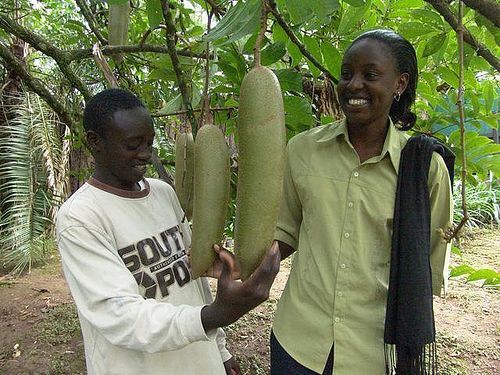
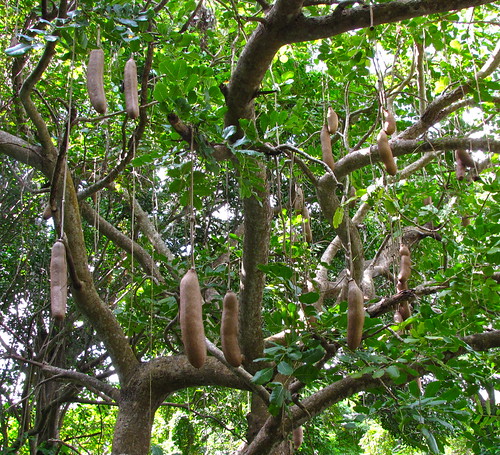
An unusual tree with even more unusual fruit.

Key Features of the Sausage Tree

  • Latin name Kigelia Africana other common name kigeli keia
  • Height 30-50 feet high 12m
  • Type of tree – deciduous but evergreen with adequate rainfall
  • Leaves Pinnate with 3-6 pairs of lenceolate green leaflets
  • Flowers Large, dark red, strongly scented, bell flowers hanging in panicles
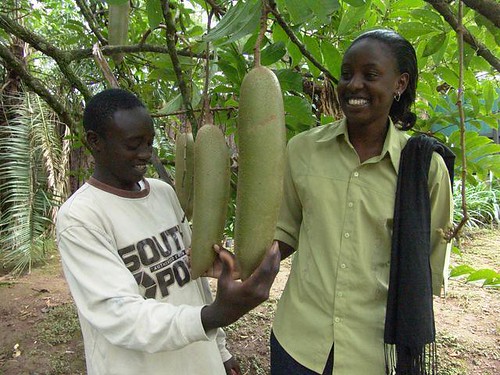
  • Fruit Pendulous grey-green sausage shaped unpalatable fruit that give the plant its common name
  • Bark Rough grey-brown
  • Family Bignoniaceae.

Sausage tree

Origins and Distribution of the Sausage Tree

  • Occurs throughout tropical Africa.
  • Sausage tree in Arabic means “the father of kit bags” .

Uses and Commercial Attributes of the Sausage Tree

  • The tree is grown as an ornamental for flowers and seed pods.
  • Medicinal uses include treatment for abscesses, rheumatism and venereal disease
  • Beer can be brewed from the fruit
  • The many seeds are good parrot food.
  • The tough wood is used to make dug out canoes

Read More Read More

Grow Abeliophyllum White Forsythia for Spring Scent

Grow Abeliophyllum White Forsythia for Spring Scent

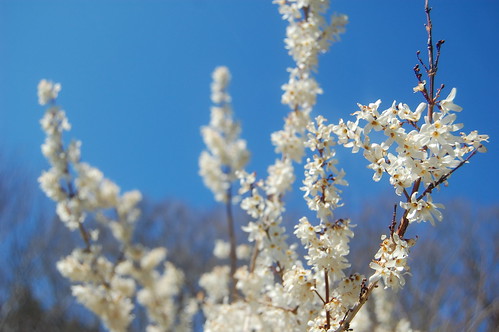
Abeliophyllum distichum also called White Forsythia is more refined than traditional yellow Forsythia to which it is distantly related, both being part of the Olive family.

Growing White Forsythia

  • Abeliophyllum distichum AGM  is native to Korea and produces clusters of fragrant, creamy white flowers which emerge in late winter or early spring before the leaves.
  • Trained against a sunny wall,  Abeliophyllum distichum will grow 3-6 feet tall. It can be rather untidy and lax if grown in a border
  • Prune after flowering to within 2-5  buds to make a permanent framework and encourage new wood for flowering next year.
  • Grow in full sun or light shade in average soil 3-4ft apart. Feed with a balanced fertiliser once a year in early spring
  • Can be underplanted with Scilla sibirica, Muscari or species Crocus for a lovely early spring display.

Abeliophyllum distichum roseum group is the seldom seen pink form. According to Junker’s nursery ‘It is sometimes called “Pink Forsythia” but this reflects more its time of flowering than either its colour or parentage! A very pretty plant that stays quite small, rarely more than 3 feet tall’.

Read More Read More

Seedheads Worth Growing

Seedheads Worth Growing

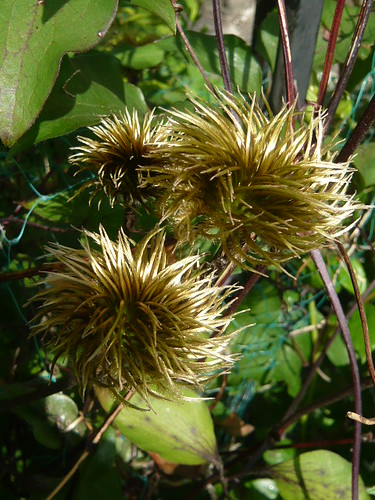
clematis seedhead

Decorative gardens can benefit from growing seedheads for their own sake.

Flowers With Seedheads

  • The clematis family produce a variety of interesting seedheads. Shortly after flowering the above heads looked truly golden in the afternoon sunshine. The fluffy seeds will eventually be dispersed from a ball of seeds that looks just as wooly.
  • Honesty is aka Lunaria after the moon shaped seedhead. After the purple flower the green seedhead, shaped like an old penny or halfacrown in old money, looses the green covering to reveal a translucent white disc and ripe seeds. Even more decorative than the flowers and they can be picked as dried flowers.
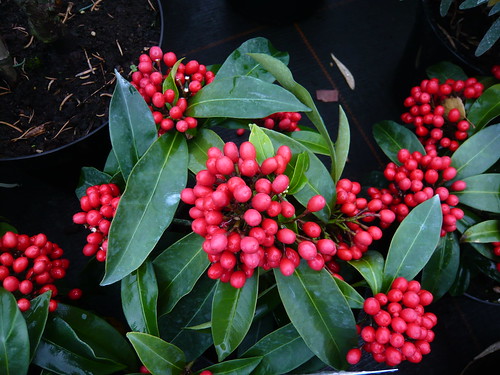
  • Rosehips make some of the most startling seedheads but then again berries are all seedheads of a sort. Below is a photo of Skimmia berries the main reason for growing these small shrubs

Skimmia Berries

Grasses and Other Seedheads

  • The natural look from planting a range of different ornamental grasses for their seedheads has become very popular.

Read More Read More

Majestic and RemarkableTrees

Majestic and RemarkableTrees

Book Cover

New Trees: Recent Introductions to Cultivation by John Grimshaw, Ross Bayton and illustrated by Hazel Wilks. Amazon

A good reference work or wonderful coffee table book can be costly but the joy of a book on your favourite subject may be a great investment. I adore Trees and wish I could own and plant up my own Arboretum. Unfortunately I have to be content with good books, regular trips to sites of interest and a small number of trees in my own garden.

If I was looking for something different then this book would be amongst my first reference work from Kew and Royal Botanic Publishers. I have made plans to have a trip to Kew gardens to check out one or two ideas that I have been accumulating through winter.

Another series of books I like to browse are the ‘Remarkable’ series by Thomas Pakenham
Book Cover

Meetings With Remarkable Trees starts “The two largest Common Oaks (Quercus robur) in Britain and probably Europe, too – are the Fredville Oak in Kent and the Bowthorpe Oak in Lincolnshire”. In Meetings with Remarkable Trees Pakenham assembles a beautifully photographed gallery of 60-odd trees of Scotland, England and Ireland, and magnificent trees they are. One is a 600-year-old king oak that looms large over Charleville, Ireland; another is the yew tree that Wordsworth called the “pride of Lorton’s vale”; still another is a sequoia brought from the United States and planted in a Herefordshire grove in 1851. Amazon

In ‘Remarkable Trees of the World’ there are sections entitled, Giants, Dwarfs, Methuselahs, Dreams and an exceptional section about Trees in Peril. Amazon

Read More Read More

Growing Cannas – Facts and Fancy

Growing Cannas – Facts and Fancy

You don’t need global warming to get a warm glow in your garden if you plant some Canna. The fiery hot flowers and leaves on some Cannas are hard to beat and are worth a place in any passionate garden.

What other plant starts flowering in June and keeps flowering right through until the first frosts. Do not deadhead the flowers at any price as new blooms arise from the center of old ones. They flower in shades of red, orange, pink and yellow often bi-coloured with blotches, spots and streaks. The foliage is also a most attractive feature, and can be shades of purple/bronze, red, green and striped.

Growing Canna

  • Rhizomes have to be started into growth in February and you can be certain that if you see a new root, then a new shoot will soon follow. Start them by putting them in a hot place in a poly bag. An airing cupboard is ideal.
  • Part fill a 2 liter pot with peat based compost improved with slow release fertilizer and insecticide and lay the rhizome on the compost. If any shoots are growing, place these pointing upwards. Be very careful with any shoots because they break off very easily.
  • Fill the pot, affix a label showing the variety and the date of planting. Give the compost a good drenching, and sprinkle a few slug pellets around.
  • Place the pot in a warm frost free place. They will grow much quicker if heat is provided.
  • They can be planted out in June in sun, shade or preferably semi-shade.
  • Cannas prefer a damp soil but can survive some drought conditions. Some varieties grow well in bog gardens.
  • Large clumps can be divided in Autumn when the rizomes are stored in a frost free environment. Keep slightly damp.
  • Canna are very strong and sturdy and do not require staking. They are generally insect free in the UK.

Read More Read More

Marijuana Growers are Potty

Marijuana Growers are Potty

Book Cover

One weed that some gardeners wish they were able to grow – well then can but not always legally.

A form of grass that if you water it with neat whiskey it comes up half cut!

Cannabis the easier name to spell than Marijuana is typically considered to be one of two species Cannabis indica and Cannabis sativa.

Skunk and not Skunk cabbage but with an aroma to be sniffed at.

Humidity, temperature and ventilation  are all vital to getting your grow right.

Hash is concentrated resin produced from the flowers of the female cannabis plant or hash is the mess I make of sowing very small seeds.

Marijuana Grower’s Handbook is a perennial favourite on marijuana cultivation. Ed Rosenthal’s popular marijuana advice column and helpful web links are included as Rosenthal delivers all the basics needed for a novice plus advanced research useful to the more experienced grower. Buy from Amazon

Get a Joint to easy your joints or call it a spliff, bone, nail or, when smoked down to the end, a roach.

Mistakes Making Compost

Mistakes Making Compost

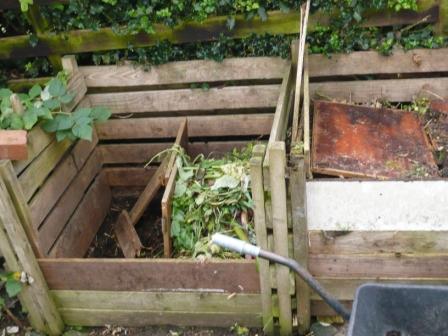
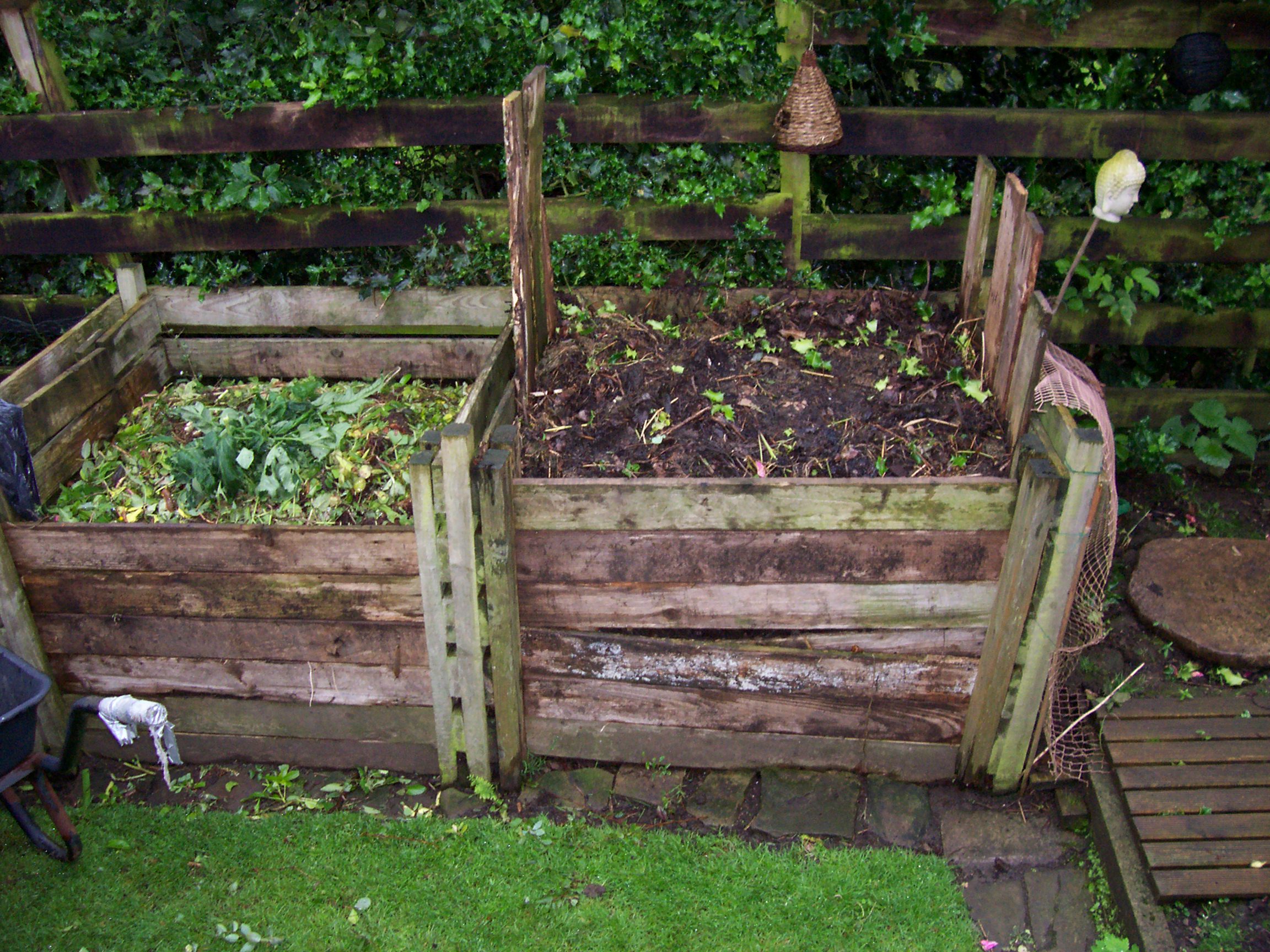
compost bins

Another wet and rainy day and all I can think about is the compost heap (well may be not all).
We all slip up, drop clangers and get it wrong so I thought I would list some of my own compost errors or lash-ups.

Gardening can be like that so I try not to beat myself up when things go wrong. There is always another season and a worse clanger elsewhere.

Soggy Compost Mistakes

  • An over wet compost heap will smell something rotten, really stink and I mean badly.
  • Nutrients will be washed out at the bottom of the heap and lost.
  • The composting process will be slowed almost to a stop.
  • I wish I had covered my heap before all this heavy rain.
  • Good compost needs air so it may help to turn and drain the wet heap.
  • Belatedly I have been putting some torn up newspaper in the heap as roughage and to soak up some excess fluids.
  • Because this time I have built the heap on soil I can reclaim some of the goodness by taking a level of soil when I spread the compost.

Construction Mistakes

  • In the past I have relied on a heap with no sides just a pile. This flattens out and spreads without ever getting to a good heat except perhaps in the center
  • As you may see from the picture below some wood has rotted. You need to use tanalised or treated wood to prevent the structure from rotting.
  • A plastic bin where ‘you can draw clean compost from the bottom whilst refilling at the top’ was an unmitigated, uncomposted disaster but I may not have followed the rules
  • For the first time I have two discrete piles. For too many years I made do and mended with one. Now I wish I had three piles – ho hum!
  • Compost heaped on a concrete base is easy to work, turn and collect for spreading.
  • Leave room for your barrow so you can unload and reload comfortably
  • Do not build too near your neighbors kitchen window or cover your own air grates (mistakes I have previously made).

Compost Content Mistakes

  • I do not put meat products on the heap but last winter a family of rats made a nest in the warm pile
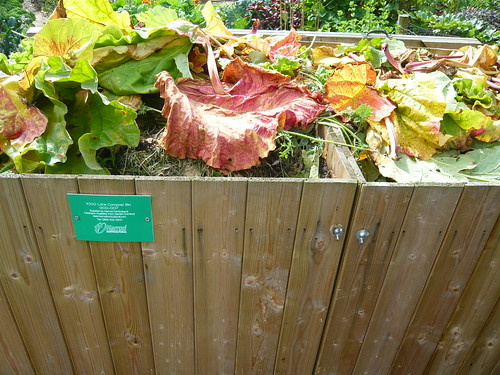
  • For several years I did not compost rhubarb leaves as I heard they were toxic. Of course they rot down and are quite safe.
  • Everyone must have tried to compost too much of the same vegetation and I have had too many grass mowings in a dry clump or a wet mess more times than I should mention. I now try to aerate the pile or turn it over regularly.
  • Leaves from trees take longer to rot, contain less nutrients and are better in a leaf pile or punctured plastic bag. Twigs need to be shredded or cut very small.
  • Seeds from weeds and plants including fox gloves and forget-me-nots do not rot they survive
  • After the mistake of too much water do not forget a dry heap will not rot either – you need some damp or add water when very dry.

wet-heap-july

Compost Mistake Elimination

  • Good compost starts with a range of good materials from a mixture of green plants and shredded brown matter.
  • Fungi and creepy crawlies breakdown the material and they need air and moisture to do their best
  • Heat helps kill pathogens and unwanted seed so keep a lid on a good sized pile and insulate the sides.
  • Turn the pile for even rotting as this stops the edges rotting more slowly
Growing African and French Marigolds

Growing African and French Marigolds

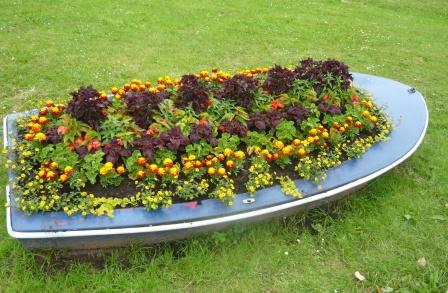
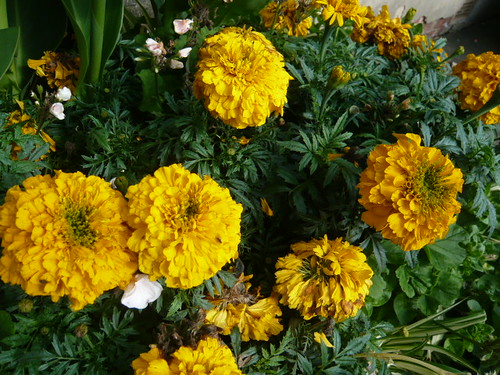
african marigolds

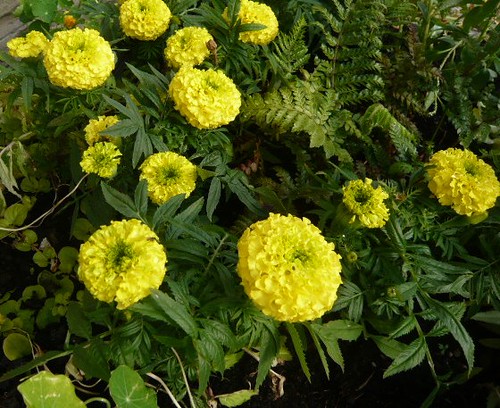
A favorite annual is the Marigold or Tagetes. Bold colours in Yellows, Oranges, Lemons Reds and Creams are a feature of these plants that flower from July to the first frost. Despite the names they all originate from Mexico.

Description of Marigolds

  • Members of the Tagetes family are half hardy annuals that flower profusely from July until September.
  • African Marigold is the taller type 10″ high with flower heads up to 3″ across.
  • French Marigold is a compact, bushier plant suitable for edging to flower beds and paths.
  • Flowers are generally doubles coloured golden, orange, yellow, and white often with maroon highlights.
  • Rounded discs or large florets display vibrant colours on thin deeply cut unassuming leaves.
  • The leaves have a distinct scent that deters some insects.

Cultivation Tips for Marigolds

  • Easily grown from seed these plants flower quickly and can be sown in situ
  • Cover seed with 1/4 inch of soil and provide an average soil warmth of 24°C if grown in a greenhouse.
  • Plant African types 12 inches apart and French types 6-8 inches apart.
  • Deadhead particularly the African types.
  • Can be bought as plug plants in summer.
  • Slugs and snails seem to love nibbling the foliage and can soon denude a plant

african marigolds

Varieties, Species and Types of Marigold

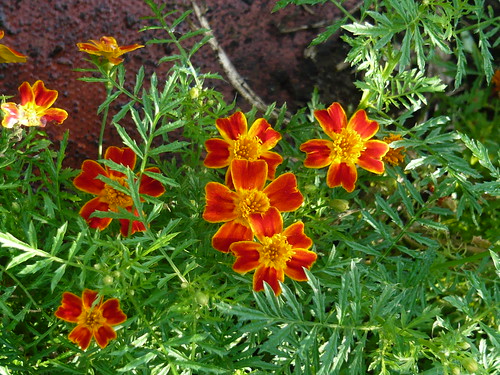
  • Tagetes erecta – African Marigold. Tagetes patula – French Marigold. Tagetes tenuifolia – Marigold gems
  • ‘Honeycomb’ and ‘Safari Tangerine’ have the award of garden merit AGM
  • Marigold ‘Striped Marvel’Tagetes patula has yellow and maroon stripes
  • Pot marigolds or Calendula and Marsh marigolds are a different species
  • Tagetes are the smaller often single flowers. More than 150 years old and still going strong, the heirloom variety of French Marigold Single Legion of Honour fits this description

Tagetes

Horticulture Sources and Advice on Marigolds

  • You can often obtain seeds or plants from our mail order company of choice Thompson & Morgan
  • Easily grown from seed these plants flower quickly and can be sown in situ
  • The ‘French’ varieties tend to be smaller flowers in clusters on bushy plants
  • Africans are larger and showy
  • Some African varieties can grow up to 5 feet tall but have fewer poorer flowers. The finely cut leaves are still attractive. For a medium to tall selection try ‘Crackerjack’
  • Marigold leaves keep white fly away from greenhouse tomatoes and I grow a few plants for that purpose. The roots are also reputed to kill or inhibit some weeds
  • These plants are not to be confused with Pot Marigolds called Calendula

More marigold flower Photographs