Browsed by
Category: Tips Hints and Ideas

Help for the new and not so new gardener

Materials for a Compost Heap

Materials for a Compost Heap

Lots of materials are suitable for a compost heap. Pile in a mix of green and brown organic materials to help them heat up, when biological activity will then be at the highest.
Organic material includes plants and most items that have been growing. Avoid droppings from carnivores such as dogs but other manures are fine.
Type of Material

Ashes from untreated wood potash – use small amounts, it can make the pile too alkaline
Bird & Chicken droppings are high in nitrogen, beware seeds.
Cardboard and manila envelopes tear or shred and dampen
Bio-activator applied as a liquid or activator like Garrotta
Coffee grounds tea bags and filters

Read More Read More

The Grafter Grafting

The Grafter Grafting

Grafting in the 19th century was a significant method of increasing stock of trees and plants as the photograph of East Anglian life by PH Emerson shows.  The objects of Grafting are to bring a bush or tree into an earlier fruiting than it would do naturally; to produce good fruit from an inferior plant; or to save space by putting dwarf scions on to rampant growing trees.
The stock or subject is the base tree and the scion or graft is the portion of the branch to be imported.

Gardeners Tips on Grafting

The best time to graft is in March when the sap is rising.
Suppress all buds that develop on the old stem below the graft.
Use a paper bag to offer some protection once the graft is done
The graft should be inclined slightly inward so the inner bark of the graft makes good contact with the stock.
Grafted vines should be packed in damp moss.
Fruit tree or rose shoots should be firm and well ripened. Grafting material should be from the previous years growth and slightly less advanced than the stock.

Methods of Grafting

Cleft, Wedge or Tongue-Grafting Cut off the top of the stock and cut out a thin wedge-shaped socket at the grafting point. Next cut the scion in a similar manner and wedge in and bind.

Double Grafting uses two scions but sacrifice the weaker one when they both take.

Read More Read More

Beginners Beginning the New Year

Beginners Beginning the New Year

file 1 197

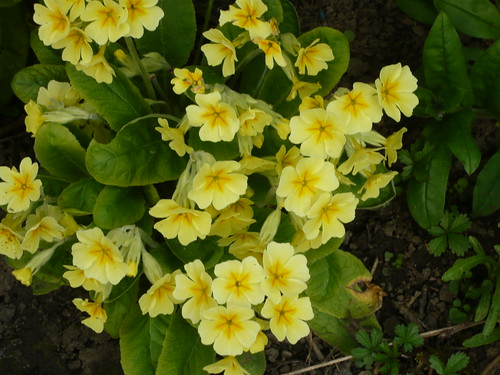
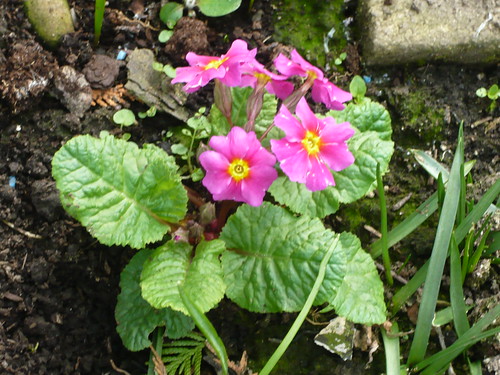
Spring will be sprung on you as soon as the snow and frost disappears. But first we need less rain. There isn’t much you can do at the moment but hope that any bulbs and hardy plants like these primroses are quietly getting ready to burst forth. If you are keen to begin then your first job should be planning and organising.

Begining to be Getting On

  1. Order and plant any bare rooted shrubs and trees. Thet can be planted as soon as the soil is workable ie can be dug and is not water logged. If it is too wet when plants arrive they can be heeled in (placed in a temporary hole and covered with soil or peat).
  2. Scan the seed catalogues and decide what to order and grow from those on offer. If you are a beginner then choose familiar plants and names as they will have stood the test of time with other gardeners and you are more likely to succeed. Avoid exotics and those that say ‘some experience needed’.
  3. Plan to cheat by buying pot grown plants like primulas and pansies to brighten up spring spots and pots. The best ones will have been grown hard in a nursery (not forced in a hot house like a supermarket).
  4. Spread last years now rotted compost where you are going to plant vegetables. What the worms don’t drag down into the soil can be dug in before planting out after March.
  5. Prune trees and grape vines (if you are lucky enough to have any) before the sap starts to rise. For spring flowering shrubs wait until they have flowered then prune back.
  6. Check over any plants or tubers in store from last year. Destroy any rotted items and tend to dry soil with a very light watering.
file 1 180
Best Gardens In China for a Visit

Best Gardens In China for a Visit

lingering-garden

China is one of the great destinations for visiting gardens. The influence over garden design and the vast array of plants and flowers is secondary to the investment in time and dedication demonstrated in so many great locations. This is just a selection of those you may consider visiting if you can make the journey..

The Garden of Contentment has an evocative name that for many sums up the essence of gardening. This feeling of tranquility will be found in many of the gardens we are considering visiting but this Shanghai location is an exceptional place to start our virtual garden tour.

YuYuan Garden

Whilst in Shanghai it is worth a visit to the local Botanic Garden with its collection of old bonsai and many acid loving plants.

For a strange, modern, garden in Beijing the Grand View Garden was built in 1984 to represent a fictional garden replicating one described in a classic Chinese tale ‘ A Dream of Red Mansions’ available in English

For keen gardeners the best location must be the ‘Silk City’ of Suzhou where you have a choice of choice gardens to visit.  The name Lingering Garden makes me want to invent a name for my own patch, perhaps that should be the patchwork garden. The image is of the Lingering garden from Wonderlust and Lipstick inspiring women travellers.

Humble Administrator's Garden
The Canglingting or Dark blue wave garden is deceptive in its use of pools and local scenery whilst the Humble Administrators Garden is anything but humble as the largest garden in the city. The Circular Grace  Mountain Villa blends with the rocky out crops making traditional use of the landscape evocative of Chinese painting.

The star amongst so may great  cultural heritage sites is the The Master of the Nets Garden a household garden and one of the smallest but highly recommended. It is about one thousand years old and is inspirational particularly in the design and linking with the living accommodation.
Imperial Garden in the Forbidden City

See more information courtesy of Travel Guide China
The Master of the Nets Garden

‘Even more than the architectural achievement is the mood of tranquillity and harmony that this humble garden embodies.
This exquisite garden was first designed during the Song Dynasty (960 – 1279) as part of a residence that was used until the Taiping Rebellion in the 1860’s. It was later restored and became the residence of a government official from whom the garden got its name.
The garden is divided into three sections: a residential section, the central main garden and an inner garden. The main garden has a large pond that is surrounded by pathways and a variety of buildings such as the Ribbon Washing Pavilion, and the Pavilion for the advent of the Moon and Wind. There are many more buildings that are situated so that there is never a sense of crowding, but always of spaciousness. As is common in Suzhou gardens, the pond has a small pavilion in it. Here the pavilion is accessible by a bridge that is less than one foot wide.
As you walk about the gardens and along the walkways, there are often views through windows onto beautiful flowers or plants framing them from a distance and drawing you to a single sight, a moment of peaceful natural beauty. As you walk through the buildings, it is easy to imagine the life that the original residents lived in a feudal society where these gardens were solely for their pleasure and the pleasure of their guests. The various buildings are constructed so that you can always access the main garden from any room.’

Guo Zhuang Botanical Garden and traditional private gardens are often on the tour circuit on trips to Eastern China. Other Botanic gardens to consider include Sun Yat-sen Botanical Garden in Nanjing , South China Botanical Garden, Xishuangbanna Tropical Botanical Garden
Kunming Botanical Garden, Wuhan Botanical Garden Lushan Botanical Garden, Hangzhou Botanical Garden and Guilin Botanical Garden.

Book Cover

Great book on Great Gardens in China by Peter Valder
From amazon ‘Valder’s illuminating compilation of more than 200 gardens promises to provide the ultimate resource for future travelers before mbarking on a trip they can study and savor images and information on diverse horticultural realms located throughout China… A lavish record of famed Imperial gardens as well as fascinating examples of lesser-known temples, parks, and botanical arboreta… Encompassing a treasury of plant portraits, stunning architectural details, and awe-inspiring vistas, Valder’s chosen topic is rendered in such depth as to rouse armchair dreamers and act as a call to action for avid garden trekkers.


Credits
YuYuan Garden by Wolfgang Staudt CC BY-NC 2.0 ‘Yuyuan Garden, first established in 1559, is located in the center of the Old City next to the Chenghuangmiao in Shanghai.
Humble Administrator’s Garden by Jan Langhaug CC BY-NC 2.0
Imperial Garden in the Forbidden City by ajft CC BY-NC-ND 2.0
Yuyuan Garden by ksbuehler CC BY-NC-SA 2.0
Yuyuan Garden

Help on Planting Technique

Help on Planting Technique

Kew 332

Have a plan in mind and think about the plants you are going to grow.
Fruit, trees and shrubs will be long term investments and mature over time.
Bedding and vegetables may need different treatment, location, maintenance and nutrients.
Special gardens and collections of plants are even more complex. You almost get out of a garden what you are prepared to put into it!

Prepare Your Soil

  • Eradicate nasty perennial weeds such as Dandelions, Bindweed, Couch grass and Ground Elder.
  • Cover with thick black polythene for at least a year to smother the weeds or use a Glyphosphate based weedkiller like Roundup.
  • Dig the soil 2 spits deep (2 spade depths or 20″). If the sub soil is very poor go one spit deep and create a raised bed to lift the height.
  • Incorporate as much organic matter as you can. Use garden compost, rotted manure, spent mushroom compost and even council recycled and composted waste.
  • Do not worry about a few stones but remove builders debris.

Good Fertilizers

  • Dress the soil with a general purpose fertilizer that releases nutrients slowly. Rake into the top 4″ a week or so before planting.
  • Growmore, fish blood and bone or just bone meal may increase overall fertility.
  • Remember NPK stands for Nitrogen to help green leaf growth. Phosphor for strong roots and bulbs, and K for Potassium for fruit and flowers.
  • Proprietary feeds can be expensive and I would only use them once the plants are growing in situ.

Planting and the Hole

  • You may have heard about a £10 hole for a £5 plant. Well, dig a good size hole, break up the soil in the bottom, place the plant in the hole at the same level it was grown at and firm the soil around the root ball or roots.
  • Stamp around the plant to firm it in again and use a cane or stake as needed for support and protection from wind rock.
  • Plant into moist soil, soak container grown plants before planting and water in after planting.
  • Mulch around the plant (but not touching the stem) to conserve moisture.

Read More Read More

Help Growing on Straw Bales

Help Growing on Straw Bales

Get it right and you can grow bumper crops on straw bales.  It is clean, cheap and environmentally friendly.
The principle is that decaying straw generates heat to form a ‘hot bed’encouraging healthy roots.

Preparing a Straw Bale

  • Watered bales are heavy so get them in the right place first.
  • A polythene membrane will help retain moisture and prevent soil contamination.
  • Water bales thoroughly. If it is very dry soak over 2 or 3 days.
  • Apply 6 oz of dry blood or other nitrogen rich fertiliser over the top of the bale and water in
  • The fermentation will start and the bale heat up. Cover with black plastic to speed up the process.
  • After 4 days remove the polythene and the bale should be warmer than the air temperature
  • Add another 6 oz of nitrogen based fertiliser.
  • Cover for another 4 days then add 12 oz of general fertiliser. The temperature should  peaking at 50 degrees or so.
  • Allow to cool to 38 degrees before planting.

Planting up a Straw Bale

  • With a bucketful of compost make and fill a small hole in the bale. It should be easy to make a small hollow.
  • Add you plants and water carefully.
  • New roots will grow through the compost into the decomposing straw.
  • Chillies, Peppers Tomatoes and cucumbers do well in bales. 2 or 3 plants per bale will give you a good crop.
  • Tall plants need staking but tumbler tomatoes can be allowed to fall over the bales edge.

ornamental-gourds

Advantages of Straw Bales

  • Bales are easy to water and retain moisture longer than a grow bag.
  • Drainage is good and ity is hard to over water.
  • At the end of the season the bale can be recycled as a mulch or added to a compost heap
  • Rotting bales give off carbon dioxide which can be beneficial to crops.
  • Ornamental plants as well as vegetables will flourish.
  • Bales are generally cheaper than grow bags.
  • Straw is better than hay the tends to go mouldy.
  • Liquid feeding is required as straw is low in nutrients.
Watering or Drowning Indoor Azalea

Watering or Drowning Indoor Azalea

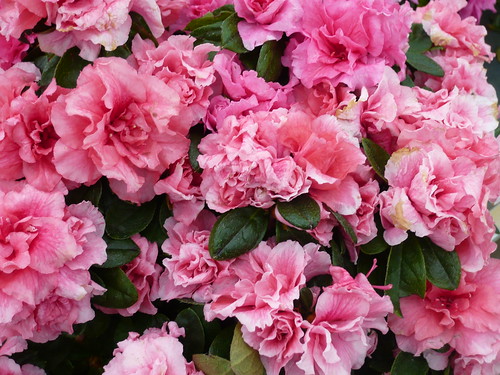
More plants drown than die of thirst but Azalea houseplants do need damp soil.
Azalea

Keeping Azaleas indoors can be simple and straight forward and the often large volume of blossom last longer than when struggling outside against the elements. Most indoor Azaleas are of the evergreen type so unlike some garden azaleas they do not loose there leaves.

Watering Tips

  • Azaleas do not like to dry out preferring a constantly moist soil and humid atmosphere.
  • Water daily if necessary, clay pots dry faster than plastic ones

Read More Read More

Growing Regal Geranium Pelargonium

Growing Regal Geranium Pelargonium

reba-regal

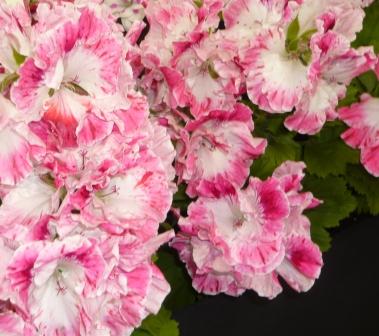
Regal Pelargoniums or exotic Geraniums are getting more fancy and colourful. This pink frilled flower is called Reba Regal. I grow Regal pelargoniums for in house but they can go outside after the last frost although some flowers are a bit susceptible to rain damage.

Tips on Growing Regal Pelargoniums.

  • Pinch out the growing tips to get a bushy plant although most varieties are branching types.
  • Water Regals more  than standard pelargoniums and feed with potash feed as they near flowering.
  • Those with large blooms and ruffled petals need a sheltered spot such as in a porch where they won’t be spoilt by the wind or rain.

    Read More Read More

Gardener’s Mildew Cures

Gardener’s Mildew Cures

If gardeners have left wet leather gloves or shoes in a mild garage since summer they may now be covered in a white dusty substance that is powdery mildew. Powdery Mildew can affect many garden plants and it is especially vexatious on Gooseberries, Roses and Peas. The greying of leaves leads to yellowing, distortion and falling, it is unsightly and damages crops.
For help understanding mildew read these tips.

Mildew Causes and Cures

Stress through dryness at the roots can make plants vulnerable. Water well in dry spells. Do not plant too close to dry walls or in a rain shadow. Add a water retaining mulch.
General maintenance issues bin any fallen or damaged leaves. Well fed plants will have more resistance to disease, apply Growmore or Blood, Fish and Bone at the start of the growing season. Select varieties that are less prone to mildew like Klevedon Wonder Peas or Cascade Brussels. Do not encourage sappy growth with too much nitrogen based fertilizer.
Good air circulation will restrict mildew so prune or thin out branches to create an open framework. Damp humid conditions also favour mildew so water the roots not the leaves. Mildew is spread by spores so do not shake infected material.

If all else fails there are proprietary fungicides and sprays including organic Fish oil blend or Sulphur powder which can help particularly on roses. Powdery mildews spend the winter as dormant infections resting structures or leaves which then release spores the following spring.

Oh and if your boots have mildew you are not doing enough gardening.


Avoidance is better than cure read tips to avoid mildew.

Foul Fungus -Damping Off

Foul Fungus -Damping Off


Solve the problem of seedlings ‘damping off’ by watering your compost before sowing seeds with Cheshunts Compound a soluble fungicide. Damping Off is a fungal disease that attacks seedlings causing them to suddenly wilt, keel over and die. Damping Off is a particular problem when sowing seed indoors or under glass.

Damping Off can affect most seedlings, particularly under levels of high humidity, poor air circulation, low light and temperature that makes seedlings grow slowly and if seed is sown to thick.

Preventing Damping Off

* Raise seedlings in commercial growing compost, which is usually free of the key fungi.
* Ideally, use new pots and trays whenever raising seedlings. If they must be re-used, wash them thoroughly and treat them with a disinfectant such as Jeyes Fluid.
* Never reuse pots and trays in which damping off has been a problem.
* Sow seedlings thinly to avoid crowding.
* Use mains water when irrigating seedlings grown in pots and trays. If using rainwater, ensure that the water butt is covered to prevent the entry of leaves and other organic debris that could harbour some of the damping off fungi.
* Keep seedlings well ventilated to reduce humidity. Do not over-water.

Cheshunts Compound

* Can be used on all seedlings whether edible or non-edible.
* Easy to use, dilute and water the solution onto compost before sowing and repeat after the emergence of the seedlings.
* For transplanting, water seedlings with the solution before and after the transplanting.
* Suitable for organic gardening.
* Cheshunts Compound uses inorganic salts copper sulphate and ammonium carbonate so it is the same type of copper-based fungicide as Bordeaux mixture.

Available from Thompson Morgan
See also Verticillium Wilt