Browsed by
Category: Tips Hints and Ideas

Help for the new and not so new gardener

Tricks of the Garden Centre Trade

Tricks of the Garden Centre Trade

Chevin garden centre

I have observed several tricks of the Garden Centre trade and I am sure there are many more. I am only concerned with those that damage or discourage gardeners unnecessarily. To remain in business nurseries and garden centres need to work with gardening customers not against their best interests.

Dubious Habits and Tricks

  • Putting stock out for sale at the wrong time. This is most prevalent in spring when plants ‘grown soft’ in a hot house environment are put out for sale and to die a premature death unless over cosseted by the buyer.
  • Selling stock too late in the season for the gardener to get any value from the purchase. This often applies to exotics which have only a narrow flowering window and need an expert to get back to any form of glory.
  • Dressing plants up cosmetically just to move the stock. e.g. Early pruning of diseased leaves without treating the cause.
  • Selling bare root plants plonked in a pot with loose compost but no new root growth.

Good Habits and Tricks

  • Keeping the tops of pots weed free and able to absorb appropriate watering.
  • Selling timely plants that have been hardened off. I do not want a Dutch glasshouse plant straight off the lorry if it is not going to thrive.
  • Specializing and growing their own stock that the garden centre fully understands and being willing to pass on the knowledge.
  • Good trained staff, sensible opening hours and a tidy display of healthy products.

Help us Learn More Tricks

If you have fallen foul of a trick or dubious practice let us know.
If you have received excellent service let us know.
If you are a garden centre or nursery and want to raise a point similarly let us know.

Bergenia for Winter Foliage & Spring Flowers

Bergenia for Winter Foliage & Spring Flowers

The best Bergenias have leaves that turn  a strong colour in Autumn. These purple leaves look good in the December garden when compared to the ‘Elephant Ear’  green varieties of Bergenia. These plants tend to be lusty and the rampant, leathery leaves may need cutting back to keep the plant in control.

Easy Bergenia Growing

  • Bergenia ciliata make good ground cover plants 1 -2 foot tall depending on the variety.
  • Bergenia cordifolia varieties have smaller leaved varieties that appeal to me for this red and purple winter leaf colouring.
  • Cuttings from the rhizomes are easy to root and plants spread naturally in most conditions including shade.
  • The lime green varieties may be larger leaved and more robust if you wish to cover large areas.
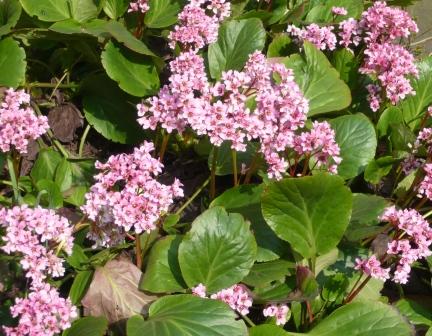
  • They flower on stems of pink bells in clusters. Begenia Eroica is said to flower for longer.
  • Dead head the flowers for a continuation of flowering.

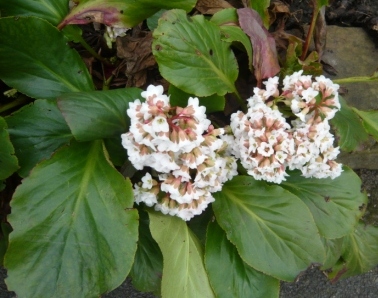
white-berginia

  • This flower is clear white but the buds are a rose pink.
  • Bergenia have large succulent stalks and like a dampish shady spot
  • The rhizomes spread and the plant is useful for covering large difficult areas like scree banks. It is too large to sit well in all but the largest rockeries.
  • Bergenia varieties including Bressingham White, Baby Doll, Rotblum and Bergenia cordifolia are shade tolerant although better sun means better flowers.
    pink-berginia

Bergenia has some medicinal properties and uses see

Bergenia from amazon

Successful Staking for Perennials

Successful Staking for Perennials

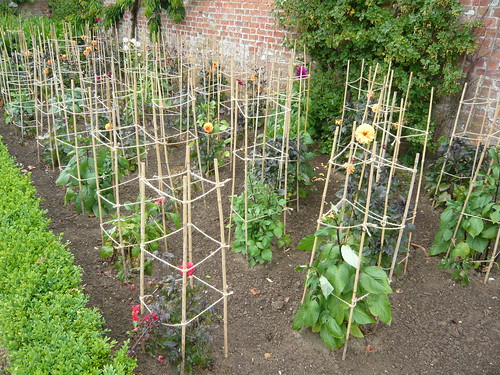
There is an art and a science to successfully staking your perennials and young plants. It can make a significant difference in a herbaceous border. Dahlias like space to themselves and can then produce a large individual plant, you may think these stakes are a bit optimistic.
Dahlia stakes

How to Stake Perennials

  • Staking should be done when the plant is about two-thirds of its final size. This is often late April or May.
  • You need to judge how wide the plant will grow as well as how high.
  • Surround the plant with a ring of stakes about every 8-12 inches
  • If using Hazel stakes, weave the tops together to form a cage that the plant stems can grow through. Bought wire mesh can achieve the same effect and will be hidden when the plant completes its growth.
  • Cut the bottom of the stake at a sharp angle so it goes into the ground more easily.
  • The life of organic stakes can be increased if you shave off the bark and pith on the part of the stake that will be pushed into the ground.

Newby Hall gardens plant support

Types of Stakes for Perennials

  • Birch, Willow and Hazel all make good stakes because they are pliable and twiggy.
  • Bamboo canes are popular and can last 2-3 seasons.
  • Plastic coated link stakes are designed to fix together. As long as the ground is even they work quickly
  • Do not forget garden twine to support the plant. I like to tie string across as well as round but that depends on the weight of plant material and flowers.
  • Tieing a stem to a single stake make a figure of eight loop around both to avoid cutting into the stem.

Newby Hall gardens 2012 116
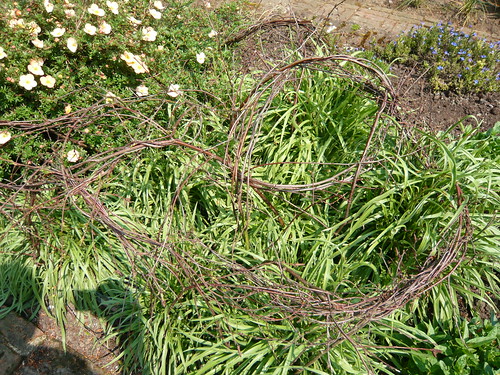
This picture above is of a large arching cage built to support a climbing flowering plant like a clematis support. There are no hard and fast rules for staking but try to make the end result unobtrusive.

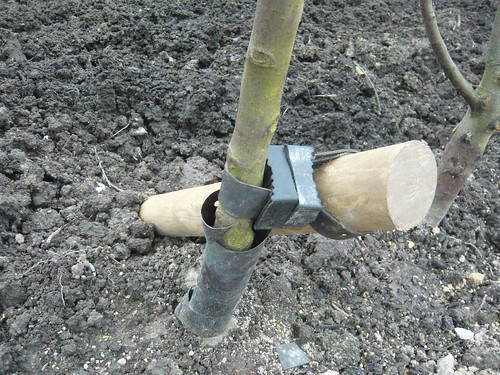
Below is an angled stake for use where the wind is high and you want the tree or shrub to be able to sway around to build up strength.
tree stake

Top Ten Don’ts in Gardening

Top Ten Don’ts in Gardening

Kew 295

Top Ten Don’ts in Gardening

  1. Don’t worry about getting it wrong, have fun and enjoy.
  2. Don’t buy expensive, exotic plants that you saw on holiday because they are better grown in hot countries or conditions (like the orchids above).
  3. Don’t set your sights on having a manicured bowling green type lawn unless you are a dedicated bowls player willing to act like a full-time groundsman.
  4. Don’t make your life too difficult. Put high maintenance plants where you can reach them and paths and stepping stones where they can give you good access.
  5. Don’t forget to keep everything looking tidy, trim lawn edges and put pots and tools out of sight (it’s what a garden shed is for as well as resting in).
  6. Hawaii Tropical Botanical Garden

  7. Don’t skimp of the quality of your main tools like your spade, trowel, watering can and fork but avoid wasting cash on gadgets and gizmos.
  8. Don’t forget this year nationally frost will kill more annuals by early planting than insects will kill by eating.
  9. Don’t ignore your plants need for sunlight, water, food and a growing medium.
  10. Don’t judge your garden against the glossy pictures in gardening magazines (they will have been touched up) or from flower shows where prize exhibits will have been selected from 100’s or 1000’s of plants.
  11. Don’t let anyone put you off, garden the way you want, enjoy the results and share your enthusiasm.

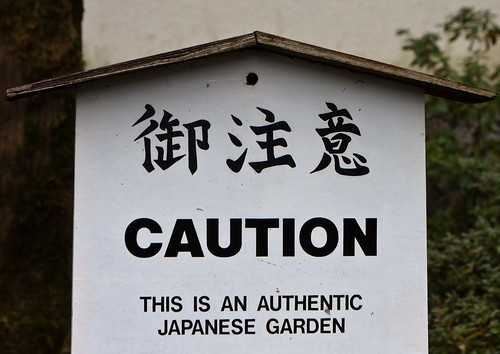
Caution: Japanese Garden

Credits
Hawaii Tropical Botanical Garden by pablo_marx CC BY-NC-ND 2.0
Caution: Japanese Garden by ~dgies CC BY-NC-ND 2.0

Gardening Holidays to Dream About

Gardening Holidays to Dream About

Real gardeners don’t want to go on holiday between April and September as there is too much fun to be had in the garden at home. There are other matters that come into play and well planed holiday can also give a keen gardener new interests and ideas.

Temptations are now wide spread in the form of organised tours
Alternatively you can make your own arrangements which retains flexibility and the opportunity to please other members of the family. In addition to UK resorts like  Cornwall and the Scilly Isles there are many hidden gardens in The Languedoc region of France, Monet’s Garden at Giverny, Gardens of Tuscany, the Italian Lakes, Sorrento, Ischia,  and Green Spain to list but a few.

Shape and Form in Your Garden

Shape and Form in Your Garden

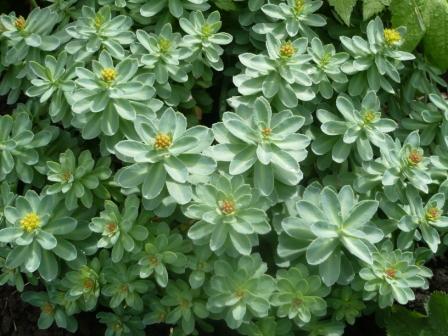
sedum

Sedum Rhodiola rosea

A garden needs visual variety and I hope we show some of that on Gardeners Tips. I know the senses we tend to focus on are sight, taste and smell but hearing and touching have their place.

Seeing Your Garden

  • Colour is often the most striking way our sight is stimulated but take time to consider and inspect the subtle variations you can achieve from leaves, barks and young shoots as well as flowers.
  • If you like topiary you will understand the impact of form and structure in your garden. Structural design can impart the essence of a gardens formality, informality or sense of fun by the features chosen and the way they are implemented.
  • The Form some plants take is also important and often the leaf or petal arrangements can be very attractive in their own right – Mother Nature knows what she is doing.
  • Texture can be seen and felt and soft grasses can complement furry leaves.

Read More Read More

Best Value Cold Frames

Best Value Cold Frames

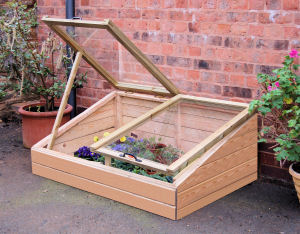
coldframe

Series of well ventilated cold frames.

Cold Frames are an excellent low cost method for developing and growing young seedlings. Cold frames make a good alternative to the the cost and size of conventional greenhouses.
To some extent you can make your own cheap cold frames. See this post – Home Made Cold Frames. I have just used a redundant double glazing unit to make a cold frame for my alpine plants.

Cold Frame


A good cold frame needs to have an easy mechanism for allowing air in. The cold frame can then be closed at night to protect seedlings against frost. This wooden variety helps keep the heat in. For best results keep at a south facing wall. The wood also makes quite an attractive feature for the garden.

The only problem with cold frames, is that  once you realise how useful they are, it soon becomes full and you start wanting a greenhouse! Of course, a cold frame can be an excellent choice for those who find the greenhouse overflowing at this time of the year.

Cheapest Cold Frames

Some of the cheapest cold frames can be bought for under £50. This Gardmen cold frame holds 6 seeds trays (1000mm *650mm) and can be bought for less than £50. Cold Frames at Amazon.co.uk

The smallest Greenhouses (6ft * 6ft) will come in at over £200. Greenhouses

Mulch around Red Shoots of Spring Peony

Mulch around Red Shoots of Spring Peony

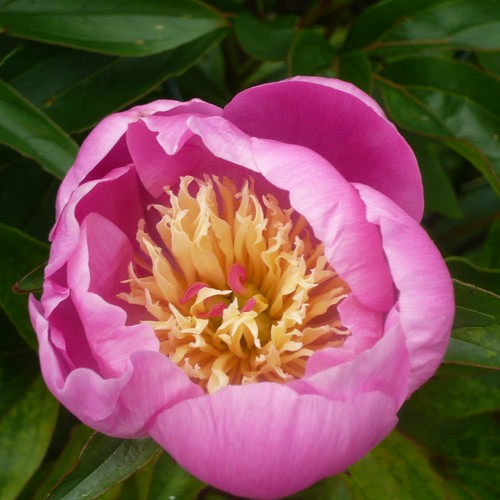
Peonie

A four foot square clump of plump new peony shoots were highlighted at Kew Gardens by the grey, gravel mulch around them. I have not suffered from slugs on Peonies, nor have they had problems with rotting, so I do not put gravel around my plants. However if it is OK for Kew then I guess it is OK for me. At least it would be a decorative improvement on my bare soil.

Ask two gardeners about mulch and you will get three answers. For example when asking about mulching Peonies I got these answers ‘Three popular choices are straw, compost or dry leaves.’ ‘Some popular spring mulches are shredded bark, pine nuggets or straw.’ So no gravel there then!

Planting too deeply may prevent the peony from flowering, they do better for a bit of frosting on the crown apparently. Peonies can live for over 50 years and mine flower just fine so I am leaving things as they stand ie. very occasional autumn mulch when the compost heap has generated compost to spare .

peaonie

Tips Prior to Mulching

  • Remove any weeds that are growing near the peony shoots or stems. Weeds take water and nutrient and look bad.
  • Fertilise in spring with a dry compound like growmore.
  • Fertilise again in autumn with a potash based feeder.
  • Remove ant rotting vegetation that may harbour fungus or disease.
Childhood Shrubs Privet and Golden Privet

Childhood Shrubs Privet and Golden Privet

Privet
Privet in flower

Privet ‘Lingustrum Vulgare’

Where has all the ‘Privet’ gone? In my youth it seemed as though every small garden was kept private by a neatly clipped Privet hedge. If it wasn’t clipped it went hay wire.

  • Privet is usually described as evergreen or semi-evergreen.
  • It loses some leaves in the winter, but not all of them and will grow almost anywhere
  • Green privet must be kept cut otherwise it becomes very open and loses its effect.
  • Particularly good in windy areas and by the sea.
  • Privet can withstand very hard pruning to get it back in shape
  • Privet is hard to remove as the roots are tenacious.

privet lives
Privet Hedge around tennis court.

The posh gardens near us had golden privet that was light green with a yellow stripe but most of us had a dark green hedge. There are Yellow-leaved varieties available which are smaller than the green-leaved type.

  • Yellow Ligustrum ovalifolium aureum has wonderfully scented if fairly ordinary looking white flowers in the spring.
  • Height and spread: 12ft x 12ft
  • Growth needs cutting twice a year but leaves can be bisected. Clipping may take away most of the flowers.
  • Propagation by cutting is very easy

Credits
Privet by jwinfred CC BY-NC-ND 2.0
privet lives by Yersinia CC BY-NC-SA 2.0

Good Tips for Saving Water in the Garden

Good Tips for Saving Water in the Garden

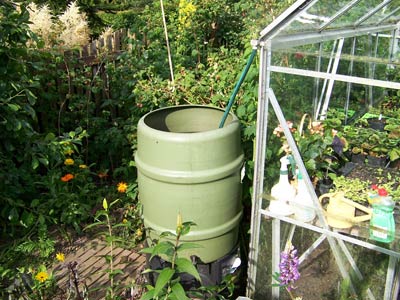
water butt

Recent years, have seen an increase in the number of hot dry spells here in the UK. Conserving water has therefore become increasingly important. Conserving water does not just save money (for those on water meters), but also helps the environment and helps maintain a healthy garden.

1. Install Waterbutt.

The water butt here is attached next to the greenhouse roof, so fills quite quickly. Don’t just install one water butt if you have a large garden use several storage devices for saving water in the garden. Note it is a good idea to use a lid to prevent water evaporation and insect infestations.

2. Saving Grey Water for the Garden.
Grey water from the bath, shower, washing up or washing machine can be used for Saving Water in the Garden. Never use water from toilets or dishwashers nor water containing bleach on your plants. Some experts recommend not using saved grey water on food crops such as soft fruit or vegetable crops.
Grey water can start to smell if stored so get it out intpo a bucket and use it as soon as possible.

3. Mulch in Spring.

In late spring, when the ground has warmed up and the soil is thoroughly moist, you can add a generous organic mulch to the top of the soil. This will help to keep the water moisture for longer. If you are adding organic matter, such as rotted manure, to the soil, it will also help improve the condition of the soil and improve its water retention capacities. This is particularly important for sandy soils.

4. Don’t Fight Conditions.

If you live in a hot, dry climate or have a poor sandy soil, don’t try to grow lots of moisture loving plants. Instead, choose plants which thrive in dryMediterranean conditions. These are often plants with thin greyish leaves, for example, lavenders. This does not mean you will be restricted to growing cactus, there are many colourful plants which can thrive or  at least tolerate dry conditions e.g. pelargoniums.

5. Water Properly

When watering make sure the watering reaches the roots of the plants. If you water frequently but little, the watering may do more harm than good. This is because the water won’t penetrate and so the roots will be encouraged to grow up to the surface. Therefore, it is better to encourage deep roots through infrequent watering. This way you use less water, but, it is more effective.

6. Water in Evening.

If you water in the morning, the water is more liable to evaporate in the day’s sun. If you water in the evening, it gives chance for the water to soak down into the ground.

7. Water into a sunken pot.

If you have target plants or trees to water, it is helpful to sink  a pipe or plastic pot into the ground. This means the water is targeted to the roots of the plant and doesn’t run off the top of the soil. Water deeply and infrequently for effective results with minimum water usage.

8. Don’t use a sprinkler

A sprinkler is an ineffective way for watering a border. Alot of water is wasted; it is better to target the water directly to base of plants; watering those who need it most.

9. Rainwater Harvesting
The concept of capturing rainwater and storing it for later use is well documented from pre-Roman times. New underground systems are available as a retrofit so you can save water for your garden and household use. Read more from the UK Rainwater harvesting association

10. New Build Rainwater Capture
Progressively new houses are being built with better capture systems. It saves drainage work and run off issues as well as providing an eco-friendly supply of water.

11. Drip Feed Water Saving
Irrigation systems such as those based on drip feed watering is very useful for the greenhouse and containers. No water is wasted and the gardener is in control.

12 Self Watering Pots and Trays
Put a saucer under your garden planters and pots. I water from the bottom by filling the saucer. Some pots now have integral water holding facilities useful for salad crops and hanging baskets.
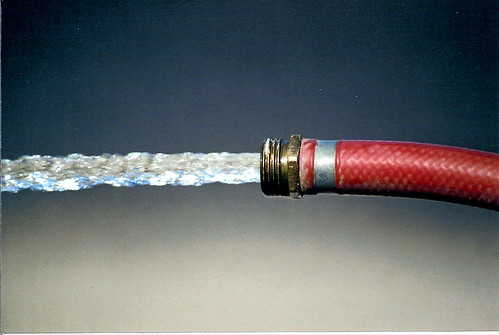
GARDEN HOSE - WATER
Hosepipe and sprinkler ban – not yet in the North of the UK

Credits
Best Time to water your garden
How to water your garden
Xeriscaping and Other if in drought Watering Tips
GARDEN HOSE – WATER by Beth Kingery CC BY 2.0

If you know of any other tips for conserving water in the garden, please let us know in the comments below.