Browsed by
Category: Tips Hints and Ideas

Help for the new and not so new gardener

Growing Monkey Flowers Mimulus & Musk

Growing Monkey Flowers Mimulus & Musk

Not a relative of Monkey nuts nor peanuts when it comes to colour.

Musk

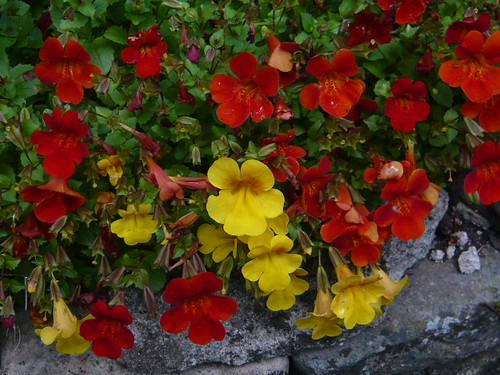
You can learn strange facts about nature from Gardener’s names for the different plants. Monkey-flowers are so named because some  flowers are shaped like a monkeys face and others have painted monkey faces.  Some species of Monkey flower (Latin name Mimulus) have a wet aromatic smell hence another gardeners name ‘Musk’.
However the item that caught my attention was Monkey flowers provide for for the Mouse Moth.

Growing Monkey Flowers

You can easily grow annual Mimulus from seed and they flower in 7-8 weeks.
You can also grow perennial Mimulus cupreus or M. luteus and in mild areas another Mimulus, the Scarlet Faced Monkey flowers may be hardy.
Most Monkey flowers grow in moist or wet soils with some growing in bogs or shallow water.
You can grow from plug plants called Magic rainbow
Monkey flowers grow well and bloom in partial shade.
Mimulus genome is being studied in depth and you can find out more at the Mimulus Community.

In the meantime I wait for the newspaper headline ‘Mouse eats Musky Monkey’
Musk

Plant Thickly for Maximum Effect

Plant Thickly for Maximum Effect

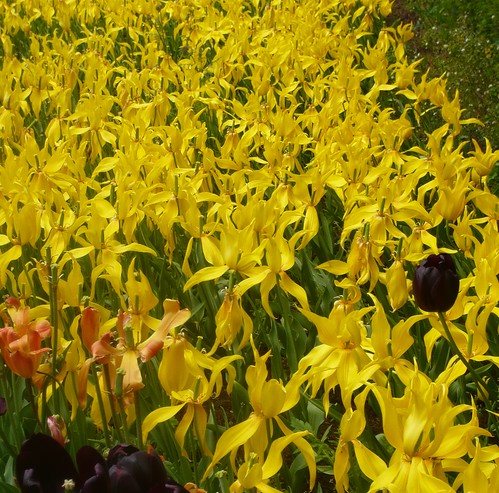
‘…when all at once I saw a host a host of golden daffodils’…

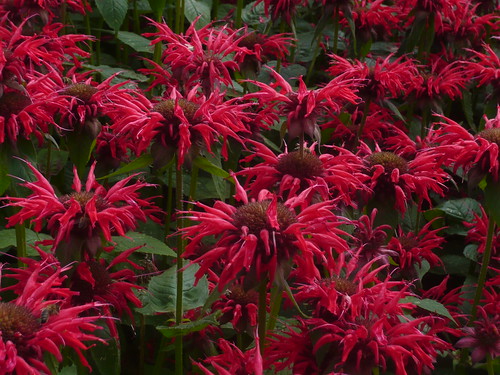
Monardia Gardenview Scarlet
I do not want to look at soil so I try get plants that will do an effective job!
Why sow one when 100 will create a staggering display?
Why plant in small numbers when a surplus can be used for a flower arrangement or given away to friends and neighbours?
Why not garden to ‘shock and awe’ by maximising the impact of colour in a bed or border?

tulip pattern

Why read this idiot if you don’t agree with his views? (Oh I see from Google analytic s you are no longer a reader – shame)
Why use the penultimate letter of the alphabet to pose these queries?

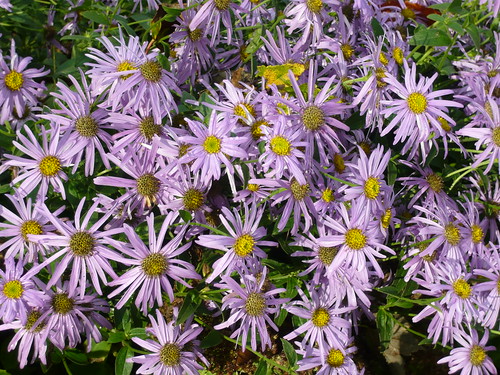
Aster

Elephant Garlic 10 Tips

Elephant Garlic 10 Tips

A Mediterranean diet is allegedly good for us so eat more tomatoes and garlic.

Elephant garlic is an allium but not a true garlic. It is technically a stem leek which produces massive bulbs approximately 4 inches in diameter. The cloves are also much larger than conventional garlic with a milder taste making it suitable for a wide choice of culinary uses, especially roasting.

Top 10 Tips

  1. Suitable for Spring or Autumn planting I am starting mine off in February but I could wait as late as May.
  2. Cover the individual cloves with one to one and half inches of soil over the top of the clove.
  3. Give each plant space to grow, 6 inches plus.
  4. Garlic responds to well dug soil with adequate amounts of phosphate and potash.
  5. Sulphate of potash will help protect against rust disease the main problem with garlics.
  6. Never let the plants run dry until a couple of weeks before harvest.
  7. As harvest approaches lift the head with their green leaves.
  8. Hang is a warm dry area with all the leaves attached until there is no moisture in the necks.
  9. Store in a warm, dry place, a cool place will encourage the cloves to sprout.
  10. The curly flower stalks also called scapes should be removed to concentrate growth into the bulb. The flower arrangers may have different ideas.


‘Elephant garlic sprouts small bulbils on the cloves or on the leaf bases, usually at least three per head. If these become detached from the parent bulb and left in situ they develop into rounds. If, however, bulbils form at the leaf tips it is not elephant garlic, but Babington’s Leek, which some growers mistakenly offer as elephant. According to the National Vegetable Society
The best crop will be produced on light, friable, well drained soil in full sun.
When planting ordinary garlic plant only the outer cloves from each head. Those cloves, that is, with one rounded and one flat side, the inner cloves, which are square or triangular in section, should be used in the kitchen.’

Roast Garlic

To buy a selection of Garlic at Thompson & Morgan click here.
For more read Tricks to get great garlic

Growing Top Ten Euphorbia

Growing Top Ten Euphorbia

The most popular Euphorbia purchase in December is the poinsettia but many cacti are also Euphorbias.
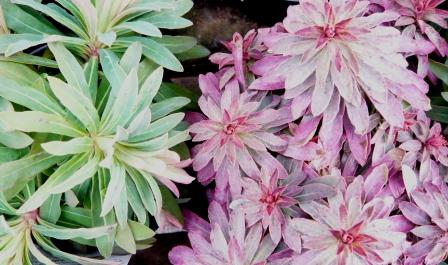
euphorbia

Euphorbia is one of the most diverse genera in the plant kingdom with over 2100 species. Members of the family and genus are sometimes referred to as Spurges. They range from annual weeds to trees. They all have a latex sap which can be an irritant and a unique flower structure. Many Euphorbias are succulent and the characias species are an architectural perennial with fresh bluish-green foliage.

Top Ten Euphorbias

  1. Euphorbia milii or Crown of Thorns is a succulent houseplant which has spiny stems and comes from Madagascar. Easy to grow in cool, bright conditionsit is propagated from tip cutings.
  2. E. griffithii ‘Fireglow’ one of the few euphorbias with orange-tinted bracts and a red flush to its leaves. ‘Fireglow’ has the Award of Garden Merit (AGM).
  3. Euphorbia pulcherrima is the plant often associated with Christmas the Poinsettia with flame red bracts or cream and pink varieties for indoor growing.

    Read More Read More

Tips for Growing Mint

Tips for Growing Mint

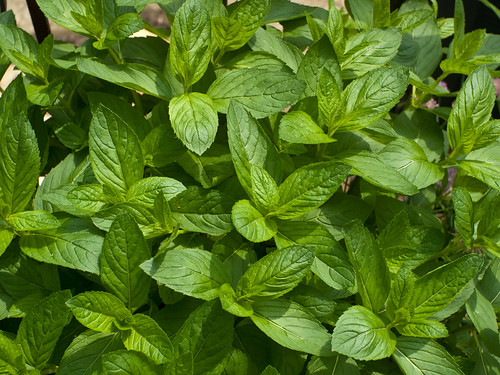
Mint is a flavour-some herb. Growing good leafy plants is easy, too easy when it tries to take over.

Mint is perennial and clumps up or spreads quickly so a good tip is to constrain the roots in an old bottomless bucket. Mint likes fertile ground and the roots will travel in search of better conditions. Large clumps can be cut back in autumn, on one side encouraging growth then next year on the other side so the plant is encouraged back.

Oberlin Summer - Mint

Mint Cultivation and Growing Tips

  • Mints grow in shade, partial sun and full sun although they prefer cool, damp, shady locations. They like poor and stoney soil.
  • Mint’s strong scent wards off insects and can be quite effective if planted with cabbage and tomatoes.
  • Mint attracts few pests or disease and doesn’t need fertilizer. If you get brown spot on the leaves destroy the plant.
  • Mint has the best flavor if trimmed every two or three weeks.
  • Use the newest young leaves for the kitchen.
  • Pot up some mint into a pot and grow in doors.

Read More Read More

Growing Fothergilla Shrubs

Growing Fothergilla Shrubs

A cottage garden structural shrub that is making a comeback in popularity
fothergillia

All plants and shrubs seem to move in and out of fashion and Fothergilla are currently enjoying a cult status amongst many gardeners. However they are not so commonplace that you should be put off growing one.

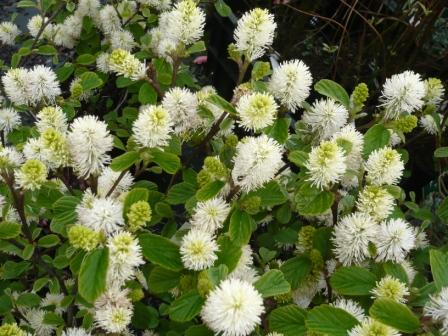
Fothergilla major is a favourite plant for Autumn colour of reds, oranges and yellows that also produces frothy and fragrant white flowers in mid Spring. The spring leaves are glossy, dark green and rounded with toothed edges. Fothergilla leaves turn brilliant shades of red, orange and yellow in autumn. This deciduous shrub can grow to 20 feet but is best restricted in a small garden. It produces suckering stolens that may be propagated and plants can also be grown from seed.

Fothergilla gardenii or the Dwarf Fothergilla also called Dwarf Witchalder grows upto six foot high and is a better mannered version of Fothergilla major. All Fothergillas seem to like wet or moist soil and they should not be allowed to dry out.

A superb introduction from Commercial Nurseries is Fothergilla Blue Shadow with powdery blue foliage that was discovered as a sport from the cultivar ‘Mount Airy’.

Garden Colour Wheel – Hints and Tips

Garden Colour Wheel – Hints and Tips

Am I a bit colour blind? I see shades in black and white because I do not think and digest what I see.

Colourful gardens are not hard to achieve but here are a few hints and tips to help you with various aspects of planning and using colour.

Tips and Hints for Colourful Tints

  • Light creates colour so think about the Sun’s effect in the morning, around mid day and in the evening. It has a cooler temperature and helps yellows and pastle colours early, can burn out soft colours in the full glare but adds warm tones later in the afternoon. Look at some old photographs to see what I mean.
  • Throw your own light into dull corners by painting trellis and furniture white. Light coloured bricks, paving and gravel can also make a huge difference.
  • Small gardens appear larger if you place soft colours furthest away with vivid colours nearest. For the appearance of width put dark blue at the back and pastels at the front.
  • Vivid colours make pastel colours seem washed out so separate them with the neutrality of white flowers.
  • Soften large areas of blue with its complementary colour orange. A complementary colour is directly opposite in a colour wheel. So red and green work well.
  • Cream, white and mauve can have a peaceful tranquil effect.
  • It is easy to forget the colour of a flower so tie a piece of coloured nylon yarn to the plant. Then when you move it or plant a companion you know what you will get.
  • Green is the predominant colour in the garden and has more shades than any other colour. Mix variegated leaves and yellow leaved plants for effect.

Read also Purple coloured flowers on Gardeners Tips
Orange Flower Photo club
This extract is from Red and Green in the Garden
Colour is classified in three ways.
1. Hue- This is the kind of colour and whether it is intense or greyed
2. Brightness – is the total light reflected that provides the tone or luminosity. It is how the eye perceives light to dark colours.
3. Saturation – Is intensity or pureness. spectral colours are the maximum intensity the eye can appreciate. Mixed with any other colour reduces saturation.

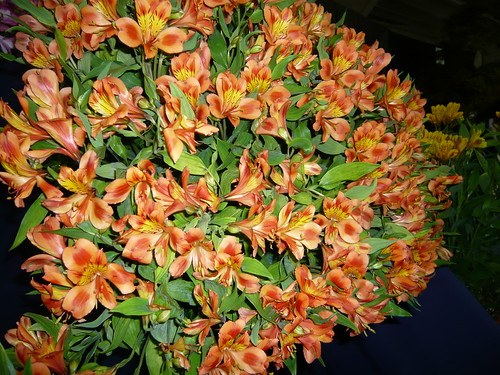
Alstroemeria

Wheel shaped arrangement of orange Alstroemeria

Quirky One Off Gardening Tips

Quirky One Off Gardening Tips

Give slugs a slug of beer to drown in. Birds succeed in your garden if you give them seeds to suck!

Gardeners Tips want to live up to its name but it is hard to make a full post out of some small tips. So here is a few uncodified items that may be of use.
Why not pay a visit to ‘the less fattening flower show’ your own Lo-cal flower show.

Vegetables
Parsnip seeds are often sown too early and rot. In April put seeds in the fridge for a week, to help break dormancy, before sowing. Bring back to room temperature, allow to dry, sow and mark the row with radishes that germinate quicker.
Grow green Soyabean seeds  ‘Envy’ or ‘Agate’  this May for 20+ pods per plant but add rhizomatous bacteria to the soil when sowing.
When herbs flower they loose some flavour so cut Chives and Fennel to the ground and other leafy herbs down by half as soon as they have flowered.
Pinch out the top inch of broad bean plants when you spot any black-fly.
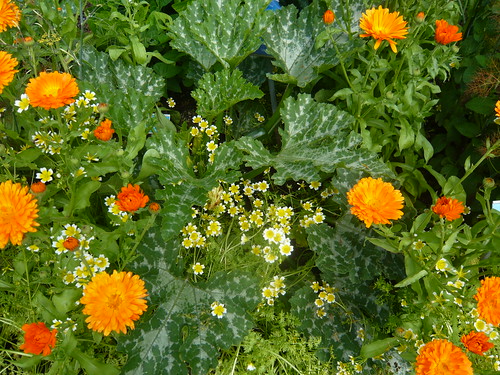
Calendula ‘Pot Marigolds’ help keep green and black flies off your veg

Coloured veg plot
Practical Gardening
Water plants from a water butt as any water direct from the mains is likely to be cold.
Black plastic pots get hotter than the terracotta equivalents by absorbing the suns heat. It suits some plants but dries out quicker so I use one size larger than normal.
If planting bulbs in pots the deeper the pot the taller the bulb and flower is likely to grow.

Pruning
Prune Lavender in August to remove old flowers and a couple of inches of new growth but do not cut  into old wood. Then in March lightly trim again to tidy up. Put August prunings in a sandy soil as cuttings to propagate new plants.
There is no law that says you must prune Roses. Left alone they will be fine, more roses are killed by over pruning than anything else.
Cutting dried or desiccated plums from a tree is not pruneing. Prune prune-plums in summer.

Primula & Polyanthus Seed Sowing Secrets

Primula & Polyanthus Seed Sowing Secrets

primulas

There should be no great secrets to sowing seeds of one of our favourite genus the Primula. However with in excess of 600 species and 30 different groups or sections you need to be on top of your seed sowing game.

Primula allionii

Secrets of Timing when Sowing Primula

  • Nature sows seeds soon after flowering. If it is good for mother nature it likely to be good for gardeners.
  • On the other hand most seed can remain viable for several years. Keep the seed in packets in a screw-topped jar and store in the cool & dark preferably in a fridge
  • If you sow before the end of May the plants have time to develop before winter.
  • Sowings can be made up to the end of July as long as you keep the seed compost cool and moist.
  • The later you leave it the more difficult it is for small plants unestablished Primulas through a winter season.
  • Primula seeds germinate best when they are fresh and ripe.
  • Alpine Species generally benefit from natural freezing and thawing to get them germinating so it’s important to sow as early as possible.

Read More Read More

Thrive in the Garden with Disability

Thrive in the Garden with Disability

newby-hall-009

Thrive is a national charity that helps people with a disability to start or continue gardening. They have specific assistance for wheelchair users, those recuperating from heart disease or strokes and many other tips and assistance. I am indebted to them for these tips and ideas that we can all learn from.

Tips on Garden Design for all Disabled Gardeners

  • Garden layout can make a real difference to how you enjoy gardening. Depending on your disability, it might be easier to focus more on container growing. Make sure any ground level areas are low maintenance to keep the digging and weeding needed to a minimum. Plan plenty of seats around the garden to save your energy and have some shady areas where you can sit to garden on hot days.
  • Avoid large lawns and lawns with sharply curved edges as they will be more time consuming to maintain. Consider having a semi-wild lawn with mown paths to save time and effort. Lawns are difficult to manage so consider replacing some or all of the lawn with a hard surface.
  • Borders will be more manageable if you can reach across them easily. So make your flower borders no more than 2 foot wide if you have access from one side, or 4 foot wide if you can reach from all sides.
  • Containers and raised beds can look attractive and are ideal if you want to start gardening on a small scale. A raised bed can be raised just a few inches, or could be at a comfortable height for you to sit or even stand.
  • Ponds can be a delightful garden feature but be aware that maintaining a pond can involve heavy jobs like clearing weed, and open water can be a danger. A small raised pond might be safer and easier to maintain and it will be easier to enjoy sitting down than a ground level pond. Why not look at installing a low maintenance water feature instead of a pond so you can still enjoy the sound and visual interest of flowing water.
  • You’ll feel safer and will be able to get things done faster if all your paths are even, with a surface that gives good grip. A 3 feet wide path is recommended as a minimum. Changes in level are a common hazard in gardens so consider installing ramps.
  • Consider having a table outside for gardening jobs like seed sowing and potting up. A recess in the table will make it easier to reach things. Plan in water butts or stand pipes around the garden to save time and effort when watering.
  • Take time to choose any paving – it should be non-slip and non-glare.
  • Always choose safe power sources for any power tools or mower that you might want to use. All electrical equipment should be fitted with a residual circuit breaker.
  • Plan how you are going to move things around the garden. Twin-wheeled lightweight barrows, barrows to use one-handed, trolleys or flexible buckets are options that can save energy and strain. Choose a composting system that suits you – there are many different models and bins can be positioned at different heights to save bending.
  • Get rid of or avoid plants that cause you problems – rampant growers, plants that take up too much space, plants that are hazardous to you, or that cast too much shade.

Other Links

Royal Horticultural Society RHS ‘Gardening for All’
National Council for Conservation of Plants and Gardens ‘Conservation through Cultivation.’
Garden Organic National Charity for Organic Gardening.
BBC Gardening