Browsed by
Category: Environment & Green Gardening

Tips for ecologically friendly gardeners and gardens that green and protect the environment.

Cure and Avoid Blackspot on Roses

Cure and Avoid Blackspot on Roses

Black spot

Black spot is an ugly and plant threatening, fungal disease causing problems with Roses. Due to ,my inattention my roses were ravaged this year!

Avoid Black Spot

  • Keep the ground clear of any diseased leaves or plant matter.
  • Burn affected leaves, do not compost as this just recycles the spores.
  • Use clean tools or dip them in fungicide particularly those that contact the sap like secateurs or loppers.
  • Buy disease resistant varieties of rose.
  • Allow air to circulate. Black spot likes humid conditions so water carefully.
  • Beware black spot can be transmitted from plant to plant. Good hygiene is vital.

Treating Black Spot

  • Remove and destroy infected material.
  • Spray with a systemic fungicide on both sides of the leaves and the stems of affected plants.

Read More Read More

Homemade Organic Garden Sprays

Homemade Organic Garden Sprays

If you do not want to use chemical sprays on your vegetables and plants, how will you protect your crops.
There are several organic sprays you can use and many can be prepared simply at home or in the garden shed.

Organic Tips

  • Well you could try mix your own but test them on single plants first, monitoring effects for a couple of days.
  • Several DIY recipes are available but I use a very weak solution of Comfrey water as a foliar feed. I put a good bunch of leaves in an old water butt for a fortnight then dilute the liquid to a weak tea colour.
  • For insect infestation try a stew brewed from rhubarb leaves and a bit of vegetable oil. Crush the leaves then poor boiling water over it and let is soak for a day or two then drain off and dilute to look like weak tea and spray of water it on after adding the oil to help it stick to the plants.
  • Recommended for Roses is a pyrethrum base home made from Chrysanthemum cinerariefolium or Dalmatian chrysanthemums. They are safe to use on vegetables and they are safe to eat after 24 hours if washed.
  • The soil association will allow farmers to use copper compounds on potatoes and sulphur isn’t totally banned.
  • ‘Organic’ products from garden supply companies can be bought from Amazon
  • Milk is a mild acid and has some fungicidal properties if you want to spray a 50% solution on mildew.

Types of Sprayer

Read More Read More

Special Ideas to Help Birds and Wildlife in your Garden

Special Ideas to Help Birds and Wildlife in your Garden

Bird Feeders

Feeding and Feeders

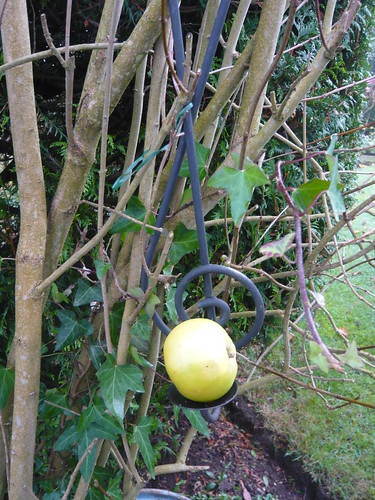
  • I like the use of a candle or tea light holder to carry a suet ball or piece of fruit on the spike that normally holds the candle.
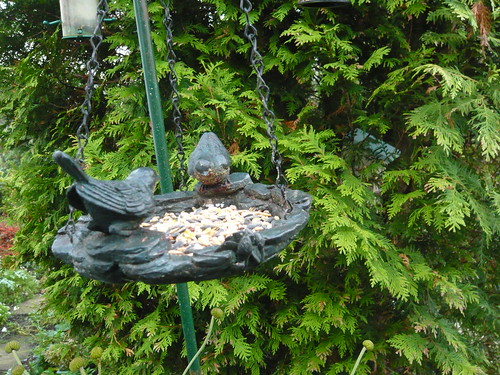
  • Seed feeders come in various shapes. Look for one that allows the seed to run freely and not get wet in a sump. Wet seed will germinate and block the hole.
  • Include special feeds for special birds like meal worms, fruit even pasta as well as nuts seeds and your usual bird mix.
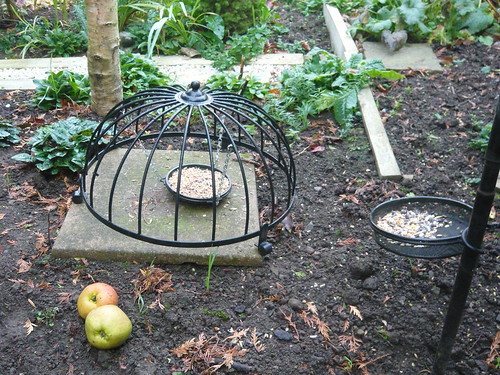
  • Put some feed on the ground. I put a cover over the seed and bird food. You can get different sized spaces for larger or smaller birds.
  • Make or buy a feeder that will stop seed falling on the ground in the slightest puff of wind.
  • Make your own fat ball food with seed and fat or suet.

Bird Feeders

Grow Plants That Help Wildlife

  • Grow bushes which produce berries.
  • Grow plants that produce plenty of seedheads for winter food. Leave them all winter if necessary.
  • Plant perennials that provide all year around habitats rather than short lived annuals.
  • Select plants that are rich in pollen and nectar chives nettles and Monardia for example.
  • Plant native species and not exotics and F1 plants

Special help for Special Visitors

  • Have more than one supply of water for drinking.
  • Add some sugar to water to attract butterflies.
  • keep water and food away from cats and predators.
  • Do not be too tidy, leave an area where wood can rot and feed insects.
  • Avoid chemical sprays.
  • Plant up winter hanging baskets to provide habitat and varied food sources.
  • Think vertically as well as horizontally. Birds like to be above ground for feeding and safety.
  • Keep feeders, water and food areas clean.
  • Donot bother feeding the sea birds in our picture.

Bird Feeders

Sources.
Ten Plants for birds

‘ * Centaura scabiosa – the seeds provide food for birds and other wildlife
* Taxus baccata – this native evergreen shrub produces berries which provide food for birds and other wildlife
* Campanula carpatica – a compact nectar-rich variety that sits well in gaps between paving
* Fagus sylvatica – a native tree that supports a number of insects and food for animals
* Anthriscus sylvestris – a nectar-rich plant attracting lacewings and hoverflies which eat aphids
* Ilex aquifolium – this evergreen shrub produces winter berries which provide food for birds and other wildlife
* Cotoneaster horizontalis – this deciduous shrub produces brilliant red berries in autumn which provide food for birds and other wildlife
* Buddleja davidii – the ultimate attraction for butterflies
* Achillea millefolium – nectar-rich plants which are wonderful for attracting bees and hoverflies
* Lonicera fragrantissima – a fragrant shrub which makes a nesting site for birds and a refuge for insects’

Eco-friendly Protection in the Garden

Eco-friendly Protection in the Garden

Vegetables

If you are in the ‘protection racket’ then a gardeners best friend is a walled garden. This protects from wind and driving rain and helps create a micro climate. Walls retain heat from the sun and are great for training climbers and some tender plants.

Protecting crops and ornamentals from natures predators is next on the list. The tent over this fruit cage keeps the birds away and the plant pot on a cane holds the mesh in the centre. Micro-fleece barriers are now regularly used to protect carrots, brassicas  and other crops from insect and pigeon damage.

Read More Read More

Look above your Garden

Look above your Garden

Light is a key ingredient in a garden. The quality varies according to the sky and sun so keep a weather-eye out.

sky skipton 018

Look above the trees in your garden and what do you see? This morning I saw a great sky with wisps of vapour trails and fine cloud. It cheered me up no end!

Normally I am looking down on the ground for work that needs doing, weeds to hoe, bugs to remove, damage clearance to be sorted. At best I am considering what crops to harvest, what flower is displaying a look that I had hoped for or how long can I put off the labouring jobs.

Today I got stuck in to pruning a Holly bush at 8.00am and filled two recycling bags of rubbish before the local authority came to convert it into compost.
I could have worried that the tops of the trees needed loping but I wasn’t going to spoil a morning sky with gloomy thoughts.

Clouds

Even if darker clouds begin to gather, look on the bright side, your plants probably need the rain.
My dark side was taking the motor mower to be repaired as it quit as the last lawn was cut the day before – lets hope it is back before the grass needs another trim!
If you have been feeding the birds it may be dangerous to look up above your garden but don’t let that put you off!
Clouds are a bit like snow in that the patterns you see will never be the same again.

bits 059

At the end of the day ‘God’s in his heaven and all is right with this Gardeners world’.

Autumn Compost Top Ten Tips

Autumn Compost Top Ten Tips

5 years ago our council  provided a brown bin for garden waste. Shortly after they introduced a charge to have the bin emptied.  Larger branches, gnarled roots and diseased wood  now goes in this bin.
Otherwise it is situation normal

Autumn is a time for collecting large quantities of compostable material from even a small garden. There are some features of Autumn compost making that need to be given special consideration.

Heat and Speed

  • As winter approaches it is harder to get and retain heat in your Autumn compost.
  • Put a cover on top of your compost bin and if necessary insulate the sides. Hot bins rot compost better and quicker than cold bins
  • Turn your compost to get air into the heap. The aerobic effect helps generate heat.
  • Heat helps kill seeds and pathogens
  • Urine soaked straw horse bedding can help the heating process if you have a local supply

Green and Brown Waste

  • Autumn produces much more brown waste in the form of stalks, twigs and drying stems.
  • To compensate for the lack of green waste consider adding a compost activator.
  • Shred and chop the waste into small bits so there are more access points for the rotting process.
  • Add water if the shredded waste is dry or if Autumn is on the dry side.
  • The worms and rotting organisms need air water and food in sensible proportion.

Compost 003

Autumn Tips

  • Avoid composting seeds they will come back to haunt you.
  • Do not add infected material like rose prunings with blackspot. I burn my problems in a special old dustbin available from amazon.
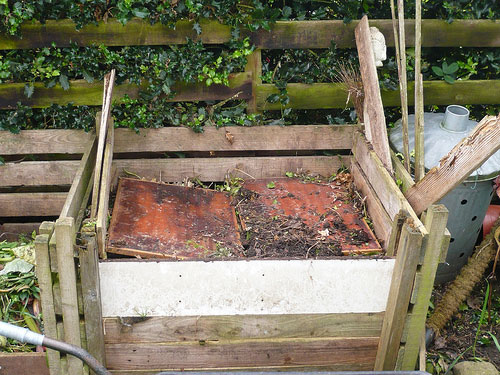
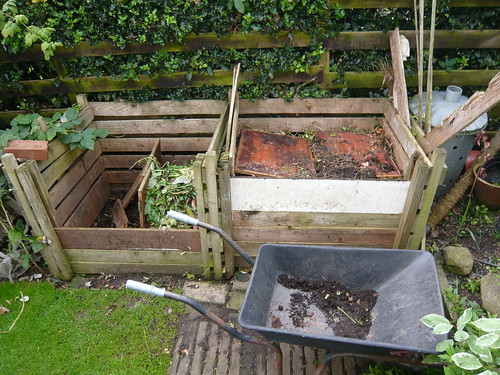
  • I have divided my large heap in to two compartments to get action in a more compact area.
  • Leaves from trees have negligible food value and rot very slowly. Other than minor quantities on the heap you are better rotting leaves down separately as leaf mould (use an aerated plastic bag).
  • Keep your compost area tidy (do as I say not as I do).
  • Grass clippings from chemically treated lawns will retain some residues so compost for twice as long or rot down separately.
  • Do not forget to mulch your perennials with well rotted compost from earlier compost heaps. My hardy Fuchsias and Roses get the best autumn compost.

Read about Compost Activators

Spare a Thought for Hedgehogs

Spare a Thought for Hedgehogs

Hedgehogs Erinaceus europaeus are good for gardens, eating through a large volume of slugs. They deserve some help to preserve hedgehog family life otherwise they will fall into further decline. However they are not domestic pets and like to be able to roam in several gardens each night.

Book Cover

Hedgehog Diet

  • Beetles 28% are a major part of hedgehog food
  • Caterpillars and beetles make up more than half of the food they eat
  • Earthworms are about 17% of the average hedgehog diet
  • Other items in smaller quantities include slugs, snails, birds eggs, millipedes, earwigs, and even birds or small mammals dead or alive.

Heaven For Hedgehogs
Make your garden Hedgehog friendly with a wild area from piles of leaves and twigs to be used for shelter.
Keep ponds topped up and ensure Hedgehogs can climb in  or fall.
A specially made hedgehog home (eg.from a box on its side) would include nesting facility in summer and a space to hibernate in winter.
Hedgehogs need to be able to travel in and out of the garden (even if that means they risk crossing roads).
Meat based pet food and fresh water in summer are a help to a hedgehog family.

Safety For Hedgehogs
Slug pellets containing metahaldide can kill. Avoid pesticides.
Bonfires should be checked for hedgehog nests before burning
Take extra care using strimmers on rough brash.
Keep netting at least 12″ above ground so hedgehogs can get under without getting trapped.
Look out for hedgehogs when turning or forking a compost pile.


The British Hedgehog Preservation Society is organising Hedgehog Awareness Week which this year runs from 5th 11th May 2013.

Control of Pests on Apples & Pears

Control of Pests on Apples & Pears

‘Understand the pest and you are part way to controlling the problem.’

Brown Rot
This rot is often associated with storage when a fungus permeates the fruit. Fruit on the tree can be mummified and this prolongs the life of the fungus. There are no effective organic sprays so rely on good cultural management. Take care picking and storing fruit.

The rot starts through wounds caused by birds, wasps and scab. At blossom time the fungus causes wilt and shoots to shrivel. Remove all rotting fruit and bury rather than compost. Prune and burn branches killed by wilt.


Aphids
Of the many species the green or rosy apple aphids and the woolly aphids plus the pear-bedstraw aphid can be very troublesome. Aphids mate in Autumn leaving eggs to over winter on spurs crevices and tips. Heavily infested shoot tips and flower cluster should be cut out and destroyed. Encourage beneficial insects like earwigs and ladybirds.

Read More Read More

Sweet William Organic Seeds

Sweet William Organic Seeds

In addition to collecting my own seed I like to try new varieties.
Suttons seeds have a ‘Kaleidoscope mix that I have just bought as an experiment. They were half price in the Wyvale sale and look as though the flower heads will feature white and a range of other pastel colours.

Cottage garden favourites are now running to seed in my garden. I am glad I dead headed the plants earlier and got a second flush of flowers but now is the time to collect seed.

Sweet William Seed.

  • Each pollinated floret will generate seed which is held in a firm upright cup.
  • As the seed dries and gets ready for distribution the cup opens and the black ‘gritty’ seeds can be shaken out. I use old envelopes to collect the seed into so I can keep and name different seeds.
  • If only a proportion of the seed capsules are open gently shake the plant into your container. If the majority are open I cut the head off, invert it over some paper and gently shake and squeeze to extract the seed.
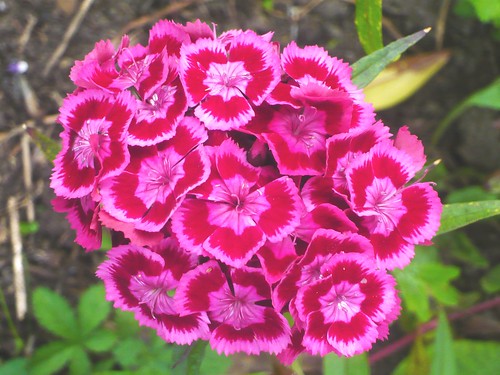
  • Sweet Williams are quite promiscuous so do not always grow just like the parent you collected from. They will have many of the characteristics so select from the colours you like. The red flowered, red leaved types are my favourite but you may prefer the pastel or chocolate kinds.
  • Nature knows what it is doing and the seeds can be sown now to germinate and grow before the ground gets too cold. If you want an informal effect you can just shake your seedheads over a soil patch and wait.
  • Other members of the Dianthus family such as Pinks and carnations can be treated in the same way

The seed I collect will be organic as I have not used any chemicals for the last two years on or around my Sweet Williams. However they will not be certified by the soil association but in the scheme of things that wont matter.

Sowing & Growing Tips
As I have just bought the seeds I am sowing them to overwinter and flower next year.
If sown in February or March they should flower the same year.
They like a bit of space to excel so allow 6-9 inches apart when planting out in the final sunny positions.