Browsed by
Category: Fruit, Vegetables & Herbs

Tips on growing good Fruit, Vegetables and Herbs

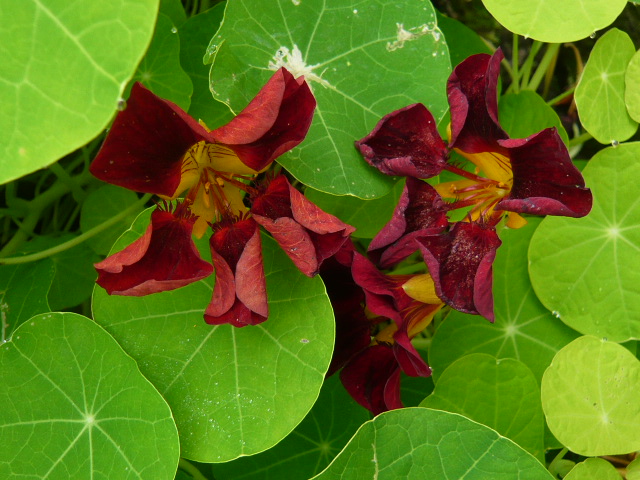
Nasturtium as a Vegetable
Nasturtium as a Vegetable

I have not got into the habit of eating Nasturtium and it may be too late for me to start at my age. However my vegetarian children take a different view.

Eating Nasturtium

  • The leaves of the nasturtium plant are edible, with a peppery flavour, that can  tossed into salads.
  • The flowers make a unique garnish to fresh foods and add a splash of colour.
  • The seed pods can be treated like Capers and pickled or used as a crunchy addition to salads.
  • For tastiest nasturtium leaves, keep the plants well watered, which helps to moderate the spiciness of the leaves and flowers.
  • According to Reneesgarden ..’I prefer to toss them among sweeter greens like butterhead or crunchy Batavian lettuce, rather than with other bitter greens. They add a refreshing bite to a classic potato salad with hard-boiled eggs and a mayonnaise dressing, and pair well with seafood. A handful of the bright colored flower petals are delicious chopped into a shrimp or crab salad sandwich filling, and the whole flowers and leaves make a great garnish for a platter of grilled salmon.’
  • You can buy Nasturtium seeds from Thompson & Morgan

Growing Watercress

  • Watercress is called Nasturtium Officinale or Nasturtium Microphyllum
  • It can be grown in gardens with chalk streams or a good supply of water as  a semi-aquatic plant
  • Buy watercress with roots on at your local supermarket
  • Watyercress from Thompson & Morgan
  • An ordinary bunch placed in a bowl of fresh clean water will develop roots. Discard any that turn yellow or do not root and plant the rest.
  • You can grow watercress in a container but keep it well watered.
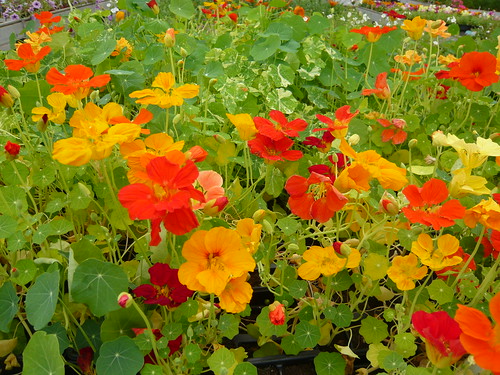
Nasturtium

Growing and Harvesting Curly Kale

Growing and Harvesting Curly Kale

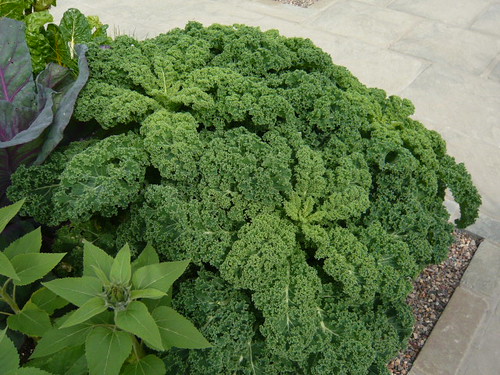
Kale or borecole has returned to popularity as a vegetable. Kale is a form of cabbage Brassica oleracea Acephala and has green or purple leaves.

Growing Curly Kale

  • The leaves do not form a cabbage head but remain open.
  • Some varieties have flat leaves but the flavour and texture is not as refined. These leaves are often used as animal feed.
  • Baby leaves can be used in a salad and have a peppery taste.
  • Black Tuscany Kale has attractive dark green, deeply savoyed, strap-like leaves.
  • The traditional winter hardiness makes this a useful winter to spring vegetable at a time when fresh garden produce is scarce.
  • F1 Kale Reflex has more intensely curled, succulent and nutritious, dark green leaves which stand well without yellowing.
  • Grow Kale from seeds planted in February or March. Some varieties supplied by Thompson Morgan can be grown inside for salads.

Eat the Seasons says ‘Kale is a very handy ingredient for seasonal eaters as it is one of the few green vegetables that is more abundant and flavourful during the coldest months of the year.’

Harvesting Kale

  • Choose a good variety and pick the greenstuff when it is young and tender .
  • Pick from the crown of the plant from November onwards.
  • Remove a few young leaves each time you pick.
  • Use a sharp knife or a sharp downwards tug.
  • Do not gather mature or yellowing leaves for kitchen use as they will be bitter.
  • Stripping of the crown will stimulate the development of succulent side shoots.

For more information on Ornamental Kale read

Growing and Maintaining Raspberries for Big Crops

Growing and Maintaining Raspberries for Big Crops

The summer Raspberries are now finished and I am eagerly awaiting a crop from my Autumn Raspberries planted 2 season ago.
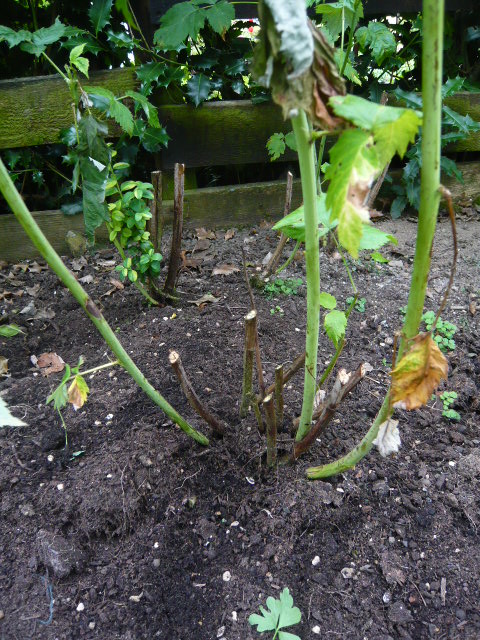
In the meantime the old Raspberries are getting a bit of friendly treatment.

Cultivation of Early Raspberries.

  • The plants throw up canes 3-5 feet high from a stool at ground level.
  • In Summer and Autumn new canes are produced that will carry the flowers and fruit next spring.
  • Canes will only fruit once so old canes should be cut down at ground level after you have harvested the fruit
  • I shred the old canes on to my compost heap.
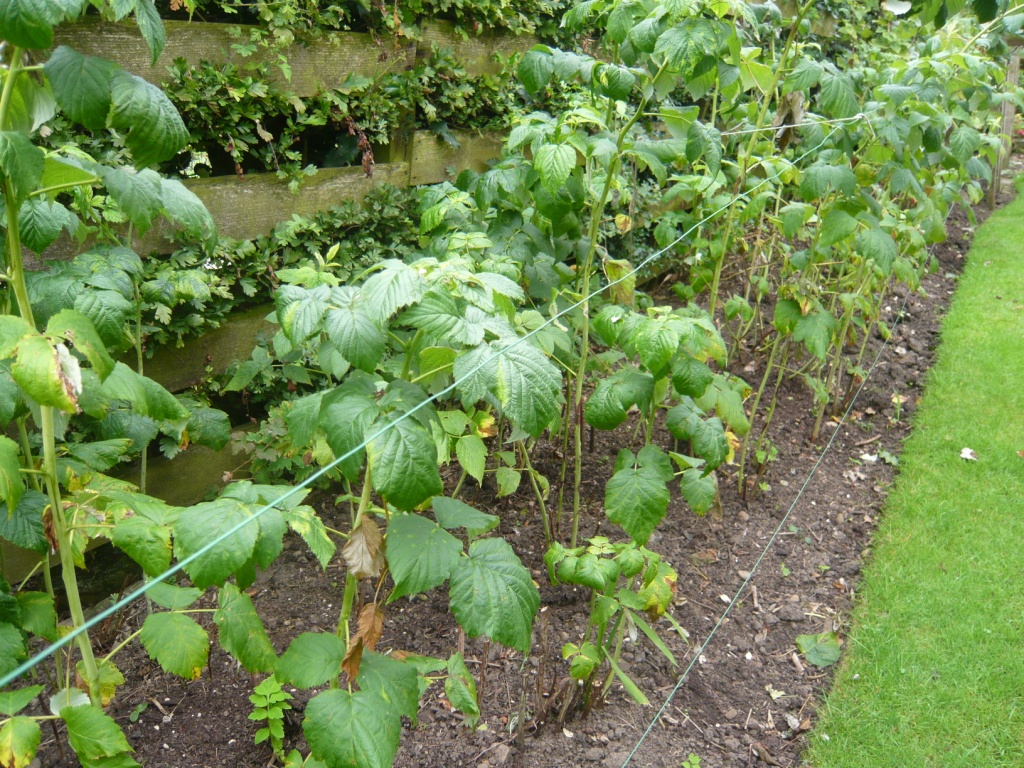
  • New canes need support. I string wire across the row from stout posts at each end.
  • Raspberries are a hungry and thirsty fruit.
  • Feed with general purpose granular fertiliser like Growmore in spring and mulch with well-rotted farmyard manure.

Varieties and Species

  • Grow Raspberries from bare-root plants in the autumn. You can buy several red raspberry varieties mail order from Thompson & Morgan
  • Glen Moy – spine free canes, heavy crops in early summer
  • Glen Prosen – firm fruit in mid-summer
  • Autumn fruiting types include All Gold and Autumn Bliss

Tips for Growing Raspberries for Big Crops

Plant raspberries in rows and trained along a post and wire system to make a hedge of canes.
Avoid a very windy site unless you can put up windbreaks to protect side branches and pollinating insects.
Canes get replaced each year, roots go on for a long time if maintained with water and feed.
Main-crop raspberries fruit on 1-year-old canes that are then cut down to ground level. Then tie in new growth to the support wires and mulch well.

See also
Coloured and species Raspberries
Growing and maintaining raspberries
Raspberries Spring Summer and Autumn

Spanish Salsify -Scolymus Hispanicus & Salsify

Spanish Salsify -Scolymus Hispanicus & Salsify

Common Golden Thistle or Spanish Salsify has golden yellow flowers that look like other members of the Compositeas.

Growing Spanish Salsify

  • The plants prefer light well-drained soil. Occasionally it will be found growing wild but as its name suggests it grows well in Spain where it is also known as Spanish Oyster.
  • Spanish Salsify is a biennial or perennial plant, which grows 2-3′ tall and is very spiny. The stems are branched at the top, with discontinuous spiny branchlets.
  • Cultivation has reduced since Victorian times when it was more popular

Growing for Eating and Cooking

  • All parts of the plant are edible but the roots were originally thought  to have a slight diuretic effect.
  • Root eaten raw or cooked have a sweet flavour that makes an excellent vegetable though it is rather low yielding.
  • The roasted root has been used as a coffee substitute
  • Young leaves and leafstalks can be blanched and used in salads
  • The flowers are used to adulterate saffron as a food colouring
  • In Spain the main uses are in salads or with scrambled eggs .

Read more on the UN Agricultural web site

Ordinary Salsify

  • Grown from seed the roots can be stored for winter use.
  • Salsify Scorzobianca produces slender, parsnip-like white skinned roots. They can be left in the ground and lifted as required. In the spring the tender shoots of Salsify Scorzobianca make an appetising green vegetable.
  • Seeds available from Thompson Morgan
  • The roots have a delicious, delicate flavour likened to Oysters or Asparagus.
  • Salsify is a good source of Vitamin C and potassium.

Amaranthus – Salad Leaf, Ornamental and Cereal

Amaranthus – Salad Leaf, Ornamental and Cereal

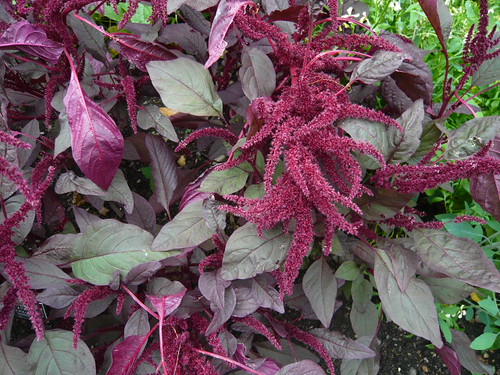
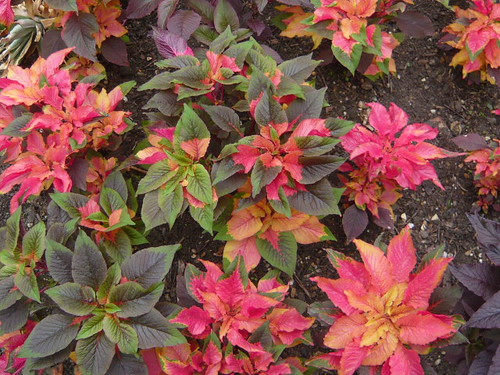
Amaranth purpurea

A family of plants that looks good, tastes good and by golly it does you good – what more can you want.

  • Amaranthus (singular Amaranth) has other names in other cultures. I like the African name ‘Chewa’ or the Caribbean ‘Callaloo’.
  • Chinese use ‘Bayam’ in stir fries
  • The plant has had synthetic red dyes named after it and the Hoppi red Dye variety has long been known for it’s deep red.
  • Amaranth ‘Red Army’ is sold by  Thompson & Morgan as a green veg like mustard and cress see below.

Amaranth

Thompson Morgan’s Growing Tips

  • Grow seeds of Amaranth Red Army microgreens for instant colour and visual appeal, with a mild flavour, brightening salads and garnishes. Micro greens are eaten as young seedlings prior to the first true leaves, when they are full of an intense range of flavours.
  • They are quick and easy to grow indoors all the year round.
  • Grow in a similar way to mustard and cress. Fill seed trays with vermiculite, then sprinkling the seeds liberally, but not too thickly on the surface. Place the trays on a warm windowsill or in the greenhouse.
  • Ensure the seeds are constantly moist and as the seedlings emerge, especially during summer, mist spray or water carefully as necessary.
  • Cut these ‘Living Seedlings’ as they develop for immediate use or keep in a plastic bag in the fridge
  • Just like sprouting seeds and salads leaves, they are very rich in healthy nutrients, ideal for spicing up sandwiches and salads or to garnish soups.
  • Seedlings mature quicker in the warmer, longer days of summer, and take a little longer during the depths of winter.
Chillies for Greenhouse Garden and Home

Chillies for Greenhouse Garden and Home

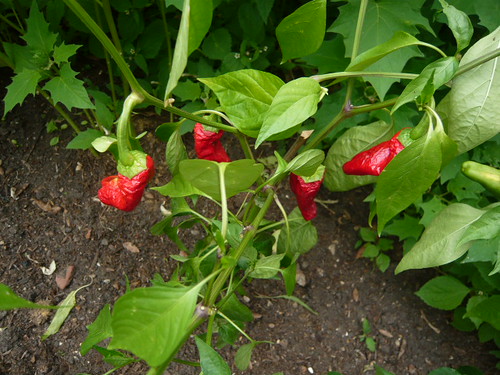
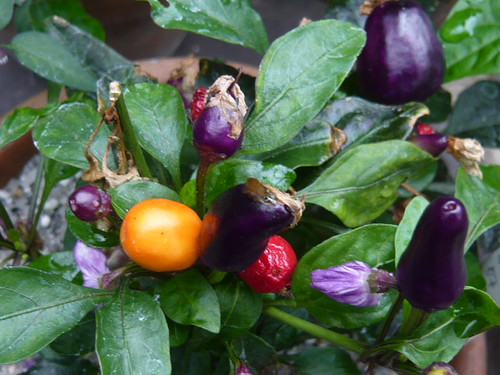
Chillie

Chillies are a hot plant to grow and a little goes a long way so they are an economic crop for the space.

Growing From Seed

  • Chilli seeds need to be sown early in the year for a long growing and ripening season.
  • Germination can be variable and speed & percentage success is improved with a propagator warmth.
  • Use a gritty soil based compost like Arthur Bowers as Chillies like good drainage.

Chilli Growing Tips

  • Pot on your seedlings into 3″ pots when the leaves are large enough to hold
  • Pot on as they grow into 9 inch pots or larger depending on the variety.
  • Chillies are best grown in a greenhouse or poly-tunnel though they can be grown outside in a sunny spot.
  • Smaller pots can be used for compact ornamental varieties.
  • Shade your greenhouse or conservatory to avoid scorching.

Book Cover
The Complete Chilli Pepper Book: A Gardener’s Guide to Choosing, Growing, Preserving, and Cooking

Chilli Varieties and Heat

  • Cayenne pepper plants will flower and fruit much earlier than varieties such as Habanero, Scotch Bonnet or Naga.
  • The slower varieties require much more heat and light and are best kept in a conservatory or greenhouse to ensure they fruit as soon as possible.
  • Habaneros take over 3 months from potting on to reach maturity.
  • Heat is measured in ‘Scovilles’ .  Sweet Peppers score nil, Jalapenos & Hot Wax 2-8k, Tabasco & Cayenne 30-50k, Habenero & Scotch Bonnet 100-325k and Naga Jolokia upto 855k. Police use a Pepper spray that is rated at 5.3m Scovilles and pure Capsicum is 16m Scovilles. Hot or what?

Solanacea Capsicum annuum

Read More Read More

Growing White Currants

Growing White Currants

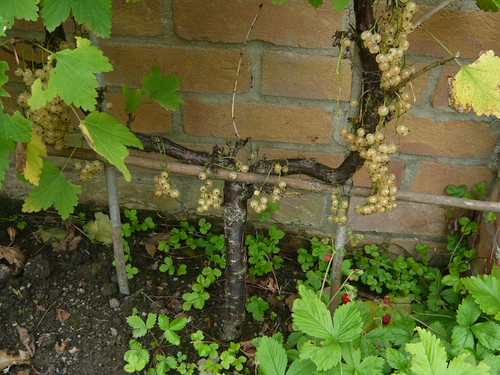
white currant

White Currants are closely related to Red Currants and need similar, sunny or partially shaded treatment. They will reward the soft fruit grower with a nice crop of sweet juicy fruit for gardeners pies and summer puddings.

What is a White Currant

  • Ribes rubrum is the fruiting currant which can be red, yellow, pink or white.
  • These currants are related to the Gooseberry
  • White Currants make a fairly strong, vigorous, upright bush. The plant in the photo has been trained in a ‘U’ shape as a double cordon. This urn shape in a bush or cordon allows air to circulate and helps harvesting.
  • White Versaillies has large light yellow and sweet fruit ready for harvesting early July. ‘White Grape’ AGM and ‘White Pearl’ fruit in summer.

Growing White Currants

  • Plant currants when they become dormant towards the end of November or December.
  • Propagate from ripe hardwood cuttings 10-12 inches long burried ¾ of the way into the ground. New roots will strike from a number of areas along the stem.
  • You can also layer currants in autumn or spring as they root quite freely.
  • Prune  all young side shoots to 5 leaves in June. In Autumn or winter cut back long shoots by one third.
  • Snip strings of fruit with scissors (then separate them from the stalk with a fork)

white currant

Growing Winter Cabbage and Spring Greens

Growing Winter Cabbage and Spring Greens

cabbage

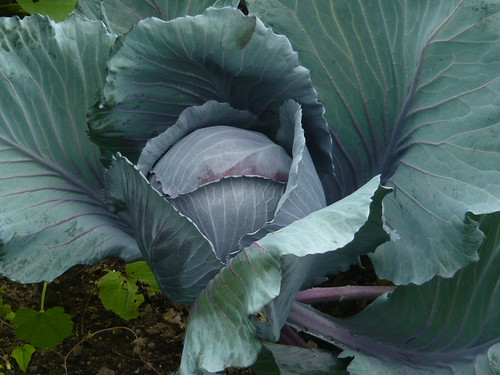
Your summer crops may have been cleared from your Veg patch but you can now plant winter cabbage. For many varieties it is too late (August) to grow from seed but you can buy suitable plants from nurseries, mail order or local market stalls.
Some loose leaf cabbage grown as spring greens can be sown in August.

Cultivating Winter Cabbage

  • Plant at 5-6 leaf stage allowing 2 feet between plants (less for spring greens).
  • The soil should be firm, contain plenty of well rotted compost and be well limed.
  • Just before planting, rake in 3oz per sq yd of balanced fertiliser.
  • Hoe occasionally and water if the weather is dry. Harvest in very late winter

Varieties to Try

  • Spring Cabbage Hero is a ball cabbage that will stand through winter to produce a solid head from early May.
  • Tundra F1 is solid and sweet with crisp heads, ideal for winter salads.
  • Thompson Morgan selection of plants and seeds
  • Spring Advantage is an excellent new variety suitable for providing both spring greens or small to medium sized hearted spring cabbage. From an August sowing it will keep well into April.
  • January King a hardy winter variety with heads which are crispy and crunchy and full of flavour.
  • Savoy cabbages can be grown through winter for spring use

For more on Brassicas read

More Cabbage Tips

Read More Read More

Shallots for Showing

Shallots for Showing

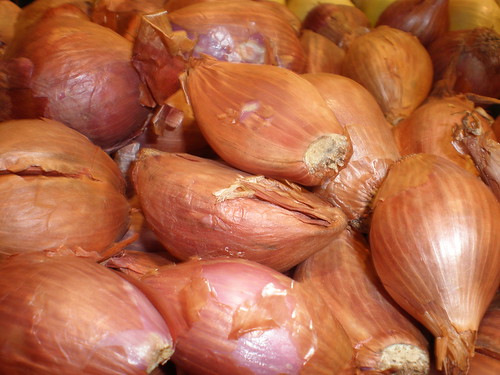
Many shows have 2 classes for Shallots. Small pickling Shallots and ‘Giants’.

Showing Shallots

  • Grow Dutch Yellow for a ‘judge pleasing’ variety or raise Russian Red from seed.
  • Display small shallots in bowls of sand, sawdust or special boxes  for the ‘Giants’. The aim is to keep the bulb in formation.
  • Pickling Shallots should be less than an inch across the waist and uniform.
  • Harvest a few weeks before the show and ripen-off in the sun during the day, bringing them in during the evening.
  • The end of May is a good time to thin Shallots being grown for showing. Carefully remove the center bulb from a cluster without disturbing the remainder.

Other Shallot Varieties

  • Prisma F1, Golden Gourmet or Red Sun are even growers.
  • Pesandor, Jermor and Vigarmor tend to be tubular shaped.
  • Thompson Morgan have good supplies for next season. Place your order when you see what has won this years show.

Show Standards

  • Local shows may have arbitrary judging standards for Shallots.
  • The majority of bulbs often end up misshapen or bulging out, not having good form.
  • The large exhibition type shallot is now awarded a maximum of 18 points because of the degree of difficulty in achieving a perfect specimen.
  • In the  RHS show handbook  ‘shapely bulbs of good form” are considered best.
  • The NVS judges guide goes even further and states that ‘single bulbs of good shape with circular outline’ are meritorious.

Soil Tips for Growing Vegetables

Soil Tips for Growing Vegetables

159

Is your soil so poor nothing will grow in it? No I didn’t think so because weeds will grow anywhere!

Improve Your Soil

  • Rotted farmyard manure, dug in each year, will boost your soils fertility.
  • The rotted farmyard manure breaks down to humus that opens up clay soils and holds moisture in sandy soils.
  • You need to replace the nutrients taken out of the soil by this seasons crops and that is where an annual dose of farmyard manure comes in.
  • Cover the veg-patch with black polythene over winter. This stops goodness leaching out, stops weeds and warms the soil in spring.
  • I also trench the Runner Bean rows with an extra bottom covering of manure to hold extra moisture.
  • Add lime for growing Brassicas but Potatoes love the slight acidity that often comes with farmyard manure.