Browsed by
Category: Fruit, Vegetables & Herbs

Tips on growing good Fruit, Vegetables and Herbs

Versatile Chives to Eat and Admire

Versatile Chives to Eat and Admire

Chopped up leaves, edible flowers and miniature onion bulbs are three ways to benefit from Chives.

Chive flowers

Chives Allium schoenoprasum are perennial and cultivated both for their culinary uses and their ornamental value. The flowers are deep blue to violet in the shape of little pompoms. The leaves are thin, hollow stem like tubes.
Chinese chives Allium tuberosum have white flowers and smell similar to mild Garlic but much milder.

Growing Chives from Seed.

  • Chives can be grown from seed and mature in summer, or early spring.
  • Chives need to be germinated at a temperature of 15-20 °C and kept moist.
  • They can also be planted under a cloche or germinated indoors in cooler climates, then planted out later.
  • After 4-7 weeks the young shoots (looking like leeks or onions) should be ready to be planted out.
  • Seeds are available from Thompson & Morgan

Read More Read More

Edible Flowers Top Ten for Chelsea

Edible Flowers Top Ten for Chelsea

Eat up the fruit and veg in your Chelsea Pimms and look for flowers in your salad.

Book Cover
Food for Free (Collins Natural History Paperback)

There are many plants whose flowers can add spice and variety to our food. Use the petals after removing the stamen and pistils. This list of tips and a top ten is based on colour and taste.

  1. Wild Garlic flowers can be picked in hedge rows and add a soft garlic taste to salads.
  2. Lavender can be used to flavour sugar or dried and used in cakes.
  3. Courgette flowers are often stuffed or battered in posh restaurants and make a delicate starter.
  4. Nasturtium flowers make good salad or sandwich accompaniments
  5. Legume flowers like pea and bean flowers are delicate additions to a salad or soup.
  6. Rosemary flowers go well with fish
  7. Calendula or Pot Marigold petals have a peppery taste and make good salads.
  8. Violet flowers are also peppery but look good decorating a salad.
  9. Day Lily ‘Hemerocallis’  flowers can be used in stir fries.
  10. Chive flowers taste fine in an omelette aux fine herbs.

Do not eat flowers that have been sprayed with insecticide or fungicide.
Always wash flowers gentley but well.

Growing Lettuce

Growing Lettuce

Lettuce may not contain that many calories so it makes a great summer food crop.

Lettuce
Lettuce in neat rows, looks a great sight as well as offering great crops

Growing lettuce is one of the most rewarding vegetable or salad crops. If you keep the slugs at bay, you will have a rewarding crop, even from a tiny space in the back garden.

In summer, lettuce has a short growing season. It means within a couple of months, you can be cutting leaves for the salad bowl. The loose leaf varieties can be ready for harvest after only 6-8 weeks. If you sow at regular intervals and make use of cloches, you can have a supply of lettuce for a large part of the year.

Tips for Growing Lettuce

  • Sow directly into the ground and thin out later. Lettuce doesn’t like being moved. If you have to sow in greenhouse, use modules for easy transfer.
  • Lettuce do npot germinate well in hot temperatures.
  • Lettuce like a humous rich soil, so make sure soil is well prepared, otherwise, the leaves will be tougher and more leathery.
  • Read More Read More

Our Big Selection of Salad Leaves

Our Big Selection of Salad Leaves

Eat up your greens and your other salad crops.

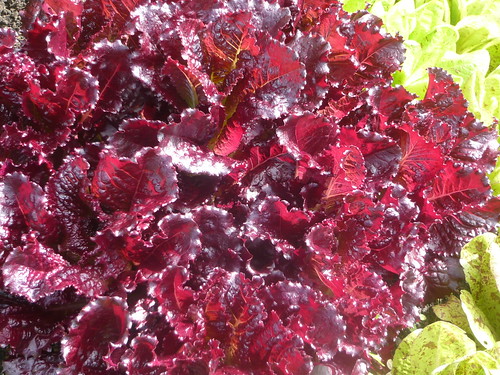
Lettuce -  Bijou & Freckles

Salad is a diverse name covering any of a wide variety of dishes including,  green salads, vegetable salads, salads of pasta, legumes, or grains; mixed salads incorporating fruit and fruit salads. They include a mixture of cold or hot foods, often including raw or sometimes cooked vegetables and/or fruits.
Alternatively ‘Salad’ is any green plant or herb used for such a dish or eaten raw so that is the part we will concentrate on.

Leafy Salad Plants

Lettuce is available in many varieties with popular types like Cos, Butterhead, Crisphead, Lollo, Oak leaved or loose leafed. The coloured varieties above are called Bijou and Freckles. Buy a mixed packet of seeds and eat young seedlings as a way of thinning out crops.

Read More Read More

Best Tips For Growing Edible Crops

Best Tips For Growing Edible Crops

Prime space and time are precious commodities for every one growing crops from the biggest corporate farmer to the smallest window box gardener.
41lbs Onions

Planning Tips
Know why you are growing each crop. Is it for flavour, feeding the family, aiming for show quality or just to enjoy the process.
Only grow crops that you or your family will want to eat. Do not grow just for the compost heap.
Sow in succession to avoid gluts.
Consider ‘catch’ crops to use the available space more intensively.
Plants perform better with adequate space.

Apples

Tips to Help Plants Excel

Read More Read More

Growing Butternut Squash

Growing Butternut Squash

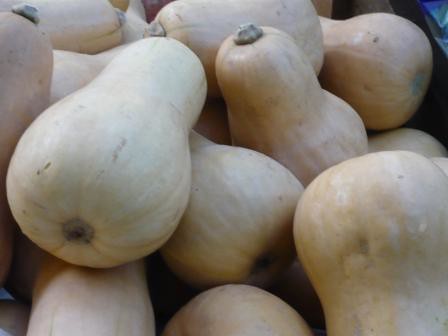
Butternut Squash

Butternut squash are delicious, prolific and easy to grow. They like to ramble and scramble, pinch out when the lead shoot is 3 feet long to encourage fruiting. Each plant can produce 4-8 fruit each weighing over 2 pounds. Butternut Squash has a sweet, nutty taste that is similar to pumpkin. It has yellow skin and orange fleshy pulp. When ripe, it turns increasingly deep orange, and becomes sweeter and richer.
I am going to try again this year as I have never been successful with this crop. I will content my self with 2-3 fruit per plant and will pollinate by hand.

  • Grow from seed when the risk of frost has gone and plant out 3 foot apart.
  • During the growing season it is vital to ensure that the plant never dries out to stop fruit being shed.
  • Deep beds with a mulch of rotted horse manure and a weekly feed with Miracle-gro or Phostrogen will help crop size.
  • Keep stalks/stems dry to avoid rotting.

Harvesting and Storing

When the fruit is ripe the texture of the skin becomes firm, golden in colour and will easily resist the pressure of your thumb nail. Like a melon, it “rings” when given a good rap.
Storage as for all vegetables of this type is in a clean, cool, dry place. I have seen them stored in a loft space on top of fiber glass insulation.
If picked in late September they can last until April the following year.

Winter Barbara Butternut F1  Seeds by Thompson Morgan

Waltham Dutchy Originals  Seeds by Thompson Morgan

More Cultivation Instructions

Read More Read More

5 Top Pot Herbs

5 Top Pot Herbs

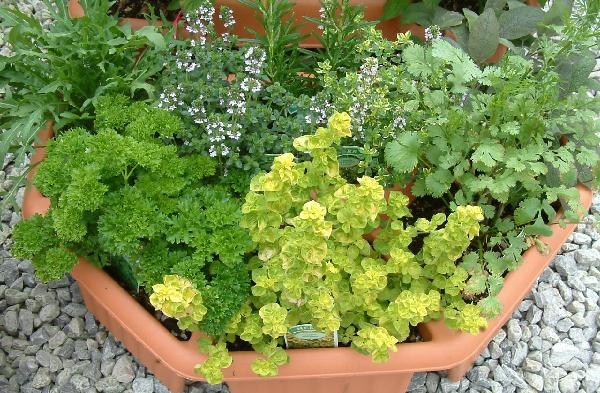
Herb Society Pot

Pot Herb is a term coming down from primitive cooking when everything was put into a pot. Vitamins and mineral salts  from herbs boost our immune system and help balance today’s diet. Many old, edible vegetable substances have been lost to the modern diet but the remaining ones are worthy of cultivation.

Top Pot Herbs

Basil has many varieties and is easily grown from seed on the window ledge or in the summer garden. Sweet or common basil has a clove-like scent when bruised and is great with tomatoes. There are other varieties that are lemon scented or smell like tarragon or Fennel. Grow a red leaved variety in the garden border like Red Rubin or Purple Ruffles.

Corn Salad (Valerianella olitoria) was cultivated in monastaries as a salad crop. It is also know as Lamb’s Lettuce or White pot herb and is reputed to go particularly well with game.

Fennel is one of the nine herb charms with Camomile, Thyme, Wormwood, Watercress, Betony, Plantain, nettle and wild apple. The warf ‘dulce’ has white stalks about one foot high like celery with a huge ball at the base. The stalks bulb and even the seeds can be eaten.

Onion needs no introduction as a vegetable and addition to all forms of pot cooking.

Thyme is the 5th in my list and is known as the herb for courage. Grow it in dry rockeries or in paved walks where it can be trodden to release the scent.

Read More Read More

Sweet Potatoes on Trial

Sweet Potatoes on Trial

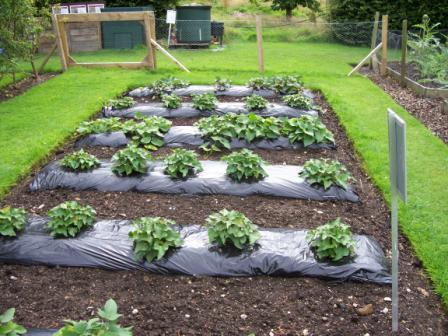
 	Sweet-potato-rhs-trial at Harlow Carr

The RHS have trialled several varieties of Sweet Potato. They picked a wet, sunless season so far but as the plants will be harvested during October (they need a long time in the ground) there is time for a good spurt of hot weather (I am an ever hopeful optimistic gardener).

Normally these plants are difficult to grow successfully in Britain but for those who are a bit adventurous you may want to try this crop next year. If so follow the results of the RHS trials.

Read More Read More