Browsed by
Category: Flowers and Plants

Annual, perennial and interesting flowers with advice on culture, information, tips and recommended varieties

Garden Orchids – Cypripedium & Hybrids
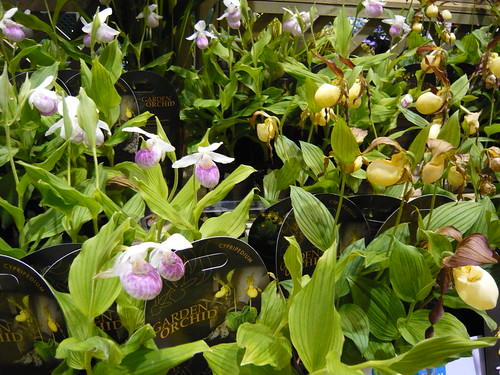
Garden Orchids – Cypripedium & Hybrids

Outdoor Orchids

Originally orchids were mostly found in tropical and subtropical areas and that is why they are foremost in our thoughts as indoor and houseplants.
What is less well known is that many orchids can also grow in areas where the temperature falls to -20°C.

One type of winter-hardy orchid from Thompson & Morgan is Cypripedium. They protects themselves by staying underground in winter but in spring the shoots appear above the ground and start flowering after just three or four weeks.

  • There are dozens of Cypripedium varieties which all have a spectacular inflorescence.
  • The Cypripedium flowers annually in May and June.
  • Cypripedium are named from the Dutch after a woman’s shoe.

Orchids

How and Where to Grow Orchids in your Garden

  • The plants prefer a sheltered and shady spot but love the morning sun.
  • A north wall is a good spot but orchids also perform well in a border with shade from trees and shrubs.
  • They like a sandy soil, and combine excellently with ferns or little Hosta varieties.
  • Dig a hole and plant into moist soil.
  • If necessary, make the structure of the soil around the hole looser with sand or clay granulate.
  • When you plant your orchid directly in the garden, take care that in the first year that the spoil does not dry out.
  • After flowering, the plant makes new shoots and settles in its new spot.
  • Orchids do not need much fertiliser.
  • When the orchid has got a good spot in your garden it will last for many years.
  • After flowering it seems that the plant stops growing but under the ground it is making new buds anb roots.
Orchids

Seasonal Tips for Outdoor Orchids

  • When resting, orchids are resistant to very low temperatures.
  • However, when the shoots start to grow, late-night frost can cause damage.
  • When late-night frost is predicted damage can be prevented by putting a bucket or big plant pot upside down over the plant and removed in the morning.
  • During the first year in particular you must keep an eye on night frosts because the plant has not yet acclimated to the climate in your garden.
  • In autumn the leaves of the orchid die off and the plant starts its winter rest.
  • The old dead foliage can be cut back to 5 cm above the soil.
  • Take care that you do not damage the new shoots when removing the old leaves or when weeding.
  • Do not cover the plant with peat but some old dry leaves are fine.
  • Often the tips of the new shoots are already visible
  • The plant can resist low temperatures and cold helps to start sprouting in spring.
  • In spring the plant sprouts again and under good circumstances produces even more shoots and therefore with more flowers. The cycle of the plant now starts again.
Orchids

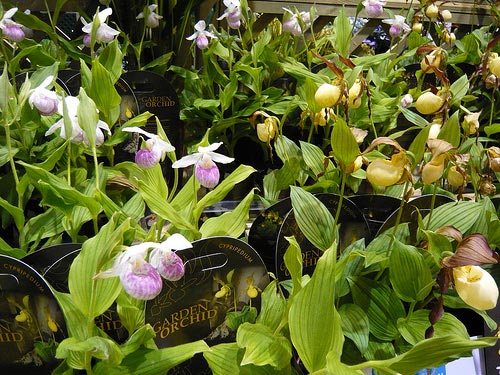
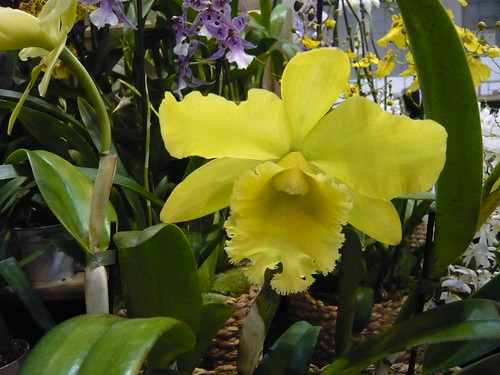
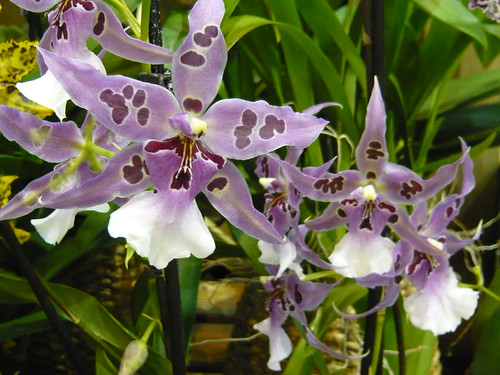
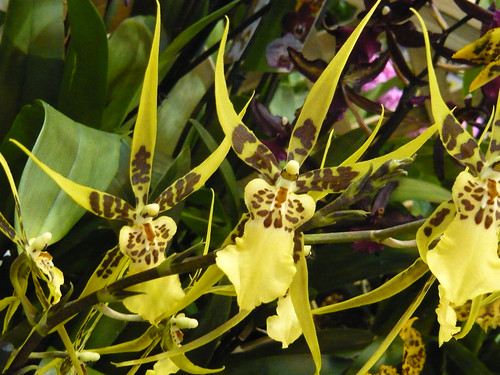
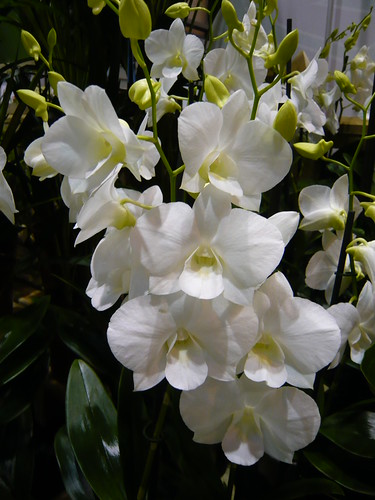
With thanks to Garden Orchids a trade supplier of Orchids.  The pictures not necessarily Cypripedium are from their stand at the  Glee show Birmingham 2011.
Orchids


Further information from the Hardy Orchid Society   -   or  Cypripedium Varieties in pictures
Cyp. acaule Cyp. calceolus Cyp. henryi Cyp. himalaicum
Cyp. kentuckiense Cyp. montanum Cyp. parviflorum makasin C. parviflorum parviflorum
C. parviflorum pubescens Cyp. plectrochilum  Cyp. reginae  Cyp. reginae alba
Cyp. smithii Cyp. ventricosum C. ventricosum, alba C. ventricosum, pale

Orchids

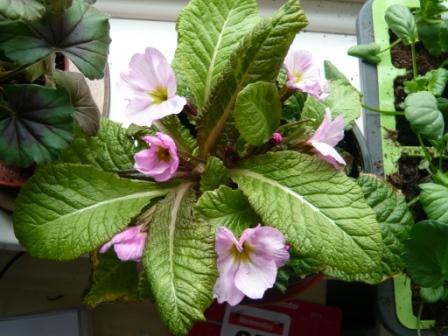
Primula Champagne White Rose

Primula Champagne White Rose

Primula Champagne white rose

We can all be caught by an impulse purchase as I was with this ‘Primula Champagne White Rose’ in the reduced section at a local garden centre. With my new found interest in the Primula family I thought I would buy this plant at half price even though they all looked as if they were done flowering for this season.

Treatment of Primula Champagne White Rose

  • I wanted to be able to divide any plant I bought and thus selected one from about 30 with what I hope were a couple of crowns.
  • I pinched out all the flower heads that were finished and cleared up some broken and damage leaves.
  • I was pleasantly surprised that there was a lot of bud still to open and I am keeping it on a windowsill near my computer for a week or so.
  • I will then take it out of the 6″ pot and molly coddle it with a bit of fibrous mulch and a weak thank you feed.
  • Hopefully I will be able to divide the separate crowns to produce more plants for next year

Information on Plant label Primula Champagne White Rose

  • The good quality printed label has a couple of rose coloured flowers with typical yellow centres. The edges on the photo are stronger red than on the actual plant but I do not feel misled.
  • Interestingly the label makes a virtue out of the Primula having been grown in the Lake District with a Union flag logo
  • ‘Primula Collection’ is the main heading Champagne White Rose is subsidiary but no reference to other items in the collection or who is responsible. (The retailer has put their name on a discount sticker £1 not £2.49.)
  • Height and spread 15cmx15cm 6″x6″ (Nothing to get concerned about although the leaves may die back a bit during summer before rejuvenating in autumn).
  • ‘Suitable for; plant in sun or shade in fertile, moist but well drained soil’ (well I do not intend drowning or starving the plant just riving it to pieces.)
  • Care Water well before planting and until established. (Since it will be late when planted out I will take care to water the plant)

Spring 412 042

Alpine House at Harlow Carr

Alpine House at Harlow Carr

standing-stones

Outside the 2009 Alpine House at the RHS garden in Harrogate are these new ‘Standing Stones’. I am interested to see if the planting links the new building to the sculptures but some how I doubt it. Possibly they are meant to represent the Alps or just be the start of a new part of the garden.

2012 update shows the stones front the much improved vegetable plots.

The new building, opened in May 2009 for the first time.  Is a tour de force and shows what finance and labour has been put in by the RHS and particularly the local Alpine and Rock Garden Group.

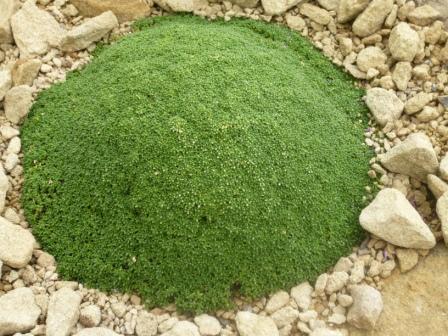
Gypsophila aretiodes
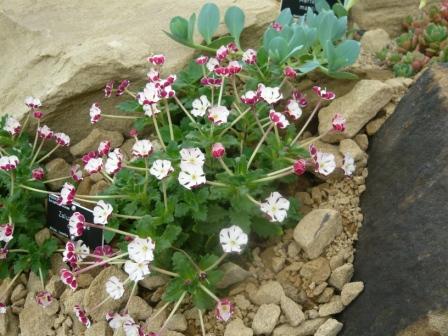
Zaluzianskya ovata
Zaluzianskya ovata

alpine-s

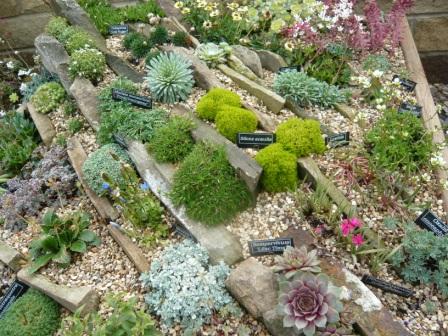
A mixed selection in a 2 meter square raised frame-bed. The sort of thing I want to try in my own garden as it is raised to working height and helps the inspection of small plants.

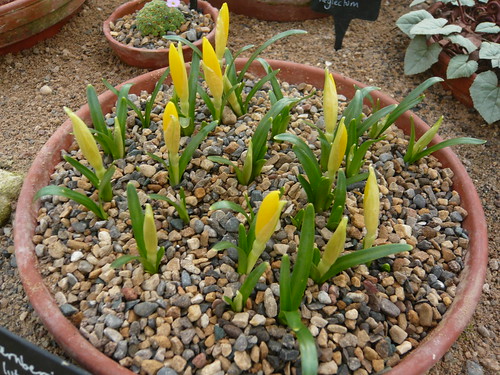
Sternbergia lutea
Sternbergia lutea

2012 updates

Tufa walls and more mature sink planters are now paying dividends.
The plant displays always include a good selection of alpines in flower.  Crocus and cyclamen were in profusion during November but below are some that took my fancy.

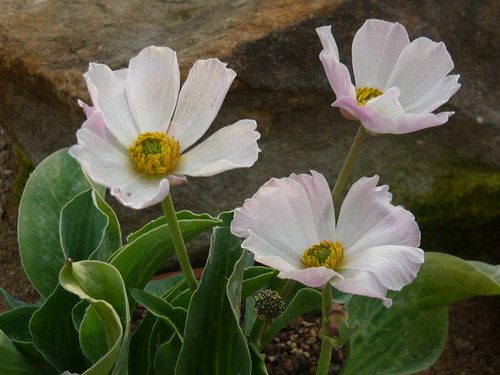
Ranunculus calandrinioides

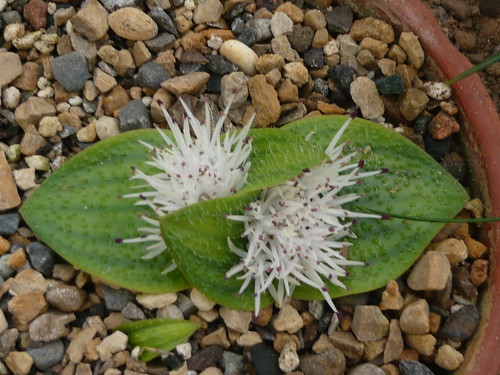
Massonia pygmaea
Scented Massonia pygmaea

Why Grow Phlox divaricata ‘Clouds of Perfume’

Why Grow Phlox divaricata ‘Clouds of Perfume’

I have hopefully just bought a smelly plant for spring flowering in my rockery. Phlox divaricata ‘Clouds of Perfume’ is a woodland plant that also thrives in walls, borders or on banking. Versatile of what?

Wild Phlox

Facts about Phlox divaricata
It will grow 12″ tall and spread as a cushion 24″ wide.
This Phlox is semi evergreen and likes well drained soil.
It is also called wild phlox and grows as a weed in North America.
Other common names include Wild Sweet William, Louisiana Phlox, and Blue Phlox.
There are 67 species of annual and perennial Phlox according to wikipedia

Why I bought Phlox divaricata ‘Clouds of Perfume’
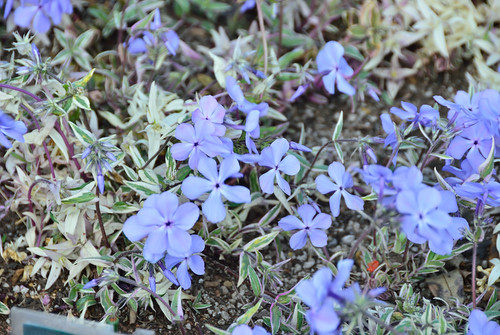
The flowers are powder blue, a cool shade I long to grow in my garden.
The bonus of a mass of flowers giving out a good scent was a second incentive.
Regular readers will know I am mean (I prefer to say thrifty) and I paid £1.50 for a large pot that was in an end of season sale. I have taken 6 rooted cuttings or divisions from the one plant and so I think I got a bargain.
Phlox Divaricata “Montrose Tricolor” Flowers at Rooftop Garden of Higashi-shinagawa Pump Facility
Other Varieties
Phlox divaricata’Blue Moon’, Phlox divaricata’Chattahoochee’is lavender coloured, and white varieties of Phlox divaricata include ‘Fuller’s White’ and ‘White Perfume’.
Phlox from Thompson & Morgan
Phlox Divaricata “Montrose Tricolor” above has variegated leaves and lilac-lavender coloured flowers.

Growing Hints
Pot grown plants should be watered well before planting.
Carefully remove from the pot and place in a prepared hole and firm the soil around the roots.
If the plant is pot bound tease out the roots or separate off some cuttings.
Water until the Phlox is established.

Phlox 'wagon wheels'
Phlox adsurgens ‘Wagon Wheels’ is another low growing perennial favourite of mine in the Polemoniaceae family.

Photo Credits
Wild Phlox by winged photography CC BY-NC 2.0
Phlox Divaricata “Montrose Tricolor” Flowers at Rooftop Garden of Higashi-shinagawa Pump Facility by ykanazawa1999 CC BY-NC-SA 2.0

Growing Red Hot Pokers (Kniphofia)

Growing Red Hot Pokers (Kniphofia)

over-red-hot-poker

Gardens look better for some variety in the height in the planting. I try to grow a variety of perennials including Red Hot Pokers to give some tall plants chance to shine. As part of the lily family these Kniphofia are sometimes called Torch Lily.

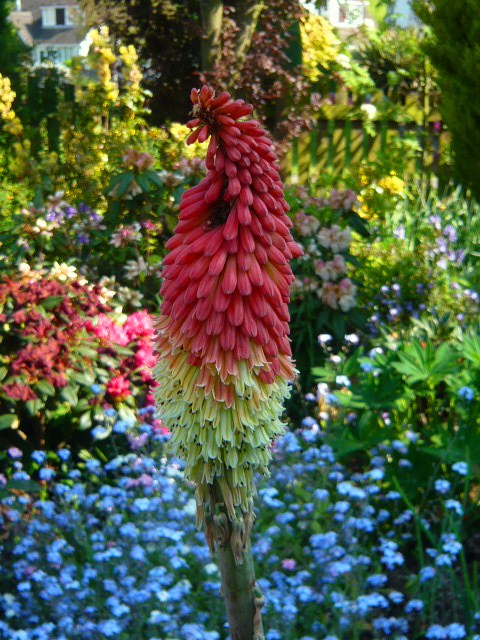
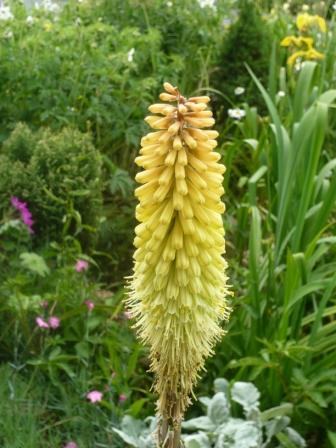
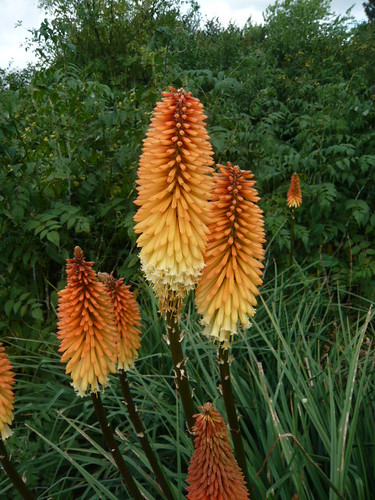
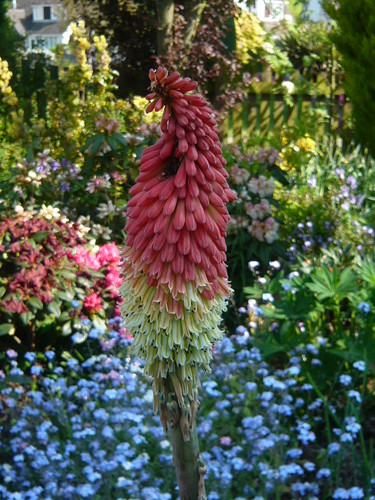
Red Hot Poker (Kniphofia) have flowered well this year and they throw up their well known spire of blossom in shades from deep red, orange, yellow and white even to a new greenish form (Kniphofia Green Jade).

Red Hot Poker

Growing Red Hot Pokers

  • Red Hot Pokers have long sword like narrow leaves and the flowers can last in a vase for up to two weeks.
  • The Kniphofia (Red Hot Poker or Torch Lily) needs abundant moisture during its growing period so good draining  soil rich in organic matter, is ideal.
  • Red Hot Pokers need full sun to flower upto 4 feet tall in mid summer. Prune the spikes  after blooming.
  • To propagate remove young plants from the edge of a clump  in spring or they can be grown from mixed seeds from Thompson & Morgan.
  • Provide adequate spacing to encourage clumping up as they may spread up to three feet.
  • Although Red Hot Pokers are drought tolerant they will do better if they are given plenty of water during hot weather.

Growing White Hot Pokers

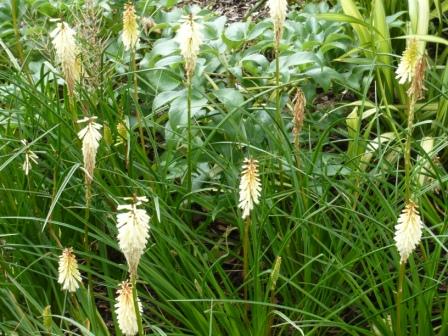
  • Kniphofia known as Red Hot Pokers come in a range of colours and I like the cream or white.
  • This variety K. citrina is a stately lemon coloured spire of flower about 3 foot tall. They are good clump forming perennials with narrow strappy evergreen leaves.
  •  For other yellow flowers try Candelight, Little Maid (AGM) or Atlanta.
  • The sword like, strappy leaves, clump together well.
  • The plants look good when massed together in clumps.
  • Pokers are generally hardy herbaceous perennials -try Kniphofia Citrina a 3 foot lemon colour or giant 6 foot Royal Castle.
  • If space is limited Kniphofia hirsuta is 18 inches high and forms dense, tidy clumps. The flowers are good for cutting.
  • If the leaves are untidy in Autumn cut them down to half their height.
  • Kniphofia combine well with many shrubs, grasses and Yuccas. They like well drained soil in a sunny position.
  • White Hot Pokers can also look good in a Mediterranean gravel or paved area.

AGM varieties to grow

  • Kniphofia ‘Brimstone’ Slender spikes of golden-yellow from green buds.
  • Kniphofia caulescens Coral-red, fading pale-yellow.
  • Kniphofia galpinii Dainty spikes of very intense, rich orange
  • Kniphofia ‘Royal Standard’ Deciduous. Bright yellow, scarlet in bud
  • Kniphofia ‘Toffee Nosed’ Creamy-white tipped toffee-brown.
  • Kniphofia ‘Bee’s Sunset’ Deciduous. Soft yellowish-orange
  • Kniphofia triangularis Free flowering. Reddish-orange

Other Resources

Royal Horticultural Society RHS ‘Gardening for All’
National Council for Conservation of Plants and Gardens ‘Conservation through Cultivation.’
Garden Organic National Charity for Organic Gardening.
BBC Gardening

Red hot poker

Long Harvest Times

Long Harvest Times

You do not only want home grown vegetables when they are in mid season with all that a glut implies.
With some planning there are some vegetables that can be available most if not every month of the year.
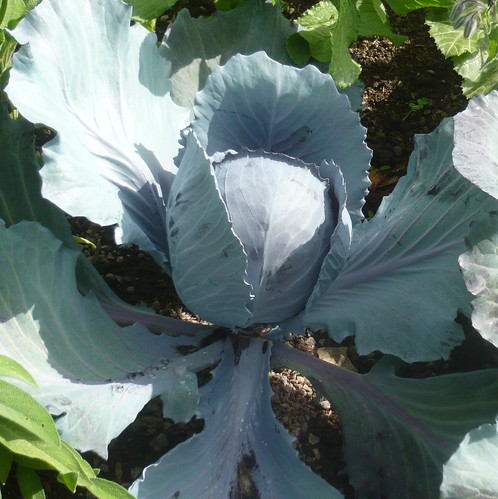
Blue Cabbage

There is a cabbage for harvesting at all times. Sow indoors or outdoors depending on the variety. Plant out 6″ apart and get 10 good heads in a 10 foot row.

Radishes are another ’12 monther’. Sow under cloches for late autumn and winter pickings.

Swiss Chard Traffic Lights
Swiss Chard is a plant that will stand outside all year. Sow in May and pick on through.

Salad leaves are also good Jan-Dec but homegrown lettuce tend to be in short supply in January and February.

Spinach, Broccoli and Leeks miss out in January and February. Parsnips let you down in early summer but Cauliflower just about cover the full year.

Five a Day Strawberry Growing

Five a Day Strawberry Growing

There are many reasons to grow one of the nations favourite fruit & here are our five with a bonus five health benefits.
There are many ways to grow Strawberries and here again we offer five tried and tested tips.

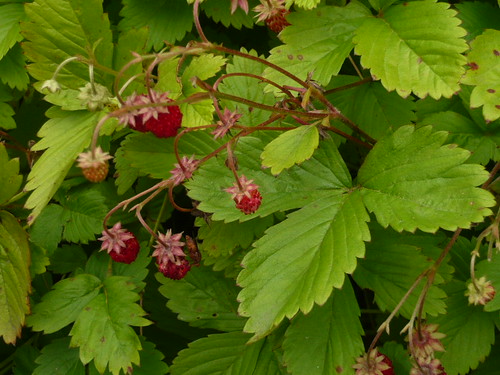
alpine strawberry

Reasons to grow Strawberries

  1. They taste better when picked fresh as a result of your own efforts.
  2. Strawberries have many healthy properties.
  3. Jam made from strawberries and particularly wild strawberries is a top conserve.
  4. Plants can look ornamental and still produce a good crop.
  5. By selecting a range of varieties you can eat strawberries from May to September.

Newby Hall gardens Strawberry
Health Benefits

  1. Your daily need for vitamin C is covered with only 25 calories of sweet juicy fruit.
  2. Strawberries have health benefits that include cholesterol lowering properties and contain elligic acid reputed but not yet proven to fight cancer.
  3. Ignoring cream (if you must) then strawberries have half the calories of an apple and a quarter of a banana weight for weight.
  4. Strawberries are rich in manganese essential for controlling blood sugar levels and enhancing memory.
  5. Eating strawberries is a comforting peace enhancing activity.

The Best Tips for Growing Strawberries

  1. Select the best varieties from a good nursery.
  2. Remove runners to channel energy into fruit not new plants.
  3. Mulch with straw or strawberry mats to conserve moisture and keep fruit clean.
  4. Feed with high potash feed when the first flowers appear. Check for cultivation tips.
  5. Force strawberries to produce fruit early and beat the imports. Lift crowns at the end of January and pot up in John Innes No 2. Water well and keep in a cool well lit greenhouse or cold frame.

Strawberry

Best UK Varieties

  1. Royal Sovereign is a mid season variety that can be forced in 5” pots in a cold greenhouse for an early crop
  2. Cambridge Vigour is a very good cropper of sweet aromatic fruit.
  3. Ellana is used by jam makers and on some pick your own farms.
  4. New varieties have been bred for the patio and hanging baskets like ‘Sweet Success’
  5. Honeoye is an early fruiter with shiny deep red fruit. There are many more varieties to select from Thompson Morgan
Growing Chilli, Sweet and Hot Peppers

Growing Chilli, Sweet and Hot Peppers

Help Growing Peppers

    • Sweet Bell peppers ripen from Green to Yellow, Orange, Red or Chocolate colour.
    • Average plant height is 30 inches and most varieties can be grown in 8 inch pots from seed which takes 1-3 weeks to germinate. Hotter varieties may take a bit longer.
    • Pinch out the growing tip to get laterals and give plants plenty of support
    • A nitrogen feed helps young plants followed by tomato food once flowering starts.
    • Peppers need a long growing season
    • Orange Bell is a productive plant producing typical ‘blocky’, thick walled fruits with delicious sweetness. The fruits start green, ripening to a gorgeous orange.

Hot Chilli Peppers

  • None Bell peppers have conical, curved or long tapered fruit. Arousa is used in Spanish Tapas and Conquistador can be dried then ground to make Paprika
  • Extreme heat is found in the seed oil. Flesh is hotter at the shoulder than the blossom end.
  • Capsicums Chinese are some of the hottest Chilli Peppers around. Seeds from 10 Habanero vaieties and  Scotch Bonnet are able to compete with C. annuum ‘Tepin’ and C. frutescens ‘Zimbabwe Bird Pepper’ for the hottest seeds around.
    Available from Thompson Morgan a seed, Chilli and vegetable specialist.
  • Jalapeno are a traditional early strain popular in tex-mex cooking. They are a mid range heat.
  • Georgia Flame sounds like a good variety for a salsa with thick crunchy flesh.
  • Heat can vary even on the same plant so test several to find a varieties you like.

Gardeners Tips
Naga types need heat to germinate
Cayenne types are generally quite prolific.
Bell peppers have no heat and are ideal for salads, stir fries and stews

Book Cover
The Complete Chilli Pepper Book: A Gardener’s Guide to Choosing, Growing, Preserving, and Cooking

Christmas Poinsettia

Christmas Poinsettia

A favourite indoor plant at Christmas is the seasonally coloured Poinsettia. These potted plants can be better value than a bunch of flowers in December.

  • The picture shows thousands of Poinsettia in a propagating glasshouse.
  • I wouldn’t bother with the pinks and white plants as it is the red and green that reminds me so vividly of Christmas.
  • Poinsettias need special light conditions to get the colourful bracts so I would recommend buying not growing your plants. With care they can be kept but seldom excel twice.
  • Poinsettias are part of the Euphorbia family and originate from Mexico.
  • The flowers are the small yellow centres the coloured section are ‘bracts’ a modified leaf.

 Care Tips

  • When you buy a Poinsettia make sure it is wrapped as exposure to cold will damage it and make leaves drop.
  • Plants showing yellow pollen are mature and will drop leaves quicker than those with closed yellow buds.
  • Place in indirect light, out of a drafts and without leaves touching cold windows.
  • High temperatures above 70°F shorten the plants life.
  • Water when dry to stop the Poinsettia from wilting and dropping leaves plant .
  • Do not fertilise when in bloom.

Poinsettia

Selecting your Poinsettia

  • Do not buy drooping, wilting or yellow leaved plants.
  • Poinsettia should be about 2-3 times the size of the pot.
  • Plants should look full, balanced and attractive from all sides.
  • Chose plants with dark green leaves down to soil level.
  • Select plants where the true flowers are tight and green or tipped red for a longer lasting show.
  • There are over 100 varieties so you may wish to try several.

Growing your Own

  • Our local nursery dedicates two glasshouse to this December crop.
  • Poinsettia need 14 hours a day complete dark for ten weeks before sale to form good bracts.
  • Commercial information can be found in the Poinsettia Growers Guide
  • For more information such as reflowering tips try  ask.com  ….. Poinsettias (Euphorbia pulcherrima) remain one of the most popular holiday flowers.
  • Hybridizers have expanded the range of colors from the familiar red to pastel yellow and vibrant bi-colors. One of the most common questions after Christmas is “How can I care for my poinsettia so that it will bloom again next Christmas?”. While this can be done, it’s a very fussy, exacting process and since the plants are not that expensive, you might just choose to start fresh next year. For those of you who are undaunted, the process for saving your poinsettia and getting it to rebloom begins with the care you give it the first season.

Thompson & Morgan for gift plants including Poinsettia

Uses of Garden Compost

Uses of Garden Compost

compost heap

How do you Use Organic Compost

  1. Good compost mixed in with soil improves the condition, texture and water retention .
  2. Put compost in a planting hole for new trees and shrubs it helps to give them a good start.
  3. Compost around plants and trees acts as a mulch to conserve moisture and protect from frost.
  4. Feeding nutrients back into the soil particularly for heavy feeders like Dahlias, Onions or Runner Beans is one of the main uses of garden compost.
  5. Suppressing weeds can be achieved by mulching with compost.

Preparation with Compost

  1. Replace the soil in the greenhouse where tomatoes have been grown.
  2. I have just made a new bed for next years Sweet peas from lots of home made compost.
  3. Mix garden compost with leaf mould and grit for a container of cuttings mix.
  4. Make your own seed compost mix with loam, compost, leaf mould and vermiculite
  5. Compost recycles waste, reduces landfill and carbon dioxide emissions whilst saving you money.