Browsed by
Category: Flowers and Plants

Annual, perennial and interesting flowers with advice on culture, information, tips and recommended varieties

Orange in your Garden

Orange in your Garden

Orange trees wont fruit in the open in the UK but you can still find the colour in flowers and plant combinations.
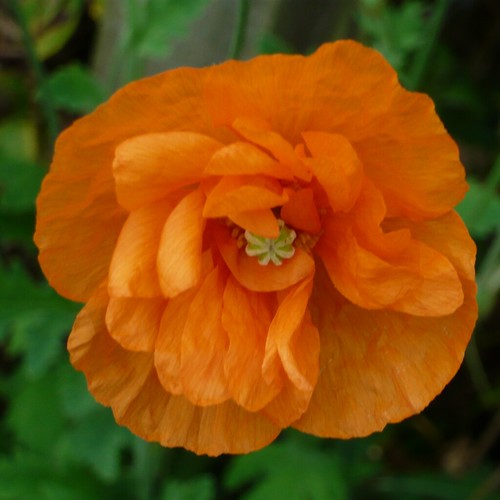
Poppy Polly

Orange was the colour of the 1970’s but gardens seemed to reject this colour as too gaudy and fit only for psychedelic record sleeves. Times have now changed and hot borders are fashionable with an exciting choice of plants including those from the Poppy family. Oriental poppies are big and blousy whilst the strong orange of Californian poppy on frail foliage can be startling.

Orange can be a hard colour to place but a strong purple leaf like Cotinus Royal Purple will offer a good contrast. However Geum Borisii will provide perennial blooms in any location without a backdrop. Acer palmatum Osakazuki is the autumnal orange leafed small tree variety to go for, underplanted with orange lilies Jet Fire, Orange Pixie or Tigrinum maybe.

Roses have a variety of orange colour schemes, choose from creamy pale Just Joey, floribunda Anne Harkness, clear toned Geraldine, apricot Pensioners’ Voice and patio rose Sweet Magic.

Beggars Begonias

Canna lilies in pots with purple leaves and orange flowers can be titally stunning like Triomphe, Wyoming or Delibab varieties and for a Gladioli try Topaz or the reddish Hunting Song. Also amongst summer tubers you can do worse than give space to some Dahlias like Bishop of Oxford and Catherine Deneuve with dark foliage or the decorative Mrs Eileen.
Eden Project Calla Lily

Tip Winter is a good season to dream of those hot psychedelic orange colours and plan where to grow the plants that will catch everyone’s eye next summer.
Primulas 172
Yellow and red make orange in some colour schemes.

Our Big Selection of Salad Leaves

Our Big Selection of Salad Leaves

Eat up your greens and your other salad crops.

Lettuce -  Bijou & Freckles

Salad is a diverse name covering any of a wide variety of dishes including,  green salads, vegetable salads, salads of pasta, legumes, or grains; mixed salads incorporating fruit and fruit salads. They include a mixture of cold or hot foods, often including raw or sometimes cooked vegetables and/or fruits.
Alternatively ‘Salad’ is any green plant or herb used for such a dish or eaten raw so that is the part we will concentrate on.

Leafy Salad Plants

Lettuce is available in many varieties with popular types like Cos, Butterhead, Crisphead, Lollo, Oak leaved or loose leafed. The coloured varieties above are called Bijou and Freckles. Buy a mixed packet of seeds and eat young seedlings as a way of thinning out crops.

Read More Read More

Streptocarpus News and Views

Streptocarpus News and Views

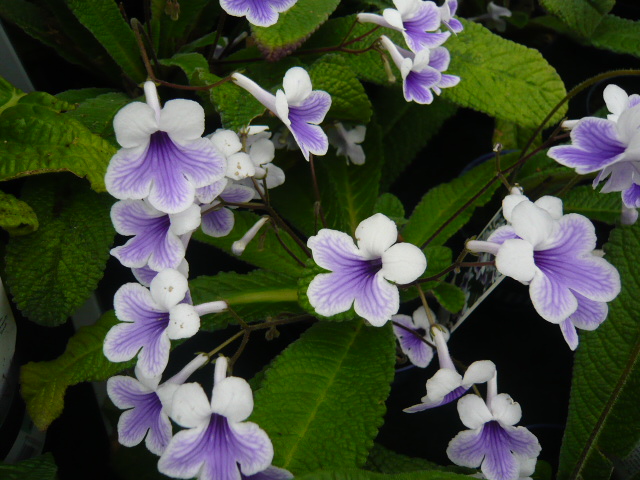
Cape Primroses never looked so good. New varieties are being released as the houseplant market takes to these interesting plants.

With the advent of yellow and blue flowered Streptocarpus there is a wider range of these interesting plants to collect and grow.

The flowers on Crystal Ice above are 1.5 inches across and have been bred to flower for long spells. Sarah on the other hand has flowers upto 3″ across.

Streptocarpus Care Tip

  • Too much sun burns the leaves and fades the flowers. Keep your plants in and east or west window.
  • Overwatering is as dangerous as underwatering causing wilting and death. Allow compostto totally dry out between watering.
  • Keep plants on the pot bound side – do not over pot.
  • Feed with a high potash feed to sustain a long flowering period.
  • In winter keep plants frost free, drier and do not feed.

For more tips read Care and Propagation
Streptocarpus seeds at Thompson & Morgan

Read More Read More

Colour from Plants not Flowers

Colour from Plants not Flowers

Spring flower show 090

‘All that glistens is not gold’ and all the colour in plants does not come from the flowers.
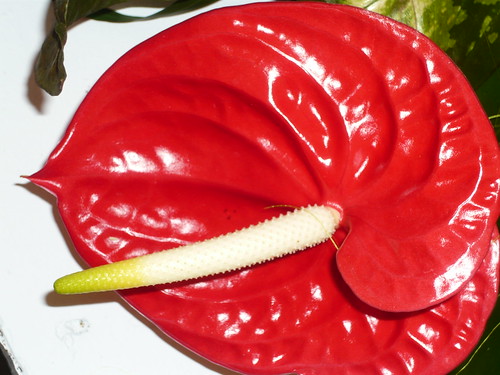
Anthuriums have coloured spathes in various shades but are particularly strong with red colours.

Spring flower show 200

Begonias are generally grown for their brashly coloured summer flowers but the ‘Rex’ varieties have a great deal of leaf colour with interesting patterns, textures and shapes. There are lots of other plants to see with interesting leaves.

Read More Read More

Divine Busy for the Impatient

Divine Busy for the Impatient

bizzie Lizzie

Busy Lizzies are correctly called and often sold as Impatiens. To combat disease they have been crossed with ‘hawkeri’ a variety from New Guinea.
The bigger the plants you buy the less impatient you need to be but beware of frost, a sure killer.
I have just received 72 plug plants that were little more than germinated seeds but I have followed the instructions repeated below:

Pot up plug plants and grow them on in bright, frost free conditions.
While the plants are still small but with more than 2 sets of leaves, pinch the growing tips out to produce a well branched, compact plant.
When all risk of frost has passed I will acclimatise the Busy Lizzie plants to outdoor conditions over 7 to 10 days, prior to planting in their final positions.

Growing Habit
This robust New Guinea Impatiens is strong growing and mildew resistant so you can rely on a fantastic display from Busy Lizzie ‘Divine’.
Its large flowers in a mix of red, orange, lavender, white and magenta are perfect for adding colour to patio pots and garden borders
Plants should withstanding wet, dry, cold or hot conditions throughout the summer. I can’t help but think they will like a regular drink and some humidity so I plan on a couple of plants in pots in the house and greenhouse.
Height: 30cm (12″). Spread: 35cm (14″)
Busy Lizzie ‘Divine’ flowers endlessly in a bright mix of colours from June to November.

Bizzie Lizzie

Anthurium as Houseplants

Anthurium as Houseplants

There is something exotic about the evergreen Anthurium that calls to mind hot tropical holidays. The long proboscis or spadix gives rise to the  nickname ‘Boy Flower’. The main issues for Anthuriums as houseplants are to keep the room temperature above 60°F and the air humid. 
There are 800-1000 species and new varieties regularly on the market so below is a small selection.

Selected Houseplant Varieties

Anthurium Crystallinum has large heart shaped leaves and grows about 18″ tall. Edges brown if too cold. Aerial roots need to be covered with moist compost so leave room at the top of the pot.

Anthurium Scherzerianum the ‘Flamingo Flower’ has waxy textured leaves and grows a bit smaller than other Anthuriums. A good plant to start with.

Anthurium Andreanum also called the ‘Wax Flower’ because of the texture of the red leaves. Appreciates some shade and humidity but not keen on dry central heating.

Tip The flowers will last for a long time as cut flowers.

Green Anthurium one of the new colours now on the market.

Pruning Anthuriums

  • Leggy plants can be trimmed to keep them in shape.
  • Remove the dead and withered blossoms and overhanging leaves.
  • After pruning allow the plant to heal and new shoots should come from the cuts.
  • Mist and keep your pruned plant in bright indirect light.

Spring flower show 090

Some of the best Anthuriums are grown in tropical or Mediterranean climates. Madeira produced this flower and many cut flowers adorned the church in ‘Monte’ during a recent visit.

Anthurium

Top Rockery Plants for Growin In UK

Top Rockery Plants for Growin In UK

alpine21

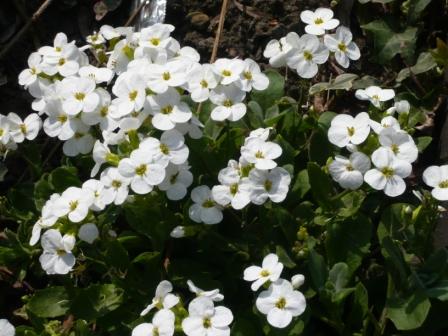
Rockery plants look very good in spring as they trail over rocks and edges in the garden. The rockery mimics natural conditions for these alpine dwellers often with limestone rocks or fast draining poor soil.

Top Rockery Plants for Beginners

  • Arabis shown above is also known as snow-in-summer and has showers of white flowers. The plant is robust and useful for covering rough stoney ground. Some species need a bit more care but are useful in the rockery including Arabis rosa a pink form and arabis bryoides that forms a small mat of hairl leaved rosetts.

Read More Read More

Wild Cowslip aka Primula veris

Wild Cowslip aka Primula veris

cowslip

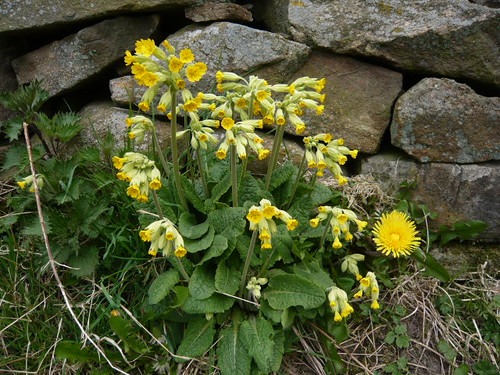
Primula veris is more commonly known as the Cowslip but also resides under the alternative names of Palsieworts, Paigles, Cowslop or Petty Mulleins.
The range of local names hints at the uses and affection for this cheerful plant.
Cowslips are still used in herbal remedies for nervous complaints and paralysis. Perhaps that is where the old name, Palsieworts comes from. Cowslop is not as fragrant.
Traditional Cowslip wine probably needs too many flowering heads to sustain the wild population of plants.
Other names that relate to their similarity to a bunch of keys include ‘key flower’ and ‘key of heaven’ whilst ‘fairy cups’ and ‘tittypines’ are a bit more avaunt-guard.

Locations for Growing Cowslips.
Cowslip field
I liked this field of wild flowers that included a large number of Cowslips. Obviously from the common name of primula veris you would expect them to be at home in a meadow.
Caught in a corner of a field the shelter provided by the wall shows off the top Cowslip to advantage.
When grown in clumps in a border or raised bed they combine well with other spring and early summer flowering plants.
I like them for the freshness in a small rock garden.
With the loss to agriculture of much meadow land it is now also worth seeking out the wild flowers on cliff tops and undisturbed land at the seaside.

Propagating Cowslips

Read More Read More

Best Tips For Growing Edible Crops

Best Tips For Growing Edible Crops

Prime space and time are precious commodities for every one growing crops from the biggest corporate farmer to the smallest window box gardener.
41lbs Onions

Planning Tips
Know why you are growing each crop. Is it for flavour, feeding the family, aiming for show quality or just to enjoy the process.
Only grow crops that you or your family will want to eat. Do not grow just for the compost heap.
Sow in succession to avoid gluts.
Consider ‘catch’ crops to use the available space more intensively.
Plants perform better with adequate space.

Apples

Tips to Help Plants Excel

Read More Read More