Browsed by
Category: Flowers and Plants

Annual, perennial and interesting flowers with advice on culture, information, tips and recommended varieties

Colourful Climbers and Creepers

Colourful Climbers and Creepers

‘Late at night when sleeping poison ivy comes a-creeping.’

As Autumn beckons I thought it worth reviewing the top climbers and creepers for that startling colour that encourage passers buy to stop and gawp.

Virginia Creeper Parthenocissus quinquefolia is a large-leafed vigorous grower with brilliant orange and scarlet leaves in autumn.
Parthenocissus Veitchii ‘Boston Ivy’ from the same family is a vigorous self clinging vine also with rich crimson and scarlet leaves in autumn.

Vitis coignetiae Crimson Glory grape vine with green leaves turning crimson and scarlet in autumn with purple fruits.
Vitis ‘Brandt’ another hardy vine growing up to 25 feet. Large deep purple leaves and bunches of purple grapes in late summer.

Actinidia Kolomikta Chinese Gooseberry has young leaves that are tipped with a distinctive splash of pink and white. Not really an Autumn specimen but a good year round climber. To get fruit you need a male and female plant.

I would strongly recommend you avoid the Russian vine Polygonum baldschuanicum the mile a minute plant that strangles all in it’s path.

Ivy

Peas are Legumes Too

Peas are Legumes Too

What do beans, lupins, lentils, wisteria, peanuts and clover have in common? They like peas are all from the legume family.

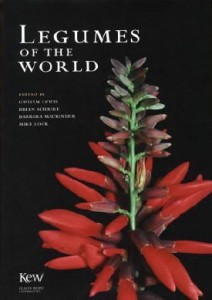
Despite photographing this plant if I could identify it I would not need to buy ‘Legumes of the World’ by Gwilym Lewis, Brian Schrire, Barbara Mackinder, and Mike Lock available from Kew

legu

‘This is the first comprehensive guide to world legumes, describing and illustrating all 727 genera. Legumes contribute enormously to the world’s economy – through food and drink, pharmaceuticals and medicine, biotechnology, building and construction, textiles, furniture, horticulture, paper and pulp, fertilizers, chemicals, pest control and ecotourism. This book spotlights as yet untapped economic potential and for the first time places genera in a modern systematic framework.
Containing over 1,000 illustrations – colour photographs and line drawings – this is a lavish yet much needed reference for botanists and other professionals involved with legumes.’ Ordered from Kew Books at Kew gardens this book costs a marrowfat sized £59.95 but it is still cheaper than Amazon.

Other Resources

Read More Read More

Plant Plants Together

Plant Plants Together

Massed planting, grouping and organised beds are just some ways of putting plants together to optimse impact.

Sometimes a single plant looks a bit weak or out of place on it’s own but a group of one variety can vastly improve the overall image of your garden. This row of Lime trees is planted close together with a fairly narrow path in between but the effect is visually strong whatever the season.

Tips to Use Plants Together

  • When planting shrubs it is often said that groups of odd numbers 3, 5, and 7 have positive effects. There is more harmony and they are easier on the eye that way.
  • Read More Read More

Pot Mum Chrysanthemum Indicum

Pot Mum Chrysanthemum Indicum

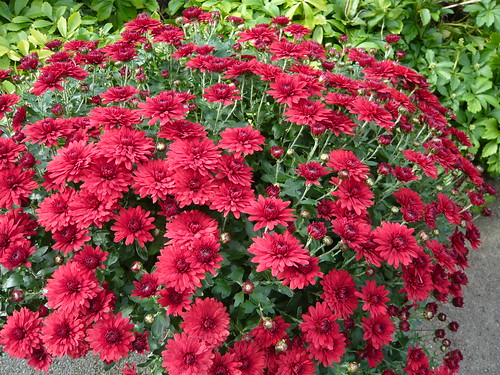
This Chrysanthemum has been grown from one of last years cheap supermarket plants. In a large pot with just garden soil it has sat in an out of the way place with only regular watering for maintenance. It is now a riot of blossom and I can hardly get my arms around the flower head.

  • Grown in pots like this plants can be moved to a more prominent position in the garden as the need arises.
  • These plants can make large domes in the garden prior to flowering close to the top of the foliage.
  • Chrysanthemums are hardy and I hope to get a few more weeks of colour from this plant before I bring the ‘stool’ (the old root stock) into the cold greenhouse for winter.
  • Read More Read More

Cheap Perennials

Cheap Perennials

A well stocked garden is a treasure chest of potential new perennial plants. Divide clumps, take cuttings or collect seed and you can increase your bounty of hardy long lived plants to give away or replant.

Keep an eye out for new plants for your garden at reasonable prices as garden centers sell off old stock. I got 5 plants in 2 liter pots for a fiver at the weekend. It is a better form of recycling for me to renovate the plants for next year rather than see them composted.

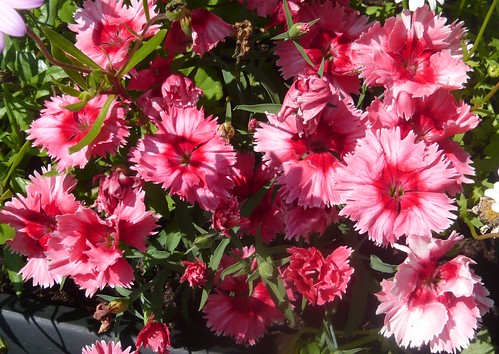
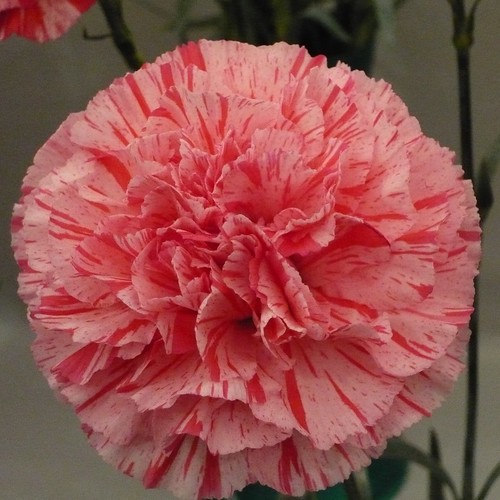
Dianthus ‘Kahori’ is an evergreen perennial with an erect habit. Its narrow leaves are greyish-green. In summer it bears scented pink flowers with a later flush in August if deadheaded.

Read More Read More

Perpetual Carnations from Cuttings

Perpetual Carnations from Cuttings

Old gardeners knew a thing or two about propagation.

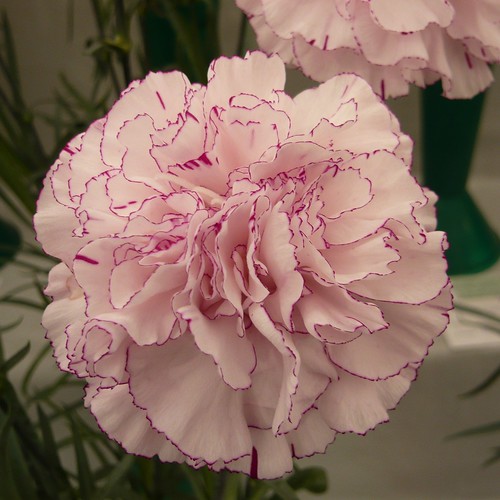
September can be a good time to take cuttings of Perpetual Flowering Carnations and other Dianthus. Using bottom heat they can be taken up to the end of March but if you have the greenhouse space then I would take them early.

Carnation Cuttings

  • Ideally use a “mother plant” that has not been allowed to flower but has been grown for the vegetative shoots.
  • Use only shoots from the lower part of the stem as cuttings from higher shoots will not form bushy plants.
  • Cuttings need a well drained compost of 50% peat (or peat and loam) and 50% sand with a bit of perlite and superphosphate.
  • Small pots can be used or three cuttings in a 3½in half pot.
  • Cuttings will have rooted when the leaves start to grow and by Christmas they need potting on into 4-5 inch pots.

The British National Carnation Society recommend taking cuttings ‘….very early and on a dull day if possible, you can take your cuttings by either using a sharp knife or pulling away with a heel. Strip away the bottom couple of leaves and make a clean sharp cut just below a node and insert into the side of the clay pot and stand in a shady spot.’

If you want to grow button holes you can pinch out all side shoots and grow carnations one to a stem in small 2″ pots from March cuttings.

Other Resources

Read More Read More

Tips Growing Decorative Alliums

Tips Growing Decorative Alliums

There was a sparkling show of long stemmed Alliums at our church flower festival this weekend.
Allium
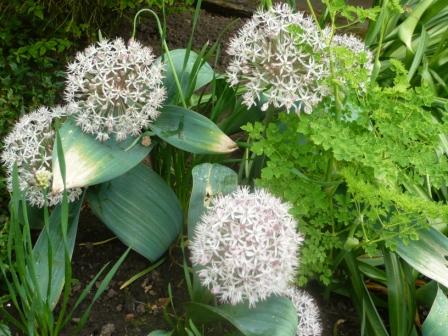
This Allium christophii must be one of the most attractive flowers for garden or cutting. the leaves are a disappointment and I recommend growing some annuals as cover as they die back in an unsightly manner.

allium

Lolly pop like Alliums  look exceptional when in flower in May until you look at the leaves which tend towards the scruffy. The seedheads are also eye catching and worth leaving although seed production may drain strength. The leaves are the way a plant builds up strength for next year as they help sunlight convert nutrients into food. Fortunately they do not cause any problem and can be taken over by other plant leaves soon after flowering. Mulch to provide food and encourage leaf growth or your Alliums will be shorter lived.

Gardeners Tips for Alliums

  • Generally Alliums need a sunny position and good drainage. Given both they will reappear year after year but may deteriorate if the leaves do not get a chance to do there job.
  • Plant bulbs in the autumn at twice the depth of the bulb and top up your stock of Alliums for those lost or not performing well.
  • Congested clumps can be lifted and divided  straight after flowering.
  • Dead-head before the seeds disperse to preserve strength or if you want to avoid unwanted seedlings.

allium-4

Read More Read More

Versatile Chives to Eat and Admire

Versatile Chives to Eat and Admire

Chopped up leaves, edible flowers and miniature onion bulbs are three ways to benefit from Chives.

Chive flowers

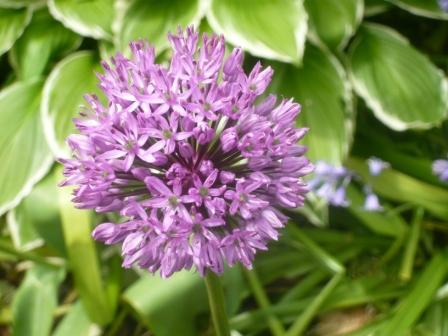
Chives Allium schoenoprasum are perennial and cultivated both for their culinary uses and their ornamental value. The flowers are deep blue to violet in the shape of little pompoms. The leaves are thin, hollow stem like tubes.
Chinese chives Allium tuberosum have white flowers and smell similar to mild Garlic but much milder.

Growing Chives from Seed.

  • Chives can be grown from seed and mature in summer, or early spring.
  • Chives need to be germinated at a temperature of 15-20 °C and kept moist.
  • They can also be planted under a cloche or germinated indoors in cooler climates, then planted out later.
  • After 4-7 weeks the young shoots (looking like leeks or onions) should be ready to be planted out.
  • Seeds are available from Thompson & Morgan

Read More Read More

Growing a Burning Bush – Dictamnus

Growing a Burning Bush – Dictamnus

http://gardenerstips.co.uk/blog/


The volatile oils from Dictamnus have a lemon scent and are quite flammable. The fumes are said to be capable of being ignited on a calm summer evening giving rise to its popular names Burning Bush or Gas Plant.

Growing a Burning Bush

  • Dictamnus is also called False Dittany but unlike Dittany it is inedible and has few herbal properties.
  • Dictamnus albus is a long lived perennial that grows 2-3 feet high. It flowers in late spring on a pyramid of spires in pink, purple and white.
  • Plants grow best in full sun but will tolerate some light shade. Grow in any well drained garden soil with added  lime .

    Read More Read More

Aquilegia Growing

Aquilegia Growing

aqu2

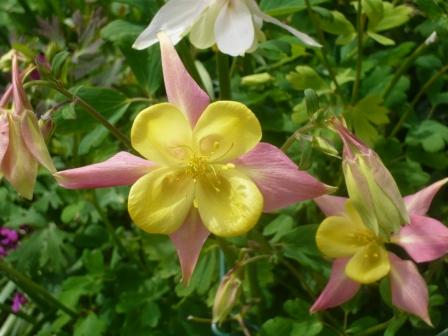
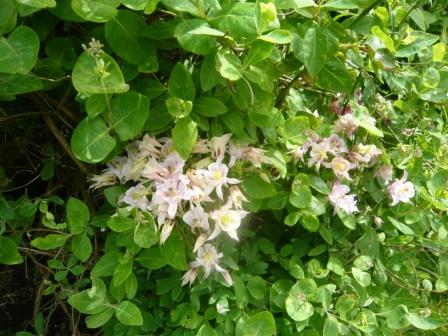
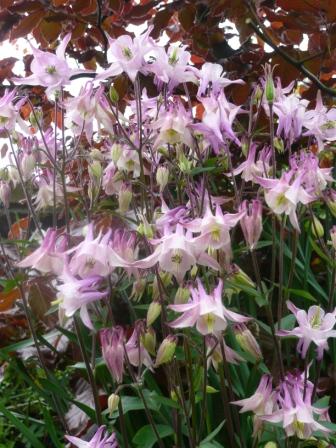
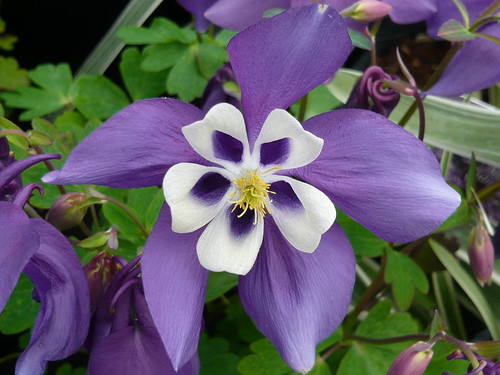
Aquilegia are growing and flowering in all parts of my garden at the moment. This Aquilegia canadensis or red columbine hybridises very easily and will self sow if left to its own devices. This Aquilegia Kansas looks very striking in tight groups.

aqu-honeysuckle

When I saw this photograph of Aquilegia colombine growing with  Honeysuckle the significance of the names escaped me. The Honeysuckle will flower a bit later than the Aquilegia which I will cut down after it flowers in the hope of a second flush of flowers later in the year.

horns

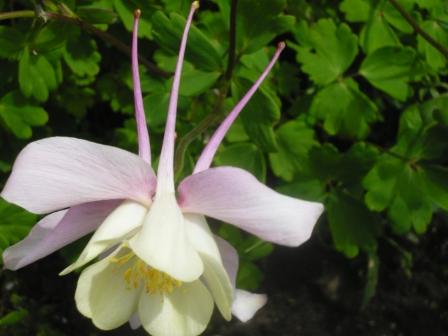
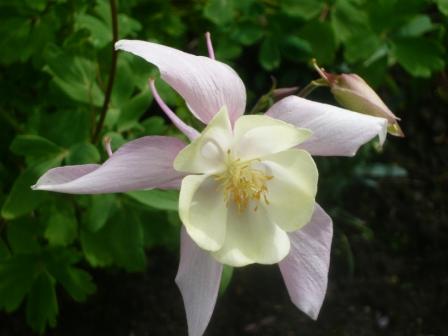
The horns of a dilema are shown on this close up of an Aquilegia flower. It pays to take the time to inspect individual flowers as well as the whole plant.
You can acquire or just admire plants as part of a collection

aqu-rhodo

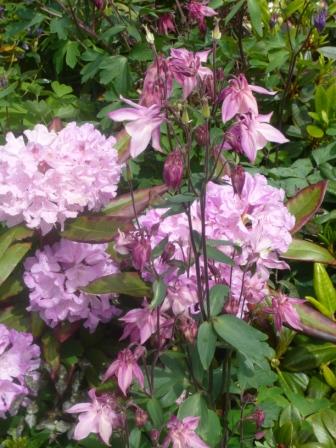
Aquilegia combine well with other plants and the colours of the Rhododendron work well with the shade of this Aquilegia.

aqu

Whilst it may not be obvious Aquilegias grow as small alpines 4 inches tall like A. Flabellata and as 3 feet high plants and various sizes in between. A good selection of seeds from many Aquilegia varieties are in the  Chiltern Seed catalogue.

aqu-leaf

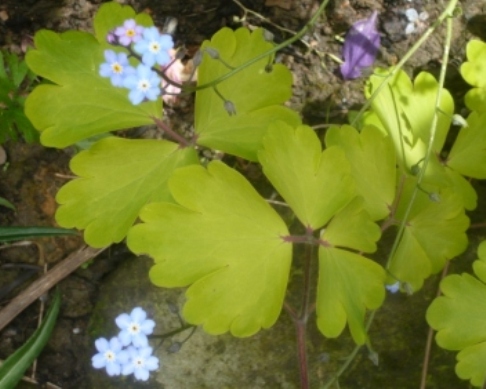
The leaves have a pleasing shape and vary in colour from the yellow green above to grey green and dark green.

aqu4

Give Aquilegia a try in your garden. They grow very easily from seed so poor specimens and colours can be weeded out.

Aquilegia