Browsed by
Category: Flowers and Plants

Annual, perennial and interesting flowers with advice on culture, information, tips and recommended varieties

Growing Citrus – Oranges, Lemons, and Others

Growing Citrus – Oranges, Lemons, and Others

Book Cover

Glasshouse gardeners and those with large conservatories may be tempted to grow citrus trees. This book by Martin Page contains well written, instructive comments. Due to an American influence on the varieties chosen it is worth doing more research for UK purchases before plunging.


Don’t expect a crop of sweet juicy fruit in normal UK conditions.

It is noaccident that oranges grapefruit and other citrus come from Florida, North Africa and hot fertile climates

‘Growing Citrus’ is also  available as an ebook.

A more general text may suit casual growers of fruit. The book below contains interesting ideas on 50 different fruit crops.
Book Cover

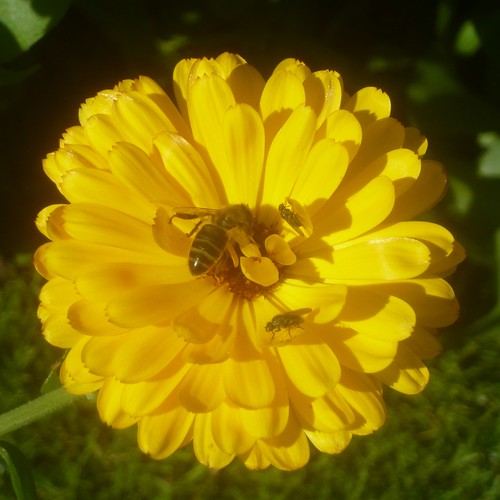
Calendula Pot Marigold Collecting Seeds

Calendula Pot Marigold Collecting Seeds

Fly trap

Calendula have lasted well all summer and there are still come bright yellow flowers in my garden despite last nights frost.

Collect Seed

  • I collect the seeds from the flowerheads when the curved seeds become brown. Otherwise the plants self sow and you get plants where you do not need them.
  • If they do self sow and germinate, as they are likely to do, you can transplant them in late spring.
  • The seeds dry quickly and are easy to find, collect and store.
  • On each head there are about 12-20 seeds.
  • Sow between March and May  ½ inch deep, outdoors in drills  12-18 inches apart, in soil which has been raked to a fine tilth.
  • After sowing, keep well watered until seedlings appear.

Calendula Tips

  • English Marigold, Marigold, or  Pot Marigold are common names for Calendula Officinalis Nana.
  • They are available a striking combination of   double yellow, lemon, apricot and orange flowers, borne on  compact, basal branching, bushy plants.
  • For organic gardeners this makes an ideal companion plant keeping flies away from other crops..
  • Flower petals and leaves can be used in salads to add a tangy flavour.
  • If you can’t collect your own seeds are available from Thompson Morgan

Orange calendula

Berry Fruit Cages

Berry Fruit Cages

You have grown some bush fruit in an organic garden and as the berries ripen all the birds you have fed through winter decide to feast on your well grown crops. What a good job you protected them in a fruit cage!

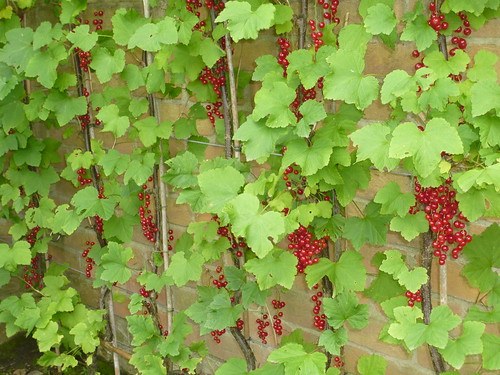
red currant

If you do not have a fruit cage yet, you can buy a Two Wests Standard 6′ High Fruit Cage 6′ x 12′ Cage from Amazon.

Blackcurrant and Jostaberry
Blackcurrants prefer a cool, clay-loam soil which is not too acidic pH 6.5.
They are gross feeders and like a rich fertile soil.
Blackcurrants are shallow rooting and require irrigation or good watering when dry.
Protection from frost may be needed for early flowering varieties.

Redcurrant and Whitecurrant

A potash rich, moist, well drained soil with a pH 6.0 is optimum.

Read More Read More

Blackcurrant Cultivation Tips

Blackcurrant Cultivation Tips

Recommended AGM Varieties

  • Ebony’s large berries can be ready as early as June. Branches may need support.
  • Big Ben crops well and a good all rounder.
  • Ben Connan compact bushes with easy to pick fruit. My choice for my small garden
  • Ben Sareksaid to acidic and have short strings.
  • Ben Hope Not a strong currant flavour
  • Ben Tirran easy to manage with late fruiting and good flavour – I have just picked a good crop

Quick Tips

  • Plant new bare rooted blackcurrants 2-5 inches lower than they were grown in the nursery to encourage branching from the bottom. This helps to create a strong shrub.
  • Best fruit yields are obtained from wood grown in the previous year so one third of the older wood can be pruned out to an inch from the ground each year.
  • Read More Read More

Lavatera Tree Mallows

Lavatera Tree Mallows

This tree Lavatera arborea ‘Olbia Rosea’ is a deciduous shrub growing 10 ‘ tall. It has a profusion of deep pink veined flowers, two inches across, that appear throughout the summer with lobed, mid green leaves.
There are a range of Lavetera species or Mallows from the tree and shrub varieties to annuals called Lavetera trimestris. The annual Ruby Regis is a ceris colour whilst Mont Blanc is pure white and pink Silver Cup has an AGM. All are easy to grow from seed and produce lots of hibiscus like flowers.

Lavatera davaei is a Portuguese shrub, up to four feet high, with clusters of violet-rose flowers.
Lavatera mauritanica, from North Africa, is an annual of two feet, with violet flowers, shaded darker at the base.
Lavetra maritima bicolour is a small evergreen shrub with grey-green foliage that produces a profusion of large, pink, lilac and white flowers with magenta veins from late summer.

* Tip 1 Grow perennial Lavetera from cuttings and annuals from seed.

* Tip 2 Prune hard in the spring to encourage flowers on the new wood.

Lavetera Barnsley is a popular and readily available plant. The lower growing Lavatera Barnsley Baby is useful for borders and patio containers, where the branching plants give racemes of hollyhock-like, soft pink blooms.
Annuals and mallows from Thompson & Morgan

Growing Good Crocosmia

Growing Good Crocosmia

The national plant collection of Crocosmia in Lincolnshire has 270 different varieties.
Most are grown in containers to make use of the available growing space.

Growing Hints and Tips

  • The bronzed leaf varieties are a bit tricky being more tender and slower to bulk up. Given good drainage and a warm sunny spot then Nigricans or Dusky Maiden may be OK. ‘Dark Leaf Apricot’ (Coleton Fishacre) should be even easier.
  • Crocosmia like plenty of water in the growing season and are hardy in winter as long as they do not get too wet.
  • A warm sunny spot suits Crocosmia best but do not forget the water.
  • Crocosmia attract insects and if possible leave the leaves on through the winter as wildlife utilise these leaves to make their homes. The old leaves also help protect emerging shoots from spring frosts but you can mulch instead if you wish.
  • Montbretia can be rampant and others you should watch out for include Red King, Meteore, Red Star and Marcotijn.

Choice Varieties

Read More Read More

Growing Ghosts – Eryngium giganteum

Growing Ghosts – Eryngium giganteum

Mrs Willmott a formidable gardener is said to have secretly sown seeds in other peoples garden, an idea that appeals to me as a guerrilla gardener. Growing Eryngiums that look spooky in the moonlight is how they got the name Mrs Willmott’s ghost plants.

Growing Tips

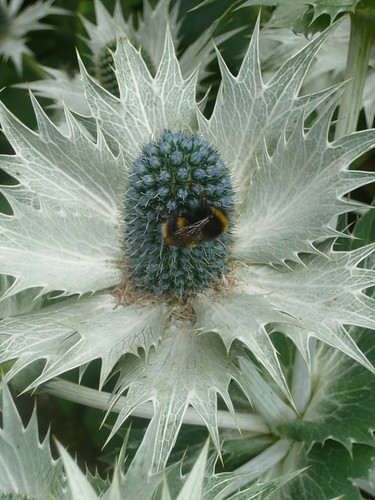
  • Sea Holly or Eryngium giganteum is an odd looking perennial with prickly, silvery-grey bracts under steel-blue cones.
  • Wonderful for dried arrangements, especially at Christmas.
  • Happy in sandy dry soils this draught tolerant plant has spikey growth can deter unwanted visitors! I have a few scars this year to prove it. Suitable for exposed coastal planting
  • An architectural plant that attracts wildlife to feed or nest.
  • Suitable for container growing; – ideal as a ‘stand out’ plant.

Raising Plants

  • Surface sow and just cover with vermiculite. Do not exclude light. Germination can be slow.
  • Sow in February to get a bit of frost or place in a refrigerator (not freezer) for 3-6 weeks.
  • Transplant to a cold frame then grow on in full sun
  • Prefers a rich, light, well drained soil.

Chiltern Seeds have 18 different varieties of seed or try Eryingyum from Thompson & Morgan

Honesty seed heads look a bit ghostly once the seeds have gone and the coin shaped, white paper disc is left to reflect low winter light. If you want a ‘ghost of Christmas past’ combine these two in a dry flower arrangement.

Read Plants for dry gardens

Growing Hydrangea

Growing Hydrangea

Hydrangea at Sunset
Hydrangea at Sunset

Hydrangea is a great plant that offers a long flowering season on a nicely shaped bush. Books suggest sun / partial shade. But, our experience is that it can thrive in full sun, but heavy shade will leave it stunted. It is relatively pest free which is a real boon. It is also fairly resistant to frosts, though new blooms may get damaged in a heavy frost. It is a heavy feeder, especially when in bloom. Give a good feed in spring with a general plant fertiliser.

Flowers come from new shoots, so you can prune back the old shoots in Autumn. But, we like to just dead head to encourage more flowers.

Getting More Flower Heads

  • Feed with phosphorous rich fertliser like bone meal.
  • Water well from early spring to encourage growth but remember Hydrangeas flower on old wood.
  • Prune with care I repeat ‘remember Hydrangeas flower on old wood.’
  • Blooms come from buds set in the autumn at the tips of stems.
  • Reduce the number of stems on the plant in early autumn.

Read More Read More

Grow Acanthus Varieties

Grow Acanthus Varieties

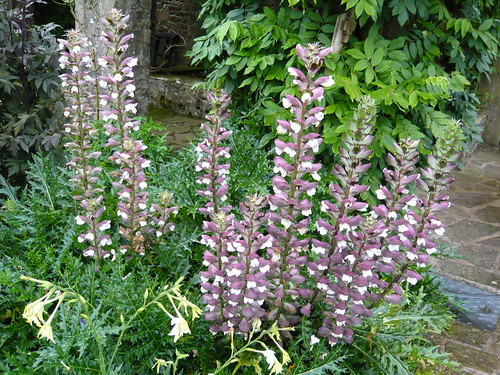
A large clump of Acanthus can produce many flowers on the 2-3 foot stems and you get the architectural leaves thrown in as an extra. The sturdy stems carry a whorl of 30 or so flowers, each producing a shiny, rich-brown, elliptical seed capsule.
Acanthus common name Bears Breeches is a genus of flowering plant named from Greek Akanthos, thorn plant.They were brought to the UK by Romans. An old herbal credits the following treatments which a Roman soldier may have needed:

“The leaves, being bruised or rather boiled and applied like a poultice are excellent good to unite broken bones and strengthen joints that have been put out. The decoction of either leaves or roots being drank, and the decoction of leaves applied to the place, is good for the king’s evil that is broken and runs; for by the influence of the moon, it revives the ends of the veins which are relaxed.”

“There is scarce a better remedy to be applied to such places are burnt with fire that this is, for it fetches out the fire, and heals it without a scar.”

Why are they named Bears Breeches or the Oyster plant?

In the 17th century, these were called Brank-ursine, meaning bear’s claws, which referred, possibly, to the shape of the flowers. They contain mucilage and tannin, which makes or rather made them useful in traditional medicine systems in Europe.

Acanthus in Cultivation

  • Acanthus grow in well drained soils, they don’t like to sit in water especially during winter.
  • The herbaceous species are native to dry rocky hills and make striking border plants. They thrive equally well in both sun and dense shade, although they tend to be more compact and flower more prolifically in sun producing more leaves in shade.
  • Acanthus have distinctive leaves at the base and some have fragrant flowers. The flower spikes are useful, when dried, for winter decoration.
  • Acanthus make excellent specimen plants in tubs and pots.
  • Slow to get a hold they can become hard to eradicate once they get going as they grow strongly from bits of root.

Acanthus Varieties

Read More Read More

Autumn Crocus & Fast Flowering Bulbs

Autumn Crocus & Fast Flowering Bulbs

Fast flowering bulbs can be planted now and will rapidly create an exotic display.

  • Colchiums and Autumn Crocus flower within days or at most weeks, producing flowers before the leaves. They can even be planted when in flower or left on a sauce to flower before planting out.
  • Cyclamen also flower from the corm before the low growing leaves push through to the surface.
  • Nerine will benefit from having a longer growing period  but, like their cousin the Amaryllis,  they flower quickly.
Type of Bulb When to Plant Flowers
Colchiums Aug/Sept Sept/Oct
Nerine Aug/Sept Sept/Oct
Autumn Crocus September October
Cyclamen September October
Amaryllis September January
Aconites September January
Dwarf Iris September March
Anemone Blanda September March
Muscari September April
Daffodils September March
Narcissi September May
Camissia September June

Other September Planted Favourites that will flower in Spring.

  • Iris reticulate are easy to plant and grow. They look excellent when grouped together in a pot or border.
  • It is too soon to plant Tulips but Daffodills and Narcissi like there time in the soil before flowering between March and May.
  • Anemone blanda and the blue Muscari are small plants that produce a good show and then leave the area clear for some annuals.

Bulbs for Later Planting.

  • As mentioned the Tulips do not need to develop strong roots in autumn and to avoid rotting I plant them in October or November.
  • Plant forced Hyacinths as soon as they are available in the shops for indoor displays or containers under shelter.
  • For more exotic flowers, plant Lilies and Fritilliaries in October to over winter and flower in early summer.
  • For indoors you will find Gloxinia are quick to grow and flower

Read Growing Habranthus