Browsed by
Category: Flowers and Plants

Annual, perennial and interesting flowers with advice on culture, information, tips and recommended varieties

Olympic Flowers and Plants

Olympic Flowers and Plants

Book Cover
It shows how long this blog has been operating. The Rio Olympics 2016 will be the third time we have commented on suitable Olympic  flowers. See Beijing 2008 and London 2012 below. Today is the ‘Anniversary Games’ in London a curtain raiser for the Brazil games.
For Brazil we should start with the nut (OK so that is the author) and then the Cacti as he is a prickly sort of guy.
Feeding plants and flowers with fertiliser or hormone treatment will not fall foul of the drug testing rules – there are no plant urine samples to test!
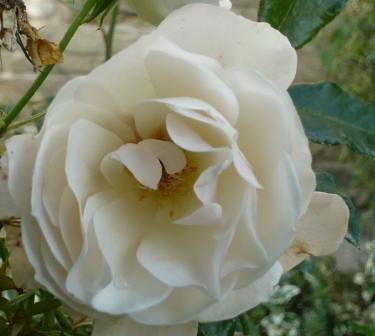
White Rose of Yorkshire

London Olympics 2012

  • Back in 2008 I wrote about the flowers and plants to be used at the Beijing Olympics.
  • ‘Budding companies’ for London Olympics can now demonstrate they have the skills and resources to design, assemble and deliver bouquets and floral arrangements. Olympics tendering authority Locog.
  • Approximately 29 London venues need 6,700 identical bouquets for the London 2012 Victory Ceremonies.
  • 30 arrangements for the Opening and Closing Ceremonies, and 130 arrangements for conferencing facilities are also in the tender.
  • They will be delivered every other day during the Olympic and Paralympic Games.
Read More Read More

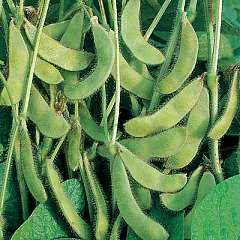
Soya Bean Superfoods ‘Glycine max’

Soya Bean Superfoods ‘Glycine max’

Grow and Crop your own Soya Beans

  • For a little grown vegetable Soya are an easy and attractive crop to grow.
  • Sow in a propagator or into warm soil May or June if sowing direct outside.
  • Plant in well-drained, moist rich soil, 6 inches apart. Keep well watered, particularly as pods are setting.
  • You will get 3-4 beans to a pod but you get lots of hairy self pollinated pods at the top of the plant.
  • Plants are virtually pest and disease free.

How to Use Your Soya Beans

  • You can pick pods whilst beans are still green and boil them in the pods with salt. Butterbean & Envy are good varieties for this purpose available from organicseedsonline.com
  • Shelled the green beans can be treated like broad beans
  • When pods turn brown harvest the dry beans and they can be stored in an airtight container. Soak them for 12 hours before using.
  • Good varieties include Ustie, Butterbean and Elna.
  • Commercially grown Soya is often GM but produces oil, Soya milk, Bean Curd or Tofu and can also be fermented to make Soya sauce.

Japanese Beans

  • Azuki beans are a hairy annual similar to Soya beans. They have yellow flowers and longer pods.
  • Daizu is the Japanese Soya rich in oil and protein. Flowers are violet or white and pea shaped.
  • Miso is a bean paste made from Soya beans rice and salt.
  • Tofu is an easily digested protein made from soaked and curded soya beans.
  • Natto is fermented Soya beans often eaten at Japanese breakfasts.
Primary Coloured Spring Bulbs & Primula Bed

Primary Coloured Spring Bulbs & Primula Bed

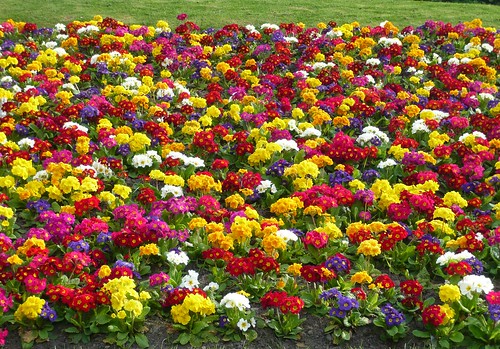
If you are looking for a show stopping display of spring flowers then why not try planting   primary colours of Red, Blue and Yellow in the same bed.

A sweeping display of blocks of colour contrasting with the other primary colours can have a stunning effect. Over planting with primary-coloured annuals will help the design continue through summer. This list starts off with bulbs in the primary colours but you can use whatever takes your fancy,  as you will see, I like Polyanthus.

More Primula seeds from Thompson & Morgan

Reds mainly Tulips

  • Small early red Tulips are Daylight and Show-winner.
  • For elegant Tulip shapes try Fosteriana Red Emperor, Charles or the more muted Rosy Dream.
  • Abba and Carlton are doubles to sing about.
  • Appledorn, Hollands Glory and Red Impressions remind you where most tulips come from but Barbados is a stunning fringed red to add to your selection.

Blues avoiding Purples

  • Muscari Azureum or other Grape Hyacinths are some of the best blues. I like Blue Spike, Super Star and Valerie Finnis.
  • Hyacinths, Crystal Palace, Blue Star, Delft Blue, Ostara and Kronos are just some of the blue varieties to try. Personally I would not bother with the yellow Hyacinths such as City of Harlem
  • Camassia, Chinodoxa and Anemone ‘Lord Lieutenant’  are varied bulbs flowering blue.
  • Dutch Iris are some of the finest blue flowers, Hildegard and Sapphire Blue. Iris reticulata, Joyce and Cantab are also well worth growing.

Yellow Aconites to Zantedeschia

  • For something a bit different try yellow Iris Danfordiae, Fritilliaria Raddena or Ixia Yellow Emperor.
  • Crocus species Chrysanthus Dorothy, Fuscotinclus and Romance are small yellow crocus whilst Golden Mammoth is just what it says, Golden and Mammoth.
  • Jonquilla Daffodills grow to about one foot and bloom freely. Baby Moon, Trevithian and the double Pencrebar are worth trying.
  • King Alfred did more than burn the cakes he had ‘the’ yellow Daffodil named after him.
  • Tamara, Carlton and Fortune are worthy substitutes
Sedum Ice Plants for Autumn

Sedum Ice Plants for Autumn

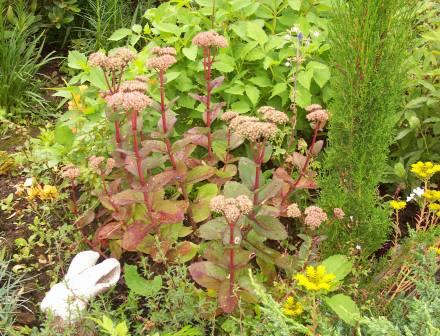
Sedum telephium matrona

This fleshy leaved Sedum Telephium Matrona is just colouring and clumping up in my garden. It is not as vigorous as Sedum spectabile Autumn Joy which can be come a bit of a thug if left unchecked.

  • Look out for even stronger burgandy coloured foliage and flowerheads
  • Try the ‘Chelsea chop’ on plants in May to encourage later growth that isn’t as prone to flop. Cut back the young growth and wait for the plant to rejuvenate
  • Sometimes called Ice Plants the heads can be left on over winter and look good rimed in frost.
  • Nearly as attractive to Bees and Butterflies as the Buddleia
  • Easy to grow even in poor soil and work well in cottage gardens

Book Cover

Seedheads for Display and Drying

Seedheads for Display and Drying

Allium seeds


Alliums produce some of the most interesting seedheads. Each capsule is about to burst on this Allium cristophii (AGM) sending dozens of hard black seeds to perpetuate the family.

There are over a thousand species of Allium or onion and this is one of the most eye-catching of them all both in flower and in seed. Large flowered Alliums should be planted in groups of odd numbers to enhance the effect. They like a sunny site where it will tolerate competition from other roots. Each spherical flower-head helps create a perfect ball shape. The complete stem will last for many weeks as part of a dried flower arrangement.

Other Plants to Grow for their Seed Heads

  • Pampass Grass (Cortaderia selloana) for the large fluffy plumes and a whole range of other grasses
  • Teasels (Dipsacus) to feed the birds and to catch the frost
  • Honesty for the shimmering white seed heads
  • Iris Foetidissma for the red berries bursting out of the seed pod
  • Paeonia lactiflora for the red furry seed head
  • Zea Mais, Mexican Corn on the cob for the multi-coloured cobs after drying
  • Papaver, Phlomis fruticosa, Phlomis samia/russelliana, Phormium tenax are also recommended by the gardener

Book Cover

Flowers Grown for Your Vase

Flowers Grown for Your Vase

My perennial Phlox have been a good stalwart flower for cutting and filling a vase this last few weeks. I found the pink colours had more scent but all the Phlox seemed to drink copious amounts of water (I wondered if water and scent were related). The Penstemon in the same vase as the Phlox was not as successful as they had a far shorter life. Another successful long lasting cut flower is the Alstromeria. The Reds performed better than the yellows but both lasted over a week.

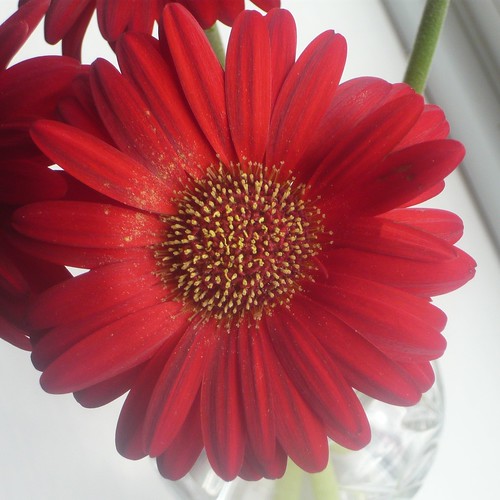
Our local garden center has been selling off Gerbera plants at £1 and I bought some just for the flowers that I could cut and put in a small vase. Even one flower in a bud vase looks good. There are now more buds to open and I think I got a good deal even though I will not bother to over winter the supposedly perennial plants. Gerberas come in a wide range of colors from light to dark yellow, orange, pink, brilliant scarlet and deep red ray flower centres.

The variety and colour of the Peruvian Lily or Alstroemeria, makes a colourful and long lasting display. Once established the plants continue to provide a good supply year after year. Pull the stalk up from the plant to encourage more flower stems. I grow my Alstroemeria in large pots.


Dahlias tend to flop a bit for me but Chrysanthemums can’t be beaten for longevity and impact.

Tip – Grow flowers that are easy to cultivate and flower in profusion but also last well when cut. Spray Chrysanthemums can give maximum pleasure for minimal outlay.

Prickly Shrubs For Prickly Gardeners

Prickly Shrubs For Prickly Gardeners

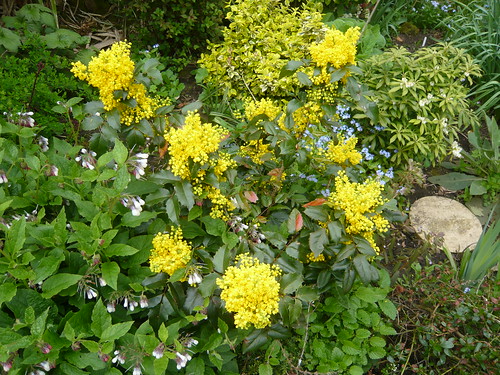
Mahonia 'Charity'

I am not suggesting you want to keep your neighbours out of your garden but there are some circumstances where a Prickly Shrub is just what the doctor ordered.

Choice Prickly Shrubs

  • Mahonias scores highly on my list. It is evergreen and the leaves are quite prickly. The flowers are a joy in late winter in a bright yellow cluster with a wonderful scent.
  • The Berberis family of shrubs include evergreen and deciduous varieties. I particularly like the evergreen, sharp leaved Berberis Darwinii with orange flowers.
  • Pyracantha or the Firethorn is popular with orange-scarlet berries. Try the freely available Pyracatha coccinea lalandii
  • Roses particularly the Rugarosa and wild species can be a feast of prickles to suit most occasions.
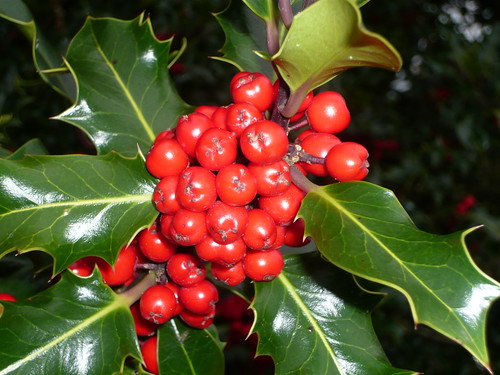
  • Holly is planted just outside my window in a mixed hedge that the birds love.

Holly in the Wild

Read More Read More

Begonia Planters

Begonia Planters

Annual begonias can make a good display in a planter. Not all planters are as tall as this.

This specimen in a public park was one of five in a row outside an orangery. The column of pots was over twelve feet tall and had a similar circumference. The plants were probably Begoinia Fuchsio that had grown over all but the top bowl of the columnar planter.

The variety most likely to be used in planters is Begonia semperflorens with its waxy bronze or green foliage. They can be grown from very fine seed to produce the fibrous roots of most plants. They are not to be confused with tuberous-rooted begonias or the angel-wing begonias with hollow stems.

Begonia sutherlandii with an AGM is suitable for hanging baskets as a foliage plant or for the clusters of small orange flowers.

At Holland Park in London this week end there was also a good show of roses even though the first flush was being pruned. Pruning seems to be one of the skills the gardeners had spent a lot of time and effort to master. Many shrubs and trees displayed the benefit of the skills. There was a area of young Acers that will develop into a colourful show over the next years. They were well protected from wind and excessive sunshine ( although the sun was the least of the problems on this wet weekend). This is one of the many less known London Parks and it is well worth visiting

Book Cover

Autumn Asters – Gardeners Tips

Autumn Asters – Gardeners Tips

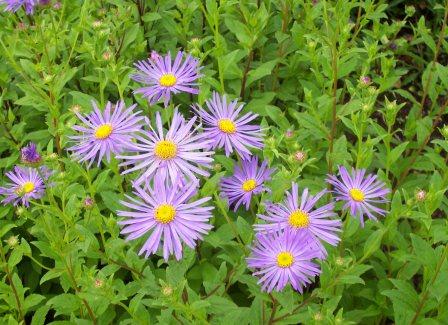
Aster frikartii

‘Aster Frikartii Monch’

These healthy plants are just coming into flower. The wet summer has made the foilage lush sappy and light green but they are still robust without support.

Asters are one of my favourite top ten border plants. This lavender-blue variety Monch has a longer flowering season, beginning earlier, in mid summer, continuing into autumn and is mildew resistant. ‘Monch’ is exceptionally free-flowering with an attractive colour that is easy to place as it associates well with so many other autumn flowers such as Echinacea White Swan.

  • Aster is best grown in a sunny or partially shaded position with fertile, well-drained soil.
  • Propagate by division or cuttings
  • Water during dry summers as it requires adequate moisture throughout summer.
  • This 2-3 foot high flower attracts bees and butterflies
  • The Royal Horticultural Society have given ‘Monch’ their prestigious Award of Garden Merit.

Book Cover

Annual Asters to grow from Seed

  • Annual Asters China Single Mixed.
  • Ostrich plume by Suttons,
  • China Powder Puff double.
Growing Witch Hazel

Growing Witch Hazel

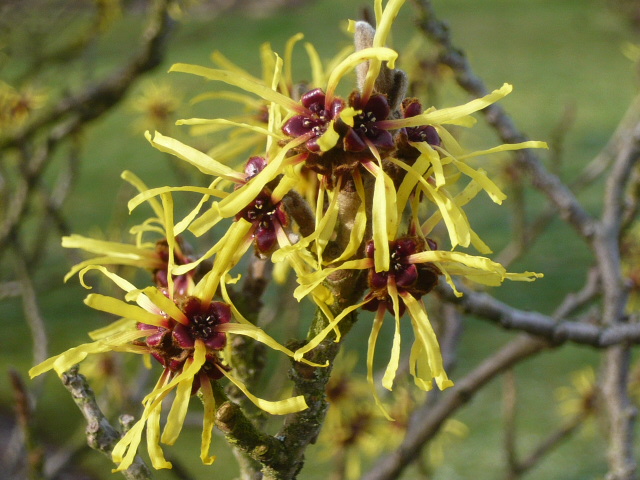
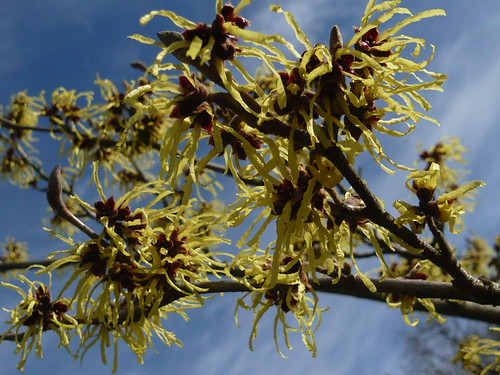
Witch Hazel or Hamamelis is a scented winter-flowering shrub. The spicy fragrance and spidery flowers in yellow, orange or red  make it a must for the winter garden.

Where to Plant Witch Hazel

  • Do not plant young shrubs in a frost pocket even though plants are hardy.
  • Witch Hazel like an open sunny position and need space to develop all be it slowly.
  • Avoid exposed and windy positions.
  • Clay soil needs improving with added humus and drainage.
  • Acid or neutral soils are best but chlorotic yellow leaves can be treated and fed with chelated iron.

On Going Cultivation

  • Water young plants during dry spells.
  • Propagation is from budding to root stock. It is difficult to grow from cuttings.
  • Witch Hazel needs little pruning provided there is room to let them grow freely to their full size.
  • Prune out any dead or damaged wood and any congested, crossing or weak shoots.
  • Remove suckers in autumn  as these will probably be from the rootstock plant.

RHS Recommended Varieties

H. x intermedia ‘Diane’ AGM: The finest red flowered witch hazel. It has a long flowering period throughout midwinter and is lightly scented. Height 2.5m (8ft). Spread 3m (10ft).

Read More Read More