Browsed by
Category: Flowers and Plants

Annual, perennial and interesting flowers with advice on culture, information, tips and recommended varieties

Best Foxtail Lilies Eremurus
Best Foxtail Lilies Eremurus

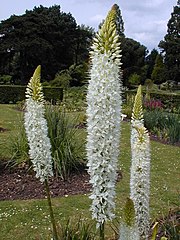
The best Foxtail Lilies can grow to 7 feet tall and form clumps of outstanding spires of star shaped flowers with showy stamens.

Best Varieties

Eremurus robustus only flowers for three weeks or so, but for that brief period it can be the star of any garden.
Eremurus stenophyllus has bright yellow flowers with orange tiped stamens giving a two tone effect as they mature. The plant looks spectacular in prairie style planting and has earned an AGM.
Eremurus Ruiter hybrid ‘White Beauty Favourite’ has tapering blooms that can last for several weeks as cut flowers.
Eremurus cultivars such as Cleopatra can have orange or peach coloured flowers.
Eremurus × isabellinus Shelford hybrids

Growing Tips

Eremurus needs good drainage, full sun and a cold snap in winter to induce flowering.
Shelter from strong winds to protect the tall blooms.
The root system is fascinating with a central growing point which is encircled by fleshy, finger-thick tapering roots. These should be planted in a shallow hole but on top of a mound of sharp sand.
Foxtail Lilies grow away quickly in spring, forming a rosette of bluish-green strap-shaped leaves up to 4ft high, from which the flower spike rises during late April to flower in May. The flowers open progressively from the bottom of the spike.
After flowering allow the plant to die back and remain dormant until next spring.
Use a mulch that stays fairly dry such as shingle or bark and this can protect new growth from frost.
To help Foxtail Lilies self-seed, leave the flower spike standing into autumn and the seeds will ripen and drop.

Read More Read More

Cactus Dahlias Flowering Until November

Cactus Dahlias Flowering Until November

Dahlias are having a good year due to the summer rain. Slugs permitting my Cactus Dahlias will have given one of the best shows for several years by November when they get cut down and stored. As I expect the flower power will still be present until the first frosts in November I am going to give them a foutnightly tonic of liquid fertiliser and a further mulch.

Cactus Dahlias are reputed to all derive from one plant Dahlia Juaresii brought to Europe from Mexico in 1863. After many decades of cross breeding, a Dahlia strength, we now have many forms that contain some or all of the Cactus traits.
On a Cactus Dahlias the petals are narrow from tip to base and the bloom appears full. The ray florets or petals are pointed, narrow and revolute. That is they curve outward from the centre of the flower.

The Semi Cactus
form on the other hand has a far broader base to the petal whilst still being pointed at the tip if the petal.

Top Dahlia Tips

  • Deadhead as regular as clockwork.
  • Pick vase flowers in big bunches as that acts like deadheading. Do not be afraid to snap off a large stem not just a short flower stem
  • Let air circulate around Dahlias, they like there own space.
  • To get big blooms pinch out the small side buds of your chosen bloom and any others that will take energy from your flower.
  • Dahlias are heavy feeders so I give them a lot of compost and generous fertilser from pre-planting until they are lifted for storage.
Scented Cut Flowers

Scented Cut Flowers

How do you chose the best flowers to grow for scent? Well if you want good scent in the home I recommend some flowers below that cut and last in a vase and provide nice scent.

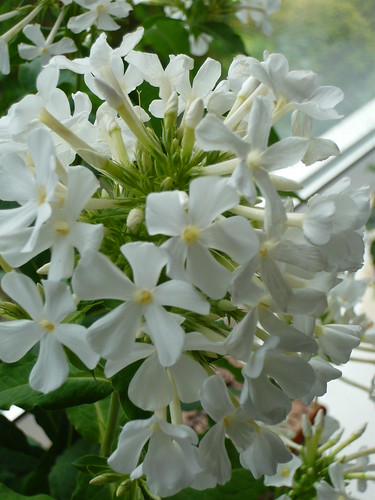
Phlox paniculata or Desussata the perennial plant with large heads of flower on 2-3 foot stems is a favourite of mine. The white version above has a sharper scent than the even sweeter smelling pinks and bi-colours.

Roses are the recognised queen of scents in the garden and the strong stems also make them good cut flowers. Mme Hardy is a damask variety with prickly stems that has superlative white blooms. Rose oil or Attar of roses is a perfume distilled from Rose damascena and Rose centifoilia so flowers with this pedigree are likely to be ‘good smellers’.

Carnations
used to smell of cloves with a hint of cedarwood but some of the intense breeding for the cut flower industry has reduced the depth of scent in some varieties. The British National Carnation Society has an interesting article on the subject of scent.

Autumn is the season to select bulbs for next year. Why not try more Narcissus for cutting or in a bowl. Yellow Cheerfulness, the single white Actaea or the traditional Pheasant Eye are fragrant choices. The smaller Jonquilla Narcissi are also an interesting and varied group to grow for scent.

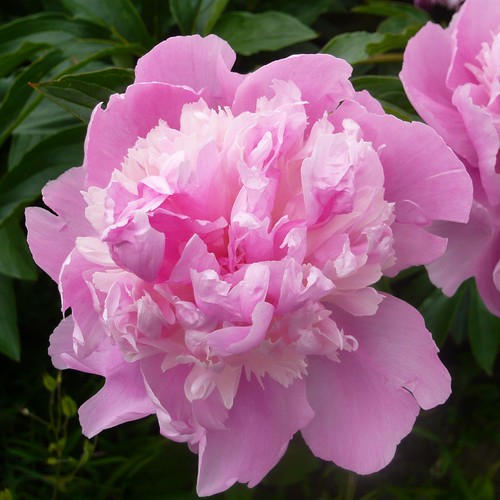
Thinking of spring brings me back to my favourite Peonies which carries a sweet scent in a bowl of water or as part of an arrangement. Sarah Bernhardt is the smelly variety below.

Other Resources

Royal Horticultural Society RHS ‘Gardening for All’
National Council for Conservation of Plants and Gardens ‘Conservation through Cultivation.’
Garden Organic National Charity for Organic Gardening.
BBC Gardening

Your Gardening Business

Your Gardening Business

Autumn may seem a strange time to start a gardening business but it is the time to focus on what you want to do. Get all your ducks (or seedlings) in a row and ensure you have the detail sorted and with that I include enough cash to see you through and chosen customer groups.
Book Cover

How to Start Your Own Gardening Business
An Insider Guide to Setting Yourself Up as a Professional Gardener is a useful tutorial if you want to set up a gardening business. I recommend you consider your aspirations and limitations carefully and either set up a ‘Life Style business’ or consider becoming a qualified, professional career gardener.


Garden Customers

  • Core customers are probably going to be proud garden owners, the elderly and the time poor who will pay someone else to do the hard work.
  • Dedicate time to plant raising and selling if that is one of the products you are offering.
  • Lawn cutting can be a specialism but needs the right mix of equipment and skills.
  • Consider businesses as customers as the work will be regular and more care and maintenance than creation and innovation.
  • There is a need for more gardeners in spring, summer and autumn but do not let that put you off. There are other services you can provide during winter such as tool maintenance sharpening and servicing (outwork it if you are not confident)
  • Try avoid unnecessary travel that will eat into your productive day.


Life Style Gardener

  • There are many jobs from spring onward for jobbing gardeners. Lawyers hang out a shingle but for gardeners a post card in the post office usually suffices.
  • Labouring on hedges and lawns for the infirm or doing small construction and garden maintenance projects are within the grasp of most hobby gardeners.
  • If your work is good then word of mouth should get you lots of referals.
  • Hourly rates in the North of England vary from £6- £20 per hour depending on the level of horticultural skill, experience and quality of garden. Ask around amongst those already in business.

Career Gardener

Read More Read More

Coloured Leaf and Leaves

Coloured Leaf and Leaves

Before the Autumn leaf colours start to invade our senses I am just recapping on the leaves that have made an impact for me this summer.

Outdoor Leaves

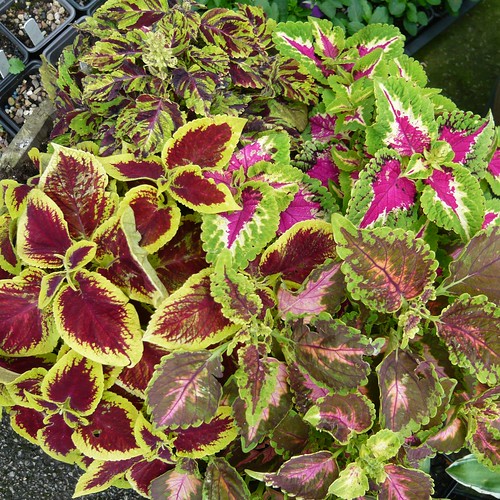
  • Coleus is a colourful exhibitionist of a plant. A whole range of colours can be combined on one or two plants like the assembly in the above plant pot.
  • Cotinus coggygria, the Smoke Bush, has been one of my favourites this summer with the royal purple leaves acting as a back drop to paler coloured leaves particularly of various grey foilaged plants.
  • Cineraria Maritima has provided the grey and blue grey interest for several darker corners. With the poor summer I have not had any of the straggly yellow flowers to steal any thunder.
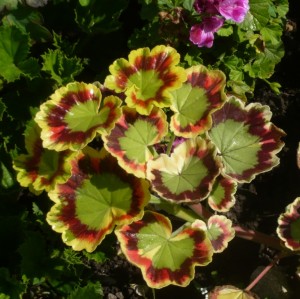
  • Zonal Geranuims vary in the amount of colouring they carry but some varieties are grown for the shades in the leaf. The plant in the photo below has yellow, bronze and greens in separate banding on the variegated leaves.

gera

Indoor Leaves

  • After many year and too many alcoholic drinks the Apidistra in our local pub has gone to the great brewery compost heap in the sky. Still my wife is Cast Iron in her belief that it was a boring plant.
  • Begonia rex on the other hand have contorted leaves withribs of many colours.
  • Codiaeum variegated plants have come hot foot and hot colours to the fore in recent seasons.
  • It may be cheating to include the coloured bracts in cream, pink and notably red of the Pionsettia but with Christmas coming I do not think you will hold it against me.

Gardeners Tip – Use coloured leaves in some areas as an alternative to flowers when designing your garden layout.
You do not need flowers to produce colour in your houseplants. In addition to Begonia Rex and its relatives why not try growing some Codiaeum, an easy to maintain leafy plant.

Codiaeum

Codiaeums are interesting foliage house plants also called Joseph’s Coat.

Codiaeum Cultivation Tips

  • This variety is called ‘Petra’ but you may also find ‘Eugene Drapps’ with long lance shaped leaves almost entirely yellow.
  • Keep plants moist and in good light with a temperature of at least 60-70° F.
  • Root 6 inch cuttings taken from the top of the plant at 70° with a bit of bottom heat.
  • Plants can be encouraged to branch by pinching out the growing tip.
  • Frequent feeding is needed except in winter when growth slows.
  • Large plants will have lots of roots so it may be worth potting up a size using loam based compost.
  • Red spider mite can be a problem with Codiaeums
  • Without good light but not full scorching sun the colouring will not be as strong and bottom leaves may be shed.

Codiaeum Madiera

Lobelia Russian Princess Perennials

Lobelia Russian Princess Perennials

Growing Tips

  • Plant in deep fertile soil which is reliably moist in summer.(You can tell this is moist by the moss)
  • Lobelia grow well in sun or partial shade.
  • Some varieties are a bit short lived 3-4 years but as they are so spectacular it is worth splitting clumps or taking cuttings to get re-energised plants at least in alternate years.
  • Perennial Lobelia species make good herbaceous border plants

Lobelia to Grow

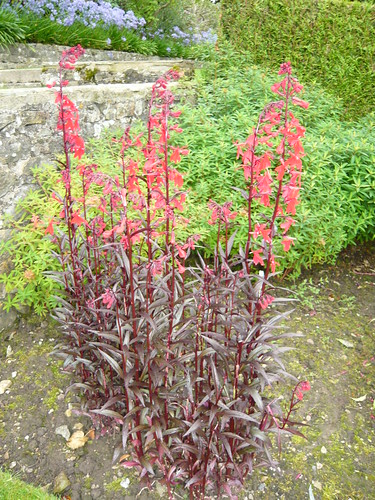
  • Lobelia Cardinalis has deep burgundy foliage and rich pinky purple or red flowers for hot coloured planting schemes. RHS is currently offering Russian Princess variety at £15 +  p&p (so the colours need to be rich).
  • A three foot high Lobelia x speciosa Vedraniensis flowers with the traditional 5 lobed blue-indigo flowers.
  • Hadspen Purple is a more compact variety that need to be planted in swathes for best effect.
  • Lobelia tupa has beautifully felted leaves and narrow tubular brick-red to orange flowers which are borne from mid summer on long racemes. It is also called the Devil’s Tobacco.

With hundreds of species, varieties and named cultivars the Lobelia family is large and wide ranging – have a look at the family for yourself.

Other Resources

Royal Horticultural Society RHS ‘Gardening for All’
National Council for Conservation of Plants and Gardens ‘Conservation through Cultivation.’
Garden Organic National Charity for Organic Gardening.
BBC Gardening

Best Cut-Flower Roses

Best Cut-Flower Roses

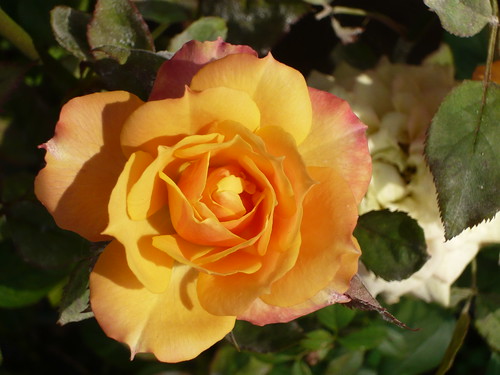
This selection of top ten Roses to grow as cut flowers has been chosen for their scent and the length of the vase life. If Roses are picked as the buds are breaking they will last at least a week and if they are picked fully open it will be several days.

Red Roses

‘L D Braithwaite’ is a vivid magenta with a cup shaped flower and many petals. The plant is vigourous and only needs alight prune in Autumn and again in spring.
‘Isabella’ is so intense a red colour with velvety texture that it can look black in some light. The flowers do not like rain.
‘Big Purple’ has long stems with very few thorns. A Hybrid Tea rose that needs hard pruning in winter

Orange & Golden Roses

‘Golden Celebration’ is a very popular rose with rich yellow flowers & strong scent.
‘Just Joey’ is an unusual amber colour starting Orange as a bud and opening to Deep Gold. Good as a floating flower or cut short in clusters.
‘Eveleyn ‘ is a Peachy Rose with many petals like the old fashioned varieties. One of the strongest scents.

Pink Roses

‘Princes Alexandra’ a top rose for cutting with pointed buds opening slowly to display a magenta frilled rosette.
‘Louise Odier’ is an old French rose with many pink flower heads. Mixes well with other roses.
‘Redoute’ is also a pink French rose that flowers a bit earlier than many varieties.
‘Gertrude Jekyll’ with flat pink rosettes with a good life span and great scent.

This is just my top 10 – If you know better let us know.

Tulips from Catalogues

Tulips from Catalogues

Tulips grow from bulbs not catalogues but I guess that is obvious. Nevertheless I think the first job is to check over any Tulip bulbs you lifted last spring to dry off. Bin any with mould or soft centers, do not add them to your compost heap.

There are many bulb catalogues now available and they usually supply a lot of information about the Tulips origin, size and flowering characteristics. If you are not on a mailing list you can respond to numerous off the page adverts in the press and magazines.
I like J Parker for the range and wholesale prices on larger volumes.
Bloms bulbs have been around for over 100 years and supply good size bulbs at a price and DeJager is another old established supplier.
Spalding bulbs are over marketed with too many gimmicks and free gifts so personally I tend to avoid them.
Of the many other bulb sources most seed companies supply bulbs by mail order but I particularly like the niche suppliers like Miniature Bulbs.

The big plus from mail order catalogues is that you can browse the pictures and specifications selecting the types and varieties you want. On the down side you are trusting that a good sized bulb will be supplied (a good big one beats a good small one). Remember too complain if you are unhappy with the bulbs you get, most companies value their reputation amongst gardeners.

Uses for Crab Apples

Uses for Crab Apples

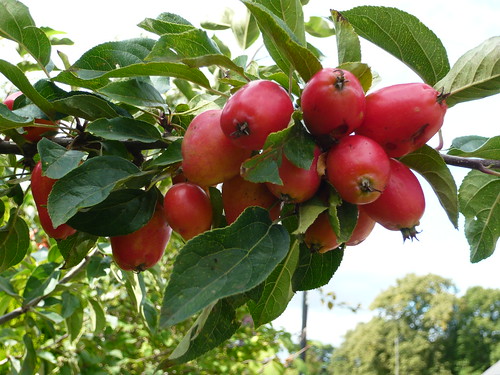
Crab apples can be used as food, for ornamental effect, to help pollination, or for the wood. The wild crab apple found individually in woods has green fruit turning golden in Autumn. Cultivated crab apples vary in habit and grow upto 10 feet. Fruiting this year looks like a bumper harvest after the wet weather earlier in the year.

Crab Apples make attractive ornamental trees with their pink or white blossom, followed by colourful autumn fruits that make delicious preserves. Varieties John Downie, Golden Hornet, Laura and Red Sentinel are all self fertile. Crab apples planted near fruiting apple trees make excellent pollinators and will help pollinating bees to increase your crops.

Crab apples are used to make jelly, pickles or can be roasted and served with meat or added to winter ale or cider. Any unpicked fruits will soften after a few frosts and will create a sumptuous food source for wild birds from late January until March. For a jelly recipe with a chillie kick try Cottage Smallholder

The timber of the crab apple is uniform in texture and if dried slowly, is excellent for woodworking. At one time it was used for making set-squares and other drawing instruments. Failing that apple wood burns in your chimenea of fire grate with a nice aroma.

Order now for winter delivery Crab Apples at Thompson & Morgan

Autumn Chrysanthemum Show

Autumn Chrysanthemum Show

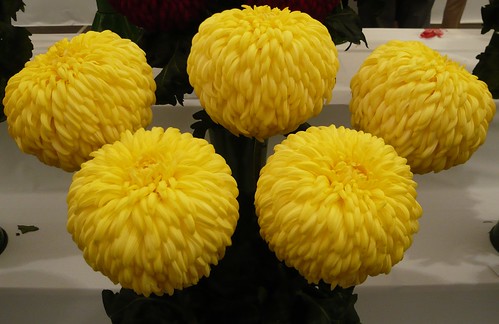
I took my camera to the Autumn flower show and came back with some colourful pictures of great Chrysanthemums. On the doormat when I got home was a newly printed catalogue for Chrysanthemums  so I thought someone was trying to tell me something.

I have not been patient or focused enough to grow good Chrysanthemums so I hoped the catalogue would give me enough pointers to fire my enthusiasm but unfortunately not. If I want to know about growing Chrysanthemums I am going to have to consult my gardening book library. In the mean time it is a ‘ reflex’ action to continue with my usual spray chrysanths and pot mums but not focus on buying plants now for delivery from February onward in the hope of growing show plants for next Autumn.

Web Resources

National Chrysanthemum Society