Browsed by
Category: Flowers and Plants

Annual, perennial and interesting flowers with advice on culture, information, tips and recommended varieties

More Phalaenopsis Moth Orchids

More Phalaenopsis Moth Orchids

It is easier to call a Phalaenopsis by its common name of Moth Orchid

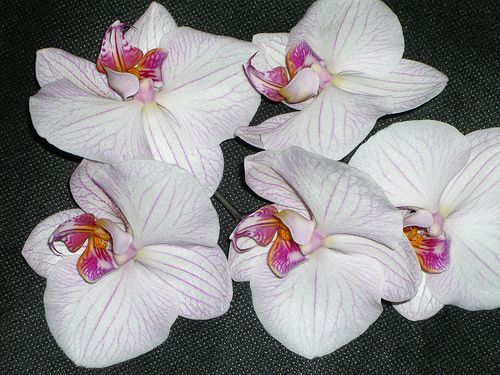
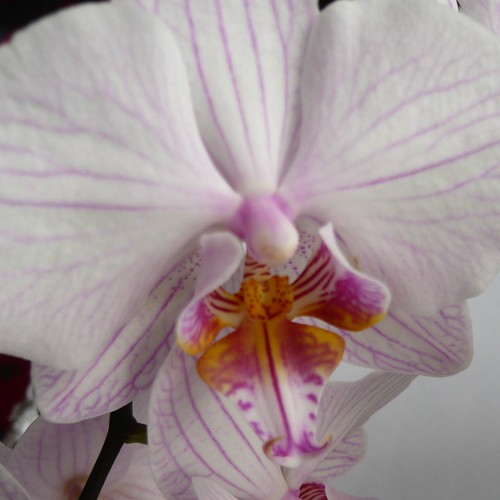
This moth orchid (called Phalaenopsis) is blooming for a second time this year and the last blossom lasted over 5 months. On one arching stem there are 12 flowerheads and one unopened bud but there is also 4 other stems at different stages of flower production and at least 25  2½” diameter flowers are currently on display. This floriferousness may be due to a happy accident after the first (and only) stem flowered I followed received wisdom. I trimmed off the spike to around 1 inch above the first node on the spike stem, somewhere below where the first flower had appeared, near a little bump. The stem regrew but horizontally and I wanted to tie it up a cane. Being too vigorous I broke the new flowering stem but all the new ones have turned up at the funeral so to speak.

Book Cover

Read More Read More

Easy Phalaenopsis Orchids

Easy Phalaenopsis Orchids

orchid

Some orchids are temperamental but this Phalaelenopsis has give unstinting blooms for eight months on the trot without any trouble. Growing on one stem which branched into three side shoots there were upto 20 flowers on the Orchid at anyone time. The variety must be resilient as we gave it no special treatment but these Phalaelenopsis or Moth Orchids are one of the easier Orchids to grow.

Orchid Flowering Tips

  • Orchids like a humid atmosphere but apart from  keeping the soil moist, not heavily watered this plant thrived on a north facing window sill.
  • We don’t have under the window radiators so there was no dramatic drying
  • This plant wasn’t fertilized but we didn’t get any new leaves either so perhaps we should have encouraged new growth for next season.
  • The stem has now been cut back by a half to just above a joint. New flowers may grow and if not the plant will be given a rest in a light bathroom. Looking at the Orchid I see a new flower shoot growing from a leaf joint so there are more flowers to come
  • Wipe the leaves to remove dust but do not let water stand on the leaves.
  • Phalaenopsis like warm, shady conditions so fit in well to most modern homes.
  • Leaves are important to the health and flowering ability of the plant. They should be turgid and glossy and mine are 9 inches long and about 4 inches wide.

Read More Read More

Primula – Alpines and Pot Plants

Primula – Alpines and Pot Plants

Primula is a genus with over 500 species and numerous hybrids, divided into 30+ sections.

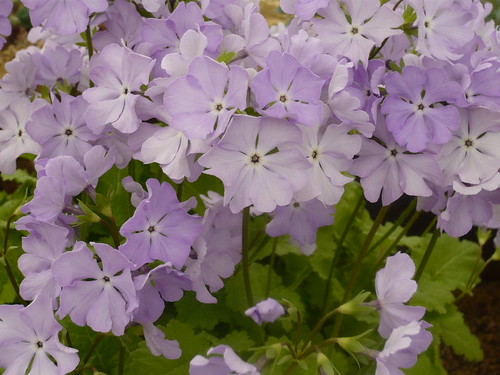
Primula seiboldii blue japan

Primulas all have flowers with 5 rounded petals like our own primrose Primula vulgaris. The cowslips, Primula elatior, flowers in simple umbels and the candelabras in rising tiers of umbels.

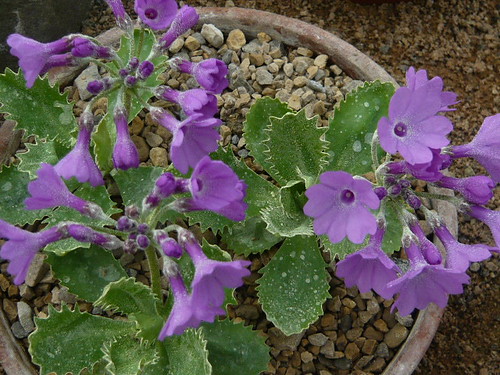
Primula 'E L Bolton'

European Primulas

  • These plant s are hardy and most will succeed in any well drained gritty soil with plenty of humus.
  • All are spring flowering except Primula auricula, marginata, rubra and viscosa.
  • Although most like an open sunny position care must be taken to avoid drying out in too much sunshine.
  • With only a few exceptions the Primulas tolerate or even welcome lime.
  • Some varieties die back to a resting bud during summer.

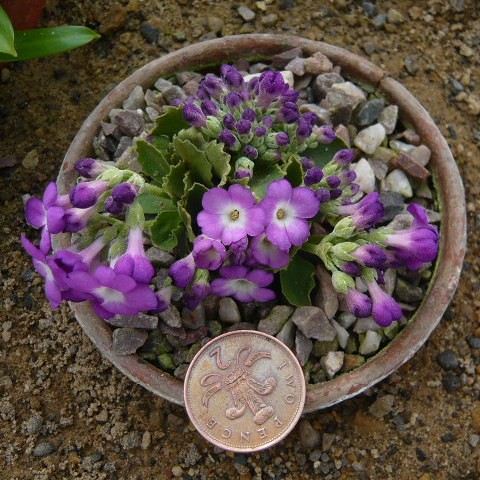
Primula allianii Joan Hughes

Read More Read More

Moles Problems in Your Garden

Moles Problems in Your Garden

Moles in your lawn are unfortunate not to say annoying particularly as they are difficult to remove without killing them. Their main diet is earthworms, but, removing these valuable garden creatures is hardly worth while. They are more likely in sandy soils, but, can appear anywhere – especially in more rural areas.

Book Cover

Symptoms of the Problem

  • Heaps of soil are thrown up as the mole digs underground. It is unsightly and damages the grass.
  • Tunnels close to the surface can cause ridges in the grass.
  • One mole can produce many molehills.
  • Tunneling can disturb seedlings and other plants

Treatment and Cure for Mole Problems

There are some things that are said to help remove moles, but, they are not guaranteed to work permanently.

You can try these items placed in mole holes or tunnels (But they probably wont work)

  • Burning Wood,
  • Disinfectant in holes
  • Creosote.
  • Moth Balls
  • Mole smokes are now unavailable

The best method to remove moles is by using a trap. Pictures of trap setting in the above book are very helpful, as it’s easy to get this wrong if you don’t know what you’re doing.

Mole hills are unsightly but at least moles don’t do any real damage to plants, they are more a nuisance value than anything. If you really want to get rid of them, you may be best of employing the services of a professional mole catcher / killer. However, if you live in a   rural environment you may have your work cut out as moles are likely to keep returning.

Plants for Hanging Baskets

Plants for Hanging Baskets

hangingbasket

A simple single colour Petunia gives a good effect.

The typical plants seen in hanging baskets include Lobelia, Petunia, Begonia, Marigolds, Fuchsias and Pelagoniums. The F1 varieties of these plants have a long flowering season making them ideal for summer hanging baskets.

Obviously in any hanging basket, trailing plants add an extra interest. For example a variegated ivy helps to offset and provide a balance to the more colourful varieties.

Plants for the Spring / Autumn Hanging Basket

Try Primulas, Violas, pansies, miniature conifers, ornamental cabbage and cyclamen. All can offer a good season of winter colour at a time when it is most appreciated.

Read More Read More

Best Plants for Damp Shade

Best Plants for Damp Shade

dryshade

Fritilliary in damp shade

Previously we looked at plants for shady areas. Damp shade is another more specific problem area. In nature, we are likely to get damp shade in a woodland setting, with a combination of shady tree growth and a peaty soil.There is a combination of low light and potentially wet surfaces. Nevertheless, even if you have some damp shade, the following plants should work quite well.

Japanese Maple – Acer Palmatum. Japanese maples can offer excellent colour in autumn. They also make an excellent small tree / shrub for the small garden. Benefits from some mulch in winter to protect from heavy frosts.

Astilbe – False Goat’s Beard. An easy plant to grow. After flowering it’s deadseed heads are also quite attractive

Book Cover

Bleeding Heart – Dicentra Spectabilis. A lovely plant with delicate shaped flowers in Spring. Dies back in mid summer. Don’t forget where you planted it. Dicentra Spectabilis

Clematis  ‘Kasmu’ Ideal for planting at the base of a shrub of tree. This clematis will grow up through the shrub offering wonderful flowers from July onwards.

Clematis Montana – likes to keep its roots cool, so damp shade helps here.Use a good Foliar feed every 7-10 days and a good root drenching weekly.

Lilly of the Valley – A lovely delicate white carpet flower. The main thing is it likes permanently moist soil

Fritilliary. The fritilliary is another flower which likes and needs a damp soil. Will flower fine in shade. Important it never dries out.

Hydrangea Serrata – a lovely compact Hydrangea

Cowslips / Primulas. Primulas do well in cool damp conditions, flowering in spring and also later in autumn. E.g. Primula viallii is a great plant for damp shade with wonderful purple flowers.


Related

Book Cover

Primula, Primroses and Polyanthus

Primula, Primroses and Polyanthus

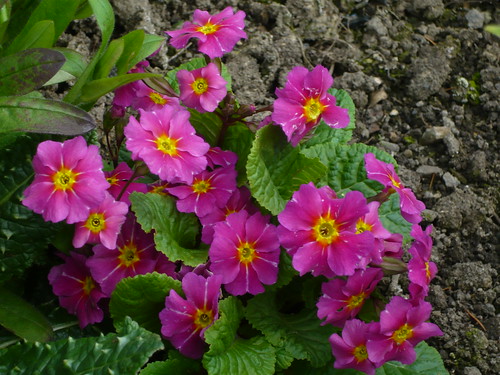
‘Kinlough Beauty’ is an exceptionally hardy Primrose from the Primula family. . To maintain vigour divide ‘Kinlough Beauty’ every couple of years or so after blooming. This is when your free plants arise. I have just got nine new healthy plants from one clump. Other primroses can be divided in a similar manner.

Primula

Gardeners Tips

To divide a primrose separate new crowns with some roots from the old root. Pull apart or prise loose with two forks back to back.

Alternatively take divisions with a trowel whilst plants are still in the ground for more reliable performance.

Do not split into too many divisions as they take longer to establish.

Plant firmly in soil and keep moist as new roots are established.

Kinlough Beauty is a hardy evergreen or semi-evergreen Juliana cultivar with deep green, oval leaves 6 inches long. Plants produce loose clusters of wine red to rose-pink yellow eyed flowers held above a mound of foliage.

Kinlough-beauty

Plant labeling of primrose family can be a bit hit and miss.

Read More Read More

Best Garden Colour – Yellow?

Best Garden Colour – Yellow?

Is yellow your favourite garden shade or colour. Certainly it is present is so many plants if only as pollen or as straw as old grass dies and colour fades away. At it’s brash best Yellow is stunning well able to stand on its own aor as support to other plants. With some plants such as Choysia even the leaves can be yellow.

harrogate-122

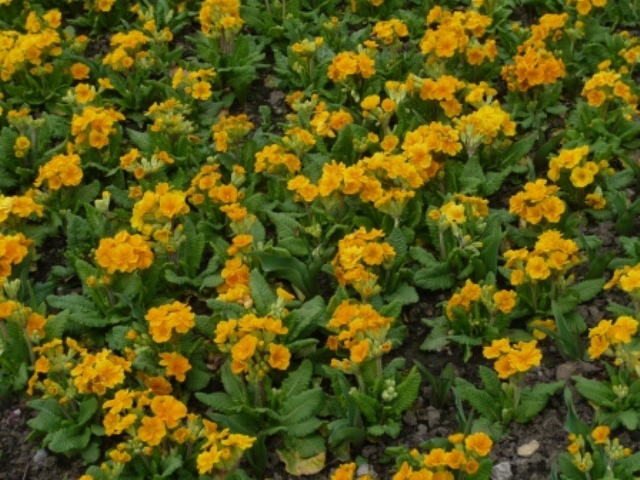
For traffic stopping colour in your garden then you need blocks of the same plant all flowering at the same time. These primula are in a near-by garden in a long row against a wall. It catches early morning sun and is protected from wind and the worst of the frost. The colouring is stronger than the primrose or many other primulas and even one or two plants whould look good but massed together they are stunning.

Read More Read More

Root Vegetables a Gardeners and Bakers Dozen

Root Vegetables a Gardeners and Bakers Dozen

After salad crop failures in Spain and shortages of courgettes, broccoli and other ‘long distance’ vegetables gardeners could to worse than focus on traditional and non-traditional root crops.

Book Cover

Chinese artichoke, Stachys affinis was popular in Edwardian times. It is a sprawling plant that produces knobbly roots for baking, mashing, frying or stir frying. Harvest as needed, after a long growing season, as they do not store well

Jicama or Yam bean have crunchy roots similar to dahlia tubers useful for adding to salads.Can only be stored for about a month.

Rampion have a strong taste, knobbly and fiddly roots and would be at the end of our list of experiments.

Hamburg parsley is popular in Germany with edible, evergreen leaves. Roots are upto 8inches long. Roast or use in stew.

Salsify and Scozonera look and taste similar and have been grown in the UK for hundreds of yaers . Salsify or Oyster plant, is biennial Scozonera is a hardy perennial that grows 3ft high.

Mouli or winter Radish cultivars of Raphanus sativus grow to the size of grapefruit. Round black are best for storing and all varieties red and yellow are prone to bolting unless sown after mid-summer.

Sweet potato Beauregard has been cultivated for UK growing and is available from Marshalls, Thompson Morgan and others. Protect from frost. Tubers tend to be smaller Sweet Potato ‘T65’. They have salmon-orange flesh and a sweet  flavour.

Old faithful Root crops

  • Potato
  • Carrot
  • Swede, turnip and rutabaga
  • Beet and manglewurzels
  • Parsnips
  • Jerusalem Artichoke

Root out some Tips

  • Root crops are generally heavy feeders.
  • Roots will ‘fang’ or fork if the soil has been freshly manured.
  • To get the straightest roots avoid stony soil and keep soil light
  • Plenty of water and high potash feed will help grow better crops.
  • Grow in full sun with adequate space and avoid competition from weeds.
  • Look after the leafy tops to get good underground growth
Dangerous and Mind Altering Plants

Dangerous and Mind Altering Plants

Many plants have dangerous components, leaves, seeds and roots. Some of the most dangerous must be grown under government license.
Below are notes on just a few plants to avoid eating.

Mandrake is one of the most poisonous plants that is known. The specimen above is grown under strict control with a fence around it. A member of the nightshade family, Mandrake also contains atropine, scopolamine, apoatropine and hyoscyamine that affect brain functions.

Strychnine, the deadly poison, is produced from the beans of Strychnos ignatii. It is also found in the orange fruit and nuts of Strychnos nux vomica.

Ricin is a poison found naturally in the seeds of the Castor oil plant that also produces the oil that is fed to babies. Ricinus communis ‘Gibsonii’ has red-tinged leaves with reddish veins and pinkish-green seed pods but there are other Castol oil plant varieties.
If castor beans are chewed and swallowed, the released Ricin can cause injury.
Ricin can be made from the waste material left over from processing castor beans into castor oil.

Mescaline is a hallucinogen compound made from the small, spineless cactus Lophophora williamsii or Peyote. It is also present in other cacti including Echinopsis peruviana.
Mescaline is also found in certain members of the Fabaceae bean family.

Book Cover

Read More Read More