Browsed by
Category: Flowers and Plants

Annual, perennial and interesting flowers with advice on culture, information, tips and recommended varieties

The Dry Garden

The Dry Garden

dry

The Foxgloves may suffer in very dry conditions. But, Lavender and Pelagoniums are both quite draught resistant.
The dry garden is a garden designed to flourish in hot and dry conditions without additional water. Sometimes, we try hard to fight nature, but, sometimes it is good to grow the plants which will thrive in the conditions we have. A dry garden doesn’t have to be an arid and boring place with nothing more than a few cactus, there are many plants which will thrive in dry conditions.


Californian poppy thrive in hot dry conditions. A good example of a vibrant colourful annual you can grow in a dry garden.

Good Plants for Dry Conditions

Trees

  • Acers
  • Betula Pendula

Read More Read More

Forcing Flower Bulbs

Forcing Flower Bulbs

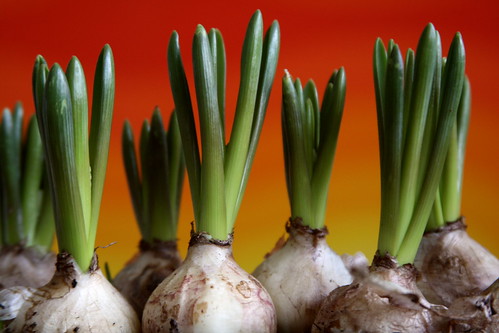
A bowl of flowering bulbs can be delightful in the depths of winter and you can force them to flower as early as Christmas.

Conditions for Forcing

  • Bulbs need at least 4″ of compost for root development and good drainage in the pot.
  • Forced bulbs need a period in the cold at 7-9º Centigrade.
  • Dark conditions are also best
  • If there is no suitable indoor space the pots can be buried outdoors in soil that is not too wet.

Timing for Forcing

  • Plant the bulbs from 1st September until December. The earlier the start the earlier the flower.
  • Short cooling periods equal short stumpy flowers, too long cooling will produce excessively long flower stems.
  • After cooling, bring bulbs into the warmth and they will flower in 2-3 weeks.
Bulb Planting Date No Weeks Chilled
Hyacinth prepared 15.09 -15.12 10-12
Hyacinth unprepared 15.10 -01.12 11-13
Tulip

Blenda, Prominence

Arma, Yellow Present

01.10-01.12 14-15

15-17

Daffodil

Tete-a-Tete

Carlton

01.10-01.12 12-13

14-15

Crocus 01.10-01.11 14-15
Iris Reticula 01.10-01.11 12-13
Muscari 01.10-01.11 14-15

Amaryllis and Paperwhite Daffodils ( Tazeta narcissi) can be put straight into a warm room and do not need the chilling process. Hyacinths can be chilled at slightly warmer temperatures than other bulbs.

Read More Read More

Growing Conifers in the Garden

Growing Conifers in the Garden

conifers
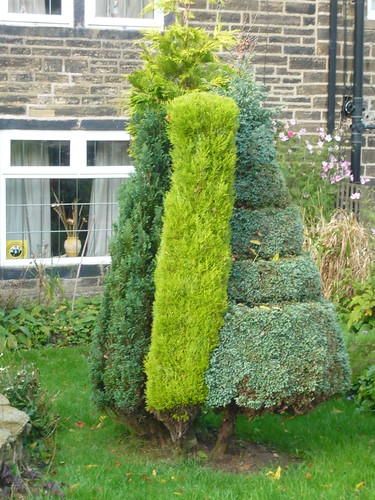
Conifers are very popular in the garden, usually as a utility hedging feature or for a simple topiary feature like above.

They can provide a great natural screening effect – giving the garden more privacy, shelter and it’s own micro climate. However, unchecked, conifers can be a really pain, rapidly growing in size overshadowing a garden throwing shade and drying up neighbouring gardens.

A real potential villain is Leylandii Cypress. It can grow 4 foot a year and is one of the fastest growing trees. It has many advantages if properly pruned – it is hardy, responds well to drastic pruning and soon provides a shelter. But, if left unpruned it can soon get out of control. (see: Dealing with problems of Leylandii)

Often we tend to lump conifers together. However, there is great variety and diversity within this species. There are different types which can offer a useful balance of evergreen colour in the garden.

Try varieties such as Thuja or Taxus (Yew) or Junipers. These provide a variety of shapes, sizes and speed of growing. Tall thin varieties can be great for the small garden.

Read More Read More

Tips for Perennial Border

Tips for Perennial Border

border

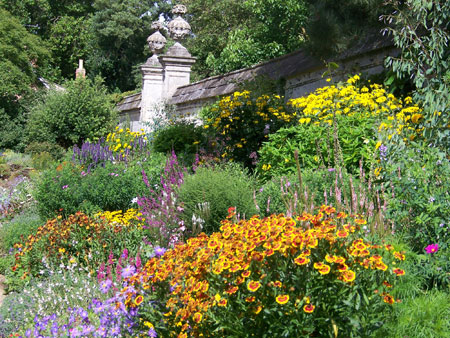
An early autumn border – plenty of colour and interest.

The perennial border is one of the great joys of the English garden. It is like an open canvas, constantly changing and evolving. Crammed full of plants it can offer a great display throughout the year. With careful planning and preparation the home gardener can enjoy a perennial border like these photos here.

Tips for the Perennial Border

Contrast. It is important to have some interesting contrast within a border. THis doesn’t have to be opposite colours. Contrast can involve contrast of form, height and movement. Contrast gives any border more interest.

Height. tall plants help a border become three dimensional rather than a two dimensional bedding plant scheme you may see in your local park. For example, Verbena Bonariensis

Movement. Plants which sway in the breeze help give an added interest to the garden. It creates a sense of drama in the border. See: Movement in the garden

border

A July Border

Be Bold. For effect be prepared to plant in drifts and large groups. Don’t just plant he odd plant here and there, it can be more powerful to see long drifts. At the same time you don’t need to plant in regimented blocks, allow a plant to move throughout the border.

Read More Read More

Tips for Lawn Care

Tips for Lawn Care

lawn
Lawn at Brasenose College, Oxford University.

If you fancy impressing the neighbours or you fancy holding a croquet tournament on your lawn why not try to grow the perfect lawn? If the idea of a perfect lawn doesn’t appeal no harm, you can always go for a wildlife lawn complete with daises e.t.c However, there are several steps we can take to enjoy a better lawn

10 Steps to a Perfect Lawn

1. Preparation. Prepare the area by providing a good well drained soil, free of large rocks and flattened with a rake. In preparing the lawn, take time to remove any perennial weeds. You can grow from seed, but for more immediate results, buy turf from a specialist supplier. At least then you can get off to a good start. If your lawn is really bad, it may be worth starting from scratch

2. Regular Mowing. Regular mowing at the right height is one of the most important tasks to maintain the lawn in good health and beat off any weeds which may creep into the lawn. The height of mowing will vary. But, generally the rule is to start higher and reduce the cutting height in the middle of the summer, when the lawn is growing fastest.


Another lawn at Brasenose College.

Read More Read More

Growing Wisteria

Growing Wisteria

Wisteria in Full Flower, Lady Margaret Hall, Oxford, June 2010

Wisteria can be a very rewarding climber. If the plant is from good quality stock and it is planted in good conditions it can give a wonderful flowering display.

Tips for Growing Wisteria.

  • Wisterias are usually grown from grafted rootstock. It is important you get plants from a reliable source. Non flowering wisteria can often be traced to poor grafting / rootstock which won’t flower whatever you do.
    Wisteria naturally grow in wooded environments with shoots reaching above tree line for sun. Make sure they are planted in plenty of organic matter and ideally soil should be kept shady or moist.
  • Wisteria need some training to give the best flowering. Ideally, you want to train along horizontal supports, which will maximise flowering from the spurs which develop from side shoots.
  • Wisteria naturally attach themselves to supports in a clock wise motion, so bear this in mind when tying them in.

wisteria
This well trained Wisteria has a high % of flowers to green leaves.

Read More Read More

Growing Helianthemum Rock Roses

Growing Helianthemum Rock Roses

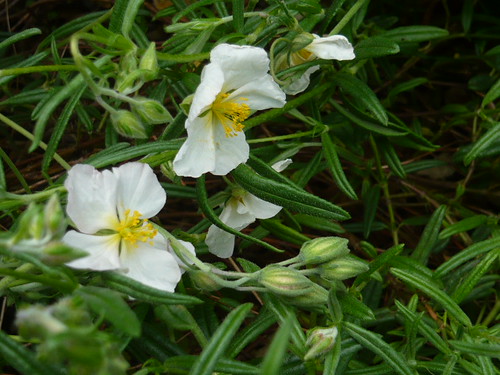
Rock Rose

This alpine species are hardy, colourful and trouble-free. Growing in rock crevices or alpine meadows Helianthemum have been given a common name of Rock Rose but they will grow in many garden situations.

They are part of the Cistacea family which contains over 100 species see Growing Cistus.

Propagation

  • Plants from seeds can produce some very interesting forms due to cross pollination but germination rates tend to be low .
  • The majority of Helianthemum’s are propagated from cuttings as this is the quickest, easiest and method.
  • In summer take your 2-3″ cutting from young growth just below a leaf for optimum rooting.
  • Cuttings may take 6 months before being ready to pot on or plant out

Cultivation

  • Prune straight after flowering to keep in shape and possibly get a second flush of flowers.
  • Helianthemum normal growing conditions are on chalk land so add a small amount of lime to the soil mixture.
  • Water young potted plants regularly in dry weather for optimal growth.
  • Rock roses are neat little plants with upright foliage and are easy to grow on banks, rockeries, the edge of borders and containers.

Selection from 200 Cultivars of Helianthemum nummularium

Plants for Walls

Plants for Walls

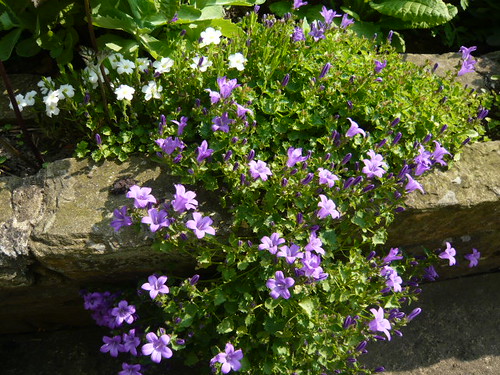
Campanula

I am fortunate to have a boundary wall that has two skins of stone filled with soil. This makes an habitat for plants that I can use to grow something a bit different.

The Pros & Cons of a Filled Wall.

  • The wall raises the working height and brings plants nearer to eye level.
  • The soil is of poor quality as goodness is leached away. This suits some alpines and nasturtiums.
  • Due to holes somewhere the soil washes out in some spots and I am always looking to refill or stop the leak.
  • The wall is dry and gets hot in the sun although the stone provides some cooler protection for roots.
  • Slugs do not like to climb the wall (just send gardeners up it)
  • wall plants

    Suitable Plant Types for Walls

    • Dry condition lovers and sun seekers like Thyme
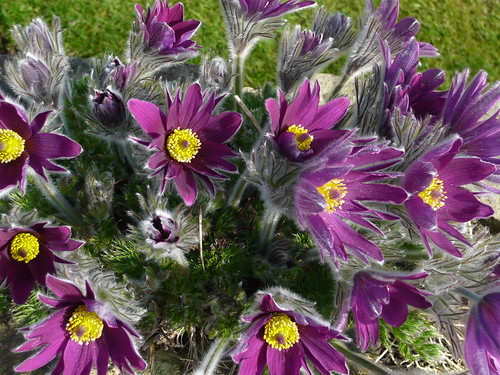
    • Plants that like a baking like Pulsatilla
    • Plants that hold there own water store like Sedums and Houseleeks.
    • Alpines and similar plants with long roots.
    • Trailing plants and poor soil plants.

    Pasque Flower

    Some Plants recommended by Cambridge University Gardening services site
    Crassula sarcocaulis
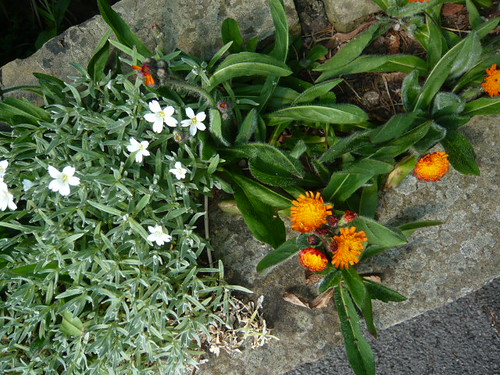
    Helichrysum ‘Sulphur Light’
    Sedum acre
    Sempervivum ciliosum
    Saxifraga species

    Read More Read More

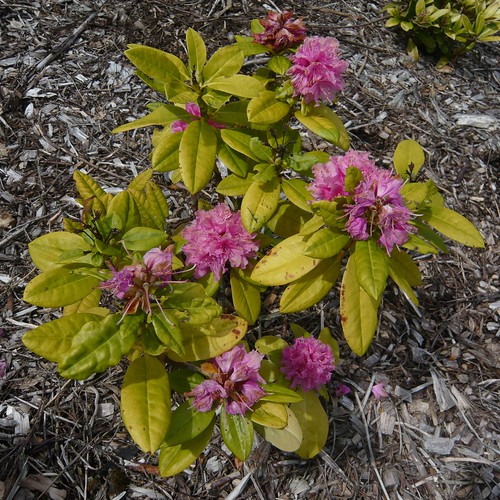
    Yellow and Sickly Leaves caused by Chlorosis

    Yellow and Sickly Leaves caused by Chlorosis

    Acid deficiency

    Yellow sickly leaves on acid loving plants is called ‘chlorosis’. It is a nutrition problem as the plant is inhibited from getting the nutrients from the soil. It is easiest to think of it as an Iron or acid deficiency.

    Plants affected by Yellowing Leaves

    • Rhododendrons often suffer if the soil is not sufficiently acidic as the picture shows. Eventually the leaves then the shrub dies.
    • Chlorosis in fruit trees is a gradual yellowing of the tissue between the veins of younger leaves will occur while the veins themselves stay green.
    • Azalea, Laurel, Maples, Oaks and other ericaceous plants can show symptoms of chlorosis.
    • Tomato chlorosis crinivrus is a yellowing of leaves but is cause by a virus introduced by white fly. Control the insects and feed the plants.
    • Yellowing leaves on houseplants can be due to overwatering. If your plant has been sitting in water it’s time to let it dry out.

    Cures for Chlorosis

    • Water with a liquid feed of ‘Sequestrene’ which is designed for such plants.
    • Fertilizers that contain chelated iron, manganese and magnesium will help improve the colour and health of leaves and plants available from Thompson Morgan
    • ‘Sequestrene’ Granular Iron Tonic is for acid-loving ericaceous plants. It provides iron in a chelated form which can easily be taken up in any soil.
    • Foliar Sprays may be effective as a temporary measure, spray when the symptoms are first noticed with a ferrous sulphate solution.
    • Peat, ericaceaous compost or applications of acid fertilizers, such as ammonium sulphate may help mild cases of iron chlorosis.
    • Do not lime the soil.
    • Treatment the soil directly with flowers of sulphur to lower the pH to 5.5

    Buy Chempack for acid lovers